中美贸易关系

Search documents
宝城期货豆类油脂早报-20250828
Bao Cheng Qi Huo· 2025-08-28 01:33
Report Summary 1. Report Industry Investment Rating No investment rating information is provided in the report. 2. Core View of the Report - All three varieties (soybean meal, soybean oil, and palm oil) are expected to be "weakly volatile" in the short - term, medium - term, and intraday, according to the reference views [5][6][8]. 3. Summary by Variety Soybean Meal (M) - **Price Movement Outlook**: Intraday view is weakly volatile, medium - term view is volatile, and the reference view is weakly volatile [5]. - **Core Logic**: The change in Sino - US trade relations affects US soybean export prospects. The pattern of weak reality and strong expectation in the domestic market remains unchanged. Short - term soybean futures prices are highly repetitive at high levels. As market sentiment weakens again, both domestic and foreign soybean futures prices decline, increasing the short - term volatility of soybean meal futures prices. Import arrival rhythm, customs clearance inspection, oil refinery operation rhythm, and stocking demand also play roles [5][7]. Soybean Oil (Y) - **Price Movement Outlook**: Intraday view is weakly volatile, medium - term view is volatile, and the reference view is weakly volatile [6][8]. - **Core Logic**: The soybean oil market focuses on raw material soybean cost support, US biodiesel policy expectations, and the resolution of domestic inventory pressure. Affected by the weakening of raw material soybean prices, the cost support for soybean oil futures prices weakens. US biofuel policy, US soybean oil inventory, domestic soybean cost support, supply rhythm, and oil refinery inventory are also influencing factors [6][7][8]. Palm Oil (P) - **Price Movement Outlook**: Intraday view is weakly volatile, medium - term view is volatile, and the reference view is weakly volatile [7]. - **Core Logic**: International oil price fluctuations have a continuous spill - over effect on the palm oil market. As the most energy - related oil variety, palm oil futures prices are significantly affected. Although the positive trend of the palm oil industry chain remains unchanged, short - term capital outflows intensify price fluctuations. Factors such as biodiesel attributes, Malaysian palm oil production and exports, Indonesian exports, main - producing countries' tariff policies, domestic arrivals, inventory, and substitution demand also impact the price [7][8].
国投期货农产品日报-20250827
Guo Tou Qi Huo· 2025-08-27 11:48
Report Industry Investment Ratings - **Buy Rating**: Soybean No. 1, Soybean Meal, Soybean Oil, Palm Oil, Rapeseed Oil [1] - **Sell Rating**: Rapeseed Meal, Corn, Live Pigs [1] - **Neutral Rating**: Eggs [1] Core Views - The prices of various agricultural products are affected by multiple factors such as policies, supply - demand relationships, and international trade. Different products have different trends and investment opportunities. For example, some products are expected to rise, while others may continue to be weak [2][3][4] Summary by Related Catalogs Soybean No. 1 - The price of Soybean No. 1 shows a weak decline due to the government's competitive sale of soybeans, increasing supply pressure and weak demand. The price difference between Soybean No. 1 and Soybean No. 2 has rebounded from a low level. Short - term attention should be paid to policies and the performance of imported soybeans [2] Soybean & Soybean Meal - Affected by the auction of imported soybeans, the price of Dalian soybean meal futures continues to fall. The strengthening of global oils may drive up soybean crushing. The supply of soybeans in the fourth quarter is sufficient, but there may be a shortage in the first quarter of next year. The long - term view on Dalian soybean meal is cautiously bullish [3] Soybean Oil & Palm Oil - The domestic soybean and palm oil markets continue to be weak. The medium - term overseas palm oil is in a production - reduction cycle. Long - term development trends of biodiesel in the US and Indonesia still exist. Consider buying on dips with a larger fluctuation space and risk control [4] Rapeseed Meal & Rapeseed Oil - In the rapeseed sector, the meal is weak and the oil is strong. The domestic rapeseed sector is in a short - term shock - consolidation pattern, and the price center may decline [6] Corn - The auction of imported corn by Sinograin continues, with a low transaction rate. The good growth of US corn and the good weather in domestic corn - producing areas may lead to a bumper harvest. Dalian corn futures may continue to be weak at the bottom [7] Live Pigs - The spot and futures prices of live pigs are weak. The supply pressure is high in the second half of the year. Policy aims to promote capacity reduction, but the inflection point has not been seen. Pig prices are expected to remain weak in the medium term [8] Eggs - Egg futures continue to increase positions and reach new lows, while spot prices rise. There may be a seasonal rebound in spot prices. The probability of significant capacity reduction in the second half of the year is high, and it is advisable to consider buying futures contracts for the first half of next year on dips [9]
宝城期货豆类油脂早报-20250827
Bao Cheng Qi Huo· 2025-08-27 01:10
Report Summary 1) Report Industry Investment Rating No relevant information provided. 2) Core Viewpoints - The domestic situation of weak reality and strong expectation in the soybean sector remains unchanged, with high volatility in short - term soybean futures prices. The overall performance of soybean meal and palm oil futures is expected to be weakly volatile both in the short - term and medium - term [5][6]. - Fluctuations in international oil prices have a continuous spill - over effect on the oil market, especially on palm oil futures, which experience intensified high - level volatility. However, the positive trend in the palm oil industry chain remains, providing support for palm oil prices [8]. 3) Summary by Variety Soybean Meal (M) - **Short - term, Medium - term, and Intraday Views**: All are weakly volatile [5][7]. - **Core Logic**: Sino - US trade relations are crucial for US soybean export prospects. The import arrival rhythm, customs clearance inspection, oil refinery operation rhythm, and备货 demand also affect soybean meal prices. Market sentiment turning weak leads to synchronized declines in domestic and foreign soybean futures prices, increasing the short - term volatility of soybean meal futures [5][7]. Palm Oil (P) - **Short - term, Medium - term, and Intraday Views**: All are weakly volatile [6][7]. - **Core Logic**: Fluctuations in international oil prices have a significant impact on palm oil futures. The positive trend in the palm oil industry chain, such as declining Indonesian inventories, strong Malaysian palm oil exports, and increased Indian imports, supports palm oil prices. However, short - term price fluctuations are intensified [8]. Soybean Oil (2601) - **Short - term, Medium - term, and Intraday Views**: All are weakly volatile [7]. - **Core Logic**: Influenced by US biofuel policies, US soybean oil inventories, domestic soybean cost support, supply rhythm, and oil refinery inventories [7]. Palm (2601) - **Short - term, Medium - term, and Intraday Views**: All are weakly volatile [7]. - **Core Logic**: Affected by its bio - diesel properties, Malaysian palm oil production and exports, Indonesian exports, tariff policies of major producing countries, domestic arrival and inventories, and substitution demand [7].
国投期货农产品日报-20250826
Guo Tou Qi Huo· 2025-08-26 14:25
Investment Ratings - Bean No.1: Neutral (White Star) [1] - Bean Meal: Slightly Bullish (One Red Star) [1] - Soybean Oil: Neutral (White Star) [1] - Palm Oil: Neutral (White Star) [1] - Rapeseed Meal: Neutral (White Star) [1] - Rapeseed Oil: Neutral (White Star) [1] - Corn: Slightly Bearish (One Green Star) [1] - Live Hogs: Slightly Bearish (One Green Star) [1] - Eggs: Neutral (White Star) [1] Core Views - The overall agricultural product market shows a complex situation with different trends in various varieties. Some are affected by supply - demand factors, some by policies, and others by weather and trade relations [2][3][7] - There are opportunities for long - term investment in some varieties like eggs, while others like live hogs are expected to remain weak in the medium - term [8][9] Summary by Variety Bean No.1 - The price of Bean No.1 is in a weak decline due to increased supply pressure from policy - driven soybean auctions and weak demand. The spread between Bean No.1 and Bean No.2 is in consolidation. Short - term focus should be on soybean policies and Sino - US trade relations [2] Soybean & Bean Meal - As of August 24, the US soybean good - to - excellent rate was 69%, higher than expected. Global oil strength may boost soybean crushing. China's soybean supply in Q4 is sufficient, but there may be a gap in Q1 next year. The situation of "crushing for oil" has emerged. The long - term view on domestic bean meal is cautiously bullish [3] Soybean Oil & Palm Oil - The market has positive expectations for Sino - US trade negotiations. US soybean oil is in a short - term rebound and then in a shock. Mid - term overseas palm oil is in a production - reducing cycle. Long - term, there is a development trend for US and Indonesian biodiesel. Bean and palm oils can be considered for buying at low prices with risk control [4] Rapeseed Meal & Rapeseed Oil - Rapeseed varieties' futures prices closed down today, dragged down by the weak external rapeseed market. The supply and demand of Canadian rapeseed affect global rapeseed prices. The domestic rapeseed market is in a short - term shock and the price center may shift down [6] Corn - China Grain Reserves Corporation continued to auction imported corn with a 15% transaction rate. Shandong's corn supply is stable. The US corn good - to - excellent rate was 71% as of August 24. Domestic new - season corn may have a good harvest, and the Dalian corn futures may continue to be weak at the bottom [7] Live Hogs - The live hog spot price is weak, with the average slaughter price hitting a new low. The supply is abundant. The futures price follows the spot price. The supply is expected to be high in the second half of the year, and the price is expected to remain weak in the medium - term. Policy aims at industry capacity reduction, but the inflection point has not been seen [8] Eggs - Egg futures are weak, with some contracts hitting new lows and funds increasing positions. Spot prices are rising in many places. There may be a seasonal rebound in egg prices from late August to September. In the long - term, there are signs of accelerated culling of old hens, and there is a high probability of capacity reduction in the second half of the year. It is advisable to consider buying futures contracts for the first half of next year at low prices [9]
特朗普称中国必须确保美国的稀土磁体供应,否则将面临200%关税,中方回应
Sou Hu Cai Jing· 2025-08-26 13:49
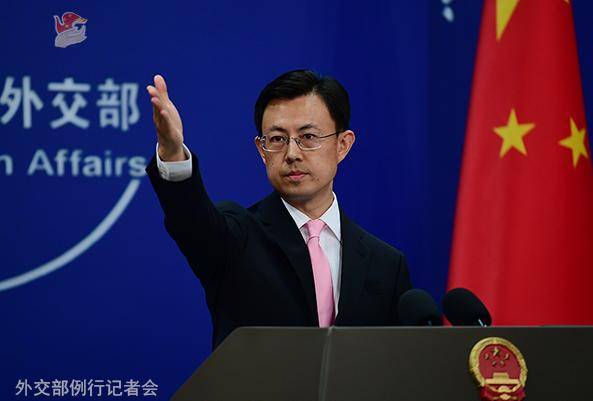
Core Viewpoint - The Chinese government emphasizes its commitment to mutual respect and cooperation in handling U.S.-China relations, while also asserting its sovereignty and development interests in response to U.S. tariffs and trade pressures [1][3]. Group 1: Tariff and Trade Relations - U.S. President Trump has threatened to impose a 200% tariff on Chinese rare earth magnets if China does not ensure the supply of these materials to the U.S. [1]. - The Chinese government has reiterated its position on tariffs, indicating that it has addressed this issue multiple times [3]. Group 2: U.S.-China Relationship Dynamics - The Chinese government maintains that it operates on principles of mutual respect, peaceful coexistence, and win-win cooperation in its dealings with the U.S. [3]. - There is a call for the U.S. to engage in actions that promote stable, healthy, and sustainable development of U.S.-China relations [3].

拦不住中俄做生意!美国副总统万斯承认,54%对华关税已经够高,不可能再加了
Sou Hu Cai Jing· 2025-08-26 09:30
Group 1 - The statement by US Vice President Vance indicates that trade relations between China and Russia will not lead to new tariffs from the US, reflecting a victory for the pragmatic faction in US internal politics and highlighting the US's helplessness in international affairs [1][5] - The 54% tariff mentioned by Vance is composed of multiple factors, including a 20% tariff on fentanyl, a 10% baseline tariff, and a 24% pending tariff, illustrating the significant economic pressure that sanctions have placed on the US itself [3][5] - The deepening trade cooperation between China and Russia has rendered US sanctions increasingly ineffective, as Russia exports energy to China while China supplies products like cars and phones to Russia, creating a resilient bilateral trade relationship [5][7] Group 2 - Vance's remarks suggest a need for the US to rethink its global relationships, emphasizing that stability in US-China relations cannot be achieved through threats or unilateral tariffs, but rather through mutual respect and cooperation [7] - Despite a slight easing in US-China trade relations indicated by Vance's statement, the internal political landscape in the US remains unchanged, with hardliners still seeking opportunities to reinstate tough policies against China [7] - The effectiveness of tariffs as a diplomatic tool is being questioned, marking a significant geopolitical shift where past strategies may no longer yield the desired results [5][7]

特朗普就稀土磁铁供应威胁对华征收约200%关税,外交部回应
中国基金报· 2025-08-26 08:02
Group 1 - The core viewpoint of the article revolves around the ongoing trade tensions between the U.S. and China, particularly focusing on the implications of tariffs and supply chain dependencies related to rare earth materials [2][3] - The Chinese Foreign Ministry reiterated its stance on tariffs, emphasizing that it has previously addressed the issue multiple times, indicating a consistent position on trade matters [2] - The article highlights President Trump's assertion that the U.S. holds greater influence over trade with China, which is countered by China's commitment to mutual respect and cooperation in managing bilateral relations [3]

特朗普称美国在贸易方面对中国的影响力大于中国对美国的影响力,外交部回应
Huan Qiu Wang· 2025-08-26 07:53
Core Viewpoint - The Chinese government emphasizes its commitment to mutual respect, peaceful coexistence, and win-win cooperation in managing Sino-U.S. relations, while also asserting its sovereignty and development interests [1] Group 1: U.S.-China Trade Relations - U.S. President Trump claims that the U.S. has greater influence over China in trade matters, particularly highlighting the importance of aircraft components [1] - The U.S. is urged to address China's restrictions on rare earth materials, which are critical for various industries [1] Group 2: China's Position - The Chinese side reiterates its principles in handling U.S.-China relations, advocating for stability, health, and sustainable development in bilateral ties [1] - China expresses a desire for the U.S. to reciprocate in efforts to promote a positive relationship [1]
两广油脂市场调研:弱现实强预期,油脂价格重心预计上移
Dong Zheng Qi Huo· 2025-08-26 07:47
1. Report Industry Investment Ratings - Palm oil: Bullish [1] - Soybean oil: Bullish [1] - Rapeseed oil: Bullish [1] 2. Core Views of the Report - Most enterprises are bullish on the fourth - quarter to first - quarter (next year) oil market, mainly due to supply - side factors. However, some enterprises are cautious about the bullish view, considering factors such as high domestic inventory, low consumption, and potential imports [4][16]. - The key factors to watch include downstream consumption recovery, the crushing situation after Australian rapeseed arrives, and the purchase of US soybeans [4]. 3. Summary by Relevant Catalogs 3.1. Research Background and Purpose - The Sino - US and Sino - Canadian bilateral trade situations are uncertain. As of now, there is no news of China purchasing US soybeans, and the preliminary anti - dumping ruling on Canadian rapeseed has blocked its arrival from September to December. The supply of soy and rapeseed in the fourth quarter is not optimistic. The research aims to understand the current market situation, procurement, and import conditions [11]. 3.2. Research Summary Rapeseed oil - National rapeseed oil inventory is sufficient, with high pressure in inland areas like Sichuan and Chongqing. Most oil mills' rapeseed inventory is depleted, and some pressing lines are shut down. The de - stocking speed is slow, and the degree of de - stocking in the fourth quarter depends on consumption [14]. - Domestic rapeseed oil consumption is extremely poor, mainly for rigid demand. After the start of school and approaching festivals, consumption may improve [14]. Soybean oil - Spot - end soybean oil inventory is sufficient, and there will be a large amount of soybean arrivals in September and October. Some oil mills may shut down due to full - capacity of soybean meal. If no US soybeans are purchased this year, there may be a shortage from January to March next year. After the start of school, demand may improve [15]. 3.3. Market Outlook - Most enterprises are bullish on the oil market from the fourth quarter to the first quarter of next year, as soybean and rapeseed oil will de - stock in the fourth quarter, and the shortage in the first quarter of next year is difficult to make up. However, some enterprises are cautious, considering factors such as imports of rapeseed oil and Australian rapeseed [16]. 3.4. Research Content August 19th Morning - Enterprise A - It is a trading enterprise mainly engaged in soybean and rapeseed oil trade. It purchases raw materials from nearby companies and oil mills [17]. - The sales area of Guangxi's rapeseed oil is mainly Yunnan, Guizhou, and Sichuan. The enterprise is bullish on the 2025 soybean oil market, believes in focusing on macro news, and thinks rapeseed oil may be a strong variety in the fourth quarter [18][19]. August 19th Morning - Enterprise B - It is a trading enterprise mainly engaged in rapeseed meal and soybean meal trade, with a total annual trading volume of 120 - 130 tons [20]. - It mainly purchases rapeseed meal from domestic oil mills. The substitution between soybean meal and rapeseed meal is affected by price difference. Rapeseed meal demand is seasonal. The soybean meal market has sufficient supply. Key factors to watch include anti - dumping policies and Sino - US negotiations [21][23]. August 19th Afternoon - Enterprise C - It is mainly engaged in the trade of soybean, rapeseed, and cottonseed oil, with a trading volume of about 300,000 tons. It serves customers in Yunnan, Guizhou, Sichuan, and Chongqing [24]. - In the soybean oil market, supply was tight from February to April this year, and consumption was weak from June to August. In the rapeseed oil market, port inventory is low, and consumption is mostly replaced. If Sino - US negotiations fail, there may be a shortage of soybeans from the fourth quarter to the first quarter of next year. Rapeseed pressing volume may decline [25][27]. August 20th Morning - Enterprise D - It has a daily rapeseed pressing capacity of 2000 tons and a daily refining capacity of 600 tons. It is currently short of rapeseed and may switch to soybean pressing. The de - stocking progress of rapeseed and soybean oil in the fourth quarter depends on domestic consumption [29][32]. August 20th Morning - Enterprise E - It has three pressing lines. It is currently pressing soybeans with a capacity utilization rate of 50 - 60%, and the rapeseed line is shut down. It is concerned about the import of Australian rapeseed. It does not think there will be a supply problem in the fourth quarter, but there may be a gap in March [34][36]. August 20th Afternoon - Enterprise F - Its daily pressing capacity is 11,000 tons. The soybean pressing line is fully operational, and the rapeseed line is shut down. It has three ships of new - season Australian rapeseed with uncertain plans. Rapeseed oil is mostly for rigid demand, and soybean oil is under less pressure. After the start of school, consumption will improve, but there is obvious consumption downgrading [37][39]. August 21st Morning - Enterprise G - Its daily soybean pressing capacity is 5000 tons, and it also has other production capacities. It mainly purchases Brazilian and Argentine soybeans. It expects a soybean supply gap in February - March next year and high soybean meal inventory after September [41][44]. August 21st Morning - Enterprise H - It is mainly engaged in oil packaging, with a planned annual capacity of 200,000 tons. The consumption in different regions has different preferences. This year's sales volume has decreased, and the downstream procurement is more cautious. Palm oil demand has decreased, and the overall oil demand is stable but lacks growth [46][49]. August 22nd Morning - Enterprise I - It has various production capacities, including peanut, wheat, and planned soybean pressing. It mainly purchases oil raw materials from domestic oil mills. It is bullish on the short - term oil market and expects soybean meal to be weak for a long time [50][54].
【真灼机构观点】多重因素推动中国股市向好,港股通周一净流出13.7亿港元
Xin Lang Cai Jing· 2025-08-26 06:47
Market Overview - The Chinese stock market has recently shown exceptional performance, with the Shanghai Composite Index reaching a ten-year high since 2015, and the CSI 300 Index surpassing a four-year peak [3] - The surge in the market reflects multiple macroeconomic factors, primarily driven by extremely ample domestic liquidity [3] Liquidity and Investment Trends - A significant influx of household savings into the stock market is observed as bank deposit rates and bond yields continue to decline, leading to daily trading volumes on the Shanghai and Shenzhen exchanges exceeding 2 trillion yuan for nine consecutive days, marking a historical record [3] Policy and External Factors - There is an increasing expectation of policy stimulus, coupled with a thaw in China-US trade relations, which has injected optimism into the market [3] - The extension of the tariff truce agreement by Trump has alleviated external uncertainties, further supporting market sentiment [3] - Strengthened expectations of interest rate cuts by the Federal Reserve have also enhanced the flow of capital from the US to China, creating a favorable external financial environment [3] Stock Flow Insights - On the Hong Kong Stock Connect, there was a net outflow of 1.37 billion HKD on Monday, with Alibaba (09988.HK) recording the highest net inflow of 590 million HKD, followed by Kuaishou (01024.HK) [3] - Conversely, the Tracker Fund of Hong Kong (02800.HK) experienced the largest net outflow, amounting to 2.3 billion HKD, followed by Xiaomi Group (01810.HK) [3]