反内卷

Search documents
化工行业周报20260225:国际油价大幅上涨,分散染料迎来第四轮涨价
Bank of China Securities· 2026-02-25 07:20
基础化工 | 证券研究报告 — 行业周报 2026 年 2 月 25 日 强于大市 化工行业周报 20260225 国际油价大幅上涨,分散染料迎来第四轮涨价 二月份建议关注:1、低估值行业龙头公司;2、"反内卷"对相关子行业供给端影响;3、下游需求旺 盛,自主可控日益关键背景下的电子材料公司。 行业动态 相关研究报告 《染料价格上行,一体化企业有望受益》 20260211 《化工行业周报 20260208》20260208 《化工行业周报 20260201》20260202 中银国际证券股份有限公司 具备证券投资咨询业务资格 证券分析师:余嫄嫄 (8621)20328550 yuanyuan.yu@bocichina.com 证券投资咨询业务证书编号:S1300517050002 证券分析师:范琦岩 qiyan.fan@bocichina.com 证券投资咨询业务证书编号:S1300525040001 投资建议 风险提示 ◼ 地缘政治因素变化引起油价大幅波动;全球经济形势出现变化。 ◼ 本周(02.17-02.24)均价跟踪的 100 个化工品种中,共有 33 个品种价格上涨,8 个品种价格下跌, 59 个品 ...
A股收评:沪指涨0.72%、创业板指涨1.41%,涨价题材股集体爆发,全市场超3700股走高,连续两日超百股涨停
Jin Rong Jie· 2026-02-25 07:11
Core Viewpoint - The A-share market experienced a strong upward trend, with significant gains across major indices, driven by resource stocks and specific sectors like semiconductors and rare earths [1][2][3]. Market Performance - The Shanghai Composite Index rose by 29.82 points, or 0.72%, closing at 4147.23 points; the Shenzhen Component increased by 184.3 points, or 1.29%, to 14475.87 points; the CSI 300 Index gained 28.34 points, or 0.6%, ending at 4735.89 points; the ChiNext Index climbed 46.55 points, or 1.41%, to 3354.82 points; and the STAR 50 Index rose by 7.91 points, or 0.54%, to 1473.28 points [1]. Sector Highlights - Resource stocks, particularly in rare earths and precious metals, saw significant gains, with companies like Shenghe Resources hitting the daily limit up and achieving historical highs [2]. - The price of praseodymium and neodymium oxide increased to an average of 882,000 yuan/ton, up by 41,600 yuan/ton compared to before the holiday [2]. - The semiconductor sector showed strength, with stocks like Yiyuan Silicon and Fuchuang Precision rising over 10% [3]. Weakness in Certain Sectors - The film and media sector faced continuous declines, with companies like Hengdian Film experiencing consecutive limit downs [4]. - AI application stocks weakened, with some individual stocks in storage chips and optical modules undergoing corrections [4]. Institutional Insights - Dongguan Securities noted a high probability of market gains post-holiday, with historical data indicating a significant increase in A-share prices after the Spring Festival [5]. - China Galaxy Securities highlighted that the market will be driven by policy catalysts around the Two Sessions, with a focus on "hotspot rotation and style switching" [5]. - Zhongyuan Securities observed that the volatility in funds before the Spring Festival is nearing its end, with a rebound in equity fund issuance and significant inflows into overseas mutual funds [5]. Short-term Market Outlook - Caixin Securities suggested that there is still room for improvement in short-term risk appetite, with the market likely to remain volatile [6]. - Huatai Securities emphasized the mid-term value of sectors like robotics and intelligent driving, driven by recent high-profile events [6].



化工行业周报20260225:国际油价大幅上涨,分散染料迎来第四轮涨价-20260225
Bank of China Securities· 2026-02-25 06:56
国际油价大幅上涨,分散染料迎来第四轮涨价 二月份建议关注:1、低估值行业龙头公司;2、"反内卷"对相关子行业供给端影响;3、下游需求旺 盛,自主可控日益关键背景下的电子材料公司。 行业动态 基础化工 | 证券研究报告 — 行业周报 2026 年 2 月 25 日 强于大市 化工行业周报 20260225 相关研究报告 《染料价格上行,一体化企业有望受益》 20260211 《化工行业周报 20260208》20260208 《化工行业周报 20260201》20260202 中银国际证券股份有限公司 具备证券投资咨询业务资格 基础化工 证券分析师:余嫄嫄 (8621)20328550 yuanyuan.yu@bocichina.com 证券投资咨询业务证书编号:S1300517050002 证券分析师:范琦岩 qiyan.fan@bocichina.com 证券投资咨询业务证书编号:S1300525040001 投资建议 风险提示 ◼ 地缘政治因素变化引起油价大幅波动;全球经济形势出现变化。 ◼ 本周(02.17-02.24)均价跟踪的 100 个化工品种中,共有 33 个品种价格上涨,8 个品种价格下跌, ...
集体拉升,涨停潮来了
Zhong Guo Ji Jin Bao· 2026-02-25 05:51
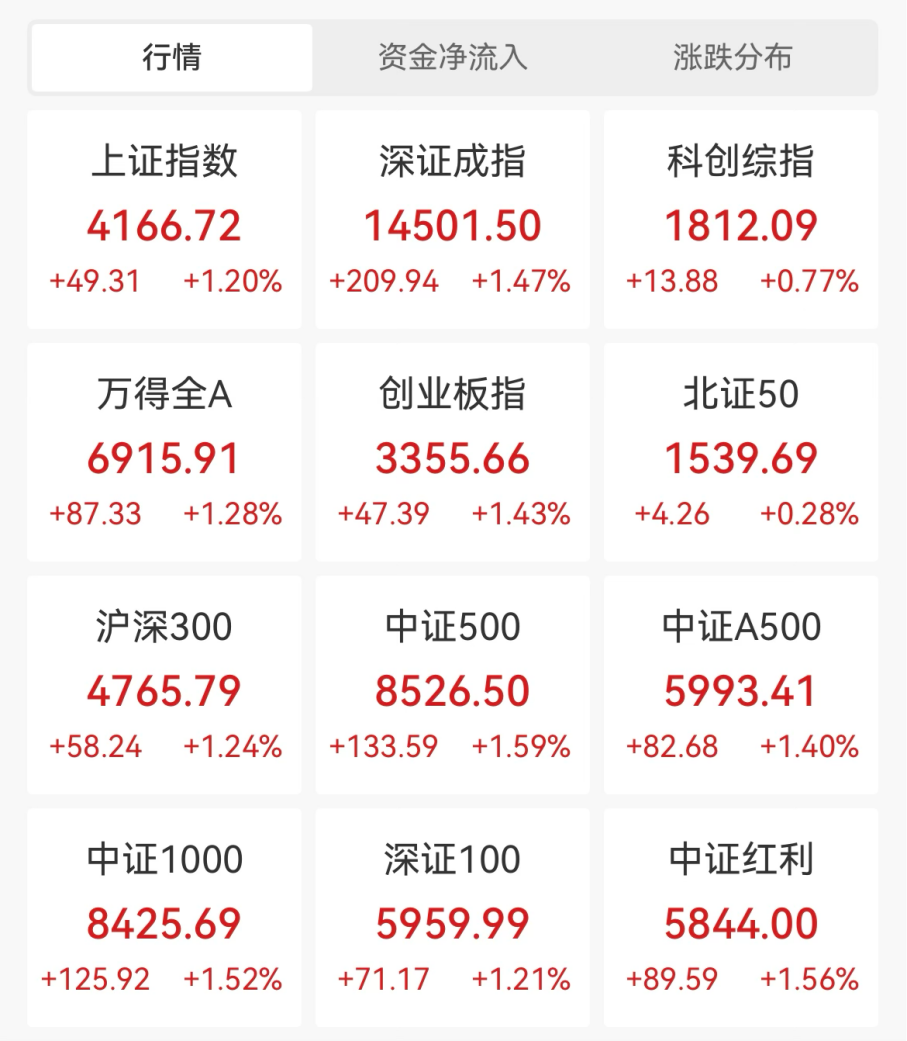
Market Overview - The A-share market saw all three major indices rise collectively, with gains exceeding 1%, and nearly 4,000 stocks in the market increased in value [1] - The Shanghai Composite Index closed at 4166.72 points, up 1.2%, while the Shenzhen Component Index rose by 1.47% and the ChiNext Index increased by 1.43% [2] Sector Performance - The rare earth, phosphorus chemical, shipping, and oil and gas sectors showed strong performance, with the non-ferrous metals sector experiencing a "limit-up" trend [1][4] - The phosphorus chemical sector surged over 8%, with stocks like Chengxing Co. and Chuanjin Nuo hitting the daily limit [10][12] - The steel sector also performed well, with multiple companies such as Baotou Steel and Linggang Steel reaching their daily limit [14] Notable Stocks - In the non-ferrous metals sector, over 20 stocks hit the daily limit, including Northern Rare Earth and Huaxi Nonferrous [4] - Key stocks in the oil and gas sector, such as Tongyuan Petroleum and Zhongyuan Shipping, recorded significant gains, with Tongyuan Petroleum rising over 18% [7][8] - The phosphorus chemical stocks saw notable increases, with Chuanjin Nuo and Qingshuiyuan both achieving gains of around 20% [10][11] Investment Insights - According to research from Zhongyin Securities, the market is expected to enter a "profit-driven growth phase" by 2026, with the strong cyclical nature of non-ferrous metals likely to be highlighted [5] - The U.S. has been working to reduce dependence on Chinese phosphorus resources, which may lead to increased demand and price appreciation for phosphorus-related stocks [12]


硅料老大出手!通威拟收购青海丽豪,段雍要回“老东家”?
Nan Fang Du Shi Bao· 2026-02-25 05:25
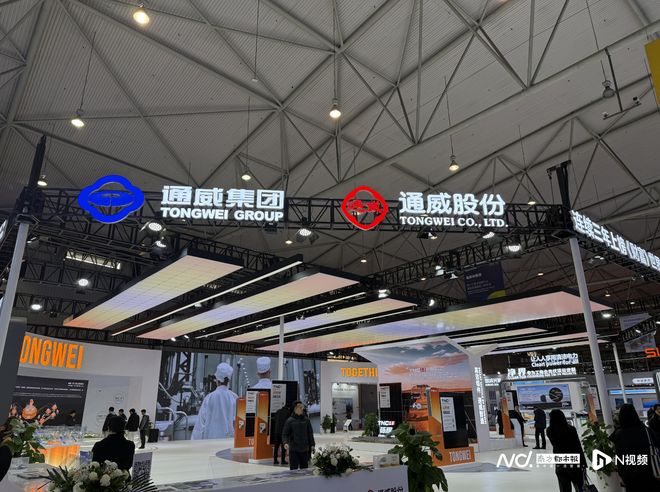
Core Viewpoint - Tongwei Co., Ltd. plans to acquire 100% equity of Qinghai Lihua Co., Ltd. through a combination of share issuance and cash payment, aiming to strengthen its position in the photovoltaic industry [1][11]. Company Overview - Tongwei Co., Ltd. is a leading global player in the photovoltaic sector, with a high-purity crystalline silicon production capacity exceeding 900,000 tons and solar cell production capacity over 150 GW as of June 2025 [3][7]. - In 2024, Tongwei achieved a high-purity crystalline silicon sales volume of 467,600 tons, marking a year-on-year increase of 20.76%, capturing approximately 30% of the national market share and ranking first globally [3][11]. - Qinghai Lihua, established in April 2021, has a production capacity of over 200,000 tons of high-purity crystalline silicon and is among the top ten in the industry [3][4]. Acquisition Details - The acquisition is part of Tongwei's strategy to consolidate its market position and address the challenges of overcapacity and price wars in the photovoltaic industry [8][11]. - Qinghai Lihua's facilities are located in the Qinghai Xining Economic and Technological Development Zone, with a planned total investment of 20 billion yuan, aiming for an annual output value of approximately 20 billion yuan [3][4]. Industry Context - The photovoltaic industry is currently facing issues of overcapacity and price wars, with polysilicon prices dropping significantly from 300,000 yuan per ton in 2022 to 35,000 yuan per ton, leading to financial distress for many companies [8][10]. - The establishment of a multi-crystalline silicon capacity integration platform, involving major players including Tongwei and Qinghai Lihua, is seen as a potential solution to mitigate the adverse effects of excessive competition [10][11]. Historical Context - The founder and chairman of Qinghai Lihua, Duan Yong, has a history with Tongwei, having previously held significant positions within the company, which may facilitate the integration process [7][11]. - Tongwei has a track record of strategic acquisitions, such as the purchase of Hefei Swei's battery factory in 2013, which solidified its leadership in the battery segment [11].

有色金属延续强势表现,有色ETF富国(159168)盘中涨超5.3%
Mei Ri Jing Ji Xin Wen· 2026-02-25 05:21
Core Viewpoint - The non-ferrous metal sector has seen significant gains, with the non-ferrous ETF FuGuo (159168) rising by 5.32% at one point, driven by macroeconomic uncertainties and supply chain restructuring concerns [1] Group 1: Market Performance - The non-ferrous metal sector experienced a substantial increase, with key stocks such as Xiyegongsi, Beifang Rare Earth, and Chihong Zinc & Germanium hitting the 10% daily limit [1] - Over 90% of the stocks in the sector showed an upward trend, indicating strong market sentiment [1] Group 2: Macroeconomic Factors - Ongoing tensions between the US and Iran, along with the US government's announcement of a 10% to 15% alternative tariff on global goods, have heightened market concerns regarding policy uncertainty and supply chain restructuring [1] - This macro environment has reinforced the safe-haven attributes of key minerals and the logic of stagflation trading [1] Group 3: Future Outlook - Research institutions predict that by 2026, the market will enter a second phase of a bull market characterized by profit-driven growth, supported by domestic demand expansion and anti-involution narratives [1] - The strong cyclical nature of non-ferrous metals is expected to manifest, with financial attributes and industry trends providing opportunities for revaluation [1] Group 4: Investment Opportunities - Investors looking to enter the non-ferrous metal sector may consider the non-ferrous ETF FuGuo (159168), which closely tracks the Industrial Non-Ferrous Index (H11059.CSI) [1] - The ETF selectively includes 30 listed companies involved in industrial metals such as copper, aluminum, rare earths, lead, zinc, tungsten, and molybdenum, focusing on growth dividends from industrial upgrades [1]
有机硅行业深度报告:“反内卷”协同共振,供需平衡逐步修复
2026-02-25 04:13
Summary of the Conference Call on the Organic Silicon Industry Industry Overview - The conference focused on the organic silicon industry, highlighting its positive outlook under carbon emission constraints, which is expected to lead to price increases and a revaluation of the sector [1][2]. - The organic silicon industry is experiencing a continuous improvement in supply-demand dynamics, with stable growth in traditional sectors such as electronics, construction, and textiles, alongside rapid growth in new sectors like photovoltaic adhesives and lithium battery adhesives [1][2]. Key Insights and Arguments - **Demand Growth**: The projected growth rate for organic silicon consumption in China from 2025 to 2027 is estimated at 8% to 8.8%, indicating a robust growth trajectory [2][12]. - **Supply Constraints**: The organic silicon production capacity in China accounts for over 70% of global capacity, with significant capacity expansion expected to slow down, leading to limited new capacity releases in the coming years [2][16]. - **Price Recovery**: The price of organic silicon intermediates has risen from 11,000 CNY per ton in November 2025 to 14,000 CNY per ton by the end of January 2026, marking a nearly 27% increase [3][21]. - **Utilization Rates**: The capacity utilization rates are projected to improve from 70.58% in 2025 to 81.61% by 2027, indicating a recovery in the industry [5][19]. Sector-Specific Demand Analysis - **Construction**: The construction sector is expected to stabilize, with organic silicon consumption projected at 42.95 million tons by 2027, supported by improving housing sales and renovation demand [7][12]. - **Electronics**: The electronics sector is anticipated to see an 8% to 10% demand growth, driven by the increasing use of photovoltaic adhesives and domestic high-performance battery adhesives [9][11]. - **Manufacturing**: The manufacturing sector's demand is expected to grow due to investments in high-voltage power transmission and updates to electrical grid equipment [10][14]. - **Emerging Applications**: New applications in sectors such as medical, 3D printing, and transportation are expected to drive additional demand for organic silicon products [10][11]. Export and Import Dynamics - **Export Growth**: Organic silicon exports are projected to reach 559,000 tons in 2025, with a year-on-year growth of 2.4%. Key export destinations include South Korea (17.3%) and India (15.1%) [14][15]. - **Import Dependency**: The import dependency for organic silicon is expected to decrease to 3.7% by 2025, indicating a strengthening domestic production capacity [18]. Policy and Market Implications - The cancellation of export tax rebates starting April 1, 2026, is expected to increase export costs but may also encourage a shift towards higher value-added products [15][22]. - The industry is expected to benefit from the exit of overseas competitors, such as Dow Chemical, which will create opportunities for domestic companies to fill supply gaps [18][22]. Recommended Companies - Key companies to watch in the organic silicon sector include: - **Hesheng Silicon**: Leading in integrated production capabilities from industrial silicon to organic silicon [22][23]. - **Xingfa Group**: Notable for its comprehensive organic silicon capacity and integration with other chemical sectors [23]. - **New安股份**: Recognized for its complete organic silicon product line and strategic focus on high-end market segments [23]. - **Dongyue Silicon**: Strong in both upstream and downstream processing capabilities [24]. Conclusion - The organic silicon industry is poised for a recovery phase, driven by stable demand growth in traditional and emerging sectors, alongside a tightening supply environment. The overall sentiment is optimistic, with expectations of price stability and gradual increases in utilization rates [19][22].



有机硅供需及反内卷展望
2026-02-25 04:13
Summary of the Conference Call on Organic Silicon Industry Industry Overview - The conference focused on the organic silicon industry, particularly the DMC (Dimethylcyclosiloxane) segment, discussing supply-demand outlook and potential opportunities for rebalancing in the market [1][2] - The organic silicon sector has gained significant attention due to its alignment with the broader chemical industry trends, especially in light of rising energy costs affecting European production competitiveness [1] Key Insights and Arguments - **Supply-Demand Dynamics**: The industry is currently experiencing a slight oversupply, with production capacity expected to double by the end of 2024 compared to 2020 levels. Despite strong demand, supply expansion has outpaced it, leading to a bottoming out of market conditions [2] - **Price Trends**: The price of DMC has increased from 11,000 RMB per ton in late 2022 to 14,000 RMB currently, indicating a recovery in profitability for the industry after a period of losses [3] - **Industry Collaboration**: Major players in the organic silicon market have engaged in coordinated production cuts, which have positively impacted pricing and helped stabilize the market [2][3] - **Production Control**: Companies have adopted conservative production strategies, with inventory levels significantly lower than the previous year, indicating a proactive approach to managing supply [4] Additional Important Points - **Market Leaders**: Key companies mentioned include Dongyue Group, Xingfa Group, Xin'an Chemical, and Hesheng Silicon Industry, all of which are positioned well within the market [6][11] - **Future Growth Potential**: The organic silicon market is projected to maintain a double-digit growth rate, driven by demand from sectors such as renewable energy, consumer products, and advanced materials [9][10] - **Investment Recommendations**: Analysts recommend focusing on companies with strong fundamentals and growth potential, such as Dongyue Silicon and Xingfa Group, particularly as the market enters a seasonal peak [6][10] - **Cost Structure**: The industry exhibits a flat cost curve, with a high concentration ratio (CR5 at 64%), which supports the potential for collaborative pricing strategies among major players [3][4] Conclusion - The organic silicon industry is poised for a recovery, with favorable supply-demand dynamics and collaborative efforts among key players. The current market conditions present significant investment opportunities, particularly as companies prepare for the upcoming peak season and manage inventory levels effectively [10][11]
券商把脉节后投资主线
Jin Rong Shi Bao· 2026-02-25 02:52
Group 1 - The Spring Festival holiday saw a record-breaking cross-regional movement of over 5 billion people, indicating strong consumer activity [1] - The average daily inbound and outbound personnel at national ports during the holiday is expected to increase by 14.1% year-on-year, reaching over 2.05 million people, nearly five times the level of the previous year [1] - The first three days of the holiday showed a year-on-year increase of 4.5% in foot traffic and 4.8% in sales for monitored pedestrian streets, reflecting a robust consumption environment [1] Group 2 - Huatai Securities noted that domestic consumption data showed an overall increase in volume with stable prices, highlighting service consumption as a new growth point [2] - Data from Meituan indicated that leisure orders in lower-tier cities grew by nearly 30% year-on-year, with a notable shift towards younger consumers [2] - The "post-Spring Festival" market outlook suggests a focus on theme investments in sectors like the export chain and service consumption, while also considering geopolitical risks [2] Group 3 - Guosheng Securities identified four key variables that may influence market trends post-holiday, including uncertainties in U.S. tariff policies and the resilience of export chain enterprises [3] - The rise of AI and robotics, validated by sales data from platforms like JD.com, is expected to attract investment in related sectors [3] - The attractiveness of assets priced in RMB is increasing, particularly in the equity market, with a trend of foreign capital inflow into Chinese assets [3] Group 4 - China Galaxy Securities recommended focusing on two main lines post-holiday: sectors benefiting from improved supply-demand dynamics and industries with structural highlights like robotics and AI [4] - Guojin Securities emphasized the importance of the "global physical assets vs. Chinese assets" theme, suggesting investment in commodities and sectors with a competitive advantage in China [4]
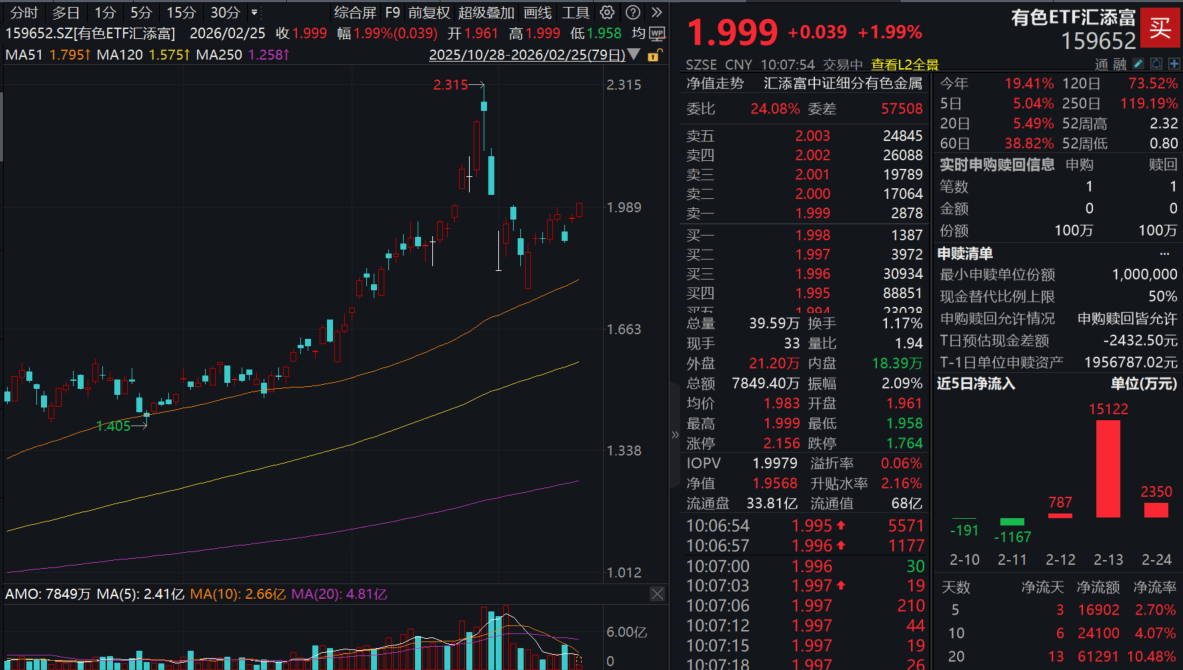
有色再度冲高,锗、镓等小金属领涨!云南锗业涨停,北方稀土涨超6%,有色ETF汇添富(159652)大涨2%,连续3日吸金!美国拟开发AI定价项目
Sou Hu Cai Jing· 2026-02-25 02:47
Core Viewpoint - The A-share market continues to show positive momentum, particularly in the non-ferrous metal sector, with significant inflows of capital and strong performance from key ETFs and constituent stocks [1][4]. Group 1: Market Performance - As of February 25, the A-share market saw over 4,000 stocks rise, with the non-ferrous ETF Huatai-PineBridge (159652) increasing by 1.99% [1]. - The non-ferrous sector has attracted over 180 million yuan in capital inflows over the past three days [1]. - Key constituent stocks such as Yunnan Tin and Xiyang Co. have shown substantial gains, with Yunnan Tin hitting the daily limit and others like Northern Rare Earth and China Aluminum rising over 3% [1]. Group 2: Industry Insights - The U.S. plans to utilize AI for setting reference prices for critical minerals, focusing initially on germanium, gallium, antimony, and tungsten, which may influence global metal trade dynamics [4]. - Recent trends in the London Metal Exchange show a rise in base metal prices, with tin up 5.41% and copper up 2.54%, indicating a bullish outlook for copper prices in the coming months [4]. - The non-ferrous sector is expected to benefit from improved supply-demand dynamics and industry profitability recovery, with over 80% of constituent stocks forecasting profit increases [5][6]. Group 3: Performance Forecasts - As of February 25, more than half of the constituent stocks in the non-ferrous ETF have released earnings forecasts, with 40% expecting to double their profits [5]. - Specific companies like Guocheng Mining and Shenghe Resources are projected to see significant profit growth, with Guocheng Mining's upper limit forecast at 1.12 billion yuan, reflecting a year-on-year increase of over 1,000% [6]. Group 4: Investment Strategy - The non-ferrous sector is highlighted as a key area for investment, driven by monetary easing, rigid supply, and new demand dynamics [8]. - The Huatai-PineBridge non-ferrous ETF is noted for its high "gold-copper content," with copper at 34% and gold at 14%, making it a leading choice in the sector [10][11]. - The ETF's performance is driven by earnings rather than valuation, with a PE ratio of 32.24, indicating a strong earnings-driven growth phase [13].