
固定资产投资

Search documents
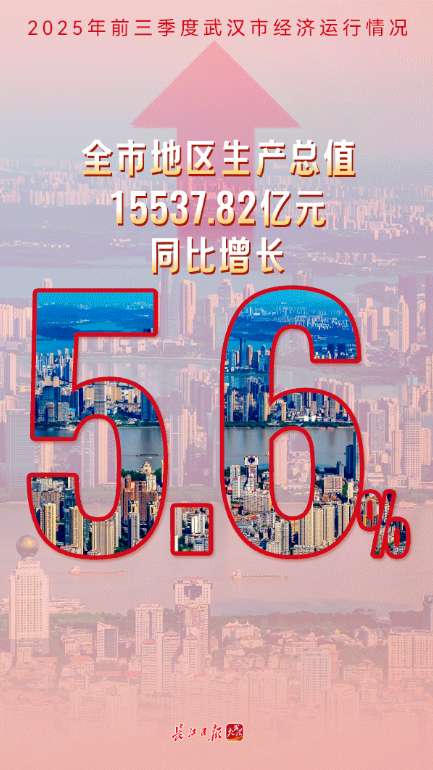
刚刚,武汉2025年前三季度GDP公布
Chang Jiang Ri Bao· 2025-10-29 08:20
Economic Overview - Wuhan's GDP for the first three quarters of 2025 reached 15,537.82 billion yuan, reflecting a year-on-year growth of 5.6% at constant prices [3] - The primary industry added value was 370.81 billion yuan, growing by 3.7%; the secondary industry added value was 5,068.39 billion yuan, growing by 4.8%; and the tertiary industry added value was 10,098.62 billion yuan, growing by 6.0% [4] Agricultural Sector - The total output value of agriculture, forestry, animal husbandry, and fishery reached 608.38 billion yuan, with a year-on-year growth of 3.9% [11] - Major agricultural products saw production increases, with summer grain and early rice totaling 120,500 tons, up by 0.6% from the previous year [11] Industrial Sector - The industrial added value for large-scale enterprises grew by 5.4%, accelerating by 0.3 percentage points compared to the first half of the year [13] - High-tech manufacturing added value increased by 16.3%, accounting for 25.2% of the total industrial added value [13] - Notable growth was observed in the computer, communication, and other electronic equipment manufacturing sector, which grew by 18.0% [13] Service Sector - The service industry added value increased by 6.0%, with transportation, warehousing, and postal services growing by 10.8% [15] - Revenue from large-scale service enterprises rose by 11.6%, with significant increases in various service sectors [15] Investment Trends - Fixed asset investment grew by 2.0%, with industrial investment increasing by 12.0% and infrastructure investment by 6.2% [17] - High-tech industry investment rose by 2.9%, with high-tech service and manufacturing investments growing by 13.2% and 0.4%, respectively [17] Consumer Market - The total retail sales of consumer goods reached 6,299.74 billion yuan, with a year-on-year growth of 5.5% [19] - The "old for new" policy positively impacted retail sales in home appliances and building materials, with increases of 28.6% and 21.0%, respectively [20] Trade and Finance - The total import and export volume was 3,369.6 billion yuan, growing by 15.8% year-on-year [22] - Financial institutions reported a deposit balance of 42,864.83 billion yuan, with a year-on-year growth of 5.1% [22] Income and Prices - Per capita disposable income reached 46,107 yuan, with urban and rural incomes growing by 4.6% and 5.9%, respectively [24] - The consumer price index rose by 0.3% year-on-year, with various categories showing different price trends [24] Conclusion - Overall, Wuhan's economy showed stable growth in the first three quarters of 2025, with a focus on consolidating the recovery and addressing external uncertainties [25]

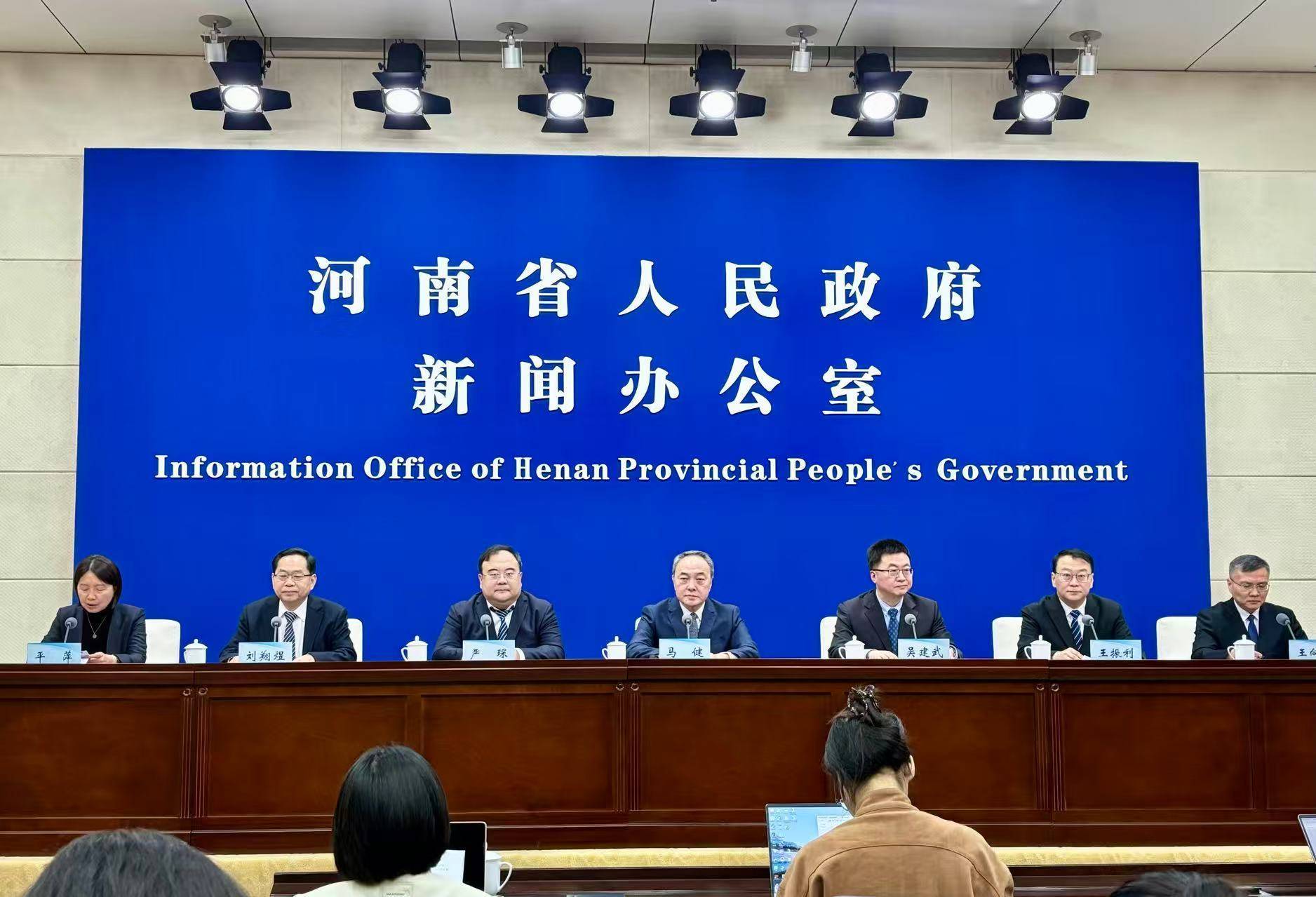
如何挖掘有效投资潜力?河南:走上去、走出去、走下去
Sou Hu Cai Jing· 2025-10-28 10:20
Core Viewpoint - The fixed asset investment in Henan province has shown a positive trend in the first three quarters of the year, growing by 4.5%, which is 5 percentage points higher than the national average, playing a crucial role in stabilizing the economy [3][4]. Group 1: Investment Growth and Economic Impact - In the first three quarters, major projects have effectively driven investment, with the investment structure continuously shifting towards new areas and private investment showing vitality [3]. - The growth of fixed asset investment in Henan is seen as a significant support for the province's economic sustainability and improvement [3][4]. Group 2: Future Investment Strategies - Henan plans to adopt a more proactive approach to secure funding and project opportunities, focusing on key areas such as technological innovation, advanced manufacturing, green low-carbon initiatives, comprehensive transportation, urban renewal, and consumption stimulation [4]. - The province aims to attract and implement large projects with strong driving force and high efficiency, leveraging industrial parks and focusing on leading and advantageous industries [5]. - There will be an emphasis on detailed element assurance and coordination services for major projects, implementing a "hundred-thousand" project construction initiative, and enhancing the management of major projects [5].
热点思考 | 投资“失速”的真相?(申万宏观·赵伟团队)
申万宏源研究· 2025-10-28 01:36
Group 1 - The core viewpoint of the article highlights a significant decline in fixed asset investment growth across various sectors, reaching historical lows in the second half of 2025, with a notable drop of 9.1 percentage points to -6.5% by September, marking the lowest point in five years [1][10][19] - Investment in broad infrastructure, services, real estate, and manufacturing has all seen substantial declines, with respective drops of 13.1, 11.1, 9.3, and 9.1 percentage points, leading to negative growth rates of -3.3%, -6.6%, -21.2%, and -1.5% [1][10][19] - The decline in investment is attributed to several factors, including accelerated debt resolution efforts that have occupied investment funds, with over half of the investment decline explained by this issue [2][29] Group 2 - The construction and installation investment has decreased significantly, contributing to the overall decline in fixed asset investment, with a drop of 16.4 percentage points to -15.7% by September [2][19] - The eastern region has experienced a more pronounced decline in construction and installation investment compared to central and western regions, with cumulative declines of 3.9, 3, and 2.3 percentage points respectively [2][19] - The article identifies that the push for debt resolution has led to a requirement for enterprises to expedite the repayment of debts, further impacting investment negatively [3][40] Group 3 - The lack of new projects is also affecting current investment levels, with renovation projects maintaining high growth while new construction investments have significantly declined [4][44] - The article notes that the yield rates for investments in transportation, public utilities, and environmental management have fallen into negative territory, indicating poor returns on investment in these sectors [4][44] - Recent fiscal measures have been implemented to alleviate the pressure on investment caused by debt resolution, including the allocation of 500 billion yuan for local projects aimed at addressing debt issues [6][66] Group 4 - The article discusses the potential for policy optimization to improve corporate financial health, as high accounts receivable ratios have been noted, particularly among private enterprises [5][53] - The reduction in accounts receivable growth rates for both joint-stock and private enterprises suggests a potential recovery in cash flow, which could support investment revitalization [5][59] - Historical precedents indicate that effective debt repayment policies can lead to significant improvements in corporate investment activity, as seen in past government initiatives [5][60]

热点思考 | 投资“失速”的真相?(申万宏观·赵伟团队)
赵伟宏观探索· 2025-10-27 16:03
Group 1 - The core viewpoint of the article highlights a significant decline in fixed asset investment growth across various sectors, reaching historical lows in the second half of 2025, with a notable drop of 9.1 percentage points to -6.5% by September, marking the lowest point in five years [1][10][19] - Investment in broad infrastructure, services, real estate, and manufacturing has all seen substantial declines, with respective drops of 13.1, 11.1, 9.3, and 9.1 percentage points, leading to negative growth rates of -3.3%, -6.6%, -21.2%, and -1.5% [1][10][19] - Specific sectors such as major projects, consumer infrastructure, and manufacturing have also experienced significant downturns, with infrastructure investments in IT services, public utilities, and facility management dropping around 20 percentage points [1][12][19] Group 2 - The decline in construction and installation investment is identified as a primary factor contributing to the overall drop in fixed asset investment, with a decrease of 16.4 percentage points to -15.7% by September, which has dragged down overall investment growth by 8.4 percentage points [2][19] - Regionally, the eastern regions have experienced a more significant decline in construction and installation investment compared to central and western regions, with cumulative declines of 3.9, 3, and 2.3 percentage points respectively [2][19] Group 3 - The article identifies accelerated debt resolution as a major reason for the investment slowdown, explaining that this has accounted for over half of the decline in investment growth. The issuance of special refinancing bonds has significantly reduced available government investment funds [3][29] - Since mid-2024, companies have been increasing investments through debt, but the current push for debt repayment has led to a reduction in available funds for new investments, particularly affecting state-owned enterprises and the real estate sector [3][40] Group 4 - The lack of new projects is also impacting current investment levels, with renovation projects maintaining high growth while new construction and expansion projects have seen significant declines, reflecting a "lack of projects" effect [4][44] - Infrastructure investment returns in sectors like transportation and public utilities have fallen into negative territory, indicating a need for improved project viability [4][44] Group 5 - Policy optimization is expected to positively impact corporate financial recovery, with targeted measures already in place to alleviate the debt burden on investments. Historical precedents suggest that resolving debt issues can enhance corporate cash flow and stimulate economic activity [5][59] - Recent fiscal measures have introduced new funding aimed at addressing the investment decline, particularly in economically significant provinces, which is expected to mitigate the downward pressure on investment [6][66]

热点思考 | 投资“失速”的真相?(申万宏观·赵伟团队)
申万宏源宏观· 2025-10-27 14:16
Core Viewpoint - The article discusses the significant decline in fixed asset investment in China since the second half of 2025, highlighting a broad downturn across various sectors including infrastructure, services, real estate, and manufacturing [1][10][19]. Investment Growth Decline - Fixed asset investment growth has dropped sharply by 9.1 percentage points to -6.5% in September 2025, marking a five-year low. The actual investment growth, excluding price disturbances, fell by 7.8 percentage points to -4.1% [1][10]. - Investment in broad infrastructure, services, real estate, and manufacturing has all seen declines, with respective drops of 13.1, 11.1, 9.3, and 9.1 percentage points [1][10][19]. - Specific sectors like major projects, consumer infrastructure, and manufacturing have also experienced notable declines, with infrastructure investments in IT services, public utilities, and facility management dropping around 20 percentage points [1][12]. Reasons for Investment Slowdown - The primary reason for the investment slowdown is the acceleration of debt resolution, which has occupied investment funds, explaining over half of the investment decline. The Ministry of Finance allocated 800 billion for special refinancing bonds, with issuance rising to 1.2 trillion since June, reducing available government investment funds [2][29]. - Companies have been increasing investments through debt, but the current push for debt repayment has led to a reduction in available funds for new investments. This has particularly affected state-owned enterprises, which are under pressure to clear debts more quickly [3][40]. - A lack of new projects has also contributed to the investment decline, with new and expansion projects seeing significant drops in growth rates, while renovation projects maintain a higher growth rate [4][44]. Policy Optimization Impact - Historical data suggests that debt issues can significantly constrain corporate cash flow and economic performance. The proportion of accounts receivable has risen to around 15%, with private enterprises having the highest share [5][53]. - The ongoing debt resolution process may improve corporate cash flow, potentially restoring economic momentum. Recent data shows a decline in accounts receivable growth for both private and state-owned enterprises, which could alleviate the "triangle debt" issue [5][60]. - Recent fiscal measures have introduced new funding aimed at addressing the investment decline, particularly in economically significant provinces. The central government has allocated 500 billion for local debt resolution and project construction, which may help mitigate the investment downturn [6][66].

2025年9月经济数据点评:生产提速,需求回落
Shanghai Securities· 2025-10-27 08:02
Economic Performance - In September, industrial production increased significantly with a year-on-year growth of 6.5%, up 1.3 percentage points from the previous month[12] - The GDP for the third quarter was 4.8%, a decrease of 0.4 percentage points from the second quarter[4] - Fixed asset investment (excluding rural households) for January to September was 371,535 billion yuan, a year-on-year decline of 0.5%[12] Investment Trends - Manufacturing investment grew by 4.0%, but the growth rate decreased by 1.1 percentage points, contributing 1.0 percentage points to total investment growth[19] - Infrastructure investment increased by 1.1%, down 0.9 percentage points, contributing 0.2 percentage points to total investment growth[19] - Real estate development investment from January to September was 67,706 billion yuan, down 13.9%, with the decline accelerating by 1 percentage point[20] Consumer Behavior - Retail sales of consumer goods in September totaled 41,971 billion yuan, with a year-on-year growth of 3.0%, a decrease of 0.4 percentage points from the previous month[22] - Excluding automobiles, retail sales grew by 3.2%[12] - The decline in consumption was influenced by a drop in dining consumption, indicating a broader slowdown in consumer spending[26] Future Outlook - The company anticipates that investment will stabilize and grow, supported by infrastructure projects and policies aimed at stabilizing the real estate market[30] - The overall economic performance in the first three quarters suggests a solid foundation for achieving annual targets, with a GDP growth of 5.2%[30] Risk Factors - Potential risks include worsening geopolitical events, changes in the international financial landscape, and unexpected shifts in U.S.-China policies[31]
【广发宏观团队】投资补短板:观测四季度和明年经济的关键线索
郭磊宏观茶座· 2025-10-26 08:33
Group 1 - The article emphasizes the need to address the shortfall in fixed asset investment, which has shown a cumulative year-on-year decline of -0.5%, leading to a significant demand gap in the economy [1][2] - The industrial added value and service production index for the first three quarters were 6.2% and 5.9% respectively, while exports, consumption, and investment showed growth rates of 6.1%, 4.5%, and -0.5% respectively, indicating a disparity between supply and demand [1][2] - The third quarter saw the fastest decline in investment, with fixed asset investment year-on-year growth of only 2.8% in the first half of the year, and monthly declines of -5.2%, -6.3%, and -6.8% from July to September [1][2] Group 2 - Since the end of September, policies have intensified to boost investment, including the launch of new policy financial tools amounting to 189.35 billion yuan, aimed at supporting major economic provinces and private investment [3][4] - The Ministry of Finance announced a local government debt limit of 500 billion yuan, which is 100 billion yuan more than last year, to support local governments in resolving existing investment project debts and unpaid corporate accounts [3][4] - The early indicators, such as the EPMI, showed a significant seasonal increase, suggesting that the economy is highly sensitive to investment shortfalls [4] Group 3 - The article discusses the global market's risk-on phase, with stock markets rising across the board, driven by expectations of interest rate hikes by the Federal Reserve and improved economic indicators in Europe and Japan [6][7] - The MSCI indices for developed and emerging markets rose by 1.88% and 2.19% respectively, with significant gains in major U.S. stock indices [7][8] - Commodity markets also reflected this risk-on sentiment, with oil prices rising significantly due to geopolitical tensions and supply constraints [8][9] Group 4 - The article highlights the importance of the upcoming first quarter of 2026 as a critical period for investment, with expectations of increased project activity as part of the "15th Five-Year Plan" [5][6] - The focus on new demand leading to new supply and the promotion of a virtuous cycle between supply and demand indicates a shift in policy emphasis [5][6] - The stock market is anticipated to enter a second phase of a profit-driven bull market if fixed asset investment rebounds in early 2026 [5][6] Group 5 - The article notes that the U.S. inflation data has shown a moderate increase, reinforcing market expectations for a potential interest rate cut by the Federal Reserve in October [15][16] - Core commodity prices are under upward pressure, particularly those affected by tariffs, while core service prices have shown signs of cooling [15][16] - The ongoing U.S.-China trade negotiations and geopolitical tensions are influencing market dynamics, particularly in the energy sector [17][18] Group 6 - The article discusses the recent adjustments to the steel industry capacity replacement policy, which imposes stricter requirements on capacity replacement ratios and limits on inter-company capacity transfers [26][27] - The new policy aims to encourage mergers and restructuring within the same corporate group while preventing capacity transfers from non-key areas to key pollution control regions [26][27] - The adjustments reflect a broader strategy to enhance environmental standards and improve the efficiency of the steel industry [26][27]

三季度增长符合预期,债市延续震荡
Ge Lin Qi Huo· 2025-10-24 13:28
Report Summary 1. Report Industry Investment Rating No information provided. 2. Core Viewpoints - The third - quarter growth meets expectations, and the bond market continues to fluctuate. The short - term trend of Treasury bond futures may be volatile, and trading - type investments can conduct band operations [2][44][45] 3. Summary by Relevant Content Treasury Bond Futures and Bond Market - This week, Treasury bond futures fluctuated slightly downward, while the Wind All - A Index fluctuated slightly upward. The 30 - year Treasury bond fell 0.62%, the 10 - year Treasury bond fell 0.24%, the 5 - year Treasury bond fell 0.15%, and the 2 - year Treasury bond fell 0.04% [4] - As of October 24, compared with October 17, the Treasury bond spot yield curve shifted slightly upward as a whole, with a slightly larger upward movement at the long end. The 2 - year Treasury bond yield remained flat at 1.49%, the 5 - year yield rose 3 BPs to 1.62%, the 10 - year yield rose 3 BPs to 1.85%, and the 30 - year yield rose 1 BP to 2.21% [6] Macroeconomic Data - In the third quarter, China's GDP grew 4.8% year - on - year, in line with market expectations. In the first three quarters, GDP grew 5.2% year - on - year [9] - From January to September, national fixed - asset investment decreased 0.5% year - on - year, lower than market expectations. General infrastructure investment (including electricity) grew 3.3%, narrow - based infrastructure investment (excluding electricity) grew 1.1%, manufacturing investment grew 4.0%, and real estate development investment decreased 13.9% [12] - From January to September, the sales area of newly built commercial housing was 658.35 million square meters, a 5.5% year - on - year decrease, and the sales volume was 6.304 trillion yuan, a 7.9% year - on - year decrease. In September, the sales of newly built commercial housing accelerated their decline [14] - In September, the sales price of second - hand residential properties in first - tier cities decreased 1.0% month - on - month, and the decline in second - and third - tier cities expanded. The real estate sales price is still in the bottom - building process [17] - In September, the total retail sales of consumer goods were 419.71 billion yuan, a 3.0% year - on - year increase, lower than market expectations. From January to September, the total retail sales of consumer goods increased 4.5% year - on - year [19] - In September, the service retail sales increased 5.2% year - on - year from January to September, and the national service production index increased 5.6% year - on - year, the same as in August [24][26] - In September, the added value of industrial enterprises above designated size increased 6.5% year - on - year, higher than market expectations. From January to September, it increased 6.2% year - on - year [29] - In September, the product sales rate of industrial enterprises above designated size was 96.7%, a 0.7 - percentage - point year - on - year increase. In the third quarter, the capacity utilization rate of industrial enterprises above designated size was 74.6%, the lowest in the same period since 2017 [32][34] - In September, the national urban surveyed unemployment rate was 5.2%, a 0.1 - percentage - point decrease from the previous month [37] Capital Market and Policy - This week, the capital interest rate remained low. The weighted average of DR001 was 1.317%, and that of DR007 was 1.429%. The LPR remained unchanged in October [41] - Recently, the central government has allocated 500 billion yuan from the local government debt balance limit to local areas, and a new round of China - US economic and trade consultations will be held on October 24 [44]
股指黄金周度报告-20251024
Xin Ji Yuan Qi Huo· 2025-10-24 12:32
Report Industry Investment Rating - No information provided Core Viewpoints - In the short term, domestic policy has released positive signals, but corporate profits have not significantly improved. Therefore, the short - term rebound of stock indices should be viewed with caution. As the Fed's October interest rate decision approaches and the expectation of an interest rate cut this year has been digested in advance, and the situation in Russia and Ukraine is unclear, gold is likely to continue high - level volatile adjustments [36]. - In the medium to long term, the valuation of stock indices is mainly dragged down by the decline in corporate profit growth at the molecular end, while the support at the denominator end mainly comes from the recovery of risk appetite, including the intensification of domestic counter - cyclical adjustment policies and the easing of international trade frictions. Stock indices are expected to maintain a wide - range oscillation. With the concerns about the uncertainty of US tariff policies fading, the geopolitical situation in the Middle East easing, and the expectation of an interest rate cut by the Fed this year being fully digested, there is a risk of a deep adjustment in gold [36]. Summary by Relevant Catalogs Domestic and Foreign Macroeconomic Data - In the third quarter of this year, GDP grew by 4.8% year - on - year, 0.4 percentage points slower than in the second quarter. From January to September, fixed - asset investment decreased by 0.5% year - on - year, the first negative growth since September 2020. Industrial added value increased by 6.2% year - on - year, the same as last month. The total retail sales of consumer goods increased by 4.5% year - on - year, 0.1 percentage points slower than last month [4]. Stock Index Fundamental Data - In September this year, the scale of new loans and social financing rebounded, and the gap between M1 and M2 further narrowed, reflecting that financial institutions have continuously increased credit support for enterprises. The A - share market was active, and liquidity remained abundant [17]. - The balance of margin trading in the Shanghai and Shenzhen stock markets slightly decreased to 2426.377 billion yuan. The central bank conducted 867.2 billion yuan of 7 - day reverse repurchase operations this week, achieving a net investment of 78.1 billion yuan [21]. Gold Fundamental Data - The US federal government was in a shutdown, causing some economic data to fail to be released on time. There were differences within the Fed regarding future interest rate policies, and most officials supported a further interest rate cut this year. The yield of the 10 - year US Treasury bond fell below the 4% mark [27][28]. - The warehouse receipts and inventory of Shanghai gold futures continued to soar, reflecting an increase in the demand for physical gold delivery and high market bullish sentiment [34]. Strategy Recommendation - In the third quarter, GDP growth slowed down, and fixed - asset investment continued to decline, mainly dragged down by the expanding decline in real estate investment and the slowing growth of infrastructure and manufacturing investment. With the improvement of weather conditions and the arrival of the peak construction season, industrial production expanded faster. Affected by the high - base effect of the same period last year, the growth rate of consumption slowed down marginally. The foundation for China's economic recovery is not solid, and the characteristics of strong production, weak demand, strong service industry, and weak manufacturing industry are still significant, with insufficient demand remaining the main contradiction [35]. - The communique of the Fourth Plenary Session of the 20th Central Committee was released, proposing the main goals of the 15th Five - Year Plan and requiring continuous and timely strengthening of macro - policies. A new round of China - US economic and trade consultations will be held from October 24th to 27th, and the market expects positive progress in the negotiations. With positive signals from the domestic policy side and eased concerns about China - US trade frictions, risk appetite has significantly rebounded, but the short - term rebound of stock indices should be viewed with caution [35]. - As the Fed's October interest - rate meeting approaches, it is highly likely to cut interest rates by 25 basis points. However, due to the continuous shutdown of the US government, important data such as non - farm employment and core inflation have not been released on time, bringing uncertainty to the Fed's future interest - rate policy. In terms of international geopolitics, the meeting between US and Russian leaders was postponed, the EU imposed a new round of sanctions on Russia, and the prospect of Russia - Ukraine peace negotiations has changed again. The expectation of an interest - rate cut by the Fed this year has been repeatedly digested, and after the rapid rise of gold, some funds have taken profits. Gold may enter a stage of adjustment in the short term [35].
9月经济数据点评:供给侧强,需求侧弱
LIANCHU SECURITIES· 2025-10-24 08:57
Economic Overview - In Q3, the actual GDP growth rate slowed to 4.8%, with a cumulative growth rate of 5.2%[3] - Nominal GDP growth rate was 3.7%, with a cumulative growth rate of 4.1%, indicating a "volume increase and price drop" pattern[3] - The GDP deflator narrowed to -1.1%, reflecting a decrease in price levels[3] Production Insights - In September, industrial added value grew by 6.5% year-on-year, exceeding market expectations and increasing by 1.3 percentage points from the previous month[4] - The service production index maintained stability with a year-on-year growth rate of 5.6%[4] - Mining and manufacturing sectors saw growth rates of 6.4% and 7.3%, respectively, while the electric heat and water industry dropped to 0.6%[4] Investment Trends - Fixed asset investment showed a negative growth of -7.1% in September, with a cumulative growth rate of -0.5%[5] - Infrastructure investment slowed significantly, with broad and narrow infrastructure cumulative growth rates at 3.3% and 1.1%, respectively[5] - Real estate investment fell sharply by -21.3% in September, with cumulative growth at -13.9%[20] Consumption Patterns - Retail sales growth slowed to 3.0% year-on-year in September, down 0.4 percentage points from the previous month[31] - Restaurant consumption growth was only 0.9%, a decline of 1.2 percentage points from the previous month[31] - Consumer electronics, particularly home appliances, saw a significant drop in growth to 3.3%, down 11.0 percentage points[31] Future Outlook - The implementation of 500 billion yuan in policy financial tools is expected to effectively stimulate infrastructure investment and alleviate current downward pressure on investment[7] - Close attention is needed on the progress of policy implementation and its transmission effects on the real economy[7]