通缩

Search documents
债王格罗斯:“通胀之火”对投资者来说是更大的威胁
Hua Er Jie Jian Wen· 2025-07-16 09:59
Group 1 - Bill Gross warns that the threat of inflation "fire" in financial markets will outweigh the risks of economic growth and price decline "ice" [1][3] - Gross highlights that the current growth of government debt is a focal point, but its inflationary nature is not new, and its growth rate seems unstoppable [1][4] - He points out that recent tariff increases and the potential "Big Beautiful" plan mentioned by President Trump could further fuel inflation [1][4] Group 2 - Gross compares the opposing threats of inflation and deflation to "fire" and "ice," reflecting on historical economic struggles between these forces [3] - He notes that the growth of government debt, while not a new issue, is becoming increasingly inflationary over the long term [3][4] - The past decade has seen new "accelerants" such as shadow banking platforms and excess liquidity created by the Federal Reserve, which have fueled speculative investments [4] Group 3 - Gross warns that investors should be cautious of rising interest rates, which could offset productivity gains from advancements in artificial intelligence [5] - He calculates that the 10-year Treasury yield should be around 4.25% based on current consumer price inflation of 2.4% [5][6] - The risk in the long-term bond market is accumulating, with increased volatility in 30-year Treasury yields compared to shorter maturities [5][6] Group 4 - Gross emphasizes that the risk associated with long-term bonds is extremely high, noting that a small increase in the 30-year Treasury yield could erase an entire year's interest income for investors [6] - He concludes that while the situation may not be a raging fire, the heat is above normal levels, indicating significant market risks [6]

新闻解读20250511
2025-07-16 06:13
Summary of Conference Call Notes Industry or Company Involved - The discussion primarily revolves around the **Chinese export industry** and its interactions with **U.S. trade policies**. Core Points and Arguments - **Trade Meeting Expectations**: The anticipated trade meeting did not yield significant outcomes, but the absence of negative news was seen as a positive sign. Trump's comments about potentially reducing tariffs to 80% were highlighted as optimistic signals from the U.S. side [1] - **April Export Growth**: Despite facing substantial tariff pressures, China's exports grew by **8.1% year-on-year in April**, significantly exceeding expectations. This growth may have been supported by indirect trade routes, such as transshipment through Vietnam, which also reported record high export figures [2] - **Alternative Export Strategies**: China is exploring other markets, such as Europe and the Middle East, to alleviate export pressures. Additionally, some exported goods are being redirected to domestic markets, contributing to price competition within China [3] - **Inflation and Price Pressures**: Recent macroeconomic data indicated persistent inflation issues, with the **Producer Price Index (PPI) declining by 2.7% year-on-year**. This ongoing deflationary pressure is a significant concern for the domestic economy and impacts the profitability of many listed companies [4] - **Monetary Policy Critique**: There is a prevailing belief that the central bank is primarily responsible for inflation issues, with suggestions that increasing money supply and lowering interest rates could alleviate deflation. However, this perspective is challenged, emphasizing the need for demand-side solutions [5][6] - **Market Stability**: The market remains relatively stable with no significant negative news impacting investor sentiment. However, there is a lack of substantial policy-driven market stimulation, leading to a cautious investment environment [7] - **Currency Fluctuations**: Recent fluctuations in the Chinese yuan, including a slight depreciation, are attributed to broader market dynamics, particularly the strength of the U.S. dollar. This situation may lead to capital outflows from the U.S. to other global markets [8][9] - **Long-term Industry Outlook**: The military industry is noted to have gained recognition due to recent conflicts, but this is viewed as a long-term trend rather than a short-term opportunity. The discussion suggests that event-driven sectors may face downward adjustments as situations stabilize [10] Other Important but Overlooked Content - The need for patience in addressing economic challenges is emphasized, indicating that immediate solutions may not be forthcoming. The focus should be on long-term strategies involving fiscal support and demand stimulation to combat deflationary pressures [6]
BCA Research 全球资产配置-《宿醉之后-重估风险,重启配置》
2025-07-16 06:13
Summary of Conference Call Notes Company/Industry Involved - The discussion revolves around the macroeconomic environment, particularly focusing on the U.S. economy and its implications for investment strategies. Core Points and Arguments 1. **Economic State Post-COVID**: The current economic situation is likened to a hangover after a period of excessive spending driven by government stimulus during COVID-19. This necessitates a reevaluation of risk and asset allocation strategies [1][2]. 2. **Labor Market Dynamics**: The labor market has tightened, with the ratio of job openings to unemployed individuals returning to pre-COVID levels of 1:1, down from 1.25 before the pandemic [3]. 3. **Consumer Spending Trends**: Consumer spending, a key driver of U.S. economic growth, has shown signs of weakness, particularly among lower-income households, which are experiencing a significant drop in disposable income [5][7]. 4. **Housing Market Challenges**: Rising interest rates have increased housing costs, with first-time homebuyers spending approximately 40% of their income on mortgage payments, compared to 20% for other buyers. Over 60% of counties are experiencing declining home prices [9][10]. 5. **Inflation and Economic Outlook**: The U.S. economy is not in a recession but is facing the weakest growth in 30 years, with inflation primarily driven by supply-side factors rather than demand [11][17]. 6. **Federal Reserve Policy**: There is a consensus that the Federal Reserve may need to lower interest rates to stimulate the economy, especially as labor market conditions weaken [14][39]. 7. **Global Asset Allocation**: There is a trend of "de-Americanization" in global asset allocation, with investors moving away from U.S. assets towards European markets [24][28]. 8. **Chinese Economic Context**: China's consumer growth is strong, but investment growth is even faster, indicating a shift in economic focus from manufacturing to consumption [19][21]. 9. **Currency Dynamics**: The depreciation of the Chinese yuan against the dollar has become a focal point in U.S.-China trade negotiations, with potential implications for global asset allocation strategies [23][24]. 10. **Investment Strategy Adjustments**: The company is adjusting its investment strategy, moving from underweight to neutral positions in U.S. equities while favoring sectors like technology and communication services [31][32]. Other Important but Possibly Overlooked Content 1. **Student Loan Impact**: The expiration of the student loan payment pause is expected to lead to increased defaults, affecting consumer spending power [8]. 2. **Geopolitical Risks**: Ongoing geopolitical tensions, particularly in the Middle East, continue to pose risks to oil markets, although immediate impacts have been mitigated [48]. 3. **Market Sentiment**: There is a prevailing bearish sentiment towards the U.S. dollar, but potential for a rebound exists if market conditions shift [34]. 4. **Long-term Economic Projections**: Analysts project that the economic conditions in 2026 may improve compared to current levels, particularly in high-tech sectors [30][29]. This summary encapsulates the key insights and strategic considerations discussed during the conference call, providing a comprehensive overview of the current economic landscape and its implications for investment strategies.
通缩来了,手里有大量现金的人,都要偷偷乐了,原因有这4点
Sou Hu Cai Jing· 2025-07-16 02:08
Group 1 - The core issue is the paradox of high money supply (M2 over 326 trillion, up 7% year-on-year) leading to deflation rather than inflation, as evidenced by the CPI data showing a 0.2% month-on-month and 0.1% year-on-year decline [1][3][4] - The first reason for the low prices is that the excess money is not circulating in the economy but is stuck in banks and financial institutions, similar to water flowing in pipes without reaching the fields [3] - The second reason is that consumers are hesitant to spend due to a challenging economic environment, leading to reduced demand and price drops as businesses try to clear excess inventory [4] Group 2 - Cash holders benefit from increased purchasing power during deflation, as prices for goods like pork and cars have significantly decreased, allowing them to buy more with the same amount of money [6][12] - Cash provides a hedge against investment risks, as many have faced significant losses in stocks and funds, making bank savings a safer option despite lower interest rates [8][12] - Having cash allows individuals to respond to emergencies or job losses without immediate financial pressure, providing a buffer during uncertain times [10][12] Group 3 - Cash holders can take advantage of potential investment opportunities when asset prices return to reasonable levels after deflation, positioning themselves for future gains [12] - The economic landscape is dynamic, and while cash is valuable now, it is essential to plan for future changes and diversify asset allocation to navigate different economic conditions effectively [14]

英媒:日本年轻人争当“巴菲特”
Huan Qiu Shi Bao· 2025-07-15 22:41
Group 1 - Japan is experiencing a significant investment boom, with financial literacy becoming more prevalent among the population, as evidenced by the establishment of dedicated sections in bookstores and advertisements for investment seminars on public transport [1][2] - As of the end of 2023, over 50% of Japanese household assets are held in cash and bank deposits, compared to only 1/8 in the United States [1] - The introduction of the new NISA system in 2024 has exceeded expectations, with 5 million new accounts opened and total assets reaching 59 trillion yen, achieving the government's target three years ahead of schedule [1] Group 2 - Japan's core inflation rate has risen to 3.7%, prompting a shift in public perception towards investment as a necessary means to protect existing assets due to the diminishing value of idle cash [2] - The Tokyo Stock Exchange has mandated listed companies to focus on capital costs and stock price management, leading to record-high stock buybacks and dividend payouts [2] - The government is considering a "Platinum NISA" plan to allow individuals aged 65 and older to invest tax-free in monthly dividend funds, recognizing the importance of this demographic in asset management [2] Group 3 - Critics point out that approximately half of the funds invested through the NISA system are flowing into foreign stock markets, with 80% to 90% of investments made through mutual funds [2] - New investors often default to investing in the S&P 500 or global stock indices, indicating a strategic approach to diversification rather than reliance on the domestic market [2]
从焦煤到光伏产业链:商品供给侧的变局与未来
对冲研投· 2025-07-14 12:13
以下文章来源于CFC商品策略研究 ,作者田亚雄 刘昊 CFC商品策略研究 . 好的研报应该提供打破经验,观念,陈规或惯例的视角,提供自我逻辑审查的意识自觉。阅读体验应该是一次历险,也许是一次漂流,它并 不把你带到任何一个安全的港湾去,但更像是提供一种类似在悬崖边临渊回眸,另做选择的逻辑启发,或自我反讽的邀请。 文 | 田亚雄 来源 | CFC商品策略研究 编辑 | 杨兰 审核 | 浦电路交易员 新一轮供给侧变局中,尚未有时间表和实施的路线,但市场的氛围整体围绕产能变化预期、成本提升预期进行交易,且击鼓 传花在碳酸锂和工业硅上演之后,或正迈向情绪定价的高点。 反过度竞争在7月初提出之后,到目前为止,尚未公布明确的时间表或可直接实施的方案,这反映出实施的复杂性。参考过往 的行业低价竞争,未来的终局措施或以:建立成本锚定与违规惩戒机制、行政手段加速淘汰落后产能以及审慎补贴发放等方 式展开。 供给侧正成为商品当下定价的重中之重,从焦煤到光伏产业链。 后续成本锚定成为价格中枢的关键位置。 国产煤成本相对分化,山西国企精煤完全成本超1000元/吨(高人工成本+安全投 入),民企成本约700–900元/吨,当前现货价(山西 ...

“关税大棒”会怎样影响美股市场,跨境美股ETF重回高位
Di Yi Cai Jing· 2025-07-14 11:46
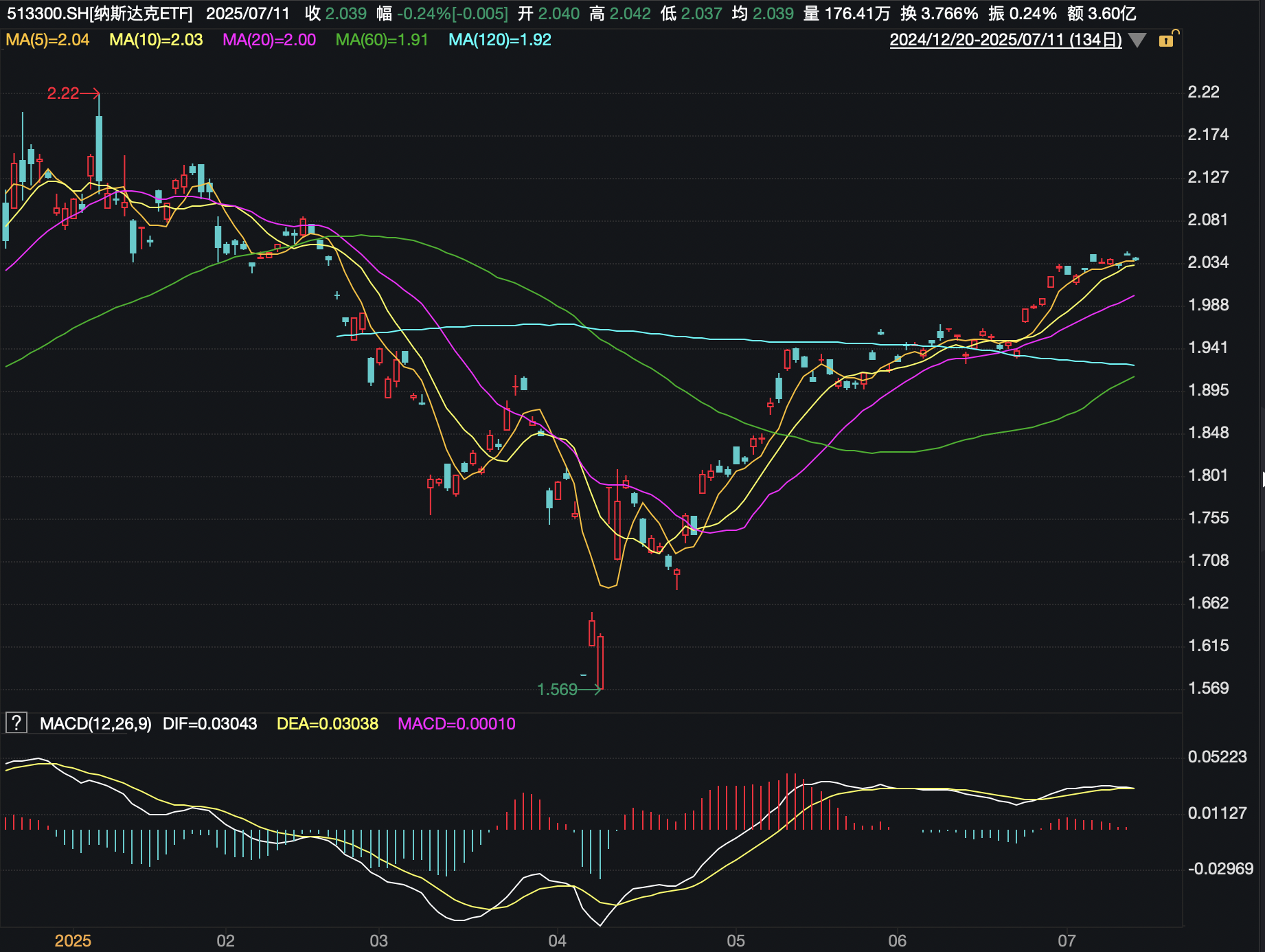
Core Viewpoint - The main supporting factors for the market include declining interest rates, strong employment, and high profitability of large enterprises [1][6][7] Group 1: Market Performance - Cross-border US stock ETFs listed in China have returned to historical highs, with the Nasdaq ETF and US 50 ETF net values reported at 2.039 and 1.3 respectively [1] - The performance of domestic ETFs is closely aligned with recent trends in US stocks, particularly driven by technology giants [1] - Goldman Sachs has raised its target for US stocks, predicting a 12-month point forecast of 6900, up from 6500 [1][6] Group 2: Tariff Impact - There is a high level of uncertainty regarding the impact of tariffs on US corporate profits and inflation, with recent data showing that tariff revenues have increased without a corresponding rise in inflation [1][4] - Morgan Stanley indicates that some sectors are experiencing deflationary signs, as companies may consider lowering prices instead of raising them due to high inventory levels [4][5] - The increase in tariffs has not yet translated into higher consumer prices, partly because companies are still selling old inventory purchased before the tariffs were announced [4][5] Group 3: Economic Indicators - The US economy is expected to slow down, with GDP growth forecasted to be 1.6% and 1.2% over the next two years [6] - The labor market remains strong, providing the Federal Reserve with room to potentially lower interest rates by 75 to 100 basis points in the next 12 months [6] - The strong earnings growth of the S&P 500, particularly from the "Tech Seven," has been a key source of resilience in the market, with a year-on-year EPS growth of 12% in Q1 [6][7] Group 4: Future Outlook - Concerns remain regarding the future of US stocks, particularly with the elevated forward P/E ratio of 22, which is at the 97th percentile since 1980 [6][7] - The main uncertainty lies in how effectively companies can pass on tariff costs to consumers, which could impact profit margins and future earnings growth [7] - If companies maintain expansionary profit margins and benefit from fiscal stimulus, earnings growth may exceed expectations [7]
美联储降息救市!7月11日,深夜的四大消息已全面来袭
Sou Hu Cai Jing· 2025-07-12 22:26
2025年盛夏的十字路口:全球金融在深夜的抉择 高盛的紧急预测与降息逻辑 世界经济的巨轮驶入2025年盛夏的十字路口,每个深夜传来的消息都可能成为改变航向的海风。货币政策、地缘博弈与国家战略在历史的节点上交汇,世界 永远在深夜的消息与黎明的市场反应间,重塑它的面貌。这一关键时刻,由7月7日深夜爆发的四重奏拉开序幕,最终在7月9日高盛的紧急报告中达到高潮。 金融风暴前的预兆:7月7日深夜的四重奏 7月7日,全球金融市场被四大重磅消息接连震动,如同深夜惊雷,预示着风暴的来临。首先,美国总统特朗普在社交媒体上发布关税威胁,任何与金砖国 家"反美政策"保持一致的国家将面临额外10%的关税。这道深夜推文如同闪电划破国际经贸夜空,全球贸易市场瞬间紧张起来。同时,美国政府宣布将于当 日中午公布与贸易伙伴的关税信函或协议,为8月1日起最高达70%的惩罚性关税铺路。 几乎与此同时,乌克兰战场上演了开战以来最大规模的无人机袭击。数百架无人机如同复仇蜂群,袭击了俄罗斯境内16个地区,从南部罗斯托夫到西部卡卢 加,从西北部圣彼得堡到首都莫斯科,甚至远至540公里外的克拉斯诺扎沃茨克化工厂——这座为俄国防部生产多管火箭炮和弹药的关键设 ...

中国上半年CPI降0.1%,进口成本压力难转嫁
日经中文网· 2025-07-10 02:36
Group 1 - The consumer price index (CPI) in China decreased by 0.1% year-on-year from January to June, marking the first negative change since the Lehman crisis in 2009 [1] - The sluggish consumption environment makes it difficult for companies to pass on rising costs to sales prices, despite increased import costs due to tariffs [2][4] - The core inflation rate, excluding food and energy prices, is only 0.4%, indicating a significant gap from the government's target of around 2% inflation by 2025 [1] Group 2 - The real estate market in China has been in a downturn for nearly four years, contributing to a stagnant economy and a challenging job market for young people [2] - Many households are opting to save rather than spend due to uncertainty about the future, leading to intensified competition in sectors like dining [2] - The wholesale price index fell by 2.8% year-on-year from January to June, with a 3.6% decline in June alone, reflecting downward pressure on prices due to insufficient demand and overproduction [4]

上半年基金成绩放榜:医药与AI双风口分化下,资产如何配置?
Sou Hu Cai Jing· 2025-07-10 02:01
Group 1: Market Overview - The first half of 2025 saw a mixed performance in the fund market, with equity funds performing well while bond fund sizes declined [2][3] - The macroeconomic environment is characterized by a mild recovery with structural contradictions, where production outpaces consumption and deflationary pressures persist [3][4] - The industrial value-added in May 2025 grew by 5.8% year-on-year, while retail sales increased by 6.4%, driven by policies encouraging consumption [3][4] Group 2: Fund Performance - Over 80% of the 12,897 public funds saw net value growth in the first half of 2025, with several funds achieving growth rates exceeding 80% [5] - The number of newly established funds reached 672, raising a total of 540.85 billion yuan, although the issuance scale decreased by nearly 20% compared to the previous year [5] Group 3: Equity Funds - A-shares and Hong Kong stocks experienced overall gains, with the North Star 50 Index rising by 39.45% in the first half of 2025 [6] - The launch of ETF funds significantly contributed to the growth of stock funds, with 387 new stock funds established, marking a 183% increase in issuance compared to the previous year [7] Group 4: Sector Performance - The top 10 performing public funds were all actively managed equity funds, with seven being focused on the pharmaceutical sector, highlighting its strong performance [8] - The pharmaceutical sector saw a 26.1% increase in the A-share innovative drug concept, driven by domestic consumption policies and accelerated domestic substitution [9] Group 5: AI Sector - The AI sector experienced volatility, with the leading AI fund showing a -20.57% return, attributed to a mismatch between investment strategy and market trends [10] - Despite the struggles of some AI funds, the technology sector remains strong, with the DeepSeek index rising by 42.51% in the first half of 2025 [10] Group 6: Fixed Income Funds - The bond fund market saw a significant recovery in June 2025, with the number of newly established bond funds reaching a record high for the year [11] - Credit bonds attracted increased investment, with net subscriptions for credit bond ETFs exceeding 800 billion yuan in the past month [12] Group 7: Future Outlook - The investment strategy for the second half of 2025 suggests a focus on high-return assets and sectors with long-term growth potential, such as agriculture, transportation, and technology [15]