
智能辅助驾驶

Search documents
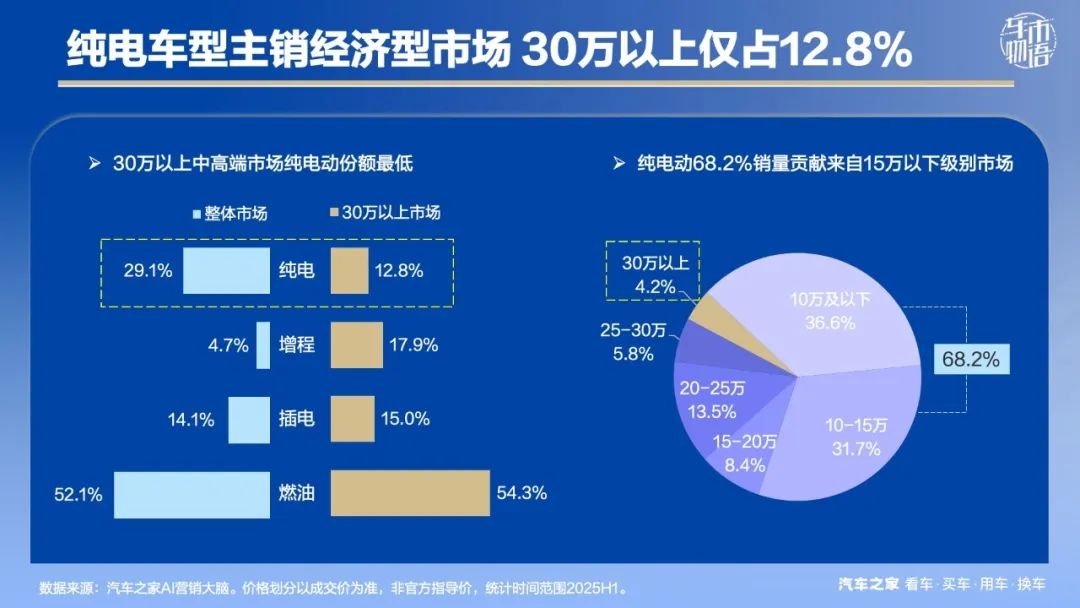
特斯拉能否打破30万纯电市场销量魔咒?
3 6 Ke· 2025-08-26 10:59
Core Insights - The introduction of Tesla's Model Y L has sparked discussions about its potential impact on the pricing and market dynamics of electric vehicles, particularly in the context of the Ideal i8 and other competitors [1][26] - The electric vehicle market faces challenges in breaking the 300,000 yuan price barrier, with a significant majority of sales coming from models priced below 150,000 yuan [1][3] - Consumer preferences are shifting towards six or seven-seater vehicles, with a notable inclination towards SUVs, indicating a change in market demand [8][12] Market Dynamics - The electric vehicle market is heavily influenced by consumer demographics, with 97% of potential buyers in the six-seater segment coming from replacement needs, primarily traditional fuel vehicle owners [3][21] - The high depreciation rates of electric vehicles contribute to consumer hesitance in investing more in pure electric models [3][12] - The sales performance of pure electric models remains weak, with the best-selling model, Zeekr 009, not exceeding 9,000 units in the first half of 2025 [6][12] Consumer Preferences - A significant 76.6% of consumers prefer SUVs when considering six-seater vehicles, with 41.4% specifically looking for six-seater versions for enhanced comfort [8][12] - Key factors influencing vehicle purchase decisions include space, comfort, safety, and energy efficiency, with over 60% of users prioritizing these aspects [12][14] - The reliability of Tesla's battery management system and electric drive system is a major draw for potential buyers, with over 80% of users valuing these features [14][26] Pricing and Value Perception - The official price of Model Y L is set at 339,000 yuan, which many consumers perceive as high, especially when considering additional costs for features like Full Self-Driving (FSD) [16][18] - Over 50% of users are reluctant to pay for FSD due to perceived high costs, and 32.7% express distrust in the utility of smart driving features [18][26] - The potential for Model Y L to penetrate the market hinges on its ability to attract high-income consumers, with 48.4% of potential buyers having an annual household income exceeding 300,000 yuan [23][26]


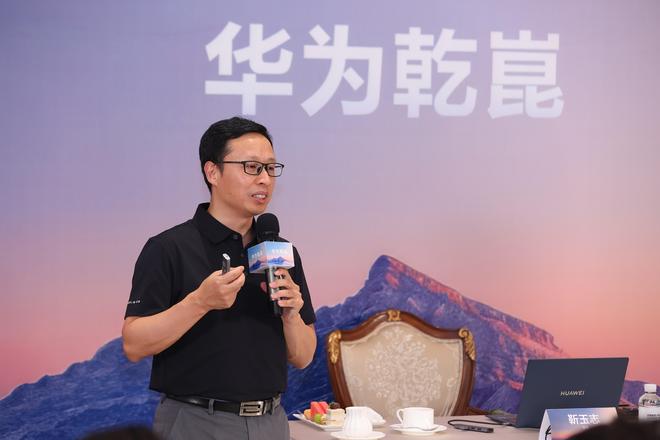
华为乾崑靳玉志:数据不会说谎
Guan Cha Zhe Wang· 2025-08-26 08:09
Core Insights - As of July this year, the number of vehicles equipped with Huawei's QianKun intelligent driving system has reached 1 million, with over 10 million instances of parking assistance and a cumulative assisted driving mileage of 4 billion kilometers [1][3] - Huawei's QianKun intelligent driving system has successfully avoided potential collisions 2.54 million times, with an average assisted driving mileage of nearly 700 kilometers per person and an average of 37 parking assists per person [1][3] Industry Overview - The Chinese automotive assisted driving industry is experiencing intense market competition, with a significant reduction in the number of manufacturers compared to 5-6 years ago, indicating a trend towards market concentration [3] - The penetration rate of L2 level assisted driving functions in China was only 19% last year, but it is expected to soar to 50% this year, reflecting strong consumer demand for intelligent features [5] Technological Development - Huawei emphasizes the importance of data-driven technology in the development of assisted driving systems, arguing that the industry is fundamentally a competition of data volume, computing power, and algorithms [3][4] - The company has adopted a one-step end-to-end approach for its technology, which is seen as a more challenging but ultimately superior path compared to other manufacturers' visual language action models [3] Product Collaboration - Huawei has partnered with 28 vehicle models, including brands like Audi, Avita, and others, covering a wide range of vehicle types and price points, which has led to significant sales growth for its partners [5] - The collaboration with Audi signifies that luxury brands will increasingly consider intelligent features, presenting an opportunity for Chinese automakers to transition from mid-range to high-end markets [5] User Experience and Innovation - Huawei's MoLA architecture aims to integrate applications, hardware, and devices to enhance user experience, with features like a high-power audio system and AI assistants [6] - The company believes that a fragmented supply chain can lead to poor user experiences, thus it focuses on providing a cohesive system to ensure long-term satisfaction [6] Strategic Focus - Huawei's strategy is centered on long-term investment and user-centric development, with over 10 years of investment in its automotive business leading to current profitability [8][9] - The company prioritizes product quality and delivery in collaboration with partners, emphasizing that consumer perception of value is the key measure of success [9]
覆盖不同细分市场 智界及问界秋季新品发布会多款重磅新品齐发
Zhong Guo Zhi Liang Xin Wen Wang· 2025-08-26 05:36
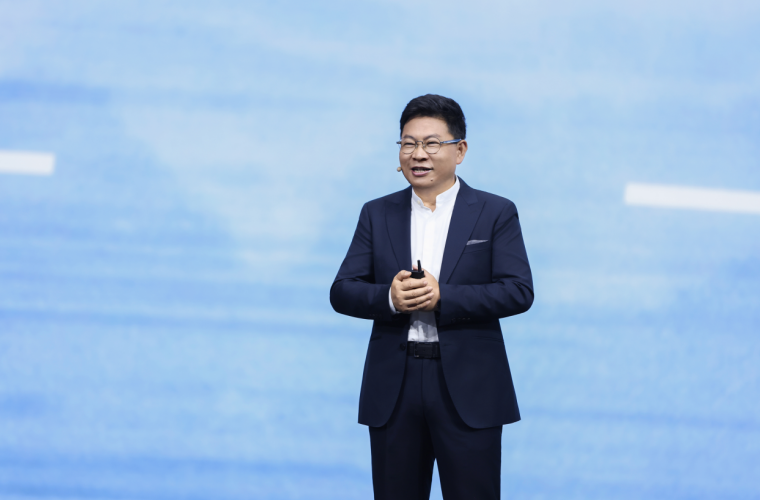
Group 1 - The core event was the launch of multiple new models by Zhijie and Wenjie at the autumn product launch in Chengdu, including the new Zhijie R7, Zhijie S7, and the pure electric version of Wenjie M8 [1][3] - Zhijie R7 and Zhijie S7 feature advanced technology and design aimed at young consumers, with prices starting at 249,800 yuan and 229,800 yuan respectively, and significant pre-sale incentives [3][5] - The cumulative delivery of Hongmeng Zhixing vehicles surpassed 900,000 units as of August 25, 2025, with notable sales figures for various models, including 12,000 units of the Zunjie S800 in 87 days and 226,000 units of the Wenjie M9 [3][11] Group 2 - The Wenjie M8 pure electric version is positioned as a family-oriented smart flagship SUV, offering two seating configurations and priced between 359,800 yuan and 449,800 yuan [12][13] - The M8 features a long wheelbase and high body design, with dimensions of 5190×1999×1795mm and a wheelbase of 3105mm, enhancing comfort and usability [15] - The M8 has achieved a C-NCAP 2024 super five-star safety certification with a comprehensive score of 93.7%, indicating strong safety performance [20][22] Group 3 - The new Zhijie models incorporate the latest HUAWEI ADS 4 technology, enhancing driving assistance capabilities with advanced radar systems for improved safety and performance [9][11] - The Zhijie R7 offers a pure electric version with a range of 802 km and a range-extended version with a fuel consumption as low as 5.68 L per 100 km, showcasing high efficiency [11] - The upcoming Wenjie M7 is set to be launched on September 23, featuring a new design and platform, and will also include the HUAWEI ADS 4 system across all models [31][33]
8大亮点看懂均胜电子2025年半年报
Quan Jing Wang· 2025-08-26 03:13
Core Viewpoint - Junsheng Electronics (600699) demonstrated resilience in a complex external environment, achieving solid growth in revenue and net profit in its 2025 semi-annual report, with a focus on "stabilizing growth and improving performance" [1] Group 1: Financial Performance - The company reported revenue of approximately 30.347 billion yuan, a year-on-year increase of 12.07% [1] - The net profit attributable to shareholders and the net profit after deducting non-recurring gains and losses were 708 million yuan and 706 million yuan, respectively, reflecting year-on-year growth of 11.13% and 10.53% [1] - The net cash flow from operating activities was approximately 1.906 billion yuan [2] Group 2: Profitability and Orders - The overall gross margin increased by 2.6 percentage points year-on-year to approximately 18.2%, marking several consecutive quarters of positive growth [2] - The gross margin in overseas regions improved significantly, with a year-on-year increase of 3 percentage points to 17.8% [2] - The total amount of new orders acquired globally reached 31.2 billion yuan, with over 66% related to new energy vehicles [2] Group 3: Research and Development - The company invested approximately 2.488 billion yuan in R&D during the first half of the year, focusing on new products and technologies for automotive intelligence and safety [3] - New innovative products such as domain fusion controllers and regional controllers were launched, alongside advancements in intelligent connected products [3] Group 4: Strategic Initiatives - The company is expanding into the humanoid robotics sector, establishing a dedicated company to provide key components and integrated solutions for domestic and international clients [3] - The company has formed strategic investments in intelligent driving chip companies, with new orders exceeding 1 billion yuan for advanced driver assistance systems [2][3] Group 5: Shareholder Returns - Over the past three years, the company has distributed approximately 860 million yuan in dividends and repurchased shares worth about 420 million yuan, with 222 million yuan of shares repurchased and canceled this year [3] - Continuous stock purchases by major shareholders and executives reflect confidence in the company's future development [3]

地平线「国产FSD」交卷,抢先体验在此
3 6 Ke· 2025-08-26 00:44
Core Viewpoint - The article discusses the advancements and potential of Horizon Robotics' HSD (Highway Smart Driving) system, emphasizing its transition from testing to near mass production, and its implications for the smart automotive industry in China [1][4][36]. Group 1: Technological Advancements - Horizon Robotics has launched its self-developed computing hardware, the J6P, and the UniAD software, marking significant milestones in autonomous driving technology [2][4]. - The HSD system features a one-stage end-to-end architecture, which improves the driving experience by integrating various functionalities without relying on traditional rule-based systems [19][36]. - Key innovations include dense modal information processing, joint optimization of lateral and longitudinal control, and a robust safety verification module to ensure safe vehicle operation [20][21][24]. Group 2: Performance and User Experience - The latest version of HSD demonstrates improved speed control and smoother driving experiences, particularly in complex scenarios like traffic lights and merging [6][10]. - The system's ability to navigate through obstacles and make real-time decisions showcases its advanced cognitive capabilities, allowing it to handle various driving conditions effectively [11][36]. - Despite its advancements, some issues were noted, such as misidentifying stationary vehicles, indicating areas for further refinement [13][36]. Group 3: Industry Implications - Horizon Robotics aims to establish a comprehensive solution for the automotive industry, moving away from isolated implementations for specific manufacturers [41]. - The company's strategy focuses on a gradual approach to autonomous driving, with a clear timeline for achieving hands-off and eyes-off driving capabilities [37][39]. - The competitive landscape suggests that companies failing to keep pace with these advancements may risk obsolescence in the rapidly evolving smart automotive sector [37][39].
岩山科技2025上半年营业收入3.17亿元 全面深入布局AI、智能辅助驾驶、脑机接口等板块
Quan Jing Wang· 2025-08-25 12:59
Core Insights - In the first half of 2025, the company reported a revenue of 317 million yuan, a year-on-year decrease of 6.38%, while the net profit attributable to shareholders increased by 81.51% to 67.11 million yuan, and the net profit after deducting non-recurring items rose by 159.06% to 58.08 million yuan [1] Group 1: Business Developments - The company aims to build a smarter, better, and more harmonious world centered around artificial intelligence, aspiring to become a global leader in AI and technological innovation [1][3] - Nullmax, a key player in the smart driving sector, has developed a comprehensive auxiliary driving application and established deep partnerships with several well-known automotive manufacturers for mass production projects [1][2] - The company has achieved TISAX AL3 certification, ensuring its information security management meets the highest standards in the European automotive industry, facilitating global market expansion [2] Group 2: Research and Innovation - The Shanghai Yansi Brain Research Institute has made significant advancements in brain-computer interface and brain-like intelligence, focusing on decoding algorithms and non-organic brain disease diagnostics [2] - A milestone achievement in brain-computer interface technology was reached with the development of a four-level decoding architecture, enabling direct interpretation of neural signals into complete sentences [2] - In the generative AI (AIGC) sector, the company launched the Yan2.0Preview model, which includes a memory module and extends multimodal capabilities to video, enhancing interaction between large models and real-world environments [2][3] Group 3: Commercialization Efforts - RockAI has begun providing localized applications and deployments for enterprise clients, addressing needs for data privacy, security, and cost-effective solutions [3] - Collaborations with various terminal device manufacturers, including robots and PCs, are being explored to implement the Yan model across multiple downstream devices [3] - A generative smart medical record system based on the Yan architecture has been successfully launched in hospitals, improving the quality and efficiency of medical record writing [3]

鸿蒙智行发布首款低于20万车型
第一财经· 2025-08-25 12:26
2025.08. 25 本文字数:668,阅读时长大约4分钟 作者 | 第一财经 黄琳 8月25日,智界及问界秋季新品发布会如期召开,鸿蒙智行五界更新亮相。其中,华为与上汽合作的 首款车型尚界H5正式开启预售,预售价格16.98万元起,这也是鸿蒙智行首款预售价低于20万元的 车型。 目前,问界、智界、尊界、享界"四界"的部分车型售价低于30万元,但均高于20万元,定位均为中 高端车型。余承东曾在智界R7的发布会上表示:"智界R7价格非常有诚意,每卖一辆车亏3万元。" 去年6月的中国汽车蓝皮书论坛上,华为常务董事、车BU董事长余承东曾表示,鸿蒙智行产品30万 元以下的车都是亏损的,卖一台亏一台,能挣钱的都是30万元以上,30万元差不多是盈亏平衡点。 对于20万元以下的市场,余承东表示,等到将来具备成本能力的时候再做,现在要是做就亏死了, 因为现在还不具备这种能力。 第 一 财 经 持 续 追 踪 财 经 热 点 。 若 您 掌 握 公 司 动 态 、 行 业 趋 势 、 金 融 事 件 等 有 价 值 的 线 索 , 欢 迎 提 供 。 专 用 邮 箱 : bianjibu@yicai.com (注:我们会对线 ...

鸿蒙智行发布首款低于20万车型,余承东曾称“30万以下卖一台亏一台”
Di Yi Cai Jing· 2025-08-25 10:50
Group 1 - The core viewpoint of the article highlights the challenges faced by Huawei's HarmonyOS Intelligent Driving products, particularly in the sub-300,000 yuan market, where the company is currently incurring losses on each vehicle sold [1][2] - Huawei's first model under the HarmonyOS Intelligent Driving brand, the Shangjie H5, has been launched for pre-sale at a starting price of 169,800 yuan, marking the first model priced below 200,000 yuan [1] - The company has delivered 47,752 new vehicles in July and has cumulatively delivered over 900,000 vehicles as of August 25, with expectations to surpass one million by October [2] Group 2 - The competitive landscape is intensifying, especially with BYD's introduction of the Tian Shen Yan assisted driving model priced at 70,000 yuan, prompting other brands to enter new product cycles and potentially lower costs for high-level intelligent driving features [1] - The pricing strategy of HarmonyOS Intelligent Driving is influenced by the current inability to produce vehicles at lower costs without incurring losses, as stated by the company's executive [1] - The report from Dongfang Securities anticipates that by 2025, Tesla will launch a budget model, and various brands, including HarmonyOS Intelligent Driving, will expand their offerings into the sub-200,000 yuan market [1]
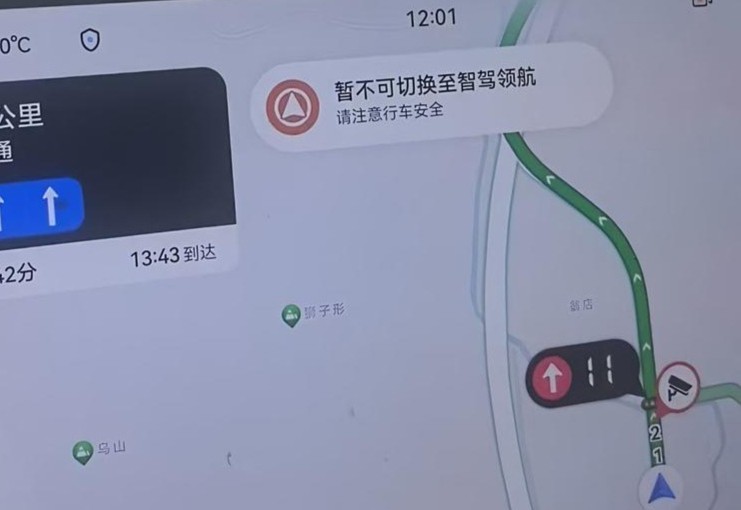
壹点探针|“NOA”在多个高速被限用,信号成主因,智驾遇大考
Qi Lu Wan Bao· 2025-08-25 03:28
Core Viewpoint - The use of NOA (Navigation on Autopilot) has been significantly restricted on highways, with only 68 kilometers of a 438-kilometer journey being usable, attributed to 5G signal limitations rather than direct restrictions from car manufacturers or highway authorities [1][2][5]. Group 1: NOA Usage and Limitations - Many drivers have reported a decrease in the availability of NOA on highways, with specific instances of it being downgraded to LCC (Lane Centering Control) or being completely unusable [2][4]. - The NOA system, which is a higher-level driving assistance feature, is often misused, leading to accidents and raising concerns about its safe deployment [4][7]. - There is speculation that traffic management authorities may have flagged certain road segments as hazardous, prompting car manufacturers to optimize NOA usage [5][7]. Group 2: Signal Issues and Responsibility - Car manufacturers, including Li Auto, have stated that they have not imposed restrictions on NOA usage, suggesting that external factors like 5G signal quality may be influencing its functionality [5][6]. - Highway staff have indicated that signal coverage issues could be a reason for NOA's limited use, rather than any restrictions imposed by the highways themselves [6][11]. Group 3: Safety Concerns and Driver Behavior - The rise in accidents related to the misuse of driving assistance systems has led to increased caution among drivers, with many opting to use simpler systems like ACC (Adaptive Cruise Control) instead of NOA [8][11]. - Reports indicate that a significant percentage of accidents involving driving assistance systems are due to drivers over-relying on these technologies, highlighting the need for responsible usage [11][12]. - Experts emphasize that drivers must remain engaged and aware while using assistance systems, as reliance on technology can lead to dangerous situations [10][12]. Group 4: Future Development and Industry Insights - The industry is urged to balance the convenience of driving assistance with safety, advocating for a deeper understanding of the interactions between humans, vehicles, and road systems [14]. - There is a call for the development of a robust support system that integrates advanced vehicle technology with traffic infrastructure to enhance the safety and effectiveness of driving assistance systems [14].
千里科技: 重庆千里科技股份有限公司2025年半年度报告
Zheng Quan Zhi Xing· 2025-08-22 16:36
Core Viewpoint - Chongqing Qianli Technology Co., Ltd. reported significant growth in revenue and net profit for the first half of 2025, driven by increased sales in both automotive and motorcycle sectors, while also focusing on AI and smart manufacturing technologies [2][3]. Company Overview and Financial Indicators - The company achieved an operating income of approximately 4.18 billion RMB, a 40.04% increase compared to the same period last year [3][10]. - Total profit reached approximately 57.30 million RMB, a significant recovery from a loss of 130.15 million RMB in the previous year [3][10]. - Net profit attributable to shareholders was approximately 31.17 million RMB, up 19% from 26.19 million RMB in the previous year [3][10]. - The company reported a net cash flow from operating activities of approximately 1.31 billion RMB, a 396.29% increase year-on-year [3][10]. Industry Development - The automotive industry in China continued to grow, with total vehicle sales reaching 15.65 million units in the first half of 2025, a year-on-year increase of 11.4% [4][5]. - New energy vehicle sales surged to 6.94 million units, marking a 40.3% increase and a market penetration rate exceeding 44% [4][5]. - The motorcycle industry also saw healthy growth, with total sales of 10.61 million units, a 11.54% increase year-on-year [4][5]. Business Operations and Strategy - The company focuses on the "AI + Vehicle" strategy, aiming to establish a global smart mobility technology brand [4][5]. - The automotive segment emphasizes building a comprehensive charging and swapping capability, while the motorcycle segment aims for international expansion [5][6]. - The company launched the "Qianli Smart Driving 1.0" solution, which includes various versions capable of complex interactions and decision-making [5][6]. Financial Performance Analysis - The company's operating costs increased to approximately 3.84 billion RMB, reflecting a 40.34% rise due to higher sales [10]. - Research and development expenses rose by 59.67% to approximately 287.59 million RMB, driven by investments in smart vehicle technologies [10]. - The company reported a significant increase in other income, primarily due to government subsidies [10]. Future Outlook - The company plans to enhance its investment in technology and strengthen partnerships with major automotive manufacturers to promote the application of AI technologies [8][9]. - The focus will remain on integrating software and hardware resources to build a comprehensive strategic ecosystem [8][9].
