
财政赤字

Search documents
特朗普打压下,欧洲“双雄”失意
Jin Shi Shu Ju· 2025-08-29 01:59
Group 1 - Germany's GDP contracted by 0.3% in Q2, worse than the previously estimated decline of 0.1% [3] - The automotive industry, a key sector in Germany, has seen a significant drop in employment, with nearly 7% of jobs lost due to weak exports to the US [3][8] - The new US tariffs are expected to reduce Germany's exports to the US by 20% to 25% over the next two years [4] Group 2 - EU exports to the US have sharply declined since April, following a peak of nearly 72 billion euros in March due to pre-tariff stockpiling [6] - The introduction of a 15% tariff on many EU goods has diminished the price competitiveness of German products in the US market, leading to an 8.6% drop in automotive exports and a 7.9% decline in machinery exports in the first half of the year [6][7] - The automotive sector has lost approximately 51,500 jobs in the past year, representing 6.7% of total employment in the industry [8] Group 3 - France's GDP grew by 0.3% in Q2, but the economic structure remains fragile with weak domestic demand and low new manufacturing orders [9] - The French government plans to cut public spending by 43.8 billion euros to reduce the budget deficit, which is projected to be 5.8% of GDP in 2024 [9][12] - A nationwide strike is planned in France starting September 10, opposing the government's budget cuts, which may distract from addressing tariff-related issues [12]


美国37万亿窟窿炸了!10万亿热钱疯狂涌入!中国股市成全球“救命稻草”
Sou Hu Cai Jing· 2025-08-27 21:42
Group 1 - The core point of the news is the significant shift in global financial markets triggered by Federal Reserve Chairman Jerome Powell's dovish signals at the Jackson Hole central bank meeting, leading to a decline in the US dollar and a surge in gold prices, as well as record highs in the US stock market [1] - Hedge funds are rapidly increasing their holdings in Chinese stocks at the fastest pace in seven weeks, with South Korean retail investors also aggressively buying A-shares, surpassing local investors' enthusiasm [1][4] - Major financial institutions, including Goldman Sachs, predict an influx of 5 trillion to 10 trillion yuan into the A-share market, providing a strong boost to Chinese equities [1] Group 2 - Powell's sudden shift in stance is attributed to the deep-rooted issues in the US economy, including a projected fiscal deficit of 1.8 trillion dollars by 2025 and interest payments on national debt exceeding 1 trillion dollars for the first time [3] - The US economy is showing signs of significant slowdown, with non-farm payrolls adding only 73,000 jobs in July and the unemployment rate rising to 4.25%, the highest in four years [3] - The market anticipates a 93% probability of a rate cut by the Federal Reserve in September, with some investors betting on a 50 to 100 basis point reduction [3] Group 3 - The continuous decline of the US dollar index has accelerated the shift of global capital, with a net inflow of 42.6 billion yuan into the Chinese market in August, marking a peak daily inflow of 6.8 billion yuan [4] - Foreign investors are attracted to the Chinese market due to the favorable price-to-earnings ratio, with the Shanghai Composite Index at 11 times compared to the S&P 500's 24 times, indicating a potential bubble risk in the US market [6] - Goldman Sachs analysts estimate that if the Federal Reserve cuts rates by 75 basis points this year, at least 500 billion dollars in foreign capital could flow into the A-share market [8] Group 4 - The Biden administration is feeling anxious about capital outflows, signaling a potential rate cut while simultaneously increasing tariffs on China, raising the average rate from 16% to 19% [9] - The new tariffs are expected to lower US GDP growth by 0.2 percentage points and increase core inflation to 3.4%, indicating a detrimental impact on the US economy [9] - The direction of foreign capital inflow into A-shares is clear, focusing on hard technology, high dividends, and low valuations, with semiconductor leaders and resource companies gaining significant market attention [9][10] Group 5 - The dynamic price-to-earnings ratio of A-shares has reached 18 times, nearing the danger zone of the 2015 "leverage bull market," raising concerns about potential volatility if hot money enters and exits quickly [10] - The A-share market faces institutional shortcomings, including an imperfect delisting mechanism and governance issues, which could lead to significant market disruptions if not addressed [10]

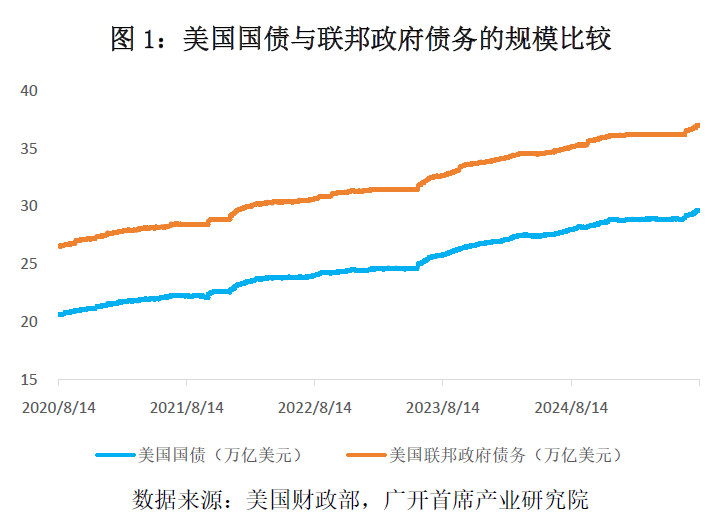
特朗普无法扭转 美国政府债务增长势头
Sou Hu Cai Jing· 2025-08-27 17:07
Group 1 - The core viewpoint is that the U.S. federal government debt is on a long-term upward trajectory, with significant implications for fiscal policy and economic stability [1][2][6] - As of August 11, the U.S. federal government debt surpassed $37 trillion, which is $1 trillion more than the previous figure reached in a shorter time frame than expected [1][3] - The debt growth rate has shown a paradoxical trend, with a slowdown in the recent increase despite the overall long-term expansion of debt [3][4] Group 2 - The U.S. federal government debt consists of both public debt and internal government debt, with public debt accounting for approximately 80% of the total [2] - Historical trends indicate that since the 1990s, U.S. federal government debt has consistently increased, with acceleration during economic crises [2][6] - Future projections suggest that if the current pace continues, the federal debt could reach or exceed $57 trillion in the next decade, with the potential for even faster growth [3][4] Group 3 - Factors contributing to the recent slowdown in debt growth include the debt ceiling reaching its limit, spending constraints, and increased tariff revenues, although the latter's impact is minimal compared to the overall debt increase [4][5] - The Trump administration's policies, including tax cuts and increased military spending, have exacerbated the fiscal deficit, leading to a projected additional $4.1 trillion in federal debt over the next decade [5][6] - The increasing debt burden will likely lead to higher interest payments, potentially nearing $2 trillion annually if the debt continues to grow at the projected rates [1][6] Group 4 - The expanding federal debt poses risks to the U.S. credit rating, with potential downgrades from rating agencies if debt levels continue to rise [6][7] - The Federal Reserve may face pressure to lower interest rates significantly to manage the debt burden, which could lead to inflationary pressures and undermine the dollar's value [7][8] - The reliance on tariffs as a revenue source is expected to persist, despite its limited effectiveness in addressing the growing fiscal deficit [7][8] Group 5 - The implications of rising U.S. debt extend globally, potentially leading to negative spillover effects on international trade and economic recovery, particularly impacting major trading partners like China [8][9] - Long-term, the systemic weakening of the dollar and U.S. Treasury securities could prompt a shift towards a more diversified global economic governance and monetary system [9]
特朗普无法扭转美国政府债务增长势头
Di Yi Cai Jing· 2025-08-27 12:53
Core Viewpoint - The rapidly expanding federal government debt in the United States has become a significant concern for the economy, with the total surpassing $37 trillion as of August 11, raising questions about the pace and implications of this growth [1][13]. Summary by Sections Long-term Debt Trends - The U.S. federal government debt, officially termed "total outstanding public debt," includes both public and internal government debt, with the public debt portion representing approximately 80% of the total [2]. - Since the 1990s, the U.S. federal government debt has shown a continuous increase, with acceleration in growth rates, particularly during economic crises such as the subprime mortgage crisis and the COVID-19 pandemic [4]. Future Projections - If the current trend continues, the U.S. federal government debt could reach $57 trillion in the next decade, with the interval for adding $1 trillion potentially shortening significantly [5]. - The debt growth rate has unexpectedly slowed in 2025, primarily due to political and economic factors rather than effective fiscal management [6]. Factors Influencing Debt Growth - The debt ceiling has constrained bond issuance, leading to temporary measures that reduced the debt increase rate in early 2025 [7]. - The government has implemented spending restraint and personnel reductions to manage costs, but these measures have had minimal impact on overall spending [8][11]. - Increased tariff revenues have partially offset the debt gap, with significant growth in tariff income observed in 2025 [9][12]. Implications of Rising Debt - The increasing debt burden will lead to higher interest payments, potentially nearing $2 trillion annually if the debt exceeds $57 trillion [13]. - Public spending will be significantly constrained, with necessary cuts likely affecting social programs, infrastructure, and education [15]. - The U.S. credit rating faces ongoing risks of downgrades, which could lead to increased market volatility and affect economic stability [16]. - The Federal Reserve may face pressure to lower interest rates to manage debt servicing costs, potentially leading to a return of quantitative easing policies [15]. Global Impact - The rising U.S. debt has a dual effect on the global economy, causing short-term negative spillovers while potentially prompting reforms in global economic governance in the long term [18][19].
普京真的想要和平吗?俄罗斯经济数据或正给出答案
Jin Shi Shu Ju· 2025-08-27 07:49
Core Viewpoint - The article discusses the ongoing economic challenges faced by Russia amid the Ukraine conflict, highlighting the tension between military actions and the need for economic stability, as well as the implications of budget deficits and inflation on future growth prospects [2][3][4]. Economic Situation - Russia's budget deficit reached 4.88 trillion rubles (approximately 61.1 billion USD) from January to July, equivalent to 2.2% of GDP, with government spending increasing by 20.8% to 25.19 trillion rubles (about 317.8 billion USD) during the same period [2]. - The Central Bank of Russia predicts a GDP growth of only 1% to 2% for the current year, with a potential growth of 4.3% in 2024, indicating a significant slowdown in economic activity [3]. - Inflation remains a concern, with the Central Bank having previously struggled to control it, peaking at 17.8% shortly after the Ukraine conflict began, but it has since decreased to 8.8% as of July [4]. Government Spending and Defense - The unprecedented level of government defense spending has been supported by oil and gas sales to allies like India, but sanctions and declining global demand are reducing oil export revenues, forcing the Kremlin to consider spending cuts or tax increases [2][3]. - The government is currently able to maintain defense and social spending but may need to cut expenditures in other areas, which could lead to further economic slowdown and wage stagnation [3]. Inflation and Monetary Policy - The Central Bank has lowered its benchmark interest rate by 200 basis points to 18% in response to declining inflation pressures, while also revising its inflation forecast for 2025 to reach a target of 4% by 2026 [4]. - Despite claims of controlling inflation, experts warn that the economic situation remains precarious, with risks of recession looming if growth continues to falter [5]. Growth Projections - Recent data indicates a slowdown in growth, with a year-on-year increase of only 1.1% in the second quarter, down from 1.4% in the first quarter [5]. - Forecasts suggest that Russia's GDP may grow by only 0.8% in 2025, with business sentiment and investment intentions at multi-year lows, indicating a challenging economic environment ahead [5].
陡峭化加剧!通胀升温与财政赤字风险叠加 全球长期公债收益率抬升
智通财经网· 2025-08-27 03:54
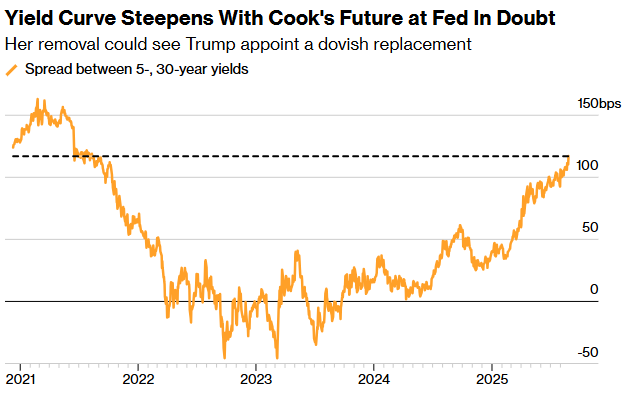
Group 1: Bond Market Overview - Long-term bond prices have significantly declined across the US, France, and the UK, driven by heightened investor concerns over inflation and government spending [1] - The yield on 30-year US Treasury bonds has risen to 4.9%, while UK and Japanese bonds are nearing historical highs, indicating a global trend of increasing borrowing costs [1][4] - The widening gap between 5-year and 30-year US Treasury yields has reached 117 basis points, the largest increase since 2021, reflecting market volatility [4] Group 2: US Treasury Bonds - Investors speculate that if Trump successfully replaces Fed Governor Lisa Cook with a more dovish policymaker, inflationary pressures may intensify [4] - The performance of 30-year US Treasury bonds has outpaced similar bonds in Europe and the UK, highlighting a growing divergence in fiscal risks and institutional credibility [4] Group 3: Japanese Bonds - Japan faces significant costs to maintain its debt levels, with 10-year bond yields reaching their highest since 2008 amid rising expectations for interest rate hikes [4] Group 4: French Bonds - The 10-year French bond yield is currently the highest in the Eurozone, surpassing yields from countries previously at the center of the European sovereign debt crisis, such as Greece and Portugal [5] Group 5: UK Bonds - UK borrowing costs are under pressure, complicating the fiscal challenges for Chancellor Rachel Reeves ahead of the autumn budget speech [7] - Over the past year, the yield on 30-year UK bonds has increased by approximately 110 basis points, compared to an 80 basis point rise in US bonds [10] Group 6: Australian and New Zealand Bonds - Australia and New Zealand have the steepest yield curves globally, with central banks indicating further rate cuts, supporting short-term bond yields while long-term bonds face pressure from increased issuance [11] - The recent dovish stance from the New Zealand central bank has reinforced the trend of "steepening" trades in global bond markets, indicating ongoing opportunities for investors [13]
申万期货品种策略日报:贵金属-20250826
Shen Yin Wan Guo Qi Huo· 2025-08-26 02:11
Report Summary 1. Report Industry Investment Rating - Not provided in the content 2. Core View of the Report - Gold and silver rebounded. At the Jackson Hole meeting last week, Powell's statement was considered a dovish stance, enhancing the expectation of a rate cut in September. The rebound of US inflation data in July and positive signals from US - Russia negotiations reduced geopolitical risks, putting pressure on gold and silver. The non - farm payrolls data in July was worse than expected and the previous value was significantly revised down. The Fed's internal views are divided, and Trump's personnel appointments affect market expectations of the Fed. Although there are multi - party progress in trade negotiations, the overall trade environment is still deteriorating. The implementation of the "Big and Beautiful" bill continues to boost the expectation of the US fiscal deficit, and the People's Bank of China continues to increase its gold holdings. The long - term drivers of gold still provide support, and currently, gold and silver may show a relatively strong trend as the expectation of a rate cut rises [5] 3. Summary by Relevant Catalogs Futures Market - **Prices and Changes**: The current prices of沪金2510 and沪金2512 are 779.92 and 782.32 respectively, with daily increases of 0.74 (0.09%) and 0.84 (0.11%). The current prices of沪银2510 and沪银2512 are 9348.00 and 9371.00 respectively, with daily decreases of 46.00 (-0.49%) and 43.00 (-0.46%) [2] - **Position and Volume**: The positions of沪金2510 and沪金2512 are 180151 and 140282 respectively, and the trading volumes are 226253 and 52290 respectively. The positions of沪银2510 and沪银2512 are 322774 and 240493 respectively, and the trading volumes are 631045 and 145892 respectively [2] - **Spot Premium and Discount**: The spot premium and discount of沪金2510 and沪金2512 are - 4.58 and - 6.98 respectively, and that of沪银2510 and沪银2512 are 16.00 and - 7.00 respectively [2] Spot Market - **Prices and Changes**: The previous day's closing prices of Shanghai Gold T + D and London Gold are 775.34 and 774.20 respectively, with daily changes of 3.71 (0.48%) and - 2.57 (-0.33%). The previous day's closing prices of Shanghai Silver T + D and London Silver are 9364.00 and 38.56 respectively, with daily changes of 182.00 (1.98%) and - 0.33 (-0.85%) [2] - **Price Ratios**: The current values of沪金2512 - 沪金2510,沪银2512 - 沪银2510, gold/silver (spot), Shanghai Gold/London Gold, and Shanghai Silver/London Silver are 2.40, 23, 82.80, 7.17, and 7.55 respectively, compared with previous values of 2.30, 20, 84.04, 7.12, and 7.34 [2] Inventory - **Domestic and Overseas Inventories**: The current inventory of Shanghai Futures Exchange gold is 37,515 kg (an increase of 60.00 kg), and the silver inventory is 1,113,641 kg (an increase of 4,518.00 kg). The current COMEX gold inventory is 38,563,780 ounces (a decrease of 32.15 ounces), and the silver inventory is 508,783,339 ounces (an increase of 296409 ounces) [2] Relevant Market Indicators - **Macroeconomic Indicators**: The current values of the US dollar index, S&P index, US Treasury yield, Brent crude oil price, and US dollar - RMB exchange rate are 98.4262, 6439.32, 4.28, 68.2, and 7.1581 respectively, with changes of 0.72%, - 0.43%, 0.47%, 0.01%, and - 0.18% compared with the previous values [2] - **Derivative Product Positions**: The current positions of the SPDR Gold ETF and SLV Silver ETF are 44315 tons (an increase of 1.00 ton). The current net positions of CFTC speculators in silver and gold are 33486 and 32895 respectively, with changes of 481 and - 1451 compared with the previous values [2] 4. Macroeconomic News - Trump met with South Korea's President Lee Jae - myung at the White House. Trump said he doesn't mind renegotiating the trade agreement with South Korea and is considering ordering some ships from South Korea [2] - The Trump administration outlined a plan to impose a 50% tariff on Indian products, targeting products entering the consumer market or being withdrawn from warehouses after 12:01 am Eastern Daylight Time on August 27, 2025 [2] - The US added minerals such as copper and potash to the 2025 critical minerals list. The draft list has been published in the Federal Register for a 30 - day public comment period [2] - In July, the annualized sales volume of new homes in the US decreased by 0.6% to 652,000 units, exceeding the market expectation of 630,000 units. The median price of new homes decreased by 5.9% year - on - year to $403,800 [3]
50%关税,美国明天将对印度加税,印股相对表现20年最差
Hua Er Jie Jian Wen· 2025-08-26 00:40
Group 1 - The Indian stock market is experiencing significant pressure due to the threat of increased tariffs from the U.S., with a proposed 50% tariff on all Indian goods starting August 27 [1][3] - The MSCI India Index has underperformed the MSCI Emerging Markets Index for four consecutive months, lagging by over 15 percentage points this year, heading towards its worst annual performance in over two decades [1] - Foreign investors are accelerating their exit from the Indian market, which is valued at $5.3 trillion, with net selling of Indian stocks for the second consecutive month in August [3] Group 2 - The new tariffs are expected to directly impact India's already slowing economic growth, with estimates suggesting a reduction in annual GDP growth by 0.6 to 0.8 percentage points [5][6] - Concerns over the expanding fiscal deficit are also putting pressure on the Indian bond market, with the yield on the benchmark 10-year government bond rising by 22 basis points this month [4] - Despite recent tax cuts introduced by Prime Minister Modi aimed at boosting the economy, analysts believe that sectors such as banking and IT will continue to face earnings pressure [6]
债务水平仍是困扰,惠誉维持对美国“AA+”信用评级
凤凰网财经· 2025-08-23 12:38
Core Viewpoint - Fitch maintains the United States' credit rating at "AA+" due to concerns over rising debt levels and fiscal deficits, despite expected revenue increases from tariffs under President Trump [1][2]. Group 1: Credit Rating and Debt Concerns - Fitch emphasizes that the U.S. has not taken effective measures to address its large fiscal deficit and increasing debt burden, alongside upcoming spending issues related to an aging population [2]. - In 2023, Fitch downgraded the U.S. sovereign rating from "AAA" to "AA+" due to anticipated worsening fiscal conditions and ongoing negotiations regarding the debt ceiling [2][3]. - Moody's also downgraded the U.S. sovereign credit rating by one notch this year, indicating the loss of the last "AAA" rating due to rising debt levels [3]. Group 2: Economic Flexibility and Tariff Revenue - Despite rising debt levels, the U.S. benefits from a large high-income economy and the dollar's status as a global reserve currency, which provides financing flexibility [2][4]. - Fitch predicts that tariff revenues will surge to $250 billion this year, significantly higher than the $77 billion expected in 2024, suggesting that tariff policies may help alleviate fiscal issues [5]. Group 3: Long-term Projections - Fitch forecasts that the deficit will increase in the long term, with the debt-to-GDP ratio expected to rise from 114.5% at the end of last year to 127% by 2027 [6]. - Fitch's report maintains a stable outlook for the U.S. credit rating, similar to Standard & Poor's, which also keeps the "AA+/A-1+" rating stable due to the revenue from tariff policies offsetting recent tax cuts and spending [7].
债务水平仍是困扰,惠誉维持对美国“AA+”信用评级
Feng Huang Wang· 2025-08-23 05:10
Group 1 - Fitch maintains the US credit rating at "AA+" while expressing concerns over rising debt levels [1] - The agency highlights that high fiscal deficits and increasing government debt limit the US rating, despite expected revenue growth from tariffs [1][2] - Fitch notes that the US has not taken concrete measures to address its large fiscal deficit and rising debt burden [1] Group 2 - In 2023, Fitch downgraded the US sovereign rating from "AAA" due to worsening fiscal conditions and ongoing debt ceiling negotiations [2] - Moody's also downgraded the US sovereign credit rating, indicating rising debt levels and the loss of the last "AAA" rating [2] - Fitch's debt dynamics model suggests a rising trend in mid-term debt, increasing vulnerability to economic shocks [2] Group 3 - Despite rising debt levels, the US government's financing ability is supported by the dollar's 58% share in global reserves [2] - Fitch predicts tariff revenue will surge to $250 billion this year, significantly higher than $77 billion in 2024, which may alleviate fiscal issues [2] - Long-term projections indicate that the debt-to-GDP ratio will rise from 114.5% at the end of last year to 127% by 2027 [2] Group 4 - Fitch maintains a stable outlook for the US rating, similar to S&P Global, which also holds the "AA+/A-1+" credit rating with a stable outlook [3] - The stability in credit ratings is attributed to tariff policies that may offset recent tax cuts and spending legislation [3]