
资产荒

Search documents
管清友:美元降息打开有利窗口,我们该解决分配问题了
Guan Cha Zhe Wang· 2025-09-19 01:12
Group 1 - The current A-share market is experiencing a slow bull market, which is significantly different from previous cycles, indicating a true explosion in China's technological innovation capabilities [1][3] - The overall Chinese economy is transitioning from contraction to correction and then to expansion, but challenges such as "asset scarcity," overcapacity, and insufficient demand remain [1][3][10] - The bull market is driven by abundant liquidity and asset scarcity, as investors are shifting away from real estate due to low market interest rates and returns [6][7] Group 2 - The impact of the U.S. Federal Reserve's interest rate cuts is expected to have a positive effect on Chinese assets, alongside other factors such as technological advancements and economic structural upgrades [7][8] - New consumption enterprises in China are rising due to improved supply chain capabilities, design abilities, and global competitiveness, reflecting a shift in consumer preferences towards spiritual consumption [9][10] - The current economic environment is polarized, making it increasingly difficult for smaller market players to compete, which raises concerns about income distribution and the need for public policy interventions [10]


新宇宙行--农业银行的“经营密码”
Hua Er Jie Jian Wen· 2025-09-18 08:13
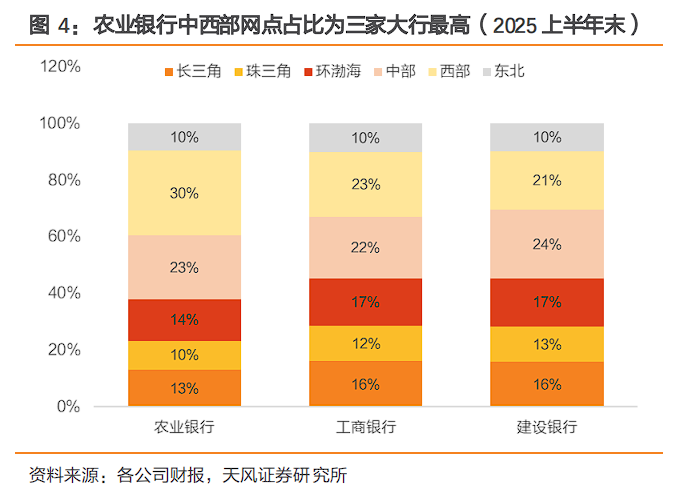
Core Viewpoint - Agricultural Bank has emerged as a standout performer among A-share listed banks since 2025, surpassing Industrial and Commercial Bank of China in total market capitalization, attributed to its long-term focus on county-level financial strategies [1][2] Strategic Advantages - The success of Agricultural Bank is linked to its unique operational strategy, termed the "Three Good Formula + Four Highlights" [1][5] - The bank's strategic focus on county-level finance aligns with national policies promoting county economic development, providing a strong foundation for its growth [6][10] Execution and Management - Agricultural Bank's strategic execution is supported by three key advantages: a strong management team, an innovative organizational structure, and effective business strategies [7][10] - The bank has a solid customer base, serving 888 million personal clients and holding a daily average deposit balance of 30.57 trillion yuan, leading among peers [10] Business Performance - County-level financial services have become a significant revenue driver, contributing 49.4% to the bank's overall performance, an increase of 11.8 percentage points since 2019 [13] - In the first half of 2025, Agricultural Bank was the only major bank to report positive growth across key financial metrics, including revenue and net profit [17] Financial Highlights - Agricultural Bank's loan growth has outpaced peers, with a year-on-year increase of 9.6% in loans by mid-2025, driven by county-level lending [18][21] - The bank maintains a strong net interest margin, benefiting from a high proportion of personal demand deposits [21][22] - The bank's non-performing loan ratio stood at 1.28% as of mid-2025, lower than its peers, and it has the lowest exposure to real estate loans, mitigating risks from the sector [26][28] Valuation Outlook - Agricultural Bank is expected to continue its valuation growth driven by its attractive dividend yield of 3.35% and strong growth prospects from its county-level financial strategy [29][30] - The bank's robust performance in credit potential, stable interest margins, and low non-performing loans are anticipated to drive its valuation upward [30]

结构性繁荣︱重阳荐文
重阳投资· 2025-09-15 07:33
Group 1 - The article discusses the concept of "structural bull market" in the context of China's real estate and stock markets, highlighting that since 2016, the market has not experienced a comprehensive bull market, but rather a structural one where investment is concentrated in specific sectors [2][8] - The real estate market in China has shown a trend of increasing numbers of cities experiencing price declines, with the peak of the real estate cycle occurring in 2021 [2][8] - Shanghai's luxury real estate market is thriving, with high-end properties seeing significant price increases, contrasting with the overall downward trend in the national real estate market [8][9] Group 2 - The article compares the peak of China's real estate market in 2021 to Japan's in 1991, noting that while Tokyo's prices fell by over 50% by 1995, Shanghai's projected decline by 2025 is around 30% [8][10] - The demand for luxury properties in Shanghai is driven by factors such as urbanization, income disparity, and a lack of high-yield investment opportunities, leading to a concentration of wealth in major cities [11][15] - The article highlights that the high-end property market in Shanghai is characterized by significant price increases, with some luxury projects seeing price hikes of over 16% within a year [9][11] Group 3 - The stock market is experiencing a structural bull market, particularly in the technology sector, driven by optimism surrounding AI and related industries, with the ChiNext 50 index showing a significant increase [19][23] - The article notes that the current market environment is marked by low interest rates and a shift of funds from savings to equities, although overall economic growth remains a concern [21][27] - The disparity in investment preferences between A-shares and U.S. stocks is highlighted, with A-shares focusing more on smaller companies and storytelling rather than valuation metrics [30][32]

李迅雷:结构性繁荣
Sou Hu Cai Jing· 2025-09-14 10:10
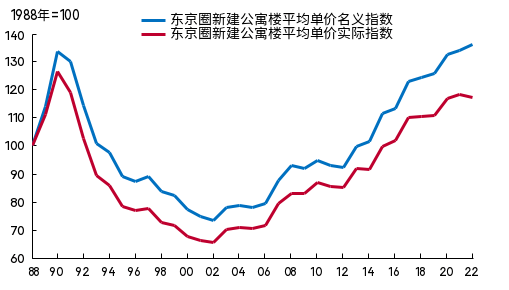
Group 1: Real Estate Market Trends - The term "structural" has gained popularity since 2016, particularly in the context of supply-side structural reforms, leading to a "structural bull market" where investment is concentrated in a few sectors, while others decline [1] - The Chinese real estate market peaked in 2021, with a noticeable increase in the number of cities experiencing price declines, contrasting with the previous trend of widespread price increases [1] - Shanghai's luxury real estate market remains robust, with high-end properties seeing significant price increases, such as the average price in Huangpu District rising nearly 30% over five years [2][3] Group 2: Comparison with Japan's Real Estate Market - China's real estate market peak in 2021 is compared to Japan's peak in 1991, with projections indicating that Shanghai's prices may only decline by about 30% by 2025, significantly less than Tokyo's 50% drop [2][4] - The historical trajectory of Tokyo's real estate prices post-bubble shows a long recovery period, with prices not surpassing their peak when adjusted for inflation [4][5] Group 3: Factors Driving Shanghai's Luxury Market - The ongoing urbanization process in China contrasts with population outflows in many smaller cities, leading to continued demand for luxury properties in major cities like Shanghai [7] - The income disparity in China is greater than in 1990s Japan, with high-income groups increasingly concentrated in first-tier cities, driving demand for luxury real estate [8] - The phenomenon of "asset scarcity" is noted, where low yields on traditional investments push wealthy individuals towards luxury real estate as a means of asset appreciation [11] Group 4: Broader Economic Context - The overall real estate market in China is experiencing a downturn, with new housing sales declining by 4% in area and 6.5% in value from January to July [11][12] - The current economic environment is characterized by low investment returns, prompting wealthy individuals to seek alternative investment opportunities, including luxury real estate [11] Group 5: Stock Market Dynamics - The A-share market has shown signs of strength since April, with concerns about over-leverage being mitigated by a lower financing balance relative to market capitalization [15] - The technology sector, particularly AI-related stocks, has seen significant growth, with the ChiNext 50 index experiencing a 30% increase in late August [20][21] - The structural bull market in technology stocks reflects a divergence from traditional economic cycles, driven by optimism about future growth and innovation [26][30]
结构性繁荣
李迅雷金融与投资· 2025-09-13 10:07
Group 1 - The term "structural" has gained popularity since 2016, particularly in the context of supply-side structural reforms, leading to a "structural bull market" where investment opportunities are concentrated in a few sectors [1] - The real estate market has also experienced a structural shift, with a growing number of cities showing price declines rather than uniform increases, indicating a divergence in market performance [1] - Shanghai's luxury real estate market is thriving, with high-end properties seeing significant price increases, contrasting with the overall downward trend in the national housing market [2][3] Group 2 - Shanghai's luxury market is characterized by strong demand, with high-value properties consistently selling out, indicating a robust appetite for premium real estate despite broader market challenges [3][7] - The price of new luxury apartments in Shanghai has risen sharply, with some projects experiencing price increases of over 16% within a year, highlighting the resilience of high-end real estate [3][4] - The disparity in real estate performance between Shanghai and other cities can be attributed to factors such as urbanization trends, income inequality, and a scarcity of high-quality assets in the market [8][11] Group 3 - The current economic environment in China is marked by an "asset shortage," where low interest rates and declining returns on traditional investments drive wealthy individuals towards luxury real estate as a means of asset appreciation [11][14] - The overall real estate market in China remains sluggish, with a decline in sales volume and prices, yet the luxury segment in major cities like Shanghai continues to perform well [11][12] - The comparison with Japan's real estate market suggests that while Shanghai's luxury prices are increasing, they are doing so at a slower rate than Tokyo's historical declines, indicating a different market dynamic [2][4] Group 4 - The structural bull market in the stock market is driven by technological advancements, particularly in AI and semiconductor sectors, which are experiencing significant growth despite broader economic challenges [26][30] - The A-share market shows a preference for smaller companies, contrasting with the U.S. market where larger firms dominate, indicating different investment behaviors and market structures [29][30] - The ongoing transformation of China's economy is evident, with emerging industries gaining market share, suggesting a shift in investment focus towards technology and innovation [25][34]

李迅雷:当前A股大牛市难支撑 核心机会和风险在AI 过段时间可能面临洗牌
智通财经网· 2025-09-12 11:53
Group 1: Market Overview - The U.S. stock market shows strong performance, but 87.5% of stocks are either stagnant or declining, indicating a misleading overall market health [1][9][10] - Japan's economy remains sluggish, and the outlook for the Japanese stock market is not optimistic [1][13] - The European economy is largely following the U.S. trend, with concerns about sustainability once military spending increases cease [1][14] Group 2: Asset Allocation and Investment Strategy - Emphasis on growth in asset allocation, particularly in technology and innovative pharmaceuticals, driven by technological advancements [1][10] - Current corporate profit growth of 2.5% is insufficient to support a bull market in A-shares, which is characterized as a structural bull market [1][19] - Long-term bullish outlook on gold, with a recommendation to adjust asset allocation to 50% stocks, 30% bonds, and 20% gold [1][21][24] Group 3: Economic Challenges and Opportunities - The global economy is entering a phase of high volatility and low growth, with significant unresolved issues such as aging populations and national debts [3][4][5] - The AI revolution is seen as a potential driver for new business models and the emergence of dominant companies, similar to the post-dot-com bubble era [2][25] - Structural opportunities and risks are concentrated in technology stocks, with a potential for market consolidation in the AI sector [2][25]
从“资产荒”到“负债荒”——银行负债与债市
2025-09-11 14:33
Summary of Conference Call Records Industry Overview - The banking industry is currently experiencing a "liability shortage" in Q1 2025 due to a large issuance of special refinancing bonds and a tightening of liquidity by the central bank, which has increased the burden on the banking system and limited the scale of market lending, leading to higher funding rates [1][5][6]. Key Points and Arguments - **Liability Structure**: The primary component of the banking liability structure is deposits, typically exceeding 70%, with fluctuations between 73% and 75%. Interbank liabilities account for over 10%, and interbank certificates of deposit have increased to about 4% to 5% [2]. - **Response to Deposit Challenges**: When facing difficulties in deposit absorption, banks often issue interbank certificates or borrow from the central bank. The issuance of interbank certificates has increased, reflecting a strong willingness to raise prices [3]. - **Impact of "Liability Shortage"**: The "liability shortage" in Q1 2025 is attributed to the significant issuance of special refinancing bonds and the central bank's liquidity tightening, which has limited the market's lending capacity and affected leverage enthusiasm [5]. - **Future Outlook on Bank Burden**: It is expected that banks will not face significant burden pressures in the future, as there are no new plans for special refinancing bonds and the central bank's liquidity stance has stabilized [6]. - **Deposit Migration Phenomenon**: The phenomenon of deposit migration is limited in scale and primarily reflects changes in the liability structure rather than causing significant funding gaps. The impact on equity markets and other financial products is positive but not decisive [7][8]. - **Current Liability Costs**: The overall liability cost for large banks is approximately 1.65%, with deposit costs between 1.45% and 1.5%. The 10-year government bond yield has risen to around 1.8%, providing better space for bank allocations [9]. - **Investment Contributions**: In 2025, banks have relied on selling old bonds from OCI and AC accounts to compensate for reduced trading profits, which has become a crucial method for maintaining revenue contributions [10]. - **Future Selling Needs**: There is an ongoing need for banks to realize gains from old bonds in the third and fourth quarters, especially as the low-interest-rate environment continues to pose challenges [11]. - **Expansion and Risks**: The overall expansion of bank balance sheets is positive but may slow down. Some banks under operational pressure may consider shrinking their balance sheets [12]. - **OCI Account Trends**: The proportion of OCI accounts in the banking system has gradually increased, allowing banks greater flexibility in trading without directly impacting current profits [13]. - **Performance of Different Bank Types**: Large commercial banks, as primary dealers, play a crucial role in policy execution and market stabilization, making their financial investment actions significant for analysis [14]. Additional Important Insights - The current market conditions and uncertainties may affect banks' allocation capabilities, and the flexibility of banks compared to non-bank institutions allows for better management of valuation fluctuations [9]. - The migration of deposits is influenced by various factors, including customer demographics and market conditions, with different groups showing varying levels of willingness to shift funds [8].
重要股东和董监高频出手 上市银行获增持释放积极信号
Zhong Guo Zheng Quan Bao· 2025-09-10 22:25
Group 1 - Major shareholders and executives of several banks, including Suzhou Bank, Qingdao Bank, and Nanjing Bank, have announced plans to increase their holdings in their respective banks, reflecting confidence in the future development prospects of the banks and the Chinese capital market [1][2] - Suzhou Bank's chairman and other executives plan to collectively purchase at least 4.2 million yuan worth of shares from September 8 to December 31, using their own funds [2] - Qingdao Bank's major shareholder plans to acquire between 233 million and 291 million shares, increasing their stake to between 19.00% and 19.99% within six months of the announcement [2] Group 2 - The overall performance of the banking sector has shown improvement, with a year-on-year increase in operating income and net profit of 1.0% and 0.8% respectively, indicating a recovery in the banking industry [3] - Non-interest income growth has played a significant role in supporting the improvement of bank performance [3] - Insurance capital has shown a preference for bank stocks, with over 700 stocks in the top ten circulating shareholders list, and six of the top ten heavyweights being bank stocks [4] Group 3 - The investment logic for bank stocks has shifted from a macroeconomic growth cycle to a focus on asset scarcity and stable, sustainable returns [4] - State-owned banks are viewed as core dividend assets due to their high dividends, low valuations, and defensive characteristics, while quality small and medium-sized banks can provide growth and dividend opportunities at certain stages [4]
记者观察:本轮“看股做债”本质上是风险偏好再平衡
Zheng Quan Shi Bao Wang· 2025-09-10 09:59
Group 1 - The "see-saw effect" between stocks and bonds has become more pronounced since July, with the A-share market strengthening due to policy support and capital inflow, leading the Shanghai Composite Index to surpass 3,800 points, a ten-year high [1] - The bond market has adjusted as funds have been diverted, with the yield on 10-year government bonds rebounding from around 1.64% in early July to over 1.8% [1] - The strong performance of the equity market is seen as a key driver of the bond market's adjustment, with a rebalancing of market risk appetite being a major underlying reason for the differing performances of stocks and bonds [1] Group 2 - The current bond market adjustment and the strengthening of the equity market may represent a correction of overpricing in bonds and a filling of valuation gaps in equities, driven by shifts in risk appetite, policy expectations, and capital reallocation [2] - The relationship between stocks and bonds is not always a "see-saw"; there can be scenarios where both markets perform well simultaneously, particularly when falling funding rates influence asset price judgments [2] - The ongoing liquidity easing, influenced by declining bank deposit rates, may also play a role in the current market dynamics, as investors seek higher returns from equities, which in turn affects bond yields [2]
固定收益定期:债市在震荡中渐进修复
GOLDEN SUN SECURITIES· 2025-09-07 14:40
Group 1: Report Industry Investment Rating - No information provided Group 2: Core Viewpoints of the Report - The bond market may gradually recover in an oscillatory and progressive manner as the correlation between stocks and bonds weakens and commodity pressure eases, but other markets, seasonal factors, and regulatory policies may cause oscillations during the recovery process. It is recommended to adopt a dumbbell - shaped operation, and long - term bond rates may decline more smoothly in the second half of the fourth quarter, with rates expected to hit new lows this year [4][6][18] Group 3: Summary by Relevant Content Bond Market Performance This Week - This week, both long - term and short - term bonds remained oscillating. The active bonds of 10 - year and 30 - year treasury bonds, 250011.IB and 2500002.IB, changed by - 1.25bps and 0.95bps respectively compared with last week, reaching 1.77% and 2.03%. After the month - end, the capital price remained loose, and the 1 - year AAA certificate of deposit stayed at around 1.67%. Credit interest rates declined slightly, with the 3 - year and 5 - year AAA - secondary capital bonds falling by 1.7bps and 1.9bps respectively compared with last week, reaching 1.92% and 2.05% [1][9] Weakening Impact of the Stock and Commodity Markets on the Bond Market - The impact of the stock and commodity markets on the bond market has gradually weakened. The 10 - day moving correlation coefficient between the daily interest rate change of the 30 - year active bond and the increase of the Shanghai Composite Index dropped from around 0.8 in late July to around 0.15 currently. On one hand, it is due to the change in bond institutional positions; on the other hand, the relative cost - effectiveness of bonds compared with stocks has gradually increased. Since the end of July, the commodity price index has continued to decline, and the Nanhua Industrial Product Price Index on September 4th has cumulatively dropped by 6.3% compared with the high on July 25th [2][10] Factors Protecting the Bond Market - The loose capital and banks' under - allocation are the main protections for the bond market. The fundamentals are still under pressure, the demand is not strong, and the financing demand is insufficient, so the loose capital situation remains unchanged. The future asset supply will further decline, and the net financing of government bonds in the next 4 months may significantly decrease compared with the same period last year. For banks, the deposit growth rate is rising while the credit growth rate is slowing down, so banks need to increase bond allocation to make up for the gap, and they may have a high willingness to increase allocation [3][10] Reasons for the Oscillatory and Progressive Recovery of the Bond Market - Other markets still impact the bond market. Although the seesaw effect between stocks and bonds has weakened, non - banks still hold a relatively high position in long - term bonds, and a significant rise in the stock market may lead to institutional selling and short - term bond market fluctuations. Seasonal factors may restrict the downward speed of interest rates. September is often a period of interest rate adjustment, and October is an oscillatory period. The new regulations on public fund redemption fees may reduce institutional willingness to invest in bond funds, and the redemption behavior may bring short - term adjustment pressure to the market [4][14][17]