财政风险

Search documents
21评论丨加息也难扭转日元贬值态势
Xin Lang Cai Jing· 2025-12-19 22:31
特约评论员 黄亚南 而日本的国际收支和贸易需求也限制了日元升值的空间。根据日本财务省的数据,2025年日本的国际收支基本处在均衡状态。而一旦处于这种 均衡状态,即便是美日两国的货币政策再怎么调整,也很难形成日元升值的趋势。这是因为今年日本企业进出口基本持平,导致的外汇交易今 年也保持平衡,没有产生更多的购买日元的需求。加上日本国际收支的一大部分是海外投资的收益,由于这部分收益并没有及时输送回日本, 而是在海外再投资中消化,所以,也就不会形成大量的购买日元的需求,不会造成日元升值的局面。 另外,国际投机资本在投资策略性方面现在也不会推动日元的升值。对冲基金曾经主导了今年上半年日元升值,日元汇率一度达到1美元兑换 140日元。这些基金仅在今年6月,就卖出200亿美元换取其他国家的货币进行对冲投资,但是,随着年底决算期的到来,这些基金纷纷回购美 元,这只会推动美元升值而不会推动日元升值。 不仅如此,日元实际上还面临着继续贬值的压力。由于目前日本政府不顾财政纪律而扩大财政支出,日本面临着巨大的财政风险。同时,如果 日本政府持续施压,威胁日本央行的独立性,那么日元就会继续贬值。 如此,虽然国际金融市场出现了本世纪以来罕 ...


独家洞察 | 美国史上最长政府停摆终结,但财政的“坑”依旧在
慧甚FactSet· 2025-11-24 06:51
Core Viewpoint - The recent U.S. government shutdown, lasting 43 days, has ended with a temporary funding bill, but underlying issues such as rising debt and political conflicts remain unresolved, posing risks for future stability [1][4][8]. Group 1: Government Shutdown and Economic Impact - The shutdown concluded on November 12, with a temporary funding bill allowing most government agencies to operate until January 30, 2026, but core disagreements on healthcare spending persist, indicating potential future shutdowns [3][5]. - The Congressional Budget Office (CBO) estimates that the six-week shutdown will reduce Q4 GDP by 1.5 percentage points, resulting in a net loss of approximately $11 billion [1][6]. Group 2: Debt and Fiscal Risks - The shutdown has highlighted the escalating U.S. debt crisis, with public debt projected to rise from 122% of GDP in 2024 to 143% by 2030, significantly above the average for developed economies [4]. - During the shutdown, U.S. government debt increased from $37.4 trillion to $38 trillion, exacerbating fiscal risks and limiting investments in critical areas such as education and infrastructure [4][8]. Group 3: Market Reactions and Future Outlook - Post-shutdown, the market is focused on the timely release of economic data, particularly for October, which may be delayed or noisy, complicating the Federal Reserve's decision-making regarding interest rates [6][7]. - The Treasury General Account (TGA) balance has surged from $300 billion in July to nearly $1 trillion in November, suggesting improved liquidity conditions as the government reopens [7]. - Political tensions between the Republican and Democratic parties remain, with a 30% market expectation of another shutdown by the end of January 2026, as both parties may leverage the situation for negotiations [7][8].
瑞银上调2026年黄金目标价至4500美元!牛市还将延续
Sou Hu Cai Jing· 2025-11-23 11:52
Core Viewpoint - UBS has raised its gold price target for mid-2026 from $4,200 to $4,500 per ounce, indicating a potential upside of over 12% from current levels [1][3]. Group 1: Gold Price Performance - Gold has been one of the best-performing asset classes in 2025, with an increase of nearly 60% year-to-date, stabilizing above $4,000 per ounce [3]. - In October, gold prices reached a historical high of nearly $4,400 per ounce before retreating below $4,000 [3]. Group 2: Factors Driving Price Increase - Key factors supporting the rise in gold prices include expectations of Federal Reserve interest rate cuts and declining real yields, which make gold more attractive as a non-yielding asset [5]. - Geopolitical uncertainties and changes in the U.S. domestic policy environment, particularly related to upcoming midterm elections and increasing fiscal risks, are also significant supports for gold prices [5]. Group 3: Changes in Demand Structure - The demand structure for gold is evolving, with increased participation from institutional investors and notable purchases by central banks [7]. - UBS estimates that central bank gold purchases will reach approximately 900 tons in 2026, significantly higher than the annual average of 450 to 500 tons from 2010 to 2021 [7]. Group 4: Institutional Outlook on Gold - Multiple Wall Street institutions, including Goldman Sachs and JPMorgan, are optimistic about gold prices, with Goldman predicting a price of $4,900 by the end of 2026 and JPMorgan projecting a range of $4,975 to $5,062 per ounce [12][13]. Group 5: Strategies for Ordinary Investors - UBS recommends that ordinary investors allocate around 5% of their total assets to gold to enhance portfolio diversification and provide a buffer against systemic risks [16]. - The firm suggests a strategy of buying on dips, indicating that investor allocation to gold remains insufficient [16]. Group 6: Future Price Predictions - UBS anticipates that gold prices may consolidate around $4,300 after the U.S. midterm elections in 2026, with potential to reach $4,900 if political and financial risks escalate [18]. - The trend of central banks and investors purchasing gold is likely to continue, reinforcing gold's appeal as a safe-haven asset amid increasing global economic and political uncertainties [18].
汇市股市同步承压,内外因素加剧“抛售日本”潮
Sou Hu Cai Jing· 2025-11-21 02:04
Core Viewpoint - The ongoing sell-off in Japanese government bonds signals significant concerns regarding the country's fiscal health, exacerbated by a proposed large-scale economic stimulus plan exceeding 20 trillion yen, which could further strain Japan's finances [1][2]. Group 1: Market Reactions - Japanese government bond yields have surged, with the 10-year yield reaching 1.8%, the highest since 2008, and the 40-year yield hitting a historical peak of 3.695% [2]. - The Nikkei 225 index has experienced substantial declines, erasing most gains since the new Prime Minister's election, indicating investor anxiety [2]. - The Japanese yen has weakened against the dollar, falling below 157 yen per dollar, reflecting market instability [2]. Group 2: Government Actions and Plans - The government is preparing a supplementary budget of at least 25 trillion yen to support economic recovery and protect households from rising prices, which is expected to lead to increased issuance of long-term bonds [2][4]. - Recent discussions between government officials and the Bank of Japan focused on maintaining communication regarding market conditions, although no specific currency discussions were held [3]. Group 3: Investor Sentiment and Concerns - Investors are increasingly worried about the fiscal risks associated with the proposed stimulus, fearing that it may necessitate further bond issuance [4]. - The recent cancellation of the annual "primary balance" target and proposed changes to corporate governance have heightened investor concerns, contributing to market volatility [4]. - Analysts warn that if the government's credibility is undermined, a broader sell-off of Japanese assets could ensue, reflecting a growing perception of economic chaos [6].
美国经济雪崩开始!180亿打水漂,政府损失惨重,对华影响超想象
Sou Hu Cai Jing· 2025-11-01 06:32
Economic Impact - The U.S. government shutdown resulted in an estimated economic loss of $18 billion, with about half of this loss potentially being irrecoverable [1][4][18] - The shutdown caused a significant reduction in GDP due to the furlough of hundreds of thousands of federal employees and contractors, leading to decreased productivity and interrupted government services [4][7] Industry Effects - Various industries experienced direct impacts, such as a small company in Washington D.C. that lost a government contract due to halted project approvals, resulting in layoffs [7] - A defense equipment supplier in Texas faced delayed payments from the military, leading to cash flow issues and the need to request loan extensions [9] Consumer Behavior - Local businesses, such as restaurants in Arlington, Virginia, reported a nearly 50% drop in lunchtime traffic due to reduced spending by federal employees [9] - Consumers became more cautious with their spending, leading to decreased sales tax revenue and stalled community projects [9] International Trade - The shutdown delayed customs safety certifications for a California electronics company, causing missed shipping windows and financial penalties [12] Macroeconomic Policy - The shutdown disrupted the Federal Reserve's ability to assess economic conditions accurately, delaying monetary policy adjustments [13] Government Financial Management - Although the shutdown reduced government spending temporarily, subsequent wage payments and contract penalties increased overall costs, raising concerns about the government's fiscal management [17] - Rating agencies indicated that repeated shutdowns could lead to a reassessment of the U.S. fiscal creditworthiness [17] Long-term Outlook - The shutdown's effects on the economy may lead to a contraction in consumer spending and market demand, exacerbated by the announcement of additional tariffs on Chinese imports [18][19] - Calls for budget reform and the establishment of emergency funds have emerged as potential solutions to prevent future shutdowns [19]
法国央行行长警告:若不解决预算和债务问题,法国经济将面临“逐渐窒息”风险
Huan Qiu Shi Bao· 2025-10-28 22:39
Core Insights - The Governor of the French Central Bank, François Villeroy de Galhau, warned that without addressing budget and debt issues, the French economy faces the risk of "gradual suffocation" [1][2] - Moody's recently downgraded France's sovereign rating outlook, reflecting concerns over political instability and severe budget issues [1][2] Economic Situation - France's public debt has reached €3.3 trillion, with the government deficit projected to be 5.4% of GDP in 2025, only slightly improved from 5.8% the previous year [1] - The IMF forecasts that if no policy adjustments are made, the deficit rate could expand to 5.8% in 2026 and further to 6.2% in 2027 and 2028, remaining around 6.3% in 2029 and 2030 [1] Interest Rates and Investment - Higher interest rates have increased borrowing costs for households and businesses, leading to a shift in funding away from priority areas like defense and environmental initiatives [2] - Economic uncertainty has resulted in increased savings among the public and delayed investments by companies [2] Taxation and Fiscal Policy - The controversial "Zuckerman tax" (wealth tax) is being discussed as a measure for achieving "tax fairness" in the 2026 budget [2] - The wealthiest individuals are perceived to benefit from tax reductions through various mechanisms, prompting calls for reform [2] Future Outlook - Despite the negative outlook from rating agencies, the French Central Bank Governor expressed confidence in a moderate growth rate of approximately 0.7% for 2025, indicating that France remains a leading country in job creation in Europe over the past decade [2]
法国财政隐忧引爆危机 欧元下行警报拉响
Jin Tou Wang· 2025-10-21 03:54
Group 1 - The core viewpoint indicates that the euro is facing downward pressure due to economic uncertainties in France and a deteriorating economic situation, which is reflected in rising bond yields [1][2] - France's debt-to-GDP ratio is projected to reach 114.1% by the end of Q1 2025, ranking third in the Eurozone, only behind Greece (152.5%) and Italy (137.9%) [1] - The recent political instability in France, marked by the appointment of a new Prime Minister, has not alleviated market concerns, as evidenced by the downgrade of France's credit rating by S&P on October 17 [1] Group 2 - The euro's recent increase was primarily due to the weakness of the dollar rather than any inherent strength of the euro itself, suggesting that the euro's internal weakness will dominate its future movements [2] - Technical analysis indicates that the euro against the dollar is likely to maintain a downward trend, with resistance levels identified at 1.1675 and support levels at 1.1630-1.1635 [3] - The steepening yield curve reflects investors demanding higher premiums to compensate for the accumulating budget deficits and expected increases in sovereign bond issuance risks [1]
6只贵金属股年内翻倍,白银年涨70%碾压黄金
2 1 Shi Ji Jing Ji Bao Dao· 2025-10-13 12:37
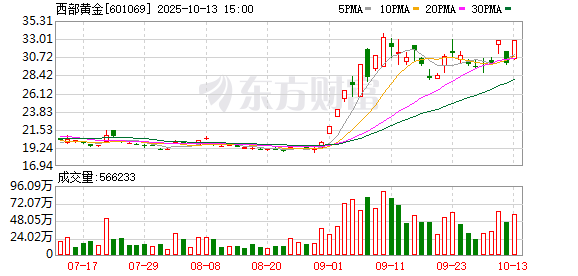
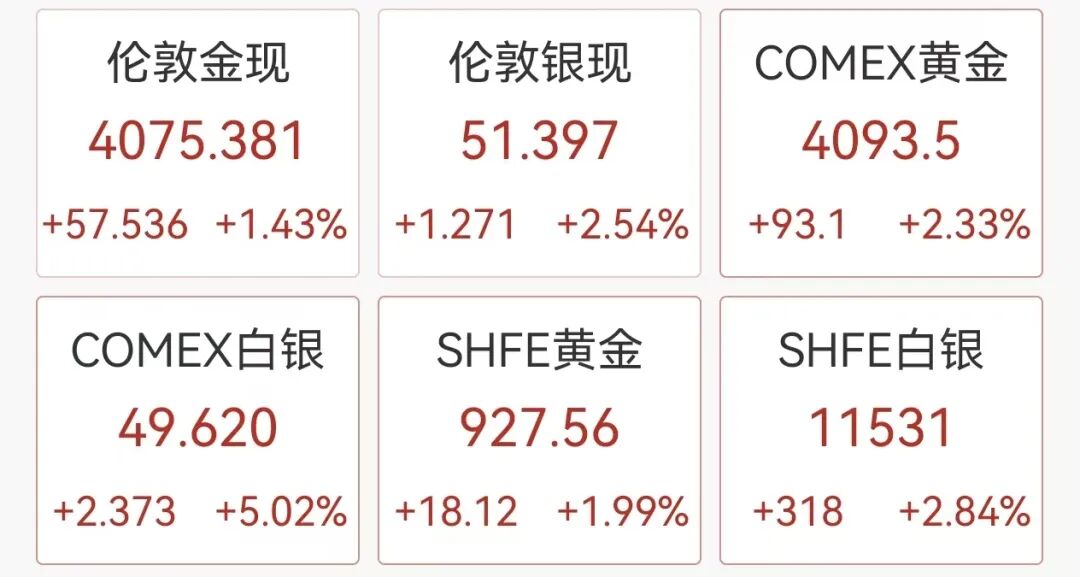
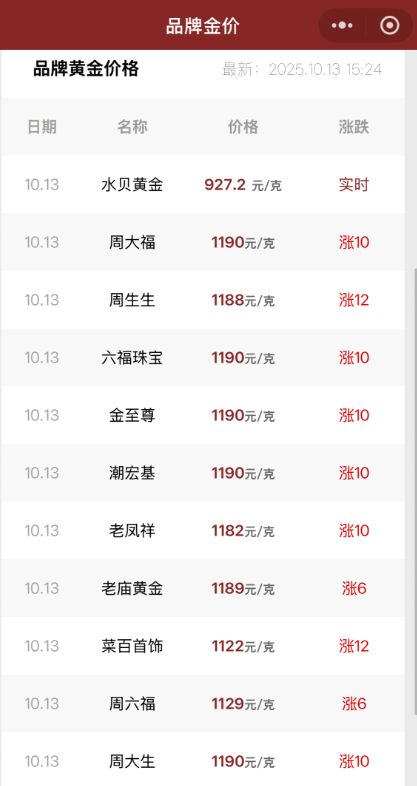
Core Insights - Gold and silver prices have reached historical highs, with spot gold touching $4080 per ounce and COMEX gold futures surpassing $4100 per ounce, marking increases of approximately 55% and 56% year-to-date respectively [1] - Silver prices have surged over 70% this year, outperforming gold [1] Market Performance - On October 13, the A-share precious metals sector rose nearly 7%, with notable gains in stocks such as Western Gold (601069) and Zhaojin Gold (000506) [3] - U.S. gold stocks also saw pre-market gains, with Coeur Mining rising over 7% and other companies like Harmony Gold and Barrick Mining showing significant increases [3] Gold Jewelry Prices - Domestic gold jewelry prices have increased, with major brands adjusting their prices upwards; for instance, Chow Tai Fook raised its price from 1180 to 1190 yuan per gram [3][4] Investment Sentiment - Huatai Futures Research Team maintains a "cautiously bullish" stance on gold and silver, citing tariff risks and ongoing expectations for monetary easing as factors driving prices higher [5] - The precious metals index has risen over 113% this year, significantly outperforming the broader market, with several stocks doubling in value [5][6] Stock Performance - Notable stock performances in the precious metals sector include Zhaojin Gold with a 254.66% increase and Western Gold with a 187.34% increase year-to-date [6] - Hunan Gold has the smallest increase among the listed stocks at 49.21% [6] Risk Advisory - Silver YS (601212) issued a risk warning after its stock price surged 40.10% over four consecutive trading days, indicating potential for future declines [7]


黄金白银又创新高,西部黄金3天2板,多只概念股年内翻倍
2 1 Shi Ji Jing Ji Bao Dao· 2025-10-13 10:53
Group 1 - The precious metals sector surged nearly 7% on October 13, with notable stocks like Western Gold and Zhaojin Gold experiencing significant gains [1] - Spot gold reached a historical high of $4,078 per ounce, while spot silver increased by over 2% to $51.71 per ounce [1] - Domestic gold jewelry prices exceeded 1,190 RMB per gram, with major brands adjusting their prices upwards [1][2] Group 2 - The precious metals index has increased by over 113% this year, outperforming the broader market [3] - Stocks such as Zhaojin Gold and Western Gold have seen their prices double, with Zhaojin Gold up by 254.66% and Western Gold by 187.34% [4] - Hunan Gold had the smallest increase among the listed companies, with a rise of 49.21% [4]

黄金白银又创新高,贵金属板块飙涨近7%,西部黄金3天2板
2 1 Shi Ji Jing Ji Bao Dao· 2025-10-13 10:04
Group 1 - The precious metals sector surged nearly 7% on October 13, with notable stocks like Western Gold, Zhaojin Gold, and others experiencing significant gains [2] - Spot gold reached a historical high of $4,078 per ounce, while spot silver increased over 2% to $51.71 per ounce [2] - Huatai Futures research team indicated that renewed tariff risks and ongoing expectations for monetary easing are driving gold prices to new highs [2] Group 2 - The U.S. government shutdown has delayed the release of key economic data, which is perceived as a significant fiscal risk, prompting the market to seek safe-haven assets, thus boosting gold prices [2] - There remains strong uncertainty regarding the Federal Reserve's interest rate cut path, but the market leans towards a potential cut in October, providing further support for gold [2]