
资产估值

Search documents
[11月5日]指数估值数据(A股低开高走;全球资产出现波动,原因为何)
银行螺丝钉· 2025-11-05 14:03
Market Overview - The market opened lower but closed higher, with overall fluctuations remaining small, maintaining a rating of 4.2 stars [1] - Both large-cap and small-cap stocks experienced slight increases [2] - Value style continues to show strength [3] - Indices related to dividends and free cash flow have seen continuous increases [4] - Growth style opened lower but rebounded significantly in the afternoon [5] - Hong Kong stocks showed minor fluctuations, with no significant changes [6] Global Asset Fluctuations - Recent global assets have experienced some volatility, with gold retreating 10% from previous highs [7] - Cryptocurrencies have seen a 20% decline from their peaks [8] - U.S. stocks reached overvalued levels for the first time this year before correcting back to a normal high valuation [9] - Japanese stocks dropped by 3% and South Korean stocks by 5% on Wednesday [10] - Global stock markets have recently corrected by 2-4% [11] - A-shares have also shown similar volatility to global markets [12] - The CSI All Share Index fell from 5967 points to 5847 points, a decline of approximately 2-3% [13] - Hong Kong stocks have experienced greater volatility, with the Hang Seng Index correcting about 5.2% recently [16] Interest Rate Impact - The recent global asset correction is primarily attributed to events in the last couple of weeks, following a period of overall asset appreciation under the backdrop of U.S. dollar interest rate cuts [17] - Non-U.S. stock markets, gold, and cryptocurrencies have all shown considerable gains in the first three quarters of the year [18] - The relationship between interest rates and asset values is likened to gravity's effect on objects [19] - A decrease in U.S. interest rates is beneficial for asset valuation [20] Federal Reserve Signals - Following interest rate cuts by the Federal Reserve in September and October, the market initially expected further cuts in December [21] - Recent signals from the Federal Reserve indicate that a December rate cut is "far from" a certainty [22] - This has led to a significant reduction in market expectations for a December rate cut [23] - The extent of volatility is also related to the previous valuations of assets [24] - For instance, gold was previously overvalued, leading to a 10% correction, while the A-share market's high-tech board corrected by approximately 12% [26] Long-term Outlook - There is no need for excessive concern regarding these fluctuations, as even in previous bull markets, there have been multiple corrections exceeding 10% [28] - Over the past year, A-shares and Hong Kong stocks have risen by 40-50% since reaching a rating of 5.9 stars [29] - The recent market index fluctuations have only been around 2-3%, which can be considered mere oscillations [31] - A-shares have shown relatively stable fluctuations amid global asset volatility [32] - In the long term, U.S. interest rates are expected to gradually decrease due to the substantial debt burden of approximately $38 trillion, with annual interest payments exceeding $1 trillion [34] - The strategy to alleviate this burden is straightforward: lower interest rates to refinance existing debt [35] - It is anticipated that U.S. interest rates will eventually return to historical averages of 2-3%, although the timing may vary from a few months to over half a year [36] - Delaying interest rate cuts could extend the current market rally [39] - Caution is advised for overvalued assets, while undervalued and fundamentally sound assets are expected to perform well in the future [40]


大摩:市场未来或回调10%至15% 明年市场展望将回归基本面
Zhi Tong Cai Jing· 2025-11-04 08:04
Core Viewpoint - The new stock market is very active this year, reflecting investors' willingness to take risks and an overall optimistic investment environment, although a potential market correction of 10% to 15% may occur due to high asset prices rather than a macroeconomic downturn [1] Group 1: Market Conditions - The current investment environment is optimistic, with active participation in the new stock market [1] - A potential market correction of 10% to 15% is anticipated, driven by high asset prices rather than a significant economic decline [1] Group 2: Regulatory and Economic Factors - Easing financial regulations is beneficial for corporate profit growth, but both equity and debt markets are considered expensive [1] - Precious metals and cryptocurrency markets exhibit speculative behavior, posing short-term valuation challenges [1] Group 3: Future Outlook - Despite risks from policy missteps and geopolitical uncertainties, systemic risks may have decreased compared to earlier in the year [1] - The focus for the upcoming year will shift back to fundamentals, particularly corporate earnings, as the market outlook evolves [1] Group 4: Sector Performance - The market is expected to show differentiation, with companies that can generate good returns without significant investment in artificial intelligence likely to perform well [1]

民企搞 REITs 难?别甩锅合规!真正卡脖子的是这事儿
Sou Hu Cai Jing· 2025-10-21 05:30
Core Viewpoint - The article discusses the challenges faced by private enterprises in issuing public REITs, highlighting the misconception that regulatory hurdles are the main barrier, while the real issue lies in the stringent asset valuation requirements imposed by these enterprises [2][4]. Group 1: Regulatory Environment - Regulatory bodies encourage private enterprises to issue REITs, and local governments often support promising private companies [2]. - The regulatory requirement for "net cash recovery" differs from the valuation needs of private enterprises, which must cover existing debts and provide surplus cash [4]. Group 2: Asset Valuation Challenges - Private enterprises have a "hard requirement" for asset valuation that is more stringent than the standards set for public offerings, often prioritizing immediate cash returns over long-term strategic benefits [2][4]. - For a project with existing bank loans of 1 billion, the asset valuation must exceed 1.65 billion to cover debts and provide cash returns, illustrating the high valuation pressure [4]. Group 3: Financial Metrics - A project with a net operating income (NOI) of 60 million and a loan interest of 50 million results in a capitalization rate of only 3.6%, which is generally not acceptable to investors or regulators [5][6]. Group 4: Potential Solutions - Suggestions for improving the situation include relaxing the self-holding ratio requirements, allowing for the pledge of self-held shares, and adjusting key valuation parameters dynamically based on market conditions [7][8]. - Shortening the approval cycle for public REITs could help private enterprises respond more quickly to urgent financial needs, as the current process can take up to two years [9]. Group 5: Market Dynamics - Private enterprises, due to their survival and competitive pressures, are more focused on asset management and market trends, making them theoretically suitable for operating REIT assets [10]. - The current financial strain on private enterprises, coupled with unfavorable market conditions, leads to their high asset valuation demands, which could be alleviated through adjustments in mechanisms and approval processes [10].

摩根大通CEO戴蒙承认:持有黄金“有些合理”,金价可能轻松涨至5000或10000美元
美股IPO· 2025-10-16 00:04
Core Viewpoint - Jamie Dimon, CEO of JPMorgan Chase, acknowledges the rationality of holding gold in the current environment, despite personally not purchasing it due to a 4% holding cost [2][3][12] Group 1: Gold Price and Market Trends - Gold prices have surged to a historical high of $4200 per ounce, with a year-to-date increase of nearly 60%, outperforming the stock market [3][4] - The allocation of gold among Wall Street professional investors remains low at only 2.4%, despite the significant price increase [5] - In comparison, cryptocurrency allocation is even lower at 0.4%, indicating that gold is still relatively under-allocated [7] Group 2: Investor Sentiment and Economic Concerns - The demand for safe-haven assets reflects concerns over inflation and geopolitical instability, with central bank gold purchases being a major driver of rising gold prices [8] - Dimon and Ken Griffin's comments suggest a shift in perspective among Wall Street leaders regarding the investment value of gold, indicating a reassessment of its role in portfolios [11] - Griffin views the shift towards gold as a sign of declining confidence in the dollar, highlighting rising concerns about the stability of fiat currencies [13]


日本央行玩 “鹰式操作”,稳利率抛资产,美联储降息算盘遇变数
Sou Hu Cai Jing· 2025-09-25 09:30
Core Viewpoint - The Bank of Japan (BOJ) has signaled a hawkish stance by maintaining interest rates while planning to reduce its ETF holdings, which may disrupt the Federal Reserve's interest rate reduction plans [1][3][11]. Group 1: BOJ's Policy Actions - On September 19, 2025, the BOJ decided to keep the benchmark interest rate at 0.5% but announced plans to reduce its ETF holdings by approximately 3.3 trillion yen annually and 5 billion yen in real estate investment trusts [3]. - This decision reflects a gradual exit from strong market intervention, indicating a potential shift towards a more hawkish monetary policy [3][10]. - The internal discussions within the BOJ revealed a divide, with two policymakers advocating for an immediate rate hike to 0.75%, highlighting the emergence of hawkish sentiments within the institution [3]. Group 2: Market Reactions - Following the BOJ's announcement, the Japanese yen appreciated against the US dollar, causing the USD/JPY exchange rate to breach critical support levels [5]. - The Nikkei index experienced a decline, signaling investor concerns over tightening liquidity [5]. - The BOJ's actions, while domestic in nature, have significant implications for global financial markets, particularly affecting the US due to the timing with the Federal Reserve's recent rate cut announcement [5]. Group 3: Implications for the Federal Reserve - The appreciation of the yen may lead to a corresponding rise in the dollar, which could weaken US export competitiveness and impact the manufacturing sector and job market [7]. - The Federal Reserve faces internal disagreements regarding the necessity of further rate cuts, with some officials expressing skepticism about the need for additional reductions [7]. - The BOJ's subtle yet impactful maneuvering has complicated the Fed's previously clear path for rate cuts, necessitating a reassessment of risk and liquidity in global markets [11][12].

金价,飙涨!
证券时报· 2025-09-01 04:41
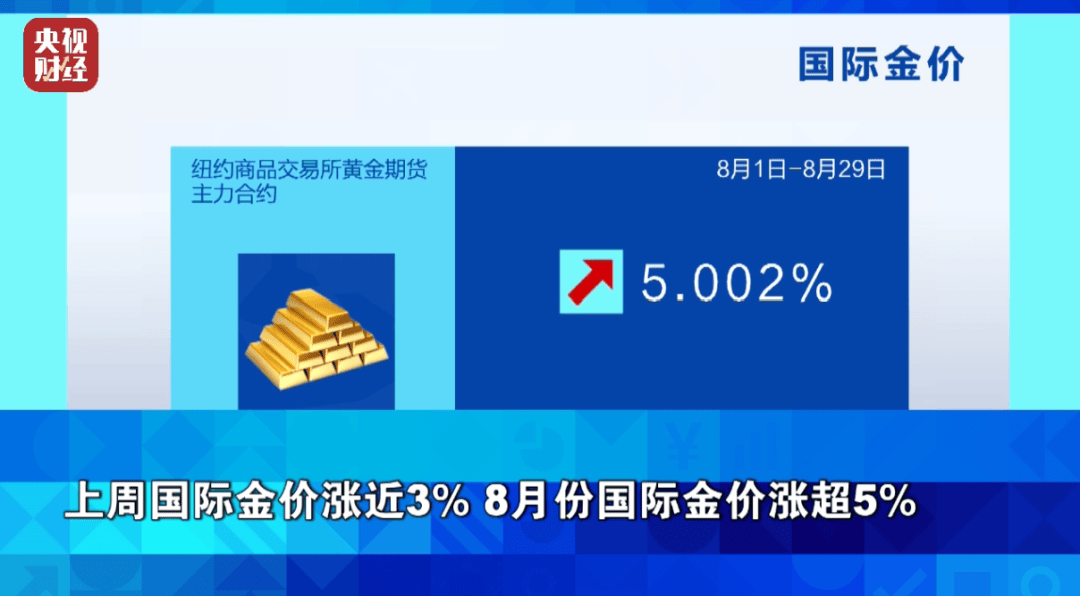
Group 1 - The core viewpoint of the article highlights the rising international gold prices due to inflation concerns and investor risk aversion ahead of potential market volatility in September [1][2] - The U.S. stock market experienced a collective decline last week, with the Dow Jones down 0.19%, S&P 500 down 0.10%, and Nasdaq down 0.19% [1] - International gold prices saw a cumulative increase of 2.86% last week, with an overall rise of over 5% in August, marking the best monthly performance since April [2] Group 2 - International oil prices also rose last week, driven by investor focus on the Russia-Ukraine conflict and a larger-than-expected drop in U.S. crude oil inventories, indicating supply tightness [5] - Specifically, West Texas Intermediate (WTI) crude oil prices increased by approximately 0.55%, while Brent crude oil prices rose by about 0.58% [5] - The upcoming U.S. non-farm payroll data for August is anticipated to be a key indicator of economic health and will influence market expectations regarding Federal Reserve interest rate cuts [8][11] Group 3 - The Federal Reserve is set to release its Beige Book this week, which will provide insights into economic activity and inflation trends [11] - Recent developments regarding the independence of the Federal Reserve have raised concerns in the market, particularly following the dismissal of a board member by President Trump [11] - Analysts from Goldman Sachs and Citigroup suggest that weak labor market data could signal further interest rate cuts by the Federal Reserve [8][11]

金价,飙涨!重要数据,要公布了
Sou Hu Cai Jing· 2025-09-01 03:52
Group 1 - The recent U.S. inflation data for July indicates rising prices and slow inflation, posing risks to the market, leading to a collective decline in U.S. stocks last week, with the Dow down 0.19%, S&P 500 down 0.10%, and Nasdaq down 0.19% [1] - International gold prices rose nearly 3% last week and increased over 5% in August, marking the best monthly performance since April [3] - Concerns over the independence of the Federal Reserve have heightened investor risk aversion, contributing to a 2.86% increase in international gold prices last week [3] Group 2 - International oil prices saw a slight increase last week, with WTI crude up approximately 0.55% and Brent crude up about 0.58%, driven by a decrease in U.S. crude oil inventories and ongoing tensions from the Russia-Ukraine conflict [5] - The upcoming U.S. non-farm payroll data for August is anticipated to be a key indicator of economic health and will test market expectations for Federal Reserve rate cuts [7] - Goldman Sachs suggests that the August non-farm payroll data will be crucial in determining the extent and pace of potential rate cuts by the Federal Reserve, especially if job growth remains weak [7][9] Group 3 - The Federal Reserve's Beige Book will be released this week, with the previous report indicating slight economic activity growth and a record low mention of inflation [9] - The recent dismissal of Federal Reserve Governor Cook by President Trump has raised questions about the Fed's independence, impacting market confidence in dollar assets [9]
全球资本为何必然涌入中国?孙加滢:除了便宜 还有三大关键理由
Xin Lang Ji Jin· 2025-08-27 10:07
Group 1 - The core logic behind the recent A-share market reaching 3800 points is a global capital reallocation trend, which has become increasingly evident [1] - Warren Buffett has been reducing his US stock holdings and shifting towards other markets, indicating a macro allocation strategy that investors should recognize [1] - There is a significant valuation disparity between global markets, with the Dow Jones at a P/E ratio of 9, Nasdaq at 7, while the Shanghai Composite and CSI 300 are only at 1.3 [1] Group 2 - China is highlighted as one of the lowest-valued assets globally, with advantages such as a safe living environment, high economic growth, robust infrastructure, and strong industrial capabilities [1] - The influx of global capital into China is anticipated once undervalued assets begin to trend upwards, as evidenced by recent capital inflows into the Hong Kong market [1] - The notion that geopolitical factors like financial wars and political sanctions deter capital flow is deemed inappropriate, as capital is primarily driven by profit motives [1]

凌晨!美联储,重大发布!
券商中国· 2025-08-20 23:31
Core Viewpoint - The Federal Reserve's internal divisions regarding monetary policy have become more pronounced, highlighting the complexities faced by decision-makers amid concerns over tariffs, inflation risks, and employment market conditions [2][4]. Summary by Sections Monetary Policy Disagreements - The FOMC's meeting minutes revealed that two officials voted against maintaining the current interest rate, advocating for a 25 basis point cut to mitigate potential labor market deterioration [4]. - Most officials believe that the risks of rising inflation outweigh the risks of declining employment, indicating a split in perspectives on economic conditions [4][5]. Inflation Risks - Officials expressed concerns about the uncertain impacts of tariff policies on inflation and the potential instability of inflation expectations [6]. - The overall inflation rate in the U.S. remains slightly above the Fed's long-term target of 2%, with recent increases in goods price inflation attributed to tariffs [7]. Economic Outlook - The uncertainty surrounding the U.S. economic outlook remains high, with officials emphasizing the dual mandate of full employment and price stability facing significant risks [5][6]. - Many officials expect inflation to rise in the short term, influenced by the timing and magnitude of tariff increases implemented by the previous administration [7]. Financial Stability Concerns - The minutes highlighted vulnerabilities in the U.S. financial system, particularly high asset valuations, which have raised concerns among officials [10]. - Recent sell-offs in high-valuation tech stocks have been noted, with market participants expressing caution regarding the sustainability of these valuations [10]. Stablecoin Implications - Officials discussed the potential rise of stablecoins following the passage of the GENIUS Act, which could enhance payment system efficiency but also raise concerns about their impact on the financial system and monetary policy [11]. - The need for close monitoring of the assets backing stablecoins was emphasized, given their potential influence on the banking system and financial stability [11].

这是高盛眼中“美国经济和市场的最大风险”
Hua Er Jie Jian Wen· 2025-07-30 00:47
Core Viewpoint - Goldman Sachs indicates that the primary risks facing the U.S. market and economy are shifting from private sector financial excesses to escalating public sector debt issues and high asset valuations [1][2]. Fiscal Sustainability - The report highlights that the greatest long-term risk for the U.S. is fiscal sustainability, with concerns that rising national debt and interest payments could necessitate sustained large fiscal surpluses, which are politically challenging [2]. - Any resulting upward pressure on interest rates could tighten the broader financial environment and hinder economic growth, especially given the already high asset valuations [2]. Asset Valuation Concerns - Despite high interest rates and geopolitical uncertainties, U.S. stock market valuations remain at their highest levels since the late 1990s, with a current price-to-earnings (P/E) ratio of 22.4, significantly above the historical average of 15.9 since 1990 [2]. - The speculative trading index from Goldman Sachs indicates heightened market risk, with phenomena like "Meme stocks" reflecting increased market risk appetite [2]. Real Estate Market Analysis - Goldman Sachs expresses limited concern regarding high real estate prices, attributing them to a persistent supply-demand imbalance rather than loose lending standards or speculative buying [3][4]. - The shortage of single-family homes is expected to continue, limiting the risk of significant price declines [4]. Household Debt Insights - The report addresses two main concerns regarding household debt: low savings rates are fundamentally linked to household wealth levels, and rising consumer credit default rates reflect past risky lending practices rather than a general deterioration in household financial health [5]. - Current default rates are stabilizing, indicating manageable household debt levels [5]. Corporate Debt Overview - Although corporate interest expenses have risen significantly in recent years, the consequences appear limited at this time [6]. - Goldman Sachs estimates that refinancing maturing debt will only increase interest expenses by 3% over the next two years, a significant decrease from the previously estimated 7% for 2023, due to much of the debt being refinanced in a higher interest rate environment [7].
