
顺周期

Search documents
科技回调资金换道!建材板块具备高股息与低估值护城河,布局建材ETF(159745)承接顺周期配置需求
Sou Hu Cai Jing· 2026-02-12 07:22
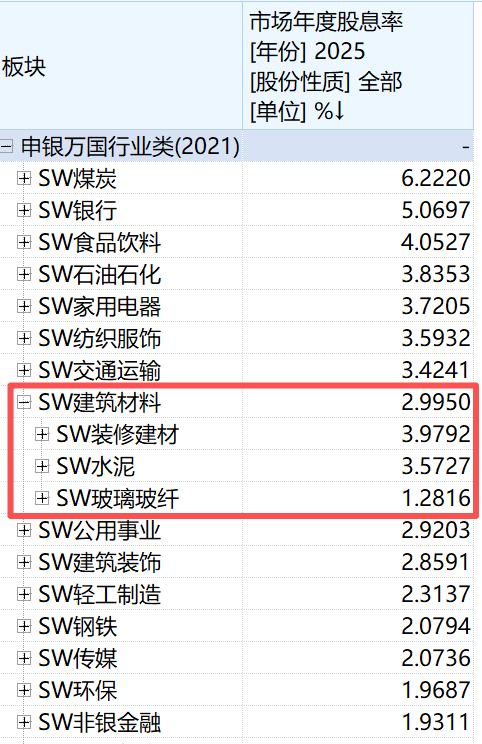
Group 1 - The core viewpoint is that in a macro environment characterized by low interest rates and asset scarcity, high dividend strategies have become a "ballast" for institutional fund allocation, with the building materials sector being a stable choice due to its high dividend and safety margin attributes [1] - The building materials sector's high dividend characteristic is not merely a reflection of profit fluctuations but is a result of improved industry competition and cash flow realization, with leading companies in the cement industry maintaining dividend yields between 3.5% and 5.0%, significantly higher than the ten-year government bond yield [2][4] - By 2025, the building materials sector is projected to rank 8th in dividend yield among Shenwan's primary industries, surpassing traditional high-dividend sectors such as utilities and steel, with renovation materials and cement yielding close to 4% [2][3] Group 2 - The building materials sector has undergone three years of deep adjustment, resulting in a "cash cow" characteristic, with capital expenditure peaking and free cash flow becoming abundant, as major cement companies' fixed asset spending is expected to decline by over 40% compared to the 2021 peak [3][4] - The "anti-involution" policy has led to effective production scheduling and capacity replacement mechanisms, which have suppressed vicious price wars, allowing leading companies to maintain a high dividend payout ratio of 30% to 50% despite a decline in profit margins [4] - The renovation materials segment also shows high dividend potential, with leading companies like Weixing New Materials and Beixin Building Materials maintaining stable dividend rates above 40%, indicating a positive cycle of profit growth and dividend increases [4] Group 3 - The current valuation of the building materials sector is low, with the CSI All Share Building Materials Index's price-to-book ratio at only 1.15%, indicating that the market has overly reflected pessimistic expectations, with some leading cement companies' price-to-book ratios falling below 0.8 [6] - The current valuation levels are lower than during the financial deleveraging period in 2018 and the real estate crisis in 2022, providing a solid safety margin that can offer considerable capital gains even if profits are under short-term pressure [6] - The building materials ETF (159745) tracks the CSI All Share Building Materials Index, covering leading companies across the entire industry chain, providing an efficient tool for investors to allocate to the building materials sector [6][8] Group 4 - Investors looking to capitalize on the cyclical recovery in the building materials sector can consider the building materials ETF (159745) for both short-term trading and long-term allocation to undervalued, high-dividend sectors, especially in a market environment where funds are shifting towards cyclical stocks [9]

十万亿化债资金开闸!财政组合拳重塑建材板块逻辑,建材ETF(159745)早周期配置窗口开启
Sou Hu Cai Jing· 2026-02-12 03:28
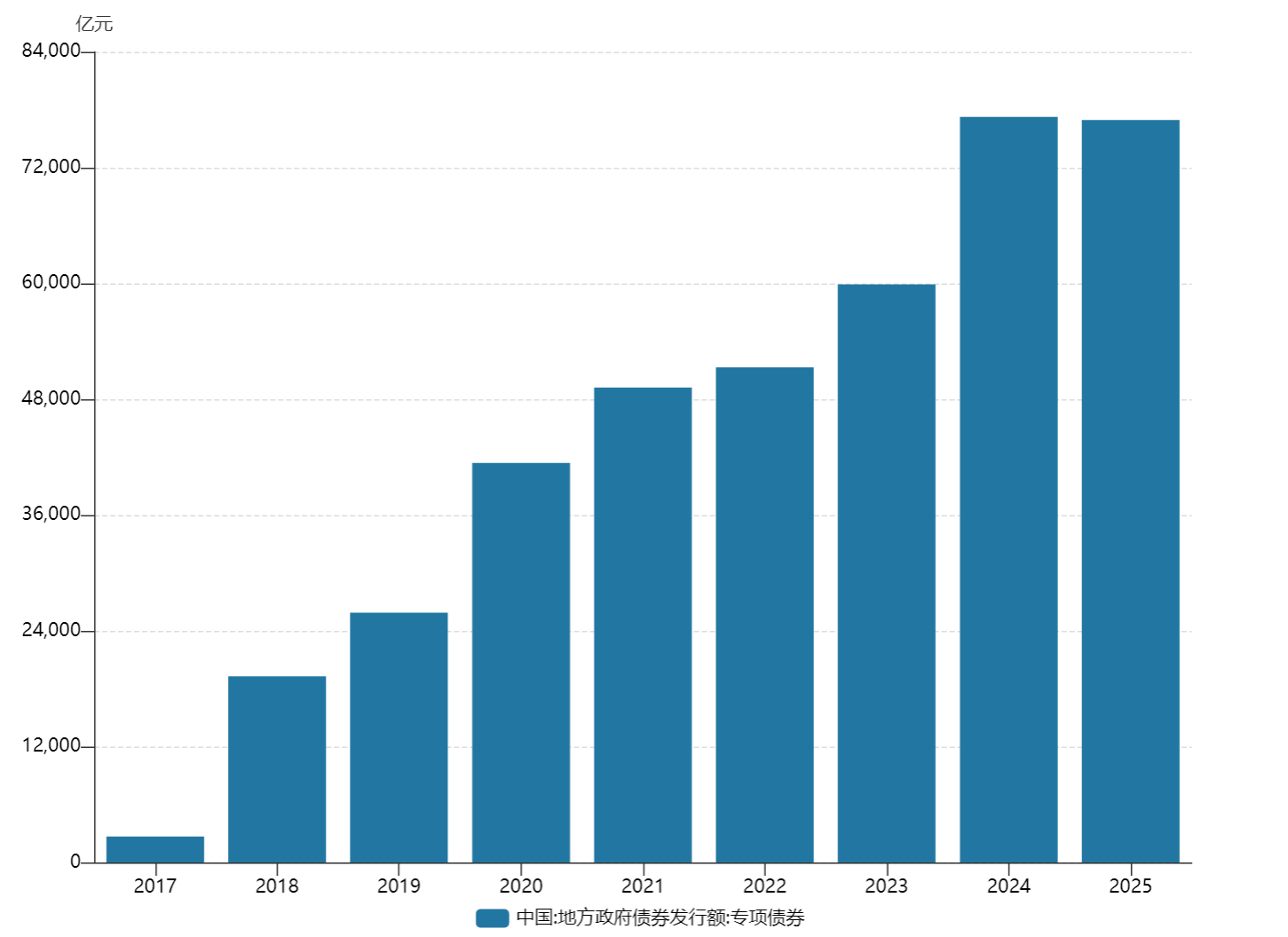
Core Viewpoint - The construction materials industry is experiencing a sustainable growth momentum due to unprecedented debt resolution actions, which are expected to improve market expectations and drive investment recovery in infrastructure and real estate sectors [1] Fiscal Perspective - The current debt resolution measures, including debt swaps and the expansion of special bonds, have systematically alleviated liquidity constraints for local governments, improving fiscal space for infrastructure investments [1] - Special bonds issued by local governments have been increasing annually since 2017, with projections for 2024 and 2025 to exceed 7 trillion yuan, and the total issuance in 2025 expected to surpass 10 trillion yuan for the first time in history [1][4] Infrastructure Investment - The issuance of special bonds is expected to lead to a significant increase in construction activity in transportation, municipal, and water conservancy sectors, with a projected surge in physical work volume in the first half of 2025 [4][6] - Despite a decline in infrastructure investment growth, the sector still holds a significant share of fixed asset investment, indicating its critical role in the overall economy [4] Policy Transition - The policy environment is shifting from "debt replacement" to "investment stimulation," which is likely to further enhance demand for construction materials [5] Demand Dynamics - The demand structure for construction materials is changing, with traditional materials benefiting from infrastructure support and renovation materials gaining from the demand for upgrading existing properties [6] - The dual drivers of infrastructure and real estate are expected to provide a solid foundation for the construction materials sector during this debt resolution cycle [6] Profitability and Market Outlook - The profitability of the cement industry is recovering, with expectations of improved margins due to supply-side adjustments and a favorable demand outlook from real estate policies [8] - The construction materials sector is characterized by high cash flow and potential for stable dividends, with forecasts indicating overall profit recovery by 2026 [8] Investment Opportunities - The construction materials ETF (159745) tracks the performance of the construction materials index, providing investors with a tool to efficiently allocate resources in the sector [8][11] - The sector is viewed as a core cyclical investment opportunity, especially in the context of a market shift towards undervalued, high-dividend stocks [11]


跨越短周期扰动,拥抱长周期拐点!借道建材ETF(159745) 捕获"量增价稳"甜蜜期
Sou Hu Cai Jing· 2026-02-11 07:02
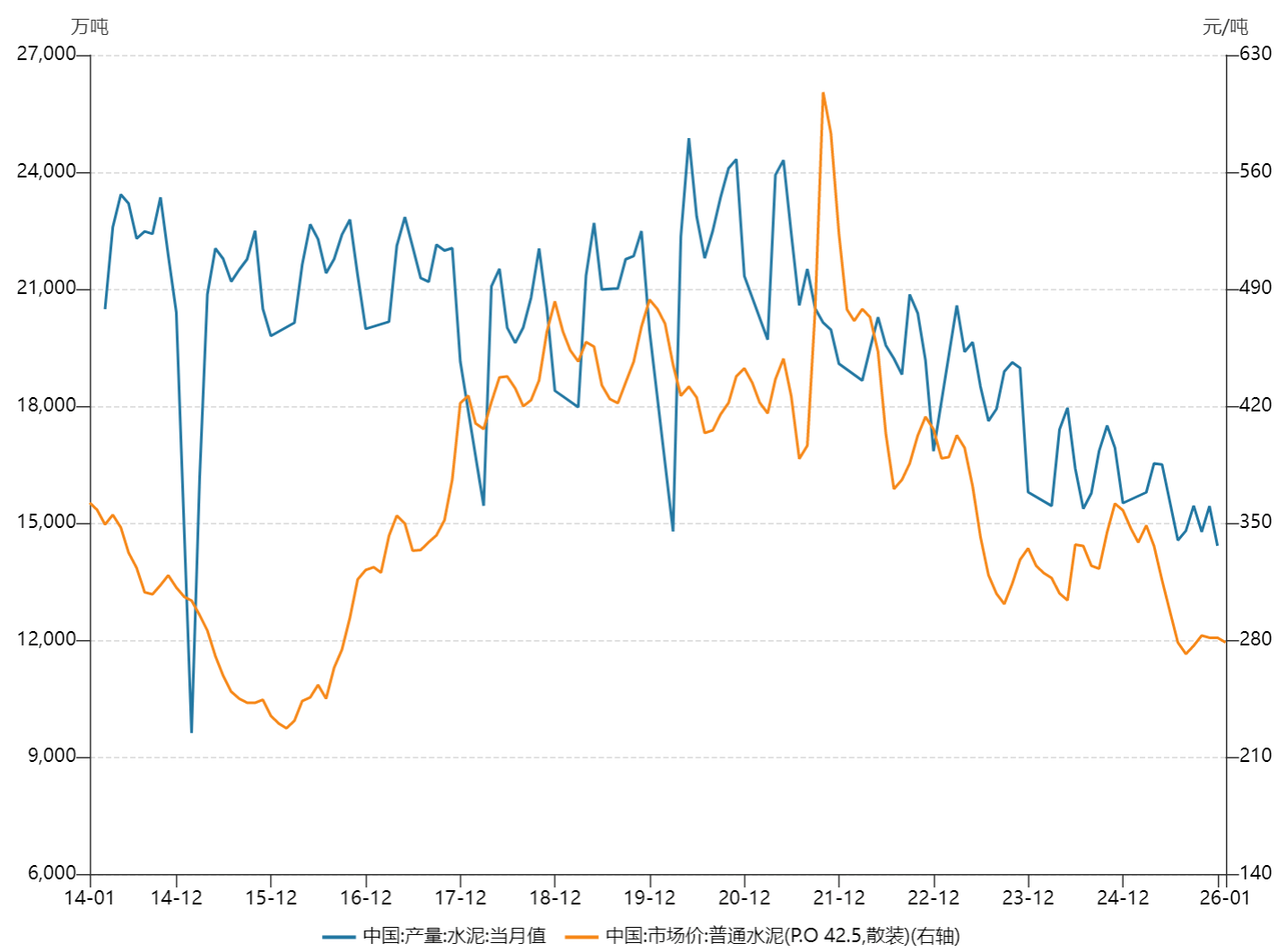
建材行业作为典型的早周期行业,其景气度回升往往领先于宏观经济复苏的确认。在当前经济企稳初期,基建投资的持续发力与地产竣工的边际改善形成需 求双轮驱动,而原材料成本(能源、化工原料)处于相对可控区间,行业或迎来"量增价稳"的甜蜜期。 短周期——天气寒冷或导致水泥产量收缩 从短周期看,水泥熟料煅烧过程需维持窑炉高温(约1450℃),极端低温会增加能耗成本并影响设备安全;同时,原材料开采受冻土影响,物流运输因冰雪 天气受阻,导致上游供给物理性受限。 另一方面,当前水泥行业执行严格的"错峰生产"政策,北方地区冬季停产时长普遍达4-5个月。以华北为例,2024-2025年采暖季水泥熟料企业限产力度达 60%以上,这虽然是环保政策驱动,但与天气严寒形成共振,进一步压缩实际产量。 以华东为例,冬季错峰停窑时间延长至80-100天,熟料库存始终处于低位。当供给端收缩幅度超过需求下滑时,价格获得支撑。2024年四季度,尽管进入传 统淡季,华东地区水泥价格较年内低点反弹超20%,验证了供给约束的有效性。 与之形成鲜明对比的是,冬季为传统施工旺季(尤其是华南),若遭遇极端寒潮(如2024年初的冻雨天气),短期产量骤降可能导致价格脉 ...
未知机构:2月金股新高餐饮主推海底捞最近一直最前底部企稳管理改善顺周期高弹性-20260211
未知机构· 2026-02-11 02:15
Company and Industry Summary Company: Haidilao Key Points 1. **Bottoming Out**: The fourth quarter showed no decline in table turnover year-on-year, and the average customer spending remained stable [1][2] 2. **Management Improvement**: Zhang Yong has been appointed as CEO of Haidilao to enhance efficiency and effectiveness from decision-making to execution, while maintaining a consistent strategy for the main brand and iterating on the development plan for the subsidiary, Hong Shiliu [1][2] 3. **Cyclical High Elasticity**: As a relatively low-frequency, mid-to-high-priced dining option among listed restaurants, Haidilao is expected to experience higher elasticity due to data improvements and anticipated policy stimuli, alongside potential growth from improved internal and external environments [1][2] 4. **Hot Pot Business Outlook**: Signals of bottoming out are strengthening, with same-store sales recovering steadily. The opening of new stores is projected to grow by a single-digit percentage, and profits are gradually returning to historical peak levels, with an estimated profit of 4.7 billion in 2024, although current tax reductions are decreasing [2] 5. **Barbecue Business Outlook**: - **Store Openings**: The domestic barbecue market is expected to reach approximately 106 billion in 2025, with 205,000 stores. The low chain rate in the barbecue sector suggests a potential for 1,000 new stores based on a market share of 0.5% [2] - **Single Store Performance**: The average customer spending is around 100 yuan, with projected annual revenue per store of approximately 8 million. For the first half of 2025, the barbecue segment is expected to contribute around 200 million in revenue, with a profit margin of 12%, leading to an estimated profit of 960,000 per store [2] 6. **Investment Recommendations**: Expected net profits for the parent company are projected at 4.2 billion, 4.6 billion, and 5.2 billion for 2025-2027, corresponding to price-to-earnings ratios of 17, 16, and 14 times. There is an emphasis on monitoring the company's progress in diversifying its business under strong incentives to build a new growth curve, with a "Buy" rating maintained in anticipation of bottoming out and management improvements by the end of 2026 [2]

港股投资策略报告:冰火两重天的港股如何配置?-20260210
INDUSTRIAL SECURITIES· 2026-02-10 14:04
Group 1 - The report highlights a significant divergence in the Hong Kong stock market, with technology and telecommunications sectors dragging down the Hang Seng Index, while other industries have shown positive returns. The Hang Seng High Dividend Yield Total Return Index has reached a historical high, and the relatively balanced Hong Kong Stock Connect Index has outperformed the A-share CSI 800 Index [2][13]. - The Hang Seng Technology Index has faced pressure from short sellers, exacerbated by multiple narratives, including concerns over tax policy adjustments and the potential disruption of AI on traditional business models, leading to a negative sentiment in the market [2][13]. Group 2 - The outlook suggests that the Hong Kong market may see an influx of foreign capital in 2026 due to the ongoing loose liquidity environment and the potential for the Federal Reserve to continue lowering interest rates. Recent trends indicate a significant increase in net inflows from the Stock Connect program, particularly into technology stocks that have experienced substantial declines [3][24]. - Domestic investors are also accelerating their investments in Hong Kong stocks, taking advantage of market adjustments. The average daily net inflow from the Stock Connect has rebounded to a high level not seen since 2024, indicating renewed interest in the market [3][24]. Group 3 - The report recommends a strategy of combining "technology as a core holding + cyclical recovery + beta opportunities in dividends" to embrace the upcoming spring market. Current market sentiment is at a relatively low point, suggesting potential for a short-term rebound [4][31]. - Technology remains a long-term focus, with AI expected to be a key driver. The report notes that leading internet and application companies have already priced in pessimistic expectations, making them attractive for investment as they are near historical valuation lows [4][31]. Group 4 - The cyclical leaders in the Hong Kong market are expected to see improvements as the Chinese economy transitions towards "slower growth + increased efficiency." This shift is anticipated to enhance the competitive landscape and gradually restore profitability for leading companies in sectors such as chemicals, real estate, and machinery [4][34]. - The report emphasizes the importance of consumer data during the Spring Festival as a potential catalyst for market performance, particularly for consumer service leaders in sectors like gaming, dining, and travel [4][34]. Group 5 - The report identifies that the ongoing geopolitical landscape in 2026 is more favorable for Chinese assets, with the risk premium of the Hang Seng Index relative to 10-year U.S. Treasury yields being significantly higher than that of developed markets. This situation is expected to attract more foreign capital to Hong Kong stocks [5][22]. - A stable RMB is projected to enhance the attractiveness of RMB-denominated assets, with historical trends indicating that significant RMB appreciation often correlates with rising Hong Kong stock prices [5][22].
周期底部已现,政策东风劲吹!借道建材ETF(159745)把握顺周期修复红利
Sou Hu Cai Jing· 2026-02-10 07:09
当前宏观经济运行呈现企稳复苏态势,顺周期板块正迎来估值修复的重要窗口。作为典型的早周期行业,建材板块与基建投资、房地产竣工周期及制造业资 本开支高度相关,在经济预期改善与政策组合拳的双重驱动下,其顺周期属性愈发凸显,板块配置价值值得期待。 从宏观政策基调看,2025年以来稳增长政策持续加码,财政前置发力特征明显。专项债发行提速带动基建实物工作量落地,1-2月数据显示水泥出货率已呈 现季节性回暖,显著优于去年同期水平。 更重要的是,房地产政策已从"防风险"向"促企稳"转变,各地限购限贷政策持续优化,保交楼专项资金加速投放推动竣工端回暖。由于建材需求中约60%与 地产后周期相关,竣工端修复将直接拉动玻璃、消费建材等品类需求回升。 与此同时,"三大工程"(保障性住房建设、城中村改造、"平急两用"公共基础设施建设)进入实质推进阶段,为建筑管材、防水材料等细分赛道提供增量需 求空间,有效对冲传统地产新开工的下行压力。 尤其是保交楼项目,截至2025年初,全国保交楼专项借款及白名单项目授信规模突破4万亿元,累计交付逾期项目超过300万套,交付率较政策初期提升逾40 个百分点。这一庞大存量工程的持续消化,正为建材板块构筑起 ...
专访田轩:A股三大主线浮现 如何“擒牛”又“防坑”?
2 1 Shi Ji Jing Ji Bao Dao· 2026-02-09 11:16
Group 1 - The core consensus in the A-share market includes the recovery of cyclical sectors, rapid development of new productive forces, and the increased value of low-valuation high-dividend asset allocation [1] - Cyclical sectors such as non-ferrous metals and chemicals, as well as midstream manufacturing sectors like machinery and building materials, benefit from supply-demand restructuring and policy support, becoming the main line for capital allocation [1] - Hard technology fields like semiconductors, high-end manufacturing, and AI computing power are recognized as long-term growth engines for new productive forces, continuously attracting market interest [1] Group 2 - Low-valuation high-dividend assets are gaining attention due to dual support from policies and capital, with long-term funds accelerating entry into the market since early 2026, reinforcing their valuation support [1] - Investors are advised to rationally assess the sustainability of profits in cyclical sectors, the warming demand trend, the timeliness of policy implementation, and industry prosperity turning points to avoid simplistic extrapolation of short-term data into long-term trends [2] - Within the new productive forces sector, significant differentiation exists, necessitating careful identification of companies' technological breakthroughs and commercialization capabilities, while being cautious of the disconnect between speculative concepts and performance realization [2]
财政货币双宽松托底地产链,建材板块或迎估值修复窗口期,借道建材ETF(159745)布局顺周期龙头
Sou Hu Cai Jing· 2026-02-09 06:17
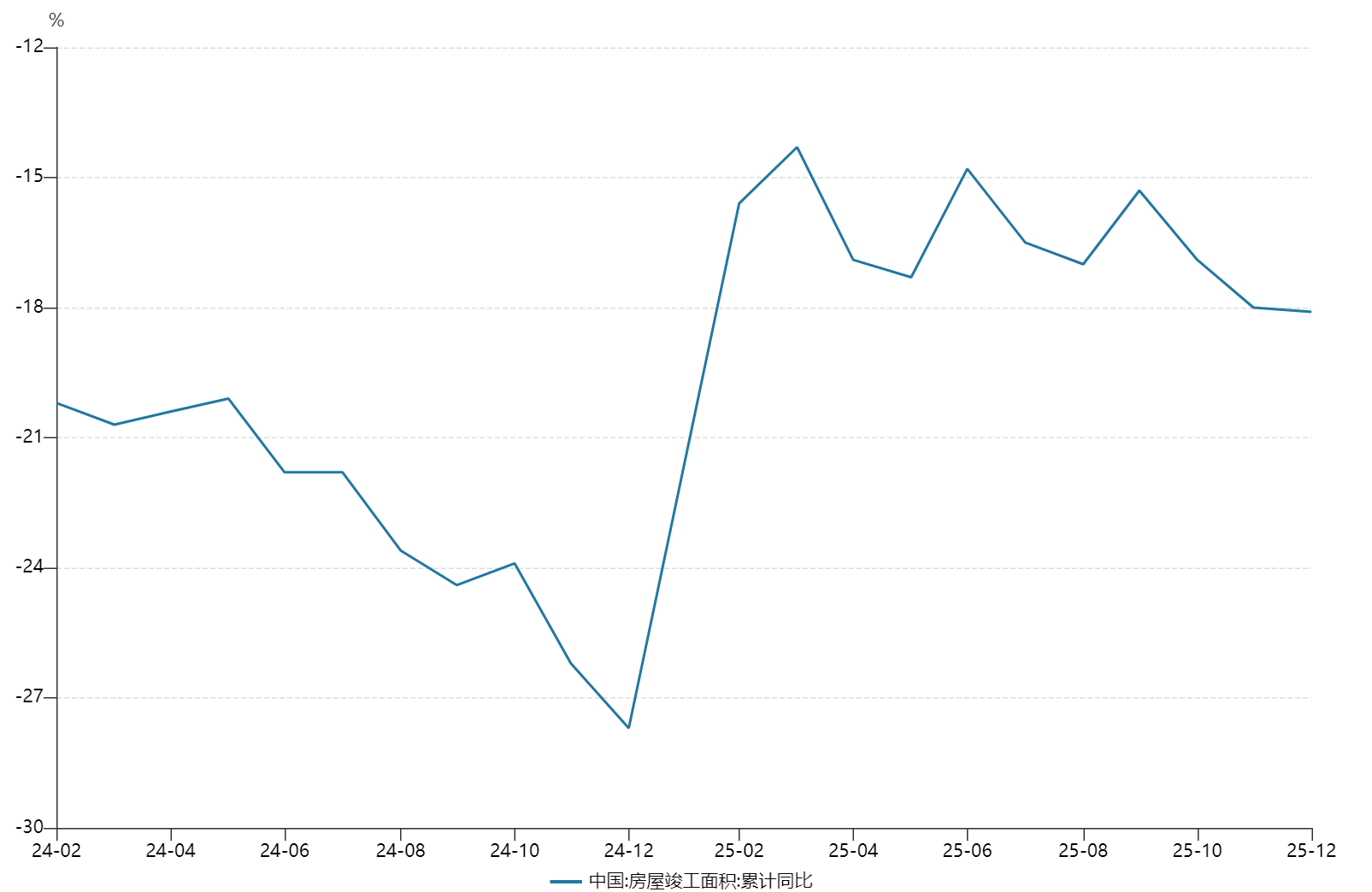
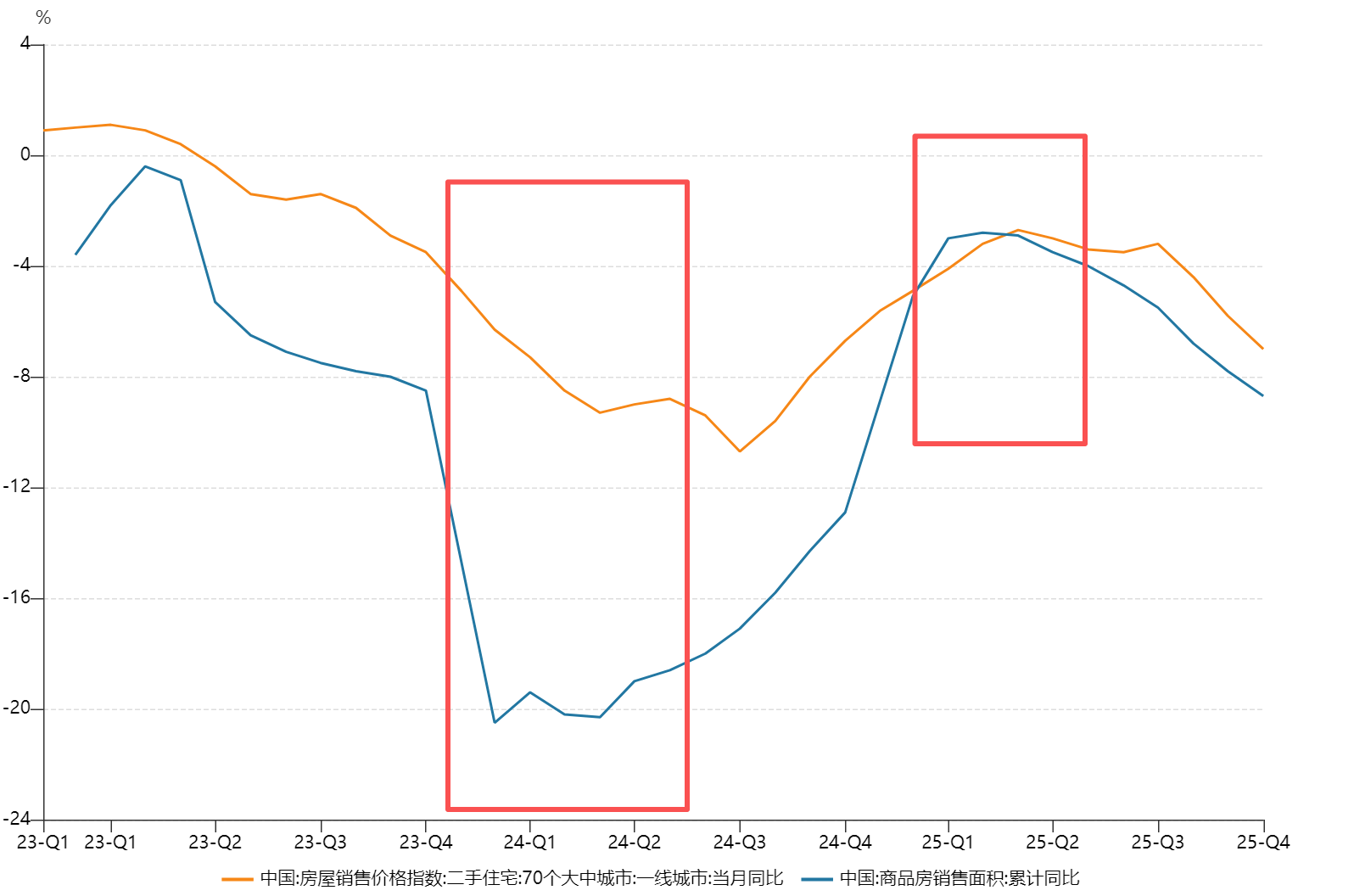
Core Viewpoint - The building materials sector is expected to experience fundamental improvement and valuation recovery due to dual drivers of policy support and real estate recovery, with a strategic window opening in 2025 [1] Policy Support - The fiscal policy for 2025 includes a record high special bond allocation of 4.4 trillion yuan, with 800 billion yuan directed towards "two major" construction and urban renewal projects, providing certainty for infrastructure demand [2] - Monetary policy is expected to maintain a moderately loose stance, with anticipated cumulative reductions in reserve requirement ratios of 150-250 basis points and interest rates by 40-60 basis points, benefiting infrastructure investment and real estate construction recovery [2] - Real estate policies aim for stabilization, with measures such as optimizing purchase restrictions and lowering down payment ratios, leading to signs of price recovery in first-tier cities; from January to May 2025, the year-on-year decline in commercial housing sales area narrowed to 2.9%, a significant improvement compared to 2024 [2] Market Trends - Starting in 2025, the sales area and prices of commercial housing are expected to rebound, particularly in the first half of the year, with a notable narrowing of overall declines [5] - The Ministry of Industry and Information Technology's "Building Materials Industry Stabilization Growth Work Plan (2025-2026)" emphasizes improving profitability and prohibits new cement clinker and flat glass capacity, promoting capacity replacement and staggered production to optimize the supply structure [5] - The real estate market in first-tier cities is projected to maintain high transaction levels post-2026, with second-tier cities like Hangzhou, Nanjing, Chengdu, and Tianjin also showing positive performance [5] Demand Dynamics - The policy to ensure housing delivery is expected to reduce the year-on-year decline in housing completion area to around 15% in the first half of 2025, directly stimulating demand for basic building materials like cement and glass [6] - The total urban housing stock in China is 37.3 billion square meters, with increasing renovation and upgrading needs driven by aging properties, leading to new growth in building material consumption; green building materials revenue is expected to exceed 300 billion yuan by 2026 [6] Investment Opportunities - The building materials sector has faced five years of decline, but positive signals are emerging, suggesting a potential recovery in the sector [8] - The Building Materials ETF (159745) tracks the CSI All Share Building Materials Index, covering leading companies across the entire industry chain, providing an efficient tool for investors to gain exposure to the building materials sector [8] - The current environment favors cyclical sectors, with the building materials industry presenting investment value due to demand recovery, supply optimization, and profitability restoration, alongside low valuations and high dividends [10]
食品饮料行业周报(2.8):茅台景气领先,大众品继续推荐顺周期-20260209
CMS· 2026-02-09 02:08
Investment Rating - The report maintains a positive investment rating for the liquor industry, particularly recommending Moutai and other consumer goods as cyclical investments [15][17]. Core Insights - Moutai continues to show strong performance, with demand recovery following the alcohol ban and a significant increase in sales volume exceeding expectations. The price of Moutai has recently surged to 1700 RMB [2][15]. - The overall industry is experiencing a double-digit decline in sales, which aligns with expectations. However, Moutai's performance remains robust, indicating a strong market position [15]. - The report highlights the potential for recovery in the dining chain sector, particularly in the condiment and beer segments, driven by policy catalysts and positive holiday consumption data [15][17]. Summary by Sections Core Company Tracking - Moutai's sales performance is expected to be strong, with a significant portion of its annual quota being allocated in the first quarter. The demand for non-standard products remains high, while Wuliangye's sales show mixed results [3][11]. - The report notes that Wuliangye's distributors are less willing to make payments, with this year's signing plans being only half of last year's [3][12]. - Other brands like Jinshiyuan and Yanghe are experiencing sales declines, with Jinshiyuan performing better than Yanghe in certain markets [11][12]. Investment Recommendations - The report emphasizes the cyclical recovery of consumer goods, particularly in the dining chain sector, and suggests increasing recommendations for companies like Chongqing Beer and Qianhe Flavor Industry, which are expected to see improved performance [15][17]. - The report also highlights the importance of maintaining a significant position in Moutai and recommends other brands such as Shanxi Fenjiu and Wuliangye, which are expected to perform better than the industry average [17]. Industry Overview - The food and beverage industry is projected to face challenges, with overall sales expected to decline. However, Moutai's strong market presence and pricing power provide a buffer against these challenges [2][15]. - The report indicates that the industry is at a historical low in institutional holdings, suggesting potential for performance and valuation recovery as negative factors gradually dissipate [16][17].


优质消费布局正当时
GUOTAI HAITONG SECURITIES· 2026-02-08 11:04
Investment Rating - The report assigns an "Overweight" rating for the textile and apparel industry [5]. Core Insights - The report highlights that the recent recovery in both domestic and international consumer markets makes it an opportune time to invest in quality consumption, focusing on three domestic demand lines and two external demand lines [2][5]. - The core consumer price index (CPI) has shown a stable increase of 1.2% year-on-year as of December 2025, indicating a resilient recovery in demand [5]. - The report emphasizes the importance of high dividend yields and favorable valuations in identifying investment opportunities within the industry [5]. Summary by Sections Investment Highlights - The S&P 500 Equal Weight Index has increased by 4.8% since January 2026, outperforming the S&P 500 Weighted Index, which rose by 1.3% [5]. - The report suggests focusing on three domestic demand lines: 1. Companies with strong fundamentals and dividend yields (A-shares above 5%, Hong Kong stocks above 7%), recommending Mercury Home Textiles, Luolai Lifestyle, and Jiangnan Buyi. 2. Companies with valuations at near three-year lows (below 20% percentile) and dividend yields above 7%, recommending Bosideng and TBO [5]. 3. Companies with positive fundamental expectations, recommending Li Ning and Samsonite [5]. - For external demand, the report notes a potential for inventory replenishment driven by improved consumer sentiment in the U.S., with the Michigan Consumer Sentiment Index reaching 56.4, a five-month high [5]. Market Review - The textile and apparel sector in the A-share market rose by 1.32%, outperforming the CSI 300 Index by 2.66 percentage points [7]. - The current PE valuation for the textile and apparel sector is 21.66 times, below the historical average of 24.54 times [7][12]. Industry Data Tracking - In December 2025, the retail sales of clothing in China increased by 1.2% year-on-year, while textile and apparel exports decreased by 7.4% [19]. - The report indicates that the cumulative textile and apparel exports for 2025 amounted to approximately $293.77 billion, reflecting a 2.61% year-on-year decline [19]. Recommended Stocks and Valuations - The report provides a detailed table of recommended stocks with their respective earnings forecasts and valuations, all rated as "Overweight" [15][17]. - Notable recommendations include: - Mercury Home Textiles with a PE of 15 and expected net profit of 3.8 billion yuan in 2025 [15]. - Li Ning with a PE of 20 and expected net profit of 25 billion yuan in 2025 [15].

