央行购金

Search documents
金价下周或迎变局,谨防2015年行情重演!最新应对策略解析
Sou Hu Cai Jing· 2025-10-23 02:54
Core Viewpoint - The gold price may experience significant changes next week, raising concerns about a potential repeat of the 2015 market crash, which saw a 45% decline in gold prices. Investors are advised to monitor key indicators and adjust their strategies accordingly [1][2]. Group 1: Key Indicators - The Federal Reserve's policy remains unchanged, maintaining the federal funds rate between 4.25% and 4.5%, indicating a restrictive stance due to inflation not reaching the 2% target. This mirrors the hawkish signals before the 2015 rate hike cycle [2]. - Gold price volatility has surged, with daily fluctuations exceeding 1.5% multiple times in October. The price dropped to $1,258 on October 21 and rebounded to $1,292 on October 22, marking the highest short-term volatility in three months [2]. - The pace of central bank gold purchases has slowed, with the People's Bank of China only increasing its gold reserves by 1.24 tons in September, the lowest increase this year. This suggests a weakening market support for gold prices [2]. Group 2: Historical Context - In 2015, the gold price plummeted by 45%, primarily due to two factors: the Federal Reserve's interest rate hike, which triggered massive sell-offs of gold as a non-yielding asset, and a strong dollar that negatively impacted gold prices [3]. - The strong dollar was a significant factor, with the U.S. GDP growth reaching its fastest pace in 11 years at 5%, leading to a negative correlation of -0.83 between gold and the dollar [3]. Group 3: Current Market Dynamics - Unlike 2015, current central bank gold purchases are providing support, with countries like China and India continuing to increase their gold reserves. China's total gold reserves stand at 2,303.52 tons, indicating a shift towards "de-dollarization" [3][4]. - Geopolitical tensions, such as conflicts in the Middle East and uncertainties in global tariff policies, are sustaining demand for gold as a safe-haven asset, which was not present in 2015 [4]. Group 4: Investment Strategies - Ordinary investors are advised not to chase high prices and to wait for a dip below $1,250 before purchasing physical gold, while setting a 10% stop-loss on existing holdings to avoid deeper losses [6]. - Speculators should closely monitor key signals from the Federal Reserve's upcoming meetings and the dollar index, with specific support and resistance levels for gold set at $1,240 and $1,300, respectively [6]. - Long-term investors are encouraged to adopt a dollar-cost averaging strategy by regularly purchasing small amounts of gold ETFs, with a recommended allocation of 10%-15% of their portfolio [6].


近期黄金调整快评:黄金的长期牛市与短期节奏
Guoxin Securities· 2025-10-22 05:14
Market Movement - Gold prices experienced a significant drop of up to 6.3% from October 21 to 22, marking the largest single-day decline in 12 years[2] - The recent decline in gold prices is attributed to various factors including rumors surrounding the Russia-Ukraine negotiations, easing US-China trade tensions, and the reopening of the US government[3] Trading Structure - Unlike the previous surge in early 2023, central banks, particularly the People's Bank of China, did not participate in the recent gold price increase, indicating a more fragile trading structure[4] - The current gold price increase has been primarily driven by investors and speculators, with a notable expansion in ETF sizes accompanying the rise[4][7] Technical Indicators - Gold prices have reached the upper limit of three standard deviations, suggesting a natural technical correction is due[8] - The implied volatility of gold ETFs has surged, often indicating a potential turning point or exhaustion of the current trend[8][12] Long-term Outlook - The long-term bullish trend for gold remains intact, supported by factors such as the restructuring of the global monetary credit system, de-dollarization trends, and ongoing central bank purchases[13] - Historical data shows that after a nine-week consecutive rise, gold prices typically experience a correction ranging from 20% to 40% over the following year[13] Historical Performance - An analysis of past instances where gold rose for nine consecutive weeks reveals maximum declines of 17% to 42% in subsequent periods, with the largest drop occurring 148 trading days later[16]
10月21日金价银价大反攻:黄金涨破4380美元!是牛回头还是新起点?
Sou Hu Cai Jing· 2025-10-21 07:21
Core Viewpoint - The recent surge in gold and silver prices is driven by expectations of a Federal Reserve interest rate cut, central bank purchases, and increased demand for safe-haven assets amid geopolitical tensions [1][3][17] Group 1: Market Movements - Gold prices in Shanghai surged by 1.92% to over 990 CNY per gram, while silver rose to 11,800 CNY per kilogram; New York gold reached 4,393 USD per ounce [1] - The fluctuations in October were notable, with gold first breaking the 4,000 USD mark, then dropping to 3,991 USD, and later peaking at 4,300 USD [3][5] - The divergence between international and domestic gold prices is attributed to short-term selling in international markets and long-term buying trends in domestic markets [11] Group 2: Driving Factors - The anticipated interest rate cut by the Federal Reserve has lowered the cost of holding gold, making it more attractive to investors [5][6] - Central banks globally are increasing their gold reserves, with China having added gold for 11 consecutive months and a projected total of 850 tons to be purchased this year [7][8] - Increased demand for gold as a safe-haven asset is evident due to uncertainties such as the U.S. government shutdown and ongoing geopolitical risks [9][10] Group 3: Implications for Consumers - Consumers purchasing gold jewelry or bars should be cautious, as prices have risen, and selling may incur fees [13] - Investors in gold stocks and ETFs have seen significant gains, with an 8.95% increase in gold stock ETFs since October [13] Group 4: Future Price Outlook - Institutions are optimistic about future gold prices, with Goldman Sachs raising its forecast to 4,900 USD for next year [15] - While the long-term outlook remains bullish due to supportive factors, short-term volatility may present risks [15][17]
紫金矿业(601899):25Q3业绩再创新高,矿金贡献亮眼
Shenwan Hongyuan Securities· 2025-10-21 05:44
Investment Rating - The report maintains a "Buy" rating for the company [2] Core Insights - The company reported a record high performance for Q3 2025, with revenue of 254.2 billion yuan (up 10.3% year-on-year) and a net profit of 37.86 billion yuan (up 55.4% year-on-year) [7] - The increase in revenue and profit is attributed to rising prices and production growth, particularly in gold and copper [7] - The report anticipates continued growth in net profit for 2025-2027, projecting 51.2 billion yuan, 63.2 billion yuan, and 72.1 billion yuan respectively, with corresponding PE ratios of 15, 13, and 11 [7] Financial Data and Profit Forecast - Total revenue for 2025 is estimated at 352.375 billion yuan, with a year-on-year growth rate of 16.1% [6] - The company expects a gross profit margin of 24.7% for 2025, increasing to 31.8% by 2027 [6] - The return on equity (ROE) is projected to be 28.6% in 2025, decreasing slightly to 25.8% by 2027 [6] Production and Cost Analysis - For Q1-Q3 2025, copper production reached 830,000 tons (up 5% year-on-year) and gold production was 65 tons (up 20% year-on-year) [7] - The average cost of gold production in Q3 2025 was 280 yuan per gram, while copper was 25,400 yuan per ton [7] - The report highlights ongoing construction projects aimed at increasing copper and gold production capacity [7] Market Comparison - The company's stock closed at 29.75 yuan on October 20, 2025, with a market capitalization of 612.491 billion yuan [2] - The stock has shown a significant performance compared to the market, with a one-year high of 32.65 yuan and a low of 15.00 yuan [2]

王召金:10.21黄金今日行情分析
Sou Hu Cai Jing· 2025-10-21 01:30
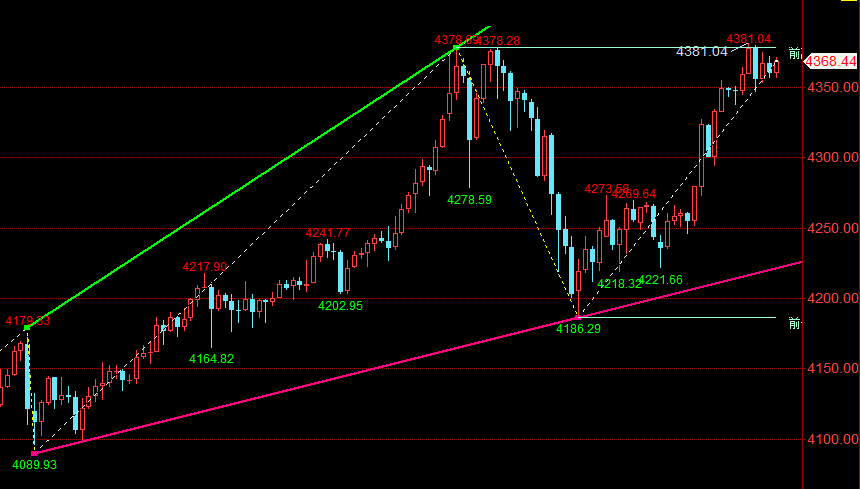
Core Viewpoint - The spot gold market has shown a "strong breakthrough + high-level fluctuation" characteristic since October 2025, with prices surpassing the historical threshold of $4200 per ounce and continuing to rise, supported by multiple favorable factors [1] Group 1: Current Market Performance - International spot gold prices have been particularly strong, reaching $4360.82 per ounce as of October 21, with a daily increase of 2.90% and a five-day cumulative increase of over 4.8% [2] - Domestic market, represented by Shanghai Gold (Gold T+D), also saw a price of 996.36 yuan per gram, reflecting a 2.35% increase, indicating a close correlation with international prices [2] - Retail demand for physical gold has shown a slight decline due to high prices, with mainstream gold shop prices ranging from 1258 to 1268 yuan per gram, down by 0.86%-1.72% [2] Group 2: Technical Analysis - The daily chart indicates that London gold has broken previous resistance levels, with KDJ and RSI indicators in the overbought zone but not showing clear reversal signals, suggesting continued bullish momentum [3] - Key resistance levels are identified between $4380 and $4400 per ounce, while support levels are at $4300, $4218, and the psychological level of $4200 [3] Group 3: Driving Factors - Three core supportive factors are driving gold prices upward: 1. Increased safe-haven demand due to geopolitical tensions and economic uncertainties, including the U.S. government shutdown and renewed political tensions in Europe [4] 2. Central banks' ongoing large-scale gold purchases, making gold the second-largest reserve asset globally, which reduces the available market supply [4] 3. Shifts in market expectations regarding the Federal Reserve's policies, with dovish expectations leading to a weaker dollar and lower real interest rates, enhancing gold's investment appeal [4] Group 4: Trading Strategies - Short-term trading strategies suggest focusing on the $4300-$4380 per ounce range, with a primary strategy of buying on dips and selling on rebounds [7] - For medium-term investors, buying opportunities are recommended in the $4200-$4250 per ounce range, with a stop-loss set below $4180 [8] - Risk management principles emphasize strict stop-loss and take-profit settings, controlling position sizes, and monitoring key economic data and geopolitical events [9][10] Group 5: Conclusion - The current spot gold market is characterized by a "strong trend + high-level fluctuation" phase, supported by three favorable factors, while caution is advised regarding potential short-term pullbacks due to overbought conditions and resistance levels [11]
强劲反弹近4%!黄金再冲4400美元
Di Yi Cai Jing Zi Xun· 2025-10-21 00:19
Core Viewpoint - The international gold price has surged over 4% due to investor anticipation of recent US-China trade negotiations and US inflation data, alongside rising expectations for further interest rate cuts by the Federal Reserve and increased demand for safe-haven assets [2][3]. Group 1: Market Dynamics - On the previous Friday, gold prices reached a historical high of $4,392 per ounce but fell 1.8% by the end of the day, marking the largest single-day drop since mid-May [3]. - Political and economic concerns are driving gold prices upward, with expectations that prices could reach $4,500 per ounce in the near term [3]. - The US government shutdown has entered its 20th day, affecting key economic data releases and creating a "data vacuum" for investors and policymakers ahead of the Federal Reserve's upcoming meeting [4]. Group 2: Federal Reserve and Interest Rates - The Federal Reserve is facing challenges in assessing the US economy due to the shutdown, which has hindered access to essential economic data [4]. - Market expectations indicate a 99% probability of a rate cut by the Federal Reserve next week, with further cuts anticipated in December and potentially three cuts (75 basis points) next year [4]. Group 3: Central Bank Demand for Gold - HSBC's commodity outlook report suggests that gold's upward momentum may continue until 2026, driven by strong central bank purchases, ongoing fiscal concerns in the US, and expectations of further monetary easing, with a target price of $5,000 per ounce [5]. - Central banks are increasingly viewing gold as a hedge against debt sustainability risks and potential dollar weakness, with sustained high demand expected, particularly from emerging market central banks [5][6]. - The World Gold Council reports that central banks remain strategic buyers of gold, viewing it as a key component of their reserve portfolios amid ongoing geopolitical uncertainties and changing interest rate expectations [6]. Group 4: Geopolitical Factors - The ongoing geopolitical uncertainties and the reliability of fiat currencies are prompting central banks to diversify their reserves by increasing gold holdings [6][7]. - Former US Mint Director Edmund Moy highlights that central banks are concerned about deteriorating US fiscal conditions and economic uncertainties, leading to a desire to reduce exposure to dollar assets [7].
金价“狂飙”之下,“以前是买玉送金,现在买金送玉”
Qi Lu Wan Bao Wang· 2025-10-20 09:34
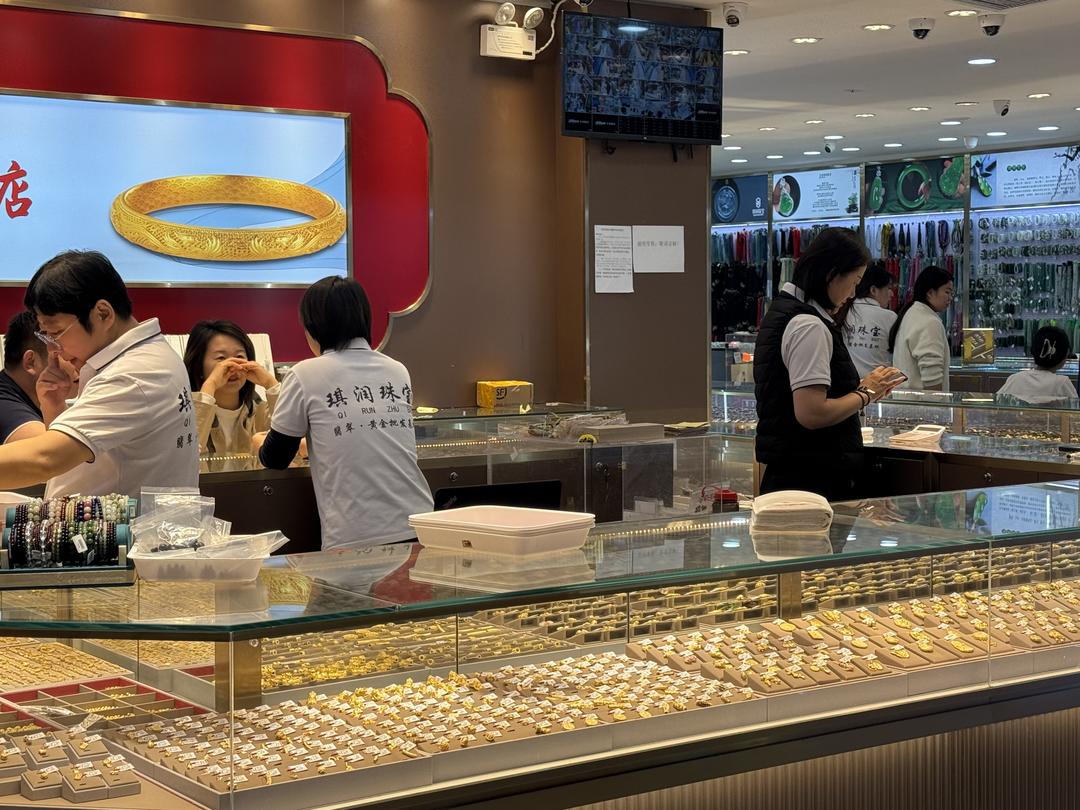
Core Viewpoint - The recent surge in gold prices has led to varied consumer behaviors in the gold jewelry market, with some seeking to cash in on profits while others rush to purchase amid rising prices [1][6]. Price Trends - As of October 20, domestic gold jewelry prices have reached approximately 1200 CNY per gram, a 46.3% increase from 820 CNY per gram in January [1]. - New York gold futures have surpassed 4372.7 USD per ounce, with a single-day increase of 1.58% [1]. Consumer Behavior - There is a noticeable trend of consumers preferring to buy smaller gold jewelry pieces (under 5 grams) to meet decorative needs while minimizing investment costs [3][6]. - The average daily gold recycling volume has reached around 30 grams, with most transactions being exchanges rather than outright sales of gold bars or bricks [1]. Market Dynamics - A significant price disparity exists between wholesale and retail markets, with retail prices exceeding wholesale prices by over 20% [3]. - The "one-price gold" phenomenon has emerged, where certain gold products are perceived as offering better value compared to fluctuating market prices [6]. Investment Insights - The World Gold Council reports that central banks globally are increasing their gold reserves, with a net purchase of 415 tons expected in the first half of 2025 [6]. - The anticipated interest rate cuts by the Federal Reserve are expected to enhance the appeal of non-yielding gold as an investment [6]. Recommendations for Consumers - For decorative purposes, consumers are advised to consider purchasing small-weight jewelry from wholesale markets [7]. - For investment, caution is advised due to potential short-term price corrections, with suggestions to consider dollar-cost averaging or investing in physical gold bars for long-term holdings [7].
英大证券晨会纪要-20251020
British Securities· 2025-10-20 02:52
Market Overview - The market experienced a decline with shrinking trading volume, indicating a cautious sentiment among investors as they await clarity on trade policies [2][12][15] - The Shanghai Composite Index fell by 1.95%, closing at 3839.76 points, while the Shenzhen Component and ChiNext Index saw declines of 3.04% and 3.36% respectively [6][7] - The decline was attributed to several factors, including a drop in trading volume below 2 trillion yuan for two consecutive days, concerns over the performance of the technology sector amidst the earnings season, and uncertainties related to tariff negotiations [2][12][15] Sector Performance - Defensive sectors such as banking and public utilities showed strength, while technology stocks faced significant selling pressure [3][8] - The precious metals sector saw a notable increase due to rising international gold prices, driven by expectations of interest rate cuts and geopolitical tensions [9][10] - Coal stocks also performed well, supported by anticipated improvements in economic conditions and potential policy measures in the fourth quarter [10] Investment Strategy - Investors are advised to adopt a dual approach, focusing on defensive assets in the short term while positioning for growth in sectors like AI, semiconductors, and robotics in the medium term [3][13] - Emphasis is placed on selecting stocks with solid earnings or future earnings potential, while avoiding technology stocks that have risen significantly without performance support [3][13] - There is a recommendation to monitor cyclical sectors and consumer demand for potential rebounds, particularly in undervalued core assets or blue-chip stocks [3][13]
黄金牛市会在什么情况下终结?
雪球· 2025-10-19 13:01
Core Viewpoint - The article discusses the historical context and potential future risks associated with gold price fluctuations, emphasizing that while gold has been a strong performer, it is not immune to significant declines under certain conditions [3][5][31]. Historical Echoes: Major Gold Price Crashes - The article outlines five significant historical instances of gold price crashes, each linked to shifts in macroeconomic conditions and investor sentiment [6]. 1. 1975-1976: First Crisis of Faith (-44%) - The gold price experienced a near halving due to U.S. government intervention and profit-taking by early investors after a significant price surge following the end of the Bretton Woods system [7][8][9][10]. 2. 1980-1982: "Volcker Shock" and the Start of a Two-Decade Bear Market (-65%) - A dramatic price drop occurred as the Federal Reserve raised interest rates to combat inflation, reversing the attractiveness of gold as a non-yielding asset [13][14][15][16][17]. 3. 1996-1999: "Barbaric Relic" Abandoned (-40%) - The rise of the internet and technology stocks led to a decline in gold's appeal, compounded by significant selling from central banks, particularly in Europe [19][20][21]. 4. 2008 Global Financial Crisis: "Indiscriminate Selling" (-34%) - During the financial crisis, gold prices fell sharply as institutions liquidated assets for cash, despite gold's status as a safe haven [23][24]. 5. 2011-2015: End of the QE Feast (-45%) - The end of quantitative easing led to a significant market shift, with investors fleeing gold in anticipation of reduced monetary stimulus [27][28][29]. Current Reality: Conditions for a Major Gold Price Decline - The article identifies several conditions that could lead to a significant decline in gold prices, emphasizing the need for a structured framework to assess risks [31]. Condition 1: Return to Hawkish Monetary Policy - A shift back to hawkish monetary policy and rising real interest rates could significantly increase the opportunity cost of holding gold [32]. Condition 2: Global Return to Stability - A reduction in geopolitical risks and a return to strong economic growth could diminish the demand for gold as a safe haven [33]. Condition 3: Reversal of Central Bank Gold Purchases - A halt or reversal in gold purchases by central banks, particularly in China, could undermine the current bull market [35]. Condition 4: Technical Breakdown and Liquidity Crisis - A breach of key technical support levels could trigger automated selling, while a liquidity crisis could lead to gold being sold off to cover losses in other areas [36]. Conclusion - The article concludes that while the current gold bull market is driven by unique narratives, the ultimate threats remain high real interest rates and strong risk appetite. Investors should remain vigilant and prepared to protect profits when certain historical indicators emerge [37][38].
午后,A股再度全线走弱!发生了什么?
Mei Ri Jing Ji Xin Wen· 2025-10-17 07:31
Market Overview - The market experienced a significant downturn on October 17, with all three major indices dropping over 2% during the day. The Shanghai Composite Index fell by 1.95%, the Shenzhen Component by 3.04%, and the ChiNext Index by 3.36% [1] - Nearly 4,800 stocks in the market declined, with a total trading volume of 1.94 trillion yuan, an increase of 6.9 billion yuan compared to the previous trading day [2] Sector Performance - Precious metals and gas sectors showed the highest gains, while sectors such as electric grid, photovoltaic, wind power, and controllable nuclear fusion faced the largest declines [2] - The gas sector maintained a steady upward trend, contrasting with the noticeable decline in coal stocks, which had previously seen a significant increase since September 29 [5][7] Policy Changes - A new announcement from the Ministry of Finance, General Administration of Customs, and State Taxation Administration will adjust the duty-free shopping policy for travelers in Hainan, effective November 1. This includes expanding the range of duty-free goods and allowing more domestic products to be sold in duty-free shops [9][10][11] - The policy aims to enhance consumer shopping experiences and support the development of the Hainan Free Trade Port [15] Gold Market Insights - International spot gold prices surged past $4,380 per ounce, marking a historic high and pushing the total market value of gold to over $30 trillion, surpassing the combined market value of the top ten global tech giants [18] - The driving factors for the rising gold prices have shifted from traditional frameworks to a new paradigm influenced by central bank purchases, de-dollarization, and geopolitical risks [18] - Despite concerns about gold being overbought, the overall holdings in gold remain low compared to historical highs, indicating potential for future growth [18]