人民币升值

Search documents
时隔15个月,人民币破7引发资产重估!普通人如何抓住升值红利?专家揭秘三大受益领域
Sou Hu Cai Jing· 2025-12-27 13:49
Group 1 - The offshore RMB exchange rate against the US dollar returned to the "6" range for the first time in 15 months, closing at 6.9973 on December 25, 2025, defying market expectations that it would remain above "7" [1] - The direct driver of RMB appreciation is the decline of the US dollar, particularly after the Federal Reserve announced interest rate cuts, leading to a drop in the dollar index below 100 [3] - The appreciation of the RMB is positively impacting import enterprises, reducing procurement costs for commodities like oil and agricultural products, which translates into improved profit margins [3] Group 2 - Export enterprises are facing challenges due to the RMB appreciation, with a Zhejiang small commodity trader noting that a $100,000 order now yields only 700,000 RMB compared to 730,000 RMB earlier in the year, squeezing profit margins [5] - The capital market's response is mixed; while RMB appreciation has attracted foreign capital into Chinese assets, investors in Hong Kong are experiencing currency exchange losses [5] - The improvement in China's economic fundamentals, with a 5.3% year-on-year increase in export value in USD terms for the first ten months of 2025, is enhancing foreign investment interest in RMB assets [7] Group 3 - Companies are adopting divergent strategies in response to currency fluctuations; some export firms are using forward foreign exchange tools to lock in rates, while import firms are adjusting their procurement schedules [8] - The central bank is maintaining vigilance, emphasizing the need to keep the RMB exchange rate stable and preventing excessive fluctuations, as indicated by the setting of the mid-price at 7.0392 despite market rates breaching 7.0 [8] - The RMB's performance against a basket of currencies shows significant appreciation against the US dollar but remains weak against non-USD currencies like the euro and yen, suggesting limited impact on export competitiveness in those markets [10]

每周推荐 | 人民币破7的持续性?(申万宏观·赵伟团队)
申万宏源宏观· 2025-12-27 13:10
Core Viewpoint - The article discusses the recent appreciation of the RMB, its potential sustainability, and the medium-term outlook for the currency amidst changing economic conditions and external factors [2][3][4]. Group 1: Reasons for Recent RMB Appreciation - The rapid appreciation of the RMB is attributed to the decline in the US dollar index from 99.4 to below 98, influenced by lower interest rate differentials and expectations of intervention by the Bank of Japan [2]. - A surge in currency settlement activity is anticipated to begin this week, with the actual swap points rising significantly, indicating increased trading volume [2]. Group 2: Short-term Sustainability of RMB Appreciation - The ongoing currency settlement wave is expected to support the RMB, with historical data suggesting that after two consecutive quarters of appreciation, the settlement rate typically improves [3]. - The delayed impact of the February Spring Festival may also contribute to the continued improvement in settlement rates over the next month [3]. Group 3: Medium-term Outlook for RMB - With nominal GDP recovery, the RMB and USD may enter a phase of mutual strength, supported by reduced debt pressure and improved investment and profitability by 2026 [4]. - Enhanced external demand and increased export resilience are expected to contribute to a non-typical recovery, potentially keeping the RMB relatively strong [4].

美联储降息托底!人民币升破7,A股春季行情信号已现?
Sou Hu Cai Jing· 2025-12-27 11:59
Core Viewpoint - The offshore RMB has broken the key 7 level against the USD, marking a significant appreciation since early 2025, reaching a new high since October 2024 [1][4]. Group 1: Currency Dynamics - The RMB's strength is primarily supported by the Federal Reserve's monetary policy adjustments, with continuous interest rate cuts in 2025 leading to a weakened USD [4]. - The depreciation of the USD has shifted global capital flows, with funds moving towards emerging markets, including RMB assets, enhancing the RMB's appreciation [6]. Group 2: A-Share Market Performance - The A-share market has shown positive momentum, with the Shanghai Composite Index achieving a seven-day rise and the Shenzhen Component and ChiNext Index recording five consecutive increases [2]. - On December 25, A-share trading volume reached 1.2 trillion, with expectations of total daily volume nearing 2 trillion, indicating a significant increase in market activity [8][10]. Group 3: Future Market Outlook - The RMB's appreciation is expected to continue into the first half of 2026, supported by a relatively loose monetary policy from the Federal Reserve [14]. - The potential return of northbound capital and increased foreign investment in A-shares could trigger a spring market rally, with the RMB breaking the 7 level serving as an important signal [16][17].

战略数据研究 | 专题报告:人民币升值下的”春季躁动“机会有何不同
Changjiang Securities· 2025-12-27 11:58
Group 1: Market Overview - The Shanghai Composite Index achieved an "eight consecutive days" rise, supported by strong domestic capital, with trading volumes exceeding 1.9 trillion CNY on December 25 and 26[4] - The offshore RMB/USD exchange rate has recently strengthened, breaking the 7.0 mark, influenced by the US interest rate cuts and a weaker dollar, becoming a key variable for future market trends[4] Group 2: Investment Strategy - The recommended trading strategy during this RMB appreciation phase is a mid-term focus on "pan-technology" and a short-term defensive approach, emphasizing sectors like commercial aerospace, robotics, and AI applications[1] - Investors are advised to maintain a low position in defensive stocks such as paper and aviation, which directly benefit from RMB appreciation, especially during the annual report forecast period[1] Group 3: Beneficiary Sectors - Beneficiary sectors are categorized into three tiers: - Tier 1: Cost and debt improvement sectors that directly benefit from RMB appreciation, showing high elasticity[4] - Tier 2: Core assets driven by capital flow, benefiting from increased attractiveness of RMB-denominated assets[4] - Tier 3: Asset revaluation opportunities due to the intrinsic value enhancement of RMB-denominated assets[4] Group 4: Historical Context - Since 2017, the RMB has experienced three rapid appreciation phases, each with different underlying logic and market conditions, including core asset bull markets and significant recovery in exports[5] - The current phase differs from previous ones, characterized by domestic capital dominance and a focus on technology-driven growth rather than economic recovery[6]
汇率升值利好三大群体,你的钱袋子变了吗?
Sou Hu Cai Jing· 2025-12-27 10:46
文 |无言 12月25日,离岸人民币兑美元升破7的整数关口。 这事儿说通俗点,就是咱们手里的人民币,在国际市场上购买力提升了。 以前换1万美元要花7.27万人民币,现在7万就够,直接省下2700块。 本来想这只是个普通的汇率波动,后来发现,这波动背后,有人欢喜有人愁。 受益群体:这些人先享升值红利 最先感受到好处的,得是有跨境消费或资金需求的群体。 准备送孩子出国留学的家长,怕是最有体会。 一年学费4万美元,单看汇率变化,就能省下1万多人民币,这笔钱够买好几台平板电脑了。 海淘爱好者的福利也来了。以前500块的进口护肤品,现在470块就能拿下。 航空公司、造纸厂、化工厂这类企业,常年需要进口原材料或借入美元贷款。 人民币每升值一点,它们的成本就会下降一截。 南方航空因汇率变动,每股收益增加了0.05元,中国国航则减少了2.3亿的汇兑损失。 进口100万美元的航油,现在能省下11万人民币。 这些成本的节省,直接体现在了企业的利润表上。 一台2万的进口手表,价格能便宜1000多。 计划出境游的人更不用说,购物成本直接降低了不少,相当于变相省出了部分机票钱。 企业层面,那些背负美元债务或依赖进口的主体,也吃到了红利 ...
人民币破7,有利于中国成为发达国家?单边升值不一定是好事
Sou Hu Cai Jing· 2025-12-26 23:10
Core Viewpoint - The recent appreciation of the Renminbi (RMB) beyond the 7.0 mark has sparked discussions about its potential impact on China's economy and its role in helping China transition to a developed nation status [1] Microeconomic Impact - The appreciation of the RMB has varying effects on different income groups. For low to middle-income groups, the benefits are limited as domestic goods are primarily produced locally, and the impact of reduced import costs on final prices is minimal. In contrast, high-income groups, who engage more in cross-border consumption, benefit from lower costs for imported goods and enhanced overseas purchasing power [3] Macroeconomic Considerations - Relying solely on RMB appreciation to boost per capita GDP and cross the threshold of developed nations is not sustainable. While RMB appreciation can increase GDP figures in USD terms, the current per capita GDP is projected to exceed 140 trillion RMB, translating to approximately $14,300 at a 7.0 exchange rate, and $16,700 at a 6.0 exchange rate. The threshold for developed nations is currently $20,000 and expected to rise to $30,000 by 2035 [4] Trade and Economic Growth - Foreign trade remains a crucial engine for China's economic growth. Despite external pressures such as U.S. tariffs, China's exports have continued to grow, although some sectors are experiencing profit declines due to a "price for volume" strategy. A rapid appreciation of the RMB, combined with U.S. tariff policies, could severely impact export industries, particularly those with thin profit margins, affecting employment and tax contributions [6] Currency Management - A long-term depreciation of the RMB could deter foreign investment, as currency fluctuations directly affect the returns on RMB-denominated assets. For instance, an appreciation from 7.0 to 6.0 could yield a significant exchange gain of approximately 17% even on low-interest deposits [7] Ideal Currency Fluctuation - The optimal scenario for RMB management is to maintain a stable, two-way fluctuation within a reasonable range, such as between 6.8 to 7.2 or 6.5 to 7.0. This approach would attract foreign investment while minimizing adverse effects on export industries and balancing the interests of different consumer groups [9] Conclusion - A pragmatic and stable approach to RMB exchange rate management, avoiding extreme fluctuations, is deemed the most sensible choice for the current economic landscape [10]
人民币“破7”预期升温 岁末结汇潮涌动
Xin Lang Cai Jing· 2025-12-26 19:02
Core Viewpoint - The recent appreciation of the Renminbi against the US dollar is driven by increased foreign exchange settlement demand from export enterprises, creating a positive feedback loop that strengthens the currency [1][2][3]. Group 1: Renminbi Exchange Rate Dynamics - As of December 25, 2025, the Renminbi to US dollar central parity rate was reported at 7.0392, an increase of 79 basis points from the previous trading day, marking the first time since September 2024 that the offshore Renminbi broke the "7" level [1]. - The appreciation of the Renminbi is expected to continue, supported by a weak US dollar index and favorable external conditions for the currency [1][6]. - The increase in foreign exchange settlement demand is attributed to the end-of-year rush from export enterprises, which accelerates the conversion of foreign currency into Renminbi [2][3]. Group 2: Corporate Responses to Currency Fluctuations - Export enterprises are adjusting their foreign exchange management strategies in response to the Renminbi's appreciation, focusing on proactive management rather than passive acceptance of currency fluctuations [2][3]. - Companies are advised to accelerate their foreign exchange settlements and adjust pricing strategies to mitigate the impact of currency appreciation on profit margins [6][7]. - There is a growing emphasis on risk management tools to hedge against currency volatility, with companies encouraged to adopt a "risk-neutral" financial philosophy [7][8]. Group 3: Economic and Policy Context - The Chinese government is expected to implement supportive macroeconomic policies to stabilize growth and employment, which may further bolster the Renminbi's strength [5]. - The overall foreign trade environment is better than anticipated, reducing the necessity for a depreciated Renminbi to stimulate exports, thus creating conditions for moderate appreciation [6]. - The regulatory stance is inclined towards maintaining a stable exchange rate to provide a predictable external environment for businesses [5].
美元大跌10%,人民币破7背后,这是美国谋划的金融迷局?
Sou Hu Cai Jing· 2025-12-26 17:58
Group 1 - The recent appreciation of the Renminbi (RMB) against the US dollar is largely attributed to the weakening of the dollar due to the Federal Reserve's interest rate cuts, rather than a strong performance of the RMB itself [1][4] - The RMB has appreciated approximately 4.5% to 6% since the beginning of the year, while the US dollar index has declined nearly 10%, indicating a relative weakness of the dollar [1][4] - The appreciation of the RMB has mixed implications for different sectors; it benefits importers and students studying abroad by reducing costs, while it poses challenges for export-oriented businesses facing reduced competitiveness [6][9] Group 2 - Export-oriented companies are experiencing pressure as the appreciation of the RMB makes their products more expensive in international markets, potentially leading to a loss of orders and profit margins [6][10] - The end-of-year "settlement tide" drives demand for RMB as export companies convert their dollar earnings into RMB for year-end payments, contributing to the RMB's appreciation [12][10] - Despite the RMB's appreciation against the dollar, it has depreciated against a basket of other currencies, which helps maintain price competitiveness for exports to regions like Europe and Japan [14][10] Group 3 - Market sentiment can amplify the RMB's appreciation, leading to self-reinforcing cycles of investment based on expectations of further appreciation, which could create volatility [15][16] - Financial authorities emphasize the importance of stability in the RMB exchange rate, implementing measures to prevent excessive fluctuations that could disrupt business operations and personal financial plans [15][16] - Experts recommend that businesses and individuals focus on their core operations and manage currency risk through financial instruments, rather than speculating on currency movements [18][19]
重磅,人民币回归6时代,特朗普目的达到?欧央行:美元霸权结束
Sou Hu Cai Jing· 2025-12-26 16:33
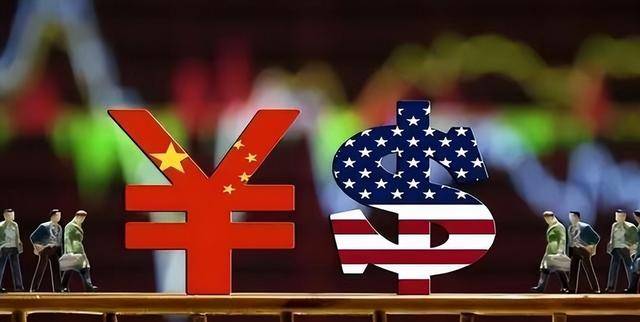
Group 1 - The offshore RMB has surged past the 7 mark against the USD, reaching a high of 6.9960, marking its return to the 6 range for the first time since September of last year, driven by year-end corporate foreign exchange settlements and strong economic data from China [2] - The appreciation of the RMB benefits consumers, making overseas purchases and studying abroad cheaper, while it poses challenges for export companies, particularly smaller firms, as their profit margins are squeezed due to lower RMB returns from USD-denominated sales [4] - The People's Bank of China emphasizes the need to prevent excessive fluctuations in the exchange rate to maintain stability, as the RMB's strength is supported by a robust trade surplus, but future domestic demand and credit conditions could necessitate policy support [4] Group 2 - The weakening of the USD is linked to President Trump's criticism of the Federal Reserve and his push for lower interest rates to alleviate the US debt burden, which has led to a decline in the USD index from 110 to below 100 [6][9] - Trump's influence on the Federal Reserve raises concerns about its independence, as he appoints individuals who support his monetary policy agenda, potentially undermining global investor confidence in the USD [8][9] - The European Central Bank, under Lagarde, is seizing the opportunity to challenge the USD's dominance, advocating for the euro's increased role in international trade and financial systems, as the euro's share of global reserves has risen to 20% [11][13] Group 3 - The return of the RMB to the 6 range is part of a broader shift in the global currency landscape, with the weakening USD accelerating de-dollarization efforts and increasing the euro's prominence [13] - The uncertainty surrounding Trump's policies and the European economic landscape suggests that while RMB assets are becoming attractive to foreign investors, companies must adapt to currency fluctuations and enhance product competitiveness [13] - The overall currency dynamics reflect a competition of national strengths, with China's economic resilience and foreign investment inflows supporting a stable RMB, while the central bank will manage volatility to prevent extreme fluctuations [13]
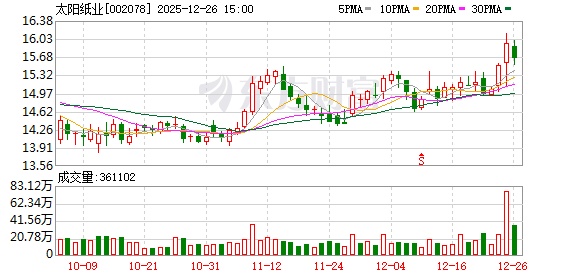
太阳纸业:目前公司的产品出口占比较小
Zheng Quan Ri Bao· 2025-12-26 13:35
证券日报网讯 12月26日,太阳纸业在互动平台回答投资者提问时表示,公司的境外采购原材料主要为 木浆、木片及化工原料等,目前主要以美元结算为主。根据公司生产经营、实施新项目、实施技术改造 等的需要,需要进口商品木浆、木片等生产原材料,需要采购与项目相关的进口设备,人民币的升值有 益于降低公司对前述进口大宗物资、生产设备等的采购成本;同时,人民币的升值会对公司的产品出口 带来一定负面影响,但目前公司的产品出口占比较小。 (文章来源:证券日报) ...