贸易战

Search documents
中方稀土禁令暂停一年,G7连夜组建矿产联盟!中国岂能不留后手?
Sou Hu Cai Jing· 2025-11-10 10:50
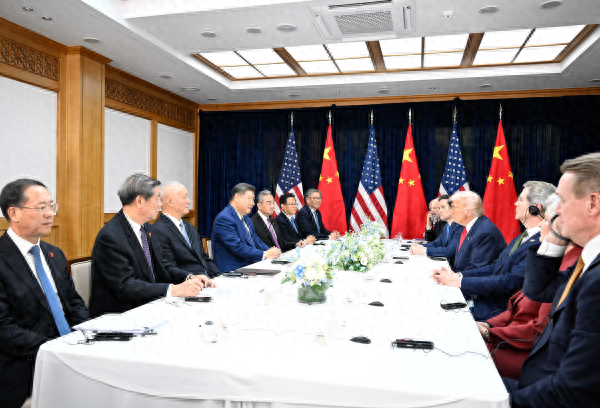
Group 1 - The meeting between the leaders of China and the U.S. resulted in a significant pause in tariff and export control measures, with Trump expressing high satisfaction with the outcomes [1][3] - China committed to purchasing 12 million tons of U.S. soybeans this season and agreed to an annual purchase of 25 million tons over the next three years, indicating a shift in trade dynamics [3] - The U.S. agreed to suspend 50% of its chip export controls to China for one year and paused the 301 investigation into China's shipbuilding industry, reflecting economic pressures beyond mere political confrontation [3][9] Group 2 - China announced a one-year suspension of previously planned rare earth export controls, which is seen as a major outcome of the talks, although it retains a cautious stance due to the U.S.'s history of changing agreements [3][9] - The G7 countries established a critical minerals alliance on the same day as the U.S.-China agreement, aiming to set minimum prices for rare earths and impose high tariffs on products containing Chinese rare earths, indicating a strategic countermeasure [3][4] - The G7's efforts to reduce reliance on Chinese rare earths face significant challenges, as rebuilding supply chains without Chinese technology could take at least a decade [8][9] Group 3 - The structural contradictions between the U.S. and China remain unresolved, and the next year will be a crucial period for strategic maneuvering, with the potential for either deeper cooperation or increased confrontation [9][11] - The U.S. must recognize that collaboration with allies like Australia will not serve as a viable counter to China, as the core issues between the two nations persist [9][11] - The upcoming year is viewed as a critical buffer period for China to enhance its core technologies and diversify its supply chains, particularly in chip manufacturing and rare earth refining [9][11]


东海研究 | 石油石化:原油供给宽松,叠加需求淡季,油价测试底部
Xin Lang Cai Jing· 2025-11-10 08:31
Core Viewpoint - The report discusses the factors influencing oil prices, including geopolitical tensions, OPEC production decisions, and global economic conditions, predicting fluctuations in oil prices between $50 and $70 per barrel in Q4 2025, with a potential drop to $40 in 2026 [16][11][8]. Oil Price Influencing Factors - Geopolitical conflicts and OPEC+ production cuts have supported oil prices, while U.S. shale production and global demand fluctuations have created volatility [8][11]. - OPEC+ is expected to increase production by 137,000 barrels per day in November, with further increases planned for December [28][16]. - The U.S. commercial crude oil inventory as of October 24, 2025, was 416 million barrels, down 9.54 million barrels year-on-year, and 5.91% lower than the five-year average [17][24]. Global Oil Supply and Demand - Global oil demand is projected to grow, with the EIA forecasting an increase of 300,000 barrels per day in 2025 and 240,000 barrels per day in 2026 [7][16]. - The IEA predicts a similar growth trajectory for global oil and liquid production, with increases of 270,000 and 130,000 barrels per day respectively [7][16]. - China's industrial crude oil processing volume increased by 6.8% year-on-year in September 2025, indicating a recovery in demand [24]. Economic Indicators - The U.S. 10-year Treasury yield was approximately 4.11% as of October 31, 2025, with expectations of a potential interest rate cut by the Federal Reserve in December [16][34]. - The manufacturing PMI in China for October 2025 was reported at 49.0%, indicating a contraction in the manufacturing sector [47]. Inventory and Production Insights - As of October 31, 2025, the number of active oil rigs in the U.S. was 546, a decrease of 39 rigs year-on-year, with production remaining stable at 13.64 million barrels per day [24][17]. - Global oil inventories are expected to increase, with a projected average growth of 2.6 million barrels per day in Q4 2025 [16]. Price Predictions and Market Outlook - The Brent crude oil price is expected to average $69 per barrel in 2025, with a decline to $52 per barrel in 2026 [16][7]. - The report highlights the potential for oil prices to test lower levels due to increasing supply and geopolitical uncertainties [16][11].
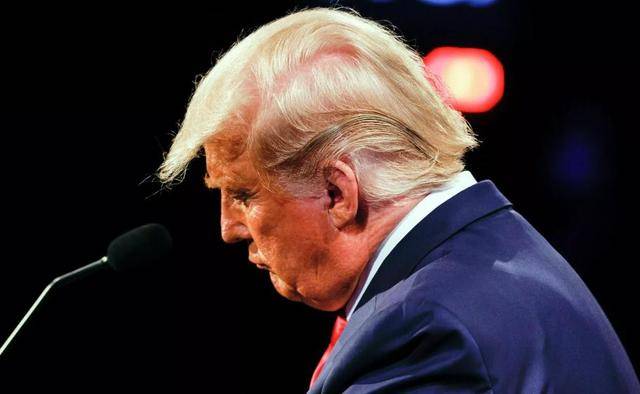
特朗普终于低头了!只因他发现:中国已和二战的美国一样强大
Sou Hu Cai Jing· 2025-11-10 04:10
Core Viewpoint - The article discusses the significant shift in the U.S. perception of China's industrial strength, comparing it to the U.S. during World War II, and highlights the unsustainability of the trade war initiated by Trump against China [3][5][24]. Group 1: Trade War and Economic Impact - Trump acknowledged that imposing a 100% tariff on China is "unsustainable," marking a notable change in his stance towards China [3][5]. - The U.S. has faced multiple economic setbacks due to the trade war, including a decline in GDP by 1.4%, which translates to annual losses in the billions [7][19]. - The trade war has led to significant challenges for U.S. companies, with major players like Nvidia reporting a drastic drop in market share in China [5][7]. Group 2: Industrial Strength Comparison - China's manufacturing output reached $4.98 trillion in 2022, significantly surpassing the U.S. output of $2.81 trillion, making China's manufacturing 1.77 times larger than that of the U.S. [11]. - In shipbuilding, China's annual capacity exceeds 40 million tons, while the U.S. capacity is only 0.2 million tons, indicating a stark contrast in industrial capabilities [11][13]. - China possesses a complete industrial system, allowing it to produce any required product independently, which is a critical advantage in times of conflict [11][13]. Group 3: U.S. Deindustrialization - The U.S. has experienced a deindustrialization process, with manufacturing's share of GDP dropping from 28% in the 1950s to about 11% today [17][19]. - Labor shortages and outdated infrastructure are significant challenges for U.S. manufacturing, with 20% of factories unable to operate at full capacity due to labor supply issues [17][19]. - Trump's tariff policies have inadvertently increased manufacturing costs in the U.S., leading to a further decline in the manufacturing sector's GDP contribution [19][21]. Group 4: Strategic Responses and Global Positioning - China's response to the trade war, including imposing tariffs and export restrictions, demonstrated its strategic resilience, compelling the U.S. to reconsider its approach [26][28]. - The article notes that U.S. allies are distancing themselves due to Trump's "America First" policy, while China is expanding its global partnerships [24][26]. - The historical context of industrial strength is emphasized, with the article warning that the U.S. could face dire consequences if it does not address its industrial decline [28].
特朗普一战四伤!印度梦碎、日本掏空、欧盟跪了、加拿大背刺警告
Sou Hu Cai Jing· 2025-11-09 17:12
Core Viewpoint - The article discusses the unintended consequences of the global tariff war initiated by Trump, highlighting how four countries—India, Canada, Japan, and the European Union—suffered significant economic setbacks as a result of their attempts to navigate the trade conflict [1][3]. Group 1: India - India aimed to become the next global manufacturing hub through the "Make in India" initiative but faced severe setbacks due to Trump's tariffs, which reached as high as 50% [4][6][8]. - The immediate impact included a capital outflow of $17 billion, a more than 90% drop in foreign investment, and significant declines in various sectors, including a 25% drop in the apparel industry and a 30% decrease in seafood exports [9][11]. - India's historical attempts to challenge major powers have repeatedly ended in failure, with the current situation echoing past economic struggles [13]. Group 2: Canada - Canada, closely allied with the U.S., faced a maximum tariff increase of 39%, particularly affecting steel and aluminum exports, leading to a 27% drop in overall exports [15][17]. - The Canadian economy was heavily reliant on the U.S. market, with 99% of its natural gas and 97% of its oil exported to the U.S., making it vulnerable to U.S. trade policies [19][21]. - The Canadian government attempted to appeal to American sentiment but ultimately found itself in a precarious position, losing significant economic ground [19][21]. Group 3: Japan - Japan invested $550 billion in the U.S., increased military spending, and purchased large quantities of American goods, including products that had little market demand in Japan [23][25]. - The financial burden of these investments and purchases was substantial, with Japan effectively paying a "protection fee" without receiving significant concessions in return [25][26]. - The outcome for Japan was a financial loss without the expected benefits, highlighting the pitfalls of its strategy to align closely with the U.S. [26]. Group 4: European Union - The EU initially resisted U.S. tariffs but ultimately conceded to a deal that involved purchasing $750 billion in U.S. energy and investing $600 billion in U.S. strategic industries [27][29]. - The EU's concessions led to significant losses in its automotive sector, with Volkswagen reporting a €1.3 billion profit loss in just six months and potential cumulative losses exceeding €400 billion over three years [31]. - The overall cost to the EU from these trade negotiations was estimated at over $1.3 trillion, resulting in increased dependency on U.S. energy and a hollowing out of its industrial base [33]. Conclusion - The article illustrates that the trade war, while perceived as a U.S.-China conflict, resulted in collateral damage for other nations, which miscalculated their positions and suffered economically as a result [35][37].
中方真的掐到美国命根子了?特朗普嘴硬不服,这次真的无力回天!
Sou Hu Cai Jing· 2025-11-09 06:18
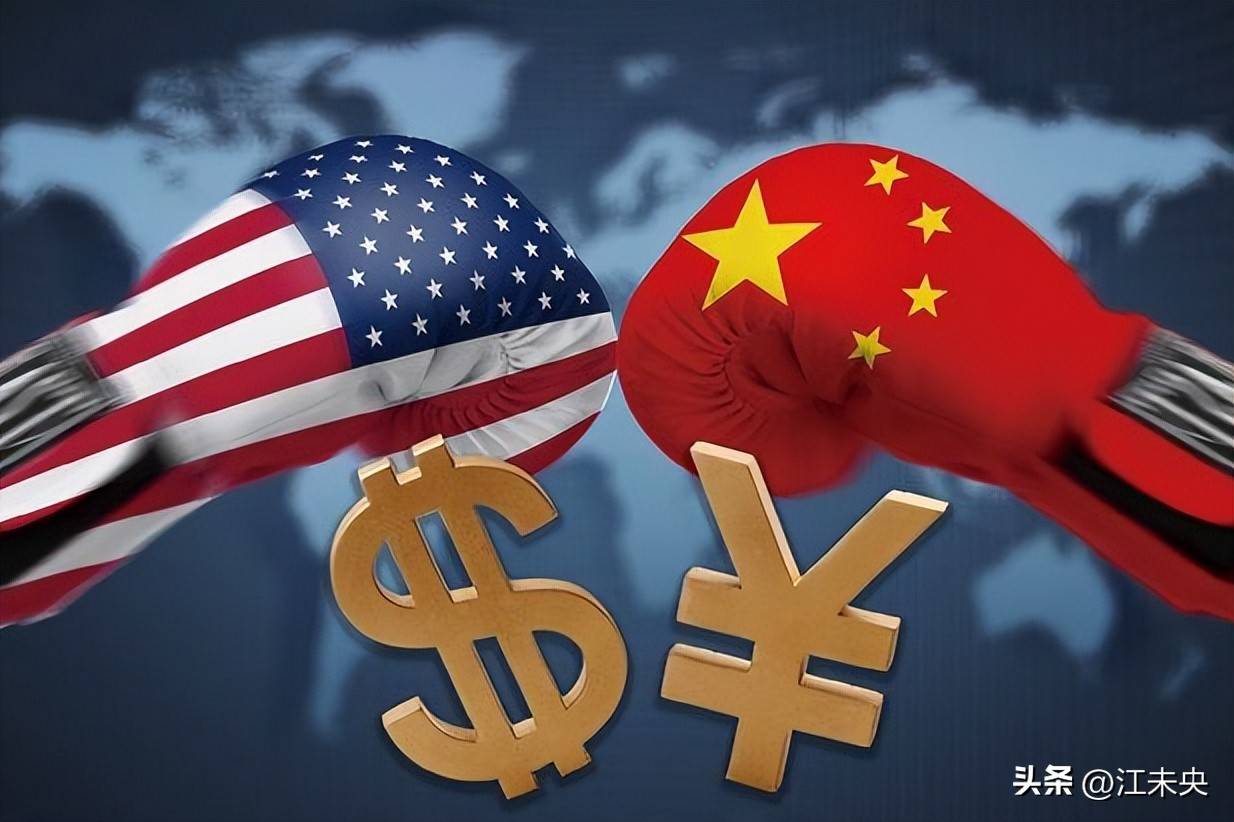
Core Insights - The unexpected "counteraction" from China has emerged as the U.S. attempts to impose extreme pressure on its economy, leading to a stronger China instead of a weakened one [1][4] - The current state of U.S.-China economic relations has evolved beyond mere confrontation, resembling a "boomerang" effect where pressure applied by one side ultimately rebounds back to the initiator [1][4] Group 1: Economic Impact - The extreme pressure from both sides has triggered unforeseen counteractions in economic, technological, and strategic dimensions, forcing a reevaluation of mutual interests [1][4] - The initial U.S. tariffs, intended to harm China, have instead resulted in significant domestic inflation in the U.S., affecting ordinary citizens and farmers [8][12] - Despite the intense conflict, trade volumes between the U.S. and China have not significantly declined, indicating a tightly interwoven supply chain that is difficult to decouple [8][12] Group 2: Technological Dynamics - The U.S. shifted from blunt tariffs to more precise measures like technology restrictions, targeting Chinese companies in critical sectors such as semiconductors [10][12] - China's response included anti-dumping investigations on U.S. chips and export controls on strategic products like rare earths and lithium batteries, which are vital for U.S. industries [12][14] - The U.S. technology blockade inadvertently catalyzed China's innovation in semiconductors and new materials, transforming external pressure into internal motivation for growth [13][14] Group 3: Strategic Reassessment - The ongoing technological battle has altered the nature of the competition, prompting both nations to reassess their strategic positions and recognize the futility of zero-sum games [14][19] - Negotiation has become crucial as both sides acknowledge the need for dialogue to align with realistic interests, especially amid global economic challenges [16][19] - The U.S. continues to engage in tactical maneuvers during negotiations, attempting to leverage additional pressure while China balances its strategic responses with cooperative signals [17][19] Group 4: Future Outlook - The persistent "counteraction" has led to a mutual understanding of interdependence, suggesting that future economic relations will focus on mutual benefits rather than outright conflict [19][21] - The true victor in this ongoing competition will be the party that effectively understands and navigates the "counteraction" dynamics, avoiding a scenario where both sides suffer [21]
鲍韶山:把目前实施关税视作美国的“胜利”,这显然错了
Guan Cha Zhe Wang· 2025-11-09 05:40
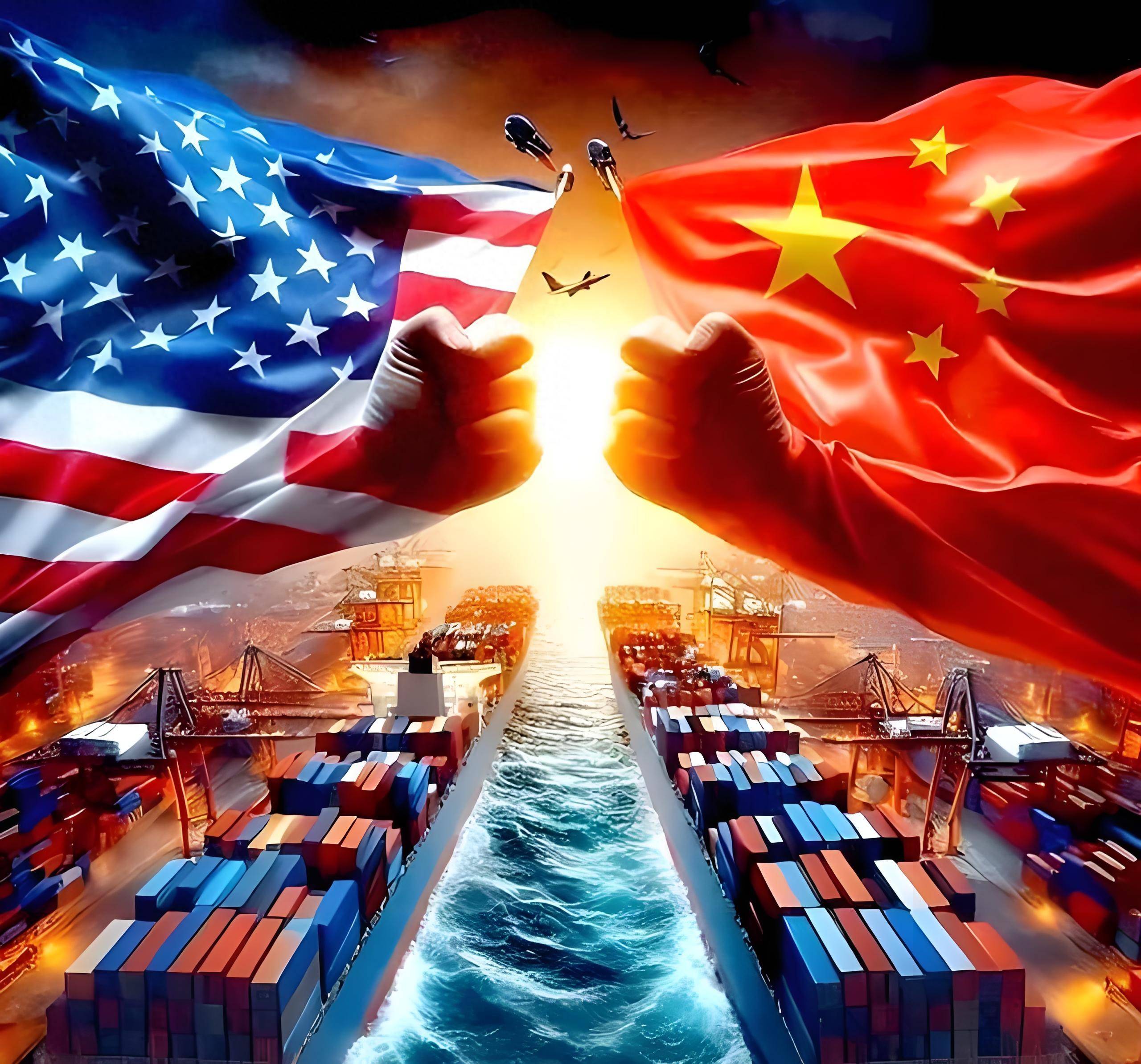
Core Insights - The meeting between the leaders of China and the U.S. in Busan indicates a significant strategic failure for the U.S. in its aggressive trade stance against China, which has not only failed to revive American industry but has also strengthened China's economic resilience [1][4][21]. Trade Agreements and Negotiations - The U.S. agreed to cancel the 10% "fentanyl tariff" and suspend the 24% "reciprocal tariff" on Chinese goods for one year, which includes products from Hong Kong and Macau [1][2]. - China will adjust its countermeasures accordingly, and both sides agreed to extend certain tariff exemptions [2]. - The U.S. will also suspend new export restrictions announced on September 29 for one year, which expanded the scope of its "entity list" [2]. - China will respond by suspending its previously announced export controls related to rare earth elements for further study [2]. - Both countries reached consensus on enhancing cooperation against fentanyl, expanding agricultural trade, and addressing individual business cases [2]. Economic Resilience of China - China's nominal GDP is projected to reach $19.5 trillion by 2025, indicating strong defensive capabilities against U.S. trade provocations [5]. - In 2024, China's exports to the U.S. are expected to account for approximately 2.8% of its GDP, which is a significant but manageable portion of its total exports [5]. - Even with a hypothetical loss of the U.S. market due to tariffs, the impact on China's GDP growth would be minimal, with a potential reduction of only about 0.144% [5][6]. Domestic and Global Economic Strategies - China's domestic consumption and investment, which together account for 80% of its GDP, provide a robust buffer against external shocks [6]. - The "dual circulation" strategy prioritizes domestic markets while expanding international trade ties, enhancing structural stability [10]. - China's investments in technology and green energy sectors have maintained industrial momentum, with R&D spending growing at 10% annually since 2018 [10]. U.S. Economic Vulnerabilities - The U.S. economy, despite its size, faces significant structural weaknesses, with over 60% of American households living paycheck to paycheck [11]. - Tariffs on Chinese imports could lead to increased consumer prices, further straining household budgets and potentially reducing GDP by 0.5% to 1% [12]. - The U.S. manufacturing sector has not seen the expected revival, with job levels stagnating since 2010 despite tariff policies [12]. Supply Chain Dependencies - The U.S. heavily relies on China for critical materials, particularly in the clean energy sector, where disruptions could significantly impact project viability and costs [13]. - China's dominance in rare earth elements poses a strategic challenge for the U.S., which depends on these materials for various high-tech and defense applications [14][17]. Financial Leverage of China - China holds substantial U.S. debt, providing it with significant leverage in trade negotiations [19]. - A potential halt in trade could lead to a depreciation of the dollar, increasing inflationary pressures in the U.S. and complicating its fiscal situation [19][20]. Global Implications - The trade war has not only failed to achieve its intended goals but has also led to a decline in U.S. global influence, with allies adjusting their strategies in response [21][22]. - The emergence of a multipolar world is becoming evident, as countries adapt to the new realities of international relations [21][23].
特朗普赚麻了,大豆可以出口到中国了,承认关税让美国人付出代价
Sou Hu Cai Jing· 2025-11-08 19:12
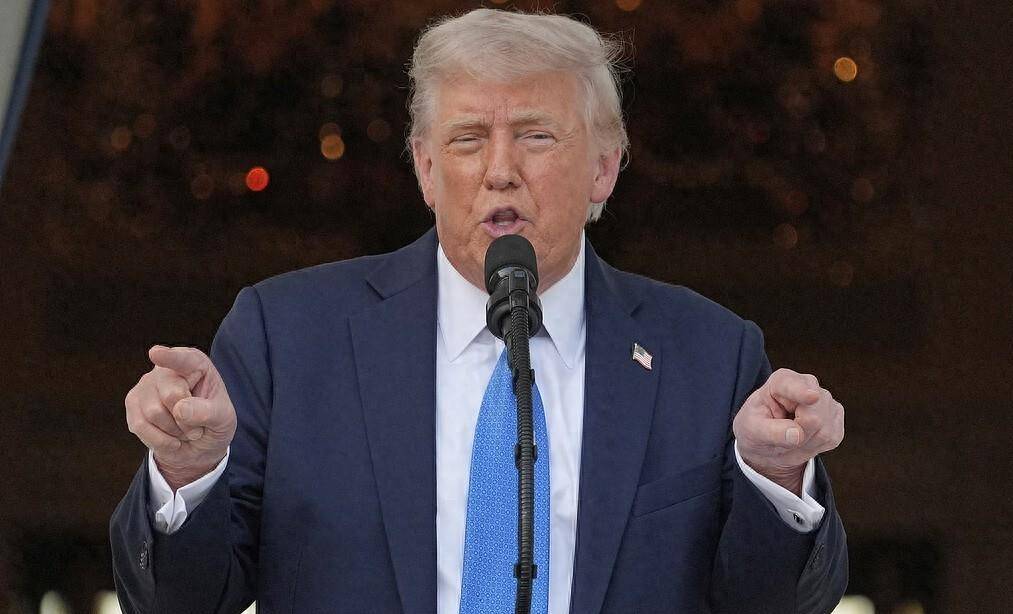
Core Viewpoint - Former President Trump acknowledged that tariffs may indeed be costing Americans, contradicting his previous stance that foreign entities bear the burden of tariffs [1][12] Group 1: Trade Dynamics - In the months leading up to Trump's admission, U.S. soybean farmers faced significant challenges, with a notable decrease in soybean planting area from 34.82 million acres to 33.4 million acres and 32.42 million acres in July and August 2025, respectively [3][5] - U.S. soybean exports to China plummeted to 5.93 million tons in the first eight months of 2025, a stark decline from 26.8 million tons in the same period the previous year, with exports to China hitting zero for five consecutive months [5][10] - China has shifted its soybean imports to South America, particularly Brazil, with August 2025 imports reaching a record high of 12.27 million tons, and 73.31 million tons imported in the first eight months, marking a 4% year-on-year increase [5][7] Group 2: Economic Impact on U.S. Farmers - The trade war has resulted in an estimated loss of $45 billion for U.S. agriculture, with farmers facing rising production costs due to increased fertilizer prices and supply chain disruptions [9][10] - The number of small business bankruptcy filings among U.S. farmers reached a five-year high, with 259 filings from April 2024 to March 2025, nearly double the number from the previous year [9][10] - The U.S. government considered using $10 billion to $14 billion in tariff revenue to subsidize farmers, but this amount is seen as insufficient compared to the actual losses incurred [10][12] Group 3: Negotiation and Policy Changes - In August 2025, U.S.-China trade negotiations resumed in Stockholm, with soybean exports becoming a critical bargaining chip amid increasing pressure on U.S. farmers [10][12] - On November 10, 2025, China announced the restoration of soybean import qualifications for three U.S. companies, which accounted for over 8 million tons of soybean exports to China in 2024, representing 18% of total U.S. soybean exports to China [10][12] - Despite the restoration of import qualifications, U.S. soybeans still face competitive pricing challenges, with U.S. soybeans priced at $1,026 per ton compared to Brazilian soybeans at $580 per ton [7][13]
能不能替代中国,美国大豆协会揭了特朗普的底
Sou Hu Cai Jing· 2025-11-08 14:03
Group 1 - The article discusses the ongoing trade tensions between the United States and China, highlighting that despite aggressive tariffs imposed by the U.S., China has not shown signs of backing down and has retaliated in kind [1][2] - The U.S. government's attempts to leverage advanced semiconductor technology against China have not succeeded, as major U.S. chip companies like NVIDIA have exited the Chinese market, allowing local Chinese firms to fill the gap [1][2] Group 2 - The U.S. soybean export market heavily relies on China, with the American Soybean Export Association acknowledging that China is an irreplaceable market for U.S. soybeans [3][5] - Despite the cessation of soybean imports from the U.S. by China, the American Soybean Export Association continues to engage with the Chinese market, emphasizing the importance of maintaining strong agricultural ties [5][6] Group 3 - China has diversified its sources for liquefied natural gas and soybeans, turning to countries like Russia, Qatar, and Brazil, which has now become the largest supplier of soybeans to China, capturing 71.6% of the market share [6][7] - Brazilian soybeans are not only comparable in quality to U.S. soybeans but are also cheaper by 15%, making them a more attractive option for China [7][9] Group 4 - The oversupply of soybeans in the U.S. has led to significant storage issues, with reports indicating that 70% of soybean warehouses in North Dakota are full, and farmers are facing financial distress due to unsold crops [9][11] - The U.S. soybean farmers are heavily impacted by the loss of the Chinese market, which previously accounted for over half of U.S. soybean exports, leading to potential bankruptcies among farmers [11]

中国重启美豆进口,美国豆农为何笑不出来?问题出在美方
Sou Hu Cai Jing· 2025-11-08 11:11
Core Viewpoint - China's decision to resume imports of U.S. soybeans is influenced by market demand and supply chain security, rather than being a simple trade restart [1][5] Group 1: Import Dynamics - China has agreed to import 12 million tons of U.S. soybeans by the end of 2025, reflecting its reliance on soybean imports [1] - The U.S. soybean's advantages include lower costs, higher oil yield, and stable supply compared to Brazilian soybeans, which face seasonal supply fluctuations [1][3] - The recent El Niño phenomenon has reduced Brazilian soybean production, causing prices to rise approximately 15% above U.S. soybean prices, prompting Chinese importers to shift to U.S. soybeans [1] Group 2: Trade Agreements - In exchange for resuming soybean imports, the U.S. has agreed to reduce tariffs on Chinese imports by 10 percentage points starting November 10, 2025, and suspend high tariffs until November 10, 2026 [5] - The agreement aims to establish a long-term stable "soybean backup" mechanism to mitigate supply chain risks for China [3] Group 3: Economic Implications - The halt in U.S. soybean imports previously led to significant challenges for U.S. soybean farmers, including price drops and storage issues, with 70% of North Dakota's soybean warehouses full and at least 3 million tons without storage [5] - The trade disruption has resulted in job losses across related industries, including truck drivers and port workers, with tens of thousands of manufacturing jobs lost [5] Group 4: Strategic Considerations - China's higher production costs and lower yields in soybean farming compared to the U.S. and Brazil necessitate reliance on imports to ensure food security [7] - The ongoing trade tensions and U.S. tariff policies reflect a conflict between economic rationality and hegemonic thinking, with the trade war illustrating the pitfalls of using tariffs as leverage [7] Group 5: Future Outlook - Despite the resumption of soybean imports, U.S. trade representatives continue to pursue investigations against China, indicating potential future tensions [10] - The U.S. government's inconsistent trade policies may create uncertainty for U.S. soybean farmers, who are left to navigate a volatile trade environment [11]

黄金走出阴霾!
Xin Lang Cai Jing· 2025-11-08 02:52
Core Viewpoint - The gold market experienced volatility with a significant drop during the US trading session, failing to maintain the 4000 mark due to various factors including Federal Reserve officials opposing a rate cut and reduced geopolitical risks [2][3]. Market Performance - Gold prices peaked at 4020-50 but faced resistance, leading to a drop [2]. - The current international gold price is reported at 4002, with domestic gold prices at 919.5 and 916.5 for different contracts [4]. Central Bank Activity - The World Gold Council reported that global gold ETFs saw net inflows for five consecutive months in October, with daily trading volumes reaching historical highs [2]. - The People's Bank of China has been the largest buyer of gold among global central banks since 2022, indicating a trend in central bank purchases [3]. Technical Analysis - The gold market is showing a potential upward trend if it maintains above the support level of 3965, with resistance at 4083 [6]. - A head and shoulders bottom pattern is forming, suggesting a short-term upward movement [6]. - Caution is advised as the market may face challenges in sustaining upward momentum before 11 AM [7].