
CPI

Search documents
国内观察:2025年11月通胀数据:通胀虽有分化,不改积极趋势
Donghai Securities· 2025-12-10 10:42
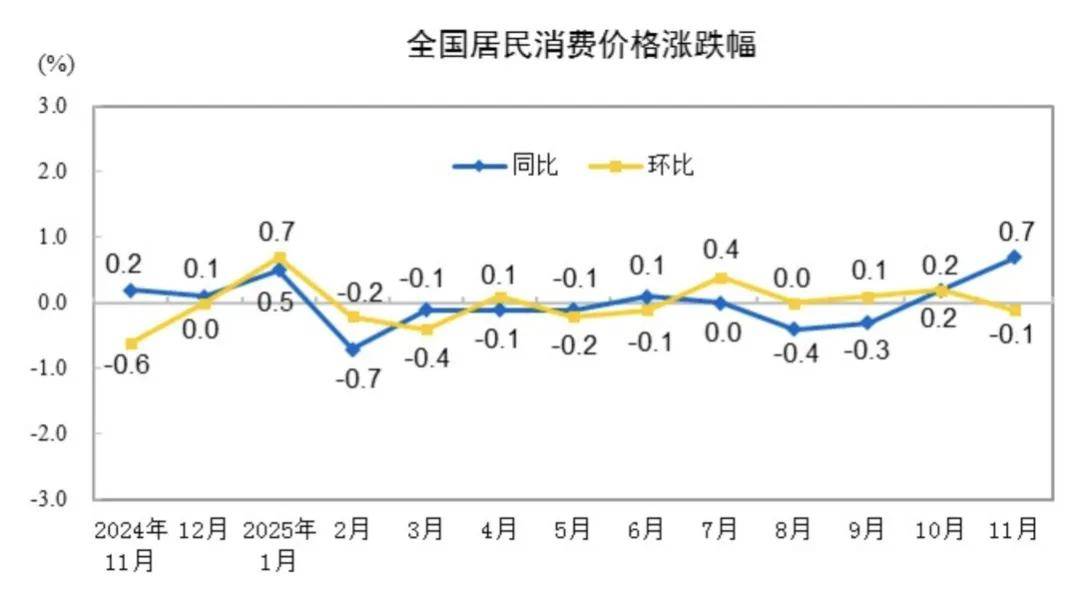
Inflation Data Overview - In November 2025, the CPI year-on-year increased to 0.7%, up from 0.2% in the previous month, while the month-on-month change was -0.1%, compared to 0.2% previously[2] - The PPI year-on-year decreased by 2.2%, slightly worse than the previous month's decline of 2.1%, but the month-on-month change remained positive at 0.1%[2] CPI Insights - The CPI's year-on-year increase was supported by fresh vegetables and gold jewelry, with fresh vegetable prices rising by 7.2% month-on-month, significantly higher than the 5-year average of -4.9%[2] - The core CPI remained stable at 1.2% year-on-year, with a month-on-month change of -0.1%, slightly better than seasonal expectations[2] PPI Analysis - The PPI's month-on-month growth for two consecutive months indicates a relatively positive trend, despite a slight widening in the year-on-year decline[2] - Key contributors to PPI performance include coal prices rising by 4.1% month-on-month due to seasonal demand, while oil-related industries continued to face downward pressure from international oil prices[3] Market Outlook - The report suggests that if the trend of decreasing breeding sows continues, a turning point in pork prices may be observed in the second half of next year[2] - The upcoming Central Economic Work Conference is expected to provide additional insights on policies aimed at expanding domestic demand and countering internal competition[2]
固定收益点评:菜价推升CPI
GOLDEN SUN SECURITIES· 2025-12-10 10:38
证券研究报告 | 固定收益点评 gszqdatemark 2025 12 10 年 月 日 固定收益点评 菜价推升 CPI 11 月通胀数据显示,CPI 涨幅扩大,PPI 降幅小幅走阔。11 月 CPI 同比 涨幅扩大 0.5 个百分点至 0.7%,连续两个月上涨且为 2024 年 3 月份以 来最高,CPI 环比季节性也明显高于前两年。PPI 同比降幅小幅扩大 0.1 个 百分点至-2.2%,环比保持 0.1%的增长。 菜价是本月 CPI 回升的主要原因。11 月 CPI 同比上涨 0.7%,上月为上 涨 0.2%,环比下跌 0.1%。其中,食品价格由上月下降 2.9%转为上涨 0.2%,对 CPI 同比的影响由上月下拉 0.54 个百分点转为上拉 0.04 个百 分点。食品中菜价上涨最为明显,受天气因素等影响,鲜菜价格由上月下 降 7.3%转为上涨 14.5%,对 CPI 同比的上拉影响比上月增加约 0.49 个 百分点。由于蔬菜生长周期短,因而难以持续涨价,短期快速上涨之后往 往会由于供给增加而回落。 核心 CPI 平稳,金价影响依然显著。核心 CPI 同比上涨 1.2%,与上月持 平,涨幅连续 3 个 ...
菜价金价带动11月CPI上行,物价进一步企稳
Xin Jing Bao· 2025-12-10 10:25
Group 1 - The core viewpoint of the articles indicates that consumer prices are recovering, with the Consumer Price Index (CPI) showing a month-on-month decrease of 0.1% but a year-on-year increase of 0.7%, marking the highest increase since March 2024 [1][2] - The increase in CPI is primarily driven by a turnaround in food prices, which shifted from a decrease of 2.9% in the previous month to an increase of 0.2% in November, contributing positively to the CPI [2][3] - The core CPI, excluding food and energy, rose by 1.2% year-on-year, indicating a gradual recovery in consumer spending [2][3] Group 2 - The Producer Price Index (PPI) increased by 0.1% month-on-month, marking two consecutive months of growth, although the year-on-year decline widened to 2.2% [5][6] - The PPI's year-on-year decline is attributed to a high comparison base from the previous year, and the industrial market remains characterized by weak demand despite some seasonal price increases [6][7] - Looking ahead, the PPI is expected to decline by approximately 0.5% year-on-year in 2026, with a narrowing of the decline due to ongoing policy measures aimed at stabilizing prices and enhancing competition [7]
CPI同比涨幅扩大 核心CPI继续上涨——透视11月物价数据
Xin Hua Wang· 2025-12-10 09:47
新华社北京12月10日电 题:CPI同比涨幅扩大 核心CPI继续上涨——透视11月物价数据 新华社记者王雨萧 国家统计局最新发布数据显示,11月份,全国居民消费价格指数(CPI)环比略降0.1%,同比上涨 0.7%,扣除食品和能源价格的核心CPI同比上涨1.2%,涨幅连续3个月保持在1%以上。 董莉娟分析,国内部分行业需求季节性增加带动价格上涨。各地"迎峰度冬"开始,煤炭、燃气需求季节 性增加,煤炭开采和洗选业价格环比上涨4.1%,煤炭加工价格上涨3.4%,燃气生产和供应业价格上涨 0.7%。入冬以来,防寒保暖产品进入消费旺季,毛织造加工价格上涨0.6%,羽绒制品加工价格上涨 0.2%。 "PPI同比下降2.2%,降幅比上月扩大0.1个百分点,主要受上年同期对比基数走高影响。"董莉娟说,随 着我国各项宏观政策不断显效,价格呈现积极变化。 综合整治"内卷式"竞争成效显现—— 重点行业产能治理持续推进,市场竞争秩序不断优化,煤炭开采和洗选业、光伏设备及元器件制造、锂 离子电池制造价格同比降幅均已连续多个月收窄;新能源车整车制造价格降幅比上月收窄0.6个百分 点。 新兴产业快速发展,带动相关行业价格同比上涨—— " ...
东海期货11月宏观数据观察:CPI同比超预期回升,PPI降幅有望收窄
Xin Lang Cai Jing· 2025-12-10 09:38
Group 1 - In November, China's CPI increased by 0.7% year-on-year, matching expectations, and up from 0.2% in the previous month [1][19] - The PPI decreased by 2.2% year-on-year, slightly worse than the expected decline of 2.0% and a previous decline of 2.1% [1][19] - The rise in CPI was driven by a significant rebound in food prices, while PPI's decline was influenced by high base comparisons from the previous year and ongoing supply-demand structural optimization in certain industries [20][21] Group 2 - The overall improvement in domestic supply-demand relationships is expected to lead to a gradual narrowing of PPI declines, supported by ongoing capacity governance in key industries [20][21] - International commodity prices have generally risen, while domestic demand remains weak, but some industries are experiencing price increases due to improved supply-demand fundamentals [20][21] - The core CPI maintained a high year-on-year growth rate of 1.2%, with non-food prices rising by 0.8%, indicating effective consumer demand policies [20][21] Group 3 - Food prices shifted from a decline of 2.9% last month to an increase of 0.2%, significantly impacting the CPI [20][21] - Energy prices fell by 3.4% year-on-year, contributing to the overall inflationary pressure [20][21] - The service sector saw price increases, with notable rises in household appliances and clothing prices, reflecting the effectiveness of domestic demand expansion policies [20][21]


2025年11月价格数据点评:CPI涨势能否延续?
EBSCN· 2025-12-10 08:52
Group 1: CPI Analysis - In November 2025, the CPI increased by 0.7% year-on-year, up from 0.2% in the previous month, aligning with market expectations[2] - The main driver for the CPI increase was the turnaround in food prices, particularly fresh vegetable prices, which rose by 14.5% year-on-year, compared to a decline of 7.3% in the previous month[4][5] - Core CPI remained stable at 1.2% year-on-year, with gold prices contributing significantly to this stability, while service prices showed a slowdown due to seasonal demand[6] Group 2: PPI Analysis - The PPI decreased by 2.2% year-on-year in November, slightly worse than the previous month's decline of 2.1%, primarily due to a high base effect from the previous year[8] - PPI showed a month-on-month increase of 0.1%, marking the second consecutive month of growth, driven by rising prices in the coal and non-ferrous metal sectors[8][9] - The "anti-involution" effect is evident as downstream consumer goods prices stabilize, while upstream coal and metal prices continue to rise[11] Group 3: Future Outlook - The CPI is expected to maintain its upward trend in December, supported by low base effects and rising food prices, with a projected average CPI growth rate of 0.7% for the coming year[10] - The PPI's year-on-year decline is anticipated to narrow, influenced by global manufacturing recovery and domestic supply-demand adjustments, although the timing for a return to positive growth remains uncertain[11] - The recovery of domestic demand and the potential for a rebound in pork prices are critical factors that could influence CPI trends in the upcoming months[10]
2025年11月通胀数据点评:通胀延续温和回升
Tebon Securities· 2025-12-10 08:47
Group 1: Inflation Overview - In November 2025, China's CPI increased by 0.7% year-on-year, with a month-on-month decrease of 0.1%[4] - Core CPI, excluding food and energy, rose by 1.2% year-on-year, maintaining above 1% for three consecutive months[4] - Food prices shifted from a decline of 2.9% to a slight increase of 0.2%, contributing positively to the CPI[4] Group 2: PPI and Industrial Prices - The PPI decreased by 2.2% year-on-year, with the decline slightly widening from the previous month's -2.1%[4] - The mining industry saw a month-on-month price increase of 1.7%, while coal mining prices surged by 4.1% due to winter energy demand[3] - Prices in the raw materials sector fell by 2.9% year-on-year, indicating continued supply pressure in some industries[3] Group 3: Sector Performance - Non-food prices rose by 0.8% year-on-year, with household goods prices increasing by 4.9%[4] - The price of fresh vegetables rebounded significantly, rising by 14.5% year-on-year after nine months of decline[4] - Durable goods prices decreased by 3.6% year-on-year, reflecting weak demand in that segment[5] Group 4: Future Outlook - Expectations suggest that food price declines may continue to narrow, potentially lifting CPI further[5] - Industrial product prices are anticipated to stabilize and improve due to ongoing supply-side optimization and marginal demand recovery[5] - Risks include escalating US-China trade tensions and uncertainties regarding the Federal Reserve's interest rate decisions[5]
CPI升至20个月新高,对A股意味着什么?
Sou Hu Cai Jing· 2025-12-10 08:44
根据国家统计局公布的最新数据,2025年11月份,全国居民消费价格同比上涨0.7%,是2024年3月份以来最高。 我之前曾说过,上市公司股价上涨底层逻辑有两个,一是企业业绩上升。二是企业产品涨价。在其它条件不变的情况下,如果CPI上涨肯定有助于推动股 价上升。 举个例子: 一瓶白酒,原来成本50卖100,赚50。现在经济好了,大家愿意喝,酒厂把价格提到110,成本还是50,现在就赚60。产品价格温和上升,对很多企业来 说,就像是生意场的"暖风",货好卖了,价好谈了,账本好看了。 投资者看到企业业绩改善,会预测它未来赚得更多,就愿意提前出更高的价钱买它的股票。股票就像公司的"所有权凭证"。公司更赚钱了,这张凭证 的"含金量"自然就高了,这是支撑股价最根本的力量。 今年中国实现5%的全年经济增长目标应该问题不大了。根据海关总署发布数据,2025年11月,我国货物贸易进出口总值3.9万亿元,同比增长4.1%,比上 月加快4个百分点。前11个月,我国贸易顺差达到1.08万亿美元。说明中国外贸的强大韧性。 这种情况下,一方面物价数据、美联储降息为中国央行降息打开空间。另一方面,强劲的外贸数据下,这个降息的窗口可能给到明 ...
港股异动 | 餐饮股涨幅进一步扩大 11月CPI同比涨幅扩大 餐饮行业已现积极改善信号
智通财经网· 2025-12-10 08:02
中银国际此前发布研报称,行业层面来看,6月以及后续三季度,社零餐饮增速下降,主要是受餐饮消 费大环境影响。但当前市场竞争从价格战逐步走向理性,客单价逐步趋稳。后续企业层面更需关注自身 经营水平建设。 消息面上,12月10日,国家统计局公布数据显示,11月份居民消费价格指数(CPI)同比上涨0.7%,涨 幅扩大;扣除食品和能源价格的核心CPI同比上涨1.2%,涨幅连续3个月保持在1%以上。天风证券此前 指出,餐饮社零10月同比增长3.8%,为自6月以来的最高增幅,呈现积极改善信号。 智通财经APP获悉,餐饮股涨幅进一步扩大,截至发稿,九毛九(09922)涨3.75%,报1.66港元;海底捞 (06862)涨3.6%,报14.12港元;特海国际(09658)涨2.25%,报13.62港元;百胜中国(09987)涨2.02%,报 364.2港元。 ...

11月通胀点评:内需依然偏弱,关注外需波动
Bank of China Securities· 2025-12-10 07:50
宏观经济 | 证券研究报告 — 总量点评 2025 年 12 月 10 日 11 月通胀点评 内需依然偏弱,关注外需波动 11 月 CPI 同比增速符合万得一致预期,PPI 同比增速略低于万得一致预期; CPI 同比上行主要靠食品价格,特别是鲜菜价格的拉动,服务价格环比出现 季节性回落;PPI 环比增速连续两个月增长,但 11 月同比降幅较 10 月小幅 扩大,主要受输入性因素影响。 相关研究报告 《政治局会议点评》20251209 《稳中求进、提质增效》20251208 《全面布局"十五五"》20251208 中银国际证券股份有限公司 具备证券投资咨询业务资格 宏观经济 证券分析师:张晓娇 xiaojiao.zhang@bocichina.com 证券投资咨询业务证书编号:S1300514010002 证券分析师:朱启兵 (8610)66229359 Qibing.Zhu@bocichina.com 证券投资咨询业务证书编号:S1300516090001 11 月 CPI 环比下降 0.1%,同比增长 0.7%,核心 CPI 同比增长 1.2%,服 务价格同比增长 0.7%,消费品价格同比增长 0.6%。 ...