财政赤字

Search documents
大美丽法案,真的“美丽”吗?
3 6 Ke· 2025-07-08 03:58
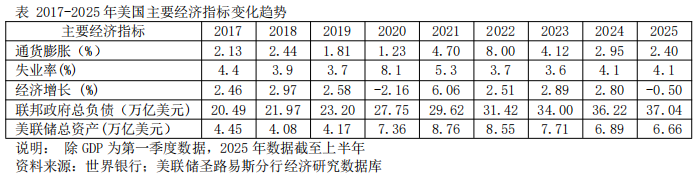
Group 1: Core Aspects of the "One Big Beautiful Bill Act" - The "One Big Beautiful Bill Act" is considered the most significant economic legislation during Trump's presidency, extending tax cuts from the 2017 Tax Cuts and Jobs Act (TCJA) that were set to expire in 2025 [2][4] - The act primarily continues existing tax policies rather than introducing new substantial tax cuts, preventing a significant increase in personal income tax rates post-2025 [2][4] - The Republican Party traditionally advocates for tax cuts to stimulate economic growth, create jobs, and increase national income, based on the belief that lower taxes enhance corporate profitability and investment [2][4] Group 2: Fiscal Deficit and Government Debt Implications - The act is projected to add $3 trillion to $4 trillion in additional fiscal deficits over the next decade, exacerbating the already high government debt, which is expected to reach nearly $36 trillion by 2024 [6][10] - The U.S. federal government's fiscal deficit is anticipated to reach 6.6% of GDP in 2024, marking a historical high, with debt interest payments surpassing defense spending [6][9] - Economic studies suggest that the growth effects from tax cuts may not sufficiently offset the revenue losses, with estimates indicating that only about one-third of the revenue loss from tax cuts can be compensated through economic growth [5][6] Group 3: Income and Wealth Distribution Effects - The act is expected to provide $1 trillion in tax benefits to the wealthiest 1% of Americans over the next decade, while low-income individuals may suffer from reduced healthcare and government benefits [11][13] - This disparity in benefits is likely to exacerbate income and wealth inequality in the U.S., posing challenges to the political system [11][13] Group 4: Indirect Effects on China - In the short term, the act may benefit the Chinese economy by increasing U.S. demand for Chinese products as trade tensions ease, aiding China's transition from external to internal demand [14] - The act's cancellation of subsidies for renewable energy sectors may slow the development of the U.S. renewable energy industry, but its direct impact on China's electric vehicle sector is expected to be limited [14] Group 5: Broader Economic and Political Implications - The act introduces significant uncertainty regarding the sustainability of U.S. federal finances, with long-term economic growth effects remaining unclear [10][18] - The political dynamics surrounding the act's implementation and its impact on Trump's influence and authority are uncertain, as they will evolve with the economic and electoral landscape [17][18]

市场关注美国关税政策新动向 美债收益率陡峭化上行
Xin Hua Cai Jing· 2025-07-08 00:49
机构分析认为,法案进一步提升美国未来债务压力,预计这将导致中长期长端美债利率中枢上行。 受关税方面消息影响,美国股市主要股指7日全线下跌,道琼斯工业平均指数下跌0.94%,标准普尔500 种股票指数下跌0.79%,纳斯达克综合指数下跌0.92%。 欧盟委员会发言人奥洛夫·吉尔7日表示,欧盟仍在争取于7月9日前与美国达成一项原则性的双边贸易协 议,目前欧盟与美国仍在继续接触。 吉尔说,欧盟始终致力于达成一项有利于欧盟企业、消费者和全球经济的协议。此外,欧盟也已准备好 应对所有结果的选项,包括反制清单,但暂不打算启动该程序。 新华财经北京7月8日电美国国债收益率周一(7月7日)延续涨势,10年期美债收益率涨3.36个基点,报 4.38%;2年期美债收益率涨1.46个基点,报3.89%。2年期与10年期美债利差走阔约2个基点。超长期美 债收益率涨幅超过4个基点,收益率曲线趋向陡峭。 特朗普7月4日签署"大而美"税收和支出法案,标志着这一备受争议的法案正式成为法律。 美国总统特朗普7日表示,将从8月1日起分别对来自日本、韩国等14个国家的进口产品征收25%至40% 不等的关税。特朗普在信中警告上述国家领导人称,如果想 ...
债务预计突破1300万亿韩元,韩国追加预算刺激经济引担忧
Huan Qiu Shi Bao· 2025-07-07 22:39
Group 1 - The South Korean National Assembly recently passed a supplementary budget of approximately 31.8 trillion KRW (about 31.8 trillion KRW equals 100 billion RMB) to stimulate economic recovery amid challenges such as weak consumption and rising trade risks due to the US's so-called "reciprocal tariffs" [1] - The supplementary budget is expected to increase South Korea's GDP growth rate by 0.14 to 0.32 percentage points, with institutions like Goldman Sachs and Barclays raising their GDP growth forecasts to around 1% [2] - The budget includes 12.17 trillion KRW for consumer vouchers and 10.3 trillion KRW to cover tax revenue shortfalls, along with debt relief measures for small and micro enterprises [1] Group 2 - Concerns are rising regarding the increasing fiscal burden, as the total fiscal expenditure in 2025 is projected to reach 703.3 trillion KRW, with government debt as a percentage of GDP rising from 48.4% to 49.1% [2] - The supplementary budget was passed just before the deadline for US tariff negotiations, with South Korean officials engaging in discussions with US counterparts regarding tariff exemptions [2]
市场情绪遇上大美丽法案
2025-07-07 16:32
Summary of Key Points from the Conference Call Industry or Company Involved - The discussion primarily revolves around the U.S. labor market, economic policies under the Trump administration, and the implications of the "Great Beautiful Act" on the economy. Core Insights and Arguments - **Labor Market Risks**: The decline in labor participation rates, particularly among youth and older populations, indicates potential risks in the labor market despite a decrease in unemployment rates. The unemployment rate may rise in the future, with projections suggesting it could reach 4.4%-4.5% by the end of the year, exceeding the natural unemployment rate level [1][6][10]. - **Non-Farm Payroll Adjustments**: Significant downward revisions are expected for the non-farm employment data for Q1 2025, with monthly adjustments potentially reaching 70,000 to 80,000 jobs. This aligns with a slowdown in private non-farm income due to reduced working hours and declining wages [3][4]. - **Impact of Government Policies**: The Trump administration's immigration restrictions have temporarily lowered unemployment rates but may hinder long-term demand and GDP growth. The tax cuts have stimulated short-term demand, but the overall impact on employment growth remains uncertain [9][11]. - **Federal Reserve's Interest Rate Decisions**: There is a high probability that the Federal Reserve will initiate interest rate cuts in September, with expectations of two cuts within the year, influenced by the current labor market conditions and fiscal policies [10][20]. - **Economic Implications of the "Great Beautiful Act"**: The act, signed on Independence Day, is expected to have short-term economic effects, but its long-term impact requires further analysis, particularly on various sectors such as services and manufacturing [7][8]. Other Important but Potentially Overlooked Content - **Debt and Deficit Projections**: The new fiscal legislation is projected to expand the deficit to approximately $4.1 trillion over the next decade, with a potential debt-to-GDP ratio reaching 130% by 2033, raising concerns about long-term fiscal sustainability [11][13][15]. - **Sector Performance in A-Share Market**: The A-share market shows strong sentiment, particularly in sectors like non-bank financials, insurance, and consumer goods, which are expected to perform well due to supportive earnings and favorable valuations [21][22]. - **Macroeconomic Policy Directions in China**: Future macroeconomic policies in China will focus on stabilizing the real estate market, expanding domestic demand, and promoting technological innovation, which are crucial for overall economic stability [23][24]. - **Investment Opportunities**: Long-term investment potential is identified in sectors such as energy, basic chemicals, and consumer electronics, with a focus on areas that exhibit strong earnings support and favorable valuations [24][25][26].
减税刺激难掩赤字隐忧,美国“大而美”法案经济效应几何
2 1 Shi Ji Jing Ji Bao Dao· 2025-07-07 11:43
Core Points - The "Big and Beautiful" tax and spending bill signed by President Trump on July 4 marks a significant legislative move, reflecting Republican priorities and diminishing Democratic political capital [1][2] - The bill extends many provisions of the 2017 Tax Cuts and Jobs Act, increasing tax exemptions and military spending while cutting social welfare programs [1][3] - Critics argue that the bill disproportionately benefits high-income earners and exacerbates income inequality, with potential negative impacts on low-income households [2][6] Tax and Spending Provisions - The bill raises tax exemption thresholds, including a $25,000 exemption for tip income and a $12,500 exemption for overtime income, while also increasing military spending by $157 billion [1][3] - It eliminates subsidies for clean energy and imposes stricter work requirements for Medicaid, affecting over 7 million people by 2034 [3][4] - Food stamp benefits will be reduced for approximately 40 million people, impacting vulnerable populations including children and the elderly [3][4] Economic Implications - The effectiveness of the tax cuts in stimulating economic growth is questioned, with historical data suggesting limited impact on growth and increasing federal debt [7][8] - The new tariffs are expected to have a negative effect on the economy, with rising consumer costs and potential inflationary pressures [8][9] - Employment levels may not improve significantly, as the bill's measures to increase work requirements could overlook the contributions of undocumented workers [9] Political Context - The passage of the bill reflects a partisan divide, with Republicans leveraging their slim majority to push through legislation that may disadvantage Democrats ahead of the midterm elections [2][6][10] - The upcoming midterm elections will serve as a referendum on the bill, influencing the political landscape for both parties [10]
海外市场周报:OBBBA过会与美股新高之后-20250707
Tebon Securities· 2025-07-07 09:14
Market Performance - Global stock markets showed mixed performance, with US indices rising: Dow Jones +2.3%, S&P 500 +1.7%, and Nasdaq +1.6%[2] - European indices had varied results, with the UK FTSE 100 and France's CAC40 rising, while Germany's DAX index slightly declined[2] Economic Indicators - US manufacturing remains weak, with June PMI at 49, indicating contraction for four consecutive months[2] - The ISM non-manufacturing index for June was 50.8, slightly above expectations, indicating slow expansion in the service sector[2] Legislative Developments - The OBBBA Act passed with a vote of 218:214, raising concerns about a projected $3.3 trillion increase in the deficit from 2026 to 2035[2] - The act aims to make the 2017 tax cuts permanent while tightening social welfare eligibility and eliminating certain subsidies[2] Monetary Policy Outlook - Stronger-than-expected non-farm payroll data reduced the likelihood of a July interest rate cut from 23.8% to 6.7%[2] - Market expectations for rate cuts have shifted from three to two for the year, with inflation data becoming increasingly critical[2] Oil Market Dynamics - OPEC+ announced an increase in production by 548,000 barrels per day, which could impact oil prices and inflation[2] - Oil price fluctuations are expected to play a significant role in shaping inflation trends and Federal Reserve rate cut expectations[2] Investment Strategy - With US stocks reaching new highs, potential risks include tariff negotiations and oil price volatility, which could lead to significant market corrections[2] - Continued upward movement in US stocks requires favorable outcomes from trade negotiations and declining oil prices[2] Risk Factors - Risks include unexpected inflation rebounds, weaker-than-expected global economic conditions, and geopolitical tensions that could lead to market volatility[2]
惠誉:从长期来看,与老龄化相关的支出将对日本财政赤字构成持续压力,这主要体现在医疗成本上升方面。不过,财政改革可能会减轻这种影响。
news flash· 2025-07-07 07:35
Core Viewpoint - Long-term spending related to aging will exert continuous pressure on Japan's fiscal deficit, primarily reflected in rising healthcare costs. However, fiscal reforms may alleviate this impact [1]. Group 1 - Aging-related expenditures are expected to significantly increase, leading to sustained fiscal challenges for Japan [1]. - The primary area of concern is the escalation of medical costs associated with an aging population [1]. - Potential fiscal reforms could mitigate some of the financial pressures stemming from these rising costs [1].
贵金属日评:OPEC+计划8-9月原油连续增产,特朗普政府将对各国设定新税率-20250707
Hong Yuan Qi Huo· 2025-07-07 07:03
| 贵金属日评20250707: OPEC+计划8-9月原油连续增产,特朗普政府将对各国设定新税率 | 交易日期 | | | | | | | | | | | | | | | --- | --- | --- | --- | --- | --- | --- | --- | --- | --- | --- | --- | --- | --- | --- | | 较昨日变化 | 较上周变化 | 2025-07-04 | 2025-07-03 | 2025-06-30 | 收盘价 | 777.06 | 781.28 | 767.58 | -4.22 | 9. 48 | | | | | | 成交量 | 213782. 00 | 189582. 00 | 24, 200. 00 | 211285.00 | 2, 497.00 | 期货活跃合约 | 持仓重 | 175040.00 | 19, 219. 00 | 155821.00 | -421.00 | 175461.00 | | | | 库存(干克) | 21456.00 | 3.000.00 | 18237.00 | 3, 219. 00 | 18456.00 | 上海 ...
国泰君安期货商品研究晨报:贵金属及基本金属-20250707
Guo Tai Jun An Qi Huo· 2025-07-07 02:23
Report Industry Investment Rating No relevant content provided. Core Viewpoints of the Report - Gold: Non - farm payrolls performed better than expected [2] - Silver: Continued to soar [2] - Copper: Global inventories increased, and prices fluctuated [2] - Zinc: Traded sideways [2] - Lead: Supported by short - term consumption peak season expectations [2] - Tin: Driven up by the macro - environment [2] - Nickel: Upside elasticity was limited, and nickel prices were under pressure at low levels [2] - Stainless steel: Inventories were slightly digested, and steel prices recovered but with limited elasticity [2] Summary by Related Catalogs Gold and Silver - **Price and Trading Volume**: The closing price of Shanghai Gold 2508 was 774.88, down 0.52%, and the night - session closing price was 777.00, up 0.19%. The closing price of Shanghai Silver 2508 was 8919, down 0.29%, and the night - session closing price was 8931.00, up 0.16%. The trading volume and positions of some contracts changed compared with the previous day [5]. - **Inventory**: Shanghai Gold inventory remained unchanged at 18,456 kilograms, and Shanghai Silver inventory increased by 2133 kilograms to 1,340,792 kilograms [5]. - **Trend Intensity**: Gold trend intensity was - 1, and silver trend intensity was 1 [8]. Copper - **Price and Trading Volume**: The closing price of the Shanghai Copper main contract was 79,730, down 1.03%, and the night - session closing price was 79720, down 0.01%. The trading volume of the Shanghai Copper main contract increased by 17,176 to 100,562, and the position decreased by 8,934 to 215,738 [10]. - **Inventory**: Shanghai Copper inventory decreased by 1,796 tons to 22,307 tons, and LME copper inventory increased by 950 tons to 95,275 tons [10]. - **Trend Intensity**: Copper trend intensity was 0 [12]. Zinc - **Price and Trading Volume**: The closing price of the Shanghai Zinc main contract was 22410, up 0.38%. The trading volume of the Shanghai Zinc main contract increased by 20897 to 153571, and the position increased by 66 to 128000 [13]. - **Inventory**: Shanghai Zinc futures inventory increased by 647 tons to 7246 tons, and LME zinc inventory decreased by 350 tons to 112325 tons [13]. - **Trend Intensity**: Zinc trend intensity was 0 [13]. Lead - **Price and Trading Volume**: The closing price of the Shanghai Lead main contract was 17295, up 0.29%. The trading volume of the Shanghai Lead main contract decreased by 10116 to 24330, and the position decreased by 1206 to 51672 [15]. - **Inventory**: Shanghai Lead futures inventory remained unchanged at 46439 tons, and LME lead inventory decreased by 2625 tons to 263275 tons [15]. - **Trend Intensity**: Lead trend intensity was 1 [16]. Tin - **Price and Trading Volume**: The closing price of the Shanghai Tin main contract was 268,420, down 0.04%. The trading volume of the Shanghai Tin main contract decreased by 16,735 to 57,264, and the position decreased by 923 to 30,442 [18][19]. - **Inventory**: Shanghai Tin inventory decreased by 6 tons to 6,882 tons, and LME tin inventory decreased by 50 tons to 2,165 tons [19]. - **Trend Intensity**: Tin trend intensity was 0 [21]. Nickel and Stainless Steel - **Price and Trading Volume**: The closing price of the Shanghai Nickel main contract was 122,270, and the closing price of the stainless - steel main contract was 12,730. The trading volume and positions of related contracts changed compared with previous periods [22][23]. - **Industry News**: In March, Ontario, Canada, might stop exporting nickel to the US; in April, the Indonesian CNI nickel - iron project entered the trial - production stage; an Indonesian nickel smelter resumed production; an Indonesian冷轧厂 planned to continue maintenance; the Philippine nickel industry welcomed the removal of the raw - ore export ban; environmental violations were found in an Indonesian industrial park; Indonesia planned to shorten the mining quota period [23][24][25]. - **Trend Intensity**: Nickel trend intensity was 0, and stainless - steel trend intensity was 0 [28]
“大而美”法案将如何影响美元资产
第一财经· 2025-07-07 02:18
Core Viewpoint - The "Big and Beautiful" tax and spending bill signed by President Trump is controversial due to its cuts to healthcare, increase in long-term debt, cancellation of clean energy incentives, and tax reductions for the wealthy and large corporations [1][4]. Summary by Sections Bill Overview - The "Big and Beautiful" bill extends current tax cuts, reduces healthcare and nutrition assistance spending, increases military and border security spending, and eliminates government support for electric vehicles and solar projects [6]. Public Opinion - A recent poll indicates that 50% of voters oppose the "Big and Beautiful" bill, while only 36% support it [6]. Economic Impact - The Congressional Budget Office estimates that the bill will increase national debt by $4.1 trillion by 2034 and result in 11.8 million Americans losing healthcare coverage [4][6]. Healthcare System Effects - The bill is expected to cut approximately $900 billion from Medicaid over the next few years, reversing progress made during the Biden and Obama administrations [6]. - Stricter requirements for states to apply for federal matching funds may lead to reduced Medicaid coverage or benefits [6]. - A "work requirement" clause will mandate Medicaid beneficiaries to work, volunteer, or participate in education for at least 80 hours per month, potentially causing millions to lose coverage [6][7]. Business and Tax Implications - The bill has been welcomed by business organizations as it reinstates tax deductions for equipment purchases and provides tax incentives for semiconductor manufacturers building facilities in the U.S. [8]. - High-income households are projected to see an average net income increase of 3%, while low-income households may experience a 1.1% decrease in actual income [8]. Stock Market Sentiment - Despite concerns over increased fiscal deficits, foreign institutions remain optimistic about U.S. equities, predicting continued growth in the stock market [10]. - The S&P 500 index reached 6279.35 points, with a year-to-date increase exceeding 7% [10]. Bond Market Outlook - Concerns over high debt servicing costs and trade tensions have led to a negative sentiment towards U.S. dollars and bonds [12]. - The 10-year Treasury yield has fluctuated, with expectations of further increases in long-term rates due to refinancing risks [13][14]. Currency Trends - A weak dollar is anticipated as market participants seek to diversify away from U.S. assets, with the dollar index recently reported at 96.82 [15]. - The euro has appreciated over 10% against the dollar, reflecting investor sentiment towards reducing dollar exposure [15][16].