以销定产

Search documents
新能源及有色金属周报:假期结束后下游陆续复工,但暂时以以销定产为主-20251012
Hua Tai Qi Huo· 2025-10-12 12:02
Report Investment Rating - The investment rating for the lead industry is neutral [4] Core Viewpoint - At present, the processing fee for lead concentrates remains low despite the rising by - product prices, and there are no significant fundamental contradictions. Downstream enterprises are expected to fully recover from the holiday next week, mainly adopting a production - based - on - sales model. The lead price is expected to fluctuate in the range of 16,920 yuan/ton to 17,300 yuan/ton [4] Summary by Directory Lead Market Analysis - **Mine End**: In the week of October 10, the quotation divergence in the imported ore market continued. With the silver price hitting new highs, the processing fee for silver - containing lead concentrates continued to decline. Domestically, some mines completed fourth - quarter pre - sales and suspended quotations, leading to a shortage of market - circulating resources. There were north - south differences in smelter processing fees. The winter - storage order processing fee in Henan and Inner Mongolia was 300 - 500 yuan/metal ton, while in Yunnan and Hunan, due to the decline in raw material inventory, some smelters could only purchase low - silver ore sources at 0 - 200 yuan/metal ton. In the long - term, the supply - demand imbalance of lead concentrates is difficult to improve [1] - **Primary Lead**: In the week of October 10, the operating rate of primary lead smelters in three provinces was stable at 68.47%, a slight increase of 1.98% compared to before the holiday. A smelter in Henan resumed production as planned, increasing output slightly, while a company in Hunan was expected to see a decline in electrolytic lead output in October due to crude lead maintenance. Overall, the operating situation showed regional differentiation [1] - **Recycled Lead**: In the week of October 10, the operating rate of recycled lead in four provinces rose to 34.04%, an increase of 5.63 percentage points. Anhui was the main driving force, with a large smelter resuming production and another entering the baking stage. The operating rate in Anhui is expected to rise by about 10 percentage points next week. The operating rates in other provinces were generally stable. It is expected that the enthusiasm of recycled lead enterprises to start work will only increase limitedly [2] - **Consumption**: In the week of October 10, the comprehensive operating rate of lead - acid battery enterprises in five provinces was 61.71%, an increase of 6.58 percentage points. The resumption of work after the holiday was the main reason for the increase. It is expected that the operating rate will continue to recover next week, and the production rhythm will be more inclined to production - based - on - sales [2] - **Inventory**: In the week of October 10, the total social inventory of lead ingots in five regions was 3.69 million tons, a decrease of 2.05 million tons compared to the previous week. The LME inventory decreased by 450 tons to 237,000 tons [3]
行业透视 | 10月新房供应回调预期成交热度回落,苏宁郑等或延续弱复苏
克而瑞地产研究· 2025-10-02 01:34
Core Viewpoint - The supply of new homes in October shows a steady decline, with developers' enthusiasm for launching new projects remaining moderate, leading to a continuation of low-level consolidation in new home transactions, and a potential widening of year-on-year decline due to a high base from last year [1][4]. Supply Overview - In October, the supply of new homes in 28 cities decreased by 41% month-on-month and 18% year-on-year, with a total expected supply of 577 million square meters [3][6]. - First-tier cities experienced a significant drop in supply, with a total expected supply of 122 million square meters, a month-on-month decrease of 50% and a year-on-year decrease of 27% [8][10]. - Second-tier cities saw about 90% of cities decline month-on-month, with a total expected supply of 416 million square meters, down 40% month-on-month and 18% year-on-year [8][10]. - Third and fourth-tier cities showed a low-level recovery, with a total expected supply of 39 million square meters, increasing by approximately 47% month-on-month and 39% year-on-year, largely driven by a surge in Quanzhou [9][10]. Supply Structure - The supply structure in key cities is tilted towards improvement demand, with the proportions of essential, improvement, and high-end products being 29%, 57%, and 14% respectively [12]. - Nearly 80% of cities have their main supply concentrated in urban areas, with a significant focus on improvement products in cities like Beijing, Shenzhen, and Hangzhou [12][13]. Market Dynamics - The average absorption rate for projects in 28 key cities is expected to be 34%, a decrease of 7 percentage points month-on-month and 4 percentage points year-on-year [18]. - Cities like Hangzhou are expected to maintain high absorption rates due to strong purchasing power and a concentration of high-quality improvement housing, while other cities like Nanning and Chongqing are struggling with absorption rates below 30% [18][19].


伟星新材(002372) - 2025年9月17日投资者关系活动记录表
2025-09-18 09:10
Group 1: Business Operations - The company's business is primarily divided into retail and engineering operations, with retail adopting a distribution model and engineering combining distribution and direct sales [2] - The pricing strategy follows a cost-plus principle, maintaining stable prices for retail products while engineering prices are market-driven and set per order [2] - Accounts receivable showed a year-on-year decrease in the first half of 2025, indicating good operational quality [2] Group 2: Production and Market Conditions - The company follows a "sales-driven production" principle and maintains some inventory for standard products [2] - In the first half of 2025, retail product prices stabilized due to improvements in product and service quality [2] - Current market demand remains weak, with no significant improvement observed [3] Group 3: Business Development and Industry Outlook - The waterproof business is expanding through a "product + service" model, while the water purification business is undergoing adjustments to its business model [3] - The plastic pipe industry is closely tied to the macroeconomic environment, with retail demand influenced by economic conditions and consumer confidence, while engineering demand is more affected by government policies [3] - The company is responding to the current industry environment by enhancing product and service capabilities, upgrading business models, and focusing on cost control to improve efficiency and reduce costs [3]

金禄电子:PCB应用领域广泛,行业竞争较为充分且日趋激烈
Zheng Quan Ri Bao Zhi Sheng· 2025-09-10 08:09
Group 1 - The core viewpoint of the article highlights that Jinlu Electronics is focusing on the automotive application market, particularly in the new energy vehicle sector, to expand its customer resources [1] - The company emphasizes a customized product approach and a "sales-driven production" model, which helps in developing its core competitiveness [1] - Jinlu Electronics has a stable and practical management team that has accumulated rich experience in production management and quality control [1] Group 2 - The PCB industry is characterized by broad applications and increasingly intense competition [1] - The company is unable to disclose specific customer names due to confidentiality requirements [1]
宁波高发业绩说明会:立足国内并积极拓展国际市场,保证并争取更大市场份额
Zheng Quan Shi Bao Wang· 2025-09-02 13:49
Core Viewpoint - Ningbo Gaofa reported a steady increase in revenue and profits for the first half of 2025, driven by strong sales in its automotive control systems, while also expanding its international presence and production capabilities [1][2]. Group 1: Financial Performance - In the first half of 2025, Ningbo Gaofa achieved an operating income of 787 million yuan, a year-on-year increase of 7.83% [2] - The operating profit was 115 million yuan, reflecting a year-on-year increase of 4.56% [2] - The net profit reached 103 million yuan, up 11.63% year-on-year, with the net profit attributable to shareholders at 104 million yuan, an increase of 11.93% [2] - The net cash flow from operating activities was -44.81 million yuan, a decrease of 311.11% year-on-year [2] Group 2: Product Development and Market Expansion - The company’s gear shifter products have entered the supply chains of major automotive manufacturers such as Geely and Renault [2] - The electronic accelerator pedals have been integrated into the systems of Stellantis, Renault, and several other major automotive brands [2] - The company is actively expanding its product offerings, including brake pedals, into new customer supply chains [2] - Long-term strategies include maintaining market expansion and product development efforts, focusing on both domestic and international markets [2] Group 3: Production and Supply Chain Management - Ningbo Gaofa has established a production base in Malaysia, with plans to commence production in the second half of the year [3] - The company is also working on the preliminary approval for a production base in Morocco [3] - The procurement strategy includes centralized purchasing for bulk materials to enhance bargaining power and secure favorable prices [3] - The company is adapting to price fluctuations in raw materials and is negotiating with suppliers to control costs while introducing domestic alternatives to maintain product competitiveness [3]

为什么在中国开一家烘焙店这么难?这是一场关于消费者、渠道与认知的深度重构
东京烘焙职业人· 2025-09-02 08:58
Core Viewpoint - The traditional baking industry is facing significant challenges, including declining foot traffic, rising costs, and increased competition, leading to a shift in consumer behavior towards new channels and products [3][5][6]. Group 1: Cost Structure - Traditional bakeries are heavily impacted by rising rental and labor costs, with rent increasing by 8%-12% annually and labor costs by 6%-8%, consuming over 20% of sales [6][8][11]. - New channels like convenience store baking sections benefit from shared resources, significantly reducing costs compared to traditional bakeries [9][11]. Group 2: Efficiency - Traditional bakeries struggle with high waste rates, with over 50% of daily products needing to be sold the same day, leading to profit erosion [12][14]. - New retail players utilize big data for demand forecasting, keeping waste rates below 5% and allowing for more efficient production [14]. Group 3: Consumer Disconnect - Traditional brands face challenges in adapting to new consumer trends, such as low-sugar and whole grain products, due to reliance on classic products that maintain stable sales but are low-margin [16][18]. - There is a lack of effective communication with younger consumers, as traditional marketing methods fail to resonate in the age of social media [20][24]. Group 4: New Consumer Trends - The emergence of new baking brands is characterized by innovative designs and concepts that appeal to modern consumers [22][23]. - Successful products in membership stores are not just about low prices but about creating a comprehensive shopping experience that enhances membership value [25][27][30]. Group 5: Convenience and Accessibility - Convenience stores excel by providing quick access to baked goods, aligning with the fast-paced lifestyles of consumers [43][44]. - The combination of baked goods with coffee in convenience stores creates a stable profit margin and enhances customer experience [45]. Group 6: Live Commerce and Content Marketing - Live commerce shifts the focus from traditional retail logic to engaging consumers through content and emotional connections, transforming the purchasing experience [48][52]. - Data-driven product iterations in live commerce allow brands to quickly respond to consumer preferences, significantly shortening product development cycles [55][58]. Group 7: Diverse Consumer Segments - The baking market is increasingly segmented, with different consumer types such as efficiency-driven, value-conscious, and experience-seeking consumers, each with distinct purchasing motivations [70][86]. - Brands must identify and cater to specific consumer needs to create a compelling value proposition [89][91]. Group 8: Strategic Repositioning - Traditional baking brands must undergo a fundamental transformation in their business models, focusing on deep consumer insights and tailored value creation [98][99][111]. - The future winners in the baking industry will be those who can adapt to changing consumer values and preferences through innovative products and effective communication strategies [94][96].
广州白马服装采购节开幕 探索“即秀即买”数智实践
Zhong Guo Xin Wen Wang· 2025-08-27 02:08
中新网广州8月26日电 (记者 郭军)2025中国流花国际服装节暨粤港澳大湾区时尚周·广州白马服装采 购节26日在越秀区流花展贸中心启幕。 开幕式上,大湾区买手供采合作联盟正式成立,标志着涵盖湾区核心城市服装协会、设计师、院 校、头部采购商平台协同网络正式运转。该联盟将通过共享买手资源库、建立供应链响应机制等举措, 让广州的制造优势、香港的设计资源、澳门的跨境商贸能力形成"1+1+1>3"的合力。 活动首日,广州白马场内同期开启上新选品会与百团千人对接会,迅速点燃秋冬采购的热潮。 开幕现场,香港纺织商会常务副会长关淑敏的LAFAVEUR芸想品牌领衔亮相"湾·织万象"时尚发 布,联合13家湾区设计师品牌,以"情景演绎、模特走秀、互动体验"形式,演绎湾区时尚新力量。 不同于传统时装周的"滞后性消费",这场发布依托广州白马自主研发的"白马智选"小程序,实现 了"即秀即买":采购商拍照识图即可查看单品细节、批量下单。这种"全品类展示+即时交易"的模式, 通过打通设计、生产、展示、销售全链路,让市场需求反哺上游生产,重构"以销定产"的新型产业逻 辑。 "过去要跑遍几个市场比价,现在在白马能一站式触达全风格全品类服饰,还 ...
外卖补贴战总会结束,但拼好饭会一直便宜
乱翻书· 2025-08-07 09:28
Core Viewpoint - The article emphasizes the growing demand for affordable and high-quality food options across various market segments, highlighting the success of Meituan's "Pin Hao Fan" as a response to this demand [1][3][20]. Group 1: Market Trends - The demand for cost-effective meals is not limited to lower-tier cities; even high-tier cities have a significant need for affordable options, which has been historically overlooked [1]. - The rise of "two dishes rice" in Hong Kong reflects a broader trend where consumers are increasingly valuing affordable yet satisfying meals, indicating a shift in dining preferences [3][20]. Group 2: "Pin Hao Fan" Overview - "Pin Hao Fan" was launched in June 2020 and has rapidly grown to over 270 million users, with daily orders increasing from 1 million in 2022 to over 35 million by July 2025 [5][13]. - The service operates on a simplified model, offering a limited number of fixed-price meal options, typically ranging from 10 to 15 yuan, which enhances efficiency and reduces costs [13][16]. Group 3: Operational Efficiency - The model focuses on reducing SKU variety, concentrating on a few popular items, which streamlines operations and enhances profitability for merchants [16][17]. - By aggregating orders and optimizing delivery routes, "Pin Hao Fan" significantly improves operational efficiency compared to traditional food delivery services [16][18]. Group 4: Consumer Trust and Brand Quality - To address consumer concerns about hygiene and quality, "Pin Hao Fan" has initiated the "Million Bright Kitchen" program, promoting transparency in food preparation environments [24][27]. - The platform aims to shift the perception that low prices equate to low quality, ensuring that consumers can trust the affordability of the meals offered [22][27]. Group 5: Competitive Landscape - Unlike traditional platforms that rely heavily on subsidies, "Pin Hao Fan" focuses on sustainable pricing strategies that do not compromise merchant profitability [28][29]. - The service is positioned as a long-term solution to the challenges faced in the food delivery market, moving away from unsustainable subsidy wars [28][30].

桃罐头企业要把控生产节奏 切实做到以销定产
Xiao Fei Ri Bao Wang· 2025-08-05 03:01
Group 1 - The peach canned food industry is currently in a critical adjustment period, requiring companies to remain rational and calm in the face of raw material shortages and rising costs [1] - The meeting highlighted that the national peach raw material supply has been affected by weather, changes in planting structure, and infrastructure issues, leading to a certain degree of production reduction [2] - Panic buying of raw materials has been triggered by high demand from frozen food, milk tea, and dairy industries, resulting in soaring raw material prices and significant pressure on production cost control [2] Group 2 - The current economic situation is severe, with weak consumer demand and existing inventory levels in the industry [2] - New tariffs imposed by the U.S. are expected to further strain the industry, with reports of companies in South Africa applying for bankruptcy due to these tariffs [2] - Companies are facing production obstacles due to uncertainties in raw material supply and cost fluctuations, leading some to adjust production plans and slow down production pace [2] Group 3 - The industry is encouraged to adhere to market rules, strengthen self-discipline, and establish long-term stable relationships with raw material suppliers to ensure stable supply and quality [3] - Companies should explore innovation by optimizing production processes, expanding sales channels, and enhancing product value to alleviate the pressure from rising costs [3]
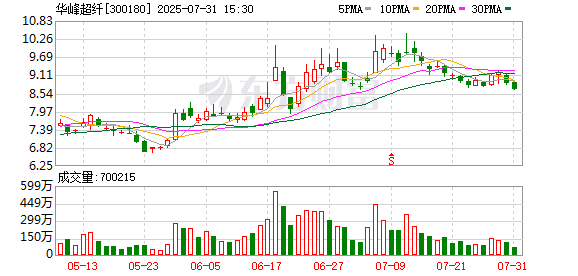
华峰超纤:公司超纤业务现阶段根据市场需求情况采用“以销定产”策略制定排产计划
Zheng Quan Ri Bao· 2025-07-31 12:39
Group 1 - The company, Huafeng Superfiber, is currently implementing a "sales-driven production" strategy for its superfine fiber business based on market demand, indicating that it is not operating at full production capacity [2]