
传统消费

Search documents
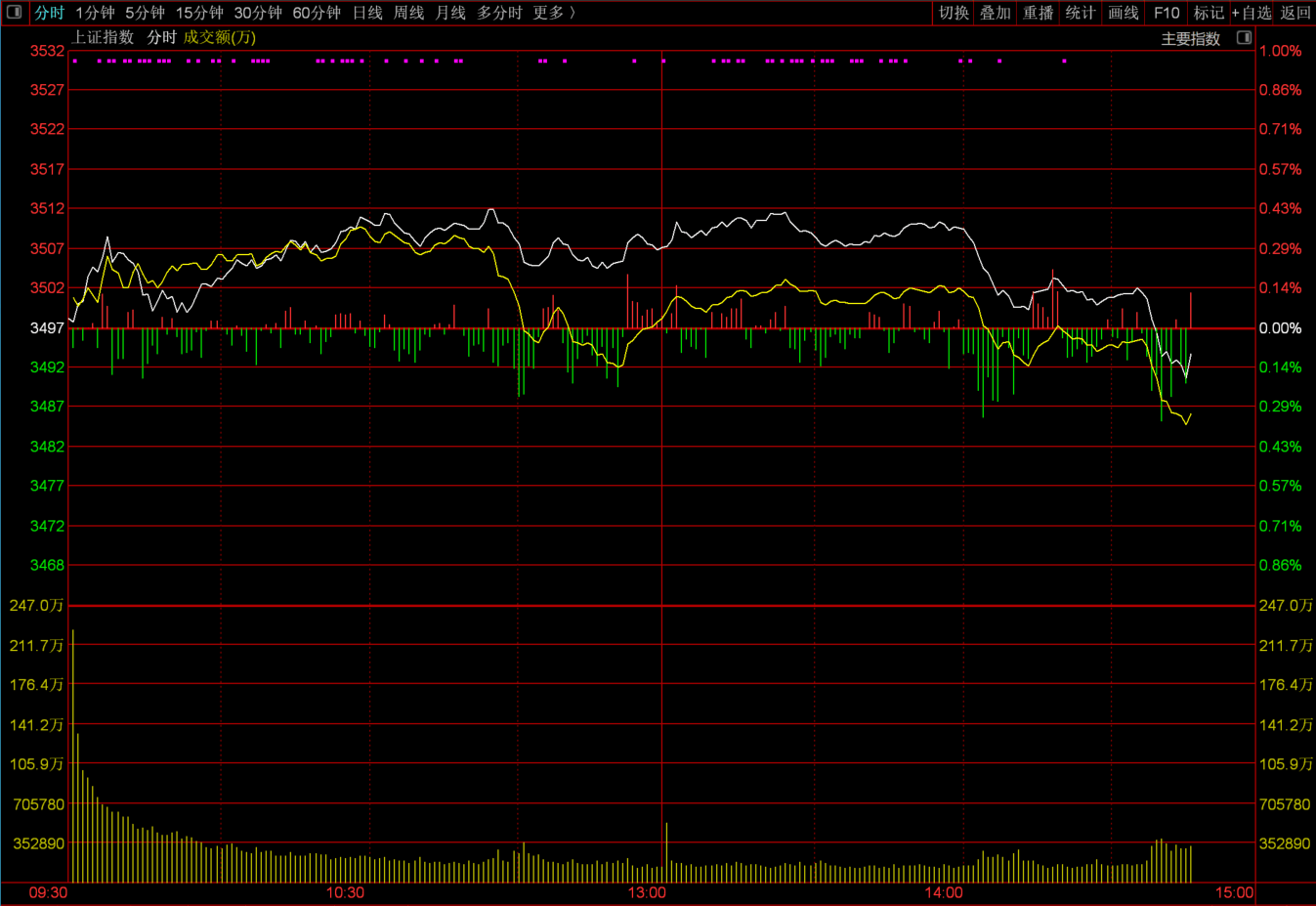
A股,14点之后,突然一波小跳水来了,因为什么?
Sou Hu Cai Jing· 2025-07-09 08:04
Group 1 - The Consumer Price Index (CPI) for June shows a year-on-year increase of 0.1% and a month-on-month decrease of 0.1%, indicating a stable recovery in consumer confidence despite recent fluctuations [1] - The CPI data reflects a significant change from the previous year's trend of sharp declines and volatility, suggesting a rare stability and signs of recovery in the last four months [1] - The overall economic performance in the first half of the year is positively reflected in consumer spending, with expectations for a stable economy in the second half, especially if trade conditions improve [2] Group 2 - A-shares experienced a sudden drop in the afternoon session, despite the index showing an upward trend earlier, indicating a lack of strong market sentiment [4] - The drop was primarily triggered by the securities sector, where a lack of upward momentum led to a collective decline in major indices [5] - The 3500-point level on the Shanghai Composite Index is seen as a critical threshold, with historical trends suggesting difficulty in maintaining levels above this point, yet current market dynamics may challenge this pattern [7]

华尔街谈LABUBU与茅台:似曾相识还是范式转移?
Hua Er Jie Jian Wen· 2025-06-24 02:18
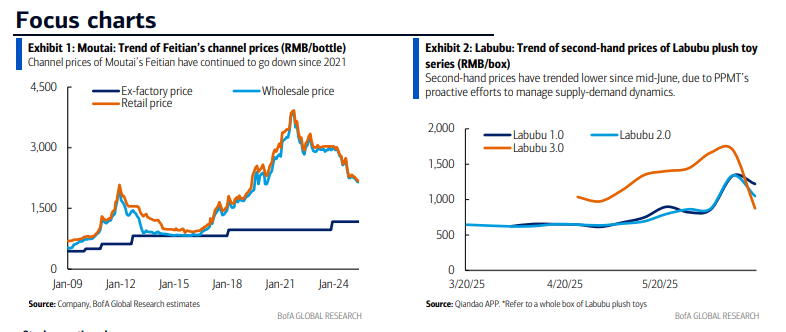
Core Insights - The report from Bank of America compares Labubu, a trendy IP, to the traditional liquor giant Moutai, highlighting the differences in their social currency attributes and consumer engagement [1][2] - Labubu's appeal is rooted in the interests and values of the younger generation, while Moutai's social function is tied to power and hierarchy, reflecting a shift from traditional to new consumption patterns [1][2] Group 1: Social Currency and Consumer Behavior - Labubu and Moutai both possess social currency but differ in generational appeal; Moutai serves as a "social/business lubricant," while Labubu caters to emotional value in a digital social media context [2] - The transition from an investment-driven model to a consumption-driven model in China is indicated by Labubu's success, which aligns with global trends [2] Group 2: IP Lifecycle and Investment Attributes - Both Bubble Mart and Moutai face challenges related to IP lifecycle and investment attributes, with the potential for slowed global growth if there is a long gap between Labubu and the next hit IP [3][4] - The historical resilience of Moutai, with its centuries of legacy, contrasts with the relatively short histories of Bubble Mart and Labubu, which are 15 and 10 years old respectively [4] Group 3: Regulatory and Market Risks - Regulatory risks are significant for both Moutai and Bubble Mart, with the latter facing scrutiny as its consumer base diversifies; however, its growing overseas business may mitigate some risks [7] - The phenomenon of "crowded trades" in capital markets, similar to the influx of funds into Moutai from 2016 to 2021, is now observed in the new consumption sector represented by Bubble Mart [8]

谁在定义新消费信仰?消费巨变进行时
格隆汇APP· 2025-06-20 08:19
Core Viewpoint - The article discusses the shift in consumer behavior in China, highlighting the rise of "new consumption" and its contrast with traditional consumption, emphasizing the emotional value and social aspects of modern purchasing decisions [1][4][21]. Group 1: Current Consumption Landscape - Domestic consumption has become a primary focus for the economy, with various government initiatives like subsidies and consumption vouchers aimed at boosting spending [1][2]. - China's household consumption accounts for less than 40% of GDP, significantly lower than the 70% in the US and 60% in Japan, indicating substantial growth potential [3]. - There is a notable disparity in the consumption market, with traditional sectors declining while new consumption categories are thriving [4]. Group 2: Traditional vs. New Consumption - Traditional dining sectors are struggling, with significant losses reported by established brands, while new beverage brands like Mixue Ice City are rapidly expanding [5]. - Traditional retail channels are experiencing a decline, with hypermarkets down 11.4% for four consecutive years, while snack stores are booming [7][8]. - The high-end liquor market is facing challenges, with prices for premium brands like Moutai dropping significantly, reflecting inventory pressures [9]. Group 3: Emotional and Social Aspects of New Consumption - New consumption is characterized by a shift from basic needs to "self-pleasing" demands, focusing on emotional value rather than practical utility [21][22]. - The success of products like LABUBU from Pop Mart illustrates the importance of social media and emotional marketing in driving consumer interest [30][31]. - Over 40% of young consumers prioritize emotional value in their purchases, with a significant portion seeking to please themselves through spending [35][36]. Group 4: Evolution of Consumer Behavior - The article outlines the historical evolution of consumer behavior in China, indicating three major shifts in consumption patterns since the 1990s [47][48]. - The emergence of the third consumption era reflects a transition towards valuing symbolic meanings over practical use, aligning with global trends [52][53]. - As consumer needs evolve, there is a potential shift towards a fourth consumption era, characterized by rational consumption and a focus on value [68][72]. Group 5: Future Outlook - The new consumption trend is expected to continue growing, particularly in sectors like pet economy and new consumer electronics, despite potential market corrections [62][63]. - The interplay between traditional and new consumption is seen as a driver for domestic demand recovery, supported by policy initiatives [75][76].


谁在定义新消费信仰?消费巨变进行时
格隆汇APP· 2025-06-20 08:08
Core Viewpoint - The article discusses the shift in consumer behavior in China, highlighting the rise of "new consumption" and its contrast with traditional consumption, emphasizing the importance of emotional value in purchasing decisions [1][2][4][30]. Group 1: Current Consumption Landscape - Domestic consumption in China accounts for less than 40% of GDP, compared to 70% in the US and 60% in Japan, indicating significant growth potential [3]. - There is a notable disparity in the consumption market, with traditional sectors declining while new consumption categories are thriving [4][5]. - Traditional dining categories are struggling, with brands like 湊湊火锅 closing 73 stores and incurring losses exceeding 3.5 billion yuan, while new tea beverage brands like 蜜雪冰城 are rapidly expanding [6]. Group 2: Traditional vs. New Consumption - Traditional consumption focuses on essential daily needs, while new consumption shifts towards "self-pleasing" demands [21][22]. - The rise of "emotional consumption" is evident, with over 40% of young consumers prioritizing emotional value in their purchases [31]. - The concept of new consumption encompasses various sectors, including snack retail and new tea beverages, reflecting a broader trend towards personalized and emotional purchasing [34]. Group 3: Market Trends and Future Outlook - The article notes that new consumption trends are not merely a passing fad but are rooted in changing consumer environments and behaviors [54]. - Despite the current enthusiasm for new consumption, many companies are experiencing stock price corrections, indicating potential overvaluation [52][53]. - Long-term prospects for sectors like pet economy and new consumer electronics appear promising, with emerging trends suggesting continued growth [55][56].

新消费崛起 VS 旧消费承压:从五粮液到泡泡玛特
雪球· 2025-06-20 07:40
Core Viewpoint - The article discusses the structural differentiation and paradigm shift in the current Chinese consumer market, highlighting the rapid growth of new consumption sectors compared to the stagnation of traditional consumption sectors like high-end liquor [2][10]. Group 1: Comparison of New and Old Consumption Markets - Traditional consumption, exemplified by Wuliangye, faces challenges due to policy restrictions, shrinking demand, and valuation corrections. The 2025 policy prohibits government agencies from providing alcohol at official receptions, impacting high-end liquor consumption [3][4]. - Economic deflation and consumption downgrade are evident, with CPI showing negative growth for two consecutive quarters in 2025, leading consumers to prefer more cost-effective products. The price of Feitian Moutai has dropped below 2000 yuan per bottle, weakening the "face-saving" function of high-end liquor [3][4]. - The valuation bubble in the liquor sector has burst, with a 200% increase in the sector from 2020 to 2024, leading to concerns about whether Wuliangye's earnings growth can match its valuation as the dynamic P/E ratio falls to 7.8 times [3][4]. - High inventory levels and weak demand in traditional consumption scenarios, such as weddings and business banquets, have resulted in a revenue growth slowdown for major liquor companies, with growth rates dropping to 5%-10% in Q1 2025 [3][4]. Group 2: Explosive Logic of New Consumption - New consumption, represented by Pop Mart, thrives on emotional value and the needs of Generation Z, utilizing blind box strategies to create uncertainty and surprise, achieving a gross margin of 50.9% in 2024, significantly higher than traditional sectors [4][5]. - Pop Mart has established an IP ecosystem and global expansion strategy, planning to increase overseas stores by 80% to 230 by 2025, enhancing cultural output [5]. - The company has built supply chain and channel barriers, rapidly expanding production capacity and enhancing user engagement through a combination of direct stores and robotic shops [5]. - The influx of southbound capital exceeding 610 billion HKD and policies promoting "old-for-new" exchanges are stimulating the new consumption sector, with the toy market expected to reach 110.1 billion yuan by 2026, growing at a CAGR of 20% [5][6]. Group 3: Core Drivers of Market Transformation - The shift in consumer behavior is characterized by a focus on "quality-price ratio" and "emotional-price ratio," with new consumption companies experiencing a revenue growth rate of 65% in 2024, compared to just 2.4% for traditional consumption [6]. - Technological advancements and data-driven strategies are facilitating the rapid response of new consumption companies to market demands, with online retail accounting for 26.8% of total retail sales in 2024 [6]. - Policy support and capital inflow are crucial for the recovery of traditional consumption, which relies on further policy measures to stimulate growth [6]. Group 4: Future Investment Opportunities - Traditional consumption companies like Wuliangye have potential for valuation recovery, but face short-term risks from policy restrictions and high inventory levels. Long-term prospects depend on economic recovery and policy easing [7][8]. - New consumption companies like Pop Mart exhibit strong growth potential due to their IP ecosystem, global expansion capabilities, and increasing emotional economic penetration, with overseas revenue expected to grow by 259.6% year-on-year in 2025 [8].


博时基金王诗瑶:解析LABUBU爆火背后的新消费投资逻辑
Xin Lang Ji Jin· 2025-06-17 01:37
Core Viewpoint - The rise of new consumption, driven by technology and policy, is reshaping consumer behavior and market dynamics, particularly among the Z generation [1][2]. Group 1: Drivers of New Consumption - The dual drivers of policy and technology, including the "trade-in" policy and the application of AI and big data, are accelerating the integration of online and offline channels [2]. - The demand for consumption upgrades, particularly from the Z generation, is pushing the growth of emotional value sectors such as trendy toys and pet economy [2]. - The potential of lower-tier markets is being unlocked, with high-cost performance domestic brands optimizing supply chains to penetrate these areas, leading to significant growth for certain industries and companies [2]. Group 2: Differences from Traditional Consumption - New consumption is characterized by a focus on "emotional value" and "supply creating demand," catering to the self-satisfaction and social needs of the Z generation, contrasting with traditional consumption that relies on material needs and demographic dividends [3]. - In terms of valuation methods, new consumption's high growth potential supports higher valuations, while traditional consumption is anchored by stable cash flows and dividend yields [4]. - The risk characteristics differ, with new consumption being highly volatile and sensitive to market emotions, whereas traditional consumption is more defensive but shows weak demand growth [4].
钟摆回摆,国内暖风接近临界点
Hu Xiu· 2025-06-16 11:16
Group 1 - The macroeconomic indicators show a mixed performance, with recent data indicating a significant increase in consumer spending, particularly in service and new consumption sectors, with retail sales growing by 6.4%, the largest increase in nearly two years [3][4] - Traditional consumption sectors, exemplified by the liquor industry, continue to face downward pressure, with notable declines in leading products like Moutai, which has seen prices drop below 2000 yuan per bottle, signaling potential market distress [4] - The market is experiencing a recovery in various asset classes, despite the ongoing geopolitical tensions in the Middle East, suggesting that the recent disruptions may be short-term in nature [3][4] Group 2 - The analysis emphasizes the importance of distinguishing between new consumption and traditional consumption sectors, with a recommendation to focus on the former for investment opportunities [4] - Recent policy changes and economic indicators are closely intertwined, indicating a potential for increased market activity and investment in the near future [3][4]
港股创新药持续强势,多只ETF周涨幅超8%,“上半年最强主线”稳了?
Mei Ri Jing Ji Xin Wen· 2025-06-13 08:41
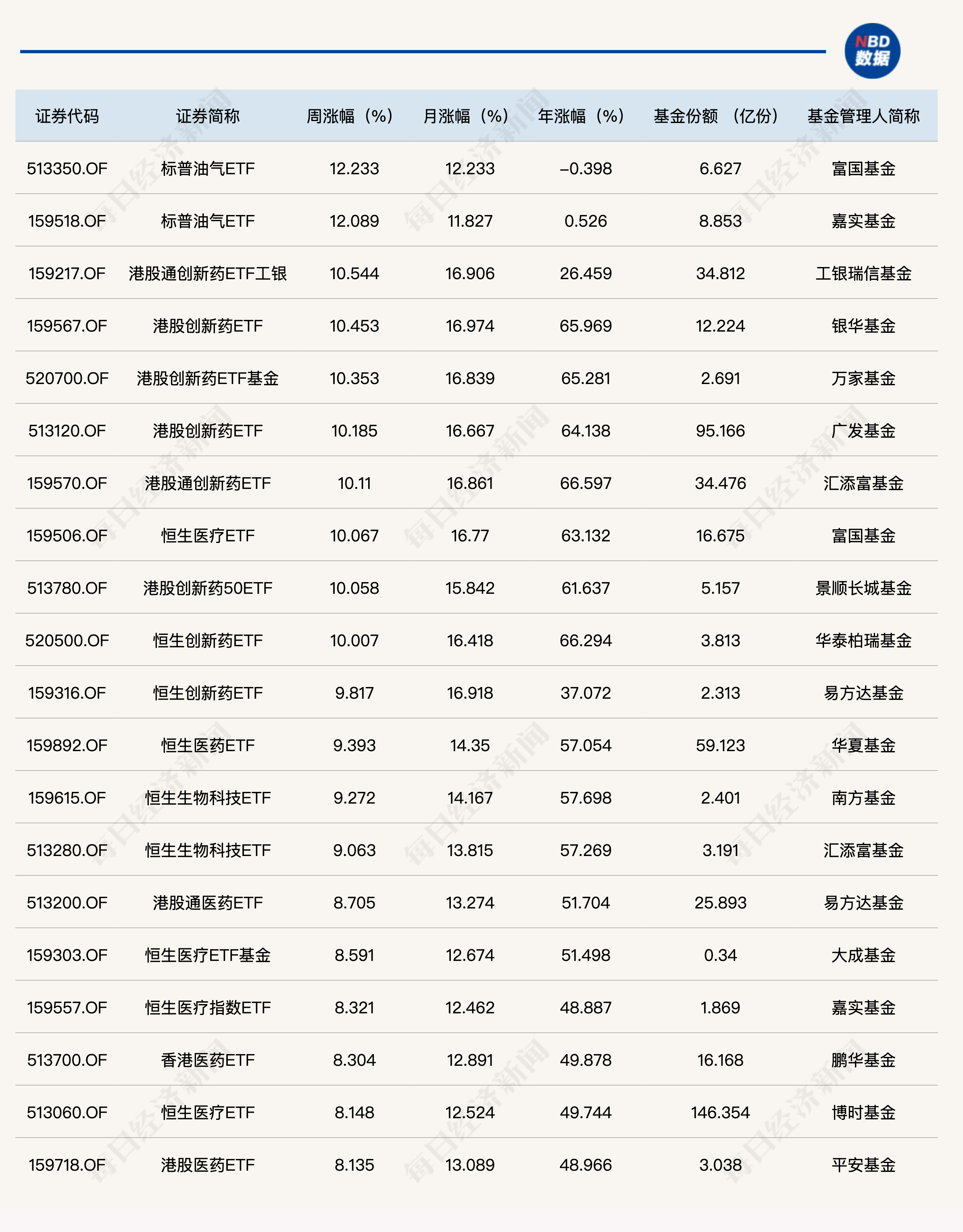
Market Overview - The Shanghai Composite Index briefly surpassed 3400 points but adjusted to close at 3377 points, resulting in a weekly decline of 0.25% [1] - The performance of ETF products varied significantly across different sectors, with Hong Kong innovative drug-related products experiencing substantial gains, potentially becoming the strongest theme for the first half of the year [1] ETF Performance - The S&P Oil & Gas ETF led the weekly gains with a rise of 12.23%, driven by geopolitical tensions in the Middle East, which caused a spike in international oil prices [5] - Eight Hong Kong innovative drug-related ETFs recorded weekly gains exceeding 10%, indicating strong market interest in this sector [5] - Year-to-date, the top-performing ETFs are those related to Hong Kong innovative drugs, with several products showing gains over 60% [5] Declining Sectors - The Wine ETF experienced a significant decline of 5.55% this week, continuing a downward trend that has persisted for five years, with a year-to-date drop exceeding 11% [10] - Other sectors such as food and beverage ETFs also faced declines, with several products reporting weekly drops over 4% [10]
黄金原油飙涨!亚太股市普跌
新华网财经· 2025-06-13 04:38
Market Overview - The Asia-Pacific stock market experienced a widespread decline due to external "black swan" events, with the Shanghai Composite Index down 0.72%, Shenzhen Component down 1.15%, and ChiNext down 1.14% [2] - International oil prices surged, with WTI crude oil futures rising over 14% during the session, while spot gold reached a recent high of $3440 per ounce [1][11] Oil and Gas Sector - The oil and gas exploration sector showed strong performance, with stocks like Keli Co., Tongyuan Petroleum, and Qianeng Hengxin experiencing significant gains [5] - In the Hong Kong market, the energy sector also saw substantial increases, with Shandong Molong's stock price soaring over 71% by midday [5] - Analysts attribute the rise in oil prices to heightened geopolitical risks and improving macroeconomic conditions, with U.S. inflation data indicating a relatively mild inflation environment [8] Precious Metals Sector - The precious metals sector, particularly gold, saw significant gains, with companies like Xiaocheng Technology and Western Gold reporting substantial increases in stock prices [9] - The current gold price surge is supported by central bank purchases, weakening U.S. dollar credit, and ongoing global trade concerns, leading to expectations of a higher price range for gold [11] Consumer Sector - The liquor sector, particularly the baijiu segment, faced a notable decline, with Kweichow Moutai down 2.02% [12][13] - The traditional consumer sector, represented by baijiu, has shown weaker performance compared to "new consumption" trends, with Kweichow Moutai's stock price dropping over 12% since mid-May [15] - Analysts suggest that the investment logic between new and traditional consumption differs significantly, with new consumption driven by emotional value and demand creation, while traditional consumption relies on stable cash flow and dividend yields [16][17][18]

捕捉情绪价值驱动下的新消费投资机遇——专访中金消费升级基金经理高大亮
Zheng Quan Ri Bao· 2025-05-29 16:07
Core Insights - The government work report emphasizes the importance of boosting consumption and expanding domestic demand as a top priority for 2025, highlighting consumption as the "main engine" of economic growth [1] Group 1: Structural Changes in Consumption Market - The consumption market is undergoing a profound structural transformation, with domestic demand being a long-term strategy for economic upgrading [1] - Recent trends show a shift in consumption performance, with inward and growth-oriented consumption sectors becoming more attractive for investment [1] Group 2: New Consumption Trends - The "high-growth consumption new track" initiative reflects macroeconomic and demographic changes, with service consumption increasing significantly as GDP per capita rises [1] - New consumption models are emerging across various fields, with examples like the integration of culture and tourism, and the rise of smart consumption scenarios [1] Group 3: Consumer Behavior and Emotional Value - Consumers are increasingly valuing emotional aspects of consumption, with trends in self-satisfaction and social consumption gaining traction [2] - The complexity of modern consumer needs is evident, with a blend of desires for happiness, health, solitude, and social interaction influencing purchasing decisions [2] Group 4: Investment Opportunities in Traditional Consumption - Traditional consumption sectors are currently undervalued, with many companies increasing dividend payouts, indicating a shift towards quality dividends [2] - The ongoing policies to stimulate domestic demand are opening up valuation recovery opportunities for traditional consumption "white horse" stocks [2] Group 5: Investment Framework for Consumer Goods - The growth of consumer goods companies can be categorized into three stages: product explosion, channel adjustment, and platform phase, providing a systematic methodology for evaluating growth potential [2] Group 6: Future Consumption Investment Landscape - Future consumption investments will require a blend of technological insights and humanistic understanding, focusing on the impact of AI and IoT on consumption scenarios and the emotional value shifts among Generation Z [3]