
基本面分析

Search documents
认知:是投资升阶的充要条件
雪球· 2025-11-26 08:24
Group 1 - The core viewpoint is that the current bull market in A-shares is still ongoing, despite market fluctuations, as it is determined by national policies and the realization of capital market value [4][6]. - The process of debt reduction is still in its early stages, indicating that the market's recovery is complex and slow [4]. - Economic indicators such as consumer spending, housing prices, and private enterprise investment remain weak, suggesting that deflationary pressures have not changed [5][6]. Group 2 - Technical indicators like K-line combinations, moving averages, and trading volume are essential for stock trading, serving as the foundation of technical analysis [11]. - Fundamental analysis focusing on performance and valuation is crucial for value investors, but it may not significantly improve the success rate for most retail investors due to information lag [13][14]. - National policies and geopolitical factors are vital for identifying market trends and investment opportunities, acting as catalysts for bull markets [15]. Group 3 - Understanding broader trends and logical analysis is key to identifying potential high-performing stocks and serves as a basis for long-term investment decisions [17]. - Maintaining the right rhythm and mindset is critical for successful trading, emphasizing the importance of patience and clarity in decision-making [18][19]. - A comprehensive understanding of all the aforementioned factors contributes to an investor's cognitive development, which is essential for achieving higher investment success [20][21][22].


锚定基本面 聚焦波段交易
Qi Huo Ri Bao Wang· 2025-11-25 05:55
Core Insights - The article highlights the trading strategies and market analysis approach of Kuang Bolin, who emphasizes fundamental analysis in commodity trading, particularly in the context of the 2025 national futures trading competition [1][2]. Group 1: Trading Philosophy - Kuang Bolin's core trading philosophy is that commodity prices are ultimately determined by supply and demand [2]. - He believes that successful swing trading requires a deep understanding of the commodity's fundamentals, which serves as the basis for trading decisions [2]. Group 2: Market Analysis - In 2025, commodity prices were significantly influenced by policy expectations and market sentiment, especially in the black series commodities, which faced downward pressure due to high production capacity and weak downstream demand from real estate and infrastructure [1]. - Kuang Bolin noted that sectors with high industry concentration and existing losses, such as soda ash and glass, were particularly sensitive to policy expectations, leading to multiple instances of price rebounds despite an overall downward trend [1]. Group 3: Specific Commodity Insights - During the competition, Kuang Bolin profited mainly from trading egg futures, soda ash, and the shipping index [2]. - For egg futures, he analyzed key fundamental factors such as chicken stock levels, feed prices, and the behavior of farmers regarding restocking and culling [2]. - In 2025, the chicken stock levels remained historically high, and with relatively low feed prices, the supply-demand balance for eggs was skewed towards oversupply, leading him to short the egg futures contracts [2]. Group 4: Risk Management - Kuang Bolin maintains a cautious approach to position management, prioritizing capital safety and avoiding heavy single-sided trades [3]. - He adjusts his position size based on market conditions and risk tolerance, reducing exposure in uncertain markets and increasing it when clear trading opportunities arise, but without over-leveraging [3]. - His stop-loss strategy is triggered by significant changes in fundamentals, alterations in trading logic, chaotic market movements, or sudden emotional market shifts [3]. Group 5: Integration of Analysis - Kuang Bolin believes that combining the rational logic of fundamentals with the market heat of sentiment is essential for accurately capturing market dynamics and making informed trading decisions [3].
有关今天的股市大跌
Sou Hu Cai Jing· 2025-11-21 06:36
Group 1 - The market has likely confirmed the end of the upward trend, with a preference for a sideways market rather than a bear market [1][2] - The strong support level for the market is around 3500 points, which was previously a resistance level [3] - Future market movements will depend on upcoming economic policy announcements, particularly from the December economic work conference [5] Group 2 - The current market situation requires careful position management, with a strategy of selling in a bull market and being cautious about buying [5] - Investors should have contingency plans in place due to the unpredictability of market trends, emphasizing the importance of risk management [6] - The analysis of market trends should be based on various indicators, with a focus on the 60-day trend line for determining trend continuation or termination [6]
真正的“取经之路”
Bao Cheng Qi Huo· 2025-11-19 09:35
Core Views - The wisdom of trading lies in "planning before action", seeing the overall situation, being patient and waiting for the right opportunity to strike [2] - Successful trading requires strategic vision and systematic thinking, paying attention to fundamental evolution, macro - economic cycles, and industrial policy orientation [3] - Traders should establish a trading system with fundamental trends as the anchor, technical analysis as the ruler, and risk control as the shield, and wait patiently for high - probability and high - profit - loss - ratio opportunities [4] - In trading, one should reconcile with the market and oneself, admit mistakes, conduct calm reviews, and correct strategies [4] Summary Based on Related Ideas - The story of Zheng庄公's brother's failure in the "Digging the Ground to See His Mother" is similar to traders who are over - confident due to small gains in the early stage of the trend and end up in a fiasco when the market reverses, emphasizing the importance of not being blinded by small profits and seeing the overall situation [2] - The author's own experience of almost losing all account funds due to greed and luck in early trading shows that market risks come from cognitive blind spots and emotional out - of - control, and traders need to control their desires and abide by rules [3] - The story of Guan Zhong assisting Duke Huan of Qi to dominate the world shows that successful trading requires strategic vision and systematic thinking, not just focusing on K - line fluctuations [3] - The stories of Lin Xiangru and Lian Po in "The Complete Return of the Jade to Zhao" and "Lian Po Carrying Thorns to Apologize" reflect the power of "harmony" in trading, that is, reconciling with the market and oneself [4]
止损是保住本金的最后一道防线
Qi Huo Ri Bao Wang· 2025-11-19 01:04
Core Insights - The article highlights the success of Wang Ran, a trader who emerged as the sixth place winner in the national futures trading competition, emphasizing his emotional stability and experience in trading [1] Group 1: Key Factors for Success - Risk management and decisive action during critical moments were identified as the two main pillars of Wang Ran's success in the competition [2] - Wang Ran's strategy involved a combination of fundamental and technical analysis, where fundamentals set the direction, technicals determine entry points, and drawdown rates establish stop-loss levels [3] Group 2: Trading Philosophy and Experience - Wang Ran's trading journey was marked by challenges, including significant losses during the 2008 soybean oil market, which taught him the principle of market reversals [4] - His trading philosophy emphasizes the importance of risk control, with strict discipline in managing exposure, ensuring that each trade only risks 1-3% of the total capital [4]
在对市场随机性的摸索中成长
Qi Huo Ri Bao Wang· 2025-11-14 00:31
Core Insights - The article highlights the impressive performance of "Chun Chun" in a trading competition, achieving third place in the lightweight group and fourth in the options group [1] - "Chun Chun" attributes his success to a strategic focus on lithium carbonate options during a price uptrend, resulting in significant profits from an initial capital of 28,000 yuan to over 6 million yuan [2] Group 1: Trading Strategy and Performance - The key to "Chun Chun's" success was heavy investment in bullish options for lithium carbonate, driven by factors such as low price levels, rising electric vehicle sales, and new regulatory changes [2] - Despite a high profit of 8.33 million yuan at one point, "Chun Chun" ended the competition with a profit of 4.88 million yuan, indicating the challenges of maintaining profitability in trading [3] - "Chun Chun" learned from past trading failures, particularly in 2021, which shaped his current approach to follow market trends rather than relying on cost-based pricing [3] Group 2: Trading Philosophy and Future Plans - "Chun Chun" emphasizes the importance of the trading process over the results, viewing the market as an interesting entity [4] - He employs a specific position management strategy called "721," which allocates 70% to in-the-money options, 20% to slightly out-of-the-money options, and 10% to deep out-of-the-money options [4] - The trader recognizes the emotional aspect of the market and advocates for a calm approach to trading, aiming to improve his methods through quantitative techniques [4] - "Chun Chun" is considering a full-time commitment to trading, viewing it as a journey of self-discovery and personal improvement rather than merely a means to conquer the market [4]
商品期货早班车-20251107
Zhao Shang Qi Huo· 2025-11-07 03:12
1. Overall Investment Ratings The report does not provide an overall industry investment rating. 2. Core Views - The commodity futures market is influenced by a variety of factors, including economic data, geopolitical events, and supply - demand dynamics. Different commodities show different trends and investment opportunities due to their unique fundamentals [2][4][9]. - In the precious metals market, the price of gold and silver is affected by factors such as US economic data, Fed officials' statements, and inventory changes. In the base metals market, copper, aluminum, and other metals are affected by market risk preferences, supply - demand relationships, and inventory changes. In the black industry, steel, iron ore, and other products are affected by factors such as supply - demand balance and cost changes. In the agricultural products market, factors such as supply - demand balance, weather, and policies affect the prices of soybeans, corn, and other products. In the energy and chemical industry, factors such as new device production, demand, and geopolitical risks affect the prices of LLDPE, PVC, and other products [2][4][7]. 3. Summary by Commodity Categories Precious Metals - **Gold**: Overnight, precious metal prices rose and then fell, with London gold reaching $4000/ounce. The US included copper and silver in the new key minerals list, and US employment data was weak. Domestic gold ETF inflows were 1.1 tons. Suggest buying at the lower support level [2]. - **Silver**: Multiple factors influenced the market, and it is recommended to reduce long positions [2]. Base Metals - **Copper**: Copper prices oscillated. The market risk preference declined, and the supply of copper ore remained tight. It is recommended to treat it with an interval - oscillation mindset in the short term [4]. - **Aluminum**: The price of the electrolytic aluminum main contract increased by 1.10%. Supply increased slightly, and demand decreased slightly. Pay attention to the de - stocking of aluminum ingots [4]. - **Alumina**: The price of the alumina main contract increased by 0.54%. Supply decreased due to environmental protection, and demand remained high. The market is in an oversupply pattern, and prices are expected to oscillate weakly [5]. - **Zinc**: The price of the zinc main contract increased slightly. Supply increased, and demand was in the off - season. It is recommended to sell short at high prices [5]. - **Lead**: The price of the lead main contract decreased slightly. Supply was marginally loose, and demand was mixed. It is recommended to operate within an interval [5]. - **Industrial Silicon**: The price of the main contract increased. Supply decreased, and demand was supported by polysilicon. The price is expected to operate between 8600 - 9400, and it is recommended to wait and see [5]. - **Lithium Carbonate**: The price of the main contract increased. Supply was expected to increase, and demand was high. It is recommended to try to buy on dips [6]. - **Polycrystalline Silicon**: The price of the main contract increased slightly. Supply decreased, and demand was under pressure. It is recommended to buy on dips or sell put options [6]. - **Tin**: Tin prices oscillated weakly. Market risk preferences fluctuated, and supply was expected to ease. It is recommended to use an interval - oscillation mindset in the short term [6]. Black Industry - **Rebar**: The price of the rebar main contract increased. Supply and demand weakened marginally, and the futures price was at a high valuation. It is recommended to wait and see [7]. - **Iron Ore**: The price of the iron ore main contract decreased. Supply and demand were neutral and deteriorated marginally. It is recommended to exit and wait, and aggressive investors can try to short [7]. - **Coking Coal**: The price of the coking coal main contract decreased slightly. Supply and demand were affected by steel production, and the futures price was at a high valuation. It is recommended to exit and wait, and aggressive investors can try to short [8]. Agricultural Products - **Soybean Meal**: US soybeans may enter an oscillation phase. Domestic supply is relatively loose, and the medium - term trend depends on tariff policies and production in the producing areas [9]. - **Corn**: Corn futures prices rose, and spot prices were mixed. New grain is about to be listed, and prices are expected to oscillate in the short term [9]. - **Sugar**: The price of the Zhengzhou sugar 01 contract increased slightly. Internationally, sugar production is expected to increase, and it is recommended to short in the futures market and sell call options [9]. - **Cotton**: International cotton prices fell, and domestic cotton prices oscillated weakly. It is recommended to wait and see within the 13400 - 13700 range [9]. - **Palm Oil**: The Malaysian palm oil market rebounded. Supply increased, and demand increased slightly. The market is expected to be weak, and it is recommended to pay attention to production and policies [10]. - **Eggs**: Egg futures and spot prices rose. Supply decreased, and demand increased seasonally. Prices are expected to oscillate strongly [10]. - **Pigs**: Pig futures prices oscillated narrowly, and spot prices were mixed. Supply is sufficient, and prices are expected to be weak [10]. - **Apples**: The price of the main contract decreased slightly. Different regions have different situations, and it is recommended to wait and see [10]. Energy and Chemicals - **LLDPE**: The price of the LLDPE main contract continued to decline slightly. Supply pressure increased but at a slower pace, and demand was in the off - season. It is recommended to short at high prices in the medium - long term [11]. - **PVC**: The price of the PVC main contract decreased. Supply increased, and demand was weak. It is recommended to short or do a reverse spread [12]. - **PTA**: PX supply increased, and PTA supply pressure was high in the medium - long term. It is recommended to take profit on long positions and short the processing fee in the far - month contracts [12]. - **Glass**: The price of the glass main contract decreased. Supply decreased due to production line shutdowns, and demand improved. It is recommended to do a reverse spread [12]. - **PP**: The price of the PP main contract continued to decline slightly. Supply increased, and demand was in the off - season. It is recommended to short at high prices in the medium - long term [12]. - **Crude Oil**: Oil prices fell. Supply pressure increased, and demand was seasonally weak. Prices are expected to oscillate in the short term, and it can be shorted at high prices if Russian oil production reduction is less than 500,000 barrels per day [13]. - **Styrene**: The price of the styrene main contract continued to decline slightly. Supply and demand were weak, and it is recommended to short at high prices in the medium - long term [13]. - **Soda Ash**: The price of the soda ash main contract increased. Supply and demand were balanced, and it is recommended to wait and see [13].
黄金今日行情走势要点分析(2025.10.22)
Sou Hu Cai Jing· 2025-10-22 00:59
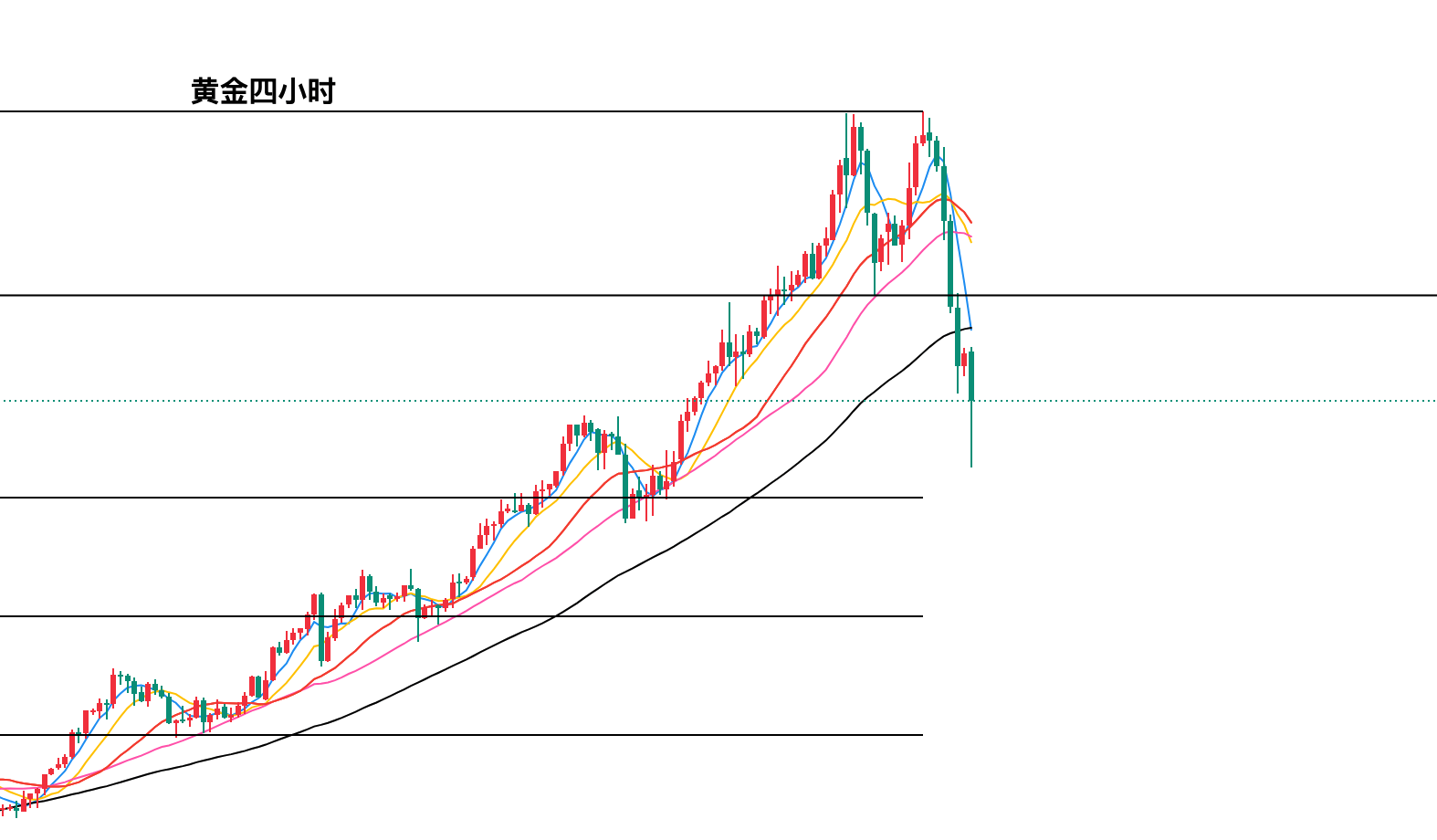
Core Viewpoint - The significant drop in gold prices is attributed to multiple factors, including profit-taking, a retreat in safe-haven demand, a strong US dollar, and adverse impacts on the precious metals market [2][3]. Fundamental Analysis - The recent plunge in gold prices is a result of profit-taking and a decline in safe-haven demand, driven by optimistic signals in international trade, ceasefire expectations in the Russia-Ukraine conflict, and potential resolution of the US government shutdown [2]. - The US dollar index rose by 0.34% to 98.98, influenced by the election of Japan's new Prime Minister, which further supported the dollar and increased the cost for non-US currency investors to purchase gold [2]. - Silver prices fell by 7% to $48.62 per ounce, while platinum and palladium also saw declines exceeding 5%, indicating a broader weakness in the precious metals sector [2]. Technical Analysis - On the daily chart, gold formed a "bearish engulfing" pattern, indicating strong bearish signals and effective suppression of bullish momentum [4]. - The break below the 5-day and 10-day moving averages marks the beginning of an adjustment phase, with the next key support level at the weekly MA5, currently around 3990 [4]. - The four-hour chart indicated a potential "double top" pattern, with actual price movement exceeding expectations, highlighting market uncertainty [6]. Future Outlook - In the short term, gold prices may enter a consolidation phase lasting two to three weeks, while medium to long-term factors such as geopolitical uncertainty and central bank buying demand may continue to support gold [3]. - Upcoming inflation data and Federal Reserve meetings could pose potential impacts on gold prices, but the core value of gold as a hedging tool remains unchanged [3].
王静:10.17技术与基本面共振,黄金高位布局空单正当时
Sou Hu Cai Jing· 2025-10-17 07:00
Technical Analysis - Gold prices are currently at a critical resistance area around 4365-70, which has shown significant selling pressure [1] - Multiple tests of this level have failed to break through, forming a potential double top or resistance platform [1] - RSI indicators on hourly and 4-hour charts show bearish divergence, indicating a decrease in upward momentum and a potential need for a technical pullback [1] - A stop-loss is recommended above the recent high at 4380 to effectively manage risk [1] - The first target for a potential downside move is 4340, which is a strong support level and corresponds to the Fibonacci 38.2% retracement of the recent upward wave [1] Fundamental Analysis - Recent market expectations for a Federal Reserve rate cut have cooled, with several Fed officials making hawkish comments emphasizing the need for more evidence of inflation decline [1] - This has led to a stabilization and rebound in U.S. Treasury yields, providing support for the U.S. dollar index [1] - Higher interest rates increase the opportunity cost of holding non-yielding assets like gold, putting pressure on gold prices [1] - Despite ongoing geopolitical risks, market risk aversion has not intensified, failing to provide new upward momentum for gold prices [1] - The interplay of subtle fundamental changes and technical resistance increases the likelihood of a price correction for gold at this level [1]
硅铁:基本面与宏观情绪博弈,弱势震荡,锰硅:基本面与宏观情绪博弈,弱势震荡
Guo Tai Jun An Qi Huo· 2025-10-09 01:45
Group 1: Investment Ratings - The trend strength of ferrosilicon is -1, and that of silicomanganese is -1, indicating a weak outlook for both [3]. Group 2: Core Views - Ferrosilicon and silicomanganese are in a state of weak oscillation due to the game between fundamentals and macro - sentiment [1]. Group 3: Summary by Relevant Catalogs 1. Fundamental Tracking Futures - Ferrosilicon 2511 closed at 5494, down 116 from the previous trading day, with a trading volume of 192,219 and an open interest of 118,081. Ferrosilicon 2601 closed at 5468, down 108, with a trading volume of 76,428 and an open interest of 116,050. Silicomanganese 2511 closed at 5742, down 60, with a trading volume of 79,328 and an open interest of 35,681. Silicomanganese 2601 closed at 5758, down 62, with a trading volume of 176,364 and an open interest of 348,291 [1]. Spot - The price of ferrosilicon FeSi75 - B in Inner Mongolia was 5250 yuan/ton, down 50. The price of silicomanganese FeMn65Si17 in Inner Mongolia was 5680 yuan/ton. The price of manganese ore Mn44 block was 40 yuan/ton - degree, and the price of semi - coke small material in Shenmu was 710 yuan/ton [1]. Spreads - The basis of ferrosilicon (spot - 11 futures) was - 244 yuan/ton, up 66. The basis of silicomanganese (spot - 01 futures) was - 78 yuan/ton, up 60. The near - far month spread of ferrosilicon 2511 - 2601 was 26 yuan/ton, down 8. The near - far month spread of silicomanganese 2511 - 2601 was - 16 yuan/ton, up 2. The cross - variety spread of silicomanganese 2511 - ferrosilicon 2511 was 248 yuan/ton, up 56. The cross - variety spread of silicomanganese 2601 - ferrosilicon 2601 was 290 yuan/ton, up 46 [1]. 2. Macro and Industry News - On September 30, the price range of 72 ferrosilicon in different regions was 5200 - 5400 yuan/ton, and that of 75 was 6000 - 6200 yuan/ton. The FOB price of 72 ferrosilicon was 1050 - 1070 dollars/ton, and that of 75 was 1120 - 1150 dollars/ton. The price range of 6517 silicomanganese in the north was 5650 - 5750 yuan/ton, and in the south was 5750 - 5800 yuan/ton [1]. - In September, the number of operating ferrosilicon enterprises in Ningxia was 13, with 43 operating submerged arc furnaces. The开工 rate was 48.86%, up 2.27% from August, and the output was expected to be 12.16 tons, down 0.3 tons from August, with a capacity utilization rate of 52.28%. Nationally, there were 76 operating ferrosilicon enterprises with 245 operating submerged arc furnaces in September. The total average开工 rate was 50.88%, down 1.86% from August, and the output was expected to be 47.88 tons, down 0.05 tons from August, up 1.27 tons from the same period last year, a year - on - year increase of 2.72%. The cumulative output from January to September 2025 was 410.7 tons, up 2.26 tons from the same period last year, an increase of 0.55% [1][3]. - In September, the output of silicomanganese in the northern main production areas decreased slightly. The total output of silicomanganese in Ningxia was about 20.7 tons, down 0.75 tons from August, and the output of 6517 was about 19.8 tons [3].