
经济滞胀

Search documents
事关俄美元首会晤,特朗普最新表态!美联储高层将迎来白宫人选!英国央行降息,黄金价格会持续走高?
Qi Huo Ri Bao· 2025-08-08 00:13
Group 1: US-Russia Relations - President Trump stated that the possibility of a ceasefire between Russia and Ukraine depends on President Putin [1] - Putin expressed interest in a meeting with Trump and mentioned the UAE as a suitable location for such a meeting [1] - Putin indicated that conditions need to be created for a potential meeting with Ukrainian President Zelensky [1] Group 2: Israel-Gaza Conflict - Israeli Prime Minister Netanyahu announced plans for military control over the entire Gaza Strip, aiming to transfer governance to capable Arab forces [2] - Hamas condemned Netanyahu's statements, claiming they reflect a continuation of violence against Palestinians and a rejection of negotiation processes [2] - Hamas warned that any forces formed under Netanyahu's plan would be viewed as occupying forces [2] Group 3: UK Monetary Policy - The Bank of England lowered the benchmark interest rate by 25 basis points to 4%, marking the fifth rate cut in a year [3] - The Bank cited ongoing economic stagnation and rising inflation, with food prices contributing to an expected peak inflation rate of 4% in September [3] - The rate cut aligns with market expectations amid concerns over rising unemployment and global trade impacts from US tariff policies [3] Group 4: US Federal Reserve Appointments - President Trump nominated Stephen Moore to fill a vacant position on the Federal Reserve Board, with a term ending on January 31, 2026 [4][5] - Moore previously served as a senior economic advisor at the Treasury during Trump's first term and holds a PhD in economics from Harvard [5] Group 5: Gold Market Dynamics - Gold prices have rebounded and are experiencing high volatility, with New York gold reaching $3,470.3 per ounce on August 7 [6] - The rebound is attributed to disappointing US employment data and rising expectations for a Federal Reserve rate cut in September [6][7] - Analysts suggest that the Fed's potential rate cuts and ongoing economic uncertainties will support gold prices in the medium term [8]
今日沪铜主力铜市惊现诡异背离:降息狂欢中,铜价为何逆势下跌?
Sou Hu Cai Jing· 2025-08-07 19:54
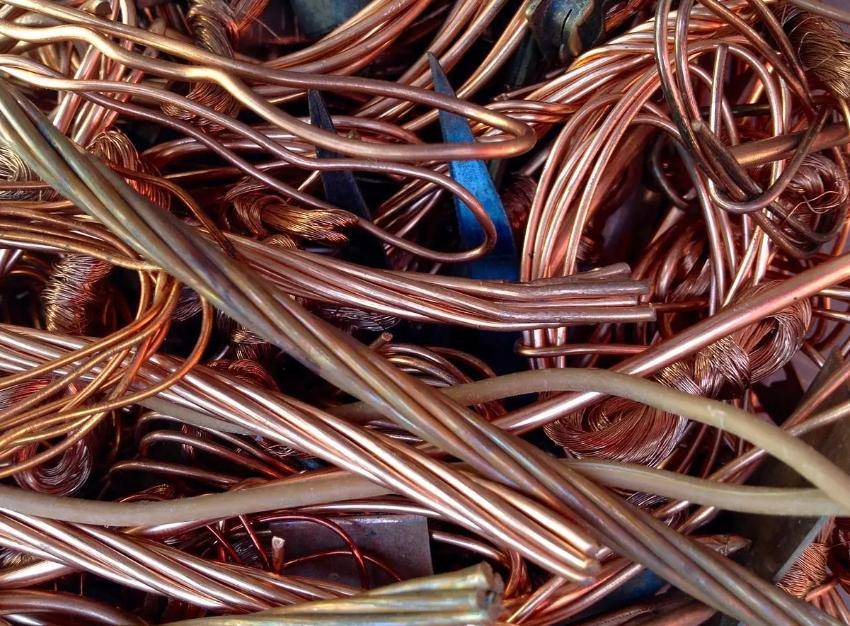
Group 1: Macroeconomic Headwinds - The market is increasingly concerned about "stagflation" in the U.S. economy, with the services PMI nearing the threshold and the price index soaring to 69.9%, a three-year high [2] - Investors are selling industrial metals like copper in favor of safe-haven assets such as gold and government bonds due to fears of stagnant growth and high inflation [2] Group 2: Tariff Policy Impact - The tariff policy from the Trump administration has targeted the copper supply chain, imposing a 50% tax on semi-finished products like copper cables while exempting refined copper [3] - This has led U.S. wire importers to cancel orders and forced Chinese copper processing companies to relocate to Southeast Asia to avoid high tariffs [3] Group 3: Federal Reserve Uncertainty - The sudden announcement of changes in the Federal Reserve's leadership has raised concerns about potential delays in interest rate cuts, prompting copper bulls to exit the market [4] - This uncertainty has contributed to increased market volatility and further depressed copper prices [4] Group 4: Inventory Dynamics - LME copper inventories surged by 14,275 tons (10.23%) on August 5, reaching a five-month high, primarily due to U.S. traders selling off during the tariff exemption window [7] - In contrast, the Chinese market is experiencing a shortage of copper, with significant price discrepancies between regions, indicating an underlying inventory crisis [7] Group 5: Industry Chain Challenges - Copper concentrate processing fees have dropped to -42.09 USD/ton, resulting in losses for smelters [8] - The cost of production for Chilean copper has risen to 2.10 USD/pound, while smelters are struggling to maintain profitability [8] Group 6: Market Reactions - On August 6, stocks of copper companies like Tongling Nonferrous and Jiangxi Copper saw significant price increases, driven by speculation around policy expectations [9] - However, futures markets remain focused on real inventory levels and weak consumption, leading to narrow trading ranges for copper contracts [9] Group 7: Long-term Outlook - Despite short-term challenges, the demand for copper driven by electrification remains strong, with Tesla's Shanghai factory increasing copper cable orders by 35% year-on-year [10] - Strategic stockpiling activities by various entities, including the Chinese state reserves and U.S. military contractors, are also noteworthy [10] Group 8: Conclusion - The short-term fluctuations in copper prices are influenced by a complex interplay of macroeconomic factors, tariff policies, supply chain dynamics, and market expectations [12] - The future trajectory of copper prices will depend on the resolution of these interrelated factors [12]

瑞达期货贵金属产业日报-20250807
Rui Da Qi Huo· 2025-08-07 10:13
Report Summary 1. Report Industry Investment Rating No investment rating is provided in the report. 2. Core Viewpoints - The precious metals market is expected to show a short - term volatile and bullish pattern. Given the background of potential interest rate cuts by the FOMC this year, the overnight US dollar index and long - term US Treasury yields have corrected. Driven by the sentiment of gold - silver ratio repair, silver prices may show more resilience recently [3]. - If the CPI data in the next few months reflects the substantial impact of tariffs on inflation, gold prices may be boosted due to the increasing risk of economic stagflation in the US. Key data to watch include the US New York Fed inflation expectation index and last week's initial jobless claims data. A significant increase in jobless claims and rising inflation expectations may further intensify market concerns about economic stagflation and be beneficial to gold prices [3]. - Operationally, it is recommended to wait and see in the short term and maintain a strategy of buying on dips in the long term, while paying attention to risk control. The focus range for the Shanghai Gold 2510 contract is 770 - 800 yuan/gram, and for the Shanghai Silver 2510 contract is 9100 - 9300 yuan/kilogram [3]. 3. Summary by Relevant Catalogs Futures Market - **Prices**: The closing price of the Shanghai Gold main contract is 785.02 yuan/gram, up 1.34 yuan; the closing price of the Shanghai Silver main contract is 9258 yuan/kilogram, up 76 yuan [3]. - **Positions**: The main contract positions of Shanghai Gold are 217,630 lots, up 2,418 lots; the main contract positions of Shanghai Silver are 378,070 lots, up 4,694 lots [3]. - **Net Positions of Top 20**: The net positions of the top 20 in the Shanghai Gold main contract are 170,427 lots, up 2,102 lots; the net positions of the top 20 in the Shanghai Silver main contract are 103,977 lots, up 7,502 lots [3]. - **Warehouse Receipts**: The warehouse receipt quantity of gold is 36,045 kilograms (no change); the warehouse receipt quantity of silver is 1,150,338 kilograms (no change) [3]. 现货市场 - **Spot Prices**: The Shanghai Non - ferrous Metals Network gold spot price is 779.9 yuan/gram, with a basis of - 5.12 yuan/gram; the silver spot price is 9175 yuan/kilogram, with a basis of - 83 yuan/kilogram [3]. Supply - Demand Situation - **ETF Holdings**: Gold ETF holdings are 952.79 tons, down 3.15 tons; silver ETF holdings are 15,112.28 tons, up 67.81 tons [3]. - **CFTC Non - commercial Net Positions**: The weekly non - commercial net positions of gold in CFTC are 223,596 contracts, down 29,442 contracts; the weekly non - commercial net positions of silver in CTFC are 59,407 contracts, down 1,213 contracts [3]. - **Supply and Demand Quantities**: The quarterly total supply of gold is 1,313.01 tons, up 54.84 tons; the annual total supply of silver is 987.8 million troy ounces, down 21.4 million troy ounces. The quarterly total demand for gold is 1,313.01 tons, up 54.83 tons; the annual global total demand for silver is 1,195 million ounces, down 47.4 million ounces [3]. Option Market - **Historical Volatility**: The 20 - day historical volatility of gold is 11%, down 0.96%; the 40 - day historical volatility of gold is 11.46%, down 0.02% [3]. - **Implied Volatility**: The implied volatility of at - the - money call options and put options for gold is 18.56%, down 0.46% [3]. Industry News - **Tariff Policy**: US President Trump signed an executive order to impose an additional 25% tariff on Indian goods, making the total tariff rate reach 50%. The new 25% tariff will take effect in 21 days, and the first - round 25% tariff will take effect this Thursday. Trump also plans to impose about 100% tariffs on chips and semiconductors, but companies building factories in the US will be exempted [3]. - **Diplomatic Efforts**: Trump plans to meet with Russian President Putin and Ukrainian President Zelensky as early as next week to attempt to achieve a cease - fire in the Russia - Ukraine conflict [3]. - **Fed's Stance**: Fed's Daly said that policy may need to be adjusted in the next few months. The labor market slowdown is unwelcome, and tariffs are unlikely to continuously push up inflation in a way that requires monetary policy intervention. Minneapolis Fed President Kashkari believes that the US economic slowdown may make short - term interest rate cuts appropriate, and he still expects two interest rate cuts by the end of this year [3].

贵金属日评:欧盟对美国贸易反制措施暂停6个月,美联储下半年或降息三次-20250805
Hong Yuan Qi Huo· 2025-08-05 06:26
1. Report Industry Investment Rating - Not provided in the report 2. Core View of the Report - The weakening US job market has heightened expectations of a Fed rate cut, and with global central banks continuing to buy gold, precious metal prices are likely to rise and difficult to fall. Investors are advised to buy on price dips. Specific support and resistance levels are provided for London gold, Shanghai gold, London silver, and Shanghai silver [1] 3. Summary by Relevant Catalogs 3.1 Market Data - **Shanghai Gold**: On August 4, 2025, the closing price was 775.55 yuan/gram, with a trading volume of 47,492 and an open interest of 206,958. The inventory was 35,889 (in ten - gram units). The spread between the near - month and far - month contracts was - 3.28, and the basis was - 2.33 [1] - **Shanghai Silver**: On August 4, 2025, the closing price was 9,039 yuan/kg, with a trading volume of - 78,029 and an open interest of 371,051. The inventory was 1,174,273 (in ten - gram units). The spread between the near - month and far - month contracts was - 17, and the basis was - 40 [1] - **COMEX Gold Futures**: On August 4, 2025, the closing price was 3,428.60 dollars/ounce, with a trading volume of 132,941 and an open interest of 334,342. The inventory was 37,762,393.92 (in troy ounces). The spread between the near - month and far - month contracts was - 53.50, and the basis was - 69.15 [1] - **COMEX Silver Futures**: On August 4, 2025, the closing price was 38.33 dollars/ounce, with a trading volume of 44,731 and an open interest of 109,684. The inventory was 506,602,108.72 (in troy ounces). The spread between the near - month and far - month contracts was - 0.22, and the basis was 0.32 [1] - **Gold and Silver Price Ratios**: Shanghai gold futures to Shanghai silver futures was 83.90; Shanghai gold spot to Shanghai silver spot was 86.32; New York gold futures to New York silver futures was 91.56; London gold spot to London silver spot was 91.72 [1] - **Other Commodities and Financial Indicators**: INE crude oil was 514.30 yuan/barrel, ICE Brent crude was 68.68 dollars/barrel, NYMEX crude oil was 66.24 dollars/barrel, Shanghai copper futures was 78,330 yuan/ton, LME copper spot was 9,708.50 dollars/ton, Shanghai rebar was 3,204 yuan/ton, and Dalian iron ore was - 7.50 yuan/ton. Major stock indices such as the Shanghai Composite Index, S&P 500, and others also had corresponding closing prices and changes [1] 3.2 News and Information - **Gold - related News**: The EU has suspended trade counter - measures against the US for six months. Switzerland is facing a negotiation "race" to reduce a 39% tariff, and Swiss gold trade has become the focus of Trump's tariff policy. Trump will select a new Fed governor in the "next few days" and announce a new Bureau of Labor Statistics director in three to four days [1] - **Macroeconomic and Central Bank Policies**: The Fed kept the federal funds rate unchanged in July. Due to possible significant downward revisions or far - below - expected non - farm payrolls in July, the US economy shows "stagflation" characteristics, increasing expectations of rate cuts in September, October, and December. The European Central Bank may cut rates once by the end of 2025, the Bank of England may cut rates 2 - 3 times by the end of 2025, and the Bank of Japan may still have a rate hike expectation by the end of 2025 [1] 3.3 Trading Strategy - Investors are advised to buy on price dips. For London gold, focus on support around 3,150 - 3,250 and resistance around 3,500 - 3,700; for Shanghai gold, support is around 730 - 760 and resistance is around 800 - 850. For London silver, support is around 34 - 38 and resistance is around 37 - 40; for Shanghai silver, support is around 8,500 - 8,700 and resistance is around 9,100 - 9,500 [1]
研究所晨会观点精萃-20250805
Dong Hai Qi Huo· 2025-08-05 00:42
Report industry investment rating No relevant content provided. Core view of the report - Overseas, the EU has suspended trade countermeasures against the US for 6 months, and Fed officials indicate that the timing of interest rate cuts is approaching, with a preference for more than two rate cuts this year. Domestically, China's manufacturing PMI in July was 49.3%, a 0.4 percentage point decrease from the previous month, and the economy slowed in July. China has introduced a national child - rearing subsidy system, and the US - China tariff truce has been extended by 90 days. Global risk appetite has increased, and domestic risk preference has also risen [3]. - The short - term logic of the precious metals market has changed significantly. Gold is short - term bullish, while silver's rise is expected to lag behind gold, and the gold - silver ratio is likely to continue to rise [5]. - The short - term prices of black metals are affected by production restriction news. Steel, iron ore, and other products are expected to fluctuate in the short term, and the prices of ferroalloys are expected to fluctuate weakly [7]. - The prices of non - ferrous metals and new energy products show different trends. Copper is affected by economic data and inventory; aluminum is affected by inventory and policies; aluminum alloy is supported by cost but limited by demand; tin is expected to decline weakly in the short term; the short - term fluctuations of lithium carbonate are large; industrial silicon may be affected by the anti - involution meeting; polysilicon is expected to fluctuate at a high level [9][10][12][13]. - Energy and chemical products are affected by factors such as the situation in Russia and Ukraine and OPEC+ production increase plans. Crude oil prices are oscillating, and asphalt, PX, PTA, and other products are expected to maintain an oscillating pattern [14][15]. - The prices of agricultural products show different trends. The prices of soybeans, soybean meal, and soybean oil are affected by factors such as production, inventory, and demand; palm oil prices may continue to weaken; corn supply and demand are in a weak balance; and pig prices are under pressure [17][18]. Summary by relevant catalogs Macro - finance - Overseas: The EU suspends trade countermeasures against the US for 6 months, Fed officials are dovish, and the US dollar is weak. Domestically: China's July manufacturing PMI is 49.3%, a 0.4 percentage point decrease from the previous month. A national child - rearing subsidy system is introduced, and the US - China tariff truce is extended by 90 days. Stock indices are expected to oscillate strongly at a high level in the short term, and treasury bonds are expected to oscillate and correct at a high level. Commodity sectors such as black, non - ferrous, energy and chemical, and precious metals have different short - term trends [3]. Stock indices - Driven by sectors such as military, precious metals, and humanoid robots, the domestic stock market has risen. China's July manufacturing PMI is 49.3%, a 0.4 percentage point decrease from the previous month. A national child - rearing subsidy system is introduced, and the US - China tariff truce is extended by 90 days. The short - term macro - upward driving force has increased. Short - term cautious waiting and watching are recommended [4]. Precious metals - On Monday, precious metals continued to rise. The sharp drop in non - farm payrolls data on Friday increased the probability of Fed rate cuts. The inflation rebound in June made the stagflation characteristics of the US economy more obvious. Gold is short - term bullish, while silver's rise is expected to lag behind gold, and the gold - silver ratio is likely to continue to rise [5]. Black metals - **Steel**: On Monday, the domestic steel spot and futures markets were weak, and production restriction news boosted the afternoon futures price. Real - world demand is weak, inventory has increased, and supply is affected by production restrictions. The steel market is expected to oscillate in the short term [7]. - **Iron ore**: On Monday, the spot and futures prices of iron ore rebounded slightly. Iron ore production may continue to decline, and supply and demand are in a state of balance. The price is expected to oscillate in the short term [7]. - **Silicon manganese/silicon iron**: On Monday, the spot prices of silicon iron and silicon manganese were flat, and the futures prices declined slightly. The prices of ferroalloys are expected to oscillate weakly in the short term [7]. - **Soda ash**: On Monday, the main soda ash contract oscillated. The supply is in an oversupply situation, and the demand is weak. The price is expected to oscillate in the short term [7]. - **Glass**: On Monday, the main glass contract oscillated. Supply pressure is high, and there is an expectation of production reduction. Demand has slightly improved. The price is expected to oscillate in the short term [7][8]. Non - ferrous metals and new energy - **Copper**: Non - farm payrolls data is not as expected, and the US economy is in a slowdown trend. Comex copper inventories are at a high level in recent years, and the price is affected by economic data and inventory [9]. - **Aluminum**: On Monday, the aluminum price rose slightly. Domestic social inventories have increased, and the impact of policies is limited. Short - term sentiment may fluctuate [9]. - **Aluminum alloy**: The supply of scrap aluminum is tight, and demand is in the off - season. The price is expected to oscillate strongly in the short term, but the upward space is limited [9]. - **Tin**: The supply - side start - up rate has increased significantly, and the demand is weak. The price is expected to decline weakly in the short term [10]. - **Lithium carbonate**: On Monday, the main lithium carbonate contract declined. The market is concerned about the risk of mine shutdown, and short - term fluctuations are large [12]. - **Industrial silicon**: On Monday, the main industrial silicon contract declined. The social inventory is at a high level. The price may be affected by the anti - involution meeting [12]. - **Polysilicon**: On Monday, the main polysilicon contract declined. The inventory has decreased slightly. The price is expected to oscillate at a high level in the short term [13]. Energy and chemicals - **Crude oil**: The market is evaluating OPEC+ production increase news, and the US threat to India has partially alleviated concerns about oversupply. The price is oscillating narrowly, waiting for risks to be determined [14]. - **Asphalt**: Asphalt prices are weakening due to the dissipation of anti - involution sentiment. The inventory is in a neutral state with limited de - stocking, and it will maintain a weak oscillating pattern [14]. - **PX**: PTA processing fees are low, and PX demand has slightly decreased. The supply - demand pattern is still tight in the short term, and the price will oscillate, waiting for changes in PTA devices [14][15]. - **PTA**: PTA prices have fallen to the support level, processing fees are low, and downstream开工 has decreased. The price will continue to oscillate weakly [15]. - **Ethylene glycol**: Port inventories have slightly decreased, but supply pressure will gradually increase. The de - stocking drive will weaken, and it will oscillate in the near term [15]. - **Short - fiber**: The price of short - fiber has decreased due to the overall decline of the sector. Terminal orders are average, and inventory has slightly increased. It can be shorted on rallies in the medium term [15]. - **Methanol**: The "anti - involution" sentiment has cooled, and the price is expected to oscillate weakly [16]. - **PP**: The "anti - involution" sentiment has cooled, and the price is expected to oscillate weakly due to strong supply and weak demand [16]. - **LLDPE**: The emotional premium has decreased. Supply has increased, and demand is weak. The price is expected to oscillate weakly [16]. Agricultural products - **US soybeans**: The优良率 of US soybeans is 69%, and attention should be paid to the risk of extreme high temperatures in the central and western US later in the week [17]. - **Soybean and rapeseed meal**: Domestic soybean arrivals and oil mill operations are high. Soybean meal inventory accumulation has slowed down, but the spot sentiment is weak. The expected arrival volume of imported soybeans from August to September is high [17][18]. - **Soybean and rapeseed oil**: Soybean oil is supported in the short term, and rapeseed oil has a weak market. The inventory of soybean oil has increased, and the inventory of rapeseed oil has slightly increased [18]. - **Palm oil**: Since July, Malaysian palm oil production has increased, and exports have weakened. Domestic imports have increased, and the price may continue to weaken, and the soybean - palm oil price difference may continue to rise [18]. - **Corn**: Corn trading is not active, supply is tight, and demand is weak. The supply - demand is in a weak balance in August [18]. - **Pigs**: Pig prices are weak, and there is a possibility of further pressure on prices in the short term [18].
国投证券:A股上周回调,牛市逻辑被打破了么?
Xuan Gu Bao· 2025-08-04 00:43
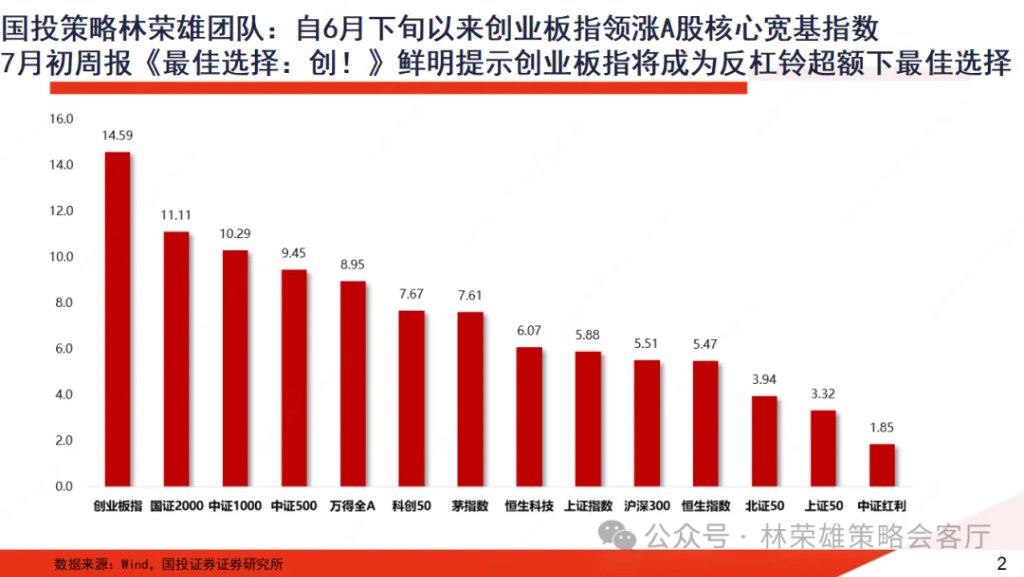
Market Overview - The Shanghai Composite Index fell by 0.94%, while the CSI 300 dropped by 1.75%, and the ChiNext Index decreased by 0.74% last week, indicating a general market pullback [1] - The average daily trading volume in the A-share market was 1.81 trillion yuan, showing a week-on-week decline [1] - Despite the recent market correction, there is a belief that the conditions for a liquidity-driven bull market are in place, emphasizing the importance of structural opportunities [1] Structural Insights - The current extreme barbell strategy represented by banks and micro-cap stocks still holds some absolute return potential, but the effectiveness of excess returns is declining [1] - Low-valuation large-cap growth stocks are beginning to see a rebound in both absolute and excess returns, with a strong focus on the ChiNext Index and technology sectors for Q3 [1] Economic Context - The recent slight market pullback is attributed to a relatively mild economic stimulus from the domestic Politburo meeting and disappointing U.S. non-farm payroll data, which led to a significant drop in U.S. stocks [5] - The market remains optimistic about the A-share index's performance in August, supported by active credit expansion and a favorable liquidity environment [5] U.S. Economic Indicators - The U.S. non-farm payroll data fell short of expectations, with the unemployment rate rising to 4.2%, raising concerns about potential stagflation in the U.S. economy [5] - Market expectations for U.S. Federal Reserve interest rate cuts have increased, with predictions of three rate cuts by the end of the year [5] Policy Developments - The July Politburo meeting emphasized the need to regulate chaotic competition among enterprises and promote capacity governance in key industries, indicating a shift in policy focus [8] - The meeting's outcomes suggest a rational return to pricing for commodities and a potential rebound in the Producer Price Index (PPI) driven by supply-side constraints [8] Investment Strategy - The current investment strategy suggests a preference for low-valuation large-cap growth stocks, technology innovation sectors, and globally priced resource categories [9] - The divergence in returns between extreme barbell assets and intermediate assets has reached historical extremes, indicating a potential shift in investment focus [12][10] Market Sentiment - The banking sector has experienced a significant pullback, with the index declining over 6% since mid-July, yet it remains resilient [22] - The ChiNext Index and technology sectors are expected to benefit from improving investment effectiveness and favorable macroeconomic conditions [25]
美媒:美关税政策恐引发经济滞胀 对美国消费者冲击最大
Zhong Guo Xin Wen Wang· 2025-07-17 09:44
Core Viewpoint - The U.S. tariff policy under the Trump administration may lead to stagflation, impacting the economy negatively and increasing uncertainty for American consumers [1][2]. Group 1: Economic Impact - The volatile tariff agenda, along with immigration policies and rising national debt, has increased market volatility [2]. - Some analysts warn that the U.S. economy may be heading towards stagflation, characterized by slow growth and high inflation [2]. - A report from Apollo Global Management highlights that higher tariffs could lead to stagflationary shocks, increasing the likelihood of economic slowdown while putting upward pressure on prices [2]. Group 2: Consumer Impact - The Swiss Re Institute reports that the unpredictable policy changes under the current U.S. government have diminished global confidence in the U.S. as a safe haven for capital, leading to lowered growth expectations for major economies by 2025 [3]. - The report indicates that declining efficiency in global supply chains and increased domestic protectionism may result in a structural rise in average inflation in the U.S. [3]. - American households, already struggling with high living costs, are preparing for future uncertainties, whether facing recession or stagflation [3]. - Jerome Hegglin, Chief Economist at Swiss Re, states that U.S. consumers will bear the brunt of the tariff policy, as rising prices will force them to cut spending, which is crucial for U.S. economic growth [3].
“大而美”法案,真的美吗?
Sou Hu Cai Jing· 2025-07-11 23:05
Core Viewpoint - The "Big and Beautiful" bill signed by President Trump is a significant piece of legislation that could alter the economic landscape of the United States for the next decade, raising questions about whether it will lead to greatness or decline [1] Tax Cuts and Welfare Reductions - The bill continues the 2017 Tax Cuts and Jobs Act, locking corporate tax rates at 21% and increasing various personal tax exemptions, benefiting high-income groups significantly [2] - Research from Yale indicates that the top 1% of earners will receive 45% of the tax cuts, while the bottom 20% will see a 2.3% decrease in after-tax income, highlighting a "robbing the poor to pay the rich" scenario [2] - The Congressional Budget Office (CBO) projects that the bill will increase the federal deficit by $3.4 trillion over the next decade, despite claims that economic growth will offset this deficit [2] Impact on Social Welfare - The bill proposes significant cuts to social welfare programs, potentially resulting in 12 million people losing health insurance and 40 million facing reductions in food assistance, affecting vulnerable populations including children, the elderly, and the disabled [3] - The attempt to boost employment through mandatory work requirements for welfare recipients may not address the real issue of skilled labor shortages in the manufacturing sector [3] Federal Reserve's Role - Political pressure on the Federal Reserve, including calls for interest rate cuts and leadership changes, poses risks to the independence of the central bank, which could lead to stagflation [3] - The potential for a new Fed chair to yield to political pressures could undermine the credibility of the dollar [3] Political Implications - The "Big and Beautiful" bill appears to be a product of political maneuvering, with wealthy individuals benefiting at the expense of the poor, leading to increased debt and reduced welfare [4] - The upcoming midterm elections are viewed as a referendum on this bill, which could determine the future political landscape for the Republican Party [4]
对话野村全球宏观研究主管苏博文:特朗普加征关税不只为减少贸易逆差,美国经济滞胀压力将很快显现
Mei Ri Jing Ji Xin Wen· 2025-07-11 07:22
Group 1 - The core viewpoint of the articles revolves around President Trump's new round of tariffs and the "Big and Beautiful" tax and spending bill, which raises concerns about inflation, economic direction, and global trade dynamics [1][2][10] - Trump's plan to impose a 15% or 20% uniform tariff on nearly all trade partners is expected to create significant uncertainty in the global economy [2][8] - The "Big and Beautiful" bill is projected to increase the U.S. budget deficit by over $3 trillion in the next decade, averaging an increase of $340 billion per year [10][11] Group 2 - The recent tariff increases are not solely aimed at reducing trade deficits but also involve broader geopolitical considerations, as seen in the case of Brazil where a 50% tariff is imposed despite a trade surplus [3][4][5] - The tariffs are primarily directed at smaller emerging market economies, many of which do not have significant trade surpluses with the U.S. [5] - The potential for retaliatory tariffs from other countries could harm U.S. export businesses, leading to a decline in exports and further impacting economic growth and employment [8][9] Group 3 - The inflationary pressures in the U.S. are expected to rise, with the core Consumer Price Index (CPI) predicted to increase from 2.8% to 3.3% by mid-2025 [9] - The U.S. GDP growth rate is forecasted to slow to 1.3% this year, influenced by reduced consumer spending due to inflation [9][10] - The Federal Reserve may delay interest rate cuts until December, with anticipated cuts being smaller than market expectations due to ongoing inflation concerns [10][12]
地方政府债与城投行业监测周报2022年第9期:隐性债务监管高压态势不变强调防范“处置风险的风险”-20250708
Zhong Cheng Xin Guo Ji· 2025-07-08 09:53
1. Report Industry Investment Rating - No information provided in the content 2. Core View of the Report - In the context of global trade pattern reshaping and geopolitical evolution, the trade protectionism and tariff policies of the United States have led to increased economic and fiscal pressures in the US, Canada, Mexico, and the EU, and the sovereign credit risks of these regions have generally risen [3][4]. 3. Summary by Relevant Catalogs 3.1 United States - **Economic Risk**: Trade protectionism restrains the US economic outlook, and the inflation expectation caused by tariffs may limit the Fed's interest - rate cut, increasing the "stagflation" risk. The US economic growth rate is expected to slow to below 2% from 2025 - 2026 [3][5]. - **Policy Uncertainty**: The Trump administration's policies reduce the predictability of the US government's policy path, and political polarization intensifies, affecting policy continuity [3][6]. - **Fiscal Sustainability**: The US government's debt level and cost are rising. The tariff policy's effect on alleviating fiscal pressure is doubtful. The fiscal deficit rate is expected to remain above 7% in the medium - term, and the government debt - to - GDP ratio may rise above 110%. The debt interest burden is expected to rise to over 12% of fiscal revenue in 2025 [3][8]. - **Impact on Global System**: The US tariff policy weakens the credit of US dollar assets and may accelerate the evolution of the global governance system towards a more multi - polar and regionalized direction [8]. 3.2 Canada - **Economic Downturn**: Canada's high dependence on US exports makes it sensitive to external shocks. Its GDP growth expectation in 2025 is lowered to below 1%, and steel, aluminum, and energy product tariffs directly impact its exports and manufacturing [3][9]. - **Fiscal Pressure**: The combination of economic slowdown and high - interest rates increases the difficulty of debt management. The interest expenditure is expected to account for about 8.5% of federal fiscal revenue in 2025, and the fiscal deficit may expand [9]. 3.3 Mexico - **Economic Recession Pressure**: Tariff shocks increase the risk of economic recession. The IMF has significantly lowered Mexico's 2025 economic growth forecast to - 0.3%. The manufacturing PMI has fallen below the boom - bust line, and inflation has risen [3][12]. - **Fiscal Challenges**: The fiscal deficit rate will remain at about 5% in 2025. The financial problems of Pemex and the contraction of exports may exacerbate fiscal sustainability risks [12]. - **Sovereign Credit Reassessment**: Mexico's sovereign credit needs to be re - evaluated, and its future depends on achieving re - balance in institutional stability, foreign trade substitution, and fiscal balance [13]. 3.4 EU - **Economic Challenges**: The eurozone economy faces slow growth and inflation. The GDP growth rate in 2025 is only 0.9%, and 1.2% in 2026. The US tariff policy may further weaken its growth power and competitiveness [16]. - **Fiscal Pressure**: EU countries' fiscal pressure is expanding. Defense spending will increase in the medium - to - long - term, and debt will accumulate further. Italy and France's debt - to - GDP ratios are expected to exceed the 2012 levels [19]. - **External Repayment Pressure**: The EU faces dual pressures of monetary policy and financing costs. Rising bond yields increase the government's refinancing cost, and the limited interest - rate cut space may increase the debt - servicing pressure of high - debt countries [20]. - **Governance Changes**: The deepening of tariff policies and geopolitical games accelerates the transformation of the European governance model. The increase in strategic autonomy and the differentiation of member states' geopolitical choices will lead to different sovereign credit risks [21].