
服务消费

Search documents
东亚银行:恒指明年目标30800点,关注人工智能、新兴工业、服务消费板块
Sou Hu Cai Jing· 2025-12-16 08:53
Core Viewpoint - East Asia Bank projects a target of 30,800 points for the Hang Seng Index by 2026, corresponding to a price-to-earnings ratio of 12.8 times, with a focus on artificial intelligence, emerging industries, and consumer services sectors [1] Group 1 - The bank's investment strategist, Wu Yongqiang, indicates that measures to counteract "involution" in mainland China and optimized supply policies can reduce irrational competition and enhance industrial capacity utilization, which will help improve the profit margins of Chinese enterprises [1] - The bank anticipates that the Federal Reserve may have the opportunity to cut interest rates 3 to 4 times by 2026, totaling 75 to 100 basis points [1] - Currently, the best lending rate for the Hong Kong dollar has dropped to a low level and is not expected to decrease further in line with the Federal Reserve's rate cuts, while the Hong Kong dollar interbank offered rate still has room to decline [1]

前11月中国铁路发送旅客人次创历史同期新高
Zhong Guo Xin Wen Wang· 2025-12-16 07:34
Core Insights - In the first 11 months of the year, China's railway system transported a record 4.28 billion passengers, marking a year-on-year increase of 6.6% [1] - The average daily operation of passenger trains increased by 7.1%, with 11,258 trains scheduled daily [1] - The railway department has tailored services to match market demand, including special trains for events and tourism [1] Group 1 - The National Railway Group has effectively utilized new lines and equipment resources to enhance passenger capacity [1] - Cross-border passenger transport has been strengthened, with significant numbers of travelers on international trains, including 28.94 million on the Guangzhou-Shenzhen-Hong Kong high-speed rail and 244,000 on the China-Laos railway [1] - Initiatives to boost the winter economy and tourism have been implemented, such as special travel tickets and upgraded tourist trains [1] Group 2 - The National Railway Group plans to closely monitor passenger flow and dynamically adjust train operations to support domestic demand and service consumption [2]
12月港股消费观察:1-2月流动性改善后港股消费买什么?
2025-12-16 03:26
12 月港股消费观察:1-2 月流动性改善后港股消费买什么? 20251215 摘要 服务零售额逆势增长,2025 年累计同比增长 5.4%,超过出口和投资增 速,成为提高居民消费率的关键。服务消费受房地产市场波动影响小, 且不存在消费透支问题,政府可通过构建消费场景有效拉动。 茅台通过控价措施稳定批发价,预计 2026 年批价至少维持在 1,500 元 左右,供给侧显著改善。大众占比提升可弥补部分商务缺失,经销商有 维护批价动力,食品饮料板块或已见底,建议积极布局。 李宁公司处于经营周期底部,营销和产品推新动作频繁,重新获得中国 奥委会合作权益,多条产品线将在 2026 年推出新品。经销商渠道库存 处于低位,实控人持续增持,建议在底部布局。 服装和鞋类制造业订单自 2025 年二季度以来逐步恢复,三季度增速加 快,美国服装零售及批发的库销比处于近三年低位。预计 2025 年三季 度是制造业订单低谷,四季度开始下游将陆续补库。 2026 年鞋服代工龙头企业利润率有望修复,推荐高股息率的龙头公司, 如申洲国际、精苑国际和九星控股。港股新标的乐舒适在非洲卫生用品 市场占据领先地位,收入和净利润复合增长率显著。 Q ...
金融监管总局等三部门:发展商业保险年金、商业健康险、意外伤害险等保险产品
Sou Hu Cai Jing· 2025-12-16 01:31
Core Viewpoint - The Ministry of Commerce, the Central Bank, and the Financial Regulatory Authority jointly issued a notice to enhance collaboration between commerce and finance to boost consumption [1] Group 1: Expansion of Service Consumption - The notice emphasizes the need to expand service consumption [1] - It highlights the importance of developing financial products suitable for small and micro enterprises [1] Group 2: Financial Product Development - The initiative includes the development of commercial insurance products such as annuities, health insurance, and accident insurance [1] - There is a focus on improving the adaptability of financial services to service consumption [1] Group 3: Innovation in Consumption Scenarios - The notice calls for the innovation of diversified consumption scenarios [1] - It aims to integrate financing, settlement, and insurance into comprehensive financial services to support new consumption models and scenarios [1]
三部门发文:加快推动个人消费贷款业务发展
Sou Hu Cai Jing· 2025-12-15 15:45
Core Viewpoint - The recent notice issued by the Ministry of Commerce, the People's Bank of China, and the Financial Regulatory Administration aims to strengthen the collaboration between commerce and finance to boost consumer spending and enhance financial support for consumption [1]. Group 1: Financial Support for Consumption - Local governments are encouraged to collaborate with financial institutions to develop specialized work plans and enhance communication mechanisms, thereby increasing financial supply in the consumption sector [1]. - Financial institutions are urged to partner with platforms and key merchants to improve payment services such as installment payments, credit cards, mobile banking, and digital RMB, catering to consumer upgrade demands [1]. - The notice emphasizes the need to expand the customer base while ensuring compliance and risk control, particularly targeting "long-tail" customers to enhance accessibility and convenience [1]. Group 2: Promotion of Consumption Policies - The notice calls for the utilization of both commerce and finance channels to promote existing financial support measures for consumption, encouraging enterprises and consumers to fully leverage policy benefits [1]. - Financial consumer rights protection is highlighted, guiding consumers towards rational borrowing and consumption [1]. Group 3: Focus on Key Consumption Areas - There is a push to enhance financial services for durable goods and digital products, aiming to unlock potential in product consumption upgrades [4]. - The notice encourages the development of financial products and services tailored to service consumption sectors such as home services, hospitality, entertainment, education, tourism, and elderly care [5]. - New consumption models, including green consumption and digital consumption, are to be supported through innovative financial services that align with local conditions [6]. Group 4: Integration of Financial Services - The integration of financing, settlement, and insurance services is encouraged to support new consumption scenarios and enhance the financial backing for various commercial activities [7]. - Financial institutions are urged to actively participate in local consumption promotion activities organized by business authorities [8].


前11个月社零增4%:以旧换新动能释放,服务消费成为新增长极
2 1 Shi Ji Jing Ji Bao Dao· 2025-12-15 10:43
Economic Data Overview - In November, the total retail sales of consumer goods reached 43,898 billion yuan, with a year-on-year growth of 1.3% [1] - From January to November, the total retail sales amounted to 456,067 billion yuan, reflecting a year-on-year increase of 4.0% [1] - Sales of essential and some upgraded products saw significant growth, with food, communication equipment, and cultural office supplies increasing by 6.1%, 20.6%, and 11.7% respectively [1] Service Consumption Growth - Service retail sales grew by 5.4% year-on-year from January to November, with an acceleration of 0.1 percentage points compared to the previous ten months [1][5] - Notable growth was observed in leisure services, communication services, tourism consulting, and transportation services [5] - The share of service consumption in total consumption is increasing, with residents' spending on services reaching 46.1% of per capita consumption, expected to exceed 50% by 2030 [6] "Old for New" Policy Impact - The "old for new" policy has driven sales exceeding 2.5 trillion yuan, benefiting over 360 million people, with significant contributions from home appliances and digital products [2] - The automotive sector also saw production and sales surpassing 31 million units, with growth rates exceeding 10% year-on-year, aided by the "old for new" initiative [2] Policy Directions for 2026 - The Central Economic Work Conference emphasized optimizing the implementation of the "two new" policies, focusing on long-term cultivation rather than short-term stimulation [3][4] - Future support will shift towards new productive forces, including low-altitude economy sectors like aircraft manufacturing and airspace management systems [3] Rural and County Consumption - Rural retail sales grew by 4.4% year-on-year, outpacing urban growth of 3.9%, indicating significant potential in rural markets [8] - The recent notification from the Ministry of Commerce highlights the importance of expanding county-level consumption and upgrading rural consumption [9] Financial Support for Consumption - The notification outlines increased financial support for consumer goods and services, including personal consumption loans and innovative financial products [9][10] - Emphasis is placed on enhancing collaboration between financial institutions and local departments to effectively implement these measures [10]
龙虎榜复盘丨航天板块继续强势,大消费也有表现
Xuan Gu Bao· 2025-12-15 10:34
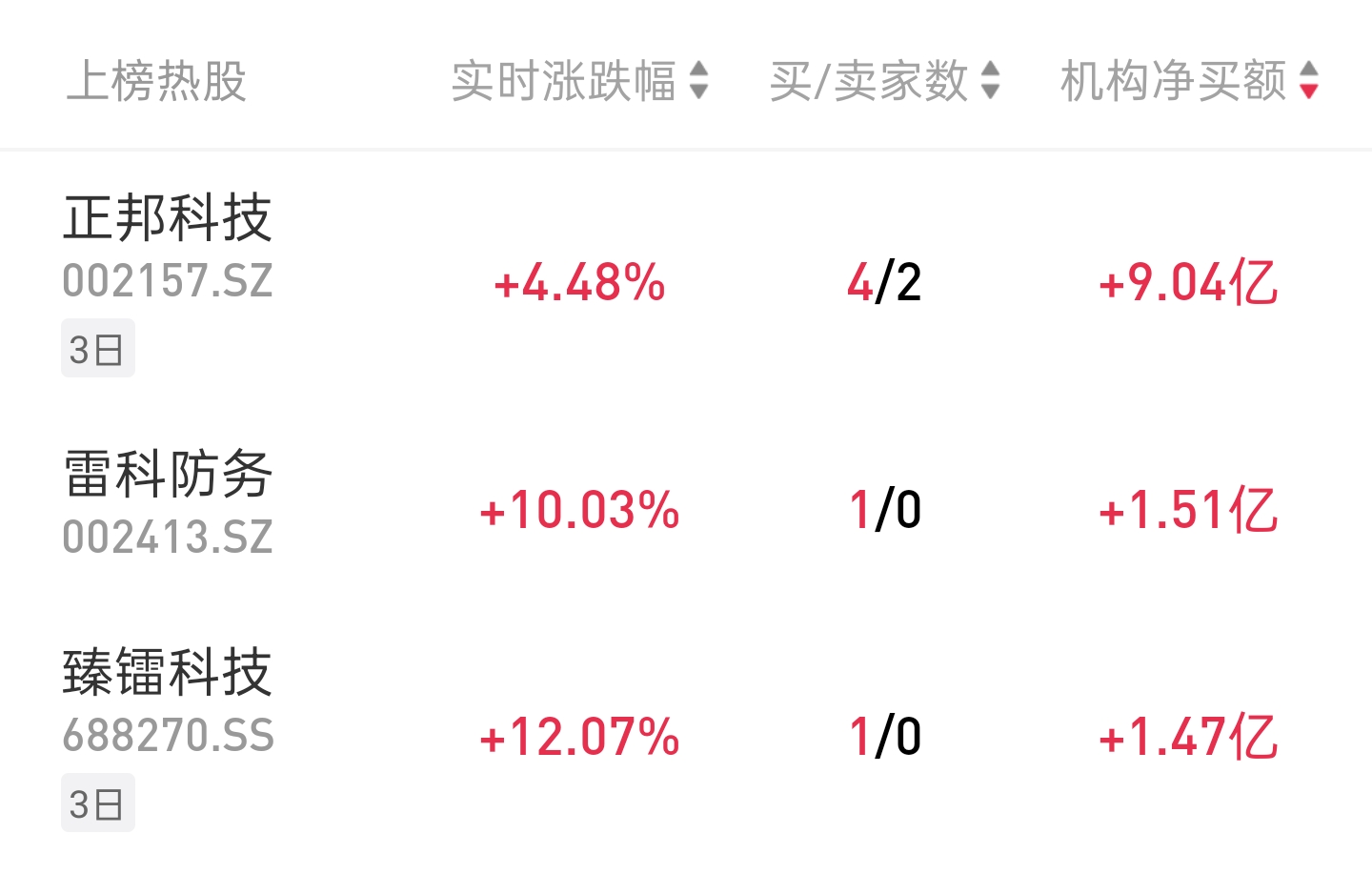
Group 1: Institutional Trading Insights - On the day, 43 stocks were listed on the institutional trading leaderboard, with 23 seeing net purchases and 20 experiencing net sales [1] - The top three stocks with the highest net purchases were Zhengbang Technology (900 million), Leike Defense (151 million), and Zhenlei Technology (147 million) [1] - Leike Defense's satellite application business has established a comprehensive technology system, providing remote sensing data solutions for key national economic sectors [1] Group 2: Aerospace Industry Developments - Shanghai Jiao Tong University and Guoxing Aerospace signed an agreement to establish China's first space computing joint laboratory, focusing on the demand for space-based computing networks [2] - The collaboration aims to form a globally influential space computing industry cluster [2] - The aerospace industry in Shenyang is set to expand, with plans to enhance capabilities in large aircraft assembly and develop a complete industry chain covering manufacturing and operational services [2] Group 3: Consumer Sector Trends - Dongbai Group focuses on retail and commercial real estate development [4] - The core product of Huanlejia is fruit canned goods, particularly orange and peach cans [4] - Recent reports indicate a price increase for high-end liquor, with the wholesale price of a 25-year-old Flying Moutai bottle rising by 20 yuan to 1500 yuan, reflecting a cumulative increase of 6% over two days [4][5] - Huachuang Securities suggests that service consumption could be a key driver for domestic demand in 2026, with significant potential in holiday policy optimization and consumption voucher issuance [4] Group 4: High-End Liquor Market Dynamics - Moutai's supply-side reform is seen as a significant change in the high-end liquor industry, focusing on stabilizing prices and reshaping the channel ecosystem [5] - The food and beverage sector is currently valued at historical lows, with the potential for investment opportunities as market sentiment shifts [5]


如何培育服务消费新增长点?学者建议:强化需求侧支撑能力
Nan Fang Du Shi Bao· 2025-12-15 09:26
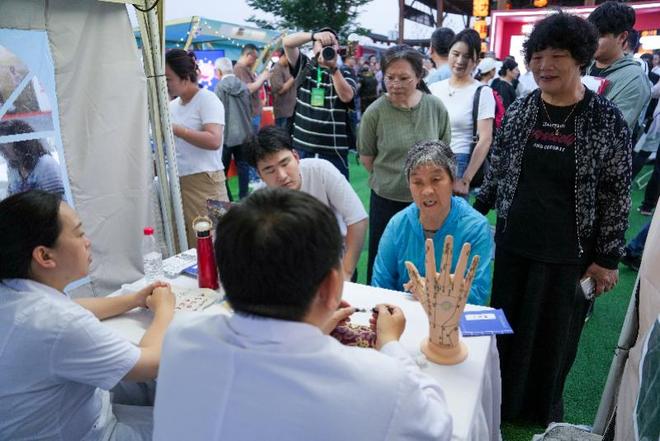
Core Viewpoint - The development of service consumption is crucial for optimizing economic structure and improving people's livelihoods, as emphasized by the Central Committee's recommendations and the recent Central Economic Work Conference [1][2]. Group 1: Current State of Service Consumption - Service consumption in China is experiencing rapid expansion and structural transformation, with a shift from survival-based to development and enjoyment-oriented consumption [2]. - In 2024, service consumption in China is projected to account for 46.1% of total consumption, significantly lower than the United States at 68.5% and South Korea at 58.9% [2]. - Challenges such as urban-rural development imbalance and insufficient high-end supply hinder the full release of service consumption potential [2]. Group 2: Supply-Side Structural Reform - Service enterprises should innovate service content by utilizing big data and AI to capture changing consumer trends [4]. - Three innovation models are highlighted: cultural IP-based services, technology-enabled smart services, and cross-industry integrated services [4][5]. - Establishing a service innovation protection mechanism is essential to encourage continuous innovation among enterprises [5]. Group 3: Policy and Institutional Environment Optimization - Implementing a negative list system for market access can eliminate hidden barriers and promote new business models [6]. - A "sandbox regulatory" mechanism is proposed to allow for cautious innovation in new service areas [6]. - A comprehensive statistical monitoring system for service consumption is necessary to support policy formulation [6]. Group 4: Demand-Side Support Enhancement - Improving residents' consumption capacity through wage growth mechanisms and tax system enhancements is crucial [8]. - The introduction of service consumption vouchers, particularly in sectors like elderly care and tourism, is recommended to stimulate demand [8]. - Enhancing the consumer environment by establishing credit systems and improving dispute resolution mechanisms is essential [8]. Group 5: New Business Models and New Formats - The development of the digital service economy is encouraged, with a focus on online education, internet healthcare, and smart tourism [9]. - Promoting the sharing economy in sectors like accommodation and transportation can foster new service models [10]. Group 6: Talent and Standards Development - A multi-level talent cultivation system is needed to support the service industry, including the establishment of new service management programs in higher education [11]. - Developing national and industry standards for emerging service sectors is critical to enhance service quality [11].
主要国际组织纷纷上调对中国经济增长预期
Zhong Guo Jing Ying Bao· 2025-12-15 08:02
Core Viewpoint - The Chinese economy is showing signs of recovery, supported by effective macro policies and an increase in consumer demand, as indicated by rising retail sales and investment growth [1][3]. Group 1: Consumer Sector - The implementation of the "old-for-new" policy has effectively boosted sales in consumer goods, particularly in home appliances and communication devices, with retail sales for these categories increasing by 14.8% and 20.9% year-on-year from January to November [1]. - Service consumption is also experiencing rapid growth, indicating a shift in consumer behavior towards services [1]. Group 2: Investment Sector - There is a noticeable increase in corporate willingness to upgrade equipment and technology, with investment in machinery and tools rising by 12.2% year-on-year, contributing 1.8 percentage points to overall investment growth [1]. - Investment in sectors such as electricity and the internet is maintaining a high growth rate, reflecting confidence in these industries [1]. Group 3: Production Sector - The implementation of policies categorized as "two heavies" and "two news" is effectively stimulating market demand, leading to a 9.3% year-on-year increase in the value added of the equipment manufacturing industry from January to November [1]. - Key industrial products, including automobiles and integrated circuits, have seen production increases of 10.8% and 10.6% respectively, indicating a continued pace of industrial upgrading [1]. Group 4: Future Outlook - The "two heavies" and "two news" policies are expected to continue supporting domestic demand and consumer confidence through 2026, with a focus on expanding service consumption and integrating new technologies [2]. - The international community has raised its growth expectations for the Chinese economy, reflecting increased confidence, although uncertainties from global geopolitical tensions and protectionism remain [3].

如何提高居民消费率?
CMS· 2025-12-15 07:34
证券研究报告 | 宏观专题报告 2025 年 12 月 15 日 如何提高居民消费率? 根据消费经济的一般演进路径,随着居民收入不断提高,消费重心会逐渐从日 常消耗品转向耐用商品,并进一步向服务领域扩展。当前,我国人均 GDP 已 跃升至 1.3 万美元以上,居民消费格局呈现出从商品主导向服务主导转变的趋 势。与一般发达国家相比,我国服务消费占比明显偏低,"十五五"时期提升 居民消费率的战略选择就是大力发展服务消费。 ❑ 消费的宏观特征:消费率低,但消费量并不低;政府消费占比较高,居民 消费率偏低;实物消费占比高,而服务型消费占比低。 1)中国整体消费率(最终消费支出/GDP)明显低于一般发达国家,但最 终消费量并不低,剔除价格、汇率等因素,按照购买力平价后的绝对消费 量接近美国,且大于整个欧盟总和;由于中国属于制造业大国,国内商 品、服务价格普遍低于国际平均水平。 2)最终消费结构中,中国居民消费率(居民消费支出/GDP)不仅低于全 球平均水平,而且低于同为发展中国家的印度、巴西等国;中国政府消费 额以及占 GDP 的比重均高于全球水平,亦高于一般发达国家,形成了 "官方消费比民间旺盛"的独特现象。 3)与 ...