金九银十

Search documents
“沪六条”首周!实探上海楼市:优质新盘余量告急,二手房成交“淡季不淡”
证券时报· 2025-09-02 13:52
Core Viewpoint - The implementation of the "Six Policies" in Shanghai has led to a significant increase in buyer interest and market activity in both new and second-hand housing sectors, with expectations for a more stable pricing environment and increased transaction volumes during the traditional peak season of "Golden September and Silver October" [1][12][14]. Group 1: New Housing Market - Following the introduction of the "Six Policies," there has been a notable increase in visitor numbers and sales at new housing projects, with some projects reporting a doubling of weekend viewings [5][9]. - A specific new housing project has seen its sales approach 90% completion, attributed to the removal of purchase restrictions and the ability to use housing provident funds for down payments [6][11]. - The overall visitor volume for key projects increased by over 40%, and the number of contracts signed surged by more than 120% compared to the period before the policy announcement [9][10]. Group 2: Second-Hand Housing Market - The second-hand housing market has also experienced a significant uptick, with daily registrations reaching a three-month high of 1,103 units on August 30, and total transactions for August exceeding 19,900 units, marking a year-on-year increase of approximately 12% [11][12]. - Despite the increase in viewing and consultation volumes, the second-hand market remains competitive, with buyers having more negotiation power due to a surplus of listings [11][12]. - The "Six Policies" have effectively boosted market confidence, leading to increased activity even during what is typically a slower season [11][12]. Group 3: Policy Impact on Financing - The adjustment of the commercial housing loan interest rate mechanism, which no longer differentiates between first and second homes, is expected to alleviate financial burdens for buyers and stimulate demand for improved housing options [13][14]. - Current interest rates for first and second homes in Shanghai are 3.05% and 3.09%, respectively, with the policy change potentially reducing monthly mortgage costs by over 200 yuan for a loan of 1 million yuan [13][14]. - The overall sentiment in the market is optimistic, with expectations for increased activity and stable prices as the market enters the peak season [12][14].


京沪限购放松带动成交回暖,多地政策加码蓄能 “金九银十”
2 1 Shi Ji Jing Ji Bao Dao· 2025-09-02 12:59
Core Viewpoint - The real estate market in China is showing signs of recovery due to the implementation of over 420 new policies this year, with significant adjustments in Beijing and Shanghai's purchase restrictions in August, leading to increased transaction volumes in both new and second-hand housing markets [1][2][3]. Group 1: Policy Adjustments - In August, Beijing and Shanghai relaxed their purchase restrictions, allowing eligible families to buy homes without limits in certain areas, which has positively impacted market activity [2][3]. - The central government has emphasized the need for strong measures to stabilize the real estate market, indicating potential for further policy support [1][6]. Group 2: Market Response - Following the policy changes, Beijing's new home transactions increased by nearly 9% month-on-month, while second-hand home transactions rose by 4.3% [1][2]. - In Shanghai, the first weekend after the new policies saw a more than 120% increase in the number of key project subscriptions, with second-hand home transactions reaching a new high for the past 60 days [3][4]. Group 3: Regional Developments - Other cities, such as Suzhou and Guangxi, are also implementing measures to stimulate housing demand, including lowering down payment ratios and optimizing loan policies [6][7]. - The overall sentiment in the market is optimistic as various cities prepare for the traditional peak sales season in September and October, known as "Golden September and Silver October" [5][7].
新政带动京沪楼市8月成交回升,为“金九银十”奠基
Xin Hua Cai Jing· 2025-09-02 09:28
Group 1 - The core viewpoint of the articles highlights the initial positive effects of policy adjustments in the real estate market, particularly in response to relaxed purchase restrictions and optimized credit conditions [1] - In August, Shanghai's second-hand housing transactions reached 19,912 units, the highest for the same period since 2021, with a notable 17% increase in transactions in the six days following the new policy [1] - The new housing market in Shanghai also showed a rebound, with a 35.25% increase in transaction area to 113,400 square meters in the last week of August [1] Group 2 - The Beijing market experienced increased activity, with new home transactions totaling 3,135 units and second-hand home transactions reaching 13,331 units in August, an increase of 547 units from the previous month [1] - The China Index Academy anticipates a new round of supportive policies to be introduced in September, which is typically a period of intensive real estate policy announcements [1] - Expectations of a potential interest rate cut by the Federal Reserve in September may further open up domestic monetary policy space [1]
丙烯日报:供需存支撑,丙烯现货延续偏强运行-20250902
Hua Tai Qi Huo· 2025-09-02 08:27
Report Industry Investment Rating - Unilateral: Neutral; PDH propylene supply is expected to tighten, supporting prices, but downstream profits are under pressure and may struggle to keep up [3] - Inter - period: None [3] - Cross - variety: None [3] Core Viewpoints - Supported by supply, demand, and inventory, propylene spot prices continue to be strong, but the futures market shows a volatile trend. The supply side is affected by PDH device maintenance, and the demand side has a mixed situation of downstream start - up rates. The cost side sees the crude oil price remaining volatile [1][2] Summary by Directory 1. Propylene Basis Structure - Relevant figures include the closing price of the propylene main contract, East China basis, North China basis, 01 - 05 contract, East China market price, and Shandong market price [7][10][12] 2. Propylene Production Profit and Operating Rate - Figures cover the difference between China CFR propylene and Japan CFR naphtha, propylene capacity utilization rate, PDH production gross profit, PDH capacity utilization rate, MTO production gross profit, methanol - to - olefins capacity utilization rate, propylene naphtha cracking production gross profit, and crude oil refinery capacity utilization rate [15][23][30] 3. Propylene Import and Export Profit - Figures involve the difference between South Korea FOB and China CFR, Japan CFR and China CFR, Southeast Asia CFR and China CFR, and propylene import profit [33][37] 4. Propylene Downstream Profit and Operating Rate - Relevant figures are the production profit and operating rate of PP powder, propylene oxide, n - butanol, octanol, acrylic acid, acrylonitrile, and phenol - acetone [40][42][45] 5. Propylene Inventory - Figures include propylene in - plant inventory and PP powder in - plant inventory [67]
国贸期货黑色金属数据日报-20250902
Guo Mao Qi Huo· 2025-09-02 07:29
Report Industry Investment Rating - Steel: Sideways observation, close futures-cash arbitrage positions [8] - Ferrosilicon and Silicomanganese: Short on rallies [8] - Coking Coal and Coke: Consider partial profit-taking for existing short positions, stay on the sidelines for non-participants [8] Core Viewpoints - The overall commodity market was weak on Monday, with the black sector leading the decline. Steel spot prices and trading volumes both dropped, and the futures-cash basis widened. The valuation of steel futures has been repaired to a neutral range, but the near-month contracts are under pressure [2]. - The short-term fundamentals of ferrosilicon and silicomanganese are poor, and prices are mainly under pressure. The supply is increasing, and the demand is expected to remain weak. The inventory is high, and the de-stocking pressure persists [3]. - Some steel mills in the northwest have initiated a price cut for coke. The coking coal auction has weakened, and the prices of coking coal and coke have declined. The market expects 2 - 3 rounds of coke price cuts in September, and the futures are trading this expectation in advance [5]. - The pre-holiday restocking cycle before the National Day provides support for iron ore prices. However, the expected increase in supply in the second half of the year and the future capacity release of large iron ore projects will limit the upside potential of iron ore prices [6]. Summary by Category Futures Market - On September 1st, the closing prices of far-month contracts RB2605, HC2605, I2605, J2605, and JM2605 were 3165.00 yuan/ton, 3314.00 yuan/ton, 743.00 yuan/ton, 1691.00 yuan/ton, and 1167.50 yuan/ton respectively, with corresponding declines of -10.00 yuan/ton, -45.00 yuan/ton, -20.50 yuan/ton, -54.00 yuan/ton, and -32.00 yuan/ton [1]. - The closing prices of near-month contracts RB2601, HC2601, I2601, J2601, and JM2601 were 3115.00 yuan/ton, 3303.00 yuan/ton, 766.00 yuan/ton, 1594.50 yuan/ton, and 1118.50 yuan/ton respectively, with corresponding changes of 8.00 yuan/ton, -53.00 yuan/ton, -21.00 yuan/ton, -58.50 yuan/ton, and -38.00 yuan/ton [1]. Steel - Steel supply remains at a relatively high level. The short-term production restriction may have a temporary impact on hot metal, but the duration will not be long. Demand is weak, and the inventory of building materials has increased significantly [2]. - The steel futures price has been further revised down to between the electric furnace loss and the blast furnace cost. The basis has widened, and the premium has improved. The valuation has been repaired to a neutral range [2]. Ferrosilicon and Silicomanganese - The short-term market sentiment fluctuates greatly. The supply continues to increase, and the demand is expected to remain weak. The inventory is high, and the de-stocking pressure persists [3]. Coking Coal and Coke - Some steel mills in the northwest have initiated a price cut for coke. The coking coal auction has weakened, and the prices of coking coal and coke have declined [5]. - The market expects 2 - 3 rounds of coke price cuts in September, and the futures are trading this expectation in advance. Short-term oversold may lead to price rebounds, and existing short positions can consider partial profit-taking [5]. Iron Ore - The pre-holiday restocking cycle before the National Day provides support for iron ore prices. However, the expected increase in supply in the second half of the year and the future capacity release of large iron ore projects will limit the upside potential of iron ore prices [6].
黑色金属数据日报-20250902
Guo Mao Qi Huo· 2025-09-02 05:50
Report Industry Investment Rating - Steel: Sideways, close out cash-futures arbitrage [8] - Ferrosilicon and Silicomanganese: Short on rallies [8] - Coking Coal and Coke: Consider partial profit-taking on existing short positions, stay on the sidelines for new entrants [8] Core Viewpoints - The overall commodity market was weak on Monday, with the black sector leading the decline. Steel spot prices fell in both volume and price. The market is awaiting the impact of the upcoming parade on production and market sentiment, and is watching for potential mismatches during the "Golden September and Silver October" period. [2] - The short-term fundamentals of ferrosilicon and silicomanganese are not good, and prices are under pressure. The market sentiment is volatile, and the supply is increasing while the demand may not improve significantly. [3] - Some steel mills in the northwest have initiated price cuts for coke. The coking coal auction has weakened, and the prices of coking coal and coke have declined. The market expects 2 - 3 rounds of coke price cuts in September. [5] - The pre-holiday restocking cycle before the National Day provides support for iron ore prices. However, the expected increase in supply in the second half of the year will limit the upside potential. [6] Summary by Category Futures Market - On September 1st, the far-month contract closing prices of RB2605, HC2605, I2605, J2605, and JM2605 were 3165.00, 3314.00, 743.00, 1691.00, and 1167.50 yuan/ton respectively, with changes of -10.00, -45.00, -20.50, -54.00, and -32.00 yuan/ton, and percentage changes of -0.31%, -1.34%, -2.69%, -3.09%, and -2.67% respectively. [1] - The near-month contract closing prices of RB2601, HC2601, I2601, J2601, and JM2601 on September 1st were 3115.00, 3303.00, 766.00, 1594.50, and 1118.50 yuan/ton respectively, with changes of 8.00, -53.00, -21.00, -58.50, and -38.00 yuan/ton, and percentage changes of 0.26%, -1.58%, -2.67%, -3.54%, and -3.29% respectively. [1] Steel - Steel supply remains at a relatively high level. The short-term production restrictions may have a short-lived impact on hot metal. Demand is weak, and the inventory of building materials has increased significantly both month-on-month and year-on-year, while the hot-rolled coil inventory is at a reasonable level. [2] - The steel futures price has been revised down to between the electric furnace loss and the blast furnace cost, and the basis has widened significantly. The valuation of steel futures has been restored to a neutral range. [2] Ferrosilicon and Silicomanganese - The short-term market sentiment is volatile, and the trading style of the black sector changes rapidly. The supply of ferrosilicon and silicomanganese is increasing, while the terminal demand may not improve significantly during the "Golden September and Silver October" period. [3] - The industry inventory is still high, and there is pressure to reduce inventory. [3] Coking Coal and Coke - Some steel mills in the northwest have initiated price cuts for coke. The coking coal auction has weakened, and the prices of coking coal and coke have declined. [5] - The market expects 2 - 3 rounds of coke price cuts in September, and the futures market is already pricing in this expectation. [5] Iron Ore - The pre-holiday restocking cycle before the National Day provides support for iron ore prices. However, the expected increase in supply in the second half of the year will limit the upside potential. [6] - The market is still debating the impact of anti-monopoly policies, and the focus next week is on the SCO Summit and the parade, with attention on whether the decline in hot metal exceeds expectations. [6]
8月零跑小鹏销量创新高,车市“金九”来了
3 6 Ke· 2025-09-02 05:30
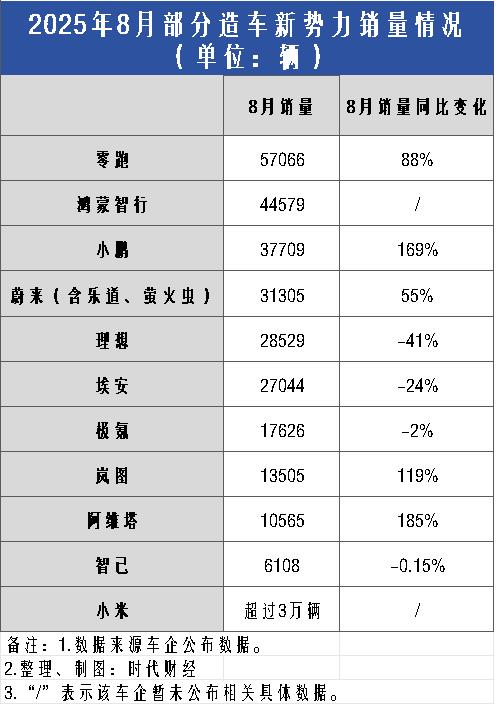
Core Insights - The new energy vehicle market in China continues to show strong growth, with several emerging car manufacturers reporting significant increases in August sales figures, indicating a robust demand for electric vehicles [1][9]. Sales Performance - Leap Motor achieved a record monthly delivery of 57,066 vehicles in August, marking an 88% year-on-year increase and becoming the monthly sales champion among new car manufacturers [2][3]. - Xiaopeng Motors delivered 37,709 vehicles in August, a remarkable 169% increase compared to the previous year, and has seen a cumulative delivery of 271,615 vehicles in the first eight months of the year, up 252% [3][5]. - NIO delivered 31,305 vehicles in August, reflecting a 55% year-on-year growth, with its sub-brand, Ladao, showing a significant increase in deliveries [3][5]. - Ideal Auto reported 28,529 vehicle deliveries in August, with plans to launch new models aimed at increasing production and sales [5][6]. - Xiaomi Auto delivered over 30,000 vehicles in August, with its automotive business moving towards profitability, showing a significant improvement in revenue and gross margin [5][6]. Market Trends - The overall retail sales of new energy passenger vehicles in China are projected to reach approximately 1.1 million units in August, with a penetration rate of 56.7% [1][9]. - The automotive market is entering a traditional peak season, with numerous new models set to launch in September, including several from major manufacturers [9][10]. - The Chengdu Auto Show highlighted the industry's momentum, with numerous new vehicle launches expected to drive sales further [10]. Future Outlook - Companies are optimistic about achieving profitability in the fourth quarter, with several manufacturers setting ambitious sales targets and expressing confidence in their market strategies [10].
有色商品日报-20250902
Guang Da Qi Huo· 2025-09-02 05:12
Report Industry Investment Rating No relevant content provided. Core Viewpoints of the Report - Copper prices are expected to continue rising in the future, but the upside may be limited due to concerns about a US recession and high copper prices affecting downstream demand [1]. - Alumina is recommended to be sold on rallies, while electrolytic aluminum may have strong upward momentum in September, and there is room for the spread of aluminum alloy to continue to repair [1][2]. - Nickel prices are likely to continue to oscillate with an upward bias as the marginal improvement in nickel - iron and the new energy sectors becomes more evident [2]. Summary by Relevant Catalogs Research Views Copper - Overnight copper prices oscillated weakly. A rising gold price may indicate increased risk aversion and potential for copper value re - evaluation. Three factors to watch include the market's expectation of a Fed rate cut in September, the traditional "Golden September and Silver October" consumption season in China, and the implementation of anti - involution policies in some domestic industries. However, the US recession expectation and high copper prices may limit the upside of copper prices [1]. Aluminum - Alumina oscillated weakly, while Shanghai aluminum and aluminum alloy oscillated strongly. Alumina production resumption is increasing, and inventory is piling up. It is recommended to sell on rallies but be cautious about chasing the decline. Downstream demand for electrolytic aluminum may exceed expectations during the peak season, and the industry profit is shifting from upstream to downstream. There is room for the spread of aluminum alloy to repair [1][2]. Nickel - Overnight LME nickel and Shanghai nickel both rose. Nickel ore prices were stable. Stainless steel inventory decreased slightly, but supply increased, and cost support strengthened. The demand for ternary materials in the new energy sector is increasing, and the price of nickel sulfate may continue to rise. First - grade nickel inventory decreased, and consumption increased significantly. Nickel prices are expected to oscillate with an upward bias [2]. Daily Data Monitoring Copper - On September 1, 2025, the price of flat - water copper was 79,830 yuan/ton, up 530 yuan/ton from August 29. The price of 1 bright scrap copper in Guangdong was 73,600 yuan/ton, up 300 yuan/ton. LME and SHFE copper inventories changed slightly [3]. Aluminum - On September 1, 2025, the Wuxi and Nanhai aluminum prices decreased. The inventory of electrolytic aluminum remained unchanged, while the inventory of alumina decreased by 0.7 million tons [4][5]. Nickel - On September 1, 2025, the price of Jinchuan nickel increased. LME nickel inventory increased by 300 tons, while SHFE nickel inventory decreased by 504 tons [4][5]. Zinc - On September 1, 2025, the main settlement price of zinc increased by 0.5%. The social inventory increased by 0.35 million tons [6]. Tin - On September 1, 2025, the main settlement price of tin decreased by 0.7%. The inventory of SHFE tin increased by 75 tons [6]. Chart Analysis - The report presents multiple charts, including those on spot premiums and discounts, SHFE near - far month spreads, LME and SHFE inventories, social inventories, and smelting profits for various non - ferrous metals such as copper, aluminum, nickel, zinc, lead, and tin, covering data from 2019 - 2025 [7][8][15]
车企8月成绩单出炉!新势力名次生变
证券时报· 2025-09-02 04:27
Core Viewpoint - The article highlights significant changes in the electric vehicle market, particularly among new energy vehicle manufacturers, with notable sales growth and competition intensifying among traditional automakers. Group 1: New Energy Vehicle Manufacturers - Leap Motor achieved a record delivery of 57,066 vehicles in August, marking an over 88% year-on-year increase and becoming the top seller among new energy vehicle manufacturers [3] - Hongmeng Zhixing ranked second with 44,579 vehicles delivered, and its cumulative delivery surpassed 900,000 units, with an average transaction price of 380,000 yuan [3] - XPeng Motors delivered 37,709 vehicles, a 169% increase year-on-year, driven by the launch of the new XPeng P7 [3] - NIO delivered 31,305 vehicles, a 55.2% increase, with significant contributions from its various brands [3] - Xiaomi Motors surpassed 30,000 deliveries for the second time, expanding its service network significantly [4] - Li Auto delivered 28,529 vehicles, with plans to increase production capacity and launch new models [4] Group 2: Traditional Automakers - BYD maintained its lead in the new energy vehicle market with sales of 373,600 units in August, showing stable performance compared to last year [6] - SAIC Group reported total sales of 363,400 vehicles, with a 41.04% year-on-year increase, and a significant rise in new energy vehicle sales [6] - Geely's total sales reached 250,200 units, with notable growth in its electric and plug-in hybrid vehicle segments [6] - Chery Group's sales reached 242,700 units, with over half of the sales coming from exports and a strong performance in new energy vehicles [6] - Changan Automobile's total sales were 233,000 units, with a remarkable 80% increase in new energy vehicle sales [7] - Great Wall Motors sold 115,600 vehicles, with a 22.33% year-on-year increase, including 37,500 new energy vehicles [7] Group 3: Market Conditions - The overall automotive market is facing high inventory levels, with a warning index of 57.0%, indicating increased sales pressure [9] - Economic pressures and low consumer confidence are affecting sales, leading to longer purchase cycles and lower transaction rates [9] - Despite challenges, the market is expected to improve in September due to traditional peak season effects and government subsidies [9]







8月份卖不到3万辆!“减速带”上的理想汽车,目送小鹏、蔚来反超
Shen Zhen Shang Bao· 2025-09-02 04:02
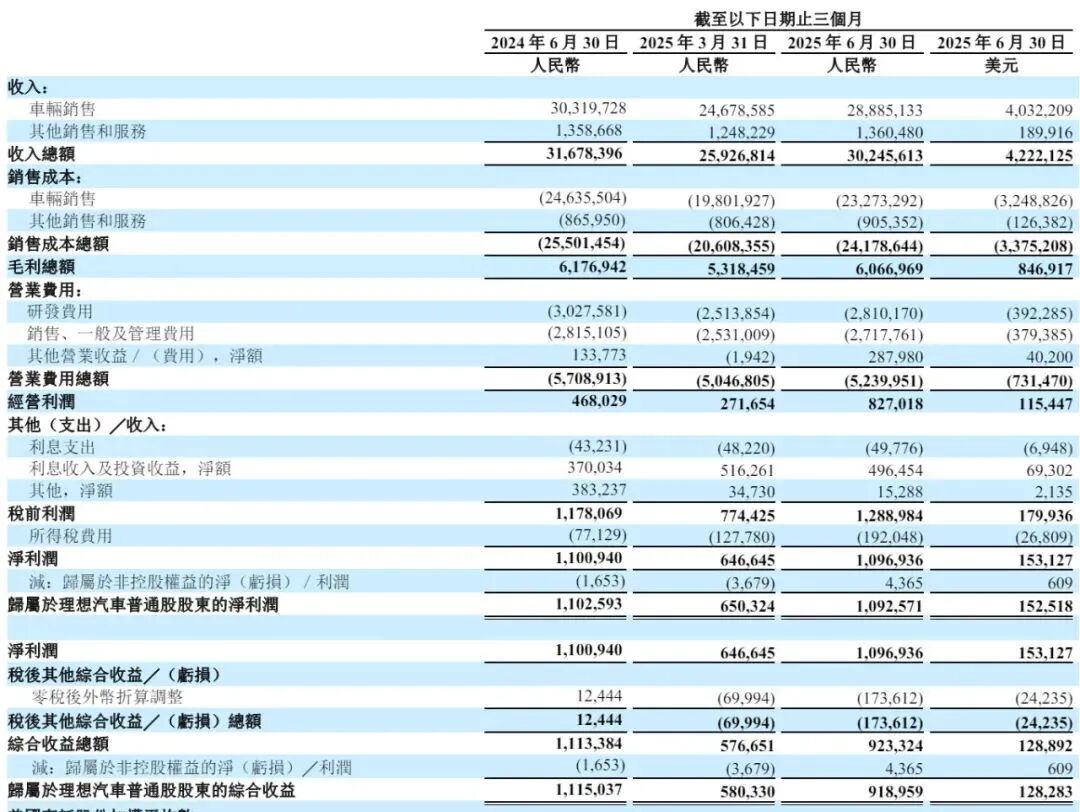
Core Insights - In August, the sales performance of new energy vehicles (NEVs) showed significant shifts among leading companies, with NIO surpassing Li Auto for the first time in 34 months, delivering 31,305 vehicles [2][3] - Li Auto's sales continued to decline, marking its second-lowest monthly delivery of the year at 28,500 vehicles, following a trend of decreasing deliveries over the past three months [4][5] - Xpeng Motors achieved a record high delivery of 37,700 vehicles in August, reflecting a year-on-year growth of 169% [3][5] Company Performance - NIO delivered 31,305 vehicles in August, a year-on-year increase of 55.2%, marking a historical high [3] - Li Auto's August deliveries were 28,500 vehicles, down from previous months, with a significant year-on-year decline of 39.74% in July [4] - Xpeng Motors' August deliveries reached 37,700 vehicles, with a month-on-month increase of 3% [3] - Leap Motor achieved a new high with 57,100 vehicles delivered in August, representing a year-on-year growth of over 88% [3] Financial Performance - Li Auto reported a revenue decline of 4.5% in Q2 2025, with total revenue of 30.246 billion RMB (approximately 4.222 billion USD) [5][6] - The company expects a sharp revenue drop of 40% in Q3 2025, projecting total revenue between 24.8 billion RMB (approximately 3.5 billion USD) and 26.2 billion RMB (approximately 3.7 billion USD) [6] - Li Auto's net profit for Q2 2025 was 1.101 billion RMB (approximately 153 million USD), nearly unchanged from the previous year [5][6] Market Outlook - The overall automotive market in China remained stable in August, with expectations for improved performance in September due to seasonal demand and promotional activities [7] - The China Automobile Dealers Association anticipates a better market performance in September, supported by government subsidies and consumer demand [7]