
新消费

Search documents
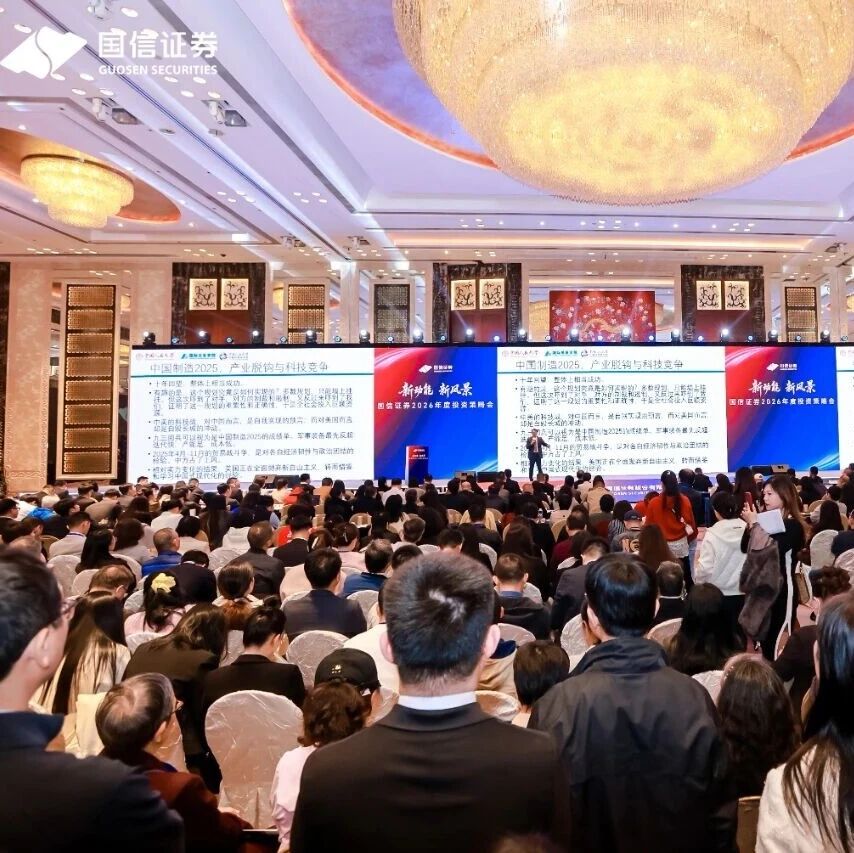
新动能,新风景——国信证券2026年度投资策略会在深圳成功举办
券商中国· 2025-11-24 15:21
Core Viewpoint - The 2026 Investment Strategy Conference held by Guosen Securities focused on "New Momentum, New Landscape," addressing key topics such as China's 14th Five-Year Plan, Sino-U.S. technology and industry competition, wealth management, and investment strategies, attracting over 2,000 attendees and 6,000 total participations across various forums [1][2]. Group 1: Conference Overview - The conference featured prominent speakers including Guosen Securities President Deng Ge and Chief Marketing Officer Yuan Chao, along with experts from various academic and research institutions [2]. - The event included a main forum and seven sub-forums, facilitating over 300 meetings between listed companies and investors [1]. Group 2: Guosen Securities' Strategic Focus - Guosen Securities aims to enhance its research capabilities, focusing on a comprehensive research system covering macro, industry, and company analysis to support investors [4]. - The company is committed to providing top-tier investment banking services, offering a full cycle of financial services from IPOs to mergers and acquisitions [4]. - Guosen Securities is expanding its wealth management transformation, leveraging AI technology to provide personalized asset allocation solutions [5]. - The firm is actively developing cross-border business opportunities to support domestic companies in international markets [5]. - Enhancements in compliance and risk management are prioritized to ensure investor safety [6]. Group 3: Economic Insights and Future Outlook - Expert speeches highlighted the need for policy support to sustain economic recovery and balance consumption and investment for high-quality growth during the 14th Five-Year Plan [7]. - The Chief Economist of Guosen Securities, Xun Yugen, discussed the challenges of transitioning from old to new economic drivers, emphasizing the role of AI and smart manufacturing in future growth [8]. - The conference's sub-forums provided in-depth analysis of investment opportunities and risks in various sectors, including A-shares, Hong Kong stocks, and public funds, offering timely research references for investors [8].


食品饮料行业2026年度投资策略:新消费内部轮动传统消费底部改善
Yin He Zheng Quan· 2025-11-24 11:23
Investment Rating - The report maintains a "Buy" rating for the food and beverage industry, highlighting several key companies as investment opportunities [3][4]. Core Insights - The food and beverage industry is experiencing internal rotation in new consumption and improvement at the bottom of traditional consumption. The overall performance in 2025 was weak, primarily due to the adjustment in the liquor sector, but the long-term recovery trend for mass consumer goods remains intact [3][8]. - For 2026, structural opportunities are expected to continue, with new consumption showing internal rotation and traditional consumption gradually recovering from the bottom [3][15]. Summary by Sections Industry Overview - In 2025, the food and beverage sector's revenue grew by only 0.1% year-on-year, while profits fell by 14.6%, underperforming compared to the previous year. The industry index ranked last among 31 sub-industries with a decline of 4.8% [8][11]. - The adjustment in the liquor sector is identified as the main factor for the overall weak performance, while the recovery trend for mass consumer goods is expected to persist [8][11]. Soft Drinks - The beverage industry is projected to benefit from a rebound in travel demand in 2026, with a revenue increase of 6.2% in the first half of 2025 compared to the previous year [42][45]. - Cost advantages from declining prices of raw materials like sugar and PET are expected to continue, enhancing profit margins for beverage companies [45][49]. Snacks - The konjac snack sector is experiencing high growth, with companies like Salted Fish and Wei Long achieving significant revenue increases in 2025 [66][67]. - The competitive landscape for konjac products is expected to remain manageable, with established brands likely to maintain their market positions despite new entrants [70][76]. Dairy Products - The dairy sector is anticipated to see a recovery in supply-demand balance, with raw milk prices expected to stabilize in 2026 due to ongoing supply adjustments [38][39]. - Policies promoting consumption are expected to benefit liquid milk and milk powder sales, driving demand improvements [38][39]. Frozen and Condiment Products - The frozen food sector is expected to see performance improvements as competition stabilizes, with a focus on recovery in demand [38][39]. - The condiment sector is also projected to benefit from a gradual recovery in consumer demand [38][39]. Liquor - The liquor industry is still in an adjustment phase but is gradually approaching a bottoming out stage, with supply clearing expected to continue into 2026 [6][25]. - The report suggests that the long-term value of liquor stocks will become more apparent as the market stabilizes [6][25]. Investment Recommendations - Key companies to watch include Dongpeng Beverage, Nongfu Spring, and Moutai in the beverage sector, as well as Wei Long and Salted Fish in the snack sector [6][8].





新动能,新风景—— 国信证券2026年度投资策略会在深圳成功举办
Hua Xia Shi Bao· 2025-11-24 09:33
Core Insights - The Guosen Securities 2026 Investment Strategy Conference was successfully held in Shenzhen, focusing on themes such as the "14th Five-Year Plan," Sino-U.S. technology and industry competition, wealth management, and new consumption trends, attracting over 2,000 attendees and 6,000 total forum participations [2] Group 1: Company Strategy and Vision - Guosen Securities aims to enhance its research capabilities and provide comprehensive support for investors through a multi-dimensional research system covering macro, industry, and company analysis [3] - The company emphasizes a full-cycle financial service model, offering support from IPOs to mergers and acquisitions, to help businesses optimize their industrial chain [3] - Guosen Securities is committed to wealth management transformation, leveraging AI technology to provide personalized asset allocation solutions [3] - The firm is expanding its cross-border business to seize new opportunities under the "dual circulation" development framework [3] - Guosen Securities is focused on improving compliance and risk management to ensure investor safety [3] Group 2: Economic Outlook and Challenges - The current economic landscape in China is characterized by a painful transition between old and new growth drivers, with deflationary pressures impacting asset prices [5] - Policies have shifted towards "anti-deflation," aiming to stabilize the stock and real estate markets to boost confidence [5] - The rise of the "new economy," represented by AI and smart manufacturing, is expected to gradually replace traditional sectors as the main growth driver [5] - The ongoing technology cycle and industrial upgrades are anticipated to facilitate the transition between old and new economic drivers [5] Group 3: Key Presentations and Discussions - Keynote speeches included an analysis of Sino-U.S. industrial and technological competition, emphasizing strategic responses [4] - Discussions highlighted the need for balanced consumption and investment to achieve high-quality economic development during the "14th Five-Year Plan" [4] - The conference featured seven sub-forums where analysts and experts provided insights into investment opportunities and challenges in various sectors, including A-shares, Hong Kong stocks, and public funds [5]

中国最会“花钱”的城市,为什么是长沙?
3 6 Ke· 2025-11-24 07:09
Core Insights - The article highlights the remarkable growth and uniqueness of consumer culture in Changsha, particularly its vibrant night economy and innovative consumption models [5][11][20]. Group 1: Economic Performance - During the National Day holiday, Changsha's total sales of goods and services reached 27 billion yuan, averaging over 3 billion yuan daily [4]. - In the first three quarters of this year, Changsha's retail sales of consumer goods grew by 5.5%, surpassing the national average by 1 percentage point [9][11]. Group 2: Night Economy - Changsha's night economy accounts for 60% of its total consumption, significantly contributing to employment with over 1 million jobs created [7][9]. - The peak consumption period in Changsha is from 6 PM to 2 AM, showcasing a thriving nightlife that attracts both locals and tourists [9]. Group 3: Innovative Consumption Models - Changsha has been recognized as a national pilot city for new consumption formats and international consumption environment construction [5]. - The city has introduced various innovative consumption initiatives, such as "New Consumption + Industry" tourism routes and educational experiences that combine learning with entertainment [13][14]. Group 4: Demographics and Urban Development - Changsha's population has grown from 6.64 million in 2009 to 10.62 million, with a young demographic where only 16.7% are elderly [34][37]. - The city has maintained a stable housing market, avoiding speculative price increases, which has contributed to its attractiveness for residents and businesses [28][30]. Group 5: Industrial Strength - Changsha is home to three national advanced manufacturing clusters, including engineering machinery and high-tech equipment, with several companies ranking among the world's top in their fields [37][38]. - The city has established a robust industrial ecosystem that supports its consumer market, with significant investments from local and returning entrepreneurs exceeding 500 billion yuan since 2017 [30][31].

2025企业家博鳌论坛系列活动将于12月2日至5日在海南博鳌举办
Xin Hua Wang· 2025-11-24 06:08
Core Points - The 2025 Boao Forum for Entrepreneurs will be held from December 2 to 5 in Boao, Hainan, focusing on the theme "Linking the World, Leading the Future: New Opportunities in the 15th Five-Year Plan" [1] - The forum aims to enhance confidence in China's high-quality economic development, improve corporate innovation capabilities, and promote mutually beneficial cooperation [1] Event Details - The forum will last four days and include a main forum along with numerous parallel sessions such as the Digital Technology Innovation Development Conference, New Consumption Development Forum, CEO Innovation Business Forum, Health Future Forum, "Finance+" Ecological Alliance Conference, High-Quality Development Forum for County Economy, and Cultural Economy Development Forum [1] - Special events will also be held to promote the Hainan Free Trade Port [1] Historical Context - The Boao Forum for Entrepreneurs has been held successfully for nine sessions since its inception in 2016, recognized as an annual intellectual feast for the business community [2]
港股消费热点解析
2025-11-24 01:46
Summary of Key Points from Conference Call Records Industry Overview - The conference call discusses the Hong Kong consumer sector, highlighting the rapid growth of instant retail, particularly in categories such as sports and outdoor, beauty, digital appliances, and pet products, which have outpaced the overall market growth. Traditional food and beverage categories are experiencing relatively weak growth [1][2]. Core Insights and Arguments - **Instant Retail Growth**: Instant retail has shown remarkable growth, with certain categories doubling their growth rates compared to the overall market. New consumption sectors are performing well both online and offline, with strong growth in new categories, demographics, and channels [1][2]. - **AI Technology Impact**: AI technology significantly enhances efficiency through precise marketing and consumer insights. Brands are encouraged to invest more in AI tools to capture consumer demand and predict product trends, thereby improving advertising conversion rates [1][4]. - **K-Shaped Market Recovery**: The market is experiencing a K-shaped recovery, where high-end products and cost-effective brands coexist. High-end products require value redefinition, while cost-effective brands leverage supply chain optimization to reduce prices [1][5][6]. - **Focus on Cash Flow and Shareholder Returns**: Essential consumer sectors emphasize certainty and shareholder returns, with a focus on companies with abundant free cash flow that can enhance shareholder returns through dividends or buybacks [1][7]. - **Potential in Health Supplements**: The health supplement industry is identified as a potential hidden champion due to the aging population and increasing health demands, with a strong growth outlook for anti-aging ingredients like ergothioneine [1][7]. Additional Important Insights - **Valuation of Consumer Sector**: The Hong Kong consumer sector is currently valued at historical lows, with the Hang Seng Consumer Index PE close to the 20th percentile over the past decade, indicating market pessimism [3][10]. - **Z Generation Consumer Behavior**: The Z generation is shifting from functional purchases to emotional and experiential ones, significantly impacting the essential consumer sector. This demographic is also price-sensitive, favoring high-cost-performance brands [3][15]. - **Risks in Essential Consumer Sector**: Despite its defensive nature, the essential consumer sector faces risks such as rising raw material costs and potential declines in consumer purchasing power during economic downturns [13][14]. - **Investment Strategy Recommendations**: Investors are advised to assess their risk profiles and consider funds that cover essential industries for stability, while more aggressive investors may explore high-volatility sectors like liquor [11]. This summary encapsulates the critical insights and trends discussed in the conference call, providing a comprehensive overview of the current state and future outlook of the Hong Kong consumer sector.
【广发证券“投研财富+” 投资者教育专栏】现制茶饮:供需共振、长坡厚雪的新消费赛道
Zhong Guo Zheng Quan Bao· 2025-11-24 00:55
Core Viewpoint - The emergence of ready-to-drink tea has simplified the traditional tea preparation process, appealing particularly to younger consumers and leading to significant industry growth and structural upgrades [1] Supply Side Analysis - The ready-to-drink tea industry is transitioning from powdered to fresh, healthy products, with high-quality raw materials becoming increasingly common [2] - Major tea brands are focusing on supply chain improvements, allowing for quality upgrades at relatively affordable prices, with over 85% of new products priced below 20 yuan in 2024 [2] - The number of ready-to-drink tea stores in China is projected to increase from 293,000 in 2019 to 448,000 by 2024, enhancing accessibility and driving consumption frequency [2] Demand Side Analysis - Consumer preferences are shifting from basic functional needs to higher-level demands such as emotional value, health, and social interaction [3] - Ready-to-drink tea has become an integral part of daily life, with significant social attributes driving consumption in various scenarios [3] - Young consumers, particularly those under 30, represent a substantial portion of the market, with 42% of consumers aged under 20 and 29% aged 20-30 [3] Long-term Outlook - There is significant growth potential for the penetration rate of ready-to-drink tea, with current per capita consumption in mainland China at 11 cups compared to over 50 cups in Hong Kong and Taiwan [4] - The industry is experiencing increasing chain rates and concentration, with the chain rate reaching 56.1% in 2023, up 17.1 percentage points since 2018 [4] Short-term Considerations - The ongoing subsidy battle in the delivery market is expected to support high growth in same-store sales, particularly benefiting the ready-to-drink tea category [5] - However, there are concerns about the sustainability of this growth post-subsidy, as well as the potential impact of consumer price sensitivity on original-priced products [6] - The focus will shift back to fundamental business practices as subsidies decrease, with supply chain efficiency and refined operations becoming critical for success [6]

财信证券宏观策略周报(11.24-11.28):短期保持谨慎,静待市场企稳
Sou Hu Cai Jing· 2025-11-24 00:41
来源:市场资讯 (来源:财信证券研究) 大势研判。上周在海外市场调整影响下,万得全A指数阶段性向下调整,跌破震荡调整区间,短期仍需合理控制仓位,静待指数企 稳信号出现。一是从资金面来看,11月底之前机构倾向于守住全年收益,加仓意愿不强,但12月中旬开始,机构资金将逐步开始布 局2026年方向,存在"抢跑"的预期;二是中央经济工作会议通常在12月中旬召开,将为明年经济工作指明方向,预计在中央经济工 作会议前后,政策预期利好将支撑市场;三是从技术形态来看,2015年以来,上证指数曾屡次挑战3700点未果,本次有效突破3700 点以后,上证指数3700点附近将从"强压力位"转为"强支撑位",后续指数调整空间可能有限。我们对中长期市场走势仍然保有信 心,A股这一轮"牛市"并未结束,我们预计12月中旬前后,市场将迎来再次做多的机会窗口期。 投资建议。短期建议适当控制仓位水平,以防守方向为主,适当关注:(1)高股息的大盘蓝筹。例如银行、保险、公用事业、交通 运输等。(2)新消费方向。例如健康、文旅、体育、美容护理、IP经济、宠物经济、文化娱乐等。(3)"反内卷"方向。例如钢 铁、煤炭、建材等。(4)AI应用方向。例如传媒 ...
韧性创新稳定开放 国内外机构看好中国经济前景
Yang Shi Xin Wen Ke Hu Duan· 2025-11-24 00:31
Group 1 - The core viewpoint of multiple financial institutions is that China's economy will continue to show steady growth in 2026, supported by policy measures, structural upgrades, and the release of potential [1] - Analysts from various institutions, including Morgan Stanley and UBS, predict that China's economy will maintain moderate growth due to appropriate easing policies and targeted support measures [1][2] - The "14th Five-Year Plan" is seen as a confidence booster for foreign institutions, indicating China's commitment to enhancing the competitiveness of advanced manufacturing and boosting exports [1] Group 2 - The dual drivers of foreign trade and domestic demand are highlighted as key to achieving high-quality economic growth, with manufacturing and exports showing strong resilience [2][3] - Export remains a core support for economic growth, with improvements in economic structure and technological advancements contributing to the stabilization and recovery of export enterprise profit margins [3] - The deepening of Chinese enterprises' global presence is expected to open up further profit growth opportunities, with a stronger export performance anticipated in 2026 compared to 2025 [4] Group 3 - The rise of new consumption sectors is injecting fresh momentum into economic growth, with analysts optimistic about the future of new consumer trends, including the international expansion of domestic brands [5] - Key terms associated with China's economy include resilience, innovation, stability, and openness, reflecting the current economic landscape and future outlook [6][7] - Innovation is shifting from traditional factor-driven growth to technology-driven growth, with advancements in AI, quantum technology, and biotechnology becoming prominent [6][7]
财信证券晨会纪要-20251124
Caixin Securities· 2025-11-23 23:33
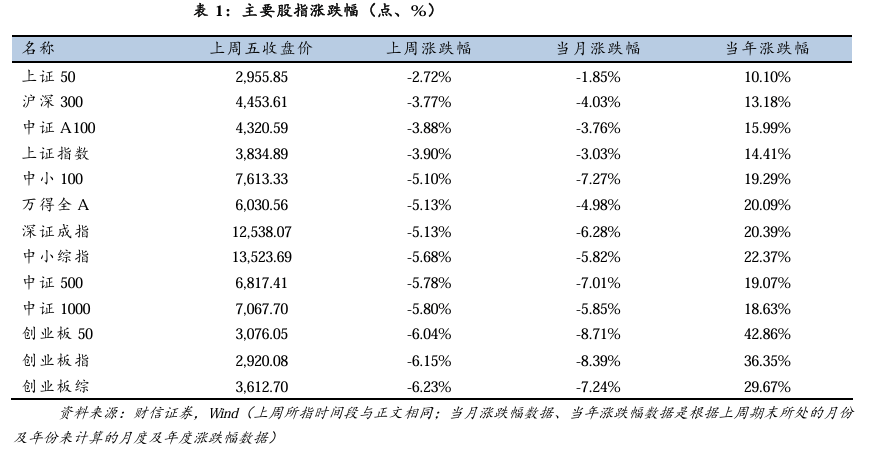
Market Strategy - The report suggests maintaining caution in the short term and waiting for market stabilization [5][9] - The overall A-share market has seen a decline, with the Wind All A Index dropping by 3.17% to 6030.56 points, and various indices reflecting similar downward trends [7][8] Economic Insights - In October, the total electricity consumption in China increased by 10.4% year-on-year, reaching 857.2 billion kWh [15][16] - The breakdown of electricity consumption shows significant growth in the tertiary industry, particularly in charging services and information technology sectors [16] Industry Dynamics - A meeting was held to promote stable livestock production, noting that the number of breeding sows fell below 40 million by the end of October [25] - The report highlights the importance of monitoring the livestock sector for potential price stabilization due to production adjustments [25] Company Updates - Baili Tianheng (688506.SH) received acceptance for its drug application for the first-in-class EGFR×HER3 dual antibody ADC for treating advanced nasopharyngeal carcinoma [27][28] - Jindi Co., Ltd. (603270.SH) signed a strategic cooperation agreement with Dongpei Co., Ltd. to collaborate on humanoid robot harmonic reducer assemblies [29][30] - Shuanglin Co., Ltd. (300100.SZ) successfully secured small batch orders for ball screws and roller screws through negotiations with a leading foreign screw manufacturer [31][32] Local Economic Developments - Hengguang Co., Ltd. (301118.SZ) reported a reduction in shareholding by a major shareholder, which did not significantly impact the company's governance structure [33] - The Hunan provincial government launched the first phase of its public data circulation infrastructure, marking a significant step in digital economic development [34]