
市场情绪

Search documents
刚刚,大跌!印度发动袭击!
券商中国· 2025-05-09 10:06
Core Viewpoint - Foreign banks sold a record amount of Indian government bonds due to escalating tensions between India and Pakistan, impacting investor sentiment and leading to declines in both the Indian stock and bond markets [1][3][5]. Group 1: Market Impact - On May 8, foreign banks net sold 106.3 billion rupees (approximately 9 billion yuan) of Indian government bonds, marking the highest level of selling since 2006 [3]. - The Indian SENSEX30 index dropped by 1.7% at one point on May 9, closing with a decline of 1.21% after a previous drop of 0.51% [3][5]. - The yield on India's 10-year government bonds rose to 6.54%, reversing recent gains driven by central bank interventions [5]. Group 2: Economic Outlook - Analysts suggest that the ongoing conflict may increase risk premiums, although they do not expect the situation to spiral out of control. The Reserve Bank of India is anticipated to intervene to stabilize the market [7]. - Despite favorable macroeconomic fundamentals for Indian government bonds, short-term market sentiment will largely depend on developments in the India-Pakistan situation [3][7]. Group 3: Military Developments - On May 8, the Indian armed forces launched attacks on multiple Pakistani air defense systems, while Pakistan reported shooting down several Indian drones [9][10]. - The conflict has escalated following a recent attack in Indian-administered Kashmir, which resulted in significant casualties and heightened tensions between the two nations [11].


闫瑞祥:英美协议缓解衰退担忧,降息概率锐减至 16.5%
Sou Hu Cai Jing· 2025-05-09 08:30
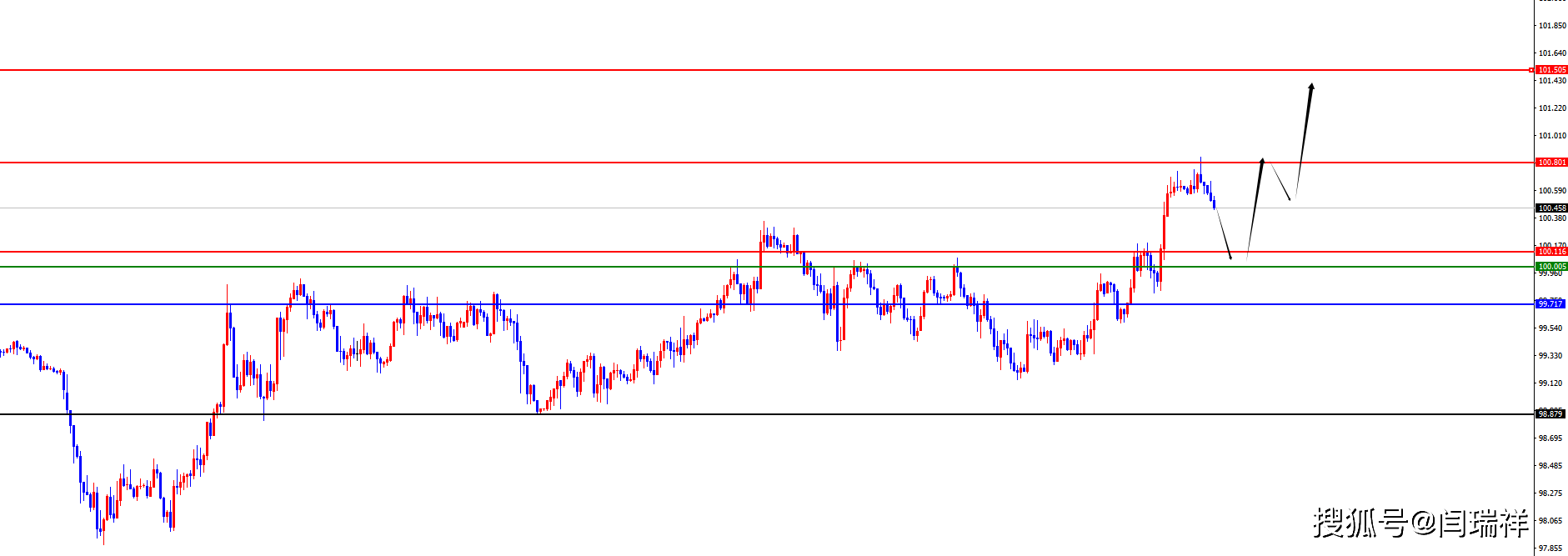
宏观面 近期国际贸易与金融市场局势复杂多变。贸易领域,美英达成 "突破性协议",英国将关税从 5.1% 降至 1.8%,并扩大美商品准入,但美国仍对英商品维持 10% 关税,协议虽带来乐观情绪,可欧盟也放话,若与美谈判不取消关税,将对 950 亿欧元美进口商品反制;美财长与贸易代表还将与中国高官会晤,备 受瞩目。金融市场上,英美协议致使避险情绪降温,黄金、日元等避险资产遭抛售,标普 500 指数上扬,市场对美联储 6 月降息预期大降,美债收益率显著 上涨。同时亚洲大国放松黄金进口购汇限制,助力黄金进口。尽管美英协议带来积极信号,但贸易担忧犹存,后续投资者需紧盯贸易局势、市场情绪变化及 美联储官员讲话,把握市场走向。 美元指数 在美元指数的表现上,周四美元指数呈现出上涨态势。当日美元指数价格最高攀升至100.739的位置,最低则下探至99.58,最终以 100.619的价格收盘。回顾 周四市场表现,在早盘期间价格短线先回撤调整,随后测试到四小时及日线支撑共振区域止步,随后如期上涨,并且随后不断再创日内高点,同时价格突破 近期震荡的高点位置,后续关注进一步上涨。 从多周期分析,周线级别来看价格压制在103.30区 ...
双融日报-20250509
Huaxin Securities· 2025-05-09 01:35
2025 年 05 月 09 日 双融日报 --鑫融讯 分析师:万蓉 S1050511020001 wanrong@cfsc.com.cn 市场情绪:77 分(较热) 最近一年大盘走势 资料来源:Wind,华鑫证券研究 -20 -15 -10 -5 0 5 10 15 20 (%) 沪深300 相关研究 | 1、《双融日报》2025-05-08 | | --- | | 2、《双融日报》2025-05-07 | | 3、《双融日报》2025-05-06 | ▌ 华鑫市场情绪温度指标:(较热) 华鑫市场情绪温度指标显示,昨日市场情绪综合评分为 77 分,市场情绪处于"较热"。历史市场情绪趋势变化可参 考图表 1。 ▌ 热点主题追踪 今日热点主题:机器人、稀土、苹果链 1、机器人主题:五一假期期间,山岳型景区迎来大批游 客。在八达岭长城、黄山、泰山这些热门景点,游客们体验 到了一种别样的登山方式一穿戴外骨骼机器人登山。这种设 备被形容为"登山外挂",通过机械结构或电机驱动,能够 降低 20%-40%的体能消耗,瞬间在户外圈爆火。相关标的: 伟思医疗(688580)、精工科技(002006) 2、稀土主题:近日,据相 ...
双融日报-20250508
Huaxin Securities· 2025-05-08 01:33
Core Insights - The report indicates a current market sentiment score of 79, categorizing it as "relatively hot," suggesting a positive market outlook supported by recent improvements in market sentiment and policy support [6][10][20]. Market Themes Tracking - **Robotics Theme**: The report highlights the rising popularity of exoskeleton robots for hiking, which can reduce physical exertion by 20%-40%. Related companies include Weisi Medical (688580) and Jinggong Technology (002006) [7]. - **Rare Earth Theme**: Following China's export controls on seven categories of heavy rare earths, prices have surged, with dysprosium prices in Europe doubling to $850 per kilogram since early April. Key players in this sector are Northern Rare Earth (600111) and Shenghe Resources (600392) [7]. - **Apple Supply Chain Theme**: The anticipated launch of Apple's first foldable iPhone in 2026 is expected to impact the product release schedule, affecting companies like Lingyi Technology (002600) and Changying Precision (300115) [7]. Major Capital Inflows - The report lists significant net inflows for various companies, with Zongshen Power (001696.SZ) leading at 734.18 million yuan, followed by AVIC Chengfei (302132.SZ) at 464.83 million yuan, and CATL (300750.SZ) at 376.67 million yuan [11]. Industry Analysis - The report provides insights into the net inflows and outflows across different industries, with the defense and military industry seeing a net inflow of 409.27 million yuan, while the electronics sector experienced a significant outflow of 653.65 million yuan [16][21].
央行宣布降准降息,股市和楼市谁受到的影响更大?
Sou Hu Cai Jing· 2025-05-07 23:37
Group 1 - The central bank's decision to cut the reserve requirement ratio by 0.5 percentage points is expected to provide approximately 1 trillion yuan in medium to long-term liquidity to the market [2] - The policy rate was lowered by 0.1 percentage points, which is anticipated to lead to a slight decrease in the Loan Prime Rate (LPR), thereby reducing the burden of existing mortgage rates for homebuyers [2][6] - The reduction in personal housing provident fund loan rates by 0.25 percentage points, with the rate for first-time homebuyers over five years dropping from 2.85% to 2.6%, is expected to stimulate demand in the housing market [2][6] Group 2 - The stock market did not experience a significant rise following the central bank's actions, indicating that the previously anticipated benefits of the rate cuts have already been priced in by the market [3][5] - The stock market is seen as a leading indicator of policy changes, reflecting market sentiment more rapidly than the housing market, which tends to react more slowly [5] - The measures taken by the central bank are aimed not only at stabilizing the stock and housing markets but also at reducing financing costs for the real economy, thereby enhancing refinancing effects [3][6] Group 3 - The decline in LPR is expected to lead to lower rates for existing mortgages, alleviating financial pressure on homeowners and indirectly boosting confidence in the housing market [6] - The central bank's actions are viewed as friendly towards the housing market, with expectations of continued supportive policies in the future [6] - The adjustment period for both the stock and housing markets is expected to shorten under the influence of these favorable policies, with market performance increasingly tied to demand recovery and improvements in economic fundamentals [6]

美联储主席鲍威尔:不过这(信心数据)是市场情绪的巨大变化。
news flash· 2025-05-07 19:20
Core Insights - The statement from Federal Reserve Chairman Jerome Powell highlights a significant shift in market sentiment regarding confidence data [1] Group 1 - The confidence data reflects a substantial change in market emotions [1]
五矿期货文字早评-20250506
Wu Kuang Qi Huo· 2025-05-06 02:10
1. Report Industry Investment Ratings No relevant content provided in the report. 2. Core Views of the Report - The report analyzes the market conditions of various sectors including macro - finance, non - ferrous metals, black building materials, energy chemicals, and agricultural products. It takes into account factors such as policy changes, supply - demand relationships, and international trade situations to provide investment suggestions and price trend outlooks for each sector [2][4][11] 3. Summary by Relevant Categories 3.1 Macro - Finance - **Stock Index**: The previous trading day saw the Shanghai Composite Index down 0.23%, while the ChiNext Index rose 0.83%, the STAR 50 Index rose 0.85%, etc. The total trading volume of the two markets was 1169.3 billion yuan, an increase of 147.2 billion yuan from the previous day. There were positive macro news such as the increase in the sales of key retail and catering enterprises during the "May Day" holiday. It is suggested to buy long positions in IH or IF index futures related to the economy on dips and consider long positions in IC or IM futures related to "new quality productivity" [2] - **Treasury Bonds**: The bond market may return to fundamentals. With the weakening of manufacturing PMI in April, economic growth in the second quarter may be under pressure. The central bank's attitude towards liquidity remains supportive, and interest rates are expected to fluctuate downward in the long - run after short - term fluctuations [6] - **Precious Metals**: Although the prices of gold and silver were weak during the "May Day" holiday, the medium - term driving factors for the rise in gold prices remain unchanged. It is recommended to maintain a long - term bullish view on gold and wait to buy on dips after the correction. For silver, it is suggested to wait and see for now [7][8] 3.2 Non - Ferrous Metals - **Copper**: During the "May Day" holiday, LME copper stocks decreased, and domestic refined copper production is expected to increase slightly in May. If the Sino - US trade situation eases, copper prices may continue to rise, but there are also pressures such as inflation expectations and weakening supply - demand relationships [11] - **Aluminum**: Aluminum prices declined and then rebounded during the holiday. If Sino - US relations improve, aluminum prices may rebound further, but the weakening domestic manufacturing industry poses a challenge to the demand for aluminum [12] - **Zinc**: Zinc ore inventory is increasing, and there is a risk of a decline in zinc prices due to the expected increase in social inventory and weakening downstream demand [13] - **Lead**: The lead market shows that lead ore inventory is rising, and the price is expected to fluctuate weakly in the short - term and move in a box - shaped range in the medium - term [14][15] - **Nickel**: The supply of nickel exceeds demand. With weakening downstream demand and the expected increase in intermediate product production in May, it is recommended to short nickel on rallies [16] - **Tin**: The supply of tin is currently tight but is expected to ease in the future. With the impact of tariffs on demand, the price of tin may decline [17] - **Lithium Carbonate**: The price is under pressure due to weakening demand expectations, cost valuation decline, and the market may further test the industry's price acceptance [18] - **Alumina**: The supply surplus situation persists, and it is recommended to short on rallies [20] - **Stainless Steel**: The cost of raw materials is high, and supply is expected to tighten. The market for 304 stainless steel is expected to gradually improve [21] 3.3 Black Building Materials - **Steel**: The prices of rebar and hot - rolled coils showed a weakening trend. The overall supply - demand structure of steel has no obvious contradictions, but the market is affected by overseas exports and production restriction rumors. The price is expected to fluctuate weakly in the short - term [23][24] - **Iron Ore**: Iron ore shipments decreased slightly, and demand is expected to peak and decline. The price of the main contract is likely to be weak [25][26] - **Glass and Soda Ash**: The price of glass is expected to be weak, and the supply of soda ash is at a high level. Although there is some support from demand, the medium - term supply is still abundant, and the price is expected to be weak [27] - **Manganese Silicon and Ferrosilicon**: The prices of manganese silicon and ferrosilicon are in a downward trend. It is not recommended to buy on dips prematurely, and it is advisable to wait and see or conduct short - term trading [28][29] - **Industrial Silicon**: The supply of industrial silicon exceeds demand, and the price is under pressure. It is not recommended to buy on dips [34][35] 3.4 Energy Chemicals - **Rubber**: Rubber prices rose slightly during the holiday. There are different views on the market, with bulls focusing on potential production cuts and bears on weak demand. It is recommended to take a moderately bullish short - term approach [37][39] - **Crude Oil**: OPEC's production increase has been realized. It is recommended to take profits on short positions on dips and consider short - term long positions in the positive spread [40] - **Methanol**: The supply of methanol is increasing, and demand is weakening. The price is expected to decline, and it is recommended to short on rallies [41] - **Urea**: The market has high supply and low demand. If export restrictions are relaxed, it may boost the market. It is recommended to hold long positions for those who have already entered the market at low prices and wait for a better entry opportunity for new investors [42] - **Styrene**: The price of styrene is under pressure due to factors such as the decline in the price of pure benzene and weak demand. It is recommended to hold short positions [43][45] - **PVC**: The supply and demand of PVC are both weak. Although inventory is decreasing, the price is expected to fluctuate weakly in the short - term [46] - **Ethylene Glycol**: The supply of ethylene glycol is decreasing, but the expected inventory reduction has not been realized. The price is expected to be weak in the short - term [47] - **PTA**: The supply of PTA is still in the maintenance season, and there is a risk of negative feedback in the medium - term. However, the short - term valuation is supported, and it is recommended to short on rallies following the trend of crude oil [48] - **Para - Xylene**: PX is also in the maintenance season, and there is a risk of negative feedback in the medium - term. The short - term valuation is supported, and it is recommended to short on rallies with the trend of crude oil [49] - **Polyethylene (PE)**: The supply of PE may be under pressure in the second quarter, and the price is expected to fluctuate [50] - **Polypropylene (PP)**: The cost of PP has some support, and the price is expected to be slightly bearish in May [51] 3.5 Agricultural Products - **Hogs**: The domestic hog price fluctuated slightly during the holiday. It is recommended to short on rallies caused by short - term market sentiment and wait and see in the short - term [54] - **Eggs**: The egg price was stable during the holiday, but it is expected to be weak in May. It is recommended to short on rallies [55] - **Soybean and Rapeseed Meal**: The price of domestic soybean meal is expected to decline in the future due to sufficient supply, while the price of US soybeans has some support. It is recommended to pay attention to the trading rhythm [56][58] - **Oils and Fats**: The price of palm oil is under pressure due to production increase and other factors. The demand for US soybean oil may be boosted. The price of oils and fats is expected to decline, but there is a possibility of support in the medium - term if the macro - economy stabilizes [59][61] - **Sugar**: The supply of raw sugar is expected to increase, and the price may decline. The domestic sugar price can maintain a high - level shock for now, but there is a risk of decline in the future [62][64] - **Cotton**: Affected by tariffs and the end of the consumption peak season, the cotton price is expected to fluctuate in the short - term. Attention should be paid to the progress of Sino - US negotiations and inventory changes [65][66]
黄金涨跌的慕后推手:这是十个因素您了解哪些?
Sou Hu Cai Jing· 2025-05-05 08:20
Core Viewpoint - Gold exhibits a unique price fluctuation mechanism influenced by multiple factors, including currency pricing systems, macroeconomic risks, market structure evolution, supply-demand elasticity, and technical reinforcement mechanisms. Group 1: Currency Pricing System Linkage - The international gold price is negatively correlated with the US dollar index, where a 1% increase in the dollar index raises gold purchasing costs, suppressing investment demand [1]. - Major central banks' balance sheet expansions directly elevate gold price benchmarks, with each additional $1 trillion in quantitative easing raising gold valuations by 8%-12% [2]. Group 2: Macroeconomic Risk Matrix - The forward price of gold is determined by the nominal interest rate minus inflation expectations, with gold prices reaching a historical peak of $2075 per ounce when the real yield on US Treasuries fell below -1% [3]. - A 10-point increase in the global geopolitical risk index results in a 3.2% increase in average monthly gold holdings, evidenced by events like the Crimea crisis and the Russia-Ukraine conflict [4]. Group 3: Market Structure Evolution - Emerging market central banks have increased gold purchases for 13 consecutive years, with global official reserves rising by 1136 tons in 2022, accounting for 23% of annual supply [5]. - An increase of 100,000 open contracts in COMEX gold futures raises price volatility by 1.8 basis points, with significant spikes in implied volatility during events like the Silicon Valley Bank incident [6]. Group 4: Supply-Demand Elasticity - The average extraction cost of the top ten gold mines has risen to $1250 per ounce, with newly discovered reserves declining by 15% year-on-year [7]. - India and China account for 55% of global physical gold demand, with a 40% surge in imports during festive seasons, despite India's recent increase in import tax to 15% [8]. Group 5: Technical Reinforcement Mechanisms - Algorithmic trading strategies hold over 30 million ounces of gold, with momentum factors contributing over 35% to price volatility, triggering significant buy orders upon breaking key price levels [9]. - A 50% year-on-year increase in Google searches for "gold investment" correlates with a 68% probability of gold price increases in the following 30 days [10].
金融工程量化月报:基金抱团减弱,市场情绪降温-20250503
EBSCN· 2025-05-03 14:49
Quantitative Models and Construction Methods - **Model Name**: PB-ROE-50 Strategy **Model Construction Idea**: The strategy aims to identify stocks with expectation gaps in the market and enhance portfolio returns by incorporating surprise factors (e.g., SUE, ROE growth)[30] **Model Construction Process**: 1. Based on the PB-ROE pricing model derived by Wilcox (1984), a pool of stocks with expectation gaps is identified[30] 2. Additional factors such as SUE (Standardized Unexpected Earnings) and ROE year-over-year growth are used to select 50 stocks to construct the PB-ROE-50 portfolio[30] **Model Evaluation**: The strategy underperformed in April 2025 across all stock pools, indicating potential limitations in capturing market trends during the period[30] - **Model Name**: Institutional Research Strategy **Model Construction Idea**: This strategy leverages public and private institutional research data to extract alpha by analyzing the frequency of company visits and stock performance relative to benchmarks before the visits[38] **Model Construction Process**: 1. Public and private institutional research data are collected[38] 2. Stocks are selected based on the number of visits and their relative performance to benchmarks prior to the visits[38] **Model Evaluation**: The private institutional research strategy achieved positive excess returns, while the public institutional research strategy underperformed relative to the benchmark in April 2025[38] Model Backtesting Results - **PB-ROE-50 Strategy**: - **Excess Return (April 2025)**: - CSI 500: -3.48% - CSI 800: -2.44% - All Market: -4.53%[30][34] - **Absolute Return (April 2025)**: - CSI 500: -7.20% - CSI 800: -5.59% - All Market: -7.69%[34] - **Institutional Research Strategy**: - **Excess Return (April 2025)**: - Public Research: -2.92% - Private Research: +0.04%[38][40] - **Absolute Return (April 2025)**: - Public Research: -6.05% - Private Research: -3.18%[40] Quantitative Factors and Construction Methods - **Factor Name**: Percentage of Advancing Stocks (Market Sentiment Indicator) **Factor Construction Idea**: This factor captures market sentiment by analyzing the proportion of stocks with positive returns in a given period. A higher proportion indicates optimism, while a lower proportion suggests caution[12] **Factor Construction Process**: 1. Calculate the proportion of stocks in the CSI 300 index with positive returns over the past N days $ \text{Advancing Stocks Percentage} = \frac{\text{Number of CSI 300 stocks with returns > 0 over N days}}{\text{Total CSI 300 stocks}} $[12] **Factor Evaluation**: The factor effectively identifies market bottoms and overheated conditions but struggles to predict downturns[12] - **Factor Name**: Moving Average Sentiment Indicator **Factor Construction Idea**: This factor uses the eight moving averages of the CSI 300 index to assess market trends and sentiment[19] **Factor Construction Process**: 1. Calculate the eight moving averages of the CSI 300 index (parameters: 8, 13, 21, 34, 55, 89, 144, 233)[19] 2. Assign sentiment values based on the position of the current price relative to the moving averages[19] **Factor Evaluation**: The factor provides a clear relationship between sentiment states and market trends but may lag in rapidly changing markets[19] - **Factor Name**: Fund Concentration Degree (Proxy for Fund Herding) **Factor Construction Idea**: This factor measures the degree of fund herding by analyzing the cross-sectional standard deviation of returns among concentrated fund portfolios[25] **Factor Construction Process**: 1. Calculate the cross-sectional standard deviation of returns for a portfolio of concentrated funds 2. A lower standard deviation indicates higher herding, while a higher standard deviation suggests dispersion[25] **Factor Evaluation**: The factor effectively tracks changes in fund herding behavior, with higher dispersion indicating reduced herding[25] - **Factor Name**: Financial Cost Burden Ratio **Factor Construction Idea**: This factor evaluates a company's financial pressure by analyzing the ratio of interest expenses to EBIT (Earnings Before Interest and Taxes)[47] **Factor Construction Process**: 1. Extract interest expenses and EBIT from the income statement 2. Calculate the financial cost burden ratio: $ \text{Financial Cost Burden Ratio} = \frac{\text{Interest Expenses}}{\text{EBIT}} $[47] **Factor Evaluation**: The factor highlights companies with high financial stress, making it a useful tool for identifying potential risks[47] Factor Backtesting Results - **Percentage of Advancing Stocks**: - Indicator value as of April 30, 2025: Below 60%, indicating a cooling market sentiment[12] - **Moving Average Sentiment Indicator**: - As of April 30, 2025: CSI 300 index in a non-prosperous sentiment zone[19] - **Fund Concentration Degree**: - As of April 30, 2025: Slight increase in dispersion, indicating reduced fund herding[25] - **Financial Cost Burden Ratio**: - Companies with ratios exceeding 10x include Liaoning Chengda, Yinbaoshanxin, Ashichuang, and others[47]
冠通研究:市场情绪扰动,盘面下跌
Guan Tong Qi Huo· 2025-04-29 09:48
1. Report Industry Investment Rating - No information provided 2. Core View of the Report - The urea market is affected by market sentiment and demand changes. The current fundamentals are weak, with supply pressure increasing as the daily production exceeds 200,000 tons, and demand showing marginal weakness. The market may experience a phased rebound when agricultural demand picks up, but there are risks of market fluctuations [1] 3. Summary by Relevant Catalogs Strategy Analysis - The urea main contract opened and closed lower on the day, and the spot market was affected by the futures market. After the pre - holiday pre - order transactions were completed, the subsequent transactions stagnated due to the futures decline. The fundamentals remained weak, with the supply side having an increased start - up rate and some factories planning to resume production after the May Day holiday. The demand side saw improved transactions after the futures rebounded yesterday, but with the holiday stocking almost over and the decline of the futures today, it is expected that tomorrow's transactions will be weak. Some agricultural dealers started low - price stocking, but the demand from compound fertilizer factories was the main factor. The raw material urea inventory in factories was not under great pressure, and the start - up load declined. The summer fertilizer demand after the holiday would have limited incremental demand for urea. Agricultural demand was expected to relieve supply pressure in May [1] Futures and Spot Market Conditions - **Futures**: The urea main 2509 contract opened and closed lower at 1770 yuan/ton and finally closed at 1735 yuan/ton, with a decline of 2.09%. The daily trading volume increased, and the open interest was 210,028 lots (+4,562 lots). Among the top 20 main positions, long positions increased by 3,932 lots and short positions increased by 2,427 lots. Specifically, CITIC Futures' net long positions increased by 7,884 lots, Zhongtai Futures' net long positions increased by 2,770 lots, Guotai Junan's net short positions increased by 7,064 lots, and Galaxy Futures' net short positions decreased by 3,971 lots [2] - **Spot**: On April 29, 2025, the urea warehouse receipt quantity was 4,999, unchanged from the previous trading day. The spot market transactions improved due to the futures rebound yesterday, but then stagnated. The ex - factory prices of urea factories in Shandong, Henan, and Hebei were mostly in the range of 1,750 - 1,780 yuan/ton, with an increase of 10 - 20 yuan/ton. The price of small - particle urea in Shanxi was 1,680 - 1,710 yuan/ton, and the quoted price of large - particle urea was mostly 1,720 - 1,760 yuan/ton, and local factories had good order receipts yesterday [3][5] Fundamental Tracking - **Basis**: The mainstream spot market quotation was stable, and the futures closing price declined. Based on Shandong, the basis widened compared to the previous trading day, and the basis of the September contract was 85 yuan/ton (+66 yuan/ton) [8] - **Supply Data**: On April 29, 2025, the national daily urea production was 203,600 tons, unchanged from yesterday, and the start - up rate was 87.28% [10]