供给侧结构性改革

Search documents
以新发展理念引领金融高质量发展(深入学习贯彻习近平新时代中国特色社会主义思想·学习《习近平经济文选》第一卷专家谈)
Ren Min Ri Bao· 2025-04-28 22:36
Core Viewpoint - The articles emphasize the importance of adhering to Xi Jinping's economic thought, particularly in the context of financial development, to achieve high-quality financial services that benefit the people and support the real economy [1][2][3]. Group 1: Financial Development Principles - Financial development must align with the new development philosophy, addressing theoretical and practical issues related to the purpose, motivation, methods, and pathways of development [2]. - The focus should be on a people-centered development approach, ensuring that financial services are diverse, inclusive, and accessible to all [3]. Group 2: Supporting the Real Economy - Financial services should prioritize supporting the real economy, particularly in addressing structural imbalances between supply and demand, which is crucial for economic growth [4]. - Emphasis on optimizing the financial structure to enhance the quality and efficiency of financial services provided to the real economy, including support for innovation and green development [4]. Group 3: Risk Prevention and Management - Risk prevention is a fundamental task in financial work, with a focus on identifying and mitigating systemic financial risks [5][6]. - The need for a robust risk management framework that includes early identification, warning systems, and effective response mechanisms to various financial risks [6].
金融支持撬动服务消费潜力
2 1 Shi Ji Jing Ji Bao Dao· 2025-04-28 16:53
Core Viewpoint - The recent Central Political Bureau meeting emphasized the importance of "vigorously developing service consumption" and proposed the establishment of "service consumption and elderly re-loan," a targeted policy financial tool to stimulate consumption in the context of a complex external environment [1] Group 1: Service Consumption Growth - The enhancement of service consumption is a necessary trend linked to the upgrade of consumption structure, with service consumption becoming increasingly significant as per international experience [2] - In 2024, China's per capita GDP is projected to reach $13,800, indicating a rapid growth phase for service consumption, although the penetration rate remains lower compared to developed countries [2] - In 2024 and Q1 2025, the proportion of per capita service consumption expenditure to total per capita consumption expenditure is expected to be 46.11% and 43.39%, respectively, highlighting substantial growth potential [2] Group 2: Current Demand and Consumption Trends - There is still an issue of insufficient endogenous demand, but the trend of service consumption leading consumption upgrades is becoming evident [3] - In 2024, service retail sales are expected to grow by 6.2% year-on-year, outpacing goods retail sales by 3 percentage points, while Q1 2025 service retail sales are projected to grow by 5%, exceeding goods retail growth by 0.4 percentage points [3] - Sectors related to consumption structure upgrades, such as education, culture, and entertainment, are experiencing faster growth, with new industries like cultural tourism and low-altitude economy emerging as growth highlights [3] Group 3: Policy Implementation and Financial Tools - The establishment of "service consumption and elderly re-loan" is a proactive measure in response to the complex economic situation, aiming to leverage financial tools to unlock service consumption potential and achieve multiple goals of stabilizing growth, adjusting structure, and benefiting people's livelihoods [3] - The re-loan will be provided at a rate of 1.75% to commercial banks, with actual financing costs for related enterprises potentially reduced to 2%-3%, creating a transmission chain from "low-cost funds to service supply expansion to consumption demand release" [4] - The focus of re-loan should be on areas such as elderly communities, cultural tourism facilities, and sports events, aligning with the issuance of government bonds [4] Group 4: Supply-Side Structural Reform and Innovation - There is a need to optimize service supply by breaking down entry barriers and simplifying approval processes in sectors like cultural tourism, healthcare, and private elderly care [5] - Expanding supply in health, elderly care, and childcare services is essential, along with integrating consumption scenarios with credit [5] - New consumption scenarios driven by technologies like 5G and AI, such as silver-haired tourism and smart elderly care, should be explored to enhance consumer experience and create sustainable consumption power [5] Group 5: Consumer Environment and Income Security - Improving the service consumption environment requires the removal of restrictive measures and the promotion of "convenient living circles" [5] - It is crucial to eliminate unreasonable consumption restrictions, such as car purchase limits, and implement paid leave systems to unlock tourism consumption potential [5] - Enhancing consumer capacity and expectations, along with increasing minimum wage standards and issuing service consumption vouchers in key cities, are vital for boosting consumer willingness [5]
苏宁“翻新” 一二级取替低能效家电、以旧换新撬动1亿销售额
Bei Jing Shang Bao· 2025-04-22 07:17
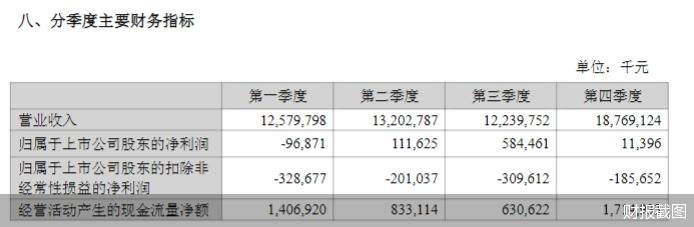
Core Viewpoint - Suning has reported significant growth in revenue and customer traffic due to the implementation of the "old-for-new" subsidy policy, which has stimulated consumer demand and forced supply chain upgrades [1][3][4]. Group 1: Revenue and Sales Performance - Suning's revenue for the fourth quarter reached 18.77 billion yuan, showing a notable increase compared to the previous quarters [2][3]. - The company experienced a year-on-year revenue growth of 34.35% in the fourth quarter, with in-store sales growing by 64.6% [3][4]. - The "old-for-new" policy has led to a 120% increase in store traffic since its implementation [3][4]. Group 2: Consumer Behavior Changes - The subsidy policy has shifted consumer preferences from low-cost options to higher-end products, with average transaction values increasing significantly [5][10]. - Sales of high-end appliances such as smart air conditioners and integrated kitchen appliances have surged, with year-on-year growth rates of 121%, 246%, and 215% respectively [5][6]. - Consumers are now more inclined to purchase products that maximize the subsidy benefits, often opting for items priced near the subsidy cap [10][11]. Group 3: Supply Chain and Product Efficiency - The policy has effectively phased out low-efficiency appliances, with first and second-tier energy-efficient products becoming the market standard [6][8]. - The market has seen a complete withdrawal of third and fourth-tier energy-efficient products from mainstream retail channels [6][8]. Group 4: Retail Channel Transformation - The "old-for-new" policy has transformed consumer behavior, emphasizing quality and experience over price, leading to a rise in demand for smart and integrated products [10][11]. - Physical stores are becoming the primary channel for consumers to engage with and purchase subsidized products, enhancing the shopping experience through direct interaction [10][11]. - Suning is focusing on experiential retail, with new store formats designed to enhance customer interaction and service [14][15].


2025年开年宏观展望:经济、政策与资产
2025-04-15 14:30
Summary of Conference Call Notes Industry Overview - The conference call primarily discusses the **Chinese economy**, focusing on key sectors such as **real estate**, **consumption**, and **foreign trade**. Key Points and Arguments Economic Performance - The overall economic fundamentals in China have not significantly changed compared to last year, with manufacturing PMI showing a recovery trend since Q4 of the previous year, but not exceeding last year's levels [1][2] - Real estate performance has shown resilience, particularly in the second-hand housing market in first-tier cities, with transaction growth noted in 15 cities [1][2] - The number of listings in the real estate market has rebounded significantly, although second to fifth-tier cities have shown a temporary rebound followed by a decline [2] Consumption Trends - Consumption during the Spring Festival has highlighted structural strengths, particularly in tourism and entertainment, with notable increases in travel revenue and box office sales [2][3] - The "old-for-new" policy has been a significant driver of consumption since its implementation in September last year, leading to a notable increase in sales for related products [4][5] - The overall consumption growth is expected to contribute positively to the economy, with projections indicating a potential increase in retail sales growth by 1.3% to 2.7% this year [6] Real Estate Market Dynamics - The real estate market is showing signs of stabilization, with a narrowing decline in sales area since June last year, and a corresponding reduction in price declines observed since November [7][8] - The performance of second-hand homes is outpacing new homes, indicating a shift in market dynamics [8] - The financial health of real estate companies remains a concern, with many showing a contraction in cash flow and overall financial stability [9][10] Foreign Trade and External Factors - The impact of foreign trade has been more optimistic than previously anticipated, with expectations of extended "export rush" effects due to tariff policies [11][12] - The anticipated impact of tariffs on GDP is relatively minor, with estimates suggesting only a 0.16% impact from the latest tariff increases [12][14] - The depreciation of the RMB may serve as a buffer against tariff impacts, with a controlled depreciation expected to mitigate some of the adverse effects [14][15] Price Trends and Inflation - Price levels are expected to remain low, with potential for recovery in service prices, particularly in tourism and household services [17][19] - The current capacity utilization rates are low, which historically correlates with negative PPI growth, indicating a need for policy intervention to stimulate production [18][19] Policy Outlook - The macroeconomic policy framework is characterized by a clear focus on high-quality development, with proactive measures anticipated to support consumption and address capacity issues [20][21] - Fiscal policy is expected to see an increase in deficit rates and spending, with projections indicating a rise in the deficit to between 5.6 trillion to 6.4 trillion yuan [23][24] - The government is likely to enhance transfer payments to local governments to alleviate fiscal pressures and support basic public services [27] Conclusion - The overall outlook for the Chinese economy remains cautious but with some optimistic indicators, particularly in consumption and real estate stabilization. The effectiveness of policy measures in addressing structural issues will be critical for sustained economic growth [20][21][39]
新一轮供改破局(国金宏观张馨月)
雪涛宏观笔记· 2025-04-13 14:12
"坚持从供需两侧发力,标本兼治化解重点产业结构性矛盾等问题,促进产业健康 发展和提质升级。要优化产业布局、强化标准引领、推进整合重组,推动落后低效 产能退出,增加高端产能供给。要优化市场监管,加强行业自律,共同维护公平竞 争、优胜劣汰的市场秩序。" 3月1日习近平总书记《求是》杂志发表文章《经济工作必须统筹好几对重要关系》指出, "内卷式"竞争是市场资源配置功能受限的结果,破局要从"有效市场"和"有为政府"两个 维度着手。 文:国金宏观宋雪涛/联系人张馨月 近期政策层面密集释放积极供给侧改革的信号。 2月10日国常会提出, "要坚持供需两侧协同发力、动态平衡,持续深化供给侧结构性改革"。 3月6日五部委记者会国家发改委主任郑栅洁表示, "将分行业出台化解重点产业结构矛盾的具体方案,推动落后低效产能退出,扩大 中高端产能供给,让供给侧更好适应市场需求变化"。 值得注意的是,近期政策表态对于供给侧问题的表述是 "重点产业结构矛盾",而非"产能过剩"。 事实上,我国多数行业面临的结构性问题是低端产能过剩、高端产能不足。尤其是对于需求仍处于上行 周期的新兴产业来说,是否存在整体的"产能过剩",还是个问号。 因此,本轮 ...
专访中国银河证券章俊:美国“对等关税”冲击大幅提升年内消费政策加码必要性|大咖谈经济
2 1 Shi Ji Jing Ji Bao Dao· 2025-04-10 06:41
章俊:供给侧结构性改革一方面能够通过技术创新和产业升级,满足居民日益多样化、高端化的需求。 另一方面又可以创造新需求,例如智能家居、新能源汽车、智能穿戴设备等新兴领域。 章俊表示,在年内未有增长政策加码的情景下,预计2025年消费对GDP增长的贡献率有望维持增长,但 增速或将边际递减。而当前美国"对等关税"政策冲击大幅提升了年内消费政策加码的必要性,且后续政 策加码仍需重视对居民增收减负的支持力度。一方面要加大力度促进居民增收,提高一次分配收入占 比、完善收入分配制度、完善就业市场等;另一方面要切实减轻居民"三座大山"的压力,如降低公积金 利率,减轻居民购房负担,释放更多可支配收入用于消费。通过以上政策组合,既能短期内刺激消费, 又能长期优化收入分配和供给结构,推动消费升级与经济增长的良性循环。 《21世纪》:《提振消费专项行动方案》首次将"城乡居民增收促进行动"置于首位,强调"增收减 负"与"高质量供给"双轮驱动。你认为这一政策设计体现了当前宏观经济调控的哪些核心逻辑? 结合当前我国人口老龄化压力加大、服务业和服务消费水平与发达国家仍有一定差距的背景,银发经 济、国货品牌、冰雪经济等或成为突破口,银发消费能 ...

宏观点评评《关于完善价格治理机制的意见》:新一轮供给侧改革思路渐明-2025-04-02
Ping An Securities· 2025-04-02 14:45
Group 1: Macroeconomic Focus - "Stabilizing prices" is a key focus of macroeconomic policy in 2025, with the CPI growth target set at around 2%, the first time below 3% since 2003[3] - The GDP deflator index has been under pressure since 2023, indicating a divergence in economic volume and price, which has negatively impacted consumer confidence and corporate profits[3] - The new price governance mechanism aims to address the low price environment and stimulate economic vitality through supply-side structural reforms[3] Group 2: Price Mechanism Reform - The current price mechanism reform echoes the 2015 initiative, both addressing insufficient capacity utilization and downward price pressure in the economy[3] - The 2025 reform emphasizes market price regulation and aims to correct market failures, particularly in sectors experiencing "price wars" and "involution" competition[4] - Key areas of focus include energy pricing reforms, particularly in new energy and carbon pricing, and adjustments in public service pricing to alleviate fiscal pressure[4] Group 3: Supply-Side Structural Reform - The supply-side structural reform strategy has become clearer since 2024, focusing on phasing out subsidies and enhancing market price mechanisms[4] - The reform aims to accelerate the exit of inefficient, high-energy-consuming production capacities through energy consumption control measures[4] - The photovoltaic industry and high-energy raw material sectors are expected to see price recoveries as a result of these reforms, leading to a reasonable rebound in prices[4]
重磅!螺纹钢库存去化不停,中钢协发力严控产能,钢价拐点已至?
Hua Xia Shi Bao· 2025-03-25 06:47
重磅!螺纹钢库存去化不停,中钢协发力严控产能,钢 价拐点已至? 3月24日,黑色系期货品种集体大涨,焦炭主力合约涨幅接近3%,铁矿石主力合约涨超2%,螺纹钢和热卷涨幅均 超1%。截至当日收盘,螺纹钢期货报收于3204元/吨。受黑色系大涨影响,钢铁板块异动拉升,八一钢铁涨超 7%,盛德鑫泰涨超6%,马钢股份、安阳钢铁、河钢资源等跟涨。 随着螺纹钢期货价格上涨,马琳表示,3月24日黑色近月合约的空头集中减仓,除了有政策预期干扰外,从估值的 角度上看,螺纹已经打到谷电成本区域附近,期货价格继续下跌会有一定的阻力,并且空头减仓也是对前期悲观 情绪修复的表现。不过,值得关注的是,也有部分空头是从近月移仓到远月合约,说明市场对未来需求的看法还 未发生彻底转向。 钢铁供需格局或迎巨变 3月22日,中国钢铁工业协会党委副书记、副会长兼秘书长姜维在北京表示,钢材消费结构变化带来消费总量变化 的高强度和持续性,是中国钢铁面临的前所未有的挑战,供需失衡是当前影响行业发展的主要矛盾。对于钢铁行 业持续推动高质量发展,姜维提出,切实关闭新增产能入口,尽快畅通落后产能退出渠道,建立产能治理新机制 是解决当前行业主要矛盾的关键一招。 经历 ...


韩文秀:以高质量发展的确定性应对外部环境的不确定性 | 宏观经济
清华金融评论· 2025-03-24 10:35
中央财经委员会办公室副主任、中央农村工作领导小组办公室主任韩文秀 3月23日在中国发展高层论坛专题研讨会上作 《以高质量发展的确定性应 对外部环境的不确定性》 主题发言。他表示,在外部不确定不稳定因素 明显增多的情况 下,中国将坚定不移办好自己的事,以高质量发展的确 定性应对外部环境的不确定性,努力为世界经济发展提供"稳定锚"。 中央经济工作会议提出,要全方位扩大国内需求,大力提振消费。当前我国消费规模很大,但消费在国 民经济和总需求中的比例还比较低,与发达国家有大约20个百分点的差距,扩大消费的潜力巨大。 春节假日消费红火带给我们许多启示,从今年开始,我们每年增加2天法定假日,不久前国家出台了 《提振消费专项行动方案》,近期很多中央部门和地方政府都在行动起来,我们将综合施策扩大消费, 不断形成高质量发展与高品质生活相互促进、相得益彰的局面。 一是增强消费能力。在促进经济增长、提高劳动生产率基础上,增加城乡居民收入、优化收入分配结 构,提升居民收入在国民收入中的比重,让消费者有钱能消费。 二是扩大服务消费。积极发展首发经济、健康消费、冰雪经济、银发经济,把文化旅游业发展成为重要 的支柱产业。创造更多高质量的服 ...
空头反扑的核心逻辑——A股一周走势研判及事件提醒
Datayes· 2025-03-23 13:56
摘要/ 机构情绪明显下行 上周为啥大跌? 一个原因是机构情绪的回落! 民生证券构建的个人和机构投资情绪指标显示,本周(20250317-20250321)个人投资情绪维 持高位,机构投资情绪周三开始明显下行;这种投资者情绪组合意味着市场未来或阶段偏弱 走势。 对于A股而言,科技股引领的"东升西落"阶段结束,市场再度回到对于基本面的定价。 二是"四月决断"马上到来!这个时候要做好防守! 进入 4 月,上市公司开始集中披露业绩报告,同时两会和政治局会议召开对全年经济发展作 出指引,市场会基于微观企业盈利和宏观政策基调对股价进行修正。科技主题分支往往处于 新技术渗透初期,盈利兑现度不足,因此在3月末、4月初可能会阶段性退潮。 | 小盘成长相对沪深 | 2015 | 2016 | 2017 | 2018 | 2019 | 2020 | 2021 | 2022 | 2023 | 2024 | 胜摩 | | --- | --- | --- | --- | --- | --- | --- | --- | --- | --- | --- | --- | | 300超额收益率 | | | | | | | | | | | | | ...