全球去美元化

Search documents
1月26日盘后播报
Sou Hu Cai Jing· 2026-01-26 11:30
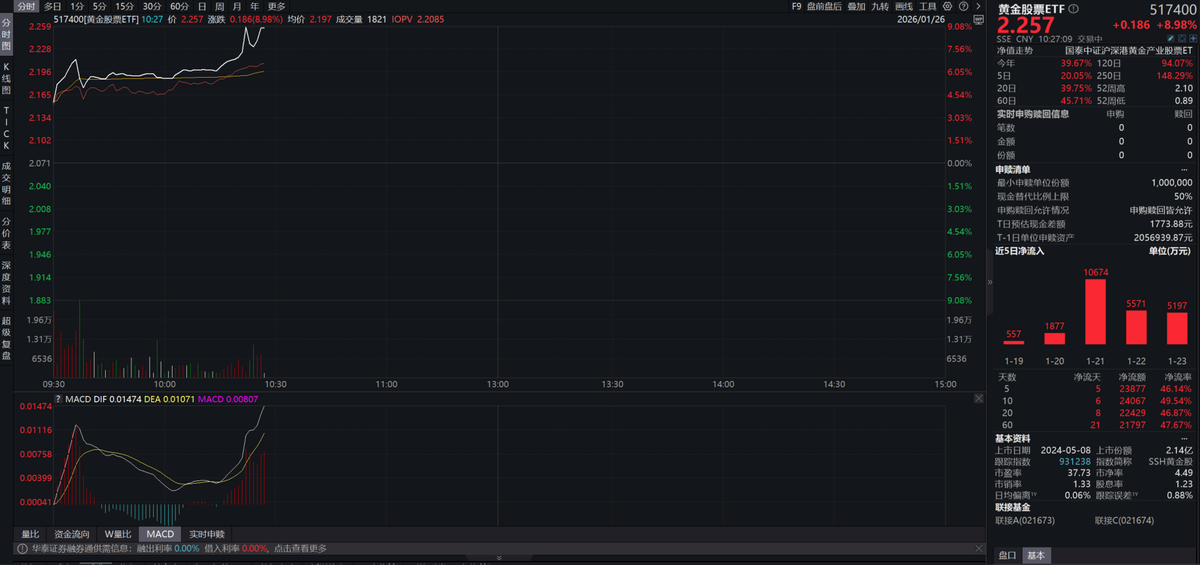
Group 1: Market Overview - The stock market experienced adjustments, with the Shanghai Composite Index down 0.09% at 4132.61 points and the Shenzhen Component Index down 0.85% at 14316.64 points, amid geopolitical tensions leading to increased risk-averse trading [1] - The total trading volume across both markets remained high, exceeding 3.28 billion [1] Group 2: Livestock Industry - The Livestock ETF (159865) rose over 2%, with the national average price of live pigs increasing to approximately 13.02 yuan/kg as of January 25 [1] - The livestock sector has undergone significant capacity reduction after a deep adjustment in 2025, with current valuations still at relatively low historical levels [1] - The industry is transitioning from losses to slight profits, indicating a high safety margin and cost-effectiveness for investment [1] - The delayed effects of capacity reduction are expected to manifest gradually in 2026, with the industry's prosperity likely to spiral upward [1] - The sector is currently in a "bottoming" phase, suggesting that investors should consider the allocation value of the Livestock ETF (159865) and adopt a phased investment strategy [1] Group 3: Coal Industry - The coal sector performed well, with the Coal ETF (515220) rising approximately 2% due to strong cold air sweeping the nation and record-high winter electricity loads [2] - The investment logic in the coal sector is shifting from purely "cyclical speculation" to a dual drive of "dividends + growth" [2] - Supply constraints due to reduced capital expenditure under the "dual carbon" policy are expected to maintain a tight balance in supply and demand for the long term [2] - The coal industry's valuation remains at a relatively low historical level, with the China Securities Coal Index's dividend yield exceeding 6% over the past 12 months, making it attractive in the current low-interest market [2] - The Coal ETF (515220) is considered worthy of attention for investors seeking stable returns and defensive positions [2] Group 4: Precious Metals - COMEX gold prices surpassed 5000, with the Gold Fund ETF (518800) increasing by 2.61% and the Gold Stock ETF (517400) rising by 8.4% [3] - Continued purchases of gold by global central banks and the selling of U.S. Treasury bonds have heightened market risk aversion, increasing demand for precious metals [3] - Short-term outlook suggests that ongoing geopolitical conflicts will keep trading in the precious metals sector active, supporting gold prices [3] - The recent strength in gold prices may lead to short-term volatility risks after reaching new highs [3] - The long-term outlook remains supported by factors such as the Federal Reserve's interest rate cut cycle, increasing global uncertainties, and the trend of de-dollarization [3] - Investors are encouraged to continue monitoring investment opportunities in the Gold Fund ETF (518800) and Gold Stock ETF (517400) [3]
现货黄金站上5000美元,黄金股票ETF(517400)涨近9%,领涨全市场
Mei Ri Jing Ji Xin Wen· 2026-01-26 03:14
Core Insights - Recent geopolitical tensions have led to a surge in gold prices, surpassing the $5000 mark, with gold stock ETFs experiencing significant inflows [1][3][6] Geopolitical Context - The former Canadian central bank governor, Mark Carney, announced at the World Economic Forum that the "rules-based international order" is over, indicating a shift towards unrestrained geopolitical competition [3] - Concerns over U.S. credit risk have prompted major pension funds, including Denmark's and Sweden's Alecta, to sell off U.S. Treasury bonds [3] Gold Market Dynamics - The Polish central bank has approved a plan to purchase 150 tons of gold, emphasizing gold's role as a risk-free asset and a stabilizer for the economy [4] - Analysts predict that the current rise in gold prices may be just a precursor to a more significant upward trend, with expectations for an average gold price of $4741.97 by 2026, a 38% increase from the previous year [5] Future Price Predictions - Analysts have varying predictions for gold prices, with some forecasting a peak of $7150 this year due to geopolitical risks and increased retail demand from Latin America [5] - The overall sentiment remains bullish, with expectations that gold will continue to rise amid a backdrop of U.S. monetary policy changes and geopolitical tensions [6] Investment Opportunities - Investors are encouraged to consider gold ETFs, particularly those tracking gold mining stocks, as a means to capitalize on the current market conditions [7]

黄金基金ETF迎历史性行情:单日大涨2.61%、规模突破372亿元,资金持续涌入
Sou Hu Cai Jing· 2026-01-26 02:53
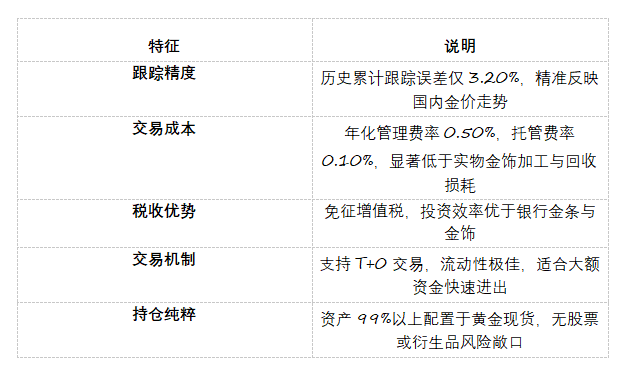
Core Viewpoint - The gold market is experiencing a significant surge, with the international spot gold price stabilizing above $5000 per ounce, leading to a strong rise in domestic gold ETF (518800) [1][2] Fund Performance - As of January 26, 2026, the gold ETF (518800) has seen a net inflow of 16.42 billion yuan over the past five days, indicating strong demand for gold assets [2] - The fund's total scale reached 372.25 billion yuan with 3.553 billion shares, maintaining its position as the largest gold ETF in the market [2] - Institutional investors hold 93.76% of the fund, reflecting a strong recognition of gold as a macro hedging tool [2] Market Drivers - The rise in gold prices is driven by three main factors: 1. Increased expectations for continued monetary easing by the Federal Reserve, lowering the cost of holding gold [3] 2. Accelerated de-dollarization, with central banks globally increasing their gold reserves [3] 3. Heightened geopolitical risks, enhancing gold's appeal as a traditional safe-haven asset [3] Product Advantages - The gold ETF (518800) closely tracks the Shanghai Gold Exchange Au99.99 spot contract, offering several advantages: - Historical tracking error of only 3.2%, accurately reflecting domestic gold price trends [4] - Low annual management fee of 0.50% and custody fee of 0.10%, significantly lower than physical gold [4] - Exemption from value-added tax, making it more efficient than bank gold bars and jewelry [4] - Excellent liquidity with T+0 trading support, suitable for large capital movements [4] - Over 99% of assets are allocated to physical gold, with no exposure to stocks or derivatives [4] Market Outlook - Despite gold prices being at historical highs, the supporting logic remains intact, with expectations for gold prices to oscillate between $4750 and $5200 per ounce in 2026 [4] - Investors are advised to consider gradual accumulation during pullbacks to mitigate volatility risks [4] - A recommended allocation of 5% to 10% of overall assets in gold ETFs is suggested as a stabilizing component [4] - For those seeking higher elasticity, gold stock ETFs (517400) may be an alternative, albeit with significantly higher volatility [4]
金属-关注供给扰动带来的板块机会
2026-01-26 02:49
Summary of Key Points from Conference Call Records Industry Overview - **Metals Sector**: The focus is on supply disruptions creating opportunities within the metals sector, particularly in precious metals, industrial metals, and energy metals [1][5]. Core Insights and Arguments Precious Metals - **Long-term Drivers**: The precious metals market benefits from global de-dollarization, central bank gold purchases, and increased ETF investments. The Chinese central bank is a major player, purchasing 24-25 tons of gold in 2025 [4]. - **Current Prices**: Gold and silver prices have reached new highs, with gold at 44,981 CNY and silver at 103 CNY. The demand for silver is expected to rise due to high physical and investment demand [2][10]. - **ETF Trends**: The trend of increasing ETF investments in gold is expected to continue, supporting price growth [8]. Industrial and Energy Metals - **Price Increases**: Significant price increases have been observed in copper, aluminum, tin, and lithium, with lithium prices surpassing 180,000 CNY. Supply constraints due to geopolitical issues and ESG factors are limiting supply growth [2][5]. - **Copper Supply Issues**: Supply disruptions from strikes in Chile are expected to keep copper prices strong in the short term [3][17]. - **Lithium Market Outlook**: The lithium market is optimistic due to increased demand from electric vehicles and energy storage, despite recent price surges posing short-term risks [12]. Nickel Market - **Supply Concerns**: The nickel market is closely watching Indonesia's nickel quota, which could lead to a supply shortage if reduced to 260 million tons. The demand from the EV sector is expected to grow, but caution is advised [13][15]. Aluminum Market - **Current Trends**: Aluminum prices are supported by geopolitical events and recovering demand from downstream processing industries. The market is expected to remain tight due to limited domestic supply growth [21][23]. Silver Market - **Demand Dynamics**: The silver market has been in a supply shortage since 2021, with fluctuations in physical and investment demand. Despite a decrease in photovoltaic demand, overall demand is expected to rise, supporting price increases [9][10]. Steel Industry - **Current Performance**: The steel industry shows mixed performance, with production growth in some areas but overall demand expected to remain stable due to reduced real estate activity. Investment opportunities are seen in companies with strong fundamentals [30][32]. Other Important Insights - **Investment Recommendations**: Focus on companies with competitive advantages in the metals sector, including leading firms in precious metals and energy metals. Specific recommendations include companies like Tianqi Lithium and Northern Rare Earth [28]. - **Market Sentiment**: The overall sentiment in the metals market is optimistic, driven by strong demand and supply constraints, with potential for price increases across various metals [2][5][12]. This summary encapsulates the key points discussed in the conference call, highlighting the dynamics within the metals sector and providing insights into future trends and investment opportunities.
现货黄金突破5000美元大关!黄金股票ETF(517400)大涨超5.6%,连续5日资金净流入超2亿元
Sou Hu Cai Jing· 2026-01-26 02:23
Core Viewpoint - Spot gold has surpassed the $5,000 mark, with gold stock ETFs (517400) rising over 5.6% and experiencing a net inflow of over 200 million yuan for five consecutive days [1] Group 1: Economic Factors - The Federal Reserve's ongoing interest rate cut cycle, escalating geopolitical conflicts, and the trend of global de-dollarization are contributing to increased uncertainty in the global order, enhancing gold's safe-haven appeal [1] - Analysts believe that former President Trump is reviving "Monroe Doctrine," suggesting a potential return to a "jungle law" in international order, which is fueling market risk aversion and supporting gold prices [1] Group 2: Central Bank Actions - The Polish central bank has announced the purchase of 150 tons of gold, while a Danish pension fund plans to sell U.S. Treasury bonds, indicating a trend among multiple countries to reduce dollar asset allocations and promote precious metals as alternative reserve assets [1] - According to World Bank data, gold reserves are expected to account for approximately 22% of global central bank reserves in 2024, a figure that remains low compared to historical geopolitical turning points despite significant increases over the past three years [1] Group 3: Investment Strategy - In the medium to long term, gold prices are expected to trend upward, and investors may consider participating in future pullbacks and gradually accumulating positions [1] - Direct investment in physical gold and tax-exempt gold ETFs (518800), as well as gold stock ETFs (517400) covering the entire gold industry chain, are recommended for investors [1]
国内外宏观环境利多有色金属板块,关注黄金基金ETF(518800)、矿业ETF(561330)
Sou Hu Cai Jing· 2026-01-26 02:07
Group 1 - Precious metals experienced a strong upward trend last week, driven by geopolitical tensions, a weakening dollar, and continued global central bank gold purchases, with international gold prices approaching $5000 and silver prices surpassing $100 [1] - The macro environment for the non-ferrous metals sector is expected to remain generally favorable through 2026, with potential for continued upward movement [2] - The ongoing Federal Reserve rate cut cycle, escalating geopolitical conflicts, and the trend of de-dollarization are expected to provide sustained support for gold prices [2][3] Group 2 - Demand for copper, aluminum, and lithium is expected to strengthen, while supply constraints are likely to persist, leading to sustained price increases for these commodities [2] - Strategic minor metals such as tungsten, tantalum, and antimony are also positioned for investment opportunities due to supply-demand mismatches and geopolitical factors [3] - The demand for minor metals is significantly increasing due to their critical role in high-tech industries such as AI, military, and semiconductors [3]
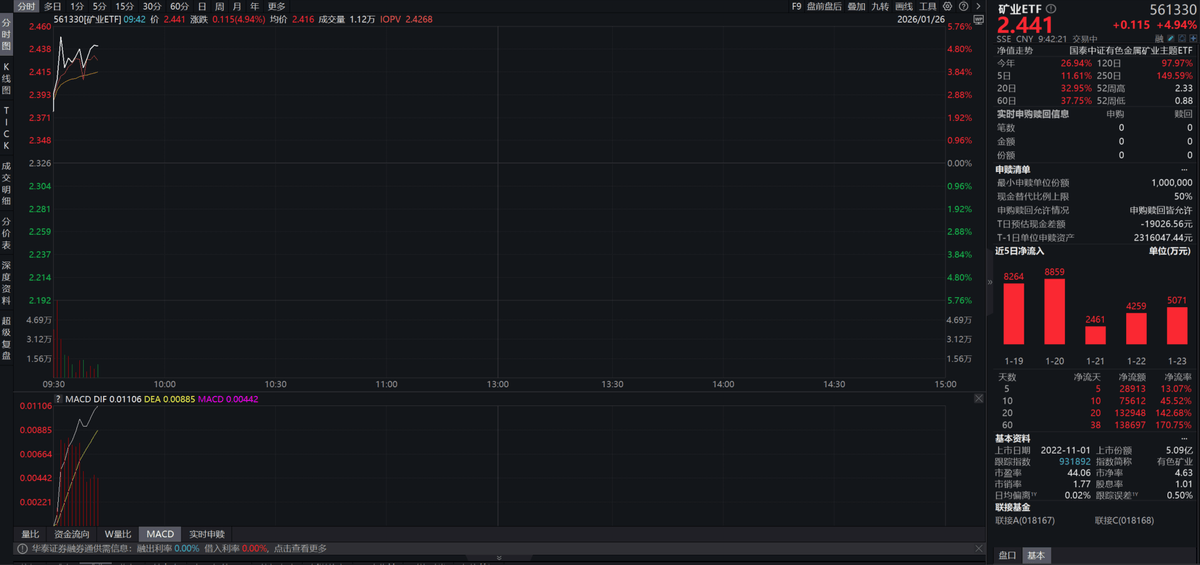
国际金价突破5000美元大关,矿业ETF(561330)大涨近5%,资金持续布局
Sou Hu Cai Jing· 2026-01-26 01:59
近期,国际金价突破5000美元大关,国际银价突破100美元历史性关口,有色矿业板块开启结构性行情, "家里有矿,2025年涨超有色"的矿业ETF (561330)大涨近5%,资金持续布局,近20日净流入超13亿元。 国际金价突破5000美元大关,有色金属开启结构性行情 黄金:美联储降息周期持续+地缘冲突加剧+全球去美元化趋势。全球秩序的不确定性加剧,黄金的避险属性将继续凸显。分析界普遍认为,特朗普正重 拾"门罗主义",国际秩序或重回"丛林法则"。 市场避险情绪高企,为金价带来一定支撑。后续关注新任美联储负责人人选,若新任负责人为鸽派,美联储 降息节奏或更为激进,利好黄金表现。此外,全球去美元化加速。波兰央行宣布增购150吨黄金,丹麦养老基金计划抛售美债,多国减少美元资产配置,推 动贵金属成为替代性储备资产。据世界银行数据,2024年全球央行储备中黄金储备占比约为22%,这一比例相较1990年冷战末期、1980年滞涨末期仍处于较 低水平。即使在连续3年的显著增持后,央行持有的黄金数量和历史上重要的地缘政治转折点相比仍然偏低。 有色:供需偏紧,降息周期下有望呈现弹性。近期市场对2026年美联储持续降息预期升温,叠 ...
人民币占比8.9%!超越日元英镑,成全球第二大储备货币
Sou Hu Cai Jing· 2026-01-24 20:45
Core Insights - The position of the Chinese yuan in global foreign exchange reserves has been gradually increasing, currently estimated to be between 1.9% and 2.88% by 2025, ranking fifth overall [2][4] - The US dollar remains dominant at approximately 58%, followed by the euro at over 20%, the Japanese yen at 5.8%, and the British pound at 4.7% [2] Group 1: Yuan's Growth and Internationalization - The yuan's share in Special Drawing Rights (SDR) started at 1.08% in 2016 and has more than doubled, driven by trade relations and policy support [4] - Emerging market countries are increasingly including the yuan in their reserve baskets to diversify risk and facilitate trade with China [4] - The yuan's payment share in the SWIFT international payment system is projected to fluctuate between 2.9% and 4.6% by 2025, occasionally ranking fourth or fifth globally [7] Group 2: Trade and Economic Factors - Chinese enterprises are conducting business with countries along the Belt and Road Initiative using yuan contracts, which helps avoid dollar-related costs [6] - China's economic scale and trade volume, being the world's largest in goods trade, provide a solid foundation for the yuan's internationalization [10] - The stability of China's foreign trade and its complete supply chain enhance the competitiveness of Chinese manufacturing, encouraging the use of local currency for settlements [10] Group 3: Policy and Global Trends - Policy measures such as joining the SDR, promoting financial market openness, and establishing bilateral currency swap agreements have facilitated the yuan's internationalization [11] - The trend of de-dollarization is gaining traction globally, with the dollar's reserve share declining from a peak of 70% to around 58%, with a notable portion shifting to other currencies, including the yuan [14] - Countries are increasingly seeking to diversify their reserves, especially in light of frequent use of sanctions, leading to a rise in gold reserves as a hedge against single-country control [13] Group 4: Future Outlook - The internationalization of the yuan is progressing steadily, emphasizing market-driven approaches and mutual benefits, with potential for further growth if trade and investment facilitation continues to improve [15] - The choice of central banks to hold yuan reserves reflects confidence in China's stable economic fundamentals and consistent policies [17]
高盛上调今年黄金目标价:从4900美元升到5400美元!我们普通人现在入场还来得及吗?
Sou Hu Cai Jing· 2026-01-22 13:55
王爷说财经讯:看好,十分看好!上调预期! 你敢信吗?就在今天,华尔街的"带头大哥"高盛彻底掀翻了桌子! 发生了什么?1月22日,高盛突然发布了一份让整个金融圈炸锅的研报, 直接把2026年底的黄金目标价,从之前的4900美元/盎司,硬生生拔高到了5400美 元!这可是整整500美元的涨幅,相当于目前很多人好几个月的工资! 什么情况?现在的金价不是还在4800美元附近震荡吗?高盛凭什么敢拍着胸脯说还能大涨30%?这究竟是机构的"诱多"陷阱,还是真正的财富大风口?我们 普通人到底还能不能上车? 01、黄金大涨背后:谁在背后疯狂"扫货"? 别被那些复杂的K线图吓住了,高盛这次调价的逻辑其实简单得可怕: 买的人太多了,根本停不下来! 这背后主要有两股"神秘力量"在抢筹码。 第一股力量,是 各国央行,尤其是新兴市场的央行。 你以为只有大妈才爱买金子? 错!现在的央行才是最大的"金主"。 高盛预测,光是2026年这一年,全球央行平均每个月就要买走 60吨黄金! 为什么? 因为他们不傻。 在全球局势动荡、美元信用摇摇晃晃的今天,黄金就是最硬的"压舱石"。 这就好比家里存粮,平时觉得现金好用,真到了荒年,手里有粮才不慌。 各 ...

买不起金条的「大妈们」,涌入了ETF
36氪· 2026-01-22 11:08
Core Viewpoint - The article discusses the significant rise in gold prices, driven by various factors including increased demand for gold ETFs and the failure of traditional safe-haven assets like U.S. Treasuries, yen, and Swiss franc to attract investment during times of uncertainty [4][8][12]. Group 1: Gold Price Performance - Since the beginning of 2026, gold prices have continued their strong performance from 2025, with prices rising from $4,300 per ounce to a peak of $4,650 per ounce, marking a historical high [6]. - The price of gold saw a dramatic increase of 90% within a year, from under $3,000 per ounce to over $4,400 per ounce by late October [6][7]. - Gold's long-term performance has been exceptional, with a cumulative increase of over 600% from 2000 to 2025, significantly outperforming major stock indices and bonds [10]. Group 2: Factors Driving Gold Prices - The core logic supporting the current rise in gold prices includes sustained purchases by central banks, steady demand from private investors, and the strengthening of gold's status as a safe-haven asset [12][13]. - In 2025, major economies entered a rate-cutting cycle, historically correlating with rising gold prices due to increased liquidity, reduced opportunity costs for holding gold, and a weakening dollar [15]. - The unusual rise in U.S. Treasury yields during the current rate-cutting cycle has raised concerns about the dollar's credibility, further driving investors towards gold [18]. Group 3: Changes in Market Participation - Gold ETFs have emerged as a significant source of new capital driving gold prices higher, with retail investors increasingly participating through these vehicles due to lower barriers to entry and higher liquidity compared to physical gold [20][22]. - The shift towards gold ETFs has altered the perception of gold, enhancing its financial attributes while diminishing its traditional role as a store of value [22][24]. - The influx of retail investment through gold ETFs has amplified market activity and contributed to the rapid price increases observed in 2025 [20][22]. Group 4: Broader Metal Market Trends - The overall metal market in 2025 has shown strength, with both precious and base metals experiencing significant price increases, driven by concerns over global resource supply chains [26][28]. - The protective trade policies of the Trump administration have heightened global anxieties regarding resource security, prompting countries to stockpile strategic metals like silver, copper, and aluminum [28][29]. - Silver and other precious metals have outperformed gold in 2025, reflecting their dual role as both safe-haven assets and essential industrial materials [29].