
再工业化

Search documents
长江有色:22日锡价上涨 锡价高企现货畏高交投清淡
Xin Lang Cai Jing· 2025-12-22 10:08
Core Viewpoint - The tin market is experiencing significant price increases driven by geopolitical tensions, supply chain disruptions, and strong demand from AI and renewable energy sectors [2][3][4]. Group 1: Market Performance - The Shanghai tin contract 2601 rose by 1,600 yuan, or 0.47%, closing at 340,440 yuan per ton, with a trading volume of 239,837 lots and a decrease in open interest by 4,558 lots [1]. - The spot tin price in the Changjiang market reported an average of 340,900 yuan per ton, up by 3,500 yuan from the previous trading day [1]. Group 2: Macroeconomic Factors - A weaker US dollar and global liquidity easing are providing favorable conditions for commodity prices, particularly in the context of a structural bull market for non-ferrous metals [2]. - Geopolitical conflicts, such as the escalation in the Democratic Republic of the Congo, are threatening key logistics hubs that account for approximately 6% of global tin supply, exacerbating supply risks [2]. Group 3: Demand Dynamics - Demand for tin is shifting from traditional consumer electronics to AI computing power and green energy applications, leading to a significant increase in tin consumption in AI servers and photovoltaic technologies [3]. - The supply of tin is becoming increasingly inelastic, creating a sharp contradiction between high demand growth and limited supply [3]. Group 4: Industry Profitability - Profit margins in the tin industry are increasingly concentrated at the upstream resource level, benefiting companies with their own mines, such as Tin Industry Co. and Xinyi Silver Tin [3]. - Midstream smelting plants are facing challenges in raw material acquisition, while downstream processing companies are adopting low inventory strategies due to high costs, accelerating industry consolidation [3]. Group 5: Price Forecast - Short-term tin prices are expected to remain high due to geopolitical risks, low inventory levels, and macroeconomic easing, although a technical correction may occur before reaching the key resistance level of 350,000 yuan per ton [4]. - In the medium to long term, a structural shortage of tin may persist due to low resource extraction ratios and high costs associated with new capacity investments, reinforcing tin's status as a "scarce metal" [4].


水电便宜到两三毛,中国铝业护城河有多深?
Sou Hu Cai Jing· 2025-12-20 02:40
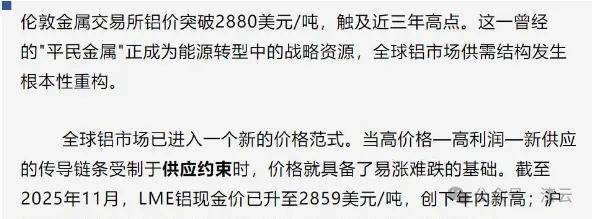
从伦敦金属交易所(LME)最新交易数据来看,铝价期货,已经突破2880美元/吨这个关口,正加快朝 着3000美元的高位冲击,华尔街的那些,交易员还在留意着英伟达的GPU出货量,却忽视了更为基本的 实体制裁。 并不是,美国的铝,产能被自家的AI泡沫挤出了电网,这就是产业链的零和博弈,当你想要同时保持 高端算力以及基础制造的时候,脆弱的电网负荷,就是第一个倒下的多米诺骨牌。 特朗普政府想要用50%的关税壁垒来,保护本国铝业,可是却是自己把自己弄进了困境,2025年7月, 美国未锻轧铝的进口量,一下子猛降到30.3万吨,关税没有让本国产能得到恢复,反倒切断了外部的供 应途径,让库存水平跌到了历史最低值。 那个被众多人忽略的数字,4500万吨,才是真正厉害的手段,中国所制定的电解铝产能,上限就是这 个,这条红线传递的含义是,不管全球价格多么疯狂地上涨,中国都不会随就去扩大产能来填补西方的 缺口。 这次并非是芯片禁运,而是物理世界出现了反作用,当美国为了囤积铜而把大宗商品价格抬高的时候, 回旋镖就精准地砸向铝的供应链,这并不只是简单的周期波动,这是全球工业针对美国再工业化野心的 一次断供预演。 铝不是一般金属,它乃是固 ...

高盛闭门会-2026全球金属铜锂铝展望,最看好铜看跌铝锂短期紧张
Goldman Sachs· 2025-12-17 15:50
Investment Rating - The report maintains a positive outlook on copper, predicting an average price of $10,650 per ton by 2026, while expressing a bearish view on aluminum, forecasting a decline to $2,350 per ton in the fourth quarter of 2026 [1][2]. Core Insights - The growth in copper demand is significantly driven by artificial intelligence data centers, which are expected to account for 26% of total demand growth by 2025, despite only representing 1% of total demand [1][4]. - China's recent copper demand has shown weakness, with a notable decline in the fourth quarter, which may persist into 2026 due to a shift towards service sector stimulus policies [1][5]. - The high copper prices may lead to a shift towards substitutes like aluminum, but the impact on aluminum is expected to be less significant compared to the negative effects on copper [1][6]. - The lithium market outlook is optimistic, with a price forecast of $11,000 per ton for lithium carbonate in the first half of 2026, driven by increased demand for energy storage systems [2][8]. - The iron ore market is projected to be bearish, with an average price of $93 per ton in 2026, influenced by high port inventories and declining steel demand in China [2][11]. Summary by Sections Copper Market - The average copper price is expected to reach $10,650 per ton by 2026, influenced by slow growth in scrap supply and increasing global demand [1][2]. - If U.S. tariff policies are clarified, it could stabilize prices between $10,500 and $11,000 per ton; otherwise, increasing U.S. inventories could tighten global markets [1][3]. Lithium Market - The lithium carbonate price is forecasted to rise to $11,000 per ton in early 2026 due to increased demand for battery storage systems, but is expected to decline to around $9,500 per ton later in the year as new supplies come online [2][8]. Aluminum Market - The aluminum market outlook is pessimistic, with expectations of a significant supply surplus starting in 2026, leading to a price drop to $2,350 per ton by the fourth quarter [2][7]. Iron Ore Market - The iron ore price is projected to average $93 per ton in 2026, with factors such as high port inventories and reduced steel production in China contributing to this outlook [2][11].
哥伦比亚政府拟上调陶瓷地砖进口关税
Shang Wu Bu Wang Zhan· 2025-12-16 03:18
据哥伦比亚《观察家报》12月13日报道,哥贸易、工业和旅游部近日公布一项法令草案,拟将部分 陶瓷地砖进口关税上调至25%。 该部表示,陶瓷地砖产业在政府"再工业化"政策中具有战略意义,2023年该行业在哥创造了5896个 就业岗位,2024年出口额达3300万美元。草案指出,2023至2025年,三项相关税目的陶瓷地砖进口量均 出现较大幅度增长,多数年份增幅达到两位数。部分来自非自贸协定国家的陶瓷地砖进口到岸价明显低 于来自自贸伙伴国家的同类产品,引发国内有关方担忧。目前,该法令草案已进入公众征求意见阶段, 意见征集将持续至2025年12月24日。 (原标题:哥伦比亚政府拟上调陶瓷地砖进口关税) ...
经济日报金观平:锻造新兴支柱产业硬实力
Jing Ji Ri Bao· 2025-12-11 23:43
Core Viewpoint - The article emphasizes the importance of developing emerging pillar industries as a key task in building a modern industrial system, highlighting the need for innovation and adaptation to global competition [1]. Group 1: Emerging Industries Development - The "14th Five-Year Plan" has accelerated the modernization of industrial chains and the rapid development of strategic emerging industries, necessitating a focus on new pillar industries during the "15th Five-Year Plan" period [1]. - Industries such as new materials, aerospace, and low-altitude economy have a solid development foundation in China, indicating a significant opportunity for growth [1]. Group 2: Practical Approaches - The development of new pillar industries must be pragmatic and tailored to local conditions, avoiding blind imitation and overexpansion to prevent resource wastage [2]. - It is essential to identify local strengths and focus on specific breakthrough areas to optimize resource allocation and achieve coordinated national development [2]. Group 3: Innovation and Reform - Continuous innovation in production relations is necessary for sustained productivity, requiring reforms in economic, technological, and talent systems to facilitate innovative resource allocation [2]. - Both effective markets and proactive government roles are crucial for fostering innovation, with enterprises acting as the main drivers and the government providing strategic support [2]. Group 4: Open Innovation Ecosystem - Expanding international cooperation and creating a globally competitive open innovation ecosystem are vital for nurturing emerging industries [3]. - The establishment of major platforms for technological innovation, service trade, and industrial development is essential for facilitating cross-border data flow and enhancing global competitiveness [3].
中欧基金任飞:全球电力短缺催化再通胀,潜在风险或转为市场主线
Zheng Quan Shi Bao Wang· 2025-12-10 06:41
人民财讯12月10日电,近日,在中欧基金2026年度投资策略会上,中欧权益研究部副总监、基金经理任 飞表示,与以往经济周期不同,当前有两股趋势性力量正在形成额外的电力需求:一是AI数据中心的 快速扩张,二是再工业化带来的高耗能产业转移与供应链重建。这两者均独立于传统经济波动,且增速 显著。从中远期来看,全球在未来几年需要额外消耗的用电需求或将面临巨大提升。 在此逻辑下,任飞认为有三大方向值得关注:一是供给约束,电解铝等高耗能行业或受直接限制;二是 需求提振,全球性电力紧张推升光伏、储能需求,2027-2028年海外储能市场或迎增长;三是中国优 势,中国电力供应相对充裕,高耗能制造业成本与供应链优势将进一步凸显。 ...
ETO Markets:全球屏息以待,AI涨势与国债狂飙谁主沉浮?
Sou Hu Cai Jing· 2025-12-08 08:54
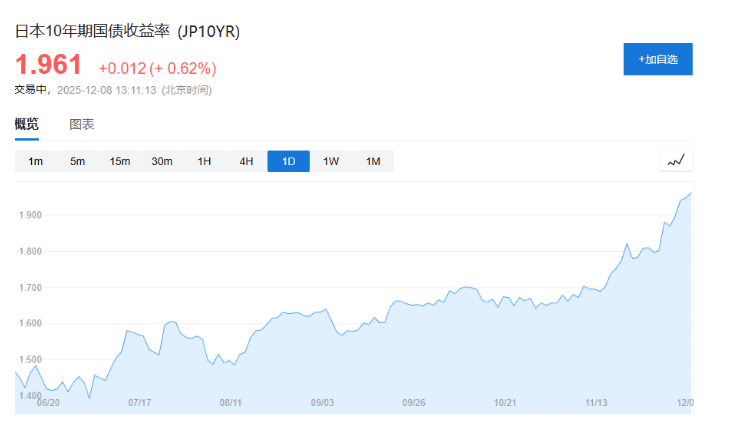
美国财政部延迟公布的9月JOLTS职位空缺、周度初请失业金、三季度就业成本指数(ECI)将在美联储 决议前密集出炉,任何意外都可能放大波动。芝商所(CME)"恐慌指数"VIX期货曲线倒挂至2025年3 月,显示对冲需求已提前布局。 太平洋另一端,日本债市率先"暴动"。 ETOMarkets的消息,周一,亚太交易时段弥漫着一种"暴风雨前夜"的安静。日经225微升0.3%,韩国 KOSPI涨0.2%,沪深300在平盘附近来回拉锯,MSCI亚太指数连续第三天收出"小阳线"。 表面波澜不惊,实则暗流汹涌——本周美联储、加拿大央行、瑞士央行、澳洲联储将先后公布利率决 定,合计管理着超过20万亿美元的经济体,市场把这四天称为"超级央行周"。 "降息25个基点已被提前锁进价格,真正的博弈是'鹰派降息'还是'鸽派降息'。"Pepperstone研究主管 ChrisWeston在致客户的晨讯中写道。掉期市场显示,周三美联储宣布降息的概率高达98%,但2025年12 月合约利率仍停留在3.75%—4.00%区间,暗示交易员对明年后续路径毫无方向感。巴克莱策略师 AndreaKiguel提醒,2026年可能进入"长期按兵不动"的冰 ...
供给给力,消费费力——年终经济漫谈之二 || 大视野
Sou Hu Cai Jing· 2025-12-08 08:19
Group 1: Manufacturing Industry Insights - The manufacturing sector in China is experiencing a significant upturn due to rising global electricity demand and the rapid adoption of AI technologies, with companies like Huaming Equipment benefiting from a 40% annual export growth over the past three years and a gross margin of 55.5% in its equipment business [6][2] - Huaming Equipment has a cost advantage of over 20% compared to its European and American counterparts, along with a delivery time that is 30%-50% shorter, positioning it well in the global market [6] - The re-industrialization trend globally is seen as a form of "Sinicization," where Chinese companies are well-equipped to meet industrial demands in regions lacking local manufacturing capabilities [8][6] Group 2: Real Estate and Manufacturing Relationship - The real estate sector has historically contributed to the development of manufacturing by providing infrastructure and financial support, although it has also created significant debt that needs to be addressed [3][2] - Local governments have utilized revenue from commercial land sales to improve the investment environment for manufacturing, indicating a symbiotic relationship between the two sectors [3] Group 3: Consumer Market Dynamics - Consumer demand in China is currently weak, with some sectors experiencing negative growth, such as the dairy industry, which saw a 2.8% decline in milk production last year [11] - The average value of goods in the express delivery sector has decreased by approximately 40% over the past five years, indicating heightened price sensitivity among consumers [12] - Despite limited growth in consumer spending, there remains potential for long-term growth in consumption, particularly in sectors where per capita consumption is still low compared to other countries [12][11] Group 4: Economic and Income Distribution Challenges - China's consumer spending rate is low, at around 37.2%, significantly below the average of 53.8% for 38 countries, indicating a need for improved income distribution and social security systems [17] - The low consumption tendency is attributed to factors such as high housing costs, a culture of saving, and inadequate social security, which collectively suppress consumer spending [20][17] - Addressing income inequality and enhancing the disposable income of lower-income groups are essential for boosting overall consumption in the economy [21][23]



大洋彼岸的机器人豪赌开场了
机器人大讲堂· 2025-12-07 09:04
Core Viewpoint - The article discusses the recent surge in the U.S. stock market related to robotics, driven by potential government policies aimed at enhancing the robotics industry as a national strategic priority, comparable to chips and AI [2][4][5]. Group 1: Government Initiatives - The U.S. government is considering an executive order on robotics technology and is forming a robotics task force within the Department of Transportation [2][10]. - The Biden administration's focus on robotics is part of a broader strategy to reshape AI and manufacturing for enhanced international competitiveness [7][8]. - The "Genesis Mission" initiated by President Trump aims to mobilize 40,000 scientists to create an AI platform focusing on advanced manufacturing and other critical sectors [8][9]. Group 2: Economic and Competitive Context - The U.S. is experiencing a "re-industrialization" anxiety due to the offshoring of manufacturing and vulnerabilities exposed during the pandemic [11]. - Robotics is seen as a solution to restore competitiveness in manufacturing by reducing labor costs and enhancing production efficiency [11][13]. - The U.S. is lagging in robot deployment compared to countries like China and South Korea, which raises concerns about maintaining its technological edge [11][13]. Group 3: Labor Market Implications - The article highlights a paradox where while robotics could alleviate labor shortages in certain sectors, it may also lead to job losses in traditional roles [14][17]. - There is a significant debate on whether the push for automation will contradict the promise of revitalizing manufacturing jobs [18]. - The need for retraining displaced workers to transition into tech roles is emphasized, but the U.S. lacks successful precedents for such initiatives [18][25]. Group 4: National Security and Defense - The strategic push for robotics is also driven by national security concerns, as autonomous systems are becoming essential in modern warfare [19][20]. - Ensuring domestic production capabilities for critical military supplies relies heavily on advanced robotics technology [20][21]. Group 5: Challenges and Future Outlook - Despite the potential benefits, the U.S. faces systemic issues such as a declining STEM workforce and reliance on imported components for robotics [23][24]. - The article warns that while robotics can create wealth, ensuring equitable distribution of that wealth remains a significant challenge [25][26]. - The future of the U.S. robotics strategy is uncertain, with the need for coherent policies and long-term planning to address fundamental economic and social issues [26][28].


美国家安全战略报告调整美全球安全优先事项
Xin Hua She· 2025-12-06 12:42
Core Viewpoint - The U.S. National Security Strategy report emphasizes a shift towards prioritizing core national interests and a more focused approach to foreign policy, moving away from the goal of permanent global dominance, which is deemed unattainable and detrimental to the American middle class and industrial base [1][2] Military Aspects - The report advocates for preventing regional conflicts from escalating into global wars and maintaining the strongest nuclear deterrent, while also developing next-generation missile defense systems [2] - It highlights the need to revitalize the defense industrial base and address cost discrepancies in expensive weapon systems like drones and missiles [2] - The strategy calls for an end to allies and partners "free-riding" on U.S. defense, urging them to take on more responsibility for regional defense [2] Economic Aspects - Economic security is framed as the foundation of national security, with a call to "rebalance" global trade relations and expand U.S. access to critical minerals and materials [2] - The report emphasizes monitoring global supply chains and technological advancements, promoting re-industrialization through "strategic tariffs" and new technology applications [2] - It aims to reinforce U.S. dominance in energy and finance while maintaining technological and economic innovation advantages [2] Immigration and Global Cooperation - The report reiterates a strong anti-immigration and anti-globalization stance, declaring the end of the "mass immigration era" and emphasizing border security as a primary national security element [2] - It downplays international cooperation and rejects the concept of climate change, accusing certain international institutions of undermining national sovereignty and being influenced by "anti-American forces" [2]