宏观预期

Search documents
国贸商品指数日报-20251202
Guo Mao Qi Huo· 2025-12-02 03:49
Group 1: Report Industry Investment Rating - No relevant content provided Group 2: Core View of the Report - On December 1st, most domestic commodity futures closed higher, with precious metals leading the gains, while agricultural products showed mixed performance. Industrial products mostly rose, and agricultural products had both gains and losses [1] - The focus of the steel futures market in December will shift from reality to macro - expectations, and short - term market sentiment is favorable [1] - The rising trend of basic metals is supported by multiple factors, and the fundamentals of aluminum are relatively stable [1] - The geopolitical situation and OPEC's production plan affect the energy - chemical products market, and the pressure on oil prices may increase if Russian oil returns to normal [1] - The short - term soybean market lacks new drivers, and palm oil prices may rise if the减产 logic is confirmed [1] Group 3: Summary by Relevant Catalog Black Series - All black series commodities rose. The recent demand for finished products improved, speculative demand rebounded significantly, and inventory continued to decline. Last week, the inventory of the five major steel products decreased by 2.25% to 1400.81 million tons, reaching a 3.5 - month low, while production increased by 0.68% to 85.71 million tons, and apparent demand slightly decreased by 0.69% to 88 million tons, still higher than the same period last year [1] Basic Metals - Most basic metals rose. The price of copper broke through the previous high, and the upward trend is supported by multiple factors in the medium term. The price of aluminum fluctuated upward, with low inventory and resilient demand [1] Energy - Chemical Products - Most energy - chemical products rose. International oil prices pulled up strongly in Asian electronic trading, and the domestic crude - oil series mostly rose. Geopolitical contradictions remain, and OPEC plans to maintain the current production plan. The pressure on oil prices will increase if Russian oil returns to normal [1] Oilseeds and Oils - Most oilseeds and oils rose. The price of US soybeans declined, and the domestic soybean meal market lacks new drivers. Palm oil prices are supported by seasonal production reduction expectations, and the price may rise if the reduction logic is confirmed [1] Index Changes - The comprehensive index of Guomao Commodities rose by 1.13% from 2200 to 2224.82 [1] - The daily consumption index rose by 0.85% from 1587.47 to 1601.03 [1] - The Guomao Black Commodity Index rose by 1.12% from 1700.99 to 1720.10 [1] - The Guomao Energy - Chemical Index decreased by 0.05% from 575.99 to 575.72 [1] - The Guomao Oilseeds and Oils Index rose by 0.03% from 2124.65 to 2125.19 [1]
宏观有所预期,钢价震荡运行
Hong Ye Qi Huo· 2025-12-01 09:01
Report Title - The report is titled "Steel Weekly Report 20251201" [2] Industry Investment Rating - No industry investment rating is provided in the report Core View - The steel price is expected to fluctuate in the short - term due to macro - expectations and the upcoming Central Economic Work Conference in December. The fundamentals of steel products show mixed trends, with some products facing challenges in supply, demand, and inventory [5][6] Summary by Related Catalogs Product Analysis Supply - The weekly output of rebar from major steel mills in China was 206.08 million tons (-1.88 million tons), and the weekly output of hot - rolled coils was 319.01 million tons (+3 million tons). Rebar long - process output decreased by 4.43 million tons, and short - process output increased by 2.55 million tons. Hot - rolled coil output increased but remained at a high level [5][35] Demand - Recent high - frequency data shows that the apparent demand for rebar and hot - rolled coils has declined. Last week, the apparent demand for rebar was 227.94 million tons (-2.85 million tons), and for hot - rolled coils, it was 320.22 million tons (-4.2 million tons). The construction steel weekly average trading volume was 10.45 million tons, remaining at a low level, and the hot - rolled coil weekly average trading volume was 3.36 million tons [5][44][49] Inventory - Rebar total inventory was 531.48 million tons (-21.86 million tons), with social inventory at 384.75 million tons (-15.27 million tons) and steel mill inventory at 146.73 million tons (-6.59 million tons). Hot - rolled coil total inventory was 400.9 million tons (-1.21 million tons), social inventory was 322.88 million tons (-1.21 million tons), and steel mill inventory remained unchanged [7] Basis - The basis of the rebar main contract was 140 yuan/ton (-23 yuan/ton), and the basis of the hot - rolled coil main contract was - 12 yuan/ton (-12 yuan/ton), showing a weakening trend [13] Summary - The steel mill profitability rate was 35.06%, a 2.6% week - on - week decrease. The molten iron output was 234.68 million tons, a 1.6 million - ton week - on - week decrease. The blast furnace operating rate was 81.09%, a 1.1% week - on - week decrease, and the blast furnace capacity utilization rate was 87.98%, a 0.6% week - on - week decrease. The electric furnace operating rate remained unchanged, and the electric furnace capacity utilization rate increased by 1.17% [7] Raw Material Analysis - The prices of quasi - first - grade metallurgical coke, main coking coal in Lvliang, and 61.5% PB powder at Qingdao Port were 1450 yuan/ton, 1505 yuan/ton, and 794 yuan/ton respectively this week, with week - on - week changes of - 30 yuan/ton, - 140 yuan/ton, and +6 yuan/ton [16][17] Market and Related Data Steel Export - In October, steel exports were 9.78 million tons, a 690,000 - ton month - on - month decrease. From January to October, the cumulative steel export volume was 97.737 million tons, a 6.6% cumulative year - on - year increase. In October, hot - rolled coil exports were 1.6415 million tons [64] Automobile Production and Sales - In October, automobile production was 3.3587 million vehicles, an 82,900 - vehicle month - on - month increase; sales were 3.3221 million tons, a 95,700 - ton month - on - month increase. New energy vehicle production was 1.772 million vehicles, a 155,000 - vehicle month - on - month increase; sales were 1.715 million tons, an 111,000 - ton month - on - month increase [68] Real Estate Data - From January to October, real estate investment decreased by 14.7% year - on - year, the new housing construction area decreased by 19.8% year - on - year, the housing completion area decreased by 16.9% year - on - year, the commercial housing sales area decreased by 6.8% year - on - year, the commercial housing sales amount decreased by 9.6% year - on - year, and the available funds decreased by 9.7% year - on - year [71][72]

钢矿震荡,关注后期交易逻辑转变
Ge Lin Qi Huo· 2025-11-28 11:21
Group 1: Report General Information - Report Title: "Steel and Ore Fluctuation: Pay Attention to the Transformation of Later Trading Logic" [2] - Report Date: November 28, 2025 [2] - Researcher: Ji Xiaoyun [3] - Contact Information: 010 - 56711796 [3] - Futures Practitioner Qualification Number: F3066027 [3] - Futures Trading Consultation Number: Z0011402 [3] Group 2: Investment Rating - No investment rating information is provided in the report. Group 3: Core Views - Steel and ore are expected to maintain a short - term oscillatory trend. The market logic will shift from industrial - driven to macro - expected in December [5][6]. - Steel supply and demand are both weak. It is expected that rebar and hot - rolled coils will continue to fluctuate within a certain range. Iron ore is also expected to maintain an oscillatory trend [5]. Group 4: Steel Analysis Supply - The output of the five major steel products increased this period. The output of rebar decreased, while that of hot - rolled coils increased. The output of electric - arc furnace steel contributed more to the increase [5][12]. Demand - The apparent demand of all steel products changed from an increase to a decrease [5]. Inventory - Rebar and hot - rolled coil inventories continued to decline, but the pace of decline slowed down [5]. Profitability - The profitability rate of steel mills was 35%, a week - on - week decrease of 2.6% [5]. Price Forecast - The pressure level of the rebar main contract is 3230, and the support level is 3000. The pressure level of hot - rolled coils is 3450, and the support level is 3200 [5]. Group 5: Iron Ore Analysis Supply - The daily output of molten iron this week was 234.68 tons, a week - on - week decrease of 1.6 tons. It is expected to continue to decline and may fall below 230 tons. The domestic iron ore arrival at ports was low this period, but the shipment was active. The overseas port inventory was at a high level [5][17]. Price Forecast - It is expected that iron ore will continue to fluctuate. The pressure level of the main 2601 contract is 833, and the support level is 750 [5]. Group 6: Trading Strategy - Maintain the judgment of the short - term oscillatory trend of steel and ore. It is recommended to conduct short - term operations [5]. - Pay attention to the time inflection point in December when the market logic will shift from industrial - driven to macro - expected [6]. Group 7: Important Information - On November 24, the Price Department of the National Development and Reform Commission organized a symposium on the cost determination of disorderly price competition. The NDRC will continue to promote relevant work to manage disorderly price competition among enterprises [7]. - From January to October, the total profit of industrial enterprises above the designated size in the country was 5950.29 billion yuan, a year - on - year increase of 1.9%. Among them, the total profit of the steel industry was 105.32 billion yuan, turning from a loss to a profit year - on - year [7]. - In mid - November 2025, the steel inventory of key steel enterprises was 1.561 million tons, a 0.8% increase from the previous ten - day period, a 26.3% increase from the beginning of the year, a 5.9% decrease from the same ten - day period of last month, a 0.4% increase from the same ten - day period of last year, and a 1.8% increase from the same ten - day period of the year before last [7]. - In November 2025, the floating value of the coking coal long - term contract price linked to steel increased by 78 yuan compared with October [7].
QCP 分析:风险情绪改善推动市场将 12 月降息概率上调至 85%
Xin Lang Cai Jing· 2025-11-27 04:39
Core Insights - BTC remains stable in the $80,000 range, with improved risk sentiment pushing the probability of a rate cut in December to 85% [1] - Inflation remains high and labor data is weakening, with upcoming unemployment claims and ADP data set to further test macro expectations [1] - Crypto fund flows are weak, with ETFs continuing to see net outflows, and most products below $1 million NAV [1] - Year-end BTC faces significant downward hedging pressure, with supply-side factors potentially suppressing price increases towards $90,000, while the $80,000 to $82,000 range remains a critical support zone [1]
商品期货早班车-20251127
Zhao Shang Qi Huo· 2025-11-27 01:59
1. Report Industry Investment Ratings No relevant content provided. 2. Core Views of the Report - The overall market is complex and diverse, with different trends and investment opportunities in various commodity sectors. Some sectors are affected by geopolitical factors, supply - demand imbalances, and policy changes. For example, gold and silver may see potential price increases, while some base metals and energy chemicals may face downward pressure or be in a state of oscillation [2][3]. 3. Summary by Relevant Catalogs Gold Market - Market Performance: On Wednesday, precious metal prices strengthened. London gold broke through $4150 and closed at $4166 per ounce [2]. - Fundamentals: US envoy Witkoff will visit Moscow next week; the Russian president's press secretary said it's too early to talk about the end of the Russia - Ukraine conflict. The number of initial jobless claims in the US unexpectedly decreased to 216,000 last week. The initial value of durable goods orders in the US in September increased by 0.5% month - on - month, and the growth rate of core capital goods orders accelerated to 0.9%. The UK Chancellor of the Exchequer announced a £26 billion tax - increase plan. ETFs continued to flow in, and there were changes in gold and silver inventories in different regions [2]. - Trading Strategy: It is recommended to buy gold at the lower support level. For silver, due to the re - emergence of overseas market tensions and significant price increases, short - term long positions can be considered [2]. Base Metals Aluminum - Market Performance: The closing price of the main electrolytic aluminum contract decreased by 0.05% compared with the previous trading day, closing at 21,455 yuan/ton. The domestic 0 - 3 month spread was - 110 yuan/ton, and the LME price was $2811 per ton [3]. - Fundamentals: On the supply side, electrolytic aluminum plants maintained high - load production, and the operating capacity increased slightly. On the demand side, the weekly starting rate of aluminum products remained stable [3]. - Trading Strategy: With the increase in the expectation of interest rate cuts in December and the destocking of aluminum ingots this week, the aluminum price showed a technical rebound. It is expected that the price will maintain an oscillatory adjustment [3]. Alumina - Market Performance: The closing price of the main alumina contract decreased by 0.26% compared with the previous trading day, closing at 2720 yuan/ton, and the domestic 0 - 3 month spread was 14 yuan/ton [3]. - Fundamentals: On the supply side, there was no long - term maintenance and production reduction, and the operating capacity fluctuated slightly. On the demand side, electrolytic aluminum plants maintained high - load production [3]. - Trading Strategy: Alumina is still in the stage of game between supply - demand surplus and cost support, and the market is highly wait - and - see. It is expected that the alumina price will maintain an oscillatory and weak trend before large - scale production reduction [3]. Industrial Silicon - Market Performance: On Wednesday, the price fluctuated narrowly throughout the day. The main 01 contract closed at 9020 yuan/ton, up 60 yuan/ton from the previous trading day, with a closing price increase of 0.67%. The position decreased by 3390 lots to 260,000 lots, and the variety's settled funds increased by 16 million yuan [3]. - Fundamentals: On the supply side, the number of open furnaces decreased by 5 last week, and the starting rate in the southwest region is expected to drop by 50% in November. Social inventory increased slightly, and warehouse receipt inventory decreased slightly this week. On the demand side, the start - up of polysilicon supported the demand, and SMM expects the output in November to be 120,000 tons. Organic silicon monomer plants reached a consensus to support prices. The starting rate of aluminum alloy was relatively stable [3]. - Trading Strategy: Fundamentally, supply and demand are relatively stable. The downstream polysilicon and organic silicon industries are promoting anti - involution, supporting prices while the output decreases month - on - month. The disk is expected to operate in the range of 8600 - 9400 yuan/ton. It is recommended to wait and see [3]. Lithium Carbonate - Market Performance: Yesterday, LC2605 closed at 96,340 yuan/ton (- 1000), with a closing price decrease of 1.03% [4]. - Fundamentals: The spot price of Australian spodumene concentrate (CIF China) was $1185 per ton, up $65 per ton from the previous day. SMM reported the price of electric carbon at 92,800 yuan/ton and industrial carbon at 90,400 yuan/ton. The weekly output last week reached a new high of 22,130 tons, an increase of 585 tons month - on - month. SMM expects the output in November to be 92,080 tons, a decrease of 0.2% month - on - month. In November, the production schedule of lithium iron phosphate was 410,000 tons, a 4.0% increase from October and a 43.5% increase year - on - year. The production schedule of ternary materials was 85,000 tons, a 1.4% increase from October and a 39.8% increase year - on - year. It is expected to continue destocking from November to December, but the shortage will narrow in December. The sample inventory last week was 118,400 tons, a decrease of 2052 tons, and the destocking speed slowed down. The inventory was transferred to the trader link, and the high - level futures delayed the downstream price - fixing rhythm. The number of Guangzhou Futures Exchange warehouse receipts was 27,050 lots (+ 435 lots) [4]. - Trading Strategy: Pay attention to the inventory data after the Thursday session. The degree of destocking has a great impact on short - term price changes. If you hold long positions, it is recommended to pay close attention to the disk and set stop - loss and take - profit levels [4]. Polysilicon - Market Performance: On Wednesday, the disk rose rapidly after opening and then fluctuated narrowly throughout the day. The main 01 contract closed at 55,895 yuan/ton, up 1165 yuan/ton from the previous trading day, with a closing price increase of 2.13%. The position increased by 13,966 lots to 143,000 lots, and the variety's settled funds increased by 777 million yuan. The 12 - 01 month spread rose to 3595. The number of warehouse receipts remained unchanged at 7270 lots [4]. - Fundamentals: On the supply side, the weekly output decreased slightly. SMM expects the output in November to be 120,000 tons. The industry inventory increased this week, and the warehouse receipts continued to decrease as the warehouse receipt cancellation period approached. On the demand side, the prices of silicon wafers and battery cells decreased slightly. The production schedules of silicon wafers and battery cells in November decreased slightly compared with October. The new photovoltaic installed capacity in September was 9.66GW, a 53.8% decrease year - on - year and a 31.25% decrease month - on - month. The "Document 136" mechanism electricity price policy was intensively introduced in various provinces, and it is expected that the photovoltaic installed capacity in the fourth quarter in China will face pressure [4]. - Trading Strategy: Currently, the spot transaction price is between 53,000 - 55,000 yuan. The near - month disk may gradually strengthen due to the possibility of a short squeeze. It is expected that the downstream production schedule in December will decline at an accelerated pace. When the progress of the near - month storage platform is less than expected, there are many market rumors. It is necessary to distinguish the authenticity. It is recommended to wait and see [4]. Black Industry Rebar - Market Performance: The main rebar 2601 contract closed at 3085 yuan/ton, a decrease of 12 yuan/ton compared with the night - session closing price of the previous trading day [5]. - Fundamentals: According to the Zhaogang data, the apparent demand for building materials decreased by 4.82 million tons month - on - month, and the output decreased by 50,000 tons to 442,000 tons. According to the Ganggu data, the apparent demand for building materials decreased by 130,000 tons to 3.64 million tons, and the output decreased by 120,000 tons. The supply and demand of steel are weak, and the structural differentiation is still significant. The demand for building materials is in the peak season, with a slight marginal improvement in demand but still weak year - on - year, and the supply also decreased significantly year - on - year, so the contradiction is limited. The demand for plates is stable, and direct and indirect exports remain high, but due to the high output, destocking is difficult. Rebar futures have a large discount and low valuation; the discount of hot - rolled coil futures is basically the same as the previous month, and the valuation is high. Steel mills continue to make losses, and the output may continue to decrease marginally and slightly [5]. - Trading Strategy: Exit and wait and see. Try to short the hot - rolled coil 2605 contract. The reference range for RB01 is 3050 - 3100 yuan/ton [5]. Iron Ore - Market Performance: The main iron ore 2601 contract closed at 792.5 yuan/ton, a decrease of 3 yuan/ton compared with the night - session closing price of the previous trading day [5]. - Fundamentals: The shipments from Australia and Brazil decreased by 2.71 million tons month - on - month and increased by 898,000 tons year - on - year. The arrivals increased by 24% month - on - month to 29.39 million tons and increased by 15% year - on - year. The inventory increased by 240,000 tons to 158 million tons compared with Thursday, a decrease of 3.8 million tons year - on - year. The supply and demand of iron ore are weak. According to the Steel Union data, the pig iron output decreased by 600,000 tons month - on - month and increased by 20,000 tons year - on - year. The third round of coke price increase has been implemented, and there is a game for the fourth round. Steel mills' profits are poor, and the subsequent blast furnace output may decrease steadily. The supply side conforms to the seasonal pattern and is slightly higher year - on - year. The supply and demand of iron ore are weakening marginally. Iron ore maintains a forward discount structure, but the absolute level remains at a relatively low level in the same period of history, and the valuation is moderately high [5]. - Trading Strategy: Exit and wait and see. Try to short the iron ore 2605 contract. The reference range for I01 is 780 - 800 yuan/ton [5]. Coking Coal - Market Performance: The main coking coal 2601 contract closed at 1069 yuan/ton, an increase of 2 yuan/ton compared with the night - session closing price of the previous trading day [6]. - Fundamentals: The pig iron output decreased by 600,000 tons month - on - month to 2.363 million tons, an increase of 50,000 tons year - on - year. Steel mills' profits are deteriorating, and the subsequent blast furnace output may decrease steadily. The third round of price increase has been implemented, and there is a game for subsequent price increases. The inventories at different supply - chain links are differentiated. The coking coal inventories and inventory days of steel mills and coking plants are at a moderate level in the same period of history, the pit - mouth inventory is low, and the overall inventory level is moderate. The futures are at a premium to the spot, and the forward premium structure is maintained. The futures valuation is high [6]. - Trading Strategy: Exit and wait and see. The reference range for JM01 is 1050 - 1100 yuan/ton [6]. Agricultural Products Market Soybean Meal - Market Performance: Overnight, CBOT soybeans rose slightly [7]. - Fundamentals: On the supply side, the near - term supply is shrinking, but it is still a quantitative change. In the long - term, South America maintains the expectation of large supply in a normal year, but the overall annual output decreases year - on - year. Currently, South America is in the sowing and growing stage. On the demand side, US soybean crushing is strong, while exports are still in a game, depending on China's non - commercial procurement volume in the later stage. In general, the global supply - demand situation is improving marginally but still remains loose [7]. - Trading Strategy: US soybeans are expected to be in a state of oscillation; the domestic market is also expected to be oscillatory in the short - term, and the medium - term trend depends on the progress of tariff policies and the output in the producing areas [7]. Corn - Market Performance: Corn futures prices are running strongly, and corn spot prices continue to rise [7]. - Fundamentals: Weather factors have postponed the supply. Currently, the national corn channel inventory is at a low level, and there is a need for inventory building. The deep - processing profit is good, the demand is strong, and the acquisition intention is relatively high. The short - term supply - demand tightness has led to a rebound in spot prices. However, the arrival of new corn in Northeast China is approaching. The new crop is expected to increase in production, and the cost of corn has decreased significantly, which suppresses the long - term price expectation. Attention should be paid to weather and policy changes [7]. - Trading Strategy: Due to the short - term supply - demand mismatch, the futures price is running strongly. Attention should be paid to selling - hedging opportunities [7]. Edible Oils - Market Performance: The Malaysian palm oil market rose yesterday [7]. - Fundamentals: On the supply side, the output in the producing areas is high. MPOA estimates that the output from November 1 - 20 increased by 3.2% month - on - month. On the demand side, ITS estimates that the exports of Malaysian palm oil from November 1 - 25 decreased by 19% month - on - month. Overall, the near - term Malaysian palm oil inventory continues to accumulate, and the long - term inventory will decrease seasonally [7]. - Trading Strategy: Palm oil leads the decline in the edible oil market, and there are differences among varieties. Attention should be paid to the later output and biodiesel policies [7]. Sugar - Market Performance: The Zhengzhou sugar 01 contract closed at 5391 yuan/ton, a 0.02% increase. The basis between the Guangxi spot price and the Zhengzhou sugar 01 contract was 322 yuan/ton, and the estimated profit of imported Brazilian sugar after processing and customs clearance was 752 yuan/ton [7]. - Fundamentals: Internationally, the export situation of India in the later stage will affect the international trend. In the short - term, raw sugar is oscillating at a low level. In the long - term, the global production increase trend remains unchanged, and the 26/27 sugar - crushing season will continue to seek the bottom through oscillation. In China, new sugar is gradually coming onto the market. The expected increase in production in Guangxi has been significantly revised up, and the import pressure in October is prominent. The domestic pressure in the fourth quarter is relatively large, and the current decline has been realized and is coming to an end [7]. - Trading Strategy: In the futures market, it is recommended to go short at high levels; for options, it is recommended to sell call options [7]. Cotton - Market Performance: Overnight, US cotton futures prices rebounded, and international crude oil prices stopped falling and rebounded [8]. - Fundamentals: Internationally, as of October 9, the cumulative net signing of US cotton exports in the 25/26 season was 1.065 million tons, reaching 40.11% of the annual expectation, and the cumulative shipment was 318,000 tons, with a shipment rate of 29.89%. Domestically, Zhengzhou cotton futures prices oscillated upward, and the Xinjiang basis decreased month - on - month. Currently, the increase in cotton prices supports textile enterprises to raise yarn prices [8]. - Trading Strategy: It is recommended to buy on dips and mainly adopt the strategy of buying in the range of 13,500 - 13,800 yuan/ton [8]. Eggs - Market Performance: Egg futures prices rebounded, and egg spot prices were stable [8]. - Fundamentals: The number of laying hens in production decreased, and the number of culled hens was at a high level, so the supply pressure decreased. Egg prices dropped to a low level, and traders' willingness to stock up increased, driving sales to pick up. However, the inventory in the circulation link increased. The stock - up demand has driven egg prices to be strong in the short - term, but the sustainability is expected to be limited [8]. - Trading Strategy: The stock - up demand boosts egg prices, and futures prices are expected to oscillate [8]. Pigs - Market Performance: Pig futures prices rebounded, while pig spot prices continued to decline [8]. - Fundamentals: The supply of pigs is still abundant. The demand is expected to increase seasonally, and the supply - demand pressure has eased compared with the previous period. However, as the Winter Solstice approaches, there may be a wave of
君諾金融:金价静待数据破局,本周经济指标会否改变降息预期?
Sou Hu Cai Jing· 2025-11-24 04:10
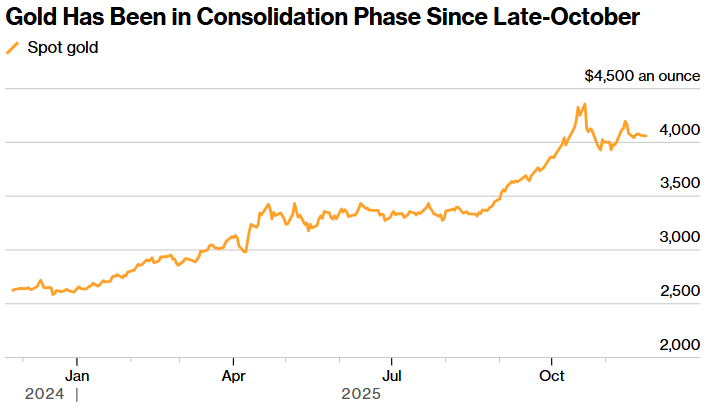
Core Viewpoint - Gold prices experienced a brief rebound to $4,100 but ultimately settled around $4,050, influenced by a slight strengthening of the dollar and a mild increase in the metals sector [2] Group 1: Market Dynamics - The market is currently focused on the Federal Reserve's potential interest rate cuts, with a 60% probability of a 25 basis point cut next month indicated by futures markets [2] - Recent comments from New York Fed President Williams suggested signs of cooling in the labor market, which provided a temporary boost to gold prices [2] - Economic data releases, including retail sales, producer price index, and unemployment claims, are anticipated to provide clearer insights into the macroeconomic environment [2] Group 2: Gold Price Trends - Since reaching a historical high of $4,380 per ounce in late October, gold has entered a consolidation phase, maintaining an overall increase of approximately 55% year-to-date [2] - Ongoing trade uncertainties, geopolitical tensions, and concerns over fiscal conditions in certain countries continue to support safe-haven demand for gold [2] - In the short term, gold prices are expected to remain range-bound, driven by macroeconomic expectations as investors await new economic data [2]

黄金、比特币大震荡:传统投资逻辑不灵了?|财经早察
2 1 Shi Ji Jing Ji Bao Dao· 2025-11-20 02:40
Group 1 - The core viewpoint of the article discusses the recent volatility in Bitcoin and gold prices, highlighting a simultaneous decline in both risk and safe-haven assets, which is considered an unusual phenomenon in traditional investment logic [1][4]. - Bitcoin experienced a significant drop, falling below $90,000 for the first time in seven months after reaching a peak of over $126,000 on October 6, driven by macroeconomic expectations and policy effects [1][2]. - The divergence in the Federal Reserve's stance on interest rate cuts has led to market uncertainty, causing a tightening of liquidity that adversely affects high-risk assets like Bitcoin [2][4]. Group 2 - The anticipated favorable regulatory environment for cryptocurrencies has not materialized, leading to a decline in market sentiment and a subsequent sell-off of Bitcoin as investors reduce leverage [3][4]. - Gold's decline, despite being a traditional safe-haven asset, indicates a stronger force at play—specifically, the tightening of dollar liquidity, which has led investors to liquidate various assets indiscriminately [4][5]. - The recent sell-off in both Bitcoin and gold reflects a broader liquidity crisis in the U.S. market, where investors are forced to sell even relatively stable assets to cover margin calls [5].
黄金、比特币大震荡:传统投资逻辑不灵了?
2 1 Shi Ji Jing Ji Bao Dao· 2025-11-20 02:33
Group 1 - Bitcoin experienced a significant drop, falling below $90,000 for the first time in seven months after reaching a record high of over $126,000 on October 6 [1][2] - The decline in Bitcoin's price is attributed to changing macroeconomic expectations, particularly regarding the Federal Reserve's interest rate decisions, which have led to increased market uncertainty [2][3] - Institutional investors are reducing leverage and selling off high-risk assets like Bitcoin in response to rising funding costs, creating initial selling pressure [2][3] Group 2 - The anticipated favorable regulatory environment for cryptocurrencies has not materialized, leading to a loss of bullish sentiment in the market [3] - The simultaneous decline of gold, traditionally viewed as a safe-haven asset, is unusual and indicates a broader liquidity crisis in the market [4] - The strengthening of the US dollar and systemic tightening of liquidity have forced investors to liquidate various assets, including gold, to secure cash [4]
风险资产与避险资产齐跌 比特币与黄金共同拉响流动性警报
2 1 Shi Ji Jing Ji Bao Dao· 2025-11-17 14:50
Core Viewpoint - Bitcoin has experienced significant volatility, reaching a peak of $126,251 on October 6, only to drop below $94,000 by November 17, erasing all gains for the year due to tightening dollar liquidity and changing market conditions [1][2][3] Market Dynamics - The recent decline in Bitcoin's price is attributed to a combination of macro liquidity tightening, decreased market risk appetite, and cyclical factors within the cryptocurrency industry [2][3] - The uncertainty surrounding U.S. fiscal and monetary policy has led to a cautious trading environment, affecting both risk and safe-haven assets [3][9] - Bitcoin's price drop has coincided with a decline in traditional safe-haven assets like gold, indicating a broader market liquidity crisis [1][9] Institutional Involvement - Institutional investors have been a key support for Bitcoin's price, but recent outflows have raised concerns about market stability [6][7] - The recent tightening of macro liquidity and increased political and policy uncertainties have prompted some institutions to withdraw from the market, contributing to Bitcoin's price decline [6][7] Future Outlook - Despite the current volatility, the long-term fundamentals for Bitcoin remain intact, supported by global asset diversification trends and increasing institutional participation [6][7] - The narrative of Bitcoin as a hedge against inflation and currency devaluation still holds potential, but it requires a shift from a speculative tool to a value storage asset [7][8] - The need for a more robust regulatory framework and technological trust is critical for Bitcoin's future acceptance as a mainstream asset [7][8] Correlation with Other Assets - The simultaneous decline of risk assets like Bitcoin and safe-haven assets like gold suggests a systemic liquidity issue, where investors are forced to liquidate assets for cash [9][10][11] - The current market environment indicates that various asset prices are increasingly correlated, reflecting a deeper liquidity pressure test [11]
比特币24小时跌至9.3万美元,回吐年内全部涨幅
Di Yi Cai Jing· 2025-11-17 14:06
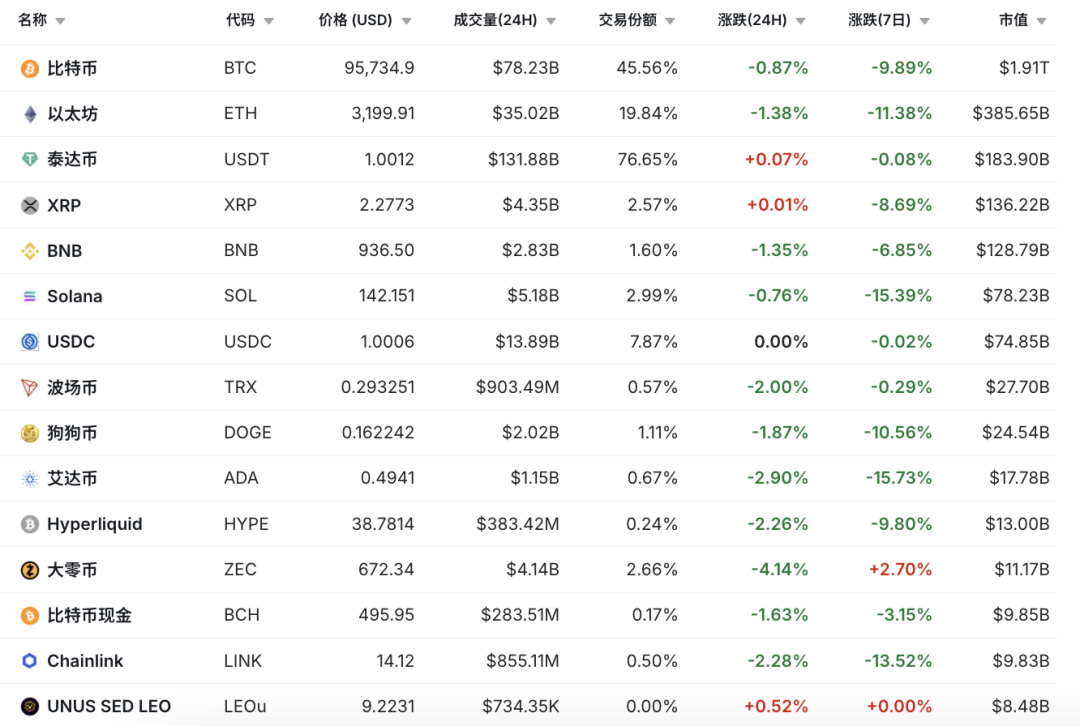
Core Viewpoint - The cryptocurrency market, particularly Bitcoin, is experiencing significant downward pressure, erasing gains made earlier in the year due to a combination of macroeconomic expectations, liquidity issues, and trading sentiment [1][5][8]. Market Performance - Bitcoin's price fell to a low of $93,714, marking a nearly 2% decline in 24 hours and erasing all gains for the year [1]. - As of the latest report, Bitcoin rebounded slightly to $95,734.9, while Ethereum was priced at $3,199.91 [2][3]. - Major cryptocurrencies, including Ethereum, have seen significant declines, with Ethereum's 7-day drop reaching 11.38% [3][4]. Market Dynamics - The decline is attributed to multiple pressures, including fluctuating macroeconomic expectations regarding the Federal Reserve's policies and a tightening liquidity environment [5][6]. - Institutional investors have been redeeming their holdings, leading to a net outflow from Bitcoin spot ETFs since September [5]. - High leverage levels in the market have made it more susceptible to liquidity shocks, with over 230,000 accounts liquidated in a recent 24-hour period, totaling over $1 billion [7]. Investor Sentiment - There is a noticeable decrease in risk appetite among investors, influenced by recent losses in the market and a cautious trading environment [8]. - Historical patterns of Bitcoin's price volatility are causing some investors to preemptively reduce their positions to lock in profits [7][8]. Long-term Outlook - Despite short-term volatility, the long-term narrative for Bitcoin as a hedge against inflation and geopolitical risks remains intact, but it requires time to mature as an asset class [9]. - Key variables influencing future market direction include the development of ETF channels, clarity in global regulatory environments, and sustained demand in on-chain finance and cross-border payments [9]. - Analysts suggest that while recent declines may correct excessive risk-taking and valuation discrepancies, the structural vulnerabilities of the cryptocurrency market compared to traditional financial assets still pose significant risks [9].