经济复苏

Search documents
金融期货早班车-20260209
Zhao Shang Qi Huo· 2026-02-09 01:32
金融期货早班车 招商期货有限公司 金融研究 2026年2月9日 星期一 市场表现:2 月 6 日,A 股四大股指下跌,其中上证指数下跌 0.25%,报收 4065.58 点;深成指下跌 0.33%,报收 13906.73 点;创业板指下跌 0.73%,报收 3236.46 点;科创 50 指数下跌 0.71%,报 收 1422.41 点。市场成交 21,635 亿元,较前日减少 308 亿元。行业板块方面,石油石化(+2.55%), 基础化工(+2.05%),电力设备(+1.27%)涨幅居前;食品饮料(-1.86%),国防军工(-1.66%),社会服务 (-1.37%)跌幅居前。从市场强弱看,IC>IM>IF>IH,个股涨/平/跌数分别为 2,748/180/2,545。沪深两 市,机构、主力、大户、散户全天资金分别净流入 4、-190、-104、289 亿元,分别变动+319、+75、 -231、-163 亿元。 股指期货 基差:IM、IC、IF、IH 次月合约基差分别为 60.77、29.01、6 与 1.66 点,基差年化收益率分别为-7.55%、 -3.56%、-1.29%与-0.55%,三年期历史分 ...
天风证券:建议投资主线降维为三个方向
Jin Rong Jie· 2026-02-09 00:37
天风证券表示,根据经济复苏与市场流动性,可以把投资主线降维为三个方向:1、AI产业革命带来的 算力、存力、 电力及应用的科技主线机会,2、内外共振,经济逐步修复,牛市主线风格"强者恒强", 但周期后半段易有所表现,3、赔率思维,即考虑风格轮动、底部反转的可能性。连续三年跑输但第四 年跑赢概率较大的行业有 食品饮料、农林牧渔、社会服务、 医药生物。AI产业趋势的进展取决于 AI应 用端和消费端的突破,重视AI巨头的布局。牛市初期资金更偏好少数高景气赛道,后期资金抱团聚焦 主线,新增资金获利难度提升,而周期股又具备低估值、高贝塔的属性,易随着基本面回暖的深化而发 挥较好的业绩弹性,获得增量资金青睐。 ...

政界存在重重分歧,外交引发多国警惕,众议院选举难解日本窘境
Huan Qiu Shi Bao· 2026-02-08 22:37
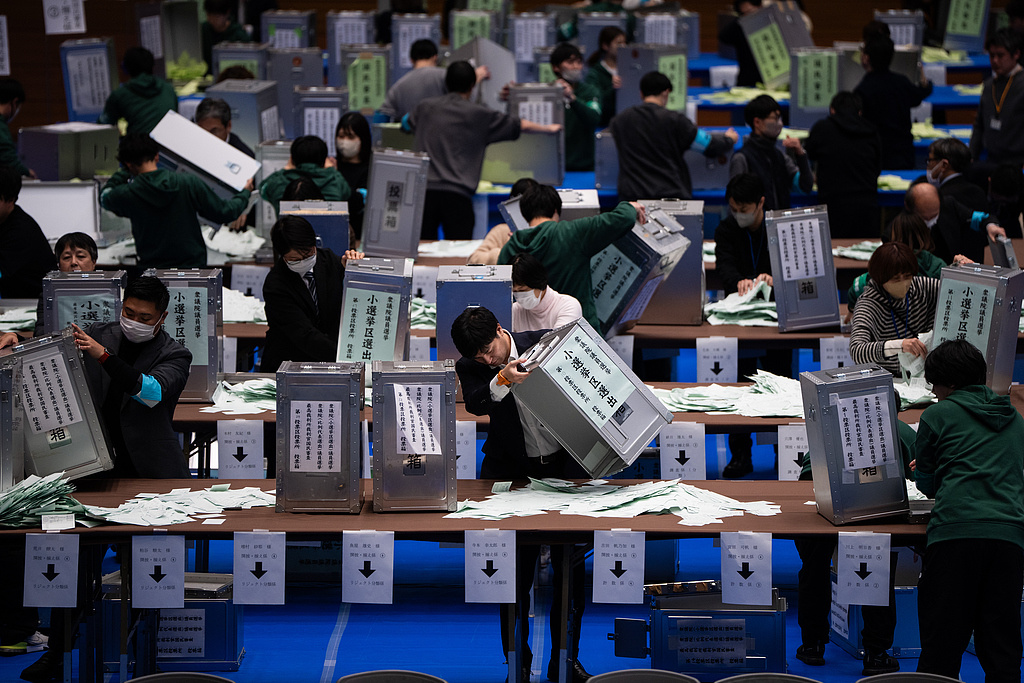
卡塔尔半岛电视台称,在投票前夕,生活成本问题仍是选民普遍关注的焦点。受访选民表示,食品、能源和日用品价格持续上涨,而工资增长幅 度有限,家庭支出压力明显增加,"米饭出现在餐桌上的次数比以前少了"。民众对政府提出的短期减税和刺激消费方案持审慎态度,认为相关措 施在缓解通胀方面的实际效果仍有待观察。 美媒称,高市试图凭借当前的支持率和个人政治影响力,在政策推进前重塑国会格局,此举被认为具有明显的政治冒险色彩。此次选举在一定程 度上带有通过选举巩固执政基础、争取更大政策回旋余地的考量,但其政治风险与社会成本同样不容忽视。 《朝日新闻》称,由日本在野党立宪民主党与公明党组建的"中道改革联合"的形成,反映出日本政界对未来政治运行模式及政策走向的分歧,尤 其是在宪法、安全保障、财政和外交等领域,社会讨论明显升温。中道改革联合共同代表野田佳彦对选举表达了批评态度称,频繁举行选举可能 对财政规划、预算制定和政策连续性造成影响,应更谨慎行使解散权。 【环球时报驻日本特派记者 刘文璋】日本第51届众议院选举投票与计票工作于8日举行。本次选举围绕众议院465个议席展开角逐。日本广播协会 8日晚公布的出口民调结果显示,在当天举行的日 ...

转债周策略20260208:当前市场环境下的转债投资思路
Guolian Minsheng Securities· 2026-02-08 05:59
Group 1 - The current stock market is in a high volatility phase, while convertible bond valuations are at historically high levels. The proportion of convertible bond holdings by public funds has increased, indicating a shift in asset allocation towards convertible bonds and other equity assets due to high expectations in the stock market and a scarcity of assets in the bond market [1][12] - The medium to long-term outlook suggests that economic recovery and industrial structural upgrades will continue, with the stock market expected to maintain a trend of oscillating upward in 2026. Convertible bond valuations are supported by allocation demand, although the potential for further increases is limited [1][12] Group 2 - The investment strategy for convertible bonds should adopt a "winning probability" mindset, recognizing that different industries will experience varying degrees of prosperity. Public funds possess strong fundamental research capabilities, allowing them to actively price convertible bonds linked to improving fundamentals. High premium rates on some convertible bonds may still yield strong excess returns if the underlying stocks are in high-growth sectors [2][13] - Caution is advised regarding specific types of convertible bonds with excessively high premium rates, particularly those with less than six months remaining until maturity and those that may trigger early redemption clauses. These bonds face risks of rapid premium compression due to their contractual limitations [2][13] Group 3 - The weekly performance of the convertible bond index showed a slight increase of 0.05%, with certain sectors like food and beverage, beauty care, and electric equipment performing well. The median price of convertible bonds across various parity ranges has risen, indicating that valuations remain at relatively high historical levels [3][17] - The influx of incremental capital into the market is expected to continue, with a likely "spring excitement" rally at the beginning of the year, focusing on technology and high-end manufacturing investment opportunities. The chemical sector is anticipated to see improvements in demand, with well-structured supply and demand dynamics in certain sub-sectors expected to perform well [3][17] Group 4 - Suggested focus areas for convertible bonds include: (1) the rising demand for overseas computing power and the acceleration of AI industrialization driven by domestic model iterations, with recommendations for bonds from companies like Ruike and Qizhong; (2) high-end manufacturing is expected to remain strong, with recommendations for bonds from companies like Yake, Daimei, Huachen, Yubang, and Tairui; (3) the "anti-involution" trend may optimize supply and demand patterns in certain industries, with a recommendation for bonds from Youfa [4][18]
美股:悄然发生变化的主线
Guolian Minsheng Securities· 2026-02-07 01:37
Market Performance - The U.S. stock market has shown unexpected performance this year, lagging behind major global markets[4] - The Russell 2000 index, representing small-cap stocks, has increased by 5.8% year-to-date, significantly outperforming the S&P 500 (0.5%) and NASDAQ (-1.4%)[4] Historical Context - Over the past decade, small-cap stocks have consistently underperformed large-cap stocks, with the last significant outperformance occurring in the early 2000s after the tech bubble burst[4] - The current underperformance of small-cap stocks relative to large-cap stocks is comparable to the peak of the tech bubble in 1999[4] Economic Indicators - Small-cap outperformance typically occurs during interest rate cut cycles, which are associated with economic recovery and moderate inflation[4] - The current economic environment is characterized by a unique divergence, with strong performance in the AI sector and ongoing struggles in traditional industries[4] Future Outlook - 2026 may mark a turning point for small-cap stocks due to anticipated changes in economic policy and a decrease in inflation concerns[4] - The performance of large tech companies is under scrutiny regarding the sustainability of AI investments, which could benefit small-cap stocks[4] Sector Analysis - The Russell 2000 index is more balanced across sectors, with healthcare (18.75%), industrials/materials (18.08%), and financials (17.23%) leading, compared to the tech-heavy Russell 1000[4][19] - The best-performing small-cap stocks are concentrated in innovative pharmaceuticals, minerals, and energy sectors, aligning with current U.S. policies focused on supply chain security[5] Political Implications - The upcoming midterm elections may favor small-cap stocks as the administration's policies could lead to resource redistribution benefiting smaller companies[5] - Potential risks include increased tariffs or military actions that could destabilize markets and impact small-cap performance negatively[5]
金融期货早班车-20260206
Zhao Shang Qi Huo· 2026-02-06 03:31
金融研究 2026年2月6日 星期五 金融期货早班车 招商期货有限公司 市场表现:2 月 5 日,A 股四大股指下跌,其中上证指数下跌 0.64%,报收 4075.92 点;深成指下跌 1.44%,报收 13952.71 点;创业板指下跌 1.55%,报收 3260.28 点;科创 50 指数下跌 1.44%,报 收 1432.52 点。市场成交 21,943 亿元,较前日减少 3,090 亿元。行业板块方面,美容护理(+3.21%), 银行(+1.57%),食品饮料(+1.31%)涨幅居前;有色金属(-4.57%),电力设备(-3.41%),通信(-2.39%) 跌幅居前。从市场强弱看,IH>IF>IM>IC,个股涨/平/跌数分别为 1,616/142/3,715。沪深两市,机构、 主力、大户、散户全天资金分别净流入-314、-265、127、452 亿元,分别变动+12、0、-58、+46 亿元。 股指期货 基差:IM、IC、IF、IH 次月合约基差分别为 28.28、25.91、5.22 与-2.39 点,基差年化收益率分别 为-3.37%、-3.06%、-1.07%与 0.75%,三年期历史分位数分别 ...
2026年2月人民币汇率走势深度解读:把握波动逻辑,掘金市场机遇
Sou Hu Cai Jing· 2026-02-05 12:28
Core Viewpoint - The RMB exchange rate has become a focal point in the financial market amid significant global economic adjustments and geopolitical tensions in early 2026, with the offshore RMB/USD rate breaking the key 6.95 level, indicating strong market expectations for RMB appreciation [1][2]. Summary by Sections 1. RMB Exchange Rate Trends in February 2026 - The overall trend of the RMB against the USD in February 2026 is characterized by strong fluctuations within a range, making sustained unilateral movements unlikely [2]. - On February 3, the offshore RMB surged past the 6.95 resistance level, with a daily increase exceeding 350 basis points, reaching a high of 6.93, igniting market expectations for RMB appreciation [2][3]. - The core drivers supporting the RMB's strength include steady domestic economic recovery and resilient foreign trade, with a trade surplus of $1.2 trillion in 2025 providing solid fundamental support [2][3]. 2. Factors Limiting RMB Appreciation - The short-term stabilization of the USD index and hawkish signals from the new Federal Reserve chair candidate have dampened expectations for aggressive monetary easing, indirectly limiting RMB appreciation [3]. - The lack of a sustained favorable interest rate differential between China and the US and potential geopolitical risks could also exert short-term pressure on the RMB [3]. 3. Core Volatility Range and Institutional Divergence - Financial institutions have differing forecasts for the RMB exchange rate, with a consensus range of 6.90-7.05. Goldman Sachs predicts a more optimistic outlook, suggesting the RMB could reach 6.85 or even below 6.80, driven by expectations of a weaker USD index and continued inflows into RMB assets [4][5]. - Domestic brokerages like CITIC Securities are more cautious, suggesting a range of 6.92-7.05, emphasizing the need for stable exchange rate policies to avoid rapid appreciation that could impact export enterprises [5]. 4. Internal and External Factors Driving Exchange Rate Logic - Internal factors such as trade surplus and economic recovery are crucial for RMB stability, with the trade surplus of $1.2 trillion in 2025 providing a safety net [7]. - External variables, particularly the USD index, play a significant role in short-term fluctuations, with recent hawkish signals from the Federal Reserve limiting RMB appreciation potential [8]. 5. Divergence in Predictions Between Foreign and Domestic Institutions - Foreign investment banks like Goldman Sachs focus on external factors, predicting RMB appreciation due to a weaker USD and global capital inflows, while domestic brokerages emphasize internal economic balance and the potential risks of rapid RMB appreciation [11]. 6. Strategies for Individuals and Enterprises - For individual investors, the strategy should focus on avoiding speculation and adapting to the exchange rate fluctuations, such as gradually exchanging currency when the RMB approaches 6.90 [13]. - Export and import enterprises should utilize hedging tools and diversify settlement currencies to mitigate risks associated with exchange rate volatility [15].
金融期货早班车-20260205
Zhao Shang Qi Huo· 2026-02-05 01:18
(一) 股指期现货市场表现 表 1:股指期现货市场表现 金融期货早班车 招商期货有限公司 金融研究 | | 市场表现:2 月 日,A 股四大股指涨跌不一,其中上证指数上涨 0.85%,报收 4 4102.2 | 点;深成指 | | --- | --- | --- | | | 上涨 0.21%,报收 14156.27 点;创业板指下跌 0.4%,报收 3311.51 点;科创 50 指数下跌 | 1.2%, | | | 报收 1453.48 点。市场成交 25,033 亿元,较前日减少 624 亿元。行业板块方面,煤炭(+7.58%),建 | | | | 筑材料(+3.48%),房地产(+2.97%)涨幅居前;传媒(-3.12%),通信(-2.73%),计算机(-1.7%)跌幅居 | | | | 前。从市场强弱看,IH>IF>IC>IM,个股涨/平/跌数分别为 3,252/95/2,126。沪深两市,机构、主力、 | | | | 大户、散户全天资金分别净流入-326、-265、186、406 亿元,分别变动-431、-177、+362、+247 | | | 股指期货 | 亿元。 | | | | 基差:IM、IC ...
南非努力巩固强劲复苏势头
Jing Ji Ri Bao· 2026-02-04 22:17
Economic Growth and Recovery - South Africa's economy has shown strong recovery with GDP growth exceeding expectations for four consecutive quarters, improved consumer confidence, and increased capital investment [1] - The unemployment rate is steadily declining, and poverty and inequality have significantly reduced, reflecting the positive impact of collective efforts to rebuild the economy [1] Infrastructure Investment - The Presidential Economic Advisory Council recommends increasing public infrastructure spending and reducing business operating costs to transform recent economic progress into sustainable growth [2] - Key infrastructure sectors such as electricity, logistics, and water are undergoing structural transformation, which is expected to enhance market competition and lower overall economic costs [2][3] Electricity and Logistics Reforms - Reforming the electricity sector is crucial for economic growth, as a competitive electricity market is necessary to lower costs, which is vital for inclusive growth and social development [3] - Enhancing the efficiency of railways, ports, and freight corridors is essential for exports, industrialization, and job creation [3] Government Commitment and Challenges - The South African government has committed to investing over 1 trillion rand in public infrastructure projects over the next three years, signaling strong support for infrastructure investment [3][5] - Despite positive economic indicators, South Africa faces ongoing challenges, including addressing employment pressures, balancing economic rights for black citizens, and combating crime and corruption [5] Global Economic Context - South Africa must continue to drive investment growth and job creation amid global economic uncertainty and rising protectionism, emphasizing the need to strengthen competitiveness and expand market access, particularly in Africa [4] - The recent appreciation of the rand against the dollar indicates resilience in South Africa's trade amidst global trade shifts [5]
FXTRADING 经济数据汇总:欧元区服务业放缓,日本增长结构改善,新西兰就业分化与美联储警惕通胀
Sou Hu Cai Jing· 2026-02-04 16:58
欧元区服务业继续扩张 欧元区1月服务业PMI最终值维持在51以上,显示经济活动仍处于扩张区间,但相比去年年底,节奏已有所放缓。综合PMI同步小幅回落,反映出服务业对 整体增长的支撑仍在。进入年初阶段,企业对新增订单和未来需求的判断明显趋于谨慎,扩张更多依赖存量业务。 从成员国分布看,区域内部的分化仍然存在。西班牙继续保持相对领先的位置,德国和意大利小幅改善,显示核心经济体并未进一步恶化,但法国依然未能 走出收缩区间,对整体景气形成拖累。企业反馈显示,新业务增长乏力、招聘意愿有限,意味着当前修复更多是韧性延续,而非全面复苏。FXTRADING 分析认为,欧元区服务业仍具一定抗压能力,但增长质量偏弱,成本压力与需求不足并存,这使得欧洲央行在政策判断上难以迅速转向宽松。 但与此同时,失业率继续上行,并升至多年高位。劳动参与率的同步上升意味着更多人重新进入就业市场,使得劳动力供给增速快于岗位吸纳能力,从而推 高失业率。工资涨幅维持温和,私营与公共部门薪资均未出现失控迹象,反映劳动力市场紧张程度正在缓解。FXTRADING分析认为,新西兰就业增长仍 具韧性,但边际趋弱迹象清晰,劳动力市场正进入降温通道,这将为后续政策调 ...