
美联储看跌期权

Search documents
美联储降息交易抢跑 新兴市场或迎资金涌入
2 1 Shi Ji Jing Ji Bao Dao· 2025-09-16 12:04
北京时间9月18日凌晨,全球金融市场将迎来本月重磅事件——美联储议息会议决议公布。在近期美国 就业数据疲软、通胀压力缓和的背景下,市场普遍预期美联储此次会议将开启新一轮降息周期,但就降 息幅度仍存意见分歧。 据芝加哥商品交易所(CME)"美联储观察",美联储本次会议降息25个基点的概率高达95.9%,而降息 50个基点的概率仅为4.1%。市场同时预期,到10月份累计降息50个基点的概率达到73.8%,显示出市场 对持续宽松的强烈预期。 但值得注意的是,美国总统特朗普近日连续在社交平台发声,施压美联储应"大幅快速降息",甚至明确 要求幅度应"超出预期",这些言论为该次会议增添了更多政治不确定性。 同时,英国央行、日本央行和加拿大央行等全球主要央行也将在本周陆续公布利率决议,"超级央行 周"的整体决策将共同塑造未来数月全球金融市场的走向。 放眼未来,美联储的决策将对全球金融市场产生怎样的连锁反应?国内股、债、汇等资产价格将如何变 动?全球资产配置格局会否发生重大调整? 25基点还是50基点 在维持关键利率稳定9个月后,市场观点普遍认为,9月美联储降息"板上钉钉"。但围绕降息幅度的争论 却始终激烈:是谨慎的25个基 ...
美元流动性收紧,美股风险积聚
Di Yi Cai Jing· 2025-09-15 12:24
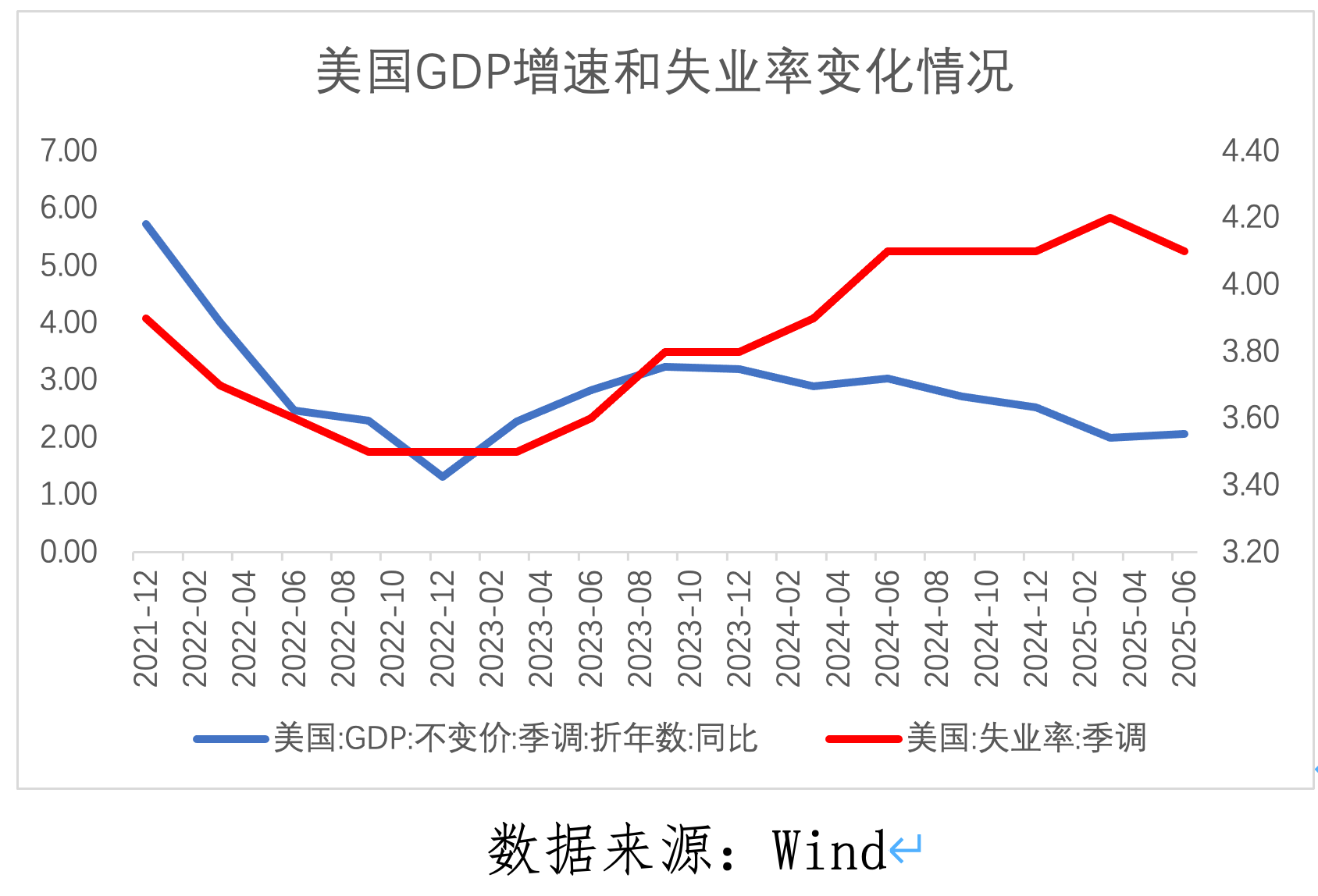
Group 1 - The core viewpoint of the article is that economic downturn and tightening dollar liquidity in the short and medium term may drive down U.S. stocks while increasing the risk of asset performance divergence [1] - The recent rise in U.S. stocks is attributed to the "Trump put" and "Fed put," where market participants expect policy easing in response to economic pressures [2][3] - The strong corporate earnings growth has been a significant foundation for the recent rise in U.S. stocks, with S&P 500 companies' profits growing approximately 12% year-on-year in Q2 2025 [4] Group 2 - U.S. stocks face significant pressure from three main factors: increasing economic downturn risks, high valuation pressures, and concentrated earnings among a few sectors [5][11] - The U.S. economy is showing signs of slowing down, with the unemployment rate rising to 4.3% in August 2025 and non-farm payrolls adding only 22,000 jobs, far below expectations [5][10] - The S&P 500 index's expected P/E ratio is around 22.5, significantly above the historical average of 16.8 since 2000, indicating high valuation concerns [5][11] Group 3 - The relationship between dollar liquidity and U.S. stocks is expected to revert to historical narratives, with tightening liquidity potentially leading to declines in stock prices [12][18] - The current market optimism is based on conflicting expectations of stable corporate earnings and Fed liquidity easing, which cannot coexist [18] - The tightening of dollar liquidity is likely to increase the risk of divergence in asset performance, particularly affecting assets that previously benefited from liquidity [18]

长期美债遭遇严峻挑战,“美联储看跌期权”却不再是万能灵药
Zhi Tong Cai Jing· 2025-09-04 08:51
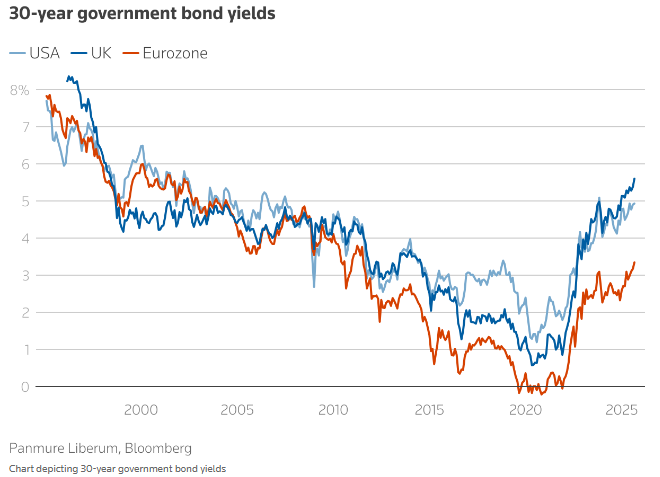
Core Viewpoint - The current anxiety in the U.S. capital markets is primarily due to soaring long-term government borrowing rates, making it difficult to stabilize the stock market, and traditional monetary and fiscal tightening may hinder economic growth and worsen tax revenue issues [1][2] Group 1: Market Conditions - The concept of the "Central Bank Put" has been prevalent among stock investors for decades, referring to the Federal Reserve's actions to stimulate the economy and provide a safety net for the stock market [1] - The expectation that the Federal Reserve will intervene to prevent significant market downturns has historically led to excessive risk-taking, as evidenced before the 2007-2008 financial crisis [1][2] - The current market is signaling caution regarding the debt expansion model, particularly in the performance of long-term government bonds [2] Group 2: Economic Indicators - The U.S. economy is currently growing at over 3%, with ample credit and a very loose financial environment, raising concerns about the potential impact of large-scale monetary easing as requested by the Trump administration [10] - The market anticipates an average inflation rate of 2.5% over the next decade, which could increase risk premiums in the U.S. bond market [10] Group 3: Policy Implications - The rising debt levels are only part of the problem; the real concern is the high inflation rate, which is significantly above target levels, and the perceived political influence on the Federal Reserve's ability to manage inflation [8][10] - A dual approach is suggested to address the current challenges: pressuring the Federal Reserve to lower interest rates while restructuring government debt to rely more on short-term bonds [14] - Even if such measures are successfully implemented, they may not alleviate core market concerns regarding sustainable inflation levels, which could continue to exert upward pressure on long-term government bond yields [14]
格林大华期货早盘提示-20250819
Ge Lin Qi Huo· 2025-08-18 23:30
Report Industry Investment Rating - The global economy in the macro and financial sector is rated as (slightly bullish) [1] Core Viewpoints - The global economy maintains an upward trend, with various countries and regions having positive developments and potential investment opportunities [1] Summary by Related Catalogs Important Information - BofA's chief strategist believes that the Fed may deal with debt through currency devaluation, making shorting the US dollar a core investment theme, and gold, cryptocurrencies, commodities, and emerging markets will be the biggest winners [1] - Michael Burry, the hedge - fund manager and the prototype of the movie "The Big Short", went from short to long on Chinese concept stocks in Q2, buying call options on Alibaba and JD.com [1] - Nomura expects Powell not to give a "clear commitment", BofA expects a hawkish stance, and Morgan Stanley expects Powell to emphasize inflation risks and resist market expectations of interest - rate cuts [1] - The Hong Kong stock market, as the world's largest RMB offshore market, has comprehensive and long - term allocation value [1] - Some public - fund professionals say this year is the "commercialization year" of humanoid robots, which will become a global trillion - dollar industry [1] - India's prime minister announced a comprehensive reform plan for the country's GST, simplifying four tax brackets to two to boost the economy [1] - Japan's Financial Services Agency will approve the country's first issuance of the yen - denominated stablecoin JPYC this month [1] - JPMorgan believes that although the "Fed put" can buffer temporary economic weakness, investors should not underestimate the tail effects of macro risks [1] Global Economic Logic - China strengthens the domestic cycle, provides loan interest subsidies, and its exports in July increased by 7.2%. Sino - US reciprocal tariffs are extended by 90 days. The US may restart interest - rate cuts in September [1] - China's comprehensive rectification of involution - style competition is expected to boost the performance of relevant listed companies. The European Central Bank has cut interest rates 8 times, and Germany's 30% military expansion may drive European economic growth [1] - Goldman Sachs believes that China's humanoid robot industry is iterating products at an amazing speed [1]
美股的平静或是“波动的先兆”,摩根大通:保持警惕
Hua Er Jie Jian Wen· 2025-08-18 03:12
Group 1 - The core viewpoint of the articles highlights the cautious optimism surrounding the Federal Reserve's potential interest rate cuts, which have led to historical highs in the S&P 500 and Nasdaq indices, but warns of limited short-term upside for risk assets [1][2] - Morgan Stanley analysts suggest that while the market is currently in an ideal "Goldilocks" state, investors should remain vigilant about macroeconomic risks that could lead to a market pullback [2][3] - The report anticipates a potential 5-10% correction in the S&P 500, with a target range of 5800-6000 points, should economic weakness signals become pronounced [1][2] Group 2 - Inflation is expected to remain sticky, with recent CPI and PPI data aligning with forecasts, indicating upward pressure on prices due to tariffs [3] - Despite the inflation concerns, Morgan Stanley maintains its prediction of a 25 basis point rate cut by the Federal Reserve in September, driven by risk management considerations amid soft employment data [3] - The report emphasizes that the decision to maintain current policy rates will depend heavily on upcoming inflation and employment data [3] Group 3 - Geopolitical risks have resurfaced, particularly with the upcoming meeting between Russian President Putin and U.S. President Trump, which has increased market optimism regarding a potential ceasefire in Ukraine [4] - However, Morgan Stanley expresses skepticism about the sustainability of any peace agreement, citing unchanged fundamental goals from Russia regarding Ukraine's NATO and EU aspirations [4] Group 4 - Morgan Stanley recommends a cautious cross-asset strategy, advising a reduction in risk assets and a bearish outlook on the U.S. dollar [5] - The firm favors defensive sectors over cyclical ones in the stock market and sees European equities as undervalued compared to U.S. stocks [5] - In the fixed income space, emerging market rates are viewed as more attractive, particularly in Brazil and Mexico, while the firm suggests shorting copper as part of a hedging strategy [5]

美国人迷上了用401(k)账户炒股
财联社· 2025-08-15 03:08
Core Insights - There is a record proportion of stocks in 401(k) accounts across almost all age groups of American workers, driven by a prolonged market uptrend [1][6] - The average stock allocation in 401(k) accounts for those in their 30s reached 88% last year, up from 82% a decade ago, while for those in their 60s, it increased to 60% from 57% [1][3] - Target date funds are also seeing increased stock allocations, with the average stock allocation for new entrants reaching 92% by the end of 2024, compared to 85% in 2014 [6] Group 1 - The trend of increasing stock investments in 401(k) accounts is evident, with many investors opting for higher stock exposure due to attractive market returns [1][6] - Investors are currently favoring stocks over bonds or cash, as evidenced by the S&P 500 index's nearly 10% increase this year [1][6] - Some investors, like Eric Evans, have gone "ALL IN" on stocks, with 100% of their investments in equities, reflecting a growing risk tolerance among market participants [7][10] Group 2 - Despite concerns about high valuations based on price-to-earnings ratios, many investors remain committed to their stock holdings [8][9] - Historical trends show that Americans have increasingly relied on the stock market for retirement savings since the introduction of 401(k) plans in 1978 [9] - The belief in market recovery, supported by past interventions from the Federal Reserve or Congress, contributes to investor confidence in stock investments [9][10] Group 3 - Target date funds are shifting towards higher stock allocations, with the average stock allocation for those within five years of retirement reaching 55% in June, up from 50% in 2020 [11] - The rise of target date funds has encouraged younger investors to enter the market, often without actively choosing their stock exposure [11][12] - Asset management firms are increasingly adopting higher stock allocation strategies in target date funds to mitigate the risk of running out of funds in retirement [12][13]

高盛:市场或将步入流动性驱动周期
Jin Shi Shu Ju· 2025-06-30 07:15
Group 1 - The market is undergoing a transformation phase, driven by deep changes in macroeconomic functions, with the Federal Reserve acting as a "shock absorber" despite persistent inflation data [1] - Goldman Sachs predicts that the upcoming non-farm payroll data will be a key catalyst, forecasting an addition of 85,000 jobs, below the market expectation of 113,000 [1] - Market liquidity is becoming the dominant force, replacing fundamentals, indicating that the market has become a policy tool [1] Group 2 - Institutional clients are cautious about chasing U.S. stocks due to weak corporate earnings outlook, the disappearance of "put options" from the Federal Reserve, and turmoil in the bond market [2] - The U.S. may enter a liquidity-driven cycle, while Europe relies on fiscal stimulus, with a preference for excess liquidity over government balance sheets [2] - In sector selection, cyclical industries in the U.S. (industrial, materials) are favored over bank stocks, which need a steepening yield curve and real growth to benefit [2] Group 3 - Stocks are fundamentally inflation assets, with a preference for the S&P 500 index to rise alongside U.S. Treasury yields [3] - The correlation between stocks and Treasury yields suggests a low acceptance of the "new cycle" narrative, with most trades linked to yield expansion and stock declines [3] - Macro factors have returned, leading to increased volatility, but asset prices may not move in a single direction, with a baseline scenario of rising Treasury yields and stock prices [3]

中央银行独立性的黄昏:政治压力与市场的预先定价
Sou Hu Cai Jing· 2025-06-29 03:38
Group 1 - The financial market dynamics, particularly the U.S. Treasury futures, indicate a shift in pricing logic that now heavily considers political factors, especially the leadership changes within the Federal Reserve [1][2] - Traders are pricing in a significant interest rate cut by the end of 2026, driven not by economic downturn risks but by increasing political pressure on the current Fed Chair, Powell [2][3] - The sensitivity of the market to political signals is high, with Fed members' dovish comments interpreted as signals rather than economic model-based judgments, reflecting skepticism about the Fed's independence [3][4] Group 2 - The trend of central bank independence being eroded is not unique to the U.S. but is a global phenomenon, with various central banks facing similar challenges [4][5] - There is a gradual shift of monetary policy towards fiscal dominance, where central banks are increasingly adapting to government fiscal agendas and political goals, potentially conflicting with their traditional roles [5][6] - This transition brings new opportunities and risks for financial markets, as expectations of future easing drive specific asset classes while increasing the unpredictability of policy decisions [6][7] Group 3 - The need for markets to interpret political signals is emphasized, as these signals may become more significant than economic data, raising questions about the effectiveness of monetary policy in responding to economic shocks [7][8] - The independence of central banks has been a cornerstone for controlling inflation and maintaining financial stability, and any erosion of this independence could have profound consequences for economic direction and stability [8]
【UNFX课堂】关税不确定下的市场狂欢:政策预期与现实的博弈
Sou Hu Cai Jing· 2025-06-27 07:04
Group 1 - The global financial market is experiencing an optimistic wave driven by policy expectations, particularly regarding the unclear "trade understanding" between the US and China and strong bets on an imminent rate cut by the Federal Reserve [1][2] - The recent statement by US Commerce Secretary Howard Lutnick, confirming a formal agreement including rare earth transportation, is seen as a positive signal for easing trade tensions, although the specifics of the agreement remain highly opaque [2] - The upcoming deadline of July 9 for the US to implement reciprocal tariffs on other trade partners adds a layer of risk, particularly for countries like India, Japan, and the EU that have not yet reached agreements [2] Group 2 - The Federal Reserve's monetary policy expectations are a significant pillar supporting current market sentiment, with recent economic data indicating a slowdown, thereby increasing the likelihood of rate cuts [3] - Market speculation around the Fed's potential actions has led to the emergence of the "Fed Put" concept, suggesting that the market believes the Fed will intervene during significant economic slowdowns [3] - Political pressure from the White House is casting a shadow over the Fed's independence, adding uncertainty to future policy decisions, despite assurances from Fed officials that such pressure does not affect their communication [3] Group 3 - Global asset prices have reacted significantly to these macro narratives, with stock markets generally rising, US markets reaching new highs, and a weakening dollar aligning with rate cut expectations [5] - Oil prices have increased, reflecting market optimism regarding economic prospects, while US Treasury yields have declined, particularly at the short end, indicating pricing in of potential Fed rate cuts [5] Group 4 - Japan's economic data presents a mixed picture, with core CPI remaining above the Bank of Japan's target despite a decline, indicating accumulating inflationary pressures, while weak retail sales suggest a need for domestic demand stimulation [6] - The Bank of Japan faces challenges in balancing inflation pressures with economic momentum, with market expectations leaning towards normalization of policy, though the timing remains uncertain [6] Group 5 - The sustainability of the current market optimism largely depends on the actual progress of trade negotiations, the outcome of the July 9 deadline, and key economic data releases from major economies like the US and Japan [7] - The market is currently in a state of exuberance amidst uncertainty, highlighting the need for cautious trading strategies in response to potential unexpected developments [7]
美联储仍处于被动局面 “看跌期权”未到触发时刻
news flash· 2025-05-07 19:16
Core Viewpoint - The Federal Reserve is currently in a passive response mode rather than a proactive one, with no immediate need for action or supporting data to justify any measures [1] Summary by Relevant Categories Federal Reserve Actions - Powell indicated that there is no necessity for the Federal Reserve to take action at this time [1] - The current situation suggests that the Federal Reserve is not in a position to initiate preemptive measures [1] Market Implications - From a market perspective, there is still a considerable distance before the "put option" scenario, where the Federal Reserve would take action to support the market, is triggered [1]