
AI泡沫

Search documents
从小确幸到大牛市
半夏投资· 2025-11-29 05:03
Core Viewpoint - The article discusses the increasing difficulty of asset allocation in a chaotic global environment, highlighting the challenges faced by high-net-worth individuals in securing their wealth and achieving satisfactory returns [2][3]. Domestic Asset Dilemma - Over the past decade, fixed-income assets, particularly non-standard assets, have been crucial for wealthy individuals in China. However, current comprehensive interest rates are at historical lows, and non-standard assets are gradually being phased out [4]. - Real estate, once a primary investment for affluent individuals, now shows an average rental return of 2.3% in the top 20 cities, making it less attractive due to liquidity issues and high transaction costs [4]. Increased Uncertainty Overseas - The trend of investing abroad has been beneficial for high-net-worth individuals in recent years, with investments in USD deposits, US stocks, and real estate in the US and Japan yielding good returns. However, potential returns are now significantly lower, and uncertainty has increased [5][6]. AI Investment Uncertainty - Current AI investments in the US resemble past infrastructure investments in China, appearing beneficial but ultimately unsustainable due to the mismatch between cash flow and debt burdens [7][8]. - Structural uncertainties in AI investments have risen, including questions about technology paths and which service providers will succeed [8]. Economic Outlook - The US economy is expected to slow significantly in the second half of next year, with AI investment being a major support for economic resilience over the past two years. However, signs of layoffs and declining housing prices in Silicon Valley indicate emerging challenges [10]. - The current high valuations and earnings in the US stock market suggest limited future returns, with a likelihood of long-term depreciation of the USD against the RMB [10]. Gold Investment Outlook - The best phase for gold investment appears to be over, with rising uncertainties and potential overvaluation based on historical pricing models [12][14]. - Recent sales of gold by central banks, particularly by Russia, signal a significant change in the market dynamics for gold [18]. Asset Allocation Challenges - The article emphasizes that asset allocation has become more complex, with increasing uncertainties regarding the safety of wealth, especially for Chinese individuals with assets abroad [20]. - The potential for major countries, including the US, to face fiscal issues could further complicate the investment landscape [20]. Investment Opportunities - Despite economic challenges, the A-share and Hong Kong stock markets currently offer some of the highest implied returns globally, with the Shanghai Composite Index trading at a PE ratio of around 13, implying a return of approximately 7% [21]. - The article suggests that even in a weak economic environment, the return on equity (ROE) for core indices may stabilize, providing a foundation for future growth [23][25]. Examples of Resilience - The article highlights examples of leading companies in struggling industries, such as construction materials and real estate, that have managed to maintain profitability and even grow amidst broader market challenges [26][33]. Future Market Outlook - The potential for a significant bull market is discussed, driven by the return of wealth from overseas and the reallocation of global capital towards Chinese assets as the domestic economy stabilizes [39][43]. - Historical patterns suggest that a low-interest environment combined with a lack of investment opportunities in other major markets could lead to a new bubble in Chinese assets [44][46].


中金研究 | 本周精选:宏观、策略
中金点睛· 2025-11-29 01:07
Group 1: Strategy - The international monetary system exhibits a stable "center-periphery" structure, where dominant currencies have changed over time, but the underlying order remains consistent. This order is rooted in trust and the "high-order belief" in sovereign currencies, which are supported by national credit and legal tender, creating liquidity premiums and network effects, thus exhibiting natural monopoly characteristics [6]. - The formation of central currencies relies on economic, financial, and institutional advantages, maintained through positive feedback loops. However, when debt expansion exceeds fiscal and institutional constraints, emerging countries may seize the opportunity to rise as old centers decline. Currently, the foundation of the dollar system is weakening, and global economic diversification is accelerating. If the RMB can leverage institutional reforms and market openness, it may enhance asset depth and international trust, potentially leading to a more balanced multi-center global currency system [6]. Group 2: Macroeconomy - Since 2022, geopolitical factors, "de-dollarization," and the continuous growth of U.S. debt have driven gold prices higher. The demand for gold is primarily influenced by central bank purchases, which have become a significant source of demand in recent years. However, as gold prices rise, some central banks have begun to reduce their gold holdings temporarily, as the ratio of gold to reserve assets exceeds their targets. Overall, there may still be room for an increase in the global allocation of gold by central banks [10]. - The U.S. stock market has experienced a long-term bull market since the 1980s, driven by economic structural transformation and the information technology revolution, which provided substantial expansion opportunities for companies. Stable capital inflows have translated future economic potential into current stock market valuations, resulting in stock market growth rates significantly exceeding economic growth rates [12]. - Japan's economy underwent a structural transformation during the "lost two decades" post-1990, which created investment opportunities despite overall macroeconomic challenges. The structural rise in Japan's stock market reflects this transformation, driven by corporate globalization, high-tech leadership, and improved corporate governance. Excluding the "old economy" sectors heavily exposed to domestic real estate and deflation, the "new economy" sectors have shown strong trends since the 1990s [14].

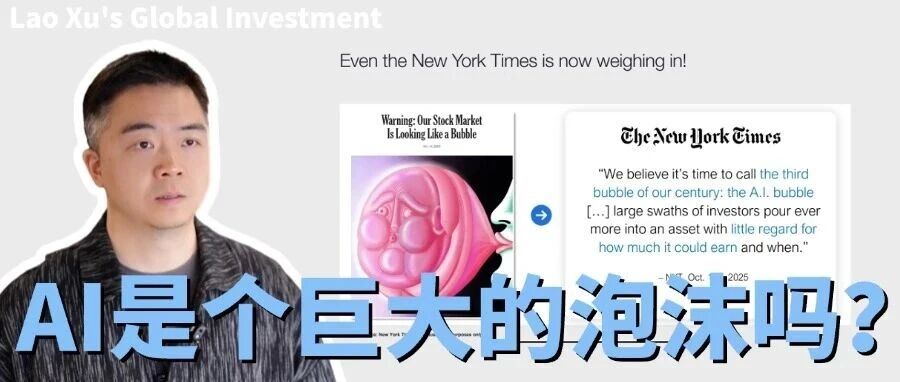
哈佛老徐:AI是一个巨大的泡沫吗?
老徐抓AI趋势· 2025-11-29 01:07
Core Viewpoint - The article aims to clarify the ongoing debate about the "AI bubble," emphasizing that perceptions of a bubble often stem from misunderstanding the underlying supply and demand dynamics in the AI industry [4][5]. Group 1: Supply and Demand Analysis - The first test examines whether GPUs are in surplus, with evidence from NVIDIA's latest earnings report indicating that all GPUs are operating at full capacity and are still in high demand, suggesting no inventory accumulation or production idleness [6][9]. - The article argues that the current situation reflects a structural supply-demand gap rather than a bubble, as evidenced by Elon Musk's decision to build a chip factory due to insufficient chip supply [9][11]. - The conclusion drawn is that when the entire supply chain is operating at full capacity, it indicates a supply-side imbalance rather than a bubble [11]. Group 2: Investment Viability - Concerns about whether investments in AI will yield returns are addressed, highlighting that major tech companies conduct extensive evaluations before making significant capital expenditures, such as Google's $90 billion annual investment in AI [13][15]. - The article posits that the collective decision of major corporations to invest heavily in AI, even at the risk of short-term losses, signals a strong belief in the future commercial value of AI [15][29]. - The consistency in choices made by industry giants indicates that they are prioritizing long-term growth over immediate profits, reinforcing the notion that AI is not a bubble but a critical investment opportunity [15][31]. Group 3: Historical Context and Comparisons - The article contrasts the current AI landscape with the historical internet bubble, noting that the previous issue was overbuilding (e.g., excessive fiber optics), while today's challenge is insufficient infrastructure to meet explosive demand [19][20]. - It emphasizes that the rapid pace of AI development has outstripped many people's expectations, leading to perceptions of irrationality in market valuations [20][25]. - The article clarifies that while there may be bubbles in the early-stage investment market, this does not equate to a broader industry bubble in AI, which is characterized by robust demand and investment [26]. Group 4: Future Implications - The article discusses the potential for AI to enhance human well-being by automating repetitive tasks, allowing individuals to focus on more fulfilling work, countering fears of widespread job loss [32]. - It concludes that the real risk lies in misinterpreting the AI trend as a bubble due to emotional responses rather than analyzing the fundamental supply-demand dynamics and investment behaviors [34].
英伟达暂时让全世界松了一口气
36氪· 2025-11-28 13:35
Core Viewpoint - The article discusses the ongoing debate about the existence of an AI bubble, particularly in light of Nvidia's recent earnings report, which exceeded market expectations and provided a positive outlook for future growth [4][6][20]. Group 1: Nvidia's Financial Performance - Nvidia reported third-quarter revenue of $57 billion, a 62% increase year-over-year, with diluted earnings per share of $1.3, surpassing market expectations [5][20]. - The data center business contributed $51.2 billion in revenue, accounting for nearly 90% of total revenue, and grew by 66% year-over-year [20][21]. - Nvidia provided a bold fourth-quarter revenue guidance of approximately $65 billion, reflecting a year-over-year growth of about 65% [20][21]. Group 2: Market Reactions and Implications - Following the earnings report, Nvidia's stock price surged over 6% in after-hours trading, positively impacting other tech giants like Amazon, Microsoft, and Google [6][20]. - Despite the positive earnings, concerns about the sustainability of AI spending and potential market corrections remain prevalent among analysts [6][12]. Group 3: Strategic Positioning and Collaborations - Nvidia is evolving from a chip supplier to a central player in defining and orchestrating future AI computing power, as evidenced by its significant partnerships with OpenAI and Anthropic [26][27]. - The collaboration with OpenAI involves a $100 billion partnership to deploy Nvidia systems for AI infrastructure, indicating a strong commitment to future AI developments [26][27]. - Nvidia's partnerships with major tech companies are expected to drive substantial capital expenditures, further solidifying its market position [27][29]. Group 4: Industry Context and Challenges - The article highlights the critical role of Nvidia's earnings in assessing the broader AI narrative and its implications for the tech sector, especially amid macroeconomic uncertainties [10][11][12]. - Concerns about high valuations and the potential for a market correction are underscored by significant sell-offs from major investors, including Peter Thiel and Bridgewater Associates [15][16]. - The ongoing debate about whether AI represents a bubble is intensified by macroeconomic factors, including interest rate fluctuations and their impact on corporate financing [10][11][12].
外资集体唱多中国科技股
凤凰网财经· 2025-11-28 12:54
Core Viewpoint - UBS warns of increased global market volatility in the coming year due to underwhelming AI revenue and geopolitical tensions, but remains optimistic about Chinese tech stocks and gold [2][3]. Group 1: AI and Market Sentiment - Prominent investors, including Michael Burry, have raised concerns about an AI bubble, exacerbated by Nvidia's stock price decline [3]. - UBS believes the current AI boom differs from the internet era, as global tech giants have strong cash flows and limited reliance on debt financing, allowing them to better withstand shocks [3]. Group 2: Chinese Tech Stocks - Chinese tech companies are expected to see profit growth of up to 37% next year due to their leading position in AI applications, and UBS asserts that Chinese tech stocks are still undervalued [4]. - UBS sets a target price of 7100 points for the Hang Seng Tech Index by the end of 2026, representing a nearly 27% increase from the recent closing price of 5598 points, with the index having risen nearly 30% this year [5]. Group 3: Broader Market Outlook - UBS anticipates the MSCI China Index could reach 100 points next year, approximately 19% higher than its latest closing price [6]. - High risks are associated with high returns, prompting UBS to encourage investors to diversify their portfolios to seize opportunities [7]. Group 4: Investment Recommendations - UBS recommends allocating at least 5% of investment portfolios to gold, predicting prices could reach $4900 per ounce [8]. - Fidelity International suggests that global fund managers will likely invest more in Asia next year, driven by a weaker dollar and a sustained AI investment cycle [8]. Group 5: Positive Sentiment Towards Chinese Market - Despite ongoing concerns about an AI bubble, several foreign investment banks, including Goldman Sachs, Morgan Stanley, and JPMorgan, have expressed bullish views on the Chinese stock market, particularly in the tech sector [10]. - JPMorgan has upgraded its rating on Chinese stocks to "overweight," indicating a higher likelihood of significant gains next year compared to potential downside risks [10].

美股盘前要点 | 美联储12月降息概率升至86.9%,芝商所因数据中心故障暂停期货交易
Ge Long Hui· 2025-11-28 12:40
2. 感恩节翌日(11月28日),美股将提前3小时收市,即提前于北京时间次日02:00休市。 3. 美国总统特朗普:将永久叫停来自所有第三世界国家的移民。 4. 据CME"美联储观察":美联储12月降息25个基点的概率升至86.9%。 5. 预测平台Polymarket:近四成投资者押注AI泡沫将于2026年底破灭。 6. 英伟达行政总裁黄仁勋周四意外现身台北,自曝"我真的超级累"。 7. "大空头"伯里回应英伟达备忘录:继续持有Palantir和英伟达的看跌期权。 8. 面临最高380亿美元罚款,苹果对印度新修订的反垄断法提起首例司法挑战。 9. 大摩:谷歌每对外销售约50万颗TPU,将推升2027年每股盈利约3%。 10. 台积电嘉义先进封装厂明年起投入量产,未来将扩建多座3D封装厂。 11. 芝加哥商品交易所今日因数据中心故障暂停期货交易。 12. 美国证交会(SEC)调查投行杰富瑞与汽车零部件供应商First Brands破产案的关系。 13. 10月丰田全球销量同比增长3%,达到100万辆,创历史同期最高销量纪录。 14. 李想宣布回归"创业公司管理模式":理想汽车未来十年将押注具身智能。 15. ...
CME期货交易暂停,“黑五”开启购物季
Zhi Tong Cai Jing· 2025-11-28 12:32
Market Updates - CME Group suspended trading due to cooling issues at CyrusOne data center, impacting stock index futures [1][4] - Major ETFs showed pre-market gains: SPY +0.26%, QQQ +0.42%, DIA +0.11% [1] - European indices showed mixed performance: DAX down 0.03%, FTSE 100 up 0.11%, CAC 40 up 0.10%, Euro Stoxx 50 down 0.02% [2][3] Retail Sector Insights - Black Friday marks the start of the holiday shopping season, with NRF predicting 186.9 million shoppers, a record high [5] - Expected sales for November and December to exceed $1 trillion, but growth forecasted to slow to 3.7%-4.2% from last year's 4.8% [5] - Average spending per consumer projected at $890.49 [5] Employment Market Concerns - Goldman Sachs warns of a softening labor market, with WARN claims at the highest level since 2016, indicating rising layoffs [7] - Sectors like technology, industrial products, and food and beverage are driving the increase in layoffs [7] Cryptocurrency Market Developments - The cryptocurrency market's volatility is impacting publicly traded companies holding digital assets, leading to significant stock price declines [8] - At least 15 Bitcoin treasury companies have seen their stock prices fall below net asset value [8] - Standard Chartered predicts accelerated consolidation in the digital asset treasury sector [8] Company-Specific News - Jefferies Group is under investigation by the SEC regarding its disclosures related to First Brands, a bankrupt auto parts supplier [10] - Bawang Tea reported a 75% increase in overseas GMV for Q3, with total GMV reaching 7.93 billion yuan [11] - Apple may face strict regulations under the EU's Digital Markets Act concerning its advertising and mapping services [12]


美股前瞻 | CME期货交易暂停,“黑五”开启购物季
智通财经网· 2025-11-28 12:14
Group 1: Market Overview - CME Group suspended trading due to cooling issues at CyrusOne data center, affecting stock index futures [1] - Major ETFs showed pre-market gains: SPY +0.26%, QQQ +0.42%, DIA +0.11% [1] - European indices showed mixed performance: DAX down 0.03%, FTSE 100 up 0.11%, CAC 40 up 0.10%, Euro Stoxx 50 down 0.02% [2][3] Group 2: Retail Sector Insights - Black Friday marks the start of the holiday shopping season, with NRF predicting 186.9 million shoppers, a record high [4] - Expected sales for November and December to exceed $1 trillion, but growth forecasted to slow to 3.7%-4.2% from last year's 4.8% [4] - Average consumer spending projected at $890.49 [4] Group 3: Employment and Economic Policies - Trump announced strict immigration policies, potentially tightening labor market supply amid weak non-farm employment data [5] - Goldman Sachs warned of a softening labor market, with WARN claims at the highest level since 2016, indicating rising layoffs in various sectors [6] Group 4: Cryptocurrency Market Dynamics - Recent volatility in the cryptocurrency market has negatively impacted publicly traded companies holding Bitcoin, leading to significant stock price declines [7] - At least 15 Bitcoin treasury companies have seen their stock prices fall below net asset value of their tokens [7] - Standard Chartered predicts accelerated consolidation in the digital asset treasury sector [7] Group 5: Corporate Developments - Jefferies Group under investigation by SEC regarding disclosures related to bankrupt First Brands [9] - Bawang Tea reported Q3 results with global GMV of 7.93 billion yuan, net income of 3.208 billion yuan, and a 75.3% increase in overseas GMV [10] - Apple faces potential scrutiny under EU's Digital Markets Act for its advertising and mapping services [11] Group 6: Investment Trends - Bridgewater's recent investment in CoreWeave raises interest despite warnings of an AI bubble [12] - OpenAI is in talks for a $38 billion loan to expand infrastructure, highlighting the competitive landscape in AI [11]

李蓓:建议布局优质龙头企业,静待市场春天的到来
Xin Lang Zheng Quan· 2025-11-28 09:23
专题:2025分析师大会:资本市场"奥斯卡"启幕 炒股就看金麒麟分析师研报,权威,专业,及时,全面,助您挖掘潜力主题机会! 11月28日,2025分析师大会重磅启幕,百位行研首席、公私募掌舵人、权威学者齐聚一堂,共寻穿越周 期的投资真谛。本次盛会汇聚了来自研究界与投资界的顶尖力量。 半夏投资创始人李蓓出席本次大会并发表主题演讲。 李蓓在演讲中回顾了过去一年的资产市场表现,指出当下全球资产配置进入 "乱世",同时也提出 A 股 和港股市场存在 "小确幸",未来更有望迎来全球资本涌入的大牛市。 李蓓表示,过去一年各类资产表现尚可,但当前资产配置难度显著加大,全球呈现 "财富无处安放,安 全难有保障" 的局面。国内方面,非标资产断供、房地产投资租金回报吸引力不足,曾经的基石资产不 再稳固;海外市场中,美国高财政赤字引发美元信用担忧,美股估值与盈利处于高位,AI 领域泡沫争 议渐起,就连此前表现亮眼的黄金,也因央行售金等信号出现不确定性,俄罗斯央行售金更是被视作重 要风险提示。此外,国际资产安全风险加剧,俄罗斯富豪资产冻结、币安创始人受罚等事件,让高净值 人群对海外资产安全产生顾虑。 不过,李蓓认为 A 股和港股大盘 ...

半夏投资创始人李蓓:资产配置遇“乱世”,A股港股现“小确幸”,大牛市可期
Xin Lang Zheng Quan· 2025-11-28 09:12
Core Insights - The 2025 Analyst Conference highlighted the current chaotic state of global asset allocation, with a focus on the potential for a bull market in A-shares and Hong Kong stocks [3][4] - Li Bei, founder of Hanxia Investment, emphasized the challenges in asset allocation due to various global uncertainties, including high fiscal deficits in the US and concerns over asset safety [3][4] Market Performance - The past year saw decent performance across various asset classes, but the difficulty in asset allocation has increased significantly [3][6] - A-shares and Hong Kong stocks are viewed as "small fortunes" with the CSI 300 index currently at a PE ratio of approximately 13 times, implying a 7% return [4][10] - Despite ongoing economic deflation, the core index's ROE has stabilized, indicating resilience in leading companies' profitability [4][10] Sector Analysis - Leading companies in struggling sectors, such as construction and real estate, have begun to see profit recovery, with some construction leaders achieving net profit margins of 6% [4][11] - Real estate firms are gaining improved bargaining power in land acquisition, leading to net profit margins exceeding 10% for new projects [4][11] Future Outlook - There is optimism for a bull market in A-shares and Hong Kong stocks, driven by the potential migration of capital into Chinese assets as domestic economic stability improves [4][12] - The current low risk appetite among Chinese residents, with significant wealth concentrated in fixed income, presents a potential catalyst for future asset reallocation [4][12] - The mismatch between China's manufacturing share and its international reserve status suggests that a recovery in the economy could lead to increased RMB settlement and reserve ratios [4][15]