
量化宽松

Search documents
贵金属:美联储宽松预期的加速释放与白银价格的补涨
Wu Kuang Qi Huo· 2025-04-28 07:29
Report Summary 1. Investment Rating No investment rating for the industry is provided in the report. 2. Core View In the context of the expansion of the US fiscal deficit and the significant impact of the Trump administration's tariff policies on the US dollar's credit, the gold price has been strong. Since the beginning of 2025 (from January 2 to April 25), the price of the COMEX gold main contract has risen by 26.1%, reaching a record high of $3,509.9 per ounce. Meanwhile, the US tariff policies and the Fed's persistently tight monetary policy stance have pressured the silver price, which has significantly underperformed gold. Currently, the gold - silver ratio is at a relatively high level. After the easing of the impact on the Fed's independence, the Fed has signaled a loose monetary policy. Around the Fed's June interest - rate meeting, the silver price may start a catch - up rally [1]. 3. Summary by Directory 3.1 2010 QE2 Monetary Policy Expectations and the Rise of Silver Price to a Record High - After the 2008 subprime mortgage crisis, the significant rise of the silver price was often macro - driven by the "accelerated" release of the Fed's loose monetary policy expectations, with the breakdown of the gold - silver ratio as the starting point on the trading chart. Before the start of the silver rally in early August 2010, the market's main expectation for the Fed's monetary policy was the implementation of the second round of quantitative easing (QE2). The Fed continuously cut interest rates after the September 18, 2007, interest - rate meeting, and the upper bound of the federal funds rate target was lowered from 5.25% to 0.25% after the December 16, 2008, meeting. The Fed's balance sheet expanded from $905.2 billion in early September 2008 to $2,325.3 billion in early August 2010 [4]. - In early June 2010, Fed Chairman Bernanke testified in the House Financial Committee, indicating that the US economic recovery faced significant risks and that the Fed would maintain policy flexibility and take action if necessary. This was his first indication of possible additional loose policies after the end of the first round of quantitative easing. The US dollar index rose from April to June 2010 due to the weak euro after the European debt crisis, reaching a peak on June 7 and then falling 6.02% to 83.15 by the end of August. The 10 - year US Treasury yield fell from 4.01% on April 5, 2010, to 2.58% in mid - August. By the end of August 2010, both the Fed officials' statements and the trends of the US Treasury yield and the US dollar index pointed to further loose monetary policy on the balance - sheet level (the possibility of lowering the policy rate to negative was low). At the Jackson Hole central bank symposium at the end of August 2010, Bernanke confirmed the implementation of QE2 [5]. - After Bernanke's speech at the Jackson Hole meeting, the gold - silver ratio broke down at the end of the triangular convergence, and the COMEX silver price rose after breaking through the convergence. From August 27, 2010, to April 29, 2011, the price of the COMEX silver main contract rose 156% to $48.6 per ounce, reaching a record high of $49.8 per ounce [6]. 3.2 2020 Pandemic Shock and the Concentrated Release of the Fed's Loose Monetary Policy - In March 2020, due to the large - scale community spread of the COVID - 19 in the US, the Fed under Powell's leadership implemented emergency interest - rate cuts. On March 15, 2020, the Fed lowered the interest rate to 0% - 0.25% and restarted quantitative easing, promising to buy at least $700 billion of Treasury bonds and MBS per month. In the May 19, 2020, interest - rate meeting, the Fed maintained the interest rate at 0% - 0.25% and emphasized that the interest rate would remain low for a long time [11]. - The 10 - year US Treasury yield fell from 1.86% on January 9, 2020, to 0.66% on June 30, 2020, due to the safe - haven drive of the pandemic and the Fed's loose stance. The US dollar index, which was strong at the beginning of the pandemic due to safe - haven factors, fell 5.1% from 102.7 on March 20 to 97.4 on June 30. By the end of June 2020, the Fed had implemented loose monetary policies in terms of both interest rates and the balance sheet, which were reflected in the 10 - year US Treasury yield and the US dollar index. In early July 2020, the gold - silver ratio formed a bear flag decline continuation pattern, and the COMEX silver main contract price had recovered from the low level and showed an ascending triangle pattern. In the July 2020 Fed interest - rate meeting, Powell emphasized the severe situation of the US economy and the need for monetary and fiscal policy support. The gold - silver ratio broke down the flag surface in July and reached 72.1 in early August. From June 30 to August 10, 2020, the price of the COMEX silver main contract rose 62% to $29.2 per ounce [12]. 3.3 Current Fed's Monetary Policy Stance Change and the Expected Repetition of the "Script" of Accelerated Loose Expectations - The Trump administration's radical tariff policies have increased the risk of a US economic recession and pushed up inflation. After the new US administration took office, Powell and other Fed officials took a hawkish stance. After the sharp correction of the US stock market on April 17, Powell was still cautious about interest - rate cuts, stating that the Fed would not conduct "market - rescue" operations. Trump criticized the Fed's monetary policy, and there were discussions about "removing Powell." However, at the end of April, Trump changed his attitude, and the US Treasury Secretary explained that Trump's remarks might refer to the end of Powell's term. Subsequently, Fed officials' attitudes changed, indicating that there was room for loose monetary policy in the second half of the year. Fed Governor Waller took a dovish stance, and Cleveland Fed President Harker was more explicit about the possible adjustment time of monetary policy [14][17]. - From February 3 to April 25, 2025, the US dollar index fell 8.8% from 109.2 to 99.6, and the 10 - year US Treasury yield fell from 4.51% to 4.24%. These declines reflected the market's expectation of a US economic recession and the selling of US dollar assets. The CME interest - rate observer shows that the market expects the Fed to cut interest rates by 25 basis points in the June, September, October, and December interest - rate meetings, with the terminal interest - rate range reaching 3.25% - 3.50% at the end of the year [18]. - Currently, the gold - silver ratio is at a high level above 100 and is gradually forming a top pattern. The COMEX silver main contract price has rebounded after the release of the negative impact of tariffs, showing a strong technical pattern. Attention should be paid to Powell's speech. Around the June interest - rate meeting, as the tariff policies have a substantial impact on the US economy, especially the labor market, Powell may gradually express his stance on interest - rate cuts. The breakdown of the gold - silver ratio will be the starting point of the silver rally, and the international silver price is expected to reach a record high [19].
英国预算财政赤字提前“爆表” 贸易战阴云再添变数
智通财经网· 2025-04-23 09:24
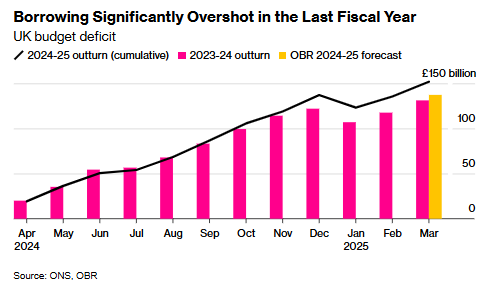
英国国家统计局周三表示,截至3月的财政年度预算赤字为1519亿英镑(2020亿美元),高于预算责任办 公室预测的1373亿英镑,而该预测数字本身已被向上修正过。 智通财经APP获悉,英国政府的借款规模超过了仅在上个月做出的官方预测,这凸显出在美加征关税致 使经济前景黯淡之前,公共财政状况就已十分脆弱。 财政部首席秘书Darren Jones表示:"在不断变化的世界中,经济稳定至关重要。我们绝不能对公共财政 敷衍了事,这就是我们的财政规则不可协商的原因,也是我们17年来首次逐笔审查纳税人资金支出,以 杜绝浪费的原因。" 另一项用于确定财政部债务出售规模的指标在过去财政年度也超出了官方预测。中央政府净现金需求实 际达到1805亿英镑,而非预算责任办公室在3月26日春季声明中预测的1726亿英镑。 然而,债务管理办公室决定通过增发国库券而非国债来填补本财政年度融资计划中49亿英镑的缺口,并 将英国国债的销售目标下调了1亿英镑,至2991亿英镑。这将通过减少长期债券的拍卖和银团承销来实 现,同时增加短期债券的发行量。受债券市场近期波动影响,30年期英国国债收益率大幅下跌,在政策 调整后又下跌了10个基点,至5.27% ...

黄金何时获利了结
信息平权· 2025-04-22 10:41
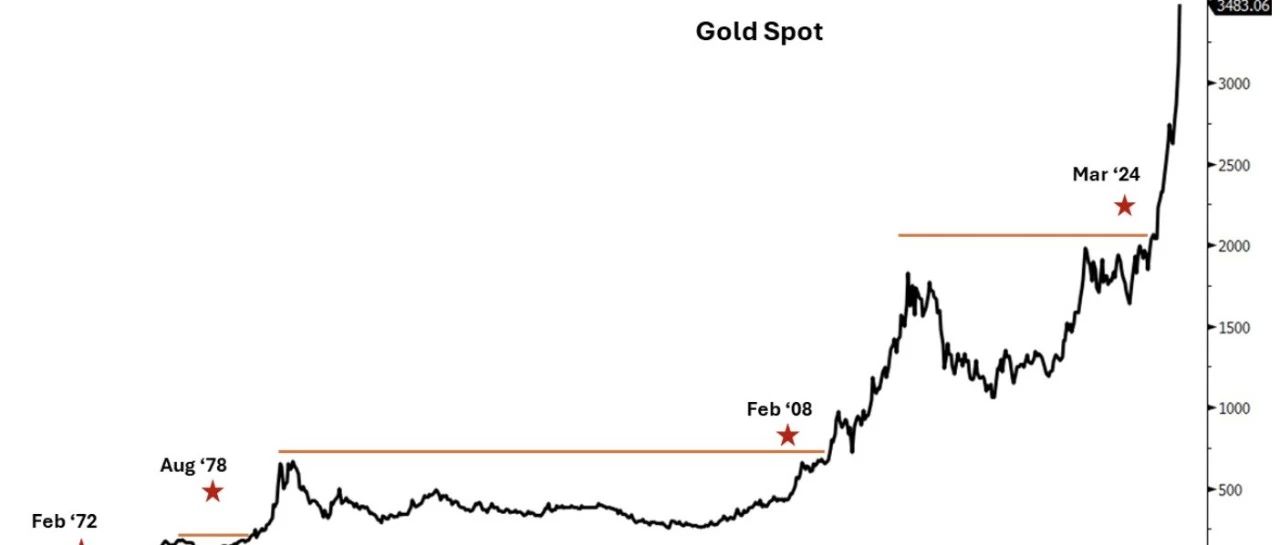
From UBS 黄金最近成为表现最好的资产类别,过去一年上涨了 50%。 现在的关键问题是何时获利了结。 与股票或债券不同,黄金缺乏确定"公允价值"的估值指 标,这一决策很有挑战。有些人会建议 使用实际利率 ,但证明难以应用(下图,已经背离),因为近期黄金价格的波动可能更多受地缘政治因素驱动,而 非投资组合优化 在本文中,我们回顾了历史上的地缘政治事件,以提供黄金走势的判断。以下是一些需要关注的"见顶信号" 黄金一旦突破,通常会在两三年内翻2-4倍……至少达到 4000 美元 当黄金价格在2024年4月突破 2100 美元时,我们在《黄金突破:追还是放弃?》中讨论过, 黄金长时间震荡后一旦突破,涨势通常迅猛且激烈, 历史 上在短时间内曾出现过 2-4 倍的飙升(是的你没看错)。以2-3年长期持有为目标的投资者可以预期价格翻倍,甚至超过4000 美元。 自1971年布雷顿森林体系结束黄金开始自由交易以来,黄金经历了四次重要的突破阶段:1972 年 2 月、1978 年 8 月、2008 年 2 月,以及最近的 2024 年 3 月(下图)。值得注意的是,黄金价格的突破在某种程度上预示了 经济衰退 和 地缘政治 ...
36万亿国债压顶,40天后6万亿到期偿还,特朗普借新还旧或违约?
Sou Hu Cai Jing· 2025-04-21 12:22
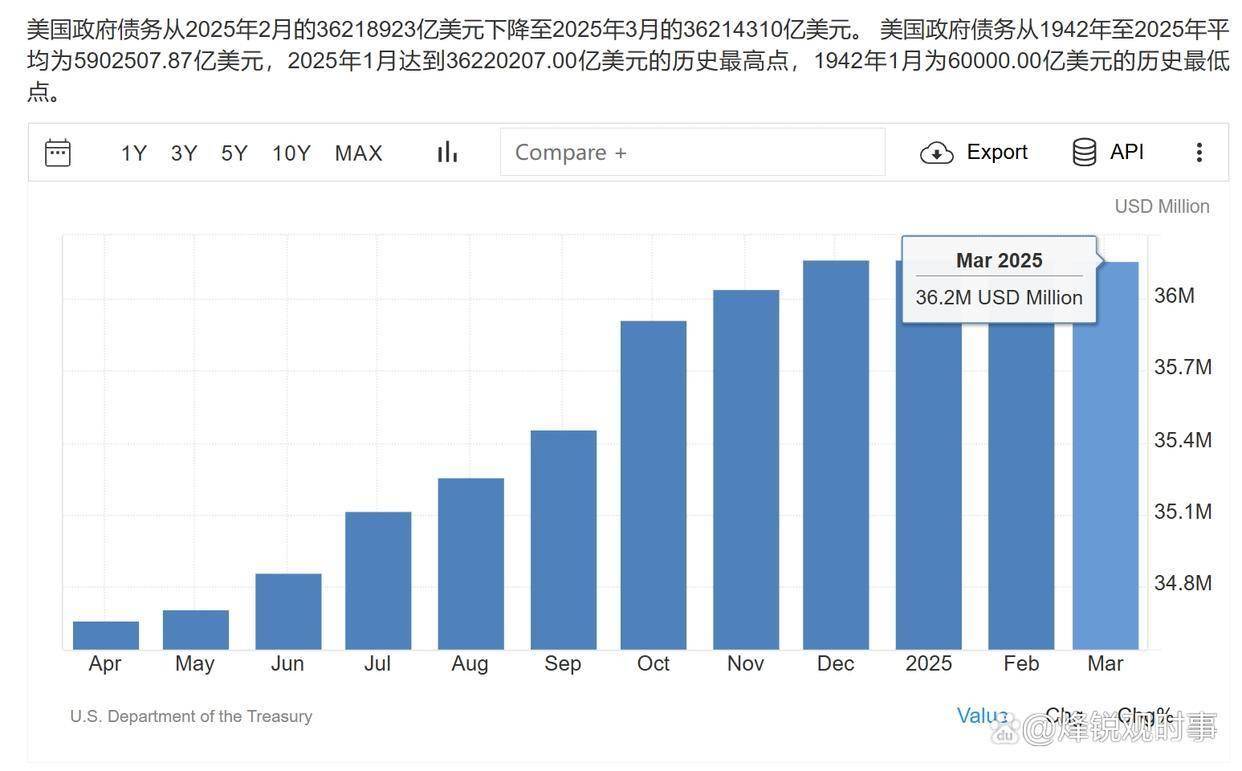
截至 2025 年,美国国债总额已如脱缰野马,突破 36 万亿美元大关。这一数字远超全球 GDP 排名第二的中国 2023 年约 18 万亿美元的 GDP 总量,甚至相 当于德国、日本、印度三国 2023 年 GDP 之和还多。 知道为什么特朗普天天等着中国给他打电话吗? 期望中国对关税妥协只是表层原因,根本原因是因为,美债的游戏快玩不下去了。 2025年是美国最困难的一年,而40天后,也就是6月份,即将是美国最艰难的一个月。 美债规模的惊人膨胀:一颗随时引爆的 "金融炸弹" 当下,美国虽将打压中国视为重要战略,但这并非燃眉之急。真正让特朗普乃至美国政府焦头烂额的,是美债游戏即将难以为继。 一直以来,美国凭借美元霸权在全球范围内肆意侵吞资产,然而,这种行径并非毫无代价。 还不起钱该怎么办? 普通人还不起钱,可能沦为老赖;企业还不起钱,可以宣布破产。但政府既不能像老赖一样逃避责任,也无法像企业那样宣告破产,于是,"借新还旧" 成 了美国政府的无奈之举。 如此庞大的债务规模,不仅需要巨额资金偿还本金,每年产生的利息更是天文数字。以当前 10 年期美债利率 4.3% 计算,仅利息支出每年就高达约 1.55 万 亿美 ...
策略专题报告(深度):房价弱,但股市强的海外案例分析
Xinda Securities· 2025-04-20 09:47
Group 1: US Market Analysis (2009-2011) - The US real estate market bottomed out without significantly affecting economic recovery, which drove a strong stock market [3][9][11] - The stock market's upward momentum was primarily driven by the recovery of personal consumption, manufacturing, and exports [3][17][25] Group 2: Japan Market Analysis (2012-2013) - Japan experienced a slight rebound in real estate, leading to a long bull market driven by government investment and quantitative easing [3][32][33] - The stock market's rise was supported by increased public investment and the Bank of Japan's purchase of risk assets [3][41][51] Group 3: Germany Market Analysis (2022-2023) - Despite a decline in real estate prices and economic recession, the German stock market continued to rise [3][58][62] - The stock market's growth was fueled by corporate globalization and favorable liquidity conditions [3][70][74] Group 4: A-Share Market Outlook - The A-share market may experience a bull market driven by the bottoming out of real estate, along with rebounds in consumption, investment, and liquidity [3][4]

瑞银:美联储量化宽松倒计时
Zhi Tong Cai Jing· 2025-04-12 07:23
2025年4月11日-对现金的急切需求促使各类资产遭到抛售,其中包括美国国债。尽管存在通缩担忧,债券收益率近期却有所上升。 全球金融危机期间: 美联储选择量化宽松政策来支撑国债销售是否只是时间问题?如果美联储宣布量化宽松,这会是股市触底的信号吗?美联储会在实 施量化宽松前将利率降至零吗? 回顾近期量化宽松的历史,可以发现一种常见模式:先是美联储降息,接着股市见顶,随后量化宽松政策启动,最后股市触底。 | | Event | Date | Fed Rate | S&P500 Drawdown from Peak | | --- | --- | --- | --- | --- | | | First rate cut 5&P peak | 17 Sep 2007 9 Oct 2007 | 5.25% (Peak) 4.75% | | | Global Financial Crisis | Fed balance sheet starts to expand in response to a money market fund "breaking the | 16 Sep 2008 | 2.00% | 19% | ...
好书推荐·赠书|《金钱的力量》
清华金融评论· 2025-04-11 10:30
Core Viewpoint - The article discusses the influence of money on the economy, exploring various aspects such as government debt, central banking, quantitative easing, and the implications of cryptocurrencies on the global financial system [2]. Group 1: Money Creation - The article outlines how money is created by governments and banks, emphasizing the role of budget deficits and central banks in generating deposits and liquidity [5]. - It explains the concept of "money begetting money" and identifies the two main sources of money creation [5]. Group 2: Government Debt - The article argues that government debt does not need to be repaid in the traditional sense, challenging the notion that governments operate like households [6]. - It discusses the purpose of bonds and the implications of foreign-held debt, as well as the limitations of the debt-to-GDP ratio as an economic indicator [6]. Group 3: Inflation Targeting - The rationale behind setting a 2% inflation target is examined, including how central banks control inflation through interest rate adjustments [6]. - The article critiques traditional economic models and their misleading nature regarding monetary policy [6]. Group 4: Quantitative Easing - Quantitative easing is described as a necessary measure when traditional monetary policy tools are exhausted, highlighting its role in refinancing government debt [7]. - The article also addresses the relationship between quantitative easing and economic inequality [7]. Group 5: Wealth and Inequality - The article discusses how money creation can lead to wealth inequality, emphasizing the inherent disparities in market dynamics and executive compensation [7]. - It highlights the challenges of taxing the wealthy and the importance of supporting the less fortunate [7]. Group 6: Destructive Forces of Money - The article explores the destructive potential of money, particularly in the context of financial crises and liquidity mismatches [7]. - It discusses the role of central banks as lenders of last resort and the associated risks [7]. Group 7: The Eurozone - The article critiques the incomplete construction of the Eurozone, arguing against the separation of monetary and fiscal sovereignty [8]. - It highlights the unique characteristics of the European Central Bank's quantitative easing measures [8]. Group 8: The Dollar as a World Currency - The article explains how the U.S. dollar became the world's primary currency, discussing the dynamics of currency flow and the role of the Federal Reserve [8]. - It addresses the concept of the "impossible trinity" in international finance [8]. Group 9: Future of Cryptocurrencies - The article evaluates the potential future of cryptocurrencies, discussing their foundational concepts and the challenges they present [8]. - It also considers the implications of central bank digital currencies [8].

美联储Hammack淡看美债收益率攀升:美国金融市场紧张但仍在运转
智通财经网· 2025-04-09 23:45
Group 1 - Cleveland Fed President Beth Hammack indicated that despite recent volatility in U.S. Treasury bonds due to President Trump's trade policies, the financial markets are functioning well. She noted that the market appears tense but is self-regulating effectively [1] - The recent sell-off in U.S. Treasuries has pushed long-term yields higher, with the 30-year Treasury yield surpassing 5%. This has led to speculation that the Federal Reserve may need to intervene if the bond market continues to deteriorate [1] - Deutsche Bank and Jefferies strategists suggested that if market turmoil persists, the Federal Reserve might need to consider emergency quantitative easing, such as purchasing bonds [1] Group 2 - Jefferies economist Thomas Simons suggested that the Federal Reserve should consider using tools from past crises, including the suspension of the Supplementary Leverage Ratio (SLR) requirements, to help dealers expand their balance sheets [2] - Hammack expressed skepticism about whether adjusting the SLR would alleviate market pressures, stating that it is unclear if removing SLR restrictions would increase the risk tolerance of banks and other intermediaries [2] - Policymakers typically intervene in the market during extreme signs of credit market freeze, and officials currently expect to maintain interest rates until they better understand the overall economic impact of Trump's policies [2] Group 3 - Hammack stated that after officials lowered borrowing costs by a full percentage point last year, interest rates are now "moderately restrictive." She prefers to wait for clearer economic trends before making policy adjustments [3]
深夜!美债汇“双杀”,美股大幅波动!经济前景堪忧,美联储或紧急出手?
证券时报· 2025-04-09 14:39
美国,汇债"双杀"! 当地时间4月9日,美股在盘初大幅震荡后,目前主要指数均转涨。值得注意的是,近日,由于美国所谓"对等关税"政策影响,美股市场大幅波动,周二,美 股道指一度涨近4%,标普500指数和纳指均一度涨超4%,但最终均以下跌收盘。自4月2日以来,美股三大指数跌幅均超过10%。 而比美股麻烦更大的是美债。近3个交易日,10年期美债遭到抛售,收益率持续攀升,最高触及了4.45%,最高涨超60个基点,波动可谓之大。与此同时,美 元指数亦大幅下挫,日内一度跌超1%。 分析人士认为,美国国债市场面临的问题比股市的问题更加严重。而美国经济的前景同样不容乐观,不少分析师认为,美联储出手的概率正在增加。 更引发市场关注的是美债,被誉为"资产之锚""避险之王"10年期美债连续3个交易日被抛售,今日,10年期美国国债收益率一度攀升到4.45%,与4月4日盘中 3.86%最低收益率相比,上行约65基点。 周三晚些时候,美国财政部将举行一场10年期债券拍卖,预计规模将达到390亿美元。在周二的3年期美国国债拍卖出现需求疲软。此前,美国国债的最大持 有者以及这些拍卖的潜在竞标者包括日本、中国和英国。 消息面上,4月9日,中国 ...
大摩交易员一线解读美股:快钱已经跑了,散户还未投降,外资是最大疑问
Hua Er Jie Jian Wen· 2025-04-09 07:44
Core Viewpoint - Foreign investors' stance on the US stock market is wavering, with Morgan Stanley indicating that the market may face deeper adjustments if foreign capital begins to question the "American exceptionalism" narrative and withdraws from the US market [1][2]. Group 1: Market Dynamics - The "fast money" has exited the market, with hedge fund net exposure dropping to 37%, currently rising to 39%, which is in the 2nd percentile since 2010 [2]. - Macro systemic leverage has decreased to the 14th percentile, following a sell-off of $375 billion in stocks [2]. - Retail investors have not capitulated yet, and long-term investment clients of QDS have not shown panic selling [2]. Group 2: Foreign Investment Concerns - Foreign investors have steadily increased their holdings in US stocks over the past 30 years, currently owning 18% of US equities [2]. - If this group begins to question the "American exceptionalism" and reduces their investments in US stocks, it could lead to more downside risks in the market [2]. Group 3: Tactical Outlook - QDS anticipates that stocks may be more likely to rise than fall in the coming week, but the market is expected to retest lows in the coming months due to the impact of tariff shocks and slow-moving investor sell-offs [5]. - Recent signs of capitulation include hedge fund net exposure falling below 40% and the VIX index exceeding 50, but a complete correlated sell-off has not yet occurred [6]. Group 4: Key Issues Influencing Market Direction - Four major issues are highlighted as critical for market direction: - Fundamentals: The impact of tariffs will take months to fully manifest, with historical data showing that a 20% drop in the S&P 500 typically indicates a recession [7]. - Federal Reserve: The Fed's response to economic slowdown may lag behind the situation, as indicated by Powell's comments suggesting they are not in a hurry [7]. - Foreign Flows: Actual funds, especially from outside the US, could have the most significant downside impact on the market [8]. - Financial Leverage: While much leverage has been removed from the system, not all has been, and the market is shorting Gamma values [8].

