关税战

Search documents
看似是中美俄三国演义,实则是去美元化之争!
Sou Hu Cai Jing· 2025-07-18 11:40
Group 1 - The article discusses the strategic dynamics of the US-China trade war, emphasizing that as long as the trade relationship with China remains stable, the US can impose tariffs on other countries without significant repercussions [1][3] - It highlights that countries attempting to gain favor with the US by antagonizing China are likely to face harsher treatment from the US, as seen in the case of the EU [3] - The article notes that the US's approach to the trade war has allowed it to maintain an advantage over other nations, particularly those that are not aligned with China [3][5] Group 2 - The article points out that the US, while being a resource country, also holds a unique position as a financial power due to its dollar hegemony, which is increasingly being challenged [5][6] - It mentions that President Trump has been scrutinizing the Federal Reserve's financial practices, indicating a potential shift in control over monetary policy [6] - The article suggests that the ongoing tensions between the US, China, and Russia are fundamentally a struggle over monetary dominance, with the US facing challenges in managing international financial capital [8]

中国已经换了打法,美国却还在抱残守缺!
Sou Hu Cai Jing· 2025-07-18 09:46
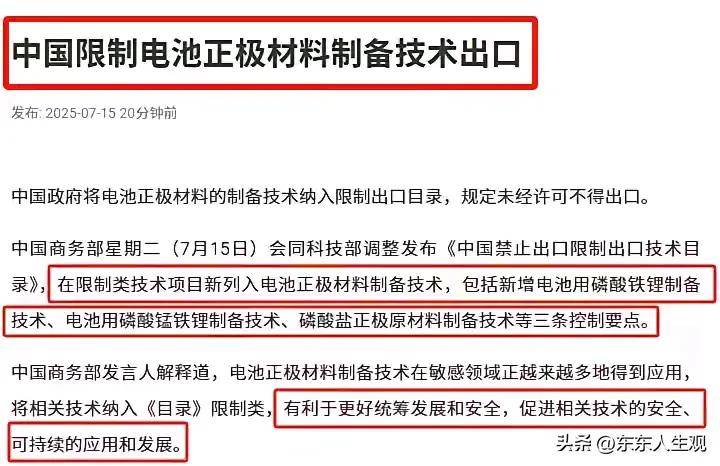
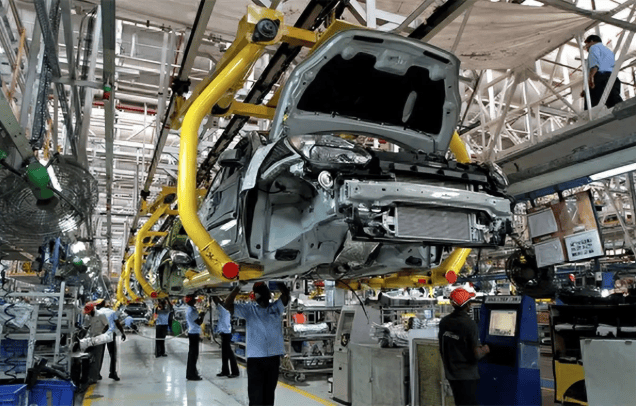
Group 1 - The strategic approach of established powers, particularly the U.S., is perceived as overly conservative and lagging behind the times, indicating a long-standing narrative since the unexpected war in the 1950s between the U.S. and China, where the U.S. has remained in a defensive posture [1] - Since 2018, the U.S. has been losing significant strategic positions, with a sense of complacency leading to a more passive stance, as the trade war evolves into a critical challenge for the U.S., which is unable to engage in a comprehensive trade war with China [3] - The U.S. strategies have been thoroughly understood by China, which is gradually gaining the upper hand and executing its strategic plans, while the U.S. continues to rely on outdated tactics, such as attempting to penetrate the Chinese AI chip market with modified products [5] Group 2 - China's recent decision to include the preparation technology of cathode materials in its export control list is not merely aimed at the electric vehicle industry but reflects a broader strategy to target U.S. technology and high-end manufacturing, indicating China's determination to not provide the West with sufficient reaction time [6] - The historical context shows that from 1999 to 2007, China had a disruptive impact on the U.S. economy, resulting in the loss of nearly a quarter of manufacturing jobs in the U.S., highlighting the significant economic influence China has had [7]
百利好晚盘分析:降息峰回路转 七月或有可能
Sou Hu Cai Jing· 2025-07-18 09:20
Group 1: Gold - Gold prices showed a slight rebound after a short-term decline, with potential support from the Federal Reserve's changing stance on interest rate cuts, particularly the possibility of a cut in July [1] - Federal Reserve Governor Waller strongly advocated for a July rate cut, suggesting that any inflation from tariffs would be temporary, indicating a favorable outlook for gold [1] - San Francisco Fed President Daly also mentioned the reasonableness of two more rate cuts by the end of the year, reflecting a potential division within the Fed regarding monetary policy [1] Group 2: Oil - Oil prices continued to rebound slightly, but the momentum remains weak due to a lack of demand support, especially amid increasing uncertainty in the global economic outlook [2] - President Trump announced intentions to impose tariffs on over 150 minor trade partners, which could further impact global trade and economic growth, with a projected decrease in global GDP from 2.8% to 2.3% [2] - The Bank for International Settlements reported that the trade war initiated by the U.S. has disrupted global economic expectations, leading to a general downgrade in growth forecasts [2] Group 3: Copper - Copper prices have shown a series of small declines and slight increases, indicating a potential adjustment phase following a previous significant rise, with current levels possibly stabilizing [3] - The hourly chart indicates a convergence of high and low points, forming a symmetrical triangle, suggesting a potential short-term support level at $5.40 [3] Group 4: Nikkei 225 - The Nikkei 225 index closed with a strong bullish candle, indicating a potential adjustment phase, with prices entering a previously dense trading area, suggesting a strengthening pattern [5] - Short-term support is noted at the level of 39,500 [5]

特朗普也没想到,莫迪手握3张“王牌”,决定在关税战中硬刚美国,印度胜算有多大?
Sou Hu Cai Jing· 2025-07-18 06:59
Group 1 - The core issue revolves around India's announcement to impose retaliatory tariffs on certain U.S. goods, escalating trade tensions between the two nations [1][4] - In 2024, the bilateral trade volume between the U.S. and India reached $195 billion, with a trade deficit of $38 billion for the U.S., indicating India's export advantage [3][5] - India's exports of electronic products to the U.S. accounted for 35.8% of its total electronic exports, valued at $14.4 billion in 2024, showcasing India's reliance on specific product categories [3] Group 2 - India has been actively signing free trade agreements (FTAs) with various countries, enhancing its market access and competitiveness in international trade [4][5] - The retaliatory tariffs are aimed at U.S. agricultural and industrial products, which could significantly impact U.S. exports and domestic political dynamics [5][7] - India's domestic market, with a population of 1.4 billion, presents a significant consumption potential that U.S. companies are keen to tap into, making it a crucial bargaining chip in negotiations [8] Group 3 - Despite India's assertive stance, there are internal challenges, including opposition from domestic parties and concerns from farmers about the impact of U.S. agricultural imports [7][9] - India's economic structure shows weaknesses, such as reliance on imports for high-end technology and a significant income disparity among its population, which could hinder its ability to withstand trade pressures [9][11] - The outcome of the trade conflict could lead to a potential decline in India's economic growth by 1.2-1.5 percentage points and a significant drop in foreign investment if negotiations fail [11]
长城兴华优选一年定开混合A: 长城兴华优选一年定期开放混合型证券投资基金2025年第2季度报告
Zheng Quan Zhi Xing· 2025-07-18 06:14
Group 1 - The fund aims to achieve long-term stable appreciation of assets by investing in high-quality companies with long-term value and growth potential while controlling risks [2][3] - The fund's investment strategy includes active asset allocation based on macroeconomic analysis, dynamic adjustments to investment proportions across various asset classes, and a focus on long-term investment value analysis of individual stocks [2][3] - The fund's performance benchmark is a combination of the CSI 800 Index return (70%), the CSI Hong Kong Stock Connect Composite Index return (10%), and the China Bond Composite Wealth Index return (20%) [3] Group 2 - As of the end of the reporting period, the total fund shares amounted to 209,395,467.89 shares, with the A share and C share classes having 147,397,456.97 shares and 61,998,010.92 shares respectively [2][3] - The fund's net value growth rates for the A and C share classes were -2.08% and -2.23% respectively, while the performance benchmark return was 1.57% [10][11] - The fund's asset allocation at the end of the reporting period included 91.27% in stocks and 1.02% in bonds, with a significant portion of equity investments made through the Hong Kong Stock Connect mechanism [11][12] Group 3 - The fund manager has a strong background in investment management, with extensive experience in various roles within the industry, ensuring a knowledgeable approach to fund management [4][6] - The fund has maintained appropriate liquidity to meet redemption requirements while managing liquidity risk effectively [3][8] - The fund's investment portfolio has been adjusted to focus on sectors with stable performance, such as banking, while reducing exposure to sectors facing intense price competition [10][11]

光大期货能化商品日报-20250717
Guang Da Qi Huo· 2025-07-17 10:47
1. Report Industry Investment Rating - All the energy and chemical products in the report are rated as "oscillating" [1][2][4] 2. Core Views of the Report - **Crude Oil**: On Wednesday, oil prices fell slightly. EIA data showed an increase in gasoline and distillate inventories and a decrease in crude oil inventories. Refinery开工率 was high, but the increase in product inventories disappointed the market. With the ongoing tariff war and lower - than - expected demand, prices are in a weak oscillation [1]. - **Fuel Oil**: The high - sulfur and low - sulfur fuel oil markets are mainly oscillating following the cost - end crude oil. The LU - FU spread has widened, but there is medium - term supply pressure for low - sulfur fuel oil, and short positions can be considered at high prices [2]. - **Asphalt**: The impact of the adjustment of fuel oil and diluted asphalt consumption tax deduction policies is not yet apparent. Short - term supply will decrease, and the market will oscillate narrowly following crude oil [2]. - **Polyester**: Polyester prices are expected to oscillate weakly. The production and sales of polyester yarn are weak, and some devices are starting up or shutting down. The demand - side inventory pressure is significant, and some products are in a loss state [2][4]. - **Rubber**: Rubber prices are expected to oscillate weakly. The export volume of Cambodian latex decreased in the first half of 2025. The domestic natural rubber inventory increased slightly, and the production increase is being realized [4]. - **Methanol**: The load of Iranian devices has recovered, and the arrival volume has increased. Downstream profits have improved, and prices have returned to an oscillating trend [5]. - **Polyolefins**: The supply of polyolefins has limited changes, demand is at the bottom, and prices are expected to fluctuate narrowly [5]. - **Polyvinyl Chloride**: The enterprise's operating rate has decreased, demand has not improved significantly, and the upward rebound space is limited [5][6]. 3. Summary by Relevant Catalogs 3.1 Research Views - **Crude Oil**: WTI 8 - month contract closed at $66.38/barrel, down $0.14 or 0.21%. Brent 9 - month contract closed at $68.52/barrel, down $0.19 or 0.28%. SC2508 closed at 517.20 yuan/barrel. Gasoline and distillate inventories increased, while crude oil inventories decreased. The market was disappointed with demand, and prices oscillated weakly [1]. - **Fuel Oil**: The main contract FU2509 of high - sulfur fuel oil rose 0.45% to 2880 yuan/ton, and the main contract LU2509 of low - sulfur fuel oil fell 0.47% to 3630 yuan/ton. The market structure of low - sulfur fuel oil weakened slightly, and the high - sulfur market remained stable. The market oscillated following crude oil, and short positions can be considered for the LU - FU spread [2]. - **Asphalt**: The main contract BU2509 of asphalt fell 0.22% to 3623 yuan/ton. The supply will decrease in the short term, and the market will oscillate following crude oil [2]. - **Polyester**: TA509 closed at 4706 yuan/ton, up 0.21%. EG2509 closed at 4351 yuan/ton, up 0.67%. The production and sales of polyester yarn were weak, and prices oscillated weakly [2][4]. - **Rubber**: The main contract RU2509 of natural rubber rose 105 yuan/ton to 14500 yuan/ton, and the main contract of NR rose 110 yuan/ton to 12490 yuan/ton. The export volume of Cambodian latex decreased, and domestic inventory increased slightly. Rubber prices oscillated weakly [4]. - **Methanol**: The spot price in Taicang was 2382 yuan/ton. Iranian device load recovered, and prices oscillated [5]. - **Polyolefins**: The mainstream price of East China drawing was 7020 - 7160 yuan/ton. Supply changes were limited, and prices oscillated narrowly [5]. - **Polyvinyl Chloride**: The market prices in East, North, and South China decreased. The enterprise's operating rate decreased, and the upward rebound space was limited [5][6]. 3.2 Daily Data Monitoring - The report provides the basis price data of various energy and chemical products on July 16, 2025, including spot prices, futures prices, basis, basis rates, price changes, and the position of the latest basis rate in historical data [7]. 3.3 Market News - EIA data showed that last week, US gasoline inventories increased by 3.4 million barrels, distillate inventories increased by 4.2 million barrels, and crude oil inventories decreased by 3.9 million barrels to 422.2 million barrels [9]. - Refineries were operating at a high rate, but the increase in product inventories disappointed the market. After the July 4th holiday, gasoline demand decreased, and the supply of gasoline products decreased by 670,000 barrels per day to 8.5 million barrels per day [9]. 3.4 Chart Analysis - **Main Contract Prices**: The report presents the closing price charts of the main contracts of various energy and chemical products from 2021 to 2025, including crude oil, fuel oil, low - sulfur fuel oil, asphalt, etc. [11][13][15] - **Main Contract Basis**: The report shows the basis charts of various energy and chemical products from 2021 to 2025, such as crude oil, fuel oil, low - sulfur fuel oil, etc. [30][34][36] - **Inter - period Contract Spreads**: The report provides the spread charts of different contracts of energy and chemical products, such as fuel oil, asphalt, etc. [44][46][49] - **Inter - product Spreads**: The report shows the spread and ratio charts between different energy and chemical products, such as crude oil internal and external spreads, fuel oil high - low sulfur spreads, etc. [61][63][65] - **Production Profits**: The report presents the production profit charts of some energy and chemical products, such as ethylene - based ethylene glycol and PP [68][70][73] 3.5 Team Member Introduction - **Zhong Meiyan**: Assistant Director of the Research Institute and Director of Energy and Chemicals, with over ten years of experience in futures derivatives market research [75]. - **Du Bingqin**: Analyst for crude oil, natural gas, fuel oil, asphalt, and shipping, with in - depth research on the energy industry chain [76]. - **Di Yilin**: Analyst for natural rubber and polyester, good at data analysis [77]. - **Peng Haibo**: Analyst for methanol, PE, PP, and PVC, with experience in combining financial theory and industrial operations [78]
特朗普对俄最后通牒,威胁加码制裁,美媒:对美国自己都极其危险
Sou Hu Cai Jing· 2025-07-17 08:36
美国总统最近公开威胁俄罗斯,宣称如果俄罗斯在50天内不停火,美国将会加码制裁俄罗斯,并且是通过关税的方式。特朗普给出了最后通牒,已经让美国 国内也感到了担忧,美国媒体直接用"对美国自己都极其危险"来形容美国总统特朗普的最后通牒。特朗普提出所谓50天内要俄罗斯停火,已经暴露了如今特 朗普对于没有兑现承诺的愤怒,特朗普之前多次公开炫耀,宣称很快就会实现俄乌冲突的停火,然而经过了无数个"24小时",俄乌冲突还在继续,为此就有 了最近的恼羞成怒,不仅仅公开抨击俄罗斯总统普京,而且还宣布恢复对于乌克兰的军事援助。 美国媒体认为特朗普的决定会伤害美国,不仅仅是因为美国要对俄罗斯加征100%的关税,而是因为美国要对和俄罗斯有贸易往来的国家加征100%的关税。 美国在发动关税战的时候,已经是碰的鼻青脸肿,如今美国要对贸易伙伴加征比关税战更为严苛的关税,显然会让美国更为受伤。特朗普的表态,是在美国 国会推动所谓的二级制裁法案的时候的动作,所谓的二级制裁是指美国要对和俄罗斯维持贸易的国家加征关税,从特朗普的回应来看,美国至少是要给予 100%的关税。 实际上目前西方国家也维持了和俄罗斯的贸易往来,因为西方国家要从俄罗斯进口必要的 ...
宏观研究:关税战后的全球新秩序
Minmetals Securities· 2025-07-17 01:45
Group 1: Tariff War Objectives - The primary goals of the tariff war initiated by President Trump include reducing the U.S. trade deficit, promoting the return of American manufacturing, and ensuring national security by curbing China's development[2] - The U.S. trade deficit with China was approximately $500 billion annually, which Trump viewed as a significant economic issue[22] - The tariff strategy is expected to result in a final average tariff rate slightly above 10%, which is considered acceptable by the market[35] Group 2: Economic Impact - The World Bank revised its global economic growth forecast for 2025 down from 2.7% to 2.3% due to the impact of U.S. tariffs[38] - The cumulative impact of the tariff war on the U.S. economy is estimated to be between 0.3% and 2.1% by 2026, depending on various scenarios[39] - China's economy is projected to face a short-term impact of less than 0.5 percentage points due to the tariff war, with a long-term effect expected to be limited[42] Group 3: Global Trade Dynamics - The tariff war has led to a significant decline in China's exports to the U.S., with a year-on-year drop of 21% in April and 35% in May[43] - The global supply chain is undergoing restructuring, which is expected to exacerbate supply-demand imbalances and increase investment demand[5] - The trend of de-globalization is becoming more pronounced, with tariffs creating lasting fractures in global trade relationships[19] Group 4: Currency and Commodity Outlook - The U.S. dollar is anticipated to enter a long-term downtrend, influenced by factors such as trade deficit reduction and rising government debt concerns[4] - Commodity prices are expected to rise in the long term due to the inverse relationship with the dollar cycle and increased demand from major economies shifting towards high-tech manufacturing[5]
铜冠金源期货商品日报-20250717
Tong Guan Jin Yuan Qi Huo· 2025-07-17 01:42
Group 1: Report Industry Investment Rating - No relevant content provided Group 2: Core Views of the Report - Overseas, rumors of Trump dismissing Powell led to a "triple kill" in the US stock, bond, and foreign exchange markets, followed by a resurgence of the TACO trade. The US June PPI同比 dropped to 2.3%, hitting a nearly one - year low. Trump insists on a 25% tariff on Japan and is promoting an agreement with India, while the EU is preparing a 72 - billion - euro retaliatory list [2]. - Domestically, Li Qiang chaired the State Council Executive Meeting to study key policy measures for strengthening the domestic cycle, promote consumption, and standardize the new energy vehicle industry. A - shares are in a shrinking adjustment, and the bond market is under pressure. The short - term is expected to continue to fluctuate and adjust [3]. - Due to the intensifying rumors of a change in the Fed's leadership and geopolitical tensions, precious metals are expected to show a volatile and upward - biased pattern, and silver prices are expected to perform well in the future [4][5]. - For copper, overseas spot tightness has eased. With factors such as price increases and cost pressures from tariffs, and some mine production increases, both Lun copper and Shanghai copper are expected to fluctuate in the short term [6][7]. - Aluminum prices are in a volatile adjustment. With the increase in ingot production and the arrival of the consumption off - season, the short - term is expected to remain weak [8][9]. - Alumina is expected to fluctuate in the short term, and there is still significant medium - to - long - term supply pressure [10]. - Zinc prices are in a narrow - range fluctuation. With weak fundamentals and limited short - selling power from funds, they are expected to run weakly in the short term [11]. - Lead prices are affected by the tariff on exported batteries and are in a weak state. Although supply tightening may provide some support, they are expected to fluctuate weakly in the short term [12][13]. - Tin prices are affected by macro factors and have large intraday fluctuations. With limited fundamental changes, they are expected to maintain a wide - range fluctuation in the short term [14]. - Industrial silicon is expected to run strongly and fluctuate in the short term under the impetus of new policies, despite weak demand in some downstream industries [15][16]. - Lithium carbonate prices are fluctuating. Affected by mine - end disturbances, they are in a strong state in the short term, but may return to fundamentals in the future [17][18]. - Nickel prices are fluctuating. With the easing of the shortage of nickel ore in Indonesia and the weakening of cost pressure, they are expected to be affected by tariff disturbances in the short term [19]. - Crude oil prices are fluctuating. The uncertainty of the Israel - Iran conflict makes it advisable to wait and see [20]. - Steel futures are in a high - level volatile state. Policy expectations boost the market, but fundamentals are weak, and demand is expected to remain weak [21][22]. - Iron ore futures are expected to fluctuate strongly in the short term. Macro sentiment is positive, but iron water production is expected to remain weak [23]. - Bean and rapeseed meal are expected to fluctuate strongly in the short term. The US - Indonesia agreement improves export expectations, but bean meal inventory is increasing [24]. - Palm oil is expected to fluctuate and adjust. Malaysian palm oil production increased in the first half of July, while demand decreased [25][26]. Group 3: Summaries According to Relevant Catalogs 1. Metal Main Varieties Yesterday's Trading Data - The table shows the closing data of major metal futures contracts, including copper, aluminum, zinc, lead, nickel, tin, gold, silver, etc., including closing prices, price changes, price change percentages, trading volumes, and open interest [27]. 2. Industrial Data Perspective - For copper, data such as SHFE and LME copper prices, inventory, spot quotes, and spreads are presented, showing changes from July 11th to July 14th [28]. - For nickel, similar data including SHFE and LME nickel prices, inventory, and spreads are provided, indicating changes during the same period [28]. - Similar data for zinc, lead, aluminum, alumina, tin, precious metals, steel, iron ore, coke, coking coal, lithium carbonate, industrial silicon, and bean and rapeseed meal are also presented, reflecting their price and inventory changes [28][30][31][32][33][34][35].
芯片断供,机器人要凉?王兴兴冷笑:没全球合作,谁也别想赢!
Xin Lang Cai Jing· 2025-07-16 15:26
Group 1 - The core viewpoint emphasizes the need for global collaboration in the humanoid robotics industry, as isolationist policies like tariffs can hinder technological progress and increase costs for everyone involved [1][5][10] - The humanoid robotics sector is still in its early stages, with significant technical challenges remaining before robots can perform tasks autonomously and reliably [3][4][10] - Current humanoid robots are often overhyped, with many companies focusing on fundraising rather than delivering functional products, leading to a situation where most are merely "PPT robots" [4][5][10] Group 2 - The complexity of humanoid robots requires a diverse supply chain, with components sourced globally, making it impractical to rely solely on domestic production [5][6][9] - The industry is characterized by a few key players globally, and collaboration among these companies is essential for sharing knowledge and advancing technology [6][9][10] - The ultimate goal of humanoid robots is to enhance human life by taking over mundane tasks, which is a universal need that transcends national boundaries [9][10] Group 3 - The article argues that the current tariff wars may backfire, ultimately harming the very industries they aim to protect by stifling innovation and increasing costs [6][10][11] - A long-term perspective is necessary for the development of the robotics industry, as immediate reactions to geopolitical tensions can obscure the path to progress [10][11] - The future of robotics is seen as a necessity for everyday life, similar to smartphones today, and global cooperation is crucial to make this a reality [11]