供应过剩

Search documents
百利好晚盘分析:市场共识疲劳 金价窄幅震荡
Sou Hu Cai Jing· 2026-01-16 10:18
黄金方面: 近期贵金属市场仅在周一和周二出现了较为明确的趋势行情,随后市场陷入震荡,主要推手是当前市场陷入共识疲劳,年初市 场共识一直看涨,而现在市场跌幅有限,是在等待新一轮的市场变化。 虽然特朗普表示,伊朗在镇压抗议活动中的行为正在缓解,暗示可能采取观望态度。但是受到特朗普一贯政策左右改变的影 响,现在市场不敢断定,美国一定不会干预伊朗的局势,仍有变数。 百利好特约智昇研究投资策略师麦东认为,近期伊朗问题的缓解,一定程度上削弱了黄金的避险属性,金价有所回落。但是跌 幅有限,一定程度上又反映了,市场处在共识疲劳期,仍需要等待确定的答案。 技术面分析:昨日收十字线。日线级别,金价维持在4600美元附近震荡。1小时级别,价格跌破60日均线,向下试探120日均 线,市场处于弱转势阶段。今日多空分水岭在4575美元一线,关注市场在此的变化。 原油方面: 随着委内瑞拉原油改革推进,更多的原油供应进入市场。在美国介入后,北美生产商可能会急于通过整合来对冲油价的下行风 险。在当前低油价环境下,规模效应可以降低成本。2026年,全球原油仍会面临过剩压力。 地缘政治对油价的影响是阶段性的,在库存压力逐步走高的背景下,原油大概率 ...


分析师:供应过剩将压制油价上行空间
Ge Long Hui A P P· 2026-01-16 06:05
格隆汇1月16日|经纪商公司Phillip Nova分析师Priyanka Sachdeva在报告中指出,她表示,市场情绪目 前主导油价走势,但石油相关新闻的影响往往短暂。尽管伊朗动荡加剧和委内瑞拉供应风险消息曾短暂 推高油价,但随后迅速回调。主要预测机构和行业数据均显示供应过剩正在加剧,这可能抑制油价上行 空间。因此,制裁措施和新闻头条仅引发短期波动,而非实际供应短缺。 ...
有色板块调整,镍不锈钢价格震荡
Hua Tai Qi Huo· 2026-01-15 05:20
1. Report Industry Investment Rating No relevant content provided. 2. Core Viewpoints of the Report - The nickel market is in a state of high inventory and oversupply, and nickel prices are expected to maintain a volatile trend. Attention should be paid to potential changes in Indonesian nickel ore policies [3]. - The stainless - steel market has a situation where cost support and weak demand are in a game. The stainless - steel main contract is expected to fluctuate in the range of 13,500 - 14,100 yuan/ton in the short term, and focus should be on the price trend of nickel iron, spot trading volume, and macro - sentiment changes [4]. 3. Summary by Related Catalogs Nickel Variety Market Analysis - **Futures**: On January 14, 2026, the main contract of Shanghai nickel opened at 140,330 yuan/ton and closed at 140,940 yuan/ton, a change of - 0.11% from the previous trading day's close. The trading volume was 1,070,694 (-206,996) lots, and the open interest was 109,975 (-9,510) lots. The contract showed a trend of "opening low, wide - range fluctuation, and a slight decline at the end", with sharp intraday fluctuations. The V - shaped rebound of the US dollar index and the correction of the US stock market suppressed the prices of LME nickel and Shanghai nickel [1]. - **Nickel Ore**: The nickel ore market has a strong price - holding atmosphere. In the Philippines, mine tender prices have continuously risen. A domestic southern factory recently purchased 1.3% grade nickel ore at a CIF price of 42 US dollars. The new round of 1.3% nickel ore tender of the main mine Benguet was concluded at an FOB price of 38 US dollars, showing a significant increase. In Indonesia, the market trading was dull, and the market is waiting for the official announcement of the HPM benchmark price on the 15th. It is expected that the benchmark price in the second half of the month will increase by about 3 - 4 US dollars compared with the first half [2]. - **Spot**: The sales price of Jinchuan Group in the Shanghai market was 150,300 yuan/ton, an increase of 1,700 yuan/ton from the previous day. The spot trading was average, and the spot premiums and discounts of various refined nickel brands were mostly stable. The premium of Jinchuan nickel changed by - 150 yuan/ton to 8,750 yuan/ton, the premium of imported nickel remained unchanged at 600 yuan/ton, and the premium of nickel beans was 2,450 yuan/ton. The previous trading day's Shanghai nickel warehouse receipt volume was 40,272 (836) tons, and the LME nickel inventory was 284,658 (510) tons [2]. Strategy - The overall strategy for nickel is to mainly conduct range operations. There are no specific strategies for inter - period, cross - variety, spot - futures, and options trading [3]. Stainless - Steel Variety Market Analysis - **Futures**: On January 14, 2026, the main contract of stainless steel opened at 13,850 yuan/ton and closed at 13,925 yuan/ton. The trading volume was 214,016 (-42,112) lots, and the open interest was 134,879 (-4,171) lots. The contract showed a trend of "opening low, rising high, and narrow - range strong fluctuation", supported by the rising price of nickel iron at the cost end and the firm spot price. It was more resistant to decline than Shanghai nickel and finally closed slightly higher, continuing the range - bound pattern [3]. - **Spot**: After the recent increase in spot prices, the upward momentum of the futures market is insufficient, market caution has increased, and trading has remained light. The stainless - steel price in the Wuxi market was 13,900 (+0) yuan/ton, and in the Foshan market, it was 13,800 (+50) yuan/ton. The premium and discount of 304/2B were 40 to 240 yuan/ton. The ex - factory tax - inclusive average price of high - nickel pig iron changed by 2.00 yuan/nickel point to 982.5 yuan/nickel point [3][4]. Strategy - The strategy for stainless steel is neutral. There are no specific strategies for inter - period, cross - variety, spot - futures, and options trading. The main contract is expected to fluctuate between 13,500 - 14,100 yuan/ton in the short term [4].
铜牛市还能持续多久?高盛:1.3万高价不可持续,变盘点或在二季度关税落地后
Hua Er Jie Jian Wen· 2026-01-14 07:32
Core Viewpoint - Goldman Sachs believes that the recent surge in copper prices is primarily driven by a stockpiling trend due to anticipated U.S. tariffs and speculative funds, creating a temporary "scarcity premium" in the market. However, the bank warns that the current high price above $13,000 is unsustainable and significantly detached from the fundamentals [1]. Group 1: Price Predictions and Market Dynamics - Goldman Sachs has raised its LME copper price forecast for the first half of 2026 from $11,525 per ton to $12,750 per ton, citing tightening inventories outside the U.S. due to capital inflows and supply shifts [1]. - The bank maintains its fourth-quarter 2026 price forecast at $11,200 per ton, indicating significant downward pressure on prices in the latter half of the year [1]. - The copper price has increased by 22% since late November last year, reaching a peak of $13,387 on January 6 [1]. Group 2: Supply and Demand Outlook - Goldman Sachs expects the second quarter to be a turning point for market sentiment, with a decision on refined copper tariffs likely to shift focus back to a severe global supply surplus [2]. - The global copper market supply surplus forecast for 2026 has been raised from 160,000 tons to 300,000 tons, indicating a return to supply-demand fundamentals as the price driver [2]. Group 3: Speculative Trends and Market Sentiment - The recent rise in copper prices is not supported by traditional supply-demand gaps but rather by capital flows and inventory transfers, with current prices exceeding the reasonable fundamental level of approximately $11,400 per ton [3]. - Speculative positions in the copper market are nearing historical highs, with the proportion of speculative long positions at CME showing signs of being in the later stages of the current price rally [5]. - If speculative net positions increase by 1 percentage point, copper prices could rise by an average of 0.4%, indicating a fragile upward trend driven by speculation [5]. Group 4: Tariff Decision Uncertainty - The timing of the U.S. refined copper tariff decision is a key catalyst for future price movements, with Goldman Sachs reducing the probability of timely implementation from 55% to 45% [4]. - Delays or insufficient increases in tariffs could have dual impacts on LME copper prices, allowing continued stockpiling in the U.S. while also prompting a reassessment of global supply surplus realities [4].
宏观金融类:文字早评2026/01/13星期二-20260113
Wu Kuang Qi Huo· 2026-01-13 00:53
1. Report Industry Investment Rating No relevant content provided. 2. Core Viewpoints of the Report - For stocks, with the entry of incremental funds at the beginning of the year, the financing scale has increased significantly, and the market trading volume has rapidly expanded. In the long - term, the policy support for the capital market remains unchanged. Strategically, the idea of buying on dips is recommended [4]. - For bonds, the improvement of economic expectations may put pressure on the bond market, but the sustainability of economic recovery momentum needs to be observed. The central bank's attitude of caring for funds remains, and the bond market is expected to be volatile and weak [8]. - For precious metals, if the silver price stabilizes, it will continue a new upward trend, and the driving force for the gold price remains strong. It is recommended to pay attention to the support of gold and silver prices around the BCOM and tariff adjustment nodes and buy on dips after short - term negative factors end [10]. - For non - ferrous metals, most metal prices are expected to be volatile. For example, copper prices are expected to fluctuate and consolidate in the short term; aluminum prices are expected to remain high; zinc and lead prices are expected to fluctuate widely following the sentiment of the non - ferrous sector [13][15][18]. - For black building materials, steel prices are expected to continue to fluctuate at the bottom; iron ore prices are expected to fluctuate at a relatively high level; glass and soda ash markets are generally weak; coking coal and coke prices are expected to fluctuate in a range [32][34][37]. - For energy and chemicals, different products have different trends. For example, rubber is recommended to be treated neutrally; the valuation of heavy - quality oil products is raised; methanol has the feasibility of buying on dips; urea is recommended to take profits on rallies [55][57][59]. - For agricultural products, the short - term trend of hog prices is expected to be stable or slightly rising, and different trading strategies are recommended for different contract periods; egg prices are expected to be stable or rising, and different strategies are also recommended for different contract periods [79][80][81]. 3. Summary by Relevant Catalogs 3.1 Macro - financial 3.1.1 Stock Index - **Market Information**: China Chamber of Commerce for Import and Export of Machinery and Electronic Products promoted a "soft landing" of the EU's anti - subsidy case on electric vehicles; Lihong No.1 completed its first sub - orbital flight test; Brain - Machine Haihe Laboratory completed the first "space brain - machine interface experiment"; prices of multiple non - ferrous and precious metal futures reached new highs [2]. - **Basis Ratio of Stock Index Futures**: Different ratios are provided for IF, IC, IM, and IH contracts in different periods [3]. - **Strategy Viewpoint**: With incremental funds entering at the beginning of the year, the financing scale has increased significantly, and the market trading volume has rapidly expanded. In the long - term, the policy support for the capital market remains unchanged. Strategically, the idea of buying on dips is recommended [4]. 3.1.2 Treasury Bonds - **Market Information**: On Monday, the closing prices of TL, T, TF, and TS main contracts changed by 0.30%, 0.07%, 0.05%, and 0.00% respectively. The Canadian Prime Minister will visit China, and the National Development and Reform Commission and other departments issued relevant policies on government investment funds [5]. - **Liquidity**: The central bank conducted 861 billion yuan of 7 - day reverse repurchase operations on Monday, with a net investment of 361 billion yuan [6][7]. - **Strategy Viewpoint**: The improvement of economic expectations may put pressure on the bond market, but the sustainability of economic recovery momentum needs to be observed. The central bank's attitude of caring for funds remains, and the bond market is expected to be volatile and weak [8]. 3.1.3 Precious Metals - **Market Information**: Shanghai gold rose 1.31%, and Shanghai silver rose 7.23%. The US federal prosecutor launched a criminal investigation into Fed Chairman Powell, which impacted the Fed's independence [9]. - **Strategy Viewpoint**: If the silver price stabilizes, it will continue a new upward trend, and the driving force for the gold price remains strong. It is recommended to pay attention to the support of gold and silver prices around the BCOM and tariff adjustment nodes and buy on dips after short - term negative factors end [10]. 3.2 Non - ferrous Metals 3.2.1 Copper - **Market Information**: Silver prices were strong, and the domestic equity market strengthened, driving copper prices to rise. LME copper inventory decreased, and domestic electrolytic copper social inventory increased [12]. - **Strategy Viewpoint**: The Fed's interest - rate cut expectation has weakened, and short - term sentiment may cool down. The copper mine supply is in a tight pattern, and copper prices are expected to fluctuate and consolidate in the short term [13]. 3.2.2 Aluminum - **Market Information**: The general atmosphere of bulk commodities was strong, and aluminum prices fluctuated and rose. LME aluminum inventory decreased, and domestic aluminum ingot and aluminum rod social inventories increased [14]. - **Strategy Viewpoint**: The high - level fluctuations of precious metals and non - ferrous metals have increased, and short - term sentiment may cool down. Aluminum prices are expected to remain high [15]. 3.2.3 Zinc - **Market Information**: The Shanghai zinc index rose, and LME zinc also increased. Zinc ingot social inventory decreased slightly [16][17]. - **Strategy Viewpoint**: The zinc price has a large room for catch - up compared with copper and aluminum. It is expected to fluctuate widely following the sentiment of the non - ferrous sector [18]. 3.2.4 Lead - **Market Information**: The Shanghai lead index rose, and LME lead also increased. Lead ingot social inventory increased [19]. - **Strategy Viewpoint**: The lead price is approaching the upper edge of the long - term oscillation range, and it is expected to fluctuate widely following the sentiment of the non - ferrous sector [19]. 3.2.5 Nickel - **Market Information**: Nickel prices rebounded, and the prices of nickel ore and nickel iron also changed accordingly [20]. - **Strategy Viewpoint**: The oversupply pressure of nickel is still large, and it is expected to fluctuate widely in the short term. It is recommended to wait and see in the short term [20][21]. 3.2.6 Tin - **Market Information**: Tin prices rose significantly. The supply in Myanmar is gradually recovering, and the demand is mainly for rigid needs [22]. - **Strategy Viewpoint**: The tin market demand is weak, and the supply is expected to improve. It is recommended to wait and see. The price is expected to fluctuate following the market risk preference [22]. 3.2.7 Carbonate Lithium - **Market Information**: The spot index of carbonate lithium rose, and the futures price also increased [23]. - **Strategy Viewpoint**: The "rush to export" effect has increased the demand expectation, but the rapid rise may increase the callback risk. It is recommended to wait and see or try with a light position [23]. 3.2.8 Alumina - **Market Information**: The alumina index rose, and the inventory continued to accumulate [24]. - **Strategy Viewpoint**: The mine price is expected to decline, and the alumina market continues to face over - capacity. It is recommended to wait and see and consider shorting on rallies [25]. 3.2.9 Stainless Steel - **Market Information**: The stainless steel main contract price was stable, and the social inventory decreased [26]. - **Strategy Viewpoint**: The optimistic expectation of Indonesia's RKAB supports the price. The price is expected to remain high and volatile in the short term [27]. 3.2.10 Casting Aluminum Alloy - **Market Information**: The price of casting aluminum alloy rose, and the inventory increased slightly [28]. - **Strategy Viewpoint**: The cost is strong, and the supply is disturbed. The price is expected to remain high in the short term [29]. 3.3 Black Building Materials 3.3.1 Steel - **Market Information**: The prices of rebar and hot - rolled coil increased, and the inventory of rebar increased slightly while that of hot - rolled coil decreased slightly [31]. - **Strategy Viewpoint**: The steel price is expected to continue to fluctuate at the bottom. It is necessary to pay attention to the de - stocking of hot - rolled coil and relevant policies [32]. 3.3.2 Iron Ore - **Market Information**: The iron ore main contract price rose, and the port inventory continued to accumulate [33]. - **Strategy Viewpoint**: The overseas iron ore shipment is in the off - season, and the iron ore price is expected to fluctuate at a relatively high level. It is necessary to pay attention to the steel mill's replenishment and iron - making rhythm [34]. 3.3.3 Glass and Soda Ash - **Market Information**: The glass main contract price decreased slightly, and the inventory decreased. The soda ash main contract price increased, and the inventory increased [35][37]. - **Strategy Viewpoint**: The glass price is expected to fluctuate, and it is recommended to wait and see. The soda ash market is generally weak [36][37]. 3.3.4 Coking Coal and Coke - **Market Information**: The prices of coking coal and coke rose. The spot prices of coking coal and coke also changed [38]. - **Strategy Viewpoint**: The commodity market sentiment is positive, but the fundamental support for the price is limited. The price is expected to fluctuate in a range [40][41]. 3.3.5 Manganese Silicon and Ferrosilicon - **Market Information**: The prices of manganese silicon and ferrosilicon rose. The spot prices also changed [42]. - **Strategy Viewpoint**: The future market trend is mainly affected by the overall market sentiment and cost factors. It is recommended to pay attention to manganese ore and "dual - carbon" policies [45]. 3.3.6 Industrial Silicon and Polysilicon - **Market Information**: The price of industrial silicon rose slightly, and the price of polysilicon decreased. The inventory of industrial silicon may increase, and the supply of polysilicon may be adjusted [46][48]. - **Strategy Viewpoint**: Industrial silicon is expected to face inventory pressure, and polysilicon is expected to be weak and volatile. It is necessary to pay attention to relevant policies and production plans [47][49]. 3.4 Energy and Chemicals 3.4.1 Rubber - **Market Information**: The rubber price fluctuated and rebounded. The tire start - up rate had marginal fluctuations, and the inventory increased [51][53]. - **Strategy Viewpoint**: The overall commodity atmosphere is positive, but the rubber seasonality is weak. A neutral strategy is recommended, and short - selling can be considered if the price falls below a certain level [55]. 3.4.2 Crude Oil - **Market Information**: The main contract price of INE crude oil rose, and the inventories of refined oil products changed [56]. - **Strategy Viewpoint**: The Latin American geopolitical situation does not have enough positive impact on the overall oil price, but the valuation of heavy - quality oil products is raised [57]. 3.4.3 Methanol - **Market Information**: The regional spot prices of methanol changed, and the main contract price decreased [58]. - **Strategy Viewpoint**: The current valuation of methanol is low, and it has the feasibility of buying on dips [59]. 3.4.4 Urea - **Market Information**: The regional spot prices of urea changed slightly, and the main contract price increased [60]. - **Strategy Viewpoint**: The import window has opened, and it is recommended to take profits on rallies [62]. 3.4.5 Pure Benzene and Styrene - **Market Information**: The prices of pure benzene and styrene rose. The inventory of pure benzene increased, and the inventory of styrene decreased [63]. - **Strategy Viewpoint**: The non - integrated profit of styrene can be long - bought before the first quarter [64]. 3.4.6 PVC - **Market Information**: The PVC main contract price rose, and the inventory increased [65]. - **Strategy Viewpoint**: The domestic PVC market has a pattern of strong supply and weak demand. It is recommended to short on rallies [66]. 3.4.7 Ethylene Glycol - **Market Information**: The ethylene glycol main contract price rose, and the inventory increased [67]. - **Strategy Viewpoint**: The ethylene glycol market needs to increase production cuts to improve the supply - demand pattern. It is necessary to beware of rebound risks [68]. 3.4.8 PTA - **Market Information**: The PTA main contract price rose, and the inventory decreased [69]. - **Strategy Viewpoint**: The PTA is expected to enter the Spring Festival inventory - accumulation stage. It is recommended to pay attention to long - buying opportunities on dips [70]. 3.4.9 p - Xylene - **Market Information**: The p - xylene main contract price rose, and the inventory decreased [71][72]. - **Strategy Viewpoint**: The p - xylene load is high, and it is recommended to pay attention to long - buying opportunities following the crude oil price [73]. 3.4.10 Polyethylene (PE) - **Market Information**: The PE main contract price rose, and the inventory increased [74]. - **Strategy Viewpoint**: The PE price may be supported, and it is recommended to long - buy the LL5 - 9 spread on dips [75]. 3.4.11 Polypropylene (PP) - **Market Information**: The PP main contract price rose, and the inventory situation was complex [76]. - **Strategy Viewpoint**: The PP price may bottom out in the first quarter of next year [77]. 3.5 Agricultural Products 3.5.1 Hogs - **Market Information**: The domestic hog price was mixed, and the price may stabilize or rise slightly [79]. - **Strategy Viewpoint**: The short - term hog price may support the futures price, but in the medium - term, supply pressure exists. Different trading strategies are recommended for different contract periods [80]. 3.5.2 Eggs - **Market Information**: The national egg price mostly rose, and the price is expected to be stable or rise [81]. - **Strategy Viewpoint**: The short - term egg price may support the futures price, but in the medium - term, supply pressure exists. Different trading strategies are recommended for different contract periods [82]. 3.5.3 Soybean and Rapeseed Meal - **Market Information**: The protein meal futures price fluctuated. The import cost of soybeans may have a bottom, but the fundamental situation is weak [83][84]. - **Strategy Viewpoint**: It is recommended to wait and see in the short term due to the combination of long - and short - term factors [84]. 3.5.4 Oils and Fats - **Market Information**: The oil futures price fluctuated. The palm oil inventory in Malaysia increased, and the domestic three - major oil inventories were at a relatively high level [85][86]. - **Strategy Viewpoint**: The current fundamental situation is weak, but the long - term expectation is optimistic. The oil price may be close to the bottom [86]. 3.5.5 Sugar - **Market Information**: The Zhengzhou sugar futures price fluctuated. The spot price of sugar decreased slightly [87]. - **Strategy Viewpoint**: The international sugar price may rebound after February, and it is recommended to wait and see in the short term [89]. 3.5.6 Cotton - **Market Information**: The Zhengzhou cotton futures price decreased. The cotton supply and demand situation changed [90]. - **Strategy Viewpoint**: The cotton price may fluctuate after rising. It is recommended to wait for a callback to buy [91].
能源日报-20260112
Guo Tou Qi Huo· 2026-01-12 11:12
Report Industry Investment Ratings - Crude oil: ★★★, indicating a clearer upward trend and a relatively appropriate investment opportunity currently [2] - Fuel oil: ★★★, indicating a clearer upward trend and a relatively appropriate investment opportunity currently [2] - Low - sulfur fuel oil: ★★★, indicating a clearer upward trend and a relatively appropriate investment opportunity currently [2] - Asphalt: ★★★, indicating a clearer upward trend and a relatively appropriate investment opportunity currently [2] Core Viewpoints - Geopolitical risks in the short - term drive up oil prices, but the sustainability of the price increase is limited due to significant inventory pressure and supply surplus in the global crude oil market in Q1 2026 [3] - The unilateral trend of fuel oil mainly follows the cost side of crude oil, and geopolitical situations affect both high - sulfur and low - sulfur fuel oil markets [4] - The recent rebound in crude oil has little impact on asphalt futures prices, and the reduction of Venezuelan crude oil shipments to China may impact domestic asphalt raw material supply [5] Summary by Related Categories Crude Oil - The geopolitical situation in Iran is tense but controllable, and the US continues to seize Venezuelan oil tankers, which drives up oil prices in the short - term [3] - In Q1 2026, the global crude oil supply - demand structure shows significant inventory pressure, and supply surplus restricts the upward space of oil prices [3] Fuel Oil & Low - sulfur Fuel Oil - The unilateral trend of fuel oil follows the cost side of crude oil, and geopolitical tensions are the key driving factors [4] - For high - sulfur fuel oil, US military actions against Venezuela may affect heavy - crude oil supply, and domestic refineries may increase fuel oil use as an alternative raw material for asphalt production. Inventory consumption may appear in late March, and raw material procurement demand may support the high - sulfur market after the Spring Festival in mid - February [4] - For low - sulfur fuel oil, the Azur refinery's CDU device has fully resumed operation, and the supply scale is expected to gradually increase. The overseas supply rebound brings loose pressure, keeping the fundamentals weak [4] Asphalt - The recent crude oil rebound has not affected asphalt futures prices significantly [5] - Since December 2025, the US seizure of Venezuelan oil tankers may impact domestic asphalt raw material supply in February and later, and the current market has priced in the expected tightening of Venezuelan crude oil shipments to China [5] - Attention should be paid to the arrival situation of Venezuelan crude oil [5]
长江有色:12日氧化铝期价涨1.63% 整体交投氛围一般
Xin Lang Cai Jing· 2026-01-12 08:45
Group 1 - The core viewpoint of the news is that the aluminum oxide market is experiencing fluctuations, with a recent increase in futures prices driven by macroeconomic factors and supply-demand dynamics [2][1]. Group 2 - On January 12, the main aluminum oxide futures contract (2605) closed at 2866 yuan, up 46 yuan, reflecting a 1.63% increase [1]. - The total trading volume for 21 contracts was 956,375 lots, a decrease of 184,183 lots or 16.155% compared to the previous trading day [1]. - The open interest increased by 7,436 lots to 784,807 lots, representing a 0.96% rise [1]. Group 3 - The domestic aluminum oxide spot prices remained stable, with prices in various regions reported as follows: South China at 2730-2780 yuan per ton, East China at 2640-2680 yuan per ton, Southwest at 2760-2800 yuan per ton, and Northwest at 2905-2945 yuan per ton [1]. - The macroeconomic announcement from the Ministry of Finance and the State Taxation Administration indicates that the export tax rebate for photovoltaic products will be canceled starting April 1, 2026, leading to a surge in exports and a temporary boost in related sectors [2]. Group 4 - The domestic aluminum oxide production capacity remains high, with no significant signs of production cuts, while there are indications of resumption in bauxite mining in northern regions [2]. - The overall market sentiment is bullish due to previous anti-competitive news and expectations of significant production cuts in loss-making aluminum oxide companies in January [2]. - Despite the bullish sentiment, the oversupply in the market continues to pose a challenge for price increases, with expectations of a rebound followed by a potential retreat to seek support [2].

投资者权衡伊朗原油供应及委内瑞拉出口恢复前景 国际油价小幅回落
Xin Lang Cai Jing· 2026-01-12 08:27
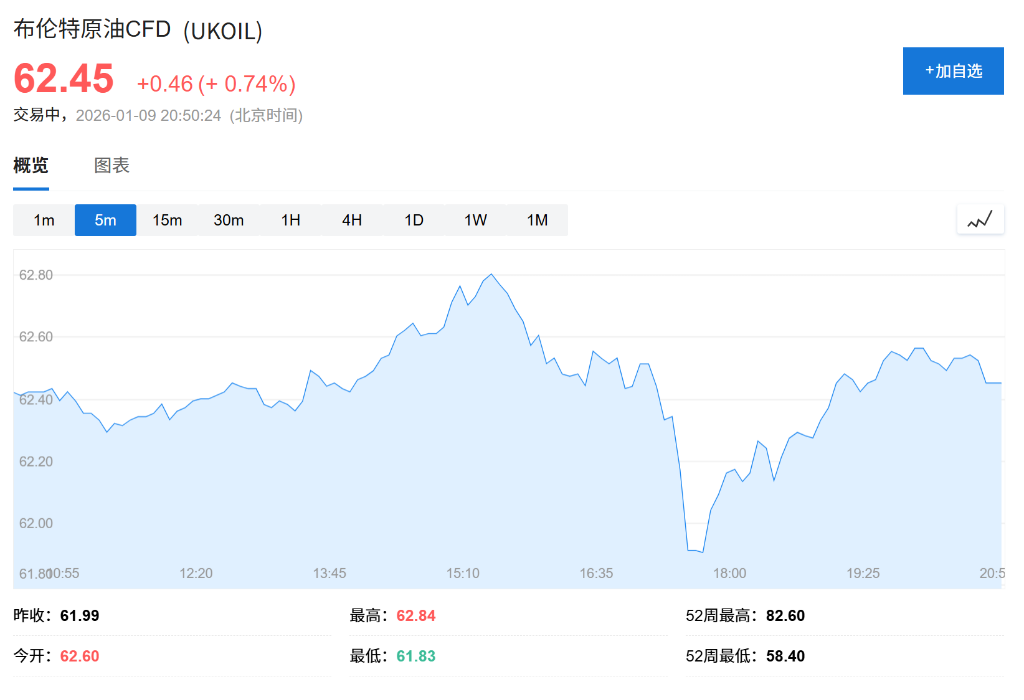
国际油价于周一走低。此前伊朗方面称,经过周末的暴力事件后该国局势已"完全可控",这缓解了市场 对这个欧佩克产油国原油供应的部分担忧,与此同时,投资者也在评估委内瑞拉恢复石油出口的相关进 展。 截至格林尼治标准时间当日07:50,布伦特原油期货价格下跌9美分,报每桶63.25美元;美国西德克萨 斯中质原油期货价格下跌10美分,报每桶59.02美元。 尽管上周末抗议活动出现升级,但伊朗宗教领导层针对这场2022年以来规模最大的示威活动加大了弹压 力度,受此影响,两大原油基准价格上周均上涨超3%,创下自去年10月以来的最大单周涨幅。 伊朗外长阿巴斯·阿拉格齐周一通过英文译员表示,经历周末的暴力冲突升级后,伊朗国内局势"已完全 在掌控之中"。 他还称,美国总统唐纳德・特朗普曾警告,若抗议活动演变为流血冲突,美方将对德黑兰采取行动,而 正是这一言论煽动"恐怖分子"将抗议者和安全部队列为袭击目标,企图以此招致外国势力介入。 日前,伊朗国内的动荡局势已造成超500人死亡。 他补充道:"市场的态度是,在供应切实出现中断之前,不会作出显著反应。" 与此同时,随着委内瑞拉总统尼古拉斯・马杜罗被抓获,该国预计将很快恢复石油出口。特 ...
大摩-因果与外汇-委内瑞拉-石油与货币
2026-01-12 01:41
Summary of Conference Call Notes Industry Overview - The notes primarily discuss the oil industry in Venezuela and its implications for the broader Latin American market and currency dynamics, particularly focusing on the relationship between the U.S. and various Latin American countries [1][2][3]. Key Points and Arguments - **U.S. Relations with Latin America**: The U.S. adopts a differentiated strategy towards Latin American countries, maintaining close ties with Brazil and Uruguay while having a more strained relationship with Mexico and Colombia, which may lead to tougher trade negotiations [1][2]. - **Venezuela's Oil Industry Recovery**: The U.S. plans to restructure Venezuela's oil sector, with short-term expectations of a quick recovery in oil production. In an optimistic scenario, production could rise to 2 million barrels per day, contingent on government stability, sanctions, and fiscal terms [1][4]. - **Impact on Global Oil Market**: The production of heavy crude oil in Venezuela is expected to significantly influence the global oil market. Canada, as a major exporter of heavy sour crude, may face challenges if the U.S. adopts a tougher stance in USMCA negotiations due to increased oil imports from Venezuela [1][5]. - **Canadian Dollar Vulnerability**: The Canadian dollar may depreciate due to concerns over increased Venezuelan oil production and its impact on the price differential between Western Canadian Select (WCS) and West Texas Intermediate (WTI) crude [1][5]. - **Emerging Market Currency Outlook**: The situation in Venezuela could lead to a weaker U.S. dollar, benefiting non-U.S. currencies such as the euro and Asian currencies. Emerging market currencies are generally expected to appreciate due to low inflation driven by supply-side factors and improved risk appetite [3][6]. Other Important Insights - **Geopolitical Risks**: The U.S. government's focus on Latin America is likely to increase geopolitical risk premiums, although the direct impact on markets may be limited. Countries like Argentina and Ecuador may benefit from favorable trade agreements and financial support, while Mexico and Colombia may face tougher negotiations [2]. - **Long-term Investment Opportunities**: Despite potential short-term declines due to the Venezuelan situation, the overall outlook for emerging market assets remains positive, with investors encouraged to seek related investment opportunities [3][6].
50美元油价的代价:特朗普的能源宏愿能否避开沙特与页岩油的夹击?
Hua Er Jie Jian Wen· 2026-01-09 13:07
Core Viewpoint - The Trump administration's goal of achieving a $50 per barrel oil price is feasible but faces complex market dynamics and potential supply-side rebound risks [1] Group 1: Oil Price Dynamics - U.S. benchmark crude oil futures were hovering around $57 per barrel, even dipping below $60, due to strong production from Brazil, Guyana, and Canada, leading to oversupply pressures [1] - The EIA projected that global oil inventories would increase by over 2 million barrels per day by 2026, which, combined with potential production recovery in Venezuela, could further push prices down [1] - Goldman Sachs estimates that if Venezuela's production increases by 400,000 barrels per day, the average oil price could drop to $50 per barrel, despite Venezuela's current contribution being less than 1% of global production [1][2] Group 2: Venezuela's Production Potential - Venezuela currently produces about 900,000 barrels per day, and short-term recovery measures could enhance capacity significantly [2] - Analysts suggest that even a modest increase of several hundred thousand barrels per day could substantially drive prices down, with a potential 400,000 barrel increase representing half of the IEA's projected global oil demand increase by 2026 [2] Group 3: U.S. Refinery Needs - If sanctions are lifted, the U.S. could quickly access Venezuelan crude, which would not only lower benchmark prices but also alleviate the shortage of heavy crude faced by U.S. refineries [3] - The need for Venezuelan heavy crude is heightened due to declining production in Mexico and the redirection of Canadian oil to the West Coast post-pipeline expansion [3] Group 4: OPEC+ Response - Low oil prices are a concern for OPEC+ members, particularly Saudi Arabia, which requires a breakeven oil price of $86.60 per barrel by 2026 to balance its budget [4] - While OPEC+ has committed to maintaining stable production levels, the possibility of production cuts may arise if low prices lead to increased fiscal strain [4] - Historical patterns show that Saudi Arabia's decisions regarding production cuts can be unpredictable, adding uncertainty to future market directions [4] Group 5: U.S. Shale Producers' Breakeven Points - U.S. shale producers are under pressure, with a breakeven price of around $61 to $62 per barrel for new drilling to be profitable [7] - If oil prices fall below $55, significant production cuts may occur, impacting the stability of U.S. supply in the medium to long term [7] - The White House aims to balance oil prices slightly above $50 to appease consumers while ensuring the survival of major oil producers [7]