
全球去美元化

Search documents
金价首破4600美元,黄金ETF暂停申购
Sou Hu Cai Jing· 2026-01-12 15:12
1月12日,全球贵金属市场迎来 "沸腾时刻"。 COMEX黄金期货价格直线拉升,首次站上每盎司4600美元整数关口,盘中最高触及4612美元/盎司; COMEX白银同步强势跟涨,最高触及84.69美元/盎司,盘中涨幅一度超过6%。 国内市场跟涨,截至12日收盘,沪金期货主力合约盘中最高涨至1031元/克,沪银期货主力合约单日涨 幅高达14%,收报20945元/千克,7个远月合约均收于涨停。 "周一(1月12日)金银价格再创新高,将维持对贵金属的看涨预期,"南华期货贵金属新能源研究组负 责人夏莹莹对记者称,尽管美联储主席鲍威尔被调查一事具有突发性,但它对贵金属市场的影响不是短 期的,而是给上涨行情添加速度。长期看,美联储独立性受损属于不可逆的制度性损伤,叠加地缘冲 突、全球去美元化、各国央行持续购金等核心叙事形成共振,共同强化贵金属的上涨逻辑。 但高位波动风险不容忽视,近期全球期货交易所干预措施频出,贵金属品种交易保证金被多次提高。1 月12日盘后,上海黄金交易所发布通知称,近期受多重因素影响,贵金属价格波动显著加剧,不确定性 持续上升。并提示各会员单位密切关注市场行情变化,投资者做好风险防范工作,合理控制仓位 ...
金价首破4600美元,黄金ETF暂停申购
第一财经· 2026-01-12 14:53
Core Viewpoint - The global precious metals market is experiencing a significant surge, with gold and silver prices reaching new highs, driven by various macroeconomic factors and geopolitical tensions [3][6]. Group 1: Precious Metals Price Movement - COMEX gold futures prices have surged, reaching an all-time high of $4612 per ounce, while COMEX silver peaked at $84.69 per ounce, with a daily increase exceeding 6% [3]. - In the domestic market, Shanghai gold futures hit a maximum of 1031 yuan per gram, and silver futures saw a daily increase of 14%, closing at 20945 yuan per kilogram [3]. - The overall trend in the futures market shows a strong bullish sentiment, with all six base metal futures contracts on the London Metal Exchange (LME) closing higher, including a 5% increase in tin and a 2% increase in copper [6]. Group 2: Macroeconomic Influences - Recent U.S. labor market data indicated a slower-than-expected increase in non-farm employment, which, combined with a declining unemployment rate and a weakening dollar, has provided new support for gold prices [6]. - Upcoming inflation data is anticipated to impact gold prices, with expectations that persistent inflation may slow down the Federal Reserve's rate-cutting pace, potentially limiting gold's recent upward momentum [6]. Group 3: Central Bank Actions and Market Dynamics - Central banks continue to accumulate gold, with China's gold reserves reported at 7415 million ounces (approximately 2306.323 tons) as of December 2025, marking the 14th consecutive month of increases [7]. - The ongoing trend of central bank gold accumulation, coupled with global monetary expansion and a shift away from the dollar, is expected to support the upward trajectory of precious metals [7]. Group 4: ETF and Investment Strategies - To manage high inflows, gold ETFs have begun to limit purchases, with the E Fund Gold ETF announcing a suspension of subscriptions starting January 16, 2026, to adjust the pricing of gold contracts and protect investor interests [9]. - The Bloomberg Commodity Index has adjusted its target weight for gold from 14.29% to 14.90%, while silver's weight decreased from 4.49% to 3.94%, effective January 15, 2026, which may lead to significant selling pressure in the silver market [10]. - Investment strategies should consider the volatility of gold and silver, with recommendations for long-term holdings to hedge against inflation while being cautious of geopolitical risks and central bank purchasing patterns in the short term [10].

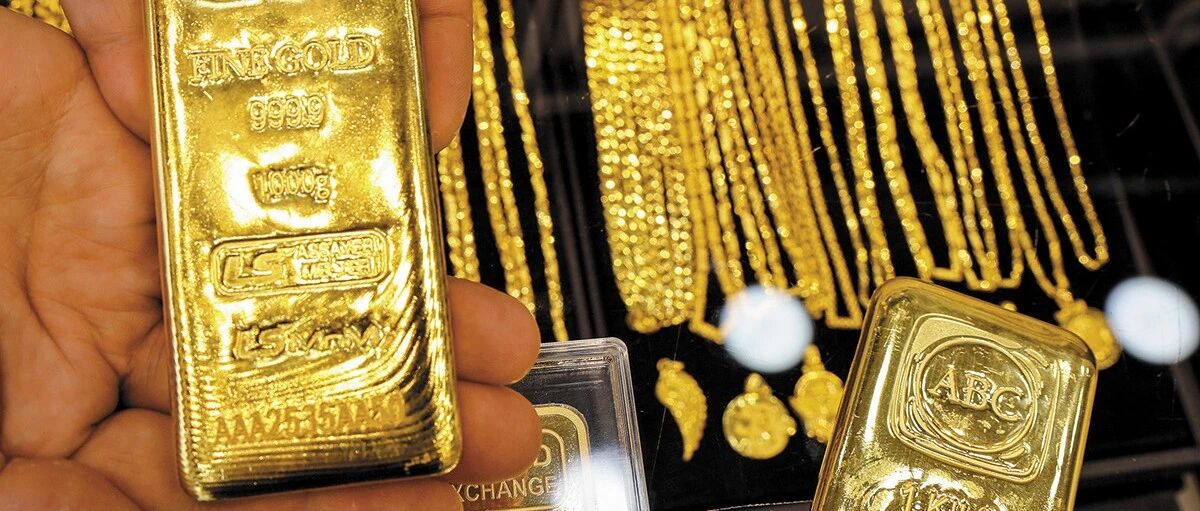
金价首破4600美元,上金所出手降温,黄金ETF暂停申购
第一财经· 2026-01-12 12:28
Core Viewpoint - The global precious metals market is experiencing a significant surge, with gold and silver prices reaching new highs, driven by various macroeconomic factors and geopolitical tensions [3][6]. Group 1: Precious Metals Price Movement - COMEX gold futures prices have surged, reaching an all-time high of $4612 per ounce, while COMEX silver peaked at $84.69 per ounce, with a daily increase exceeding 6% [3]. - In the domestic market, Shanghai gold futures hit a maximum of 1031 yuan per gram, and silver futures saw a daily increase of 14%, closing at 20945 yuan per kilogram [3]. - The overall trend in the futures market shows a strong bullish sentiment, with all six base metal futures contracts on the London Metal Exchange (LME) closing higher, including a 5% increase in tin and a 2% increase in copper [6]. Group 2: Macroeconomic Influences - Recent U.S. labor market data indicated a slower-than-expected increase in non-farm employment, which, combined with a declining unemployment rate and a weakening dollar, has provided new support for gold prices [6]. - Upcoming inflation data is anticipated to impact gold prices, with expectations that persistent inflation may slow down the Federal Reserve's rate-cutting pace, potentially limiting gold's recent upward momentum [6]. Group 3: Central Bank Actions and Market Dynamics - Central banks continue to accumulate gold, with China's gold reserves reported at 7415 million ounces (approximately 2306.323 tons) as of December 2025, marking the 14th consecutive month of increases [7]. - The ongoing trend of central bank gold accumulation, coupled with global monetary expansion and a shift away from the dollar, is expected to support the upward trajectory of precious metals [7]. Group 4: ETF and Investment Strategies - To manage high inflows, gold ETFs have begun to limit purchases, with the E Fund Gold ETF announcing a suspension of subscriptions starting January 16, 2026, to adjust the pricing of gold contracts and protect investor interests [9]. - The adjustment in the Bloomberg Commodity Index weights for gold and silver is expected to create selling pressure, particularly on silver, which may experience greater volatility due to its smaller market size [10].
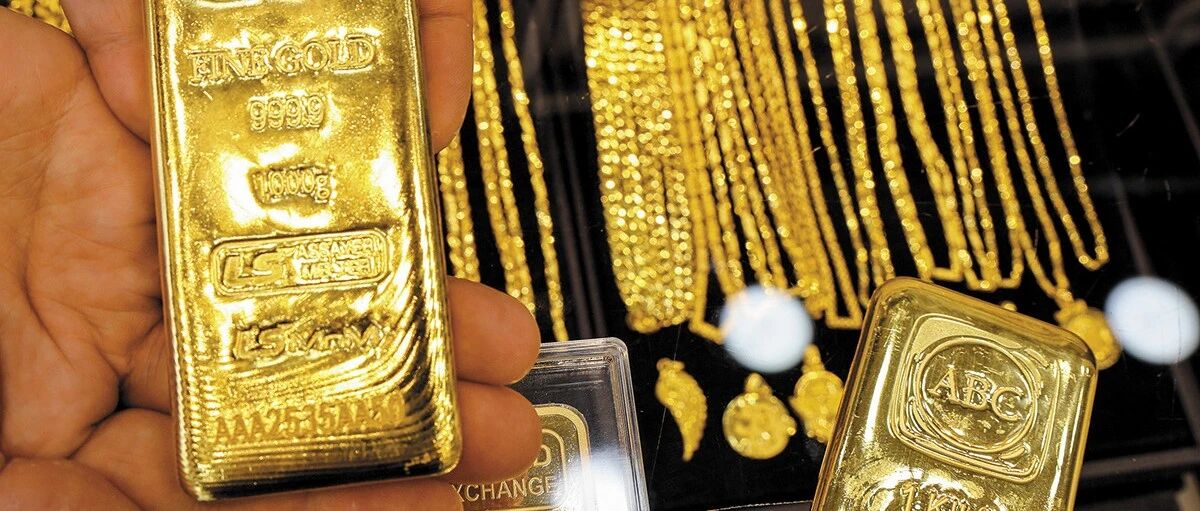
鲍威尔遭刑事调查,将对全球资本市场带来什么冲击?|国际
清华金融评论· 2026-01-12 10:16
Core Viewpoint - The article discusses the criminal investigation of Federal Reserve Chairman Jerome Powell, initiated by the U.S. Department of Justice, which raises concerns about the independence of the Federal Reserve and has led to global market volatility [1][3]. Group 1: Background of the Investigation - The investigation was triggered by the renovation of the Federal Reserve headquarters, with the budget increasing from $1.9 billion to $2.5 billion, and accusations of Powell making "false statements" regarding the project [3]. - The deeper issue lies in the ongoing conflict over monetary policy, particularly after Trump returned to the White House in January 2025, where he pressured the Fed for significant interest rate cuts to reduce government debt costs and stimulate economic growth [3][4]. Group 2: Political Implications - The investigation appears politically motivated, approved by a Trump ally, and coincides with Trump's plans to announce Powell's successor in early 2026 [4]. - Powell has responded strongly, claiming the investigation is a "political pressure tactic" aimed at forcing the Fed to comply with demands for interest rate cuts [4]. Group 3: Trump's Motivations for Rate Cuts - Trump seeks rapid interest rate cuts for political gain, to create an appearance of economic prosperity ahead of the 2026 midterm elections, and to alleviate debt pressures, as U.S. national debt exceeded $37.7 trillion by the end of 2025 [5]. - A 1% reduction in interest rates could save the government nearly $400 billion annually in interest payments, which is significant given that interest expenses accounted for about 27% of federal revenue in 2025 [5]. - Additionally, rate cuts are seen as a way to mitigate the negative impacts of tariffs on U.S. businesses and consumers, thereby stabilizing the economy and capital markets [5]. Group 4: Market Reactions - Following the announcement of the investigation, safe-haven assets surged, with gold prices rising 1.88% to over $4,600 per ounce, and silver increasing by over 4% to reach historical highs [8]. - The U.S. dollar and stock markets faced pressure, with the dollar index dropping 0.3% and S&P 500 futures declining by 0.5% [8]. Group 5: Potential Global Impact - If the independence of the Federal Reserve is compromised, it may lead to irrational interest rate cuts, potentially increasing U.S. inflation and affecting global bond pricing [9]. - The dollar's reserve status could be questioned, accelerating the trend of de-dollarization globally [9]. - The upcoming Federal Reserve meeting on January 27-28, 2026, will be a critical point to observe for market reactions [9].

黄金周报|避险情绪提振,金价再度走强
Sou Hu Cai Jing· 2026-01-12 10:08
截至上周五(1月9日),伦敦现货黄金报收4509.02美元/盎司,自1月2日以来累计上涨176.51美元/盎 司,涨幅4.07%。上周伦敦现货黄金价格震荡走强,金价于周五重回4500关口,最高达4517.23美元/盎 司。 回顾上周以来海外主要市场动态:美国12月制造业PMI超预期回落,强化市场对美联储降息预期;美国 非农就业数据再度下修,ADP数据疲软,但失业率也有所回落,尚为对降息预期有一致性的影响;地缘 冲突持续,美委冲突、白宫对格陵兰岛的表态强硬、伊朗爆发大规模抗议等,激发市场避险情绪;芝商 所第三次上调履约保证金,彭博商品指数开始调参、贵金属权重下降,对黄金带来一定短期利空。总体 来看,在地缘冲突与避险情绪的提振下,金价震荡走强,重回4500关口,或可考虑逢低分批布局黄金基 金ETF(518800)。关注本周美国12月CPI、11月PPI等。 周点评:中长期看黄金具备支撑 在地缘冲突与避险情绪的提振下,上周伦敦现货黄金价格震荡走强,重回4500美元/盎司关口。展望后 市,美委、伊朗等地缘扰动、贵金属板块的火热交易情绪或构成利好,交易所上调保证金、商品指数调 整等因素或构成短期利空加大波动、但不改长期 ...
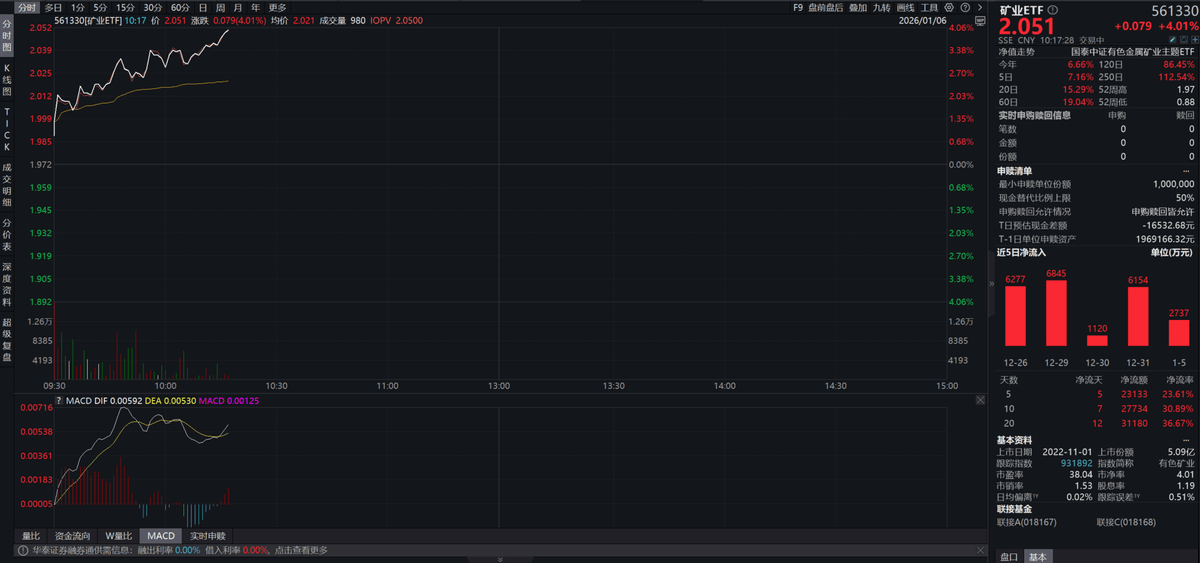
“家里有矿,2025年涨超有色”,矿业ETF(561330)大涨超4%
Sou Hu Cai Jing· 2026-01-06 02:55
Core Viewpoint - The mining ETF (561330) has seen significant inflows and a price increase, driven by expectations of rising prices for gold, copper, and rare earths due to macroeconomic factors and supply constraints [1][3]. Group 1: Market Performance - The mining ETF (561330) has increased by over 4% and has seen a net inflow of over 230 million yuan for five consecutive days [1]. - The mining ETF (561330) ranks third in overall market performance for 2025 and first among metal ETFs, with a year-to-date increase of 106.11% [4][13]. Group 2: Economic Factors Influencing Prices - The ongoing Federal Reserve interest rate cut cycle, increased macroeconomic uncertainty, and a global trend towards de-dollarization are expected to support gold prices [3]. - Supply constraints in the market, coupled with strong demand for copper, aluminum, and lithium, are likely to lead to sustained price increases for these commodities [3][12]. Group 3: ETF Composition and Strategy - The mining ETF (561330) tracks the CSI Nonferrous Metals Mining Theme Index, which has a higher concentration of leading stocks, with the top ten constituents accounting for 55.77% of the index [4]. - The index has a higher proportion of gold, copper, and rare earths at 55.8%, compared to 50.9% in the broader CSI Nonferrous Index, making it more responsive to favorable market conditions [7]. Group 4: Future Outlook - The supply-side constraints are seen as a fundamental driver for the industry, with low inventory levels and increased demand from manufacturing and energy transition projects expected to amplify price increases [12]. - Analysts predict that copper and cobalt prices will continue to rise due to supply tightness, while lithium prices are expected to benefit from unexpected increases in storage demand [12].
1月5日盘后播报
Sou Hu Cai Jing· 2026-01-05 11:34
Group 1 - The A-share market experienced a strong performance with the Shanghai Composite Index rising by 1.38% to close at 4023.42 points, while the Shenzhen Component Index increased by 2.24% to 13828.63 points, indicating a bullish trend supported by policy measures and the "opening red" effect at the beginning of the year [1] - The total trading volume in the two markets reached 2.56 trillion yuan, with over 4100 stocks rising, particularly in the media and pharmaceutical sectors [1] - The Hong Kong stock market showed strong performance during the A-share market's break, with the Hang Seng Technology Index experiencing a rebound of over 4%, suggesting a favorable long-term outlook for the technology sector despite potential short-term volatility [1] Group 2 - The gaming sector showed active performance, with significant capital inflow indicating strong confidence in the sector's "opening red" trend for 2026, shifting from mere valuation recovery to performance-driven growth [2] - The Gaming ETF (516010) is highlighted as a quality tool for investors to capitalize on the gaming industry's recovery, with a focus on medium to long-term investment strategies [2] - The Semiconductor Equipment ETF (159516) rose by 5.96%, driven by surging AI demand and significant price increases in storage-related products, suggesting that storage capacity constraints may become a key investment theme through 2026 [2] Group 3 - The Gold Fund ETF (518800) and Gold Stock ETF (517400) saw increases of 2.09% and 2.41% respectively, supported by rising geopolitical risks and active trading in precious metals [3] - Short-term gold prices may experience high-level fluctuations due to profit-taking risks after recent highs, while the long-term outlook remains supported by factors such as the Federal Reserve's potential interest rate cuts and increasing global uncertainty [3] - Investors are encouraged to monitor investment opportunities in gold ETFs amidst these market dynamics [3]
国际金银价拉升,国内足金金饰克价同步上涨
Sou Hu Cai Jing· 2026-01-05 06:29
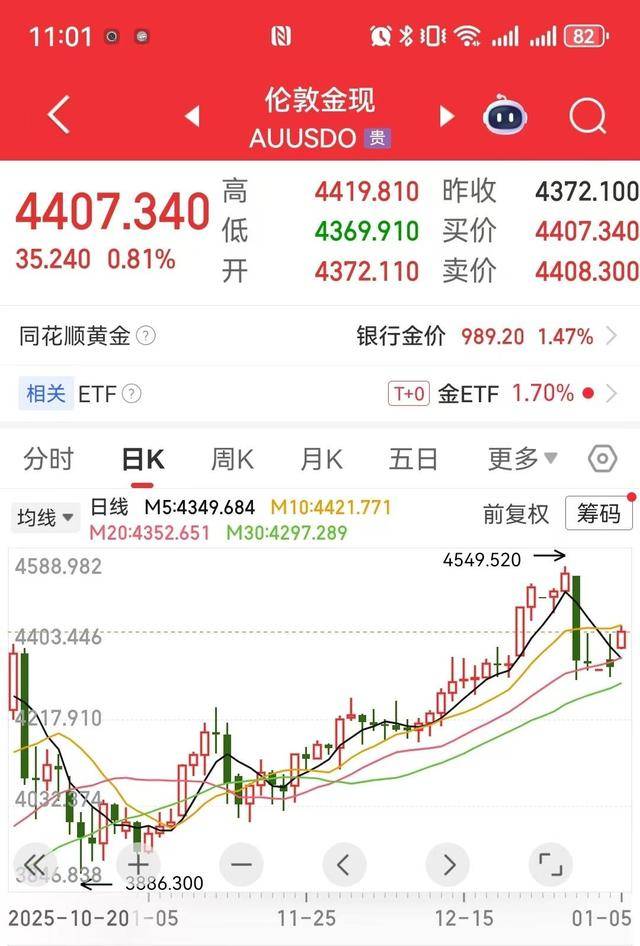
Group 1 - Gold and silver prices experienced significant increases on January 5, with London gold reaching $4,400 and peaking at $4,419.81 per ounce, marking a daily increase of 0.81%. COMEX gold rose by 1.88%, while COMEX silver surged by 5.73% [1][4]. - The rise in precious metal prices is attributed to heightened geopolitical tensions, particularly in the Middle East and Ukraine, alongside increasing probabilities of a Federal Reserve rate cut in January. This has led to a surge in market risk aversion, providing support for gold prices [4]. - Long-term factors such as the anticipated Federal Reserve rate cut cycle, increasing uncertainty in overseas macroeconomic policies, and a global trend towards de-dollarization are expected to continue supporting gold prices [4]. Group 2 - As of January 5, the latest prices for gold jewelry were reported as follows: Chow Tai Fook at 1,378 yuan per gram, Chow Sang Sang at 1,376 yuan per gram, and Lao Feng Xiang at 1,370 yuan per gram. Some gold jewelry prices increased by 22 yuan overnight [5].
贵金属市场波动加大 2025年价格总体呈现震荡上涨态势
Jing Ji Ri Bao· 2026-01-05 04:01
Group 1 - The precious metals market has gained significant attention, with gold and silver reaching historical highs in December 2025, with gold surpassing $4500 per ounce and silver peaking at $72.7 per ounce, marking annual increases of over 70% and nearly 150% respectively [1] - The surge in precious metal prices is attributed to multiple macroeconomic factors and changes in industry dynamics, driven by increased risk aversion and accelerated capital inflow into the sector [1][2] - The Federal Reserve's anticipated interest rate cuts, driven by rising unemployment and lower-than-expected core CPI, have weakened the dollar and reduced the opportunity cost of holding precious metals, further supporting price increases [2] Group 2 - Geopolitical risks have intensified, prompting a flight to safety into precious metals, which, combined with the end-of-year asset rebalancing cycle, has accelerated capital allocation into this sector [2] - Industrial demand, particularly for silver due to the expansion of photovoltaic installations and increased AI server demand, has provided strong support for precious metal prices [2] - The market sentiment and capital rotation have played a crucial role in the recent price surge, with speculative and trend-following funds entering the market, amplifying price increases [3] Group 3 - Central banks have continued their gold purchasing trend, with a reported net purchase of 53 tons in October 2025, a 36% month-on-month increase, highlighting the strategic value of precious metals in official reserves [3] - The recent volatility in precious metals has led to increased margin requirements for trading, indicating heightened market risk [3] - Despite short-term volatility, long-term prospects for precious metals remain strong due to ongoing global monetary easing, persistent central bank purchases, and geopolitical risks [4]
把握金、铜涨价机遇,关注矿业ETF(561330)
Sou Hu Cai Jing· 2026-01-05 01:32
Group 1 - The core viewpoint highlights that the ongoing Federal Reserve interest rate cut cycle, increasing uncertainty in overseas macro policies, and the global trend of de-dollarization are supportive of gold prices [1] - Geopolitical tensions in regions such as the Middle East and Ukraine, along with rising U.S.-Venezuela tensions, are contributing to heightened market risk aversion, providing additional support for gold prices [1] - The market anticipates that if the new Federal Reserve chairman adopts a dovish stance, the pace of interest rate cuts may accelerate, further benefiting gold performance [1] Group 2 - The supply-demand dynamics for metals are tightening, with expectations of resilient performance during the interest rate cut cycle, particularly for copper, aluminum, and lithium due to strong demand and supply constraints [1] - The ongoing Federal Reserve interest rate cut cycle, combined with increasing uncertainty in overseas macro policies and the global trend of de-dollarization, is expected to provide sustained support for gold prices [1] - The mining ETF (561330) has a copper content of 28% and gold content of 15%, and it is suggested to pay attention to the opportunities arising from the price increases of gold and copper [1]