
利率下行

Search documents
李扬:利率下行成为我国金融运行的重要常态
Xin Lang Zheng Quan· 2025-11-28 07:26
Group 1 - The 2025 Analyst Conference has commenced, gathering top researchers, fund managers, and scholars to explore investment opportunities amidst economic cycles [1] - Li Yang highlighted that the downward trend in interest rates has become a significant norm in China's financial operations, driven by factors such as declining global potential growth rates and changes in monetary policy paradigms [3][4] - As of October this year, the structure of social financing has notably changed, with RMB deposits reaching 325.55 trillion yuan and loans at 270.61 trillion yuan, indicating a net increase in deposits over loans [3] Group 2 - The continuous decline in interest rates since 2015 has led to lower yields on 10-year and 30-year government bonds, with the latest figures showing yields at 1.8210% and 2.1586% respectively [4] - The persistent reduction in the reserve requirement ratio has further contributed to the decline in interest rates, aligning with global trends of ultra-low or negative interest rates in regions like the US, Japan, and the Eurozone [4] - The decline in interest rates has multiple impacts, including reduced financial costs for the real economy and a historical low net interest margin for commercial banks at 1.42%, prompting financial institutions to transform [4] Group 3 - The development of the capital market has been prioritized, addressing the long-standing issues of underdeveloped capital markets and low direct financing ratios in China [4] - Asset management and mergers & acquisitions are identified as key drivers for capital market development, with the scale of the wealth management market expected to exceed 32 trillion yuan by 2025 [4][5] - The introduction of policies to relax conditions for merger targets and simplify review processes supports cross-industry mergers and acquisitions, enhancing the vitality of the capital market [5]

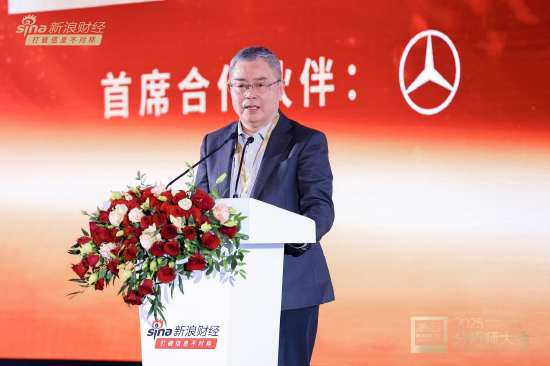
李扬:中国金融结构迎积极变化 资本市场发展迎新机遇
Xin Lang Zheng Quan· 2025-11-28 06:45
Core Insights - The 2025 Analyst Conference has commenced, gathering top analysts, fund managers, and scholars to explore investment opportunities amidst changing market conditions [1] Group 1: Financial Structure Changes - China's financial structure is undergoing positive changes, characterized by adjustments in social financing structure and a continuous decline in interest rates, creating new opportunities for capital market development [3] - In the first ten months of this year, the change in social financing structure is notable, with RMB deposits reaching 325.55 trillion and loans at 270.61 trillion, resulting in an increase of 8.35 trillion in deposits over loans [3] - The trend of "disintermediation" has persisted for three years, with M2 continuing to grow and M1 increasing at a faster rate, indicating improved monetary liquidity [3] Group 2: Interest Rate Trends - The decline in interest rates has become a significant norm in China's financial operations, with the 10-year and 30-year government bond yields consistently decreasing since 2015 [4] - As of November 24, 2025, the 10-year government bond yield is at 1.8210% and the 30-year yield at 2.1586%, with the average interest rate on new loans dropping to 3.24% [4] - The continuous reduction in the reserve requirement ratio has further facilitated the decline in interest rates, influenced by global trends of low or negative interest rates [4] Group 3: Capital Market Development - The development of asset management and mergers and acquisitions (M&A) is crucial for capital market growth, with the scale of the wealth management market expected to exceed 32 trillion by 2025 [5] - There is a rising demand for equity and mixed-asset financial products among investors, while M&A has become an important adjustment mechanism in the era of stock economy [5] - The introduction of "six guidelines" for M&A has relaxed conditions for targets and simplified review processes, supporting cross-industry mergers and technology acquisition [6]
信用债ETF系列报告:折价修复后,信用债ETF怎么看?
Hua Yuan Zheng Quan· 2025-11-27 07:13
Report Summary 1. Report Industry Investment Rating The provided content does not mention the report industry investment rating. 2. Core Viewpoints - Since October, the net value of credit bond ETFs has significantly recovered compared to the end of September, with interest rates showing a downward trend. The net value of different types of credit bond ETFs, including science - innovation bond ETFs, benchmark - market - making credit bond ETFs, and others, has increased to varying degrees [2]. - There is a structural divergence in the trends of the circulating shares and market values of credit bond ETFs. Science - innovation bond ETFs have contributed the main scale increment, while the shares and market values of benchmark - market - making credit bond ETFs have been gradually declining since early September [2]. - The market has fully priced the underlying bonds of the second batch of science - innovation bond ETFs in advance. The yield decline of the underlying bonds of the CSI AAA Science - Innovation Bond Index may be similar to that of general credit bonds, and the subsequent market trends of credit bond ETFs' underlying bonds may be in line with general credit bonds [2]. - The discount of credit bond ETFs has significantly narrowed compared to the first half of October, and there may still be room for further recovery in the future, mainly due to factors such as the potential demand from amortized fixed - open bond funds, the impact of the new regulations on public fund redemption fees, the support from fixed - income wealth management products, and the expected decline in interest rates [2][3][4]. 3. Summary by Related Catalogs Net Value Performance - As of November 21, the average unit net value of science - innovation bond ETFs has increased by 0.63% compared to the end of September, and most of them have recovered above 100 yuan. The average unit net value of benchmark - market - making credit bond ETFs has increased by 0.67% and is above 100 yuan. The net values of the three credit bond ETFs listed before the beginning of 2025 have also recovered to different degrees [2]. Share and Market Value Trends - As of November 21, the total market value of benchmark - market - making credit bond ETFs is 119.7 billion yuan, with 1.187 billion circulating shares; the total market value of science - innovation bond ETFs is 253.6 billion yuan, with 2.534 billion circulating shares; the total market value of corporate bond spread factor ETFs, urban investment bond ETFs, and short - term financing ETFs is 126.4 billion yuan, an increase of 15.6 billion yuan compared to the end of September [2]. - The shares and market values of benchmark - market - making credit bond ETFs have been gradually declining since early September, while the total market value of science - innovation bond ETFs has rapidly climbed to over 250 billion yuan as of November 21, an increase of 125.1 billion yuan compared to September 23 [2]. Pricing of Underlying Bonds - Since the listing of the second batch of 14 science - innovation bond ETFs in late September, the yields of the underlying bonds of the CSI AAA Science - Innovation Bond Index have declined significantly. The decline in the yields of underlying bonds with different remaining maturities is in the range of 10 - 19BP, and the decline is not significantly different from that of general credit bonds [2]. Discount and Recovery Potential - As of November 21, the discount rate of benchmark - market - making credit bond ETFs is 0.25%, and that of science - innovation bond ETFs is only 0.03%, significantly narrowing compared to the first half of October. The discounts of corporate bond spread factor ETFs and urban investment bond ETFs have also returned to near zero [2][3]. - There are four main reasons for the potential further recovery of credit bond ETF discounts: the potential demand from amortized fixed - open bond funds, the impact of the new regulations on public fund redemption fees, the support from fixed - income wealth management products, and the expected decline in interest rates [3][4].
个人养老金保险格局生变:分红型产品占比突破40%
Zhong Guo Zheng Quan Bao· 2025-11-24 20:13
Core Insights - The personal pension insurance market is evolving with a clear product supply structure, where annuity insurance dominates with nearly 60% of the total products available [1] - Dividend-type insurance products are gaining popularity due to their dual advantages of risk diversification and flexible returns, becoming a mainstream development direction in the market [1][2] - The current personal pension market shows a trend of "hot account openings but cold deposit intentions," indicating a need for a richer product system to activate actual funding willingness [3][4] Product Types - Personal pension insurance products can be categorized into three types: exclusive commercial pension insurance, whole life insurance, and annuity insurance [2] - Annuity insurance leads with 69 products, followed by whole life insurance with 37 products, and exclusive commercial pension insurance with only 12 products [2] Popularity of Dividend-Type Products - In a declining interest rate environment, dividend-type insurance products are increasingly favored by investors, with 50 such products available, accounting for over 40% of the total products [2][3] - The shift in the annuity insurance product landscape shows that dividend-type annuity products now hold a significant market share [2] Customer Benefits of Dividend-Type Products - Dividend-type products offer customers both guaranteed and floating benefits, with insurance companies required to share at least 70% of operational profits with policyholders [3] - Investors are shifting from fixed-income annuity products to dividend-type products due to the potential for higher returns from the floating benefit component [3] Comprehensive Solutions - The industry is encouraged to innovate by integrating health management and pension services into comprehensive solutions, enhancing product attractiveness through a "service + finance" model [4] - Regulatory changes are expected to expand the personal pension product matrix, including the introduction of personal pension savings bonds, to better meet diverse risk preferences [3][4]
利率持续下行,「固收+」为何成为投资新宠?
银行螺丝钉· 2025-11-20 12:54
Core Viewpoint - The article discusses the declining interest rates on bank deposits and wealth management products, indicating that keeping money in banks is becoming less profitable [1][3]. Summary by Sections Interest Rate Decline - Recent years have seen a gradual decrease in the yield of both bank deposits and wealth management products, making it less attractive to keep money in banks [1]. - As of May 2025, major state-owned banks in China have lowered the interest rates on RMB deposits [1]. Current Interest Rates - The current interest rates for various deposit types are as follows: - Demand deposits: 0.05% - 1-year fixed deposit: 0.95% - 3-year fixed deposit: 1.25% - 5-year fixed deposit: 1.30% [3][7]. Reasons for Interest Rate Decline - The long-term trend of declining interest rates is attributed to a slowdown in overall economic growth, with GDP growth rates decreasing from over 10% in 2006-2007 to around 5% in 2024 [5][8]. - As the economy matures, the speed at which companies earn profits slows down, leading to lower borrowing willingness and interest rates [8]. Rise of "Fixed Income +" - In response to declining interest rates, the "Fixed Income +" investment strategy has gained popularity among investors seeking better returns without increasing risk [9]. - "Fixed Income +" typically consists of a low-risk bond component for stability and a higher-risk equity component to enhance returns [9]. Global Perspective on "Fixed Income +" - The "Fixed Income +" concept is well-established in overseas markets, particularly in the U.S. and Japan, where traditional fixed income yields have declined significantly [10]. - In the U.S., as of February 2021, there were 3,936 bond funds, with 1,983 classified as "Fixed Income +," representing nearly 50% of all bond funds and about 70% of total assets [10]. Future Demand for "Fixed Income +" - The decline in traditional fixed income yields is expected to drive domestic investors towards "Fixed Income +" products, which are designed to provide stable returns [11].

债市日报:11月17日
Xin Hua Cai Jing· 2025-11-17 08:27
Market Overview - The bond market showed a strong consolidation on November 17, with all major government bond futures closing higher, and interbank bond yields declining by approximately 0.5-1 basis points [1][2] - The central bank conducted a net injection of 163.1 billion yuan in the open market, with funding rates collectively rising due to tax period disturbances [1][6] Bond Futures Performance - The 30-year main contract rose by 0.33% to 116.45, the 10-year main contract increased by 0.09% to 108.485, the 5-year main contract went up by 0.05% to 105.905, and the 2-year main contract gained 0.03% to 102.48 [2] Yield Movements - Major interbank bond yields generally declined, with the 10-year government bond yield falling by 0.35 basis points to 1.8015%, and the 30-year government bond yield decreasing by 1 basis point to 2.1385% [2] International Bond Market Trends - In North America, U.S. Treasury yields rose across the board, with the 10-year yield increasing by 2.71 basis points to 4.146% [3] - In Asia, Japanese bond yields generally increased, with the 10-year yield rising by 3 basis points to 1.73% [4] - In the Eurozone, 10-year bond yields also saw increases, with French yields up by 4.3 basis points to 3.457% [4] Primary Market Activity - Agricultural Development Bank's financial bonds had successful bids with yields of 1.3849% for 1.074 years, 1.6197% for 3 years, and 1.7076% for 5 years, with bid-to-cover ratios of 3.6, 7.53, and 1.24 respectively [5] Funding Conditions - The central bank conducted a 7-day reverse repo operation with a fixed rate of 1.40%, resulting in a net injection of 163.1 billion yuan after accounting for maturing repos [6] Institutional Insights - Institutions suggest that the current market conditions may lead to continued downward pressure on yields due to insufficient financing demand and ongoing asset scarcity, with a focus on the allocation opportunities towards the end of the year and early next year [1][7] - The tightening supply of convertible bonds has led to increased valuations, with recommendations for investors to focus on mid-to-large cap, relatively low-priced securities while taking profits on high-priced, overvalued stocks [8]
2025W46房地产周报:香港开发商竞争格如何?-20251117
NORTHEAST SECURITIES· 2025-11-17 04:13
Investment Rating - The report maintains an "Outperform" rating for the real estate sector [8] Core Insights - The Hong Kong real estate market is experiencing a significant recovery, driven by the removal of restrictive measures and declining interest rates. The private residential price index has risen for four consecutive months, with a month-on-month increase of 1.32% in September. The rental index has also increased for ten months, reaching a historical high [16][18] - The competitive landscape among Hong Kong developers is becoming increasingly concentrated, with the top four developers accounting for nearly 50% of total sales in 2024. This trend indicates a shift towards a more monopolistic market structure [18] - The report highlights the importance of policy adjustments, such as reducing purchase restrictions and expediting the recovery of idle land, to boost market confidence and stimulate demand [3][20] Summary by Sections Hong Kong Real Estate Market - The market is witnessing a recovery due to the removal of demand management measures and lower transaction costs, which have significantly stimulated homebuyer demand [16][18] - The top four developers in Hong Kong, including Sun Hung Kai Properties and Henderson Land, have seen substantial sales, with Sun Hung Kai achieving sales of HKD 36 billion in 2024, representing 20% of total sales [18] Market Performance - The A-share real estate sector outperformed the broader market, with a weekly increase of 2.70%, surpassing the benchmark by 3.78 percentage points [20][21] - The Hong Kong real estate sector also outperformed, with a weekly increase of 4.99%, exceeding the Hang Seng Index by 3.73 percentage points [33] Credit Market - The issuance of real estate credit bonds totaled CNY 3.62 billion this week, with a net financing amount of -CNY 4.13 billion. Cumulative issuance for the year stands at CNY 374.38 billion, with a net financing amount of -CNY 41.90 billion [20][40] REITs Market - The REITs index increased by 0.82% this week, with the property-type REITs index rising by 0.62% and the operating rights-type REITs index increasing by 1.08% [42][51] - The total transaction volume for REITs this week was CNY 1.353 billion, with property-type REITs accounting for CNY 732 million [56]



37万亿险资下半年投向哪
Bei Jing Shang Bao· 2025-11-16 15:40
Core Insights - Insurance capital is reshaping its investment strategy, with a notable shift from traditional fixed-income assets to equities as companies seek higher returns in a low-interest-rate environment [1][4]. Group 1: Investment Trends - As of the end of Q3, the total investment balance of insurance companies reached 37.46 trillion yuan, marking a 12.6% increase from the beginning of the year [3]. - The proportion of bond investments has slightly decreased, with life insurance companies reducing their bond investment ratio from 51.9% in Q2 to 51.02% in Q3 [3][5]. - Bank deposits have also seen a decline, with property insurance companies' bank deposit ratio dropping from 17.24% in Q2 to 15.67% in Q3, and life insurance companies' from 8.02% to 7.37% [3]. Group 2: Equity Investments - Life insurance companies' stock investment ratio reached 10.12% by the end of Q3, an increase of 1.31 percentage points from Q2, while property insurance companies' stock investment balance grew to 8.74%, up by 0.41 percentage points [5][6]. - The total stock investment by both types of companies amounted to 3.6 trillion yuan, reflecting a strategic shift towards equities to address asset scarcity and mitigate interest rate risks [5][6]. Group 3: Regulatory Environment - Recent regulatory changes have encouraged insurance companies to increase their equity investments, including a 5% increase in the equity asset ratio for certain solvency levels and a 10% reduction in risk factors for stock investments [6]. - The overall asset allocation is expected to maintain a "fixed income as the mainstay, equity as a supplement" structure, but the gradual increase in equity proportion is seen as a long-term trend [7].

三季度公募含“银”量创五年新低,四季度银行股修复动能渐显
Di Yi Cai Jing· 2025-11-11 13:40
Core Viewpoint - Qingdao Guoxin Chanin Holdings has become the largest shareholder of Qingdao Bank with a total holding of 19.17% [1] - The banking sector is experiencing a mixed performance with significant shareholder activity, particularly in the context of third-quarter financial reports [1][2] Shareholder Activity - Multiple city commercial banks and national banks have reported shareholding increases, including Chengdu Bank, Nanjing Bank, and Postal Savings Bank [1] - Public funds have reduced their holdings in bank stocks, with the proportion of public funds in bank stocks dropping to 1.78%, a decrease of 2.55 percentage points [2][3] Market Performance - The banking sector saw a decline of 8.68% in the third quarter but rebounded with an increase of 8.23% in the fourth quarter as of November 11 [1] - The overall market style shift has led to a significant reallocation of funds from low-volatility bank stocks to high-growth sectors [4] Fund Composition - Active funds have reduced their positions in major banks like China Merchants Bank and Jiangsu Bank, while some banks like Ningbo Bank and Chengdu Bank saw an increase in holdings [3] - Passive funds also exhibited a reduction in bank stock holdings, with a total market value of 841.12 billion yuan, down 5.67 percentage points [3] Institutional Investment Trends - Insurance and state-owned funds have maintained stable holdings in bank stocks, with state-owned funds holding a total market value of 4.5 trillion yuan [5][6] - Local state-owned capital is increasingly investing in city commercial banks, driven by regional financial resource integration needs and attractive valuations [6] Future Outlook - The fourth quarter has seen a wave of share buyback announcements from bank executives and major shareholders, signaling positive investment sentiment [7] - Analysts believe there are structural recovery opportunities in the banking sector, particularly for regional banks and high-dividend state-owned banks [7][8]

流动性跟踪与地方债策略专题:地方债还有什么机会
Minsheng Securities· 2025-11-11 03:10
Group 1 - The report indicates that the central bank's net investment in government bonds in October 2025 was 20 billion yuan, which is lower than the monthly net purchases in 2024, which ranged from 100 billion to 300 billion yuan [1][8] - Since June 2025, major banks have significantly increased their net purchases of government bonds with maturities of 3 years or less, with monthly net purchases exceeding 230 billion yuan [1][8] - The liquidity outlook remains relatively loose, with a weekly net payment of 369.2 billion yuan in government bonds, the highest in two months, despite low maturity amounts and the absence of tax periods [2][9] Group 2 - The sentiment in the secondary market for local government bonds has been positive since late October, with insurance and fund institutions being the main net buyers, particularly in the 15-20 year and 3-5 year maturities [2][18] - The issuance of special refinancing bonds is currently less than one-fifth of the planned 500 billion yuan, with a focus on maturities that may widen the spread between local government bonds and national bonds [3][18] - The report highlights that the newly issued bonds in November have an implied tax rate of 3% or below, with many bonds deviating significantly from secondary market pricing [3][18]