
反内卷

Search documents
交运月度会-交易-运价弹性-与-供应链重塑
2026-03-19 02:39
Summary of Conference Call Notes Industry Overview - **Industry Focus**: Transportation and logistics sectors, including shipping, rail, air travel, and express delivery services - **Geopolitical Context**: The situation in the Strait of Hormuz is impacting shipping, rail, and hazardous materials logistics positively, while high oil prices are increasing operational costs across various transport sectors Key Points and Arguments Shipping and Logistics - **Shipping Industry**: The daily passage through the Strait of Hormuz has decreased significantly, affecting 31% of global oil shipping exports and 5% of container shipping, leading to a re-evaluation of shipping rates and a potential restructuring of shipping networks [1][2] - **Rail Transport**: High oil prices are increasing road transport costs, making rail transport more attractive. The Daqin Railway is expected to benefit from increased coal transport demand due to rising coal prices linked to oil price increases [1][2] - **Hazardous Materials Logistics**: Companies with a high percentage of chemical and oil products in their storage are likely to benefit from increased demand for stockpiling, potentially raising warehouse rental rates [3] Air Travel - **Cost Pressures**: The aviation sector is facing significant cost pressures due to rising fuel prices, with fuel costs accounting for approximately 35% of total operating costs. The expected increase in fuel surcharges could reach 170-180 RMB per flight segment [6][17] - **Market Dynamics**: The geopolitical situation is creating opportunities for Chinese airlines as travelers seek alternatives to Middle Eastern hubs, potentially increasing international passenger volumes by 13% if 25% of transit passengers shift to Chinese carriers [18][19] Express Delivery - **Market Trends**: The express delivery sector is experiencing a "reverse involution" trend, with prices in key areas like Yiwu increasing. Major companies like YTO and ZTO are expected to gain competitive advantages [1][5] Investment Recommendations - **Stock Selection**: It is recommended to focus on stocks with low correlation to Middle Eastern geopolitical risks and those with defensive attributes, such as Anhui Expressway and Shenzhen International. SF Express is highlighted for its alignment with high-quality growth trends in the express delivery sector [7] - **Shipping vs. Oil Transport**: The recommendation is to prioritize container shipping over oil transport due to lower expected volatility and higher certainty in returns, even amidst geopolitical tensions [8] Market Conditions - **Current Market Sentiment**: The overall sentiment in the transportation sector is cautious, with a preference for rail over road transport due to the latter's vulnerability to rising fuel costs. The express delivery sector shows signs of recovery, while air travel is under pressure from fuel costs [15][20] Airport Operations - **White Cloud Airport**: A new duty-free agreement has been signed with a commission rate reduced to 21%, which is expected to positively impact profits, although the overall profit elasticity will depend on the recovery of duty-free sales [22][23] Future Outlook - **Long-term Adjustments**: The geopolitical situation is expected to lead to profound adjustments in global logistics networks, with potential shifts in trade routes and increased congestion at major ports [4][10] Risks and Challenges - **Cost Transferability**: The ability of the air, road, and express delivery sectors to pass on increased costs to consumers is limited due to weak supply-demand dynamics, which may suppress market demand if oil prices remain high [2][6] Additional Important Insights - **Rail Freight Benefits**: The closure of the Strait of Hormuz is driving up coal prices in the Asia-Pacific region, benefiting rail freight operations like the Daqin Railway [10] - **Container Transport Opportunities**: The potential shift from sea to rail transport for high-value goods due to increased shipping costs could benefit the China-Europe Railway Express [11] This summary encapsulates the key insights and trends discussed in the conference call, providing a comprehensive overview of the current state and future outlook of the transportation and logistics sectors.

航空机场2026年2月数据点评:春运表现良好,中东局势动荡利好中欧直飞航线
Dongxing Securities· 2026-03-18 09:53
Investment Rating - The industry investment rating is "Positive" [6] Core Insights - The Spring Festival travel season in February 2026 showed strong performance, with domestic airlines increasing capacity by approximately 11.4% year-on-year and 7.3% month-on-month, primarily due to the later timing of the Spring Festival compared to 2025 [2][11] - International routes saw a significant year-on-year capacity increase of about 16.5% in February 2026, with a notable rise in passenger load factor exceeding 4 percentage points [3][54] - The recent instability in the Middle East has positively impacted direct flights from China to Europe, leading to increased demand and ticket prices for these routes [3][59] Summary by Sections Domestic Routes - In February 2026, listed companies' domestic route capacity increased by approximately 11.4% year-on-year and 7.3% month-on-month, attributed to the Spring Festival occurring later this year [2][15] - The overall passenger load factor for February 2026 improved by about 0.7 percentage points compared to the same month in 2025, with a more significant month-on-month increase of approximately 2.9 percentage points [35][45] - The combined capacity and load factor metrics indicate a robust demand performance during the Spring Festival travel season [49] International Routes - The international route capacity for listed airlines in February 2026 increased by approximately 16.5% year-on-year, with a slight month-on-month decrease of about 3.2% [3][54] - The passenger load factor for international routes saw a significant year-on-year increase of over 4 percentage points, with a month-on-month rise of 2.8 percentage points [57][58] - The demand for direct flights from China to Europe has surged due to reduced flight options through the Middle East, resulting in higher ticket prices [3][59] Oil Price Impact - The recent rise in oil prices, driven by geopolitical events, has reached nearly $100 per barrel for Brent crude, but its sustainability remains uncertain [4][14] - The negative impact of rising oil prices on airline stock prices has been largely reflected already, suggesting a focus on supply-demand dynamics moving forward [4][14] Investment Recommendations - There is a recommendation to focus on large airlines that are expected to benefit more significantly from the industry's recovery and improved profitability due to constrained supply growth and rising load factors [5][6]






ZTO EXPRESS(ZTO) - 2025 Q4 - Earnings Call Transcript
2026-03-18 01:32
Financial Data and Key Metrics Changes - In Q4 2025, total revenue increased by 12.3% to CNY 14.5 billion, while for the full year, it rose by 10.9% to CNY 49.1 billion [15] - Adjusted net income for Q4 was CNY 2.7 billion, and for the full year, it reached CNY 9.5 billion [15] - Gross profit declined by 2.1% to CNY 3.7 billion for Q4 and by 10.5% to CNY 12.3 billion for the full year [18] - Operating cash flow surged by 50.6% to CNY 4.2 billion in Q4 and reached CNY 12 billion for the year [19] Business Line Data and Key Metrics Changes - Annual retail parcel volume grew by 46% year-over-year, with daily retail volume reaching close to 10 million parcels in Q4 [8] - The average selling price (ASP) for the core express delivery business increased by 2.9% in Q4, driven by a positive contribution from an improved mix in key account volume [15] - Total cost of revenue for Q4 was CNY 10.8 billion, increasing by 18.2%, while for the full year, it was CNY 36.8 billion, up by 20.5% [16] Market Data and Key Metrics Changes - The express delivery industry in China achieved a steady growth of 13.6% in 2025, with parcel volume reaching 200 billion [5] - ZTO's market share expanded by 0.8 percentage points, maintaining a steady market share year-over-year [5][6] Company Strategy and Development Direction - ZTO is committed to a high-quality development strategy, focusing on service quality, operational efficiency, and maintaining a healthy competitive environment [7][9] - The company plans to optimize network policies and incentive mechanisms to ensure steady volume growth and improved cost efficiency [10] - ZTO aims to integrate service quality, market share, and reasonable profit as part of its long-term strategy [11] Management Comments on Operating Environment and Future Outlook - Management noted that the express delivery industry is transitioning towards high-quality development, with a focus on both quantity and quality [9][11] - The company anticipates parcel volume growth for 2026 to be between 10%-13% year-over-year, indicating a commitment to outperform the industry average [19] - Management emphasized the importance of maintaining a stable and rational competitive order in the industry [30] Other Important Information - ZTO announced a semi-annual cash dividend of $0.39 per ADS and a new $1.5 billion share buyback program [20] - The company is advancing its digital transformation and integrating AI technology across its operations to enhance efficiency and reduce costs [39][40] Q&A Session Summary Question: Updates on anti-involution initiatives and pricing trends - Management stated that the competitive landscape has improved since the introduction of the anti-involution policy, with parcel prices recovering and a focus on safeguarding frontline interests [23] - The industry is expected to transition from volume-driven growth to a focus on high-quality development, with ZTO guiding for growth faster than the industry average [24][25] Question: 2026 priorities and AI applications - ZTO's priority for 2026 is to integrate service quality, market share, and reasonable profit, with a focus on optimizing network policies [30] - The company is leveraging AI technology to enhance operational efficiency, reduce costs, and improve customer service [39][41]

ZTO EXPRESS(ZTO) - 2025 Q4 - Earnings Call Transcript
2026-03-18 01:30
Financial Data and Key Metrics Changes - In Q4 2025, total revenue increased by 12.3% to CNY 14.5 billion, while for the full year, it rose by 10.9% to CNY 49.1 billion [14] - Adjusted net income for Q4 was CNY 2.69 billion, and for the full year, it reached CNY 9.5 billion [5][14] - Gross profit declined by 2.1% to CNY 3.7 billion for Q4 and by 10.5% to CNY 12.3 billion for the full year [17] - Operating cash flow surged by 50.6% to CNY 4.2 billion in Q4 and reached CNY 12 billion for the year [18] Business Line Data and Key Metrics Changes - Annual retail parcel volume grew by 46% year-over-year, significantly outpacing overall e-commerce parcel growth [7] - The average selling price (ASP) for the core express delivery business increased by 2.9% in Q4, driven by a positive contribution from higher value services [14] - The combined unit cost for sorting and transportation decreased by 4.5% in Q4 and by 8.8% for the year, reflecting improved operational efficiencies [16] Market Data and Key Metrics Changes - The express delivery industry in China achieved a steady growth of 13.6% in 2025, with total parcel volume reaching 200 billion [5] - ZTO's parcel volume reached 10.56 billion in Q4, an increase of 9.2% year-over-year, with market share expanding by 0.8 percentage points [5][6] Company Strategy and Development Direction - ZTO is committed to a high-quality development strategy, focusing on service quality, operational efficiency, and maintaining a healthy competitive environment [6][9] - The company plans to optimize network policies and incentive mechanisms to ensure steady volume growth and improved cost efficiency [10] - ZTO aims to lead the industry in transitioning from a volume-driven model to one focused on quality and value [11] Management's Comments on Operating Environment and Future Outlook - Management noted that the express delivery industry is entering a stable growth stage, with expectations of 10%-13% parcel volume growth in 2026 [18] - The company emphasized the importance of maintaining a fair and transparent network policy to protect the interests of partners and couriers [31] - Management acknowledged ongoing market uncertainties but expressed confidence in the company's ability to navigate through cycles and seize long-term opportunities [9][11] Other Important Information - ZTO announced a semi-annual cash dividend of $0.39 per ADS and a new $1.5 billion share buyback program [19] - The company is enhancing its shareholder return program, targeting an aggregate annual return ratio of no less than 50% of adjusted net income [19] Q&A Session All Questions and Answers Question: Updates on anti-involution initiatives and pricing trends - Management indicated that the competitive landscape has improved since the introduction of anti-involution policies, with parcel prices recovering and a focus on safeguarding frontline interests [23][24] Question: Industry growth outlook and competition landscape - The industry is expected to transition to a high-quality development phase, with ZTO anticipating growth faster than the industry average [24][25] Question: 2026 priorities under anti-involution scheme - ZTO's focus will be on integrating service quality, market share, and reasonable profit, with a commitment to maintaining a steady and rational competitive order [29][30] Question: Recent issuance of convertible bonds and AI applications - The company issued $1.5 billion in convertible bonds to enhance shareholder value and optimize capital structure, while also advancing digital transformation through AI applications across its operations [36][38]
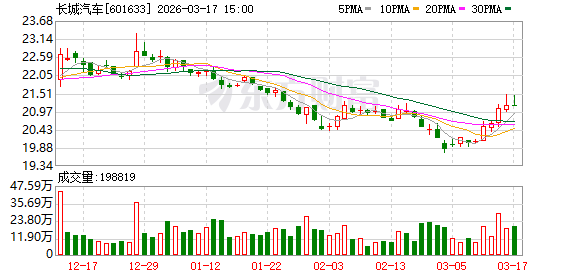
长城汽车魏建军谈“反内卷”:公信力才是中国汽车核心竞争力
Zhong Guo Jing Ying Bao· 2026-03-17 14:21
Group 1 - The core viewpoint emphasizes the importance of "public credibility" as the key competitive advantage for the Chinese automotive industry, moving beyond mere technology and scale [2][3] - The Chinese automotive industry is transitioning from a "manufacturing power" to a "manufacturing strong power," with challenges such as internal competition and supply chain issues [3][4] - The industry must focus on "industrial output" rather than just "product export," integrating local culture and contributing to local economies [4][5] Group 2 - The current competitive landscape is characterized by excessive internal competition and price wars, which detract from the original purpose of vehicle manufacturing [6][7] - Companies are urged to adopt a "public credibility value system," prioritizing long-term trust and quality over short-term gains [7][8] - Long-term strategies should include not engaging in price wars and maintaining quality standards, as excessive cost-cutting can harm brand reputation [8]


焦炭日报:震荡偏强:冠通期货研究报告-20260317
Guan Tong Qi Huo· 2026-03-17 11:09
Report Industry Investment Rating - The report gives a short - term investment rating of "oscillating and slightly bullish" for the coke industry [2] Report's Core View - After the first round of price cuts for coke is fully implemented, the loss - making area of coke enterprises expands. After the important meeting, the iron - making output of steel mills rebounds, increasing the demand for coke. At the macro level, the government work report this year mentions "anti - involution" again, and attention should be paid to subsequent growth - stabilization policies. In general, coke is expected to be oscillating and slightly bullish in the short term, and a strategy of buying at low levels should be adopted, while paying attention to the support of the 5/10 - day moving average and the pressure near the previous high [2] Summary According to Related Directory Market Analysis - Coke inventory: Last week, due to production restrictions, the demand of steel mills decreased, causing the coke inventory in steel mills to increase by 162,900 tons to 6.8755 million tons, at a relatively high level in the same period over the years. This week, the comprehensive coke inventory decreased slightly by 14,100 tons to 10.5086 million tons [1] - Profit: Last week, the first round of price cuts for coke was implemented, and the coking profit of coke enterprises declined. This week, the average profit per ton of coke of 30 independent coking plants nationwide decreased by 20 yuan to - 3 yuan/ton [1] - Downstream demand: During the important meeting, some blast furnaces faced production restrictions. Last week, the capacity utilization rate continued to decline, and the molten iron output further decreased. The daily average molten iron output of 247 steel mills surveyed by Mysteel decreased by 63,900 tons to 2.212 million tons, the lowest in the same period in the past three years [1] - Upstream coking coal: Most coal mines in the production areas have resumed production, and the comprehensive inventory of coking coal has increased slightly [1] - News: From January to February, the national real - estate development investment was 961.2 billion yuan, a year - on - year decrease of 11.1%, and the decline was 6.1 percentage points narrower than that of the whole previous year. The National Financial Regulatory Administration aims to accelerate the establishment of a financing system suitable for the new real - estate development model. Data released by the National Bureau of Statistics on March 16 showed that China's coke output from January to February was 8.255 million tons, a year - on - year increase of 1.1% [1]
1—2月经济数据点评:供给韧性延续,需求修复仍待观察
LIANCHU SECURITIES· 2026-03-17 09:03
Production - Industrial production maintained resilience with a year-on-year growth of 6.3% in January-February, and a month-on-month increase of 0.8% in February, significantly above historical seasonal levels[1] - The manufacturing value added grew by 6.6%, outperforming mining (6.1%) and utilities (4.7%), with high-end equipment and electronics manufacturing as key supports[1] - High-tech manufacturing products showed rapid growth, with industrial robots, integrated circuits, and power generation equipment increasing by 31.1%, 12.4%, and 21.6% respectively[1] Investment - Fixed asset investment rose by 1.8% year-on-year in January-February, recovering from negative growth in 2025[2] - Infrastructure investment surged, with narrow and broad infrastructure investments growing by 11.4% and 9.8% respectively, significantly improving from last year[2] - Manufacturing investment increased by 3.1%, a notable improvement from the 0.3% growth in 2025, driven by a 11.5% rise in equipment purchases[2][3] Real Estate - Real estate investment declined by 11.1%, but the drop was 6.1 percentage points less than the full-year decline in 2025, indicating some stabilization[4] - New construction area and completed area fell by 23.1% and 27.9% respectively, reflecting weak new construction intentions[4] - The amount of funds available for real estate decreased by 16.5%, with personal mortgage loans dropping by 41.9%, indicating weak leverage willingness among residents[4] Consumption - Overall retail sales grew by 2.8% year-on-year, slightly below the 3.7% growth in 2025, primarily due to a slowdown in automobile consumption[5] - Restaurant income increased by 4.8%, significantly higher than the previous year, driven by strong demand during the Spring Festival[5] - Essential and policy-related consumption performed relatively well, while some discretionary spending remained weak, particularly in real estate-related sectors[5]
——1-2月经济数据点评:\供强需弱\问题有所改善
Huachuang Securities· 2026-03-17 05:53
Supply and Demand Improvement - The supply-demand imbalance is improving, with industrial output growth at 6.3% in January-February, while demand growth (investment, retail sales, and exports) is at 6.6%[3] - In 2025, industrial output growth is projected at 5.9%, while combined growth for investment, retail sales, and exports is expected to be only 1.3%, indicating a significant demand-supply divergence[3] Structural Analysis - The supply-demand contradiction in the midstream manufacturing sector is easing, with a rolling annual demand growth of 9.6% in January-February, up from 8.4% previously[3] - Investment in the midstream sector (excluding instruments) shows a rolling annual decline of -1.8%, worsening from -1.5%[3] Production and Sales Rates - The production-sales rate for industrial enterprises is projected to be -0.1% for 2023, worsening to -0.5% in 2024, and slightly improving to -0.4% in 2025[3] - In January-February 2026, the production-sales rate dropped to -0.1%[3] Price Trends - The Producer Price Index (PPI) decline is narrowing, with a month-on-month increase of 0.42% in January and 0.39% in February, indicating strong performance beyond just bulk commodities[4] Economic Data Overview - In January-February, industrial value-added growth was 6.3%, while retail sales growth was 2.8%, up from 0.9% in December[6] - Export growth reached 21.8% in January-February, compared to 6.6% in December[6] Real Estate Market - Real estate sales area decreased by 13.5% year-on-year in January-February, an improvement from a 15.6% decline in December[6] - Real estate investment growth was -11.1% in January-February, significantly better than the -35.8% in December[6] Investment Trends - Fixed asset investment growth was 1.8% in January-February, with infrastructure investment growing at 11.4%[6] - Large project investments (over 100 million yuan) increased by 5.0%, contributing to a 2.7% overall investment growth[6]
“供强需弱”问题有所改善——1-2月经济数据点评
一瑜中的· 2026-03-17 05:04
Core Viewpoint - The supply-demand imbalance is showing signs of improvement, with demand growth outpacing supply growth in early 2026, indicating a potential recovery in midstream profitability [2][4][12]. Group 1: Observations on Supply-Demand Imbalance - Overall, the supply-demand imbalance is improving, with industrial output growth at 6.3% in January-February 2026, while combined demand growth from fixed investment, retail sales, and exports reached 6.6% [4][13]. - In terms of structure, the midstream manufacturing supply-demand contradiction is easing, with a rolling one-year demand growth rate of 9.6% in January-February 2026, up from 8.4% previously [4][14]. - The production-sales ratio is narrowing its decline, with a year-on-year drop of -0.1% in 2023, expected to expand to -0.5% in 2024, and slightly narrow to -0.4% in 2025 [5][17]. - Price levels are recovering beyond just bulk commodities, with PPI declines narrowing and midstream equipment manufacturing showing strong month-on-month growth [5][20]. Group 2: Economic Data Analysis for January-February - Industrial output growth is strong, with equipment manufacturing growth at 9.3%, significantly contributing to overall industrial growth [6][36]. - Real estate sales and investment declines are narrowing, with sales area down -13.5% year-on-year in January-February 2026, compared to -15.6% in December 2025 [6][30]. - Retail sales growth is recovering, with a year-on-year increase of 2.8% in January-February 2026, up from 0.9% in December 2025 [7][27]. - Fixed asset investment growth is rebounding, with a total investment in projects of over 100 million yuan growing by 5.0% year-on-year in January-February 2026 [7][41].
1-2月航司量价齐升,等待油价企稳
HTSC· 2026-03-17 02:45
Investment Rating - The report maintains an "Overweight" rating for the aviation transportation industry [2]. Core Insights - The industry is expected to experience a supply-demand improvement cycle, with a positive outlook for medium to long-term growth despite short-term concerns regarding oil prices and geopolitical tensions [6]. - The Spring Festival data for 2026 has set a solid foundation for annual demand, with passenger load factors and average ticket prices showing positive year-on-year growth [6][7]. - The three major airlines and Spring Airlines have seen a net reduction of 10 aircraft, indicating a low growth rate in supply, which is expected to support revenue improvement [6][7]. Summary by Sections Industry Overview - In January and February 2026, the aviation sector benefited from the Spring Festival, recording increases in both volume and price, with ASK and RPK up by 5.6% and 7.5% respectively, and passenger load factor increasing by 1.5 percentage points to 85.3% [7]. - The average domestic economy class ticket price increased by 4.2% year-on-year during the same period [7]. Airline Performance - The three major airlines (Air China, China Eastern Airlines, and China Southern Airlines) reported a steady increase in capacity, with ASK up by 5.6% and load factor rising to 84.9% [7]. - International routes showed particularly strong performance, with ASK increasing by 11.6% and load factor up by 2.2 percentage points to 82.6% [7]. Financial Projections - The report highlights several airlines with target prices and "Buy" ratings, including: - Air China (753 HK) with a target price of 9.20 [5] - China Eastern Airlines (670 HK) with a target price of 6.85 [5] - China Southern Airlines (1055 HK) with a target price of 7.60 [5] - The report anticipates a continued recovery in profitability driven by improved demand and reduced supply growth, with specific profit forecasts for 2025-2027 for various airlines [23][24][22]. Cost and Pricing Dynamics - Rising oil prices are expected to impact airline costs, with fuel costs accounting for 32.1% of operating costs for the three major airlines in the first half of 2025 [9]. - Despite the cost pressures, opportunities may arise for Chinese airlines on international routes due to reduced competition from transit hubs in the Middle East [9]. Recommendations - The report recommends a focus on airlines that are well-positioned to benefit from the expected industry recovery, with a particular emphasis on those with strong domestic and international route networks [23][24].