
消费升级

Search documents
扩大内需,内生增长质更高(连线评论员)
Ren Min Ri Bao· 2025-12-23 22:31
Core Viewpoint - The emphasis on expanding domestic demand is not a temporary measure but a strategic initiative crucial for economic stability and security [1] Group 1: Investment Dynamics - Investment in traditional sectors is weakening, while high-tech industries are experiencing rapid growth, indicating a shift in investment dynamics [1] - There is significant potential for investment in areas such as technological innovation, industrial upgrades, urban renewal, rural infrastructure, and public services, as the per capita capital stock level remains relatively low [1] - The government aims to optimize investment structure by increasing investment in human resources, public welfare projects, and sectors aligned with consumption upgrades, such as technology and low-carbon transition [2] Group 2: Consumer Spending - Service retail sales have shown a year-on-year growth of 5.4% in the first 11 months, indicating a positive trend in consumption [1] - The government plans to implement measures to increase residents' income and boost consumption, which is expected to further release consumption potential [1] - The current consumer spending rate in China is 39.9%, which is still 10-30 percentage points lower than that of developed countries, particularly in the service consumption sector [2] Group 3: Structural Reforms - To stimulate private investment, it is essential to create a fair competitive market environment and address barriers that hinder private sector participation in major projects [2] - The government should enhance public service spending, especially in education and health, to support the transition from survival-type to development-type consumption as GDP per capita exceeds $13,000 [2] - A comprehensive internal demand system needs to be established by addressing deep-seated issues related to insufficient demand and weak consumption, promoting a growth model driven by internal demand and consumption [4]
交通运输部:2025年交通固定资产投资预计超3.6万亿元 多项指标稳步增长
Zhong Guo Jing Ying Bao· 2025-12-23 14:30
Core Insights - The Chinese government aims for stable growth in transportation indicators by 2025, with expected fixed asset investment exceeding 3.6 trillion yuan, and significant expansions in high-speed rail, highways, and airports [1] Group 1: Transportation Development Goals - By 2025, the total inter-regional passenger flow is projected to exceed 66 billion trips, with freight volume surpassing 5.8 billion tons, both showing a year-on-year growth of approximately 3.5% [1] - Port foreign trade container throughput is expected to grow by about 9.6%, while international air freight is anticipated to increase by 20%, and express delivery volume is projected to rise by around 13.5% [1] Group 2: Consumer Trends and Initiatives - The government is focusing on boosting consumption, with specific actions to enhance consumer spending being a key initiative [1] - The yacht and cruise consumption sector is identified as a growth point, with new yacht registrations increasing at an annual rate of over 40% in the past three years, indicating a shift towards mass consumption [1] Group 3: Small and Micro Car Rental Market - The small and micro car rental market has seen explosive growth, with a total of 4 million small passenger cars currently in operation, and an expected annual growth rate of around 15% during the 14th Five-Year Plan period [2] - The transportation department plans to address current challenges in the small car rental market by enhancing vehicle supply during peak times and optimizing rental operations at transportation hubs [2] Group 4: Major Infrastructure Projects - Significant infrastructure projects such as the Lion's Mouth Channel and Zhangjingao Yangtze River Bridge are set to be completed during the 14th Five-Year Plan, with a focus on enhancing transportation integration and safety [3] - Future transportation investments will prioritize highway construction and upgrades in economically developed regions, while railway investments will focus on network reinforcement and smart upgrades [3]
别猜下半年流行什么了,6月26号来上海礼品展现场对个答案
Sou Hu Cai Jing· 2025-12-23 14:18
Core Insights - The 27th Shanghai International Gifts, Cultural Products, and Home Goods Exhibition will be held in June 2026, focusing on the development trends of gift enterprises in East China and addressing challenges such as customer acquisition and sales channels [1][3]. Group 1: Exhibition Overview - The exhibition will feature eight thematic areas, showcasing the diverse ecosystem and cutting-edge trends in the Chinese gift industry, emphasizing "innovation, quality, and individuality" [3]. - Key thematic areas include Business Gifts, National Trend Cultural Products, Home Goods, Internet Celebrity Selections, 3C Consumer Electronics, Gift Food Boxes, Gift Packaging, and AI Technology Products [3][4]. Group 2: Industry Trends and Innovations - The gift industry is undergoing a transformation from a "function-oriented" approach to one that emphasizes "emotional value and personalized experiences," driven by consumption upgrades and AI digitalization [6]. - The exhibition will promote innovation through three dimensions: product innovation, model innovation, and technology integration, including the use of AR and AI tools [6]. Group 3: Market Potential - The Chinese gift market is projected to exceed 1 trillion yuan by 2026, with East China being a key battleground for national gift brands [9]. - Future competitiveness in the gift industry will focus on customization capabilities, sustainability, emotional connections, and integrated multi-channel marketing [9][10]. Group 4: Strategic Importance - The exhibition serves as a strategic platform for companies to capture opportunities in the trillion-yuan gift market and link to future growth engines [10][12]. - It aims to reflect the evolution of Chinese consumption and industry, merging tradition with trends and fostering a collaborative environment for innovation [12].


造纸轻工周报:扩内需提消费下关注个护、潮玩、宠物等赛道;关注永艺股份报告-20251223
Shenwan Hongyuan Securities· 2025-12-23 11:31
Investment Rating - The report indicates a positive outlook on various sectors, particularly focusing on domestic consumption, export opportunities, AI glasses, paper industry recovery, and home furnishings [5][11][18][20]. Core Insights - The report emphasizes structural consumption opportunities driven by domestic demand expansion, highlighting sectors such as personal care, pet products, and IP-driven consumer goods [5][6]. - Export dynamics are shifting positively with reduced external disturbances and potential boosts from U.S. interest rate cuts, suggesting a new phase for Chinese companies in overseas operations [11][12]. - The AI glasses market is experiencing rapid product iterations, with major players like Meta and Alibaba leading the way, indicating a growing market for augmented reality glasses [16][17]. - The paper industry is expected to see demand recovery and price stabilization, with a focus on key players benefiting from this trend [18][19]. - The home furnishings sector is undergoing consolidation, with improved valuations anticipated as real estate policies stabilize, benefiting companies with strong dividend margins [20][21]. Summary by Sections Domestic Consumption - The report highlights the rise of domestic brands in personal care, recommending companies like Baiya and Dengkang for their strong offline channel competitiveness and product upgrades [6][7]. - In the pet products sector, companies like Yiyi and Yuanfei are noted for their robust growth and global expansion strategies [7][8]. - The IP-driven consumer goods market is gaining traction, with companies like Chuangyuan and Guangbo positioned to capitalize on emerging trends [8][9]. Export Opportunities - The report identifies key export players such as Yutong Technology and Yongyi, emphasizing their global supply chain advantages and potential for growth in overseas markets [11][12][13]. - Yongyi is particularly noted for its strategic overseas capacity expansion and the rising demand for ergonomic chairs driven by consumer trends [13][14]. AI Glasses - The report discusses the rapid development of AI glasses, with significant product launches from major brands, indicating a shift towards augmented reality applications [16][17]. - Companies like Kangnait Optical are highlighted for their potential benefits from the growing demand for integrated lens solutions in this market [16]. Paper Industry - The report anticipates a recovery in the paper industry, with key players like Sun Paper and Jiulong Paper expected to benefit from price stabilization and demand recovery [18][19]. Home Furnishings - The home furnishings sector is noted for its ongoing consolidation and potential valuation recovery, with companies like Gujia and Sophia highlighted for their strong market positions and dividend safety [20][21][22]. - The report emphasizes the importance of real estate policy stabilization in driving demand for home furnishings, with a focus on companies that can leverage this trend [21][22].
高盛:预计到2027年底中国股市还有38%的上涨空间
Zheng Quan Ri Bao Wang· 2025-12-23 11:10
Group 1 - Goldman Sachs holds an optimistic view on the Chinese stock market, citing supportive policies and structural changes such as AI, globalization, consumption upgrades, and "anti-involution" policies as potential upward drivers for the market [1] - The Chinese stock market has achieved positive returns for two consecutive years, with A-shares and H-shares expected to rise by 16% and 29% respectively by 2025, primarily driven by valuation recovery [1] - By the end of 2027, the Chinese stock market is projected to have an additional 38% upside, with the driving factors shifting towards profit growth [1] Group 2 - Strong performance in service consumption and new consumer sectors, such as entertainment and specialty retail, has outpaced traditional consumer stocks in terms of profit growth and stock returns [2] - The "anti-involution" policy is expected to improve profit margins in industries facing overcapacity, such as solar energy and cement, through supply-side structural reforms and industry consolidation [2] - Domestic and foreign investment interest in the Chinese market is increasing, with record inflows from southbound funds and heightened participation from institutional investors and individual investors [2] Group 3 - The Chinese stock market offers diversification value for global investors, as it has a low correlation with US stocks and is deeply undervalued, making it a good choice for risk diversification [2] - The policy environment has established a solid foundation against downside risks, with macroeconomic and stock market policies effectively supporting growth and compressing equity risk premiums [2]
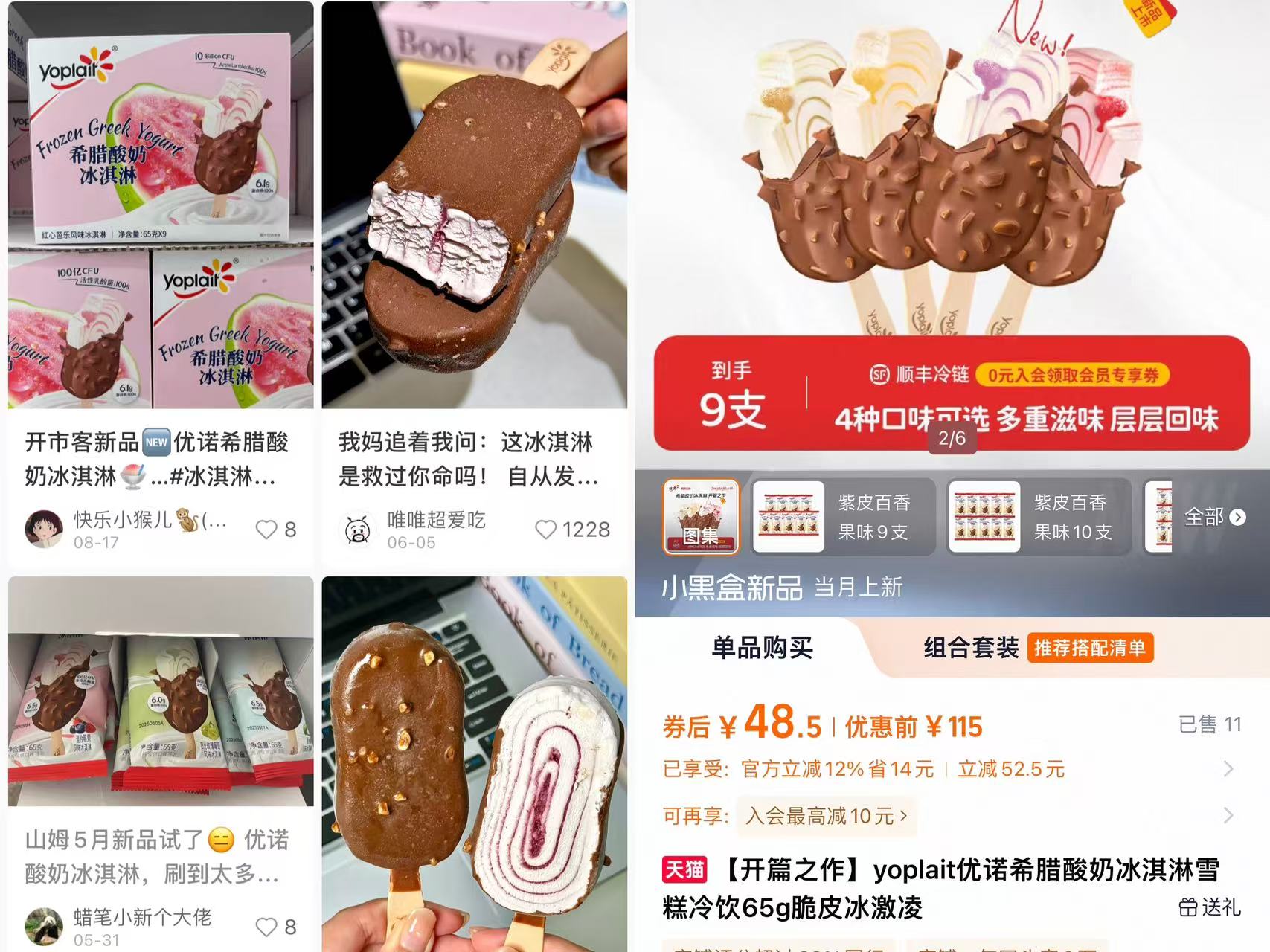
优诺不走蒙牛伊利的老路
Xin Lang Cai Jing· 2025-12-23 07:17
Core Insights - Yuno China is focusing on growth through a refined strategy after being acquired by IDG Capital, including the expansion of its factory in Kunshan to increase production capacity to 350,000 tons per year, with an expected annual output value exceeding 5 billion yuan [1][3] - The company has recently launched ice cream products, which are now available in convenience stores, Sam's Club, and e-commerce platforms, aligning with its factory expansion plans [1][3] Company Development - Yuno China was established in 2013 and was previously managed by General Mills before being acquired by Tiantu Capital in 2019 for nearly 300 million yuan, gaining full control [3] - Under Tiantu's management, Yuno expanded its product lines to include Greek yogurt, Icelandic yogurt, and children's yogurt, transitioning from low-temperature yogurt to a broader range of low-temperature dairy products [3][4] Market Strategy - Yuno's current strategy emphasizes a focus on niche markets, contrasting with earlier strategies that relied on single flagship products [6][7] - The company is capitalizing on the growing demand for low-temperature dairy products, with market data indicating a decline in sales for ambient dairy products while low-temperature products are gaining market share [7][9] Product Distribution - Yuno's products are distributed through various channels, including private label production for retailers like Sam's Club and Hema, enhancing its market presence [4][10] - The company has successfully entered major retail and dining channels, leveraging the experience of its team, which includes former executives from General Mills and Häagen-Dazs [10][11] Financial Performance - Yuno achieved a historic profitability turnaround in 2023, with revenues projected at 454 million yuan and 810 million yuan for 2023 and 2024, respectively, alongside net profits of 8.39 million yuan and 95.45 million yuan [3][12] - The company anticipates maintaining a revenue and net profit growth rate of 20%-30% for the year, supported by its penetration into new channels [12]
层层筛选突围!华帝斩获红顶奖唯一烟机大奖,铸就行业标杆
Xin Lang Cai Jing· 2025-12-23 07:07
Core Insights - The high-end home appliance market is undergoing a significant transformation, with consumer demands shifting from basic functionality to a comprehensive pursuit of quality, intelligence, health, and home aesthetics [1][11] - The 17th China High-End Home Appliance Trend Release and Red Top Award Ceremony highlighted the importance of innovation and quality in the industry, with the Red Top Award serving as a benchmark for brand competitiveness and market recognition [1][11] - Vatti's E6095ZS range hood won the Red Top Award, distinguishing itself as the only awarded product in the range hood category, showcasing the brand's strength in the high-end kitchen appliance sector [1][12] Product Performance - The Vatti E6095ZS features dual intake ports, achieving a powerful suction capacity of 32m³/min and a static pressure of 1700Pa, effectively addressing smoke issues even during peak cooking times [5][16] - The product incorporates Vatti's fifth-generation surfing steam washing technology, achieving a sterilization rate of 99.9% and a cleaning coverage rate of 99.1%, representing a 45% improvement over the previous generation [5][16] - The E6095ZS is designed with a slim profile of 22.5cm, significantly thinner than the industry standard of 35cm, enhancing both aesthetics and functionality in kitchen spaces [6][17] Brand Recognition and Innovation - Vatti's 8E37P stove and GW6i gas water heater received nomination awards, reflecting the brand's comprehensive innovation capabilities in both kitchen and water heating sectors [8][19] - The 8E37P stove emphasizes energy efficiency and features a unique one-button boost function for enhanced cooking performance, while the GW6i water heater promotes skin health through its innovative "water nourishes skin" concept [19] - Vatti has committed to increasing R&D investment, with a total of 4,690 patents expected by mid-2025 and an R&D expenditure of 170 million yuan in the first three quarters [10][21]


达意隆(002209):积极开拓海外市场 业绩有望持续改善
Xin Lang Cai Jing· 2025-12-23 06:29
Group 1 - The core viewpoint is that the company, as a leading player in the beverage packaging machinery industry, is expected to benefit from the significant price gap between domestic and imported machinery, with domestic export prices averaging less than $200 per unit compared to $36,300 for imports [1] - The company has nearly 30 years of experience in liquid packaging equipment manufacturing, with its technology being at a leading level domestically and having exported to multiple countries [1] - The company has a sufficient order backlog, which is expected to support its performance starting from 2025 [1] Group 2 - The domestic packaging machinery manufacturing market is experiencing a clear trend of domestic substitution, with production of specialized packaging equipment reaching 1.7555 million units by November 2025, and domestic manufacturers gaining competitiveness in the mid-to-low-end market [2] - The Chinese beverage market is currently only one-third the size of the U.S. market, indicating significant growth potential, especially with the rapid development of the sugar-free beverage sector [2] - The company's revenue for the first three quarters of 2025 reached 1.335 billion yuan, a year-on-year increase of 38.95%, while net profit increased by 146.16% to 103 million yuan [2] Group 3 - Revenue forecasts for the company are projected at 1.87 billion, 2.22 billion, and 2.44 billion yuan for the years 2025, 2026, and 2027, respectively, with corresponding net profits of 130 million, 200 million, and 230 million yuan [3] - The company is assigned a target price of 19.8 yuan based on a 20x PE ratio for 2026, with an initial "buy" rating [3]

魏建国在北京日报撰文
Sou Hu Cai Jing· 2025-12-23 01:31
Group 1 - The core argument of the article emphasizes that in the next five years, consumption will act as the "main engine" and "ballast" for economic growth, investment will serve as an "incubator" and "accelerator," and exports will function as a "stabilizer" [1][20] - The upcoming economic work will focus on eight key tasks, with the first being to "insist on demand-led growth and build a strong domestic market," which includes actions to boost consumption and expand the supply of quality goods and services [4] - The "14th Five-Year Plan" suggests that improving the resident consumption rate is a primary goal, indicating that a strong domestic market is a strategic foundation for modernization [4] Group 2 - To address the low resident consumption rate, solutions should be sought from both the income and supply sides, including expanding the middle-income group and increasing public service spending [10] - The article highlights the need to increase the proportion of new consumption types, focusing on enhancing people's living standards and meeting their demands for a better life [10][12] - It is essential to implement national policies effectively, such as trade-in programs and establishing a unified national market, to facilitate the free and efficient flow of various factors [12] Group 3 - The article discusses the shift from a supply-driven to a demand-driven economy, indicating that consumer sovereignty will replace producer sovereignty in the future [14] - The "15th Five-Year Plan" emphasizes that consumption will increasingly solidify its role as the main driver of economic growth, with a projected contribution rate to GDP growth exceeding 60% [16] - Investment will transition from being a short-term stimulus to a crucial tool for promoting long-term strategic and high-quality development [17][18] Group 4 - Exports are expected to maintain their role as a stabilizer, supported by China's comprehensive industrial system, despite potential fluctuations in contribution rates [20] - The next phase of economic growth and competitiveness will largely stem from the upgrading and internationalization of the service industry [21] - The focus on expanding market access in the service sector indicates a shift towards proactive participation in international standards and rules, particularly in modern service industries [23]

西部证券助力英氏控股成功过会 持续深耕消费赛道赋能区域实体
Zhong Guo Zheng Quan Bao· 2025-12-23 01:29
Group 1 - The Beijing Stock Exchange has approved the listing application of Ying's Holdings Group Co., Ltd., marking a significant achievement for Western Securities in the consumer sector and regional enterprise capital services [1] - Ying's Holdings, a pioneer in the scientific and rational research of infant complementary food, reported main business revenues of 1.296 billion yuan, 1.758 billion yuan, and 1.974 billion yuan for the years 2022 to 2024, with a compound annual growth rate of 23.46% over the last three years [1] - Western Securities has successfully sponsored and underwritten 16 Hunan enterprises for A-share listings since 2011, demonstrating its commitment to supporting regional entities and contributing to the financial empowerment of local stocks [1] Group 2 - In the context of consumer upgrades and deepening capital market reforms, Western Securities focuses on a strategy of "regional deep cultivation + sector specialization," emphasizing the development of new productive forces in the consumer sector [2] - The successful project of Ying's Holdings further consolidates Western Securities' sponsorship advantages in the consumer field, showcasing the practical results of integrating financial resources into the real economy [2] - Western Securities aims to leverage its professional advantages to support more quality consumer enterprises like Ying's Holdings in their journey from regional leaders to national brands, contributing to the narrative of "consumer upgrades + capital empowerment" [2]
