
资产配置

Search documents
读懂经济趋势,踩准财富节奏
Sou Hu Cai Jing· 2025-12-09 04:39
Economic Cycle Analysis - The economic cycle consists of four stages: prosperity, recession, depression, and recovery, with each stage characterized by different levels of economic activity and investment [2] - The current economic cycle is influenced by technological revolutions, particularly the fifth Kondratiev wave, which focuses on new energy and artificial intelligence [3] - By 2025, the global economy is expected to show a "differentiated recovery," with the U.S. nearing the end of its interest rate hike cycle, Europe struggling with an energy crisis, and China seeking new growth points amid industrial transitions [4] Key Economic Indicators - A "three-dimensional data radar" should be established to monitor GDP growth, price levels, and employment, with China's GDP expected to grow by 4.8% year-on-year in Q2 2025, driven by a 42.3% contribution from the digital economy and a 15.6% growth in strategic emerging industries [5] - The job market shows significant differentiation, with a youth unemployment rate of 18.7% and a shortage of 4 million technical blue-collar jobs, indicating high income potential for skilled workers [6] - Fiscal policies are focused on expanding effective investment in new infrastructure and affordable housing, while monetary policies aim to boost domestic demand through interest rate cuts [7] Emerging Industries and Consumer Trends - Economic opportunities in 2026 will be concentrated in the transition between old and new industries, with sectors like artificial intelligence, biomedicine, and low-altitude economy receiving policy and financial support [10] - Traditional industries are upgrading through smart and green transformations, exemplified by digital factory practices in the home appliance sector [11] - The consumer market is experiencing a bifurcation, with both low-cost necessities and high-end quality consumption growing, while the mid-tier market faces challenges [12] Personal Wealth Management Framework - Wealth management should follow a "core + satellite" approach, with asset allocation based on risk tolerance, suggesting a conservative portfolio for low-income earners [13] - A three-step execution method is recommended: risk budget allocation, cross-asset diversification, and a rebalancing mechanism to adjust asset allocation quarterly [14] - The family wealth pyramid should include liquid assets for daily expenses, safety assets for insurance and long-term investments, and high-return assets for wealth growth [15] Defensive Strategies for Wealth Preservation - Insurance coverage should not exceed 10% of total household income, focusing on health and accident insurance to alleviate financial burdens [16] - Non-essential spending should be minimized to ensure monthly savings for investment, promoting financial security [17] - High-risk investments should be approached cautiously, with a recommendation that income-generating asset allocation should not exceed 50% of available funds [18]

债市在跌什么?手里的债基怎么办?
Sou Hu Cai Jing· 2025-12-09 02:01
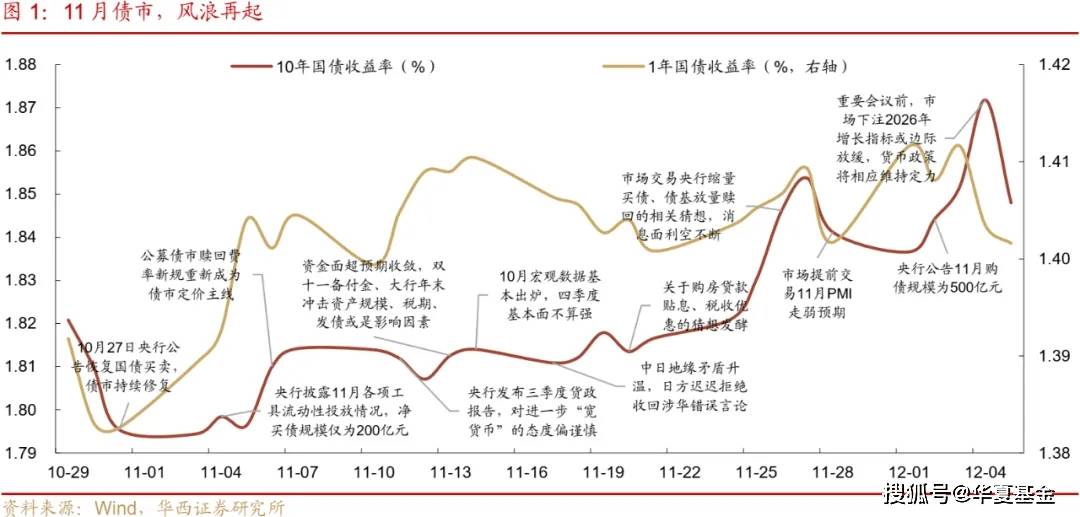
Group 1 - The bond market is experiencing a downturn, with the 10-year government bond yield remaining above 1.8% since September, leading to a total return of only 0.78% for pure bond funds this year, which is lower than that of money market funds [1][2] - The recent simultaneous decline in both stock and bond markets is attributed to low risk-reward environments and ongoing concerns about potential new regulations, resulting in insufficient buying interest from investors [2][4] - The bond market's weakness is further exacerbated by year-end profit-taking demands from institutions, alongside a lack of significant short-term positive catalysts, leading to increased selling pressure [1][4] Group 2 - Historical analysis shows that significant adjustments in the bond market are often linked to economic expectations, policy shifts, and changes in trading structures, with past downturns indicating a pattern of recovery following each major decline [5][7] - The bond market has undergone five notable adjustments in the past five years, with each instance reflecting a re-evaluation of market conditions and investor sentiment [5][7] - Current market conditions suggest that while the bond market may remain in a narrow trading range in the short term, there is potential for improvement in the short-end supply-demand structure due to a clear supportive stance from the central bank [4][8] Group 3 - Investment strategies in the current bond market environment should focus on short to medium-duration bond funds, while maintaining a cautious stance on long-duration bonds until market trends become clearer [9][11] - The concept of "timing" in bond fund investment is less critical than ensuring a balanced asset allocation, as bonds inherently possess income-generating characteristics that can mitigate short-term volatility [8][9] - The introduction of "fixed income plus" strategies is recommended to enhance returns while managing risk, particularly in a fluctuating market [11][13]
12月9日热门路演速递 | 铜铝领跑、黄金破圈、债市新逻辑
Wind万得· 2025-12-08 23:12
Group 1 - The commodity market is facing a new balance under rational supply and demand, with cost resilience creating a safety margin. The non-ferrous metal sector, particularly copper and aluminum, is identified as a clear leading opportunity with strong growth momentum [2][3] Group 2 - The traditional safety assets are losing their foundation under the global macro new normal, with global bonds facing credit risks and increased volatility, diminishing their risk-hedging function. Gold and overseas stock markets are emerging as new opportunities for asset allocation in 2026 [6][7] Group 3 - Key insights for the bond market in 2026 include market consensus expectations and potential discrepancies, with a rebound in PPI possibly exceeding market expectations. Inflation expectations are becoming the dominant logic, with 10-year government bonds expected to return to the range of 2-3% [9] Group 4 - TH International will focus on Q3 revenue growth, profit margins, and cost control performance, detailing the impact of recent convertible bond issuance and debt structure optimization on capital flexibility and financial costs. The company aims to strengthen cash flow to support store expansion and digital strategy while exploring the synergy between debt optimization and ESG goals [12][13]

2026年大类资产配置展望:宽松延续、AI渗透与大国博弈长期化
Zhong Guo Zheng Quan Bao· 2025-12-08 20:27
Core Viewpoint - In 2026, the global economic environment is expected to remain accommodative, with a focus on corporate profitability driving equity markets, while investors should be cautious of risks amid market volatility [1][2]. Macroeconomic Outlook - China's economy is projected to maintain stable growth in 2026, with moderate inflation and a focus on industrial transformation and balancing development with security [1]. - The U.S. economy is anticipated to achieve a "soft landing," with manageable short-term inflation pressures, while the AI technology revolution continues to be a core driver across economic cycles [2]. Equity Market Insights - The A-share market is entering a phase where growth will depend more on actual corporate earnings rather than valuation expansion, following a valuation recovery in 2025 [2]. - Investment strategies should focus on four main paths: growth sectors with sustained momentum, globally competitive leading companies, areas with improved supply-demand dynamics, and new opportunities from the industrialization of frontier technologies [2]. Fixed Income Strategy - The bond market is expected to maintain a range-bound pattern in 2026, supported by a loose funding environment and potential resumption of government bond purchases by the central bank [3]. - Credit bonds remain attractive due to stable institutional demand, with a recommended strategy of focusing on medium to short-duration bonds with favorable yields [3]. Alternative Assets - Gold is projected to continue its bull market in 2026, supported by expanding U.S. fiscal deficits, a Federal Reserve rate cut cycle, and ongoing central bank purchases [4]. - The commodity market is expected to trend upwards, with significant opportunities in precious metals, non-ferrous metals, and agricultural products due to changing supply dynamics and favorable liquidity conditions [5]. Quantitative Strategies - The environment for excess returns in stock quantitative strategies is expected to be favorable, with a significant portion of private equity funds now allocated to quantitative strategies [5]. - Market-neutral products are anticipated to provide stable alpha returns by effectively isolating systemic risks in a low-interest-rate environment [5].
全球通胀真来了?未来5年,内行人给出建议:请做好购买3大硬通货
Sou Hu Cai Jing· 2025-12-08 18:35
Core Insights - In the current global economic uncertainty, asset preservation has become a focal point for many individuals, reflecting concerns about inflation and the future economic outlook [1][3] Inflation Overview - Inflation is defined as the general rise in prices and the decline in purchasing power of money, with significant inflationary trends observed globally since 2021 [3] - Factors contributing to inflation include expansive monetary policies during the pandemic, supply chain disruptions, and fluctuations in energy prices [3] Investment Strategies Against Inflation - Holding large amounts of cash is deemed unwise due to its declining purchasing power in inflationary environments [3] - Recommended assets for inflation protection include: - **Quality Equity Assets**: Leading companies in expansive industries (e.g., renewable energy, integrated circuits, biomedicine) possess strong competitive advantages and pricing power, allowing them to mitigate inflation impacts [4] - **Precious Metals**: Gold is historically viewed as a wealth symbol and retains intrinsic value due to its limited supply. It often serves as a hedge against inflation, with demand increasing during inflationary periods [5] - **Real Estate**: Properties in urban areas with continuous population inflow can appreciate in value during inflation, as construction costs rise and demand remains strong [6] Asset Allocation Considerations - Each asset class has its pros and cons: equities offer liquidity but require stock-picking skills; precious metals provide strong preservation but lack cash flow; real estate requires significant capital and has lower liquidity but can generate rental income [6] - A balanced asset allocation strategy should incorporate these three asset types, adjusted according to individual circumstances and market conditions [6] - Regular review of asset allocation is essential, along with a rational investment mindset focused on long-term planning rather than short-term gains [6]

FOF产品策略覆盖多品类 年内认购份额创近四年新高
Zheng Quan Ri Bao· 2025-12-08 17:16
Core Insights - FOF (Fund of Funds) is experiencing significant growth, with a total management scale of 186.99 billion yuan and an average net value growth rate of 12.58% in 2025, indicating strong performance and investor interest [1][2][3] Group 1: Performance Metrics - As of December 8, 2025, the average net value growth rate for FOFs over the past three years is 8.79%, with 121 products achieving over 10% growth in the current year, showcasing their long-term stable return characteristics [2] - Three notable FOFs, including Qianhai Kaiyuan Yuyuan and Guangda Baodexin Yangguang, have net values exceeding 2 yuan, with annual growth rates of 38.13%, 17.01%, and 8.18% respectively [1] Group 2: Market Dynamics - A total of 74 new FOFs were established in 2025, with issuance reaching 77.61 billion units, marking a four-year high, driven by a low-interest-rate environment and a shift in investor preference towards diversified asset allocation [3] - The issuance of FOFs is supported by policy initiatives and the introduction of personal pension systems, which encourage long-term capital inflow into the market [3] Group 3: Investment Strategies - High-performing FOFs are adopting a refined selection strategy, focusing on industry themes and commodity funds rather than broad market indices, indicating a precise grasp of industry trends [4] - The FOF market has evolved from a scale of less than 10 billion yuan to 186.99 billion yuan, with a diverse range of product strategies including mixed, bond, and thematic funds, catering to various investor needs [4]
只用买标普500、红利低波和黄金就可以躺赢?
雪球· 2025-12-08 13:00
以下文章来源于大马哈投资 ,作者我叫大马哈 大马哈投资 . 雪球2021年度基金影响力账号,做专业靠谱有深度的基金研究 ↑点击上面图片 加雪球核心交流群 ↑ 风险提示:本文所提到的观点仅代表个人的意见,所涉及标的不作推荐,据此买卖,风险自负。 作者:大马哈投资 来源:雪球 大家都知道 , 今年以来的黄金资产表现得是相当抢眼 , 年内伦敦金涨幅逾60% 。 当看到这样的涨幅时 , 很多投资者第一时间就会问 , 未来黄金还能不能涨 , 现在要不要配置 ? 对于黄金未来表现这个问题 , 我此前在黄金 , 是不是又可以看看了 ? 中做过详细的展开 , 感兴趣的朋友可以参考 。 今天我想撇开这个话题 , 回到黄金对我们的另一层投资价值上 , 即资产配置价值 。 这是因为 , 若不是这几年黄金蹭蹭蹭的上涨 , 大家配置 黄金的最大理由就是配置价值 。 鉴于如今人人都在谈资产配置 , 因此我今天想来聊聊这个话题 , 希望能给大家一些启发 。 01 如何选择资产配置的底层资产 ? 关于如何选择资产配置的底层资产 , 其最大的原则就是 低相关性 , 否则如果几类资产之间高相关 , 那么资产配置的效应则会大幅减弱 。 鉴于此 , ...

黄金涨不动,白银却狂涨97%?专家预测2026年是投资的最佳时机?
Sou Hu Cai Jing· 2025-12-08 11:35
这篇经济评论分析白银暴涨背后的真相:机遇还是陷阱?2025年白银成最大黑马,半年暴涨70%!从工业需求激增到实物抢购引发供应紧张,再到金银比修 复与机构布局,五大核心动力推动银价飙升,但高波动性与工业属性也暗藏风险,投资需谨慎。 很多人晒出持仓截图,去年年底入手的白银基金,现在收益已经翻了近一倍,要知道,今年以来国际银价累计涨幅超90%,把黄金62%的涨幅远远甩在身 后,彻底摘掉了"千年老二"的帽子。 机构们也坐不住了,中银证券连发三份研报看涨白银,瑞银更是给出明确目标:2026年银价要突破60美元/盎司,这波涨势到底是机会还是陷阱?得从根上 捋清楚。 聊白银前,先讲段真真切切的历史,看完你就懂这东西有多不简单,上世纪30年代,美国大萧条正凶,银矿主们天天愁眉苦脸,银价从58美分/盎司跌到20 多美分,矿场倒闭了一批又一批。 白银疯涨刷屏:从"千年老二"到市场新宠 黄金狂飙,白银咆哮,最近的金融圈没人能绕开这俩"明星",打开交易软件,红彤彤的涨幅刺得人眼睛发花——短短两天,COMEX白银价格一举冲破58美 元/盎司,创下历史新高。 伦敦金银市场协会的数据更惊人,从2021年中到现在,伦敦市场能自由流通的白银库 ...

寻找中国经济破局之路 和讯财经中国2025年会圆满落幕
和讯· 2025-12-08 10:25
Core Viewpoint - The conference focused on "Finding the Path to Breakthrough for the Chinese Economy," addressing key issues such as macroeconomic trends, technological innovation, and capital market restructuring in the context of global changes [1]. Group 1: Economic Challenges and Opportunities - The chairman of Hexun, Zhang Zhifang, highlighted the vibrant growth in China's tech and cultural sectors, exemplified by the success of AI and film industries, while also noting challenges such as unbalanced development and risks in key areas [4]. - Huang Qifan pointed out that China's urbanization has transitioned from a 1.0 version (1980-2020) with an urbanization rate increase from 18% to 38% to a 2.0 version aiming for a further 30% increase, targeting a rate of 78% [6]. - Liu Shijun emphasized that the shift from investment and export-driven growth to innovation and consumption-driven growth is crucial during the 14th Five-Year Plan, necessitating a focus on expanding consumption and improving livelihoods [9]. Group 2: Future Economic Outlook - Yao Yang suggested that stabilizing the real estate market and local government finances is essential for supporting short-term demand and restoring economic vitality [10]. - Li Xunlei discussed the need for structural adjustments and reforms to address the intertwined issues of real estate cycles and structural problems, advocating for a technology-led growth model [11]. - Liang Hong noted that improvements in production efficiency are foundational for the revaluation of RMB assets and strengthening of the currency [11]. Group 3: Monetary Policy and AI Impact - Li Yang indicated that low interest rates may become a norm in China's financial landscape, with monetary policy increasingly focusing on asset prices and systematic interventions in the bond market [14]. - Cai Fang addressed the structural employment challenges posed by AI, advocating for policies that align AI development with employment strategies [16]. - Yao Xin highlighted that AI's impact extends beyond technology, affecting societal paradigms and economic models, while Cai Hongping expressed skepticism about the immediate applicability of humanoid robots in complex environments [19][20]. Group 4: Capital Market and Investment Strategies - Wang Qing stated that the Chinese capital market is not synchronizing with the real economy, predicting a shift towards performance-driven stock market dynamics [22]. - Xing Ziqiang noted that historical patterns of over-investment during technological revolutions suggest that the current AI boom will ultimately enhance global productivity [22]. - Wu Xiaoqiu emphasized the need to transition from a financing-centered approach to one that prioritizes investor rights in the restructuring of China's capital market ecosystem [24].

起存门槛提高利率下调 大额存单为啥突然不香了?
Yang Guang Wang· 2025-12-08 10:12
Core Viewpoint - The recent collective withdrawal of five-year large denomination certificates of deposit (CDs) by major state-owned banks and the increase in the minimum investment for three-year CDs indicate a tightening of long-term deposit products, driven by the need to manage declining net interest margins and optimize liability structures [1][3][4]. Group 1: Changes in Deposit Products - Major state-owned banks have collectively withdrawn five-year large denomination CDs, making them nearly unavailable, while some three-year CDs have seen increased minimum investment thresholds [1][2]. - The minimum investment for three-year large denomination CDs has been raised to between 1 million and 5 million yuan, with interest rates dropping to around 1.55% [2][3]. - The withdrawal and adjustment of these products reflect banks' strategies to lower funding costs and manage high-cost liabilities [3][4]. Group 2: Impact on Depositors - Ordinary depositors, particularly those relying on interest income, face challenges in finding suitable deposit products, leading to a "comparison mode" for selecting banks with the best rates [2][5]. - The decline in deposit rates is expected to push savings towards wealth management and capital markets, necessitating a shift in investment strategies for individuals [5][6]. - Depositors are advised to diversify their investments into low-risk products such as three-year fixed deposits, government bonds, or fixed-income bank wealth management products to balance safety and returns [5][6]. Group 3: Banking Sector Strategies - Banks are focusing on optimizing their liability structures by reducing high-cost deposits and enhancing their wealth management services to meet diverse customer needs [6]. - The shift towards wealth management is seen as a way to generate stable non-interest income, especially as traditional lending margins are under pressure [6]. - The overall trend indicates that banks will continue to face challenges in maintaining net interest margins, with a likelihood of further declines in deposit rates, although the possibility of reaching "zero interest" is considered low [5][6].





