
降准降息

Search documents
MLF放量影响中性,降息预期反应钝化
Xinda Securities· 2025-04-27 09:07
Monetary Policy and Market Liquidity - The central bank conducted a net liquidity injection of 674 billion CNY this week, with a significant 600 billion CNY MLF operation on Friday, marking a net MLF injection of 500 billion CNY for April, the highest since 2024[2][6]. - The average daily transaction volume of pledged repos increased by 0.01 trillion CNY to 6.34 trillion CNY, indicating a recovery in market activity[14]. Interest Rate Trends - The DR007 rate fell to 1.64%, the lowest since mid-January, reflecting stable liquidity conditions despite the central bank's shift to net absorption in the latter half of the week[6][21]. - The expectation for interest rate cuts has diminished, with the market showing a muted response to the political bureau's reiteration of "timely cuts" in monetary policy[21][22]. Government Debt Issuance - In April, the total issuance of government bonds reached 2.16 trillion CNY, with a net financing scale of 793.8 billion CNY, a decrease of approximately 680 billion CNY compared to March[29]. - The upcoming week will see a net repayment of government debt increasing from -130.1 billion CNY to 121.1 billion CNY, indicating a shift in cash flow dynamics[23][25]. Institutional Behavior - The net financing from banks returned above 3 trillion CNY, reflecting the central bank's commitment to maintaining stable liquidity, although there is no intention to significantly lower funding costs in the short term[21][22]. - The cross-month progress of various institutions reached 37.7%, the highest level in five years, influenced by the unique trading calendar of April[18].
事件点评:政策未超预期,经济或超预期
KAIYUAN SECURITIES· 2025-04-27 07:59
1. Report Industry Investment Rating - Not provided in the content 2. Core Views of the Report - The key to economic recovery lies in the direction of the cash - flow statement, not "policy exceeding expectations". The economy may continue to recover even without super - expected policies, and subsequent economic conditions may remain favorable [2][4] - The pre - condition for interest rate cuts is an economic downturn, which may not be met currently. If conditions are triggered, the central bank is more likely to cut interest rates by 10BP [6] - There is an upward risk for the 10 - year Treasury bond yield. The report is optimistic about the convertible bond market in 2025, favoring domestic demand in the second and third quarters and external demand in the fourth quarter [6][7] 3. Summary by Related Content Economic Recovery and Policy Impact - Economic recovery does not rely on "policy exceeding expectations". For example, from Q4 2024 to Q1 2025, there were no super - expected policies, but the economy exceeded market expectations. Also, past policy measures like interest rate cuts and special bond issuances did not always lead to positive market responses [2][3] - The key to economic recovery is the direction of the cash - flow statement. Fiscal policy (accelerating bond issuance and use), debt resolution methods (expanding cash - flow statements after September 2024), and monetary policy (moderately rising social financing stock growth) all contribute to economic recovery. Incremental policies in finance, currency, and real estate are expected to further expand the cash - flow statement [4] - Although exports may decline due to US tariffs, the decline may be better than expected. After Q4 2024, with the cash - flow statement turning upward and policy support, the economy may maintain a good level [5] Interest Rate Cut Conditions - "Timely" and "opportunistic" for reserve requirement ratio and interest rate cuts are just different in applicable levels. The condition for "timely reserve requirement ratio and interest rate cuts" in the Politburo meeting may be an obvious downward economic trend. As the economy has not shown a significant downward trend in the past 5 months, the measure has not been implemented. If the economy stabilizes and recovers in Q2 and Q3 2025, the condition for interest rate cuts may not be triggered. If triggered, the central bank may cut interest rates by 10BP [6] Bond Yield and Convertible Bond Market - The current pricing of the 10 - year Treasury bond yield implies a significant decline in DR007 or OMO interest rate cuts. If the capital interest rate does not decline significantly from late April to May, there is an upward risk for the 10 - year Treasury bond yield. The triggers for bond yield increases may include capital, economic, and stock market factors [6][7] - The report is optimistic about the convertible bond market in 2025. If the market corrects after the April 2025 Politburo meeting, it may present an opportunity similar to that in January 2025. It favors domestic demand in the second and third quarters and external demand in the fourth quarter, with possible reasons including China's industrial chain trends, China - EU negotiation progress, and China's substitution of US exports [7]
短线多空交织,市场继续震荡
Dong Zheng Qi Huo· 2025-04-27 07:14
1. Report Industry Investment Rating - The investment rating for treasury bonds is "Oscillation" [5] 2. Core View of the Report - The core contradiction in the market is between the difficulty of disproving the broad - money expectation and the high uncertainty of the timing of reserve requirement ratio cuts and interest rate cuts. This contradiction will not change in the short term, determining that the bond market will remain in a high - level oscillation pattern. In the coming week, the market is mixed with both long and short factors, and there are short - term trading opportunities for both long and short positions. It is recommended to adopt a quick - in - and - quick - out strategy [2][15] 3. Summary According to the Directory 3.1 One - Week Review and Views 3.1.1 This Week's Trend Review - From April 21st to April 27th, treasury bond futures oscillated at a high level. On Monday, with the LPR rate unchanged and the stock market performing strongly, treasury bond futures oscillated downward. On Tuesday, after the tax period, the capital market marginally loosened, and treasury bond futures oscillated upward. On Wednesday, Trump's softened attitude led to an expected decline in future tariff levels, and market risk appetite recovered, causing treasury bond futures to oscillate downward. On Thursday, the expectation of trade - war easing was marginally revised downward; in the morning, treasury bond futures strengthened, but in the afternoon, the broad - money expectation declined slightly, and treasury bond futures oscillated downward. On Friday, in the morning, treasury bond futures oscillated narrowly, and in the afternoon, due to the Politburo meeting policy not exceeding market expectations, treasury bond futures rose rapidly. As of April 25th, the settlement prices of the continuous main contracts of 2 - year, 5 - year, 10 - year, and 30 - year treasury bond futures were 102.310, 105.975, 108.805, and 119.820 yuan respectively, changing by - 0.126, - 0.250, - 0.195, and + 0.100 yuan compared to the previous weekend [1][14] 3.1.2 Next Week's View - The market will continue to oscillate with mixed long and short factors. The broad - money expectation is difficult to be completely disproven as the probability of April's manufacturing PMI falling short of expectations is high, but some long - position investors may choose to hold cash during the holiday to avoid trade - related risks. There are trading opportunities for both long and short positions, and the strategy should be quick - in - and - quick - out. Specific strategies include: long - position traders can look for opportunities around the release of PMI data, short - position traders can focus on changes in long - position investors' risk - aversion sentiment; pay attention to the positive - arbitrage opportunities of short - term varieties; wait for the right - hand signal for the curve - steepening strategy; and pay attention to the opportunity of narrowing the TS06 - 09 spread [2][15][19] 3.2 Weekly Observation of Interest - Bearing Bonds 3.2.1 Primary Market - This week, 70 interest - bearing bonds were issued, with a total issuance volume of 6757.83 billion yuan and a net financing amount of - 802.48 billion yuan, changing by - 1004.24 billion yuan and - 7235.36 billion yuan respectively compared to last week. 47 local government bonds were issued, with a total issuance volume of 1911.23 billion yuan and a net financing amount of 1625.12 billion yuan, changing by - 94.94 billion yuan and + 387.94 billion yuan respectively compared to last week. 530 inter - bank certificates of deposit were issued, with a total issuance volume of 9782.40 billion yuan and a net financing amount of 1876.00 billion yuan, changing by + 2693.40 billion yuan and + 1918.30 billion yuan respectively compared to last week [24] 3.2.2 Secondary Market - As of April 25th, the yields of 2 - year, 5 - year, 10 - year, and 30 - year treasury bonds were 1.48%, 1.55%, 1.66%, and 1.93% respectively, changing by + 3.39, + 3.74, + 1.14, and + 2.30 basis points compared to the previous weekend. The 10Y - 1Y spread of treasury bonds compressed by 0.93bp to 20.97bp, the 10Y - 5Y spread narrowed by 2.60bp to 11.45bp, and the 30Y - 10Y spread widened by 1.16bp to 26.46bp. The yields of 1 - year, 5 - year, and 10 - year policy - bank bonds were 1.57%, 1.61%, and 1.69% respectively, changing by - 0.14, + 2.50, and + 1.40bp compared to the previous weekend [28] 3.3 Treasury Bond Futures 3.3.1 Price, Trading Volume, and Open Interest - As of April 25th, the settlement prices of the continuous main contracts of 2 - year, 5 - year, 10 - year, and 30 - year treasury bond futures were 102.310, 105.975, 108.805, and 119.820 yuan respectively, changing by - 0.126, - 0.250, - 0.195, and + 0.100 yuan compared to the previous weekend. The trading volumes of 2 - year, 5 - year, 10 - year, and 30 - year treasury bond futures this week were 40403, 51627, 66295, and 103436 lots respectively, changing by + 3563, - 7758, - 1285, and + 126 lots compared to the previous weekend. The open interests were 142952, 203371, 222757, and 128694 lots respectively, changing by - 3119, - 1582, + 1923, and + 4351 lots compared to the previous weekend [37][40] 3.3.2 Basis and IRR - It is recommended to adopt the positive - arbitrage strategy for short - term varieties. The IRR of short - term varieties has been running at a relatively high level. After the capital market gradually loosens at the end of Q1, the cost - performance of the positive - arbitrage strategy has become more prominent. The reasons for the relatively stable positive - arbitrage opportunities in short - term varieties are that although the capital market has marginally loosened, the negative carry problem still exists, and the basis center is difficult to rise. Also, the core trading logic in the market is the broad - money expectation. Once the easing policy is implemented, the short - term varieties have a large potential for supplementary growth, and the logic of going long on short - term varieties is relatively clear. Compared with spot bonds, going long on futures saves more capital. In mid - to - early April, the net basis of TS showed a compression trend [44] 3.3.3 Inter - Delivery and Inter - Variety Spreads - As of April 25th, the inter - delivery spreads of the 2506 - 2509 contracts of 2 - year, 5 - year, 10 - year, and 30 - year treasury bond futures were - 0.254, - 0.290, - 0.165, and - 0.270 yuan respectively, changing by - 0.070, - 0.025, - 0.045, and - 0.180 yuan compared to the previous weekend [47] 3.4 Weekly Observation of the Capital Market - This week, the central bank conducted 8820 billion yuan of reverse - repurchase operations in the open market. With 8080 billion yuan of reverse - repurchases maturing, the net reverse - repurchase investment was 740 billion yuan. As of April 25th, R007, DR007, SHIBOR overnight, and SHIBOR 1 - week were 1.66%, 1.64%, 1.57%, and 1.64% respectively, changing by - 5.29, - 5.67, - 9.30, and - 1.60bp compared to the previous weekend. The average daily trading volume of inter - bank pledged repurchase this week was 6.33 trillion yuan, 98.31 billion yuan more than last week, and the overnight proportion was 74.73%, lower than the previous week's level [51][52][54] 3.5 Weekly Overseas Observation - The US dollar index strengthened slightly, and the yield of 10 - year US treasury bonds declined slightly. As of April 25th, the US dollar index rose 0.36% to 99.5836 compared to the previous weekend, the yield of 10 - year US treasury bonds was 4.29%, down 5 basis points from the previous weekend, and the yield spread between Chinese and US 10 - year treasury bonds was inverted by 263 basis points [62] 3.6 Weekly Observation of High - Frequency Inflation Data - This week, industrial product prices rose across the board. As of April 25th, the Nanhua Industrial Product Index, Metal Index, and Energy and Chemical Index were 3539.28, 6148.72, and 1656.60 points respectively, changing by + 38.06, + 68.33, and + 13.04 points compared to the previous weekend. Agricultural product prices showed a mixed trend. As of April 25th, the prices of pork, 28 key vegetables, and 7 key fruits were 20.78, 4.58, and 7.72 yuan/kg respectively, changing by - 0.07, - 0.07, and + 0.24 yuan/kg compared to the previous weekend [66] 3.7 Investment Recommendations - There are short - term trading opportunities for both long and short positions [67]
投顾周刊:一季度公募基金重仓股“换防”,资源股后来居上
Wind万得· 2025-04-26 22:26
//一 周头条// // 国内投资要闻 // 1 . 投资者押注市场复苏,杠杆股票ETF受到欢迎 。 4月杠杆股票交易所交易基金(ETF)流入量激增,因为一些投资者寻求在市场从关税引发 的抛售中复苏时获得更大的收益。 根据LSEG Lipper的数据,本月迄今为止,杠杆股票基金已获得109.5亿美元的资金流入,已超过上个月创下 的92亿美元的五年高点。 此前的峰值出现在2020年3月,当时市场受到新冠疫情危机的重创。 2. 英国金融行为监管局寻求简化投资公司的资本规则 。英国金融行为监管局正在寻求简化有关投资公司必须持有的基金规则,以吸收损失并保持在 低迷市场的韧性,拟议的改革可能会将繁琐的程序减少多达70%。该监管机构目前正在修改英国金融业的监管规定,以促进其增长和竞争力。该机 构表示,简化欧盟衍生的金融工具市场指令(MiFID)规则的提议将减少投资公司在解释和应用要求上花费的时间和资源。 // 本周市场 // 01 本周主要股指及行业回顾 4月25日,A股横盘整理,电力股领涨,地产股午后跳水。本周,上证指数涨0.56%,深证成指涨1.38%,创业板指涨1.74%。 1 . 中共中央政治局会议: 适时降准降 ...
市场等待政策发力?4月27日,今日凌晨的三大重要消息全面来袭!
Sou Hu Cai Jing· 2025-04-26 20:22
Group 1 - The central bank is implementing timely interest rate cuts and reserve requirement ratio reductions to support the real economy, indicating a shift from a "selective" to a more "timely" approach, reflecting a decrease in urgency [1] - The A-share market currently lacks confidence rather than liquidity or policy support, suggesting that the market is in need of a confidence boost to drive growth [1] - The expectation of interest rate cuts and reserve requirement ratio reductions is confirmed, with a focus on more proactive macroeconomic policies [1] Group 2 - The market is expected to face challenges in breaking through the 3309-point resistance level next week, with key moving averages indicating potential support and resistance levels [3] - The index has been struggling to maintain levels above 3300 points, indicating a deliberate strategy by major players to accumulate shares while keeping the market in a tight range [5][6] - The Shenzhen Composite Index and ChiNext Index experienced slight declines, with the real estate sector showing a lack of investor confidence despite positive news, while the power storage sector saw strong performance [8]


中央政治局会议释放了哪些重要信号?一文了解→
新浪财经· 2025-04-26 01:51
中国经济,正频频让人感到"超预期"。 一季度经济同比增速5.4%,超出了很多国内外机构的预测,而过去往往在四月底召开的中央政治局会议,来得也比往年更早一 些。 时间本身也是信号。 当前,经济持续回升向好的基础还需要进一步稳固,外部冲击影响加大,在这样的国内外情况下,及时召开会议并向社会传递应对 当前形势的决策判断与工作部署,可以帮助各界更好认识当前经济形势,统一思想认识,也可以更好凝聚共识。 细看中央政治局会议新闻通稿,多处表述之前都很少见。比如这句, "统筹国内经济发展和国际经贸斗争" 。和2018年的"经贸摩 擦"相比,"经贸斗争"反映出中央对当前国际形势的严峻性、长期性和艰巨性的最新判断,也正基于这样的判断,会议提出要"强化 底线思维,充分备足预案,扎实做好经济工作。" 以变应变。 会议提出, "要着力稳就业、稳企业、稳市场、稳预期" ,也蕴含不少新意。 "稳就业"排在首位,"对受关税影响较大的企业,提高失业保险基金稳岗返还比例",表明在外部冲击加大的情况下,对就业这个民 生之首的高度重视。 稳企业、稳市场,"多措并举帮扶困难企业",透露出宏观决策对微观经济运行主体的关切度在进一步提升。在去年9月以来一 ...
4月央行MLF净投放5000亿元 政治局会议提“适时降准降息”
Zhong Guo Jing Ying Bao· 2025-04-25 22:46
央行日前发布公告,为保持银行体系流动性充裕,4月25日将以固定数量、利率招标、多重价位中标方 式开展6000亿元MLF操作,期限为1年期。 《中国经营报》记者注意到,因本月有1000亿元MLF到期,这意味着4月央行MLF净投放达到5000亿 元,这也是继3月之后MLF再度超量续做,而且加量幅度较上月的净投放630亿元显著放大。 受访业界专家称,这表明央行加大了通过MLF向市场注入中期流动性的力度。维稳流动性信号明显, 展现出适度宽松的货币政策取向。 维稳信号明显 对于央行MLF超量续做,一位银行分析师对记者表示,这主要源于近期三个方面的因素:4月是"净缴 税"大月,单月缴税规模超万亿元,税期走款扰动资金面;同时,4月底启动大规模特别国债发行,加之 政府债券保持较快发行节奏,债市面临发行高峰。此外,国有大行需在6月底前完成增资,这会增大流 动性需求。 "在此背景下,超量续做MLF有利于稳定资金面,助力宏观调控政策发力,加大对实体经济支持力 度。"该分析师说。 一般而言,4月是传统财政"净缴税"大月,企业需要预交所得税,单月缴税规模多达1.5万亿元之上,税 期走款对资金面扰动加大。 在政府债方面,4月24日,有两 ...
2025年4月25日利率债观察:“适时降准降息”对债市有何影响?
EBSCN· 2025-04-25 12:07
Report Summary 1. Investment Rating The document does not mention the industry investment rating. 2. Core View - The probability of reserve requirement ratio cuts, OMO rate cuts (and guiding LPR down), and structural monetary policy tool rate cuts within this year is relatively high. Different types of rate cuts and reserve requirement ratio cuts have different impacts on the bond market [1][8]. - Reserve requirement ratio cuts can release long - term funds at zero cost, stabilize bank net interest margins, and boost confidence, but they do not necessarily lead to a decline in bond yields. DR007 has already dropped significantly, and it is expected to steadily fall to near the OMO rate in the near future [2][9]. - Structural monetary policy tool rate cuts are slightly bearish for the bond market. In most cases, OMO rate cuts lead to a decline in bond yields. The 7D OMO rate may drop from the current 1.5% to 1.3%, and the 10Y Treasury yield may reach 1.5% this year [3][12]. - Bond investment should not adopt an "end - game mindset". When the market interest rate drops excessively, regulators will guide market expectations, and investors should maintain rationality in bond pricing [3][12]. 3. Summary by Related Content "Timely Reserve Requirement Ratio Cuts and Rate Cuts" and Their Impact on the Bond Market - The Politburo meeting on April 25, 2025, called for "timely reserve requirement ratio cuts and rate cuts", different from the "opportunistic" statement in the first - quarter monetary policy committee meeting on March 18. "Timely" emphasizes adapting to the actual economic needs [1][8]. - The probability of reserve requirement ratio cuts, OMO rate cuts (and guiding LPR down), and structural monetary policy tool rate cuts within this year is high, but their impacts on the bond market vary [1][8]. Impact of Reserve Requirement Ratio Cuts - Reserve requirement ratio cuts can release long - term funds at zero cost, stabilize bank net interest margins, and have a signaling effect, but they do not necessarily lead to a decline in bond yields [2][9]. - Although no reserve requirement ratio cut has been implemented, DR007 has declined significantly. The average value of DR007 from early April to now is 1.72%, lower than the 1.88% average in March. It is expected to fall to near the OMO rate in the future [2][9]. Impact of Different Types of Rate Cuts - Structural monetary policy tool rate cuts are slightly bearish for the bond market as they do not guide DR down and reduce the urgency of OMO rate and DR cuts in the next stage [3][12]. - In most cases, OMO rate cuts lead to a decline in bond yields. The 7D OMO rate may drop from 1.5% to 1.3%, and the 10Y Treasury yield may reach 1.5% this year. Currently, bond yields have a relatively small upside and a relatively high probability of decline [3][12].
张斌:降低利率等逆周期政策是扩大消费最见成效之举
Sou Hu Cai Jing· 2025-04-23 10:28
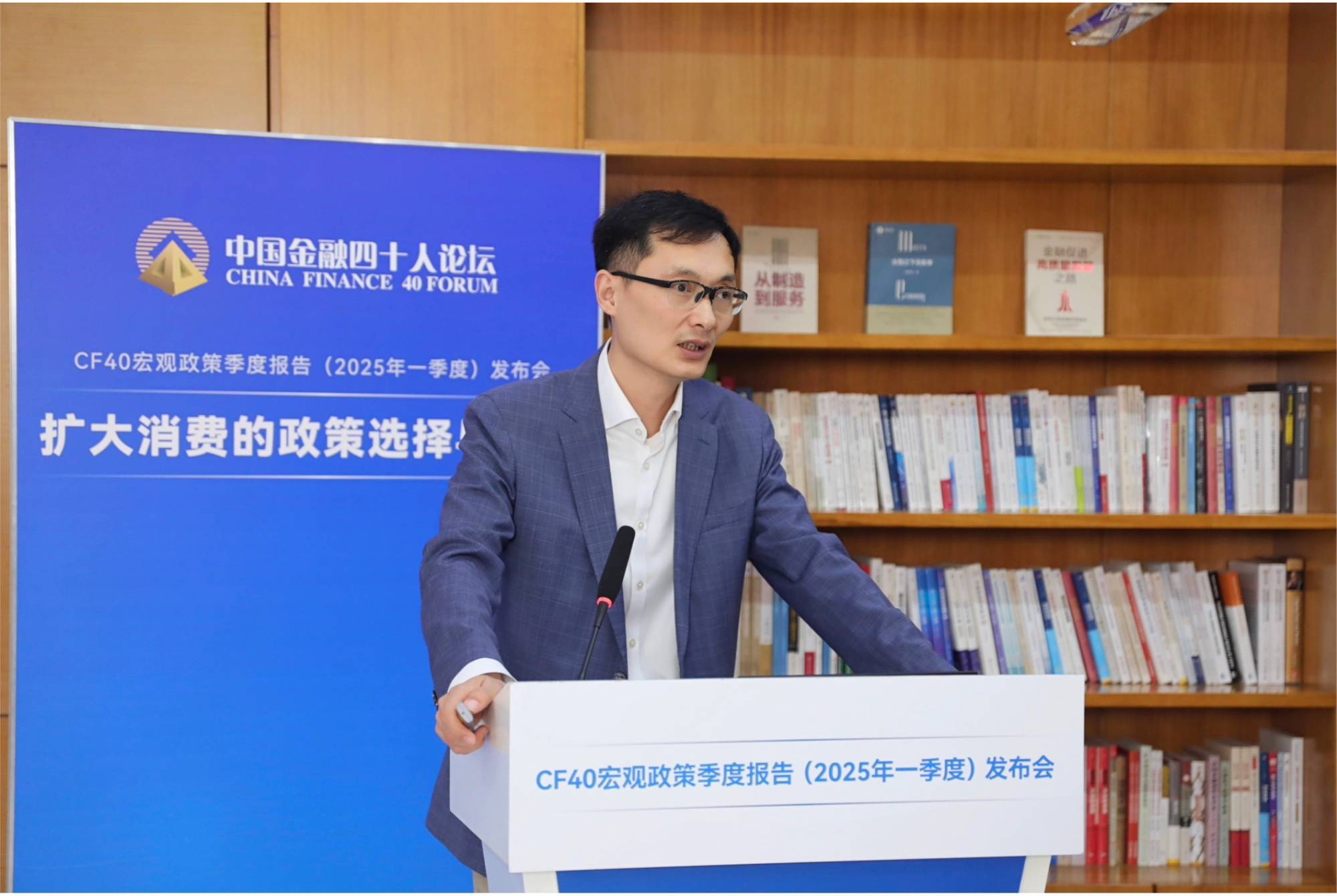
央广网北京4月23日消息(记者 樊瑞)21日下午,中国金融四十人论坛(下称CF40)发布2025年第一季度宏观政策报告。CF40资深研究员、中国社科院世 界经济与政治研究所副所长张斌表示,在扩大消费的政策选择与排序中,最优先和最见成效的是逆周期政策,可带动全社会收入和消费在短期内显著增加。 降低政策利率和扩大公共投资是逆周期政策的重点内容。 对于降准降息将在何时落地,张斌在接受央广财经记者提问时表示,"央行强调适时降准降息,具体要看经济数据还有中央统一部署。我觉得不会太远。" 推进促消费一揽子方案循序落实 张斌指出,在当下的国内外环境下,提振消费的重要性得到凸显。张斌介绍,过去二十年中国居民消费率经历"下降—上升—再下降"的三阶段波动,主要由 消费倾向变化与初次分配收入占比变化驱动。消费率变化背后的主导因素是工业化潮起带来2000-2010年的消费率下降,潮落带来2010年以后的消费率上 升,疫情带来短暂的消费率再次下降但并不改变消费率上升趋势。 CF40资深研究员、中国社科院世界经济与政治研究所副所长张斌 提振消费是扩大内需、做大做强国内大循环的重中之重。3月16日,中共中央办公厅、国务院办公厅印发《提振消 ...
4月LPR原地踏步 债市仍受宽松预期支撑
Zheng Quan Shi Bao· 2025-04-22 18:37
近日,央行公布的两个期限品种的贷款市场报价利率(LPR)与上月相比均保持不变,此前市场所期待 的"降息"未能实现。不过,债市对这一情况反应较为平淡,10年期国债到期收益率虽有小幅上行,但仍 稳定维持在1.7%左右的水平。 虽然没有"降息"让一些交易人员感到失望,但也有不少机构人士认为,短期不"降息"也在预期之内。 中证鹏元研发部高级研究员李席丰对证券时报记者表示:"首先,4月以来央行7天期逆回购利率保持不 变,LPR的定价基础没有变化。其次,一季度经济取得良好开局,叠加股市修复较强、流动性缺口较 小,4月调降LPR的必要性下降。最后,当前银行净息差、企业和个人的贷款利率都处于历史低位,银 行缺乏进一步下调LPR的动力。" 国金资管固收团队也向证券时报记者分享了类似的观点。该团队认为,目前仍需时间观察美国所谓"对 等关税"等外围变化对经济的影响,当前或并非降息合意时点。另外,去年四季度银行净息差环比收窄 至1.52%,降息或需等待银行负债端成本下降。 "4月以来央行7天期逆回购利率保持不变。这意味着4月LPR报价的定价基础并未发生变化,已在很大程 度上预示4月LPR报价会保持不动。"东方金诚首席宏观分析师王青也 ...