
供需基本面

Search documents
原油短期低位偏多
Ning Zheng Qi Huo· 2025-10-27 09:02
1. Report Industry Investment Rating - Not provided in the content 2. Core Viewpoints of the Report - The current crude oil market is in a stage of game between short - term geopolitical bullish factors and long - term supply - demand fundamental bearish factors. Short - term low - position long ideas are recommended, and the actual impact of sanctions on Russian supply should be continuously monitored [2][35] 3. Summary by Relevant Catalogs 3.1 Market Review - Crude oil showed a volatile and strong trend. SC2512 opened at 438 for the week, reached a high of 471, a low of 431, and closed at 465, with a weekly increase of 29.9 or 6.87% [3] 3.2 Price Influence Factor Analysis 3.2.1 OPEC - OPEC+ maintains its stance of increasing production. In September, OPEC's daily crude oil production was 28.44 million barrels, a month - on - month increase of 524,000 barrels, with Saudi Arabia's daily production increasing by 248,000 barrels. OPEC+ member countries' daily crude oil production was 43.05 million barrels, a month - on - month increase of 630,000 barrels. The global daily oil supply reached 108 million barrels in September, a month - on - month increase of 760,000 barrels, with OPEC+ countries' production increasing by 1 million barrels. It is expected that the global daily oil supply will increase by 3 million barrels this year to 106.1 million barrels per day and by 2.4 million barrels next year. Non - OPEC+ countries' production is expected to increase by 1.6 million barrels and 1.2 million barrels respectively in the next two years [5] - On October 1, the 62nd JMMC meeting was held, and Iran, Kuwait, UAE, Kazakhstan, Oman, and Russia updated their compensation production cut plans from September 2025 to June 2026. From September to December 2025, the planned compensation production cuts are 232,000, 203,000, 266,000, and 303,000 barrels per day respectively. The 63rd JMMC meeting will be held on November 30. On October 5, eight voluntary production - cut OPEC+ countries will increase production by 137,000 barrels per day in November, and the next eight - country meeting will be held on November 2 [6] - In September, the output of above - scale industrial crude oil was 17.77 million tons, a year - on - year increase of 4.1%, with a daily output of 592,000 tons. From January to September, the output was 162.63 million tons, a year - on - year increase of 1.7% [6] 3.2.2 Russia - In 2024, Russia's crude oil production was 516 million tons (about 9.9 million barrels per day). In 2025, it is expected to reach 515 - 520 million tons. President Putin said on October 16 that the oil production in 2025 is expected to be 5.1 billion tons, about 1% less than last year, but the overall supply remains high [7] - In August 2025, Russia's crude oil production was 9.28 million barrels per day, a month - on - month decrease of 30,000 barrels per day, and the remaining production capacity was 120,000 barrels per day, a month - on - month increase of 30,000 barrels per day. Deputy Prime Minister Novak said that Russia has the potential to increase oil production [7] - In September, Russia's crude oil exports increased by 370,000 barrels per day to 5.1 million barrels per day. In September 2025, Russia's seaborne oil exports increased by 12.8% compared with August, with ESPO crude oil exports increasing by 22.6% to 146,000 tons per day, reaching the highest level since 2025. The seaborne volume of the main export variety, Urals crude oil, increased by 7.7% to 290,000 tons per day. In the four weeks ending October 19, Russia's seaborne crude oil exports reached a 29 - month high [8] - The US Treasury Department announced sanctions on two large Russian oil companies on October 22, and the EU approved the 19th round of sanctions against Russia, including a ban on importing Russian liquefied natural gas. After the US sanctions, India's Reliance Industries decided to stop buying Russian crude oil [8][9] 3.2.3 United States - As of the week ending October 17, the US daily crude oil production was 13.629 million barrels, a decrease of 7,000 barrels from the previous week and an increase of 129,000 barrels from the same period last year. The average daily production in the four weeks ending October 17 was 13.6 million barrels, 1.3% higher than the same period last year. This year, the average daily production was 13.454 million barrels, 1.9% higher than last year [10] - As of the week ending October 24, the number of active oil - drilling rigs in the US was 420, an increase of 2 from the previous week and a decrease of 60 from the same period last year. The number of natural gas - drilling rigs was 121, the same as the previous week and an increase of 20 from the same period last year. The total number of oil and gas drilling platforms was 550, an increase of 2 from the previous week and a decrease of 35 from the same period last year [10][12] - The EIA estimates that from 3Q25 to 2Q26, the global oil inventory will increase by more than 2 million barrels per day on average. It is predicted that the low oil price at the beginning of 2026 will lead to a decline in the supply of OPEC+ and some non - OPEC producers, and the inventory will be adjusted later in 2026. The average price of Brent crude oil next year is predicted to be $51 per barrel [12] 3.2.4 America's Production Increase - The IEA expects non - OPEC+ countries' daily crude oil production to increase by 1.6 million barrels and 1.2 million barrels in the next two years respectively, with significant increases in the US, Brazil, Canada, Guyana, and Argentina. According to the current production agreement, OPEC+ will increase production by 1.4 million barrels per day in 2025 and a further 1.2 million barrels per day next year. The IEA believes that the global daily oil supply will be about 4 million barrels higher than the demand next year [18] 3.2.5 Inventory - As of July 2025, the OECD's commercial inventory was 2.761 billion barrels, an increase of 2.4 million barrels from the previous month. Compared with the same period last year, it decreased by 66.5 million barrels, less than the average of the past five years by 128.5 million barrels and less than the average of 2015 - 2019 by 208.6 million barrels [19] - As of the week ending October 17, the total US crude oil inventory including strategic reserves was 831.388 million barrels, a decrease of 142,000 barrels from the previous week. The commercial crude oil inventory was 422.824 million barrels, a decrease of 961,000 barrels from the previous week. The gasoline inventory was 216.679 million barrels, a decrease of 2.146 million barrels from the previous week [19] 3.2.6 Consumption - OPEC estimates that the global daily oil demand will increase by 1.3 million barrels this year and 1.38 million barrels next year, and the global economic growth expectations for 2025 and 2026 are maintained at 3% and 3.1% respectively [25] - The IEA estimates that in the third quarter of 2025, the global daily oil demand increased by 750,000 barrels year - on - year. However, in the remaining time of 2025 and 2026, the global daily oil consumption will remain low, with an expected annual increase of about 700,000 barrels per day [25] - As of the four weeks ending October 17, the average daily total demand for refined oil in the US was 20.474 million barrels, 0.1% lower than the same period last year. The four - week average daily demand for gasoline was 8.587 million barrels, 3.6% lower than the same period last year [25] 3.2.7 Refined Oil Processing Fee - The average refining profit margin of Shandong local refineries in this cycle was 154 yuan/ton, a decrease of 271 yuan/ton from the previous cycle. The average refining profit margin of major refineries was 512 yuan/ton, a decrease of 35 yuan/ton from the previous cycle [27] 3.2.8 Refinery Operating Rate - As of the week ending October 9, 2025, the US refinery's crude oil processing volume was 16.476 million barrels per day, an increase of 52,000 barrels per day from the previous week, and the operating rate was 93.16% [29] - This week, the average operating load of domestic major refineries in China was 80.89%, a decrease of 0.45 percentage points from the previous week. The average operating load of Shandong local refineries' atmospheric and vacuum distillation units was 50.04%, a decrease of 0.14 percentage points from the previous week [29] 3.3 Market Outlook and Investment Strategy - The US sanctions on Russian suppliers and India's review of Russian oil purchases have led to concerns about short - term supply reduction and pushed up crude oil prices. Based on past experience, the actual impact is limited, and attention should be paid to whether Russia can restructure its trade flows. The short - term strategy is to be bullish at low positions and continue to monitor the actual impact of sanctions on Russian supply [35]
“港务费”新政落地近两周,各方合力重构供应链新航道
Zheng Quan Shi Bao· 2025-10-27 00:27
Core Viewpoint - The implementation of China's special port service fee for U.S. vessels has led to significant changes in the shipping and logistics landscape, with companies adapting through rerouting and restructuring to maintain operational stability despite the absence of U.S.-flagged vessels in Chinese ports [1][3]. Port Operations - Major ports are operating smoothly, with no U.S.-owned shipping companies conducting business in Chinese ports since the policy took effect [3]. - The Guangzhou Port, a key gateway in South China, continues to maintain stable cargo and container throughput, ranking among the world's top ports [3]. Shipping Company Responses - Shipping companies have quickly adapted to the new regulations, with Maersk and other firms implementing rerouting measures to avoid U.S. flagged vessels docking at Chinese ports [6]. - Pacific Shipping is restructuring its operations by relocating part of its fleet to Singapore and changing the flag of its vessels to avoid the special port service fee [6][7]. Market Dynamics - The shipping market, particularly for bulk commodities, is expected to require time to adjust, but signs of stabilization are emerging [10]. - The overall supply of vessels remains sufficient, and there is no structural shortage, with charterers managing their shipping schedules to avoid market volatility [10]. Future Outlook - The recent discussions between China and the U.S. regarding maritime logistics and shipbuilding measures indicate a potential for constructive dialogue and resolution of trade issues [11]. - The adjustments made by shipping companies may lead to a more favorable market environment in the long term, as they seek clarity on regulatory changes and aim to minimize operational costs [10].



“港务费”新政落地近两周 各方合力重构供应链新航道
Zheng Quan Shi Bao· 2025-10-26 22:20
Core Viewpoint - The implementation of China's special port service fee for U.S. vessels has led to a significant reduction in U.S.-flagged shipping operations in Chinese ports, while the overall capacity for U.S. routes remains stable through alternative measures like transshipment and restructuring [1][2]. Port Operations - Since October 14, the operational situation at major ports, such as Nansha Port, has remained stable, with no U.S.-owned shipping companies conducting business [2] - The Guangzhou Port, a key gateway in South China, continues to maintain high cargo and container throughput despite the new fee [2] - The only reported instance of a special port service fee being charged involved the U.S. Matson Navigation Company's "Manukai" container ship, which allegedly incurred a fee of 4.4584 million yuan during its stay at Ningbo [2] Shipping Response - Shipping companies have quickly adapted to the new regulations, with Maersk and other firms implementing transshipment measures to avoid docking at Chinese ports with U.S.-flagged vessels [4] - Pacific Shipping is restructuring its operations by relocating half of its bulk carrier fleet to Singapore and changing the flag of its vessels to avoid the special port service fee [4][5] Market Dynamics - The shipping market, particularly for bulk commodities, is expected to require time to adjust, but signs of stabilization are emerging [7] - As of the week of October 23, the ultra-large tanker market remains cautious, with both charterers and shipowners adopting a wait-and-see approach [7] - The overall supply of vessels remains sufficient, and there is no structural shortage, allowing charterers to control shipping schedules [7] Future Outlook - Short-term adjustments in the shipping market are anticipated, but long-term positive impacts are expected as companies seek regulatory clarifications and aim to minimize operational costs [7] - There is potential for non-U.S. shipowners to gain a premium in the mid-term, particularly those with Chinese backgrounds, due to resource supply chain security considerations [8] - Ongoing U.S.-China trade discussions in Kuala Lumpur may address maritime logistics and shipbuilding industry concerns, with preliminary agreements being formed [8]
“港务费”新政落地近两周各方合力重构供应链新航道
Zheng Quan Shi Bao· 2025-10-26 17:39
Core Viewpoint - The implementation of China's special port service fee for U.S. vessels has led to a significant reduction in U.S.-flagged shipping operations in Chinese ports, prompting companies to adapt through cargo transshipment and restructuring to maintain service continuity [1][2]. Group 1: Port Operations - Since the implementation of the special port service fee on October 14, there have been no U.S.-owned shipping companies operating in the Nansha port area, and overall capacity for U.S. routes remains stable [1]. - Major ports, including Guangzhou, report that operations are running smoothly despite the absence of U.S.-flagged vessels, ensuring continuous service for routes from South China to the U.S. [1]. Group 2: Response from Shipping Companies - Maersk has quickly adapted by transferring cargo from U.S.-flagged vessels to non-U.S. registered ships in third countries [3]. - Companies like Pacific Shipping are restructuring by relocating part of their fleet to Singapore and changing their flag to avoid the special port service fee [3][4]. Group 3: Market Dynamics - The shipping market, particularly for bulk commodities, is experiencing a period of adjustment, with cautious attitudes from both charterers and shipowners [5]. - As the special port service fee policy details evolve, the market is expected to stabilize, with a shift in focus towards supply and demand fundamentals rather than geopolitical risks [5]. Group 4: Future Outlook - There is an expectation that U.S.-based shipowners may gain a premium in the medium term, while Chinese-owned shipping companies are likely to benefit from resource supply chain security considerations [6]. - Ongoing U.S.-China trade discussions may lead to constructive solutions regarding maritime logistics and shipbuilding industry measures, indicating potential for future regulatory clarifications [6].
美对俄制裁造成供应预期扰动,原油重回地缘交易
SINOLINK SECURITIES· 2025-10-25 12:56
Investment Rating - The report maintains a positive outlook on the oil and petrochemical sector, with various indices showing significant weekly gains, such as the oil and gas resource index increasing by 3.80% and the oil and gas extraction service index rising by 10.04% [9][10]. Core Insights - Oil prices have risen primarily due to geopolitical factors, particularly the U.S. sanctions on Russian suppliers Rosneft and Lukeoil, which have raised concerns about short-term supply reductions [15][17]. - The report suggests that the actual impact of sanctions may be limited, as historical data indicates that trade flow is more affected than actual supply levels [17]. - The report highlights that the U.S. crude oil inventory has decreased, with a net import increase, and the active oil rig count remains stable at 418 [15][17]. Summary by Sections Market Overview - The petrochemical sector outperformed the Shanghai Composite Index by 1.45%, with various sub-sectors showing positive performance [9]. - The average operating load of domestic refineries was reported at 80.89%, a slight decrease from the previous week [3]. Oil Sector - As of October 23, WTI crude was priced at $61.79, up by $4.33, while Brent crude was at $65.98, up by $3.90 [15]. - The EIA reported a decrease in commercial crude oil inventory by 961,000 barrels, with gasoline inventory down by 214,700 barrels [15]. Refining Sector - The average refining margin for major refineries was reported at 512.62 yuan/ton, down by 35.2 yuan/ton from the previous period [3]. - The report indicates a weak domestic gasoline market, with average operating loads for Shandong independent refineries at 50.04% [3]. Polyester Sector - The report notes an increase in raw material prices, leading to a slight uptick in replenishment willingness among weaving enterprises [3]. - The average profit level for polyester filament POY150D was reported at 96.02 yuan/ton, a decrease of 80.44 yuan/ton from the previous week [3]. Olefin Sector - The domestic ethylene market average price was reported at 6,370 yuan/ton, a slight decrease of 15 yuan/ton [3]. - The report anticipates continued weak consolidation in the ethylene market due to negative downstream profits [3].



国际油价大涨 难阻今年整体下跌态势
Hua Xia Shi Bao· 2025-10-25 01:31
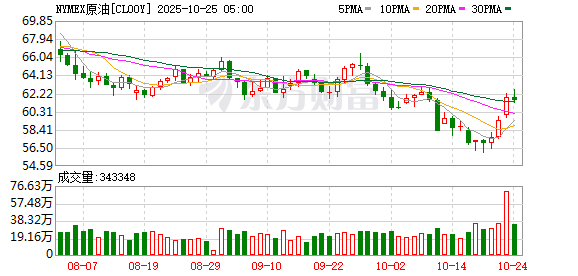
Core Viewpoint - International oil prices surged to a two-week high due to U.S. sanctions on major Russian oil companies, raising supply concerns in the market [2][4]. Group 1: Oil Price Movements - As of October 23, WTI crude oil futures rose by 5.62% to $61.79 per barrel, while Brent crude oil futures increased by 5.43% to $65.99 per barrel [2]. - Despite the recent surge, international oil prices have generally been on a downward trend this year, with prices frequently dipping below the critical $60 per barrel mark [2][7]. - Analysts predict that there may be upward potential for oil prices in the short term due to increased geopolitical tensions and sanctions against Russia [2][4]. Group 2: Sanctions and Supply Concerns - The recent rise in oil prices is primarily attributed to U.S. sanctions against two of Russia's largest oil companies, which have heightened market supply concerns [4]. - The sanctions are seen as a significant escalation in Washington's pressure on Moscow, increasing the likelihood of major disruptions in Russian oil production and exports [4]. - The European Union has also imposed sanctions on Russia, including a ban on importing liquefied natural gas and travel restrictions on Russian diplomats [5]. Group 3: Market Dynamics and Future Outlook - The overall oil market is expected to face downward pressure in the long term, particularly in the first half of next year, as OPEC+ may accelerate production increases [8][10]. - Analysts note that the global oil supply is projected to remain tight in 2024, but may become more relaxed by 2025 due to increased production capacity [8]. - The anticipated price range for Brent crude oil is expected to be between $60 and $70 per barrel, with potential declines to $52 per barrel by the fourth quarter of next year [10].

甲苯:传统银十旺季难旺,价格一度跌至近五年低位
Sou Hu Cai Jing· 2025-10-24 02:25
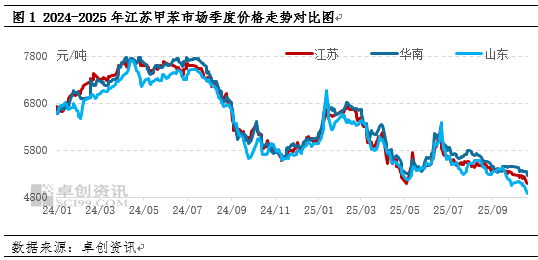
Core Viewpoint - The traditional demand peak season in October has not significantly boosted the toluene market, leading to prices dropping to near five-year lows due to weak supply-demand fundamentals and declining prices of related products [1][3]. Group 1: Supply Dynamics - Domestic toluene production capacity is expected to expand significantly in 2025, with new facilities from various companies adding nearly 1.7 million tons, resulting in a continuously increasing supply [3]. - The supply side remains robust, with minimal maintenance shutdowns in October and an expected increase in port arrivals, contributing to a supply surplus that weakens price support [3][8]. - The overall supply growth, coupled with weak demand, exacerbates the supply-demand imbalance, putting downward pressure on prices [3][5]. Group 2: Demand Trends - As of September 2025, domestic gasoline shipping orders have decreased by approximately 8.67% year-on-year, indicating a persistent weak demand environment [5]. - The traditional peak season has not led to significant increases in demand from the refining sector, with overall oil adjustment demand remaining weak [5]. - Chemical sector demand is also insufficient, with many companies only maintaining essential procurement due to reduced profit margins from related products [5][8]. Group 3: Price Influences - Following the National Day holiday, toluene prices have continued to decline, with the Shandong market dropping below 5,000 yuan/ton, marking a new low since February 2021 [1][3]. - The decline in prices is influenced by falling crude oil prices and related products, which further depress market confidence [7]. - Short-term expectations suggest a potential rebound in prices due to low levels attracting some buyers, with forecasts indicating possible price increases to around 4,900-5,000 yuan/ton in Shandong and 5,100-5,250 yuan/ton in Jiangsu [8].
聚烯烃日报:油价大幅反弹,成本端持续提振-20251024
Hua Tai Qi Huo· 2025-10-24 01:38
Report Summary 1. Investment Rating The report does not provide an industry investment rating. 2. Core Views - **PE**: Affected by geopolitics and macro - factors, international oil prices have rebounded strongly from a low level, enhancing cost support. However, the supply is expected to increase, and downstream demand follows up limitedly. Although the price has risen with cost support, the upside space is limited due to supply - demand pressure [2]. - **PP**: Oil prices and propane prices have rebounded, increasing cost support. But the supply pressure still exists, and the demand follows up slowly with large inventory de - stocking pressure. The price increase may not be sustainable [3]. 3. Summary by Directory Market News and Important Data - **Price and Basis**: L主力合约收盘价为6999元/吨(+63),PP主力合约收盘价为6691元/吨(+72)。LL华北现货为6940元/吨(+60),LL华东现货为7000元/吨(+40),PP华东现货为6610元/吨(+50)。LL华北基差为 - 59元/吨(-3),LL华东基差为1元/吨(-23),PP华东基差为 - 81元/吨(-22) [1]. - **Upstream Supply**: PE开工率为81.5%(-0.3%),PP开工率为75.9%(-2.3%) [1]. - **Production Profit**: PE油制生产利润为404.0元/吨(-87.8),PP油制生产利润为 - 236.0元/吨(-87.8),PDH制PP生产利润为63.7元/吨(-104.3) [1]. - **Import and Export**: LL进口利润为 - 138.6元/吨(+8.8),PP进口利润为 - 367.2元/吨(+84.5),PP出口利润为 - 7.6美元/吨(-39.9) [1]. - **Downstream Demand**: PE下游农膜开工率为47.1%(+4.2%),PE下游包装膜开工率为52.6%(+0.4%),PP下游塑编开工率为44.4%(+0.1%),PP下游BOPP膜开工率为61.4%(+0.2%) [1]. Market Analysis - **PE**: The cost support has increased, but the supply is expected to rise with limited downstream demand. The price has risen with cost support, but the upside is limited due to supply - demand pressure [2]. - **PP**: Cost support has strengthened, but the supply pressure still exists, and the demand follows up slowly. The price increase may not be sustainable [3]. Strategy - **Single - side**: Wait and see. - **Inter - period**: L01 - L05 reverse spread; PP01 - PP05 reverse spread. - **Inter - variety**: Shrink the spread of PP01 - 3MA01 when it is high [4].
黑色建材日报-20251023
Wu Kuang Qi Huo· 2025-10-23 01:21
1. Report Industry Investment Rating No relevant content provided. 2. Core Viewpoints of the Report - In the context of a gradually loosening macro - environment, the long - term trend of steel prices remains unchanged. In the short term, the weak real - demand pattern of steel is difficult to improve significantly. Attention should be paid to the policy strength and direction around the Fourth Plenary Session [2]. - Due to factors such as the decline in steel mill profits and high inventory pressure, iron ore prices are under pressure. With weak terminal demand and continuous macro - disturbances, ore prices are expected to fluctuate weakly, with attention on the support level of 760 - 765 yuan/ton [5]. - For the black sector, it is not pessimistic about the future. It is considered more cost - effective to look for callback positions to make rebounds rather than shorting. Manganese silicon and ferrosilicon are likely to follow the black sector's market [9][10]. - Industrial silicon prices are weakly operating and are expected to be in short - term consolidation, following the overall commodity environment due to supply pressure and uncertain demand [13]. - After the end of expected pricing, polysilicon prices have fallen again. With existing real - world constraints, it is currently a phased correction within the oscillation range, with attention on the support level of 48,000 yuan/ton for the 11 - contract [16]. - Glass is in the traditional peak - season end, with weak demand and increasing supply, and the market is expected to remain weakly operating in the short term [19]. - Soda ash has a pattern of strong supply and weak demand, with high inventory and weak downstream support. It is expected to continue to oscillate weakly in the short term [21]. 3. Summary by Related Catalogs Steel Market Information - The closing price of the rebar main contract was 3,068 yuan/ton, up 21 yuan/ton (0.689%) from the previous trading day. The registered warehouse receipts decreased by 2,414 tons, and the main - contract open interest decreased by 18,322 lots. In the spot market, the Tianjin aggregated price remained unchanged, and the Shanghai aggregated price increased by 10 yuan/ton [1]. - The closing price of the hot - rolled coil main contract was 3,247 yuan/ton, up 28 yuan/ton (0.869%) from the previous trading day. The registered warehouse receipts decreased by 896 tons, and the main - contract open interest decreased by 8,822 lots. In the spot market, the Lecong and Shanghai aggregated prices increased by 20 yuan/ton and 10 yuan/ton respectively [1]. Strategy Viewpoints - The overall atmosphere in the commodity market was weak yesterday, and steel product prices showed weak oscillations. The Fourth Plenary Session is expected to guide the macro - economic trend. Rebar production decreased slightly, and post - holiday demand led to a small reduction in inventory, but demand recovery was insufficient. Hot - rolled coil production continued to decline, and post - holiday demand also increased, but the inventory level was still high, with prominent fundamental contradictions [2]. Iron Ore Market Information - The main iron ore contract (I2601) closed at 774.00 yuan/ton, up 0.58% (+4.50), with the open interest changing to 558,200 lots, a decrease of 4,570 lots. The weighted open interest was 937,000 lots. The spot price of PB fines at Qingdao Port was 781 yuan/wet ton, with a basis of 56.13 yuan/ton and a basis rate of 6.76% [4]. Strategy Viewpoints - Supply: The latest overseas iron ore shipments increased month - on - month and were at a high level in the same period. Shipments from Australia, Brazil, and non - mainstream countries all increased. The near - end arrival volume decreased month - on - month. - Demand: The latest average daily hot - metal output was 240.95 tons, a decrease of 0.59 tons month - on - month. Some blast furnaces started maintenance due to profit decline, and the steel mill profitability continued to decline. - Overall: Affected by factors such as profit decline and high inventory, iron ore prices are under pressure. With weak terminal demand and macro - disturbances, ore prices are expected to fluctuate weakly [5]. Manganese Silicon and Ferrosilicon Market Information - On October 22, the main manganese silicon contract (SM601) closed up 1.11% at 5,810 yuan/ton. The spot price of 6517 manganese silicon in Tianjin was 5,720 yuan/ton, with a premium of 100 yuan/ton over the futures. - The main ferrosilicon contract (SF601) closed up 1.17% at 5,558 yuan/ton. The spot price of 72 ferrosilicon in Tianjin was 5,650 yuan/ton, with a premium of 112 yuan/ton over the futures. - Manganese silicon and ferrosilicon prices are in an oscillation range, and attention should be paid to the price direction at the current trend line [7][8]. Strategy Viewpoints - Current factors such as weak real - demand and the resurgence of Sino - US trade frictions have pressured prices. However, the market has insufficient trading of expectations for subsequent important meetings. There may be an expected difference. - It is not pessimistic about the future of the black sector. It is considered more cost - effective to look for callback positions to make rebounds. Manganese silicon and ferrosilicon are likely to follow the black - sector market [9][10]. Industrial Silicon Market Information - The closing price of the main industrial silicon contract (SI2511) was 8,485 yuan/ton, down 0.24% (-20). The weighted - contract open interest increased to 438,479 lots, an increase of 2,236 lots. In the spot market, the price of East China non - oxygen - permeable 553 remained unchanged, and the price of 421 decreased by 50 yuan/ton [12]. Strategy Viewpoints - Affected by the overall market environment, industrial silicon prices are weakly operating. The supply shows a pattern of "increasing in the north and decreasing in the south", with overall supply pressure. The demand has potential risks of weakening support. Cost factors provide some support. Overall, it is expected to be in short - term consolidation and follow the commodity environment [13]. Polysilicon Market Information - The closing price of the main polysilicon contract (PS2511) was 50,310 yuan/ton, down 0.80% (-405). The weighted - contract open interest decreased to 247,499 lots, a decrease of 3,171 lots. The average spot prices of N - type granular silicon, N - type dense material, and N - type re - feed material remained unchanged, with a basis of 2,690 yuan/ton for the main contract [14][15]. Strategy Viewpoints - After the end of expected pricing, polysilicon prices have fallen again. With factors such as over - expected production increase and reduced downstream production scheduling, there is real - world inventory pressure. It is currently a phased correction within the oscillation range, with attention on the support level of 48,000 yuan/ton for the 11 - contract [16]. Glass Market Information - On Wednesday afternoon at 15:00, the main glass contract closed at 1,094 yuan/ton, up 0.64% (+7). The inventory of float - glass sample enterprises increased by 2.31% week - on - week. The top 20 long - position holders reduced 372 long positions, and the top 20 short - position holders reduced 9,410 short positions [18]. Strategy Viewpoints - Entering the end of the traditional peak season, demand is weakening, and supply is increasing. The market's supply - demand contradiction is difficult to resolve in the short term, and it is expected to remain weakly operating without external stimuli [19]. Soda Ash Market Information - On Wednesday afternoon at 15:00, the main soda ash contract closed at 1,223 yuan/ton, up 1.07% (+13). The inventory of soda ash sample enterprises increased by 2.31% week - on - week. The top 20 long - position holders increased 2,351 long positions, and the top 20 short - position holders reduced 12,374 short positions [20]. Strategy Viewpoints - The soda ash industry has a pattern of strong supply and weak demand, with high inventory and weak downstream support. It is expected to continue to oscillate weakly in the short term [21].
有色金属周报:成本支撑走弱,不锈钢偏弱运行-20251021
Hong Yuan Qi Huo· 2025-10-21 08:15
1. Report Industry Investment Rating - Not provided in the document 2. Report's Core View - For electrolytic nickel, the recommended strategy is to wait and see, with an expected trading range of 115,000 - 125,000 yuan/ton. Given a loose fundamental situation, high inventory pressure, and low valuation, the price is expected to fluctuate at a low level [5][95]. - For stainless steel, the recommended strategy is to sell on rallies, with an expected trading range of 12,000 - 13,000 yuan/ton. Due to weak fundamentals and declining cost support, the price is expected to oscillate weakly [6][122]. 3. Summaries by Relevant Catalogs 1.1 Nickel Market Review - Last week, SHFE nickel fluctuated at a low level, with a weekly decline of 1.89%. Trading volume reached 486,300 lots (+196,400), and open interest was 60,500 lots (-17,300). LME nickel dropped 1.11% weekly, with trading volume at 34,600 lots (-6,400) [12]. - The basis premium was 1,240 yuan/ton [14]. 1.2 Supply Side - Nickel Ore - Last week, the prices of 0.9%, 1.5%, and 1.8% nickel ores remained unchanged, as did the shipping price from the Philippines to China [21]. - In September, Philippine nickel ore exports decreased. China's nickel ore imports reached 6.11 million tons, a 3.7% MoM decrease but a 33.9% YoY increase [26]. - Last week, nickel ore arrivals increased by 707,000 tons MoM, and port inventories rose by 30,000 wet tons [28]. 1.2 Supply Side - Nickel Pig Iron - The price of 8 - 12% high - nickel pig iron fell by 14 yuan/nickel point, and that of 1.5 - 1.7% nickel pig iron dropped by 50 yuan/ton. The negative premium of nickel pig iron to electrolytic nickel widened, and the premium to scrap stainless steel narrowed [33]. - In September, China's nickel pig iron imports were 1.085 million tons, up 24.2% MoM and 47.2% YoY. Imports are expected to decline in October [36]. - BF profit contracted, but the operating rate rose. RKEF losses widened, and the operating rate decreased [40]. - In October, the operating rate and production schedule of domestic nickel pig iron decreased, while those in Indonesia increased [44]. - Nickel pig iron inventories decreased [46]. 1.2 Supply Side - Electrolytic Nickel - In October, the operating rate and production schedule of refined nickel increased [50]. - The export profit of electrolytic nickel decreased [54]. - In September, electrolytic nickel imports increased, and exports decreased [58]. 1.3 Demand Side - Stainless Steel - In October, stainless steel production schedules increased, while those of the 300 - series decreased [63][111]. - In September, stainless steel exports decreased by 6.6% MoM and 8.7% YoY, while imports rose by 2.7% MoM and 0.4% YoY. October's import and export volumes are expected to be similar to September's [67][114]. 1.3 Demand Side - New Energy - The price of pure nickel declined, while that of nickel sulfate increased, widening the premium of nickel sulfate to pure nickel. The proportion of pure nickel used to produce nickel sulfate is minimal [72]. - In October, the production schedules of ternary precursors increased by 16.2% MoM and 2.8% YoY, and those of ternary materials rose by 4.3% MoM and 33.7% YoY [77]. - In October, the production schedule of nickel sulfate increased by 5.1% MoM and 24.3% YoY [79]. - In September, new energy vehicle production was 1.617 million units, up 16.3% MoM and 23.7% YoY; sales were 1.604 million units, up 15.0% MoM and 24.6% YoY [85]. 1.4 Inventory Side - Last week, SHFE nickel inventories and LME nickel inventories increased [86]. - Shanghai bonded area pure nickel inventories remained unchanged, while the six - region social total inventory increased by 4,014 tons [91]. 1.5 Electrowon Nickel Cost - The cost of producing electrowon nickel from purchased nickel sulfate increased, while that from purchased nickel matte and MHP decreased. MHP integrated production of electrowon nickel has a significant cost advantage over high - nickel matte integrated production [94]. 1.5 Market Outlook - Nickel - Strategy: Wait and see. Expected trading range: 115,000 - 125,000 yuan/ton. Loose fundamentals, high inventory pressure, and low valuation suggest low - level price fluctuations [95]. 2.1 Stainless Steel Market Review - Last week, stainless steel futures trended downward, with a weekly decline of 1.64%. The basis shrank to 970 yuan/ton. Trading volume was 716,700 lots (+557,400), and open interest was 197,700 lots (+144,300) [98]. 2.2 Cost and Profit - High - nickel pig iron and high - carbon ferrochrome prices fell, weakening cost support [102]. - Losses in the 200 - series, 300 - series, and 400 - series stainless steel expanded [107]. 2.3 Fundamentals - Stainless Steel - In October, stainless steel production schedules increased, while those of the 300 - series decreased [111]. - In September, stainless steel exports decreased, and imports increased. October's volumes are expected to be similar to September's [114]. 2.4 Inventory Side - Stainless Steel - Total domestic stainless steel social inventories decreased. 200 - series and 400 - series inventories decreased, while 300 - series inventories increased [120]. 2.5 Market Outlook - Stainless Steel - Strategy: Sell on rallies. Expected trading range: 12,000 - 13,000 yuan/ton. Weak fundamentals, loose cost support, and inventory patterns suggest weak price oscillations [122].