关税战

Search documents
特朗普将面临“残酷的现实”,对中国关税战代价,没容易一笔勾销
Sou Hu Cai Jing· 2025-05-20 02:14
本文来自 虎说天下 如今,美国的 "关税战休战期" 悄然过半,然而,这场关税风暴给美国经济带来的负面影响却如影随形,几 天后,一系列关键经济数据的出炉或将让特朗 普直面其关税政策带来的 "残酷现实"。 特别是在美国国内,商业活动和信心调查等 "软数据" 已清晰表明,消费者和企业的信心正急剧恶化。这对誓言通过发动关税战来 "让美国再次伟大" 的特 朗普而言,不啻于一记沉重的打击。消费者作为经济增长的重要驱动力,其信心的下降意味着消费支出可能减少,而企业信心的缺失则会抑制投资和扩 张,两者共同作用,将严重拖累美国经济的前行步伐。 与此同时,法国、德国和欧元区的 5 月采购经理人数据以及德国商业景气指数也将受到密切关注。这些数据将帮助人们评估关税对欧洲经济的影响,而欧 洲作为美国的重要贸易伙伴,其经济状况的变化也将反过来对美国经济产生连锁反应。全球商业关系在特朗普的关税政策下依然动荡不安,仅仅是贸易攻 势的预期,就已对企业造成了严重的扭曲。许多企业不得不重新评估供应链布局,增加了运营成本和不确定性。 面对不断升温的通胀压力和低迷的消费者信心,美联储在 2025 年的货币政策抉择陷入两难。摩根士丹利在报告中指出,尽管 ...


特朗普万没料到,中方一战打响名声,日本、印度硬了起来,轮到美国头疼
Sou Hu Cai Jing· 2025-05-19 16:40
Group 1 - Japan aims for "zero tariffs" in trade negotiations with the US, but has limited bargaining power due to structural contradictions [1] - The outlook for Japan-US trade talks is uncertain, with economic indicators in Japan showing weakness due to tariff impacts [1] - India's response to US tariffs has been to pursue bilateral trade agreements rather than retaliatory actions, indicating a shift in its trade strategy [3] Group 2 - The US has initiated a tariff war with Japan, linking defense cost-sharing to trade negotiations, which puts pressure on Japan's government [4] - The recent US-China trade negotiations resulted in a significant reduction of tariffs, which has influenced Japan's stance to adopt a firmer position [6] - Japanese Prime Minister Kishida's strong demand for the elimination of all tariffs reflects a notable shift in Japan's diplomatic approach, garnering domestic support [9]
利空突袭!深夜,开盘大跌!
券商中国· 2025-05-19 14:07
Core Viewpoint - The article discusses the significant market reactions following Moody's downgrade of the U.S. credit rating, highlighting the implications for U.S. stocks, bonds, and trade policies [2][4][6]. Market Reactions - U.S. stock indices opened sharply lower, with the Nasdaq and S&P 500 initially dropping over 1%, and later narrowing losses to 0.73% and 0.55% respectively [4]. - The U.S. bond market experienced a severe sell-off, with the 30-year Treasury yield surpassing 5%, marking the highest level since November 2023 [4][6]. - The dollar index fell by 0.63%, indicating a decline in the dollar's value [2]. Moody's Downgrade - Moody's downgraded the U.S. sovereign credit rating from Aaa to Aa1, citing the expanding federal budget deficit and the increasing reliance on refinancing in a high-interest-rate environment as primary reasons [4][6]. - Analysts warn that rising bond yields and a declining dollar could trigger another wave of stock market sell-offs, especially if President Trump loses control over the long-term bond market [2][4]. Trade Policy Concerns - U.S. Treasury Secretary warned of a return to high tariffs if countries do not negotiate in good faith, indicating a more aggressive stance in trade negotiations [8][10]. - Ongoing trade talks with major allies like the EU, Japan, and South Korea are reportedly stalled, with significant disagreements remaining, particularly in the automotive sector [8][9]. Economic Implications - Analysts express concerns that rising long-term bond yields will increase the government's net interest costs and deficits, potentially undermining the safe-haven status of U.S. Treasuries [6]. - The uncertainty surrounding tariffs and trade negotiations could lead to structural price increases globally, as other countries may retaliate with their own tariffs [10].






“关税战”后全球贸易再平衡:要给银行以缓冲|2025五道口金融论坛
Xin Lang Cai Jing· 2025-05-19 12:24
Group 1: Impact of Tariff Policies - The tariff policies introduced by the Trump administration have raised significant concerns regarding the cost-benefit balance in trade and investment, with new factors such as geopolitical and ideological considerations now influencing decisions [2][4] - The uncertainty surrounding these policies is expected to hinder the return of manufacturing to the U.S., as American competitiveness in labor-intensive industries remains weak [2] - The global trade rebalancing is anticipated to lead to profound adjustments in the economic structures of major economies, necessitating a focus on internal economic adjustments to effectively address trade imbalances [4] Group 2: Global Economic Outlook - The International Monetary Fund (IMF) has revised its global economic growth forecast for 2025 down from 3.3% to 2.8%, with a projected growth of 3% for 2026, largely due to the impact of U.S. tariff measures and policy uncertainties [6] - Foreign Direct Investment (FDI) has been in a state of low growth or stagnation since the financial crisis, particularly exacerbated by trade protectionism and the pandemic, with a notable decline in investment data over the past three years [6][7] Group 3: Resilience of Chinese Enterprises - Chinese enterprises have shown remarkable resilience, with over $3 trillion in foreign direct investment stock from 2014 to 2024, indicating strong participation in international markets [8][10] - The shift from labor-intensive industries to more technologically advanced enterprises has enhanced the investment capabilities of Chinese firms, contributing to local industrialization in host countries [10] - Chinese companies are increasingly establishing industrial parks abroad, fostering clusters of enterprises and contributing to local infrastructure development, which enhances their global investment footprint [10][11] Group 4: Strategies for Companies - Companies are advised to develop "immunity" through compliance with legal regulations, which is essential in uncertain environments [12] - Resilience in supply chains and the ability to self-develop core components are critical for companies to navigate external changes effectively [12] - Emphasizing digital transformation and resource linkage capabilities will enable companies to quickly adapt and seize market opportunities [12]

48小时内,美国3次对华威胁,中方祭出“王牌”,比关税更狠!
Sou Hu Cai Jing· 2025-05-19 11:18
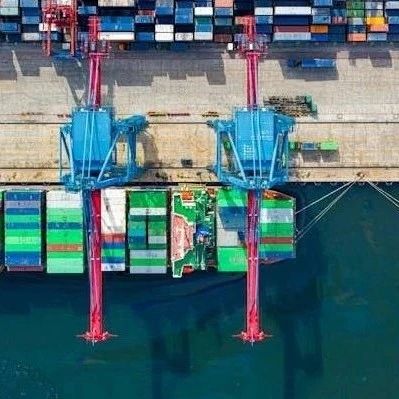
Group 1 - The core point of the news is the significant reduction of bilateral tariffs between China and the U.S., leading to a surge in shipping demand and rising freight rates as companies rush to fulfill backlogged orders within a 90-day window [1][3] - Following the announcement, shipping companies immediately raised prices, with rates for shipping containers to the U.S. West Coast reaching $6,000 in June, indicating a strong supply-demand dynamic in the market [1] - Despite the tariff reductions, there are indications that the U.S. may continue to pursue its tariff policies post the 90-day period, with potential threats of increased tariffs still looming [3] Group 2 - The U.S. Department of Commerce has revoked the AI export rules established during the Biden administration and is implementing stricter controls on global chip exports, particularly targeting China [4] - China has initiated a crackdown on the smuggling and illegal export of strategic minerals, including rare earths, to prevent the U.S. from circumventing export controls through third-party countries [6][8] - The recent actions by China to tighten export controls on rare earths are seen as a strategic move to leverage its position in negotiations with the U.S., potentially leading to increased prices and supply chain challenges for American companies [8]
下半年开始前,你得看懂关税战背后隐藏的残酷真相
创业家· 2025-05-19 10:01
Core Viewpoint - The article discusses the current era as one of significant change and instability, particularly highlighting the impact of global trade tensions and the shift in economic dynamics between the US and China [2][6]. Group 1: Global Economic Dynamics - The article references Ray Dalio's perspective that the future will be markedly different from the past, emphasizing a departure from the post-World War II global order dominated by the US [3]. - It describes the current situation as a "island chain change era," where the previously interconnected global economy is now fragmented into major "islands," primarily the US and China [6][7]. - The interconnectedness of global markets means that disruptions in one area can have widespread repercussions, akin to ships linked by chains [7]. Group 2: Future Outlook - The article suggests that 2025 will be a pivotal year, with an escalation in global trade wars and a shift towards more rational capital allocation influenced by AI [10]. - It posits that this period, often perceived as the worst, could actually represent a golden age for innovators and entrepreneurs who can adapt to the changing landscape [11]. - The emphasis is placed on the importance of collaboration and networking among entrepreneurs to navigate the challenges and seize opportunities in this evolving environment [12].
日度策略参考-20250519
Guo Mao Qi Huo· 2025-05-19 08:19
Group 1: Report Industry Investment Ratings - There is no explicit overall industry investment rating provided in the report. However, investment suggestions are given for different sectors, including "long - position reduction", "short - selling opportunities", "interval trading", etc. [1] Group 2: Core Views of the Report - The market shows complex trends due to various factors such as economic data, policy changes, and supply - demand relationships across different commodity sectors. The overall market sentiment is affected by factors like the US consumer confidence index, inflation expectations, and geopolitical events. [1] Group 3: Summaries by Related Catalogs Macro - Financial - For stock index futures, it is recommended to consider reducing long positions and be vigilant about further adjustment risks [1]. - The bond futures are supported by asset shortage and weak economy in the long - term, but the short - term rise is suppressed by the central bank's interest - rate risk reminder [1]. - Gold prices may enter a consolidation phase in the short - term, while the long - term upward logic remains unchanged. Silver prices may be more resilient than gold in the short - term due to potential tariff impacts [1]. Non - Ferrous Metals - Copper prices are expected to be weak in the short - term due to lower downstream demand and other factors [1]. - Aluminum prices will remain strong in the short - term supported by low inventory and alumina price rebounds. Alumina prices continue to rise due to supply disruptions [1]. - Zinc fundamentals are weak, and it is recommended to look for short - selling opportunities [1]. - Nickel prices will oscillate in the short - term and face long - term oversupply pressure. Short - term interval trading is suggested [1]. - Stainless steel futures will oscillate in the short - term with long - term supply pressure. Interval trading is recommended [1]. - Tin prices have strong fundamental support before the复产 of Wa State [1]. Chemicals - Silicon presents a situation of strong supply, weak demand, and low - valuation, with no improvement in demand and high inventory pressure [1]. - Lithium carbonate has no further supply contraction, increasing inventory, and downstream rigid - demand purchasing [1]. - For methanol, the short - term spot market will trade in a range, and the long - term market may turn from strong to weak and oscillate [1]. - PVC has weak fundamentals but is boosted by macro - factors, and its price will oscillate [1]. - LPG prices are expected to decline in the short - term due to tariff easing and demand off - season [1]. Black Metals - Rebar is in a window of switching from peak to off - season, with cost loosening and a supply - demand surplus, lacking upward momentum [1]. - Iron ore prices will oscillate, and manganese ore prices are expected to decline due to oversupply [1]. - Coke and coking coal are in a relatively oversupplied situation, and it is recommended to take advantage of price rebounds for hedging [1]. Agricultural Products - Brazilian sugar production in the 2025/26 season is expected to reach a record high, but it may be affected by crude oil prices [1]. - Grains are expected to oscillate, and a strategy of buying on dips is recommended considering the tight annual supply - demand situation [1]. - Soybean prices are expected to oscillate due to lack of speculation and market pressure [1]. - Cotton prices are expected to oscillate weakly as the domestic cotton - spinning industry enters the off - season [1]. - Pulp prices will oscillate due to lack of upward momentum after the tariff - related boost [1]. - Livestock prices will oscillate as the pig inventory recovers and the market is in a state of abundant supply expectation [1]. Energy - Crude oil and fuel oil prices are affected by the progress of the Iran nuclear deal and the end of the Sino - US trade negotiation drive [1]. - Asphalt prices will oscillate as cost drags, inventory returns to normal, and demand slowly recovers [1]. - Natural rubber prices are affected by rainfall, cost support, and the end of the trade negotiation drive [1].
黑色金属数据日报-20250519
Guo Mao Qi Huo· 2025-05-19 08:14
Report Industry Investment Rating No relevant content provided. Core Viewpoints - The core logic of the black sector this year is the further relaxation of furnace material supply, upstream concessions in the industrial chain, cost loosening leading to a downward shift in the valuation center, and the limited short - term effect of demand - side and supply - side policies on price boosts. It's necessary to maintain the idea of rolling sell - hedging [4]. - For coking coal and coke, the supply of carbon elements is abundant, the spot trend is weak, and the idea of shorting on rallies remains. Consider participating in the JM9 - 1 calendar spread [5]. - For ferroalloys, the rebound of ferrosilicon due to tight spot supply may continue, while manganese silicon has no new production - cut expectations for now [6]. - For iron ore, it is in a volatile state in May. After May, if the steel fundamentals weaken, it is more likely that steel will be weaker than ore [7]. Summary by Related Catalogs Steel - Weekend steel spot prices mainly declined. After the temporary improvement in market sentiment, the black sector returned to a decline, with carbon elements leading the decline. The industry's core logic is the relaxation of furnace material supply and upstream concessions. As domestic demand for building materials enters the off - season and the risk of weakening export - oriented plate demand exists, it is necessary to maintain a rolling sell - hedging strategy. For trading, it is recommended to stay on the sidelines for single - side trading, choose hot - rolled coils with better liquidity for spot - futures operations, and manage positions and conduct appropriate inventory rotation [4][8]. Coking Coal and Coke - In the spot market, the first round of coke price cuts was quickly implemented, and coking coal auction prices continued to decline with a high non - bid rate. There are still expectations of further price cuts. In the futures market, the black chain index rebounded due to tariff reduction but was still under the pressure of the 20 - day moving average. Macroscopically, the trade war situation may fluctuate, and the financial data in April was weak. Industrially, the market has expectations for "rush - to - export" during the tariff suspension period, but steel prices are still rising weakly. For coking coal and coke, due to abundant supply and downstream de - stocking, the strategy of shorting on rallies is maintained for single - side trading, and consider participating in the JM9 - 1 calendar spread [5]. Ferroalloys - There were many production - cut news for large - scale ferrosilicon and manganese silicon manufacturers this week, with a significant decline in production. Ferrosilicon spot is tight, and its rebound may continue. Manganese silicon has no new large - scale production - cut expectations after profit repair. The Hebei Steel Group's tender price was at a low level, but the quantity increased. The cost of manganese ore rebounded, and the overall cost of manganese silicon was stable. The cost of ferrosilicon may decline slightly. It is recommended to hold previous long positions in ferrosilicon and positive calendar spreads of the two ferroalloys [6]. Iron Ore - The current comprehensive tariff is still at a high level. In May, iron ore is in a volatile state. After May, if the steel fundamentals weaken, steel may be weaker than ore. It is recommended to consider shorting on rallies [7]. Market Data - **Futures Market**: On May 16, the far - month and near - month contract closing prices of various black metal varieties mostly declined, with different degrees of decline in each variety. The cross - month spreads, spreads, ratios, and profits of the main contracts also showed corresponding changes [2]. - **Spot Market**: On May 16, the spot prices of various black metal varieties also mostly declined, and the basis of each variety showed different degrees of change [2].
为“特朗普关税”辩护,美财长:不确定性是谈判策略 不想与中国脱钩
Feng Huang Wang· 2025-05-19 07:56
自上任以来,美国总统特朗普已充分让全球人民看到了他的"喜怒无常",关税政策朝令夕改也是见怪不怪了。由此带来的不确定性令人苦不堪言,从企业到 各国政府均被牵涉其中。 就在刚刚过去的周日,美国财政部长斯科特·贝森特(Scott Bessent)周日再次为特朗普辩护称,在与其他国家的贸易谈判中使用"战略不确定性",是特朗普 的谈判策略。 当被问及特朗普的关税给美国小企业带来的不确定性时,贝森特在一档节目中说,"就我们与全球各国的糟糕贸易形势而言,我们不是一夜之间就走到这一 步的。特朗普总统正在重新谈判这些问题,战略上的不确定性是一种谈判策略。" 贝森特说,"我们不想与中国脱钩。特朗普总统实际上想要中国开放商业。所以我们想把制造业带回来。" "在新冠疫情期间,我们意识到我们有一些非常战略性的不足,无论是药品、半导体、钢铁还是其他产品。因此,中期目标是尽快恢复这些战略产业。"他补 充说。 上周一,中美发布日内瓦经贸会谈联合声明:双方承诺将于2025年5月14日前采取一系列举措,包括修改和取消对彼此商品加征的关税,以及暂停或取消非 关税反制措施。这也意味着这两个全球最大的经济体之间的贸易摩擦有所缓和,向全球释放了积极信号 ...
不准给中企贷款,中美又谈崩,鲁比奥对华称呼已变,英国趁势出手
Sou Hu Cai Jing· 2025-05-19 07:51
Group 1 - The core point of the article highlights the ongoing tensions between the US and China despite recent agreements to lower tariffs, with Trump taking actions that suggest a continuation of the trade and technology conflict [1][3][15] - Trump's threats to increase tariffs if no new agreement is reached within 90 days indicate a strategy to maintain a tough image domestically while acknowledging the economic pressures from China [3][7] - The US's renewed restrictions on Huawei's Ascend chips reflect a continuation of the technology war initiated during the Biden administration, aiming to curb China's advancements in AI and semiconductor industries [5][9] Group 2 - The US's prohibition on international loans to Chinese companies in Colombia signals a geopolitical maneuver to counter China's growing influence in Latin America, particularly following recent cooperation agreements between Colombia and China [5][11] - The article discusses the broader implications of these actions, suggesting that the US's attempts to isolate China may be met with resistance from Latin American countries that see tangible benefits from Chinese investments [11][15] - The shift in rhetoric from US Senator Rubio, from labeling China as an enemy to a challenge, indicates a potential reevaluation of the US's approach towards China, suggesting a need for balance rather than outright decoupling [11][15]