
再通胀叙事

Search documents
铅周报:宏微观支撑有限,铅价弱势寻底-20260316
Tong Guan Jin Yuan Qi Huo· 2026-03-16 01:51
Group 1: Report Investment Rating - No information provided Group 2: Core Views - The re - inflation narrative restarts, and the strong US dollar suppresses the lead price. The supply of electrolytic lead refineries recovers rapidly, while the increasing losses of secondary lead refineries dampen production willingness. However, the inflow of imported crude lead increases, and overall supply continues to rise. The demand side is weak, and battery enterprises have no concentrated restocking. The supply recovery is stronger than the demand recovery, and the lead ingot inventory accumulates at a high level, dragging down the lead price. In the short term, both macro and micro supports are limited, and it is expected that the lead price will continue the weak bottom - seeking trend [3][6][7] Group 3: Summary by Directory 1. Transaction Data - From March 6th to March 13th, the SHFE lead price dropped from 16,775 yuan/ton to 16,555 yuan/ton, a decrease of 220 yuan/ton; the LME lead price dropped from 1,946 US dollars/ton to 1,903 US dollars/ton, a decrease of 43 US dollars/ton. The Shanghai - London ratio increased from 8.62 to 8.70. The上期所库存 increased by 9,220 tons to 76,049 tons, the LME inventory decreased by 1,400 tons to 284,500 tons, and the social inventory increased by 0.35 million tons to 7.65 million tons. The spot premium decreased from - 175 yuan/ton to - 190 yuan/ton [4] 2. Market Review - Last week, the main contract of SHFE lead, PB2604, continued to decline in shock, closing at 16,555 yuan/ton with a weekly decline of 1.31%. The LME lead fell below the 1,950 US dollars/ton line, with a decline of 2.21%, closing at 1,903 US dollars/ton. In the spot market, on March 13th, the price of Chihong lead in the Shanghai market was 16,545 - 16,595 yuan/ton, with a discount of 30 - 0 yuan/ton to the SHFE lead 2604 contract. The supply of secondary lead refineries was scarce due to losses, and the price of secondary refined lead was at a premium of 0 - 25 yuan/ton to the SMM1 lead average price [5] 3. Industry News - On March 13, 2026, the domestic lead concentrate processing fee was 250 yuan/metal ton, and the import processing fee was - 145 US dollars/dry ton, with both averages remaining flat month - on - month. The pig - gongtang lead - zinc ore concentrator of Hezhang Dingshengxin Mining Development Co., Ltd. is planned to enter trial production in July this year [8] 4. Related Charts - The report provides multiple charts, including SHFE and LME lead prices, Shanghai - London ratio, SHFE and LME inventories, 1 lead premium and discount, LME lead premium and discount, price difference between primary lead and secondary refined lead, enterprise operating rates, secondary lead enterprise profits, lead concentrate weekly processing fees, secondary refined lead production, electrolytic lead production, lead ingot social inventory, and refined lead import and export profit and loss [9][12][14][17][21][22]
中银国际:产业趋势与金融属性双击 有色有望迎来重估新机遇
Zhi Tong Cai Jing· 2026-02-13 09:10
Core Viewpoint - The non-ferrous metal industry is expected to experience a revaluation opportunity in 2026, driven by the resonance of financial attributes and industrial trends [1][2][3] Group 1: Industry Overview - The non-ferrous metal sector is anticipated to show structural upward trends in 2025, characterized by supply-demand mismatches and macroeconomic easing, leading to significant excess returns [2] - The rotation within the sector is expected to follow a pattern where precious metals lead, followed by small metals, and then industrial metals [2] - The upcoming bull market phase in 2026 is projected to be driven by profit-driven increases, supported by domestic demand stabilization and a narrative of re-inflation [2] Group 2: Segment Analysis - Small metals are identified as having the highest growth elasticity and the largest potential space, with a solid long-term logic [1][3] - The precious metals sector is currently in a performance realization phase, with a more stable investment attribute [1][3] - Industrial metals are characterized by balanced risk-reward features, making them a foundational choice for portfolio construction [1][3] Group 3: Specific Insights - For industrial metals, the supply side is constrained by mining investment cycles and geopolitical factors, while demand is expected to show steady growth amid structural optimization [3] - The small metals segment is shifting from event-driven speculation to systematic revaluation based on long-term strategic value, particularly in rare earths, which are supported by domestic supply dominance and international pricing power [4] - Precious metals are expected to maintain a strong long-term logic, with significant performance releases anticipated to aid in valuation recovery [4]
期货市场交易指引2026年02月13日-20260213
Chang Jiang Qi Huo· 2026-02-13 01:47
1. Report Industry Investment Ratings - **Macro Finance**: Bullish on stock indices in the medium to long term, suggesting buying on dips; expecting treasury bonds to trade in a range [1][5] - **Black Building Materials**: Short - term trading for coking coal; range trading for rebar; buying on dips for glass [1][7] - **Non - ferrous Metals**: Reducing trading positions for general traders before the holiday for copper, increasing hedging coverage; strengthening observation for aluminum; observing for nickel; range trading for tin, gold, and silver; expecting lithium carbonate to trade in a range [1][9] - **Energy and Chemicals**: Range trading for PVC, styrene, rubber, urea, and methanol; temporarily observing for caustic soda and soda ash; expecting polyolefins to trade weakly [1][15] - **Cotton Textile Industry Chain**: Expecting cotton and cotton yarn to adjust in a range; expecting apples and jujubes to trade in a range [1][25] - **Agriculture and Animal Husbandry**: Partially taking profits on short positions in hogs before the year, adopting a rolling short strategy on rebounds; reducing positions in eggs before the holiday, avoiding short - chasing; being cautious about chasing highs in corn, suggesting hedging on rebounds for grain - holding entities; observing the performance of the M2605 contract at 2700 for soybean meal, shorting on highs [1][27] - **Oils and Fats**: High - level oscillation, suggesting buying on dips, paying attention to position risks before the holiday [3][32] 2. Core Views - The report provides investment suggestions for various futures products based on their fundamentals, market trends, and macro - economic factors. It takes into account factors such as supply and demand, inventory, cost, and policy to analyze the price trends of different futures and gives corresponding trading strategies [1][5][9] 3. Summary by Directory Macro Finance - **Stock Indices**: In the medium to long term, they are bullish, and investors can buy on dips. Before the holiday, they may trade in a range, and it is advisable to hold positions lightly and focus on defense [1][5] - **Treasury Bonds**: They are expected to trade in a range. Although the overall price level shows a mild recovery, the bond market's reaction to price data is limited. After the holiday, there are uncertainties regarding important meetings and bond supply [5] Black Building Materials - **Coking Coal**: Short - term trading is recommended as the coal market shows short - term fluctuations, but the sustainability of the price increase is limited [1][7] - **Rebar**: It is expected to trade in a range. The futures price is undervalued, but the demand has declined, and the inventory is accumulating. It is advisable to trade lightly before the holiday [7] - **Glass**: Buying on dips is recommended. Although there are supply and demand constraints, the futures price has fallen to a relatively low level, and there may be variables before the contract expires [7][8] Non - ferrous Metals - **Copper**: It is expected to trade in a range. The recent sharp decline is mainly due to macro - level panic. Although the supply is tight, the demand is weakening, and the inventory is increasing. General traders are advised to reduce positions, while hedgers are advised to increase hedging coverage [9] - **Aluminum**: It is expected to trade at a high level. The supply is increasing, but the demand is weakening. It is advisable to strengthen observation and reduce positions before the holiday [10] - **Nickel**: It is expected to trade in a range. Although the nickel ore supply is strong, the fundamentals are weak. It is recommended to observe [12] - **Tin**: It is expected to trade in a range. The supply of tin ore is tight, and the downstream demand is stable. It is recommended to trade in a range and pay attention to supply and demand changes [13][14] - **Silver and Gold**: They are expected to trade in a range. The market is affected by factors such as the nomination of the Fed chairman and economic data. The medium - term price center is rising, and short - term adjustment is expected. It is recommended to trade in a range [14][15] - **Lithium Carbonate**: It is expected to trade in a range. The supply is increasing, and the demand is in the off - season. It is necessary to pay attention to the impact of mine - end disturbances [15] Energy and Chemicals - **PVC**: It is expected to trade in a wide range at a low level. The supply is high, the demand is weak, but the valuation is low. It is necessary to pay attention to policies and cost factors [15][17] - **Caustic Soda**: It is expected to trade at a low level. The demand is weak, and the supply pressure is high. It is recommended to observe [17] - **Styrene**: It is expected to trade in a range. The inventory is expected to decrease, but the valuation is high. It is necessary to be cautious about chasing highs [19] - **Rubber**: It is expected to trade in a range. The supply is in the off - season, and the demand is weak before the holiday. It is necessary to pay attention to inventory and downstream consumption [19][20] - **Urea**: It is expected to trade in a range. The supply is increasing, the demand is stable, and the inventory is at a low level. It is recommended to trade in the range of 1730 - 1830 [20] - **Methanol**: It is expected to trade in a range. The supply is decreasing, the demand is weak, and the price is affected by geopolitical and port factors [21] - **Polyolefins**: They are expected to trade weakly. The supply is high, the demand is weak, and the inventory is accumulating. It is recommended to short on highs [22][24] - **Soda Ash**: It is recommended to observe. The supply is in surplus, but the cost support is strong, and the downward space may be limited [24] Cotton Textile Industry Chain - **Cotton and Cotton Yarn**: They are expected to adjust in a range. Although the long - term outlook is optimistic, the short - term is under pressure from the internal - external price difference [25] - **Apples**: They are expected to trade in a range. The market is stable during the Spring Festival stocking period, and the trading volume of different grades of fruits varies [25] - **Jujubes**: They are expected to trade in a range. The acquisition price in the production area is based on quality [27] Agriculture and Animal Husbandry - **Hogs**: They are expected to build a bottom in a range. Before the year, partial profit - taking on short positions is recommended, and a rolling short strategy on rebounds can be adopted. In the long - term, the supply is expected to increase in the first half of the year, and the price may be under pressure [27] - **Eggs**: They are expected to rebound from a low level. Before the holiday, the position should be reduced, and short - chasing should be avoided. It is advisable to hedge on rebounds for the 05 and 06 contracts [29] - **Corn**: The price increase is limited. In the short - term, it is necessary to be cautious about chasing highs, and grain - holding entities can hedge on rebounds. In the long - term, the supply - demand pattern is relatively loose [30][31] - **Soybean Meal**: It is expected to trade in a range at a low level. The M2605 contract should pay attention to the support at 2700, and short positions can be established on highs [31] Oils and Fats - They are expected to oscillate at a high level. The fundamentals of the three major oils are mixed, with soybean oil expected to be relatively strong, and palm oil and rapeseed oil relatively weak. It is recommended to buy on dips and pay attention to position risks before the holiday [32][37]
债市日报:2月12日
Xin Hua Cai Jing· 2026-02-12 08:13
Core Viewpoint - The bond market shows slight differentiation in performance, with government bond futures experiencing a decline while interbank bond yields continue to decrease, indicating a "warm yet restrained" market sentiment ahead of the Spring Festival [1][4]. Market Performance - Government bond futures closed with half of the contracts down; the 30-year main contract fell by 0.03% to 112.7, while the 10-year main contract rose by 0.02% to 108.585 [2]. - Interbank bond yields generally decreased, with the 10-year government bond yield down by 1 basis point to 1.776% and the 30-year government bond yield down by 0.15 basis points to 2.2255% [2]. Overseas Bond Market - In North America, U.S. Treasury yields rose across the board, with the 2-year yield increasing by 6.41 basis points to 3.512% [3]. - In Asia, Japanese bond yields fell, with the 5-year and 10-year yields down by 0.4 basis points and 1.2 basis points, respectively [3]. - In the Eurozone, yields on 10-year bonds from France, Germany, Italy, and Spain all decreased, indicating a general trend of declining yields [3]. Liquidity Conditions - The central bank conducted a net injection of 448 billion yuan through reverse repos, with a total of 1665 billion yuan in 7-day reverse repos and 4000 billion yuan in 14-day reverse repos [4]. - The Shibor rates for short-term instruments mostly declined, with the overnight rate rising slightly by 0.2 basis points to 1.368% [4]. Institutional Perspectives - Citic Securities noted that while CPI remains low, PPI is steadily rising, which may have a marginal impact on bond market pricing; the sentiment-driven bond market may continue to show slight strength until the Spring Festival [5]. - Shenwan Hongyuan indicated that the bond market may enter a phase of compressed spreads, with ongoing market dynamics influenced by the balance of asset allocation and the potential for capital to flow from bonds to equities [6].
期货市场交易指引2026年02月11日-20260211
Chang Jiang Qi Huo· 2026-02-11 02:03
Report Industry Investment Ratings - The report does not explicitly provide an overall industry investment rating. However, it offers trading suggestions for various futures products, including "long - term bullish and buy on dips", "range trading", "temporary wait - and - see", etc. Core Viewpoints - The report analyzes the market conditions of multiple futures products in different sectors, including macro - finance, black building materials, non - ferrous metals, energy chemicals, cotton - spinning industry chain, and agricultural livestock. It provides trading strategies based on factors such as supply - demand relationship, cost, and market sentiment for each product. Summary by Directory Macro - Finance - **Stock Index**: Medium - to long - term bullish, suggest buying on dips. Overseas rebound and reduced liquidity shock disturbances may lead to a slightly bullish and volatile trend [1][6]. - **Treasury Bonds**: Expected to trade in a range. Despite institutional demand for holding bonds during the holiday, factors like resistance at the 60 - day moving average, upcoming important meetings, and bond supply uncertainties contribute to the range - bound movement [6]. Black Building Materials - **Coking Coal**: Short - term trading is recommended. The coal market shows short - term fluctuations, with price increases driven by factors like price adjustments by Shenhua and local inventory - building demand, but the sustainability of the price increase is limited [7][8]. - **Rebar**: Range trading. The price is currently trading in a range, with low static valuation and weakening cost support. It is recommended to trade with light positions before the holiday [8]. - **Glass**: Suggest buying on dips. Although there are still upward pressure and industry rumors, the futures price has dropped to a relatively low level again, and it is expected to be slightly bullish in the future [9][10]. Non - Ferrous Metals - **Copper**: High - level range - bound. General traders are advised to reduce trading positions before the holiday, while hedgers are recommended to increase the hedging coverage rate. The copper market is affected by macro factors, with concerns about AI bubbles and geopolitical issues. The supply and demand situation is complex, and the price is expected to stabilize in a range [11]. - **Aluminum**: High - level range - bound. It is recommended to strengthen observation. The supply of electrolytic aluminum is increasing, while the downstream demand is weakening. The overall market sentiment is still bullish on non - ferrous metals, and it is advisable to reduce positions before the holiday [13]. - **Nickel**: Range - bound. It is recommended to wait and see. The reduction of Indonesia's nickel ore quota has boosted the price, but the current market has fully priced in this factor, and the fundamental situation is weak [15]. - **Tin**: Range trading. The supply of tin ore is tight, and the downstream consumption maintains rigid demand. It is expected to continue to trade in a range, and attention should be paid to the resumption of supply and the recovery of downstream demand [16][17]. - **Gold and Silver**: Range trading. Affected by factors such as Trump's nomination of the new Fed chairman and changes in the US economic data, the medium - term price center of both has shifted upwards, but the short - term is in an adjustment state [17][18]. - **Lithium Carbonate**: Range - bound. The supply and demand situation is complex, with issues such as the suspension of mines in Yichun and the increase in South American lithium salt imports. It is expected to continue to trade in a range [18]. Energy Chemicals - **PVC**: Low - level wide - range trading. The supply is high, the domestic demand is weak, but the valuation is low. Attention should be paid to export policies and cost fluctuations [20]. - **Caustic Soda**: Low - level range - bound. Temporarily wait and see. The demand is weak, and the supply pressure is high. Attention should be paid to supply - side maintenance and production cuts [20]. - **Styrene**: Range trading. There is a rebound supported by factors such as export increase and device maintenance, but the valuation is high, and it is recommended to be cautious when chasing the rise [22]. - **Rubber**: Range trading. Before the holiday, the market is affected by both bullish and bearish factors, and the price is expected to be slightly bullish and volatile [22]. - **Urea**: Range trading. The supply is increasing, the demand from compound fertilizer enterprises is rising, and the inventory is at a relatively low level compared to the same period last year. The price is expected to trade in a range [23]. - **Methanol**: Range trading. The domestic supply is decreasing, the demand from methanol - to - olefins is weakening, and the traditional downstream demand is also weak. The price in some regions is relatively strong due to geopolitical and port arrival factors [25]. - **Polyolefins**: Weakly bearish and volatile. The downstream demand is weakening during the pre - holiday off - season, the supply is still high, and the inventory is accumulating. It is recommended to short on rallies [26]. - **Soda Ash**: Temporarily wait and see. The supply is in surplus, the cost is rising, and the market expectation is poor. It is advisable to leave the market and observe for the time being [27]. Cotton - Spinning Industry Chain - **Cotton and Cotton Yarn**: Volatile adjustment. The global cotton supply - demand situation is improving, but the internal - external price difference is suppressing the domestic market. It is recommended to be cautious in the short term and optimistic in the long term [28]. - **Apples**: Range - bound. The overall market in the producing areas is stable, and the trading volume of some varieties is average [28]. - **Jujubes**: Range - bound. The purchase price in the producing areas is based on quality, and the market is stable [29]. Agricultural Livestock - **Pigs**: Bottom - building. Partially take profits on short positions before the Spring Festival and adopt a strategy of shorting on rebounds. The short - term supply exceeds demand, and the long - term price trend depends on factors such as capacity reduction [29]. - **Eggs**: Rebound from a low level. Before the holiday, the market is volatile, and it is recommended to be cautious when shorting. Pay attention to the supply situation in the medium - to long - term [31]. - **Corn**: Limited upside. In the short term, be cautious when chasing the rise, and grain - holding entities can hedge on rebounds. The medium - to long - term supply - demand pattern is relatively loose [32][33]. - **Soybean Meal**: Low - level range - bound. For the M2605 contract, pay attention to the support at 2700 yuan/ton, and short on rebounds. The market is affected by factors such as South American production and domestic demand [33]. - **Oils and Fats**: High - level range - bound. Suggest buying on dips and pay attention to position risks before the holiday. The market situation of different oils is different, with soybean oil relatively strong and palm oil and rapeseed oil relatively weak [34][39].
2026年02月10日:期货市场交易指引-20260210
Chang Jiang Qi Huo· 2026-02-10 01:44
1. Report Industry Investment Ratings - **Macro - finance**: Bullish on stock indices in the medium - to - long - term with a strategy of buying on dips; expect government bonds to move in a range [1][6] - **Black building materials**: Short - term trading for coking coal, range trading for rebar, buying on dips for glass [1][6] - **Non - ferrous metals**: General traders are advised to reduce trading positions before the holiday, while hedgers are recommended to increase hedging coverage for copper; strengthen observation for aluminum; wait - and - see for nickel; range trading for tin, gold, and silver; expect lithium carbonate to move in a range [1][10] - **Energy and chemicals**: Range trading for PVC, styrene, rubber, urea, and methanol; temporary wait - and - see for caustic soda and soda ash; expect polyolefins to be weakly volatile [1][20] - **Cotton textile industry chain**: Expect cotton and cotton yarn to adjust in a range, apples and jujubes to move in a range [1][29] - **Agriculture and animal husbandry**: Short - term supply - demand game for hogs, with a strategy of selling on rallies for off - season contracts; sell on rallies for hedging post - festival contracts of eggs; short - term cautious about chasing high prices for corn, and grain holders can wait for rallies to sell for hedging; expect soybean meal to be mainly volatile in the short term, with the M2603 contract paying attention to the performance at the 3030 level; expect oils and fats to be volatile at high levels in the short term, and recommend buying on pullbacks [1][31] 2. Core Views of the Report - The report provides trading suggestions for various futures products based on their fundamentals, market sentiment, and macro - economic factors. It takes into account factors such as supply and demand, cost, inventory, and policy to analyze the price trends of different commodities and gives corresponding investment strategies [1][6] 3. Summary by Relevant Catalogs Macro - finance - **Stock indices**: Bullish in the medium - to - long - term, expected to be volatile and stronger. Overseas rebounds and reduced liquidity shock disturbances may drive stock indices to move in this way. It is recommended to buy on dips [1][6] - **Government bonds**: Expected to move in a range. Although institutions may have a demand to hold bonds during the holiday, the rebound of the TL2603 contract was blocked, and there are uncertainties after the holiday [6] Black building materials - **Double - coking coal**: Expected to move in a range, with short - term trading recommended. The coal market has short - term fluctuations, but the price increase is not sustainable due to weak demand and other factors [7][8] - **Rebar**: Expected to move in a range. The price is currently at a low static valuation, and the recent weakness is due to weakened cost support. It is recommended to trade with a light position before the holiday [8] - **Glass**: Expected to move in a range with a bullish bias. There are industry rumors, and although there is pressure above, the price is at a relatively low level again. It is recommended to buy on dips [9][10] Non - ferrous metals - **Copper**: Expected to be volatile at a high level. The recent sharp decline is due to macro - level panic. Although there are uncertainties, it may stabilize in a range after risk release. Traders are advised to reduce positions, and hedgers to increase coverage [11][12] - **Aluminum**: Expected to be volatile at a high level. Supply is increasing, while demand is weakening. It is recommended to strengthen observation and reduce positions before the holiday [13] - **Nickel**: Expected to move in a range. Although there is positive news, the fundamentals are weak. It is recommended to wait and see [15] - **Tin**: Expected to move in a range. Supply is tight, and consumption is in a recovery stage. It is recommended to conduct range trading [16][17] - **Silver and gold**: Expected to move in a range. Affected by factors such as the nomination of the Fed chairman and economic data, the medium - term price center is rising. It is recommended to conduct range trading and pay attention to relevant economic data [17][18] - **Lithium carbonate**: Expected to move in a range. Supply and demand are both changing, and it is necessary to pay attention to the impact of mine - end disturbances [19] Energy and chemicals - **PVC**: Expected to be volatile at a low level in a wide range. The current supply - demand situation is weak, but there are opportunities for industrial upgrading in the long - term. It is recommended to be cautious about chasing high prices [21] - **Caustic soda**: Expected to be volatile at a low level. Demand is weak, and supply is under pressure. It is recommended to wait and see [22] - **Styrene**: Expected to move in a range. There is support for inventory reduction, but the valuation is high. It is recommended to be cautious about chasing high prices and pay attention to cost and supply - demand changes [23] - **Rubber**: Expected to move in a range. Supply is tightening, and demand is under pressure. It is recommended to conduct range trading [23] - **Urea**: Expected to move in a range. Supply is increasing, and demand is stable. It is recommended to pay attention to factors such as compound fertilizer production and export policies [24][25] - **Methanol**: Expected to move in a range. Supply is decreasing, and demand is weak. It is affected by geopolitical and port factors [25] - **Polyolefins**: Expected to be weakly volatile. Supply is high, and demand is weakening. It is recommended to sell on rallies and pay attention to downstream demand and inventory [26][28] - **Soda ash**: It is recommended to wait and see. Supply is expected to shrink, and there is cost support. The price may have limited downward space [28] Cotton textile industry chain - **Cotton and cotton yarn**: Expected to adjust in a range. Although there is short - term pressure, the long - term outlook is optimistic [29] - **Apples and jujubes**: Expected to move in a range. The market for apples in production areas is stable, and the price of jujubes is determined by quality [29][31] Agriculture and animal husbandry - **Hogs**: Expected to build a bottom in a range. In the short - term, there is a supply - demand game, and it is recommended to sell on rallies for off - season contracts. In the long - term, pay attention to capacity reduction [31] - **Eggs**: Expected to rebound from a low level. The supply is sufficient in the short - term, and the market will experience a grinding process in the long - term. It is recommended to be cautious about short - selling and consider hedging on rallies [33] - **Corn**: The price increase is limited. In the short - term, it is recommended to be cautious about chasing high prices, and grain holders can sell on rallies for hedging. In the long - term, the supply - demand pattern is relatively loose [34][35] - **Soybean meal**: Expected to be volatile at a low level. Pay attention to the support at 2700 yuan/ton for the M2605 contract, and it is recommended to short on rallies [35] - **Oils and fats**: Expected to be volatile at high levels. It is recommended to buy on pullbacks and pay attention to position risks before the holiday. Different oils have different performance characteristics [36][41]
矿业ETF(561330)涨超3%,近20日净流入超8.5亿元,有色金属行情仍有望继续演绎
Sou Hu Cai Jing· 2026-01-21 06:25
Group 1 - The core viewpoint of the article highlights that the mining ETF (561330) has risen over 3%, with a net inflow of more than 850 million yuan in the past 20 days, indicating a continued bullish trend in the non-ferrous metals market [1] - Huafu Securities points out that the second phase of the bull market has entered a profit-driven upward cycle, supported by an upward revision of economic fundamentals and the strong cyclicality of non-ferrous metals [1] - The narrative of re-inflation is reinforced under the "anti-involution" and domestic demand expansion, suggesting that the non-ferrous metals market is likely to continue its performance in the second phase of the bull market [1] Group 2 - The mining ETF (561330) tracks the non-ferrous metals index (931892), which mainly includes companies engaged in the mining, smelting, and processing of non-ferrous metals, characterized by strong cyclicality and significant influence from global economic conditions and metal price fluctuations [1] - The index focuses on allocating basic and rare metals industries to reflect the overall performance of China's non-ferrous metals sector [1] - A weak US dollar provides a foundational environment, while historical underinvestment in mining capital expenditures poses a real constraint, with key mineral property rights acting as an "invisible" driving force [1]
再创新高!黄金突破4800美元,白银首度升穿95美元!有色矿业ETF招商(159690)连续7日获净申购
Sou Hu Cai Jing· 2026-01-21 02:13
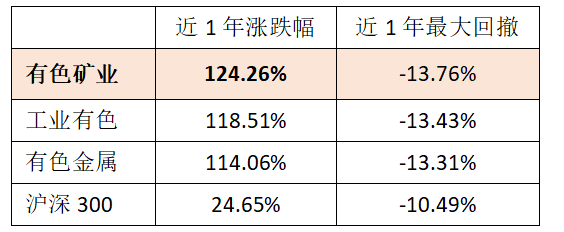
Group 1 - Gold and silver prices reached historical highs, with COMEX gold and spot gold surpassing $4800 per ounce, and silver exceeding $95 per ounce [1] - The colored mining ETF (招商 159690) saw a 1.12% increase, with significant contributions from stocks like 湖南白银, 赤峰黄金, and others, reflecting a strong inflow of funds totaling 1.1 billion yuan over the past seven trading days [1] - Geopolitical tensions, particularly regarding Greenland and potential tariff increases on European countries, have heightened market risk aversion, leading to a surge in U.S. Treasury yields and a withdrawal from U.S. debt markets [1] Group 2 - 中邮证券 predicts that by 2026, gold will continue to serve as a viable alternative to U.S. Treasuries for asset allocation, with ongoing inflows into gold ETFs likely to drive prices higher [2] - Silver is expected to rise in 2026 due to declining inventories and some countries converting it into reserve assets, which may create shortages in the physical market [2] Group 3 - Industrial metals mostly experienced price increases, with COMEX aluminum rising over 1%, and other metals like nickel, tin, copper, and lead also showing gains [3] - 华福证券 notes that the strong cyclical nature of colored metals is being reinforced by economic recovery, with a narrative of re-inflation supporting ongoing market performance [3] - The colored mining ETF (招商 159690) focuses on upstream resource products, with key metals like gold, copper, and aluminum making up nearly 60% of its index, which has seen a 124.26% increase over the past year [3][4]

中信建投固收海外-中债徘徊-美债下探
2025-03-04 07:01
Summary of Key Points from Conference Call Records Industry Overview - The records primarily discuss the U.S. Treasury bond market and its dynamics, influenced by economic data and monetary policy expectations. Core Insights and Arguments 1. **U.S. Treasury Yield Trends** - U.S. Treasury yields have rapidly declined due to weakening economic data, with market expectations shifting towards a potential recession or stagflation. The underlying reason is the instability of the re-inflation narrative, prompting a reassessment of future inflation pressures. Attention should be paid to upcoming inflation data [1][5][4]. 2. **Core CPI and Interest Rate Expectations** - February's core CPI data exceeded expectations, leading to increased market anticipation for interest rate cuts within the year. The current situation resembles economic weakness rather than stagflation, indicating that a bull market in U.S. Treasuries requires both economic downturn and declining inflation expectations [1][7]. 3. **Short-term Re-inflation Logic** - The re-inflation logic has weakened due to technical reasons, including seasonal factors in January data and differences in weight between PCE and CPI. The PCE data met expectations, suggesting a more stable inflation outlook [1][8]. 4. **Market Volatility and Yield Fluctuations** - Short-term fluctuations in U.S. Treasury yields are amplified by trading factors, with a typical range of 50-100 basis points expected. Current yield changes have only seen a 50 basis point shift, indicating potential for further declines [1][10]. 5. **Impact of Tariffs on Treasury Yields** - The effect of tariffs on U.S. Treasury yields is context-dependent. In a bull market, tariffs may be interpreted as negative for economic growth, thus benefiting Treasury yields rather than simply being a bearish factor [1][11]. 6. **Economic Data and Market Sentiment** - Recent economic data, including lower-than-expected non-farm payrolls and a decline in retail sales, have reinforced concerns about a recession. The Federal Reserve's GDP Now model has significantly downgraded Q1 GDP growth expectations [4][5]. 7. **Future Yield Predictions** - For 2025, core CPI is expected to rise by 0.25%-0.3%, limiting the scope for interest rate cuts. The ten-year Treasury yield is projected to fluctuate between 4%-4.5% in the first half of the year, potentially dropping to 3.5%-4% by year-end if rate cuts materialize [3][13]. 8. **Current State of the Bond Market** - The bond market is in a state of indecision, with concentrated positions around 1.75%-1.8%. The central bank may adjust monetary policy, and ongoing tight liquidity could exert upward pressure on Treasury yields [2][14]. 9. **Influence of Global Rate Policies** - Observations of global interest rate policies, such as Japan's recent rate hikes, provide insights for domestic strategies. Understanding these dynamics can help in formulating more feasible domestic policies [6]. 10. **Real Estate Market Insights** - The real estate market shows signs of stabilization, particularly in first and second-tier cities. However, the quality of data regarding second-hand transactions is crucial for accurate assessments [17]. Other Important but Overlooked Content - The potential for a negative feedback loop in the bond market due to the strengthening of equity closed-end funds, which could lead to increased redemptions and further pressure on bond yields [15]. - The importance of monitoring the impact of fiscal policies and potential leverage by private enterprises on market dynamics, especially post-two sessions [18].
