情绪消费

Search documents
视频丨4.5万亿元新蓝海!情绪消费赛道崛起
Xin Lang Cai Jing· 2026-01-06 18:32
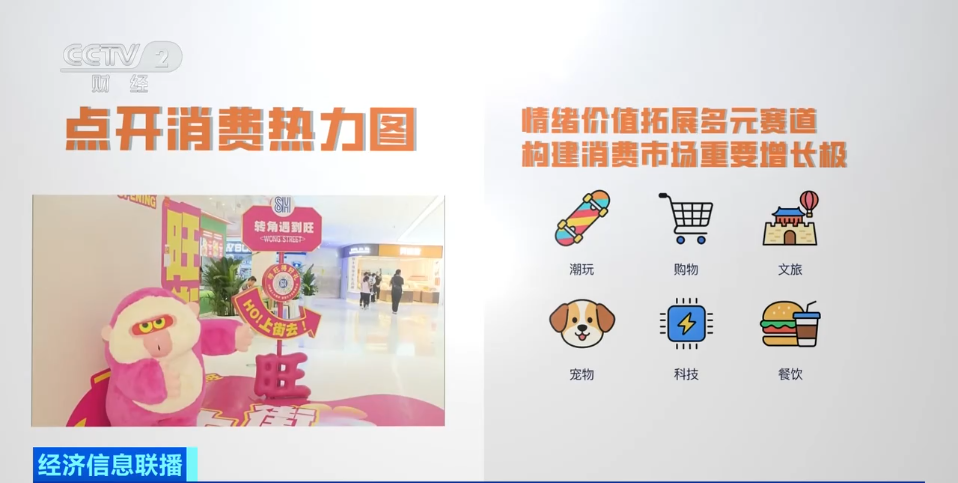
Group 1 - The core viewpoint is that emotional consumption is rapidly emerging as a significant growth driver in the consumer market, with a market size expected to exceed 4.5 trillion yuan by 2029, up from 1.63 trillion yuan in 2022 and projected to reach 2.72 trillion yuan by 2025 [3] - Emotional consumption is shifting from a focus on "cost-performance" to "emotional value," with over 90% of young people recognizing the importance of emotional value and nearly 60% willing to pay for it [1][3] - The emotional consumption market encompasses various sectors including toys, shopping, cultural tourism, pets, technology, and dining, with young consumers being the primary drivers [1][3] Group 2 - Experts highlight that Chinese products have unique advantages in the emotional consumption sector, attributed to a positive transformation in the image of "Made in China" and the country's creative capabilities that resonate with young consumers [8] - Emotional consumption serves as a connector between supply and demand, maximizing consumer potential and offering businesses opportunities to tap into local cultural elements and heritage as emotional consumption objects [9] - The dual nature of emotional consumption encompasses both material and spiritual aspects, contributing to market vitality and social psychology, with expectations for further growth as regulatory frameworks and market supply improve [9]

新消费2025:十大关键词,一个新江湖
3 6 Ke· 2026-01-04 02:36
Core Insights - The article highlights significant changes in the consumer market in 2025, emphasizing the emergence of new consumption patterns and the evolution of various sectors within the industry [2]. Instant Retail - Instant retail is recognized as the "explosion year" in 2025, expanding beyond food delivery to encompass a wide range of products [3]. - Major players like JD.com and Alibaba have entered the market, leading to intense competition and a subsidy war among platforms [4]. - The industry is shifting towards a more sustainable model, focusing on long-term ecological coexistence rather than short-term gains [4]. Emotional Consumption - Emotional consumption has become a key trend, driven by the desire for psychological comfort and social recognition among consumers [5]. - The market for emotional consumption in China reached 2.3 trillion yuan in 2024, with projections to exceed 4.5 trillion yuan by 2029 [5]. - Various segments, including healing products and immersive experiences, are gaining popularity, reflecting a shift in consumer preferences [6]. Reverse Tourism - There is a notable increase in tourism orders in county-level areas, with local entrepreneurs capitalizing on unique cultural experiences [7]. - The focus has shifted from traditional sightseeing to immersive local experiences, appealing to younger demographics [7]. Consumption Downward - Lower-tier cities are experiencing a surge in consumer activity, with significant growth in orders during events like Double 11 [8]. - Brands are increasingly targeting these markets, with local players gaining traction through culturally resonant products [8]. Hard Discounts - The hard discount retail sector is expanding, challenging the perception that low prices equate to low quality [11]. - Major internet companies are driving this trend, with new store formats and streamlined supply chains enhancing efficiency [11]. Light Health - Health-conscious products are becoming popular among younger consumers, with a focus on convenience and effectiveness [13]. - The market is evolving to include innovative health products that cater to the busy lifestyles of young professionals [14]. Circular Economy - The circular economy is gaining traction, with a shift in consumer attitudes towards second-hand goods and sustainability [16]. - Platforms like Xianyu and Zhuanzhuan are adapting their strategies to enhance trust and user experience in the second-hand market [17]. Pet Economy - The pet economy is experiencing rapid growth, with a market size exceeding 811.4 billion yuan and a 25.4% annual growth rate [18]. - There is a diversification of products and services catering to pet owners, reflecting a shift towards more personalized and premium offerings [18]. Value Export - Chinese brands are increasingly focusing on global markets, leveraging cultural resonance and operational efficiency to build brand loyalty [19]. - The strategy of value export is reshaping perceptions of "Made in China" and driving foreign trade growth [19]. Prepared Dishes - The prepared dishes industry is moving towards standardization and innovation, addressing consumer trust issues through transparency [20]. - Technological advancements in preservation and quality control are enhancing product offerings in this sector [20].
经济越来越差,这八大行业越赚爆
Sou Hu Cai Jing· 2025-12-27 07:44
Group 1 - The article discusses how certain industries are thriving despite a general perception of economic downturn, highlighting eight key sectors that are capitalizing on changing consumer behaviors and preferences [1][4] - The second-hand economy is booming, with companies like Hongbulin and Panghu experiencing significant growth as consumers shift towards purchasing second-hand luxury goods [1] - The pet economy is on the rise, with brands like Guobao and Inaba seeing strong sales as consumers prioritize spending on pet products over traditional family expenses [1][3] Group 2 - The adult care market is expanding, particularly in China, where products like adult diapers are expected to see substantial growth, similar to trends observed in Japan [1][3] - Health food and beverage sectors are benefiting from changing demographics and increased health awareness, with brands like Dongfang Shuye and Jianchun gaining traction in the market [3] - The beauty and aesthetics market remains robust, with products like collagen supplements and home beauty devices achieving significant sales, indicating a persistent consumer desire for self-improvement [5] Group 3 - Outdoor and leisure products are experiencing increased demand, with brands like Kailas and Camel seeing rapid sales growth as consumers seek outdoor experiences [7] - The emotional economy is thriving, with brands like Labubu and Rio catering to consumers' desires for emotional fulfillment and low-key indulgence [7] - The convenience economy is growing, driven by younger generations' preference for time-saving solutions, with brands like Anjiyuan and Kewo Si capitalizing on the demand for frozen foods and smart home appliances [9]

整个社会都在喊没钱了,为什么这些公司反而年赚百亿?
创业家· 2025-12-07 10:06
Core Viewpoint - The article emphasizes that despite the prevailing narrative of economic hardship, certain industries are thriving and generating significant profits, particularly in the context of Japan's "lost 30 years" and China's evolving consumer behavior [3][4]. Group 1: Economic Trends - The concept of a "low-desire society" does not equate to a lack of opportunities, as consumer demand is shifting towards different sectors [4]. - The article identifies eight key industries that are capitalizing on changing consumer preferences, highlighting the potential for growth in these areas [5]. Group 2: Key Industries - **Second-Hand Economy**: The second-hand luxury market in Japan, exemplified by "Daikokuya," has seen a surge in revenue, mirroring trends in China with platforms like "Hongbulin" and "Panghu" experiencing significant growth [6][7]. - **Pet Economy**: With a decline in birth rates, spending on pets has increased, with brands like "Inaba" in Japan and "Guobao" in China seeing strong stock performance [12][13][14]. - **Adult Care**: The adult diaper market in Japan has surpassed $10 billion, indicating a growing demand driven by an aging population [17][18]. - **Health Food and Beverages**: The rise in health consciousness has led to increased sales of sugar-free beverages and functional drinks, with brands like "Oriental Leaf" and "Dongpeng" gaining traction in China [21]. - **Beauty Economy**: The demand for beauty products remains strong, with high-priced collagen supplements and home beauty devices achieving significant sales [23][25]. - **Outdoor Recreation**: Companies in the outdoor equipment sector, such as "Snow Peak" in Japan, are thriving, reflecting a growing interest in outdoor activities [29][31]. - **Lazy Economy**: The trend towards convenience has boosted the frozen food market and smart home appliances, as consumers seek to save time [39][40]. - **Mental Well-being**: Products that provide emotional comfort, such as low-alcohol beverages and lifestyle brands, are gaining popularity, indicating a shift in consumer spending priorities [34][35]. Group 3: Investment Opportunities - The article suggests that the current economic climate presents unique opportunities for those willing to invest in counter-cyclical sectors, highlighting the importance of recognizing and acting on these trends [44].

年轻人缘何愿为“体验感”买单?
Zhong Guo Xin Wen Wang· 2025-11-26 01:35
Core Insights - Experience-based consumption is becoming a significant trend among young consumers in Beijing, characterized by immersive, participatory, and emotionally resonant experiences [1][5][11] - Emotional consumption, defined as spending driven by emotional needs and psychological comfort, is increasingly accepted and recognized, particularly among younger demographics [2][4][11] Consumption Trends - There is a notable shift in consumer demand from material utility to spiritual satisfaction, with consumers focusing more on the emotional experiences gained during consumption [4][11] - Emotional consumption encompasses a wide range of products and experiences, including seemingly "useless" items that provide emotional comfort [2][4] Experience-based Consumption - Experience-based consumption is a prominent mode of emotional consumption, where consumers are willing to invest more time and money [5][11] - Activities such as attending live performances, participating in DIY workshops, and collecting unique items are examples of how young consumers engage in experience-based consumption [6][8] Social and Emotional Dynamics - Emotional consumption serves as a means for young people to achieve self-pleasure, capture small moments of happiness, and maintain social connections [8][11] - The rise of social media platforms has amplified the sharing of emotional experiences, creating a new form of social currency among young consumers [8][9] Market Impact - The growing trend of emotional consumption is reshaping the commercial landscape, prompting businesses to focus on the emotional and cultural value of their offerings [11][14] - The integration of emotional value into consumer experiences is driving innovation in service delivery and creating new employment opportunities [14][15] Future Outlook - As the Z generation becomes the main consumer force, spending on emotional experiences is expected to continue growing, reflecting a broader societal shift towards valuing emotional fulfillment [11][12] - The expansion of experience-based consumption is likely to enhance the vibrancy of urban commercial spaces, transforming them into venues that cater to emotional needs [14][15]
抓住情绪消费风口
Jing Ji Ri Bao· 2025-10-13 23:59
Core Insights - The rise of emotional consumption reflects a shift in consumer behavior, where individuals prioritize emotional experiences and psychological satisfaction over mere utility [1][2] - The emotional economy in China is projected to grow significantly, with estimates suggesting a market size exceeding 2.3 trillion yuan in 2024 and potentially surpassing 4.5 trillion yuan by 2029 [2] Group 1: Emotional Consumption Trends - Emotional consumption is characterized by consumers spending not out of necessity but for emotional gratification, emphasizing the emotional value and connection associated with products [1] - A significant portion of young consumers (60%) are willing to spend on emotional experiences, indicating a strong market for products that evoke feelings of nostalgia or joy [1][2] Group 2: Market Opportunities and Strategies - Companies must innovate to create products that resonate emotionally with consumers, transitioning from merely providing value to fostering emotional connections [2] - Utilizing advanced technologies like big data and artificial intelligence can help businesses understand and cater to the increasingly personalized emotional needs of consumers [2] Group 3: Sustainable Practices - While recognizing the potential of emotional consumption, companies should avoid exploitative practices and focus on creating healthy, sustainable emotional value [3]
港股消费IPO狂潮:资本盛宴下的全球化突围与产业进化论
Sou Hu Cai Jing· 2025-08-30 03:54
Group 1: Capital Frenzy - The Hong Kong stock market is experiencing a "collective carnival" among consumer enterprises, with significant IPOs and market valuations, reflecting the upgrade of China's consumption industry and global capital restructuring [1][3] - As of May, over 160 companies are queued for IPOs in Hong Kong, with nearly 16% being consumer-related, driven by supportive policies from six ministries to encourage consumer enterprise listings [3][4] - More than 70% of IPO companies plan to use 20%-30% of their fundraising for international expansion, with Hong Kong serving as a crucial exit channel for VC/PE investments [3][4] Group 2: Valuation Disparity - Capital is increasingly concentrated in leading enterprises, while small and mid-cap companies face heightened pressure, with some rushing to list despite questionable profitability [4][5] - The market is witnessing a homogenization of strategies among new tea beverage companies, leading to a loss of novelty in capital markets [4][5] Group 3: Globalization Strategy - The push for globalization among Chinese consumer enterprises is a key driver of the IPO wave, with over 70% of companies planning to use raised funds for international ventures [5][6] - Cultural differences, policy barriers, and supply chain disruptions are identified as major challenges for these companies as they expand globally [5][6] Group 4: Long-term Competition - The real challenge for companies is to convert short-term financing advantages into long-term competitive benefits amid industry homogenization and valuation bubbles [6][7] - Hong Kong's market allows unprofitable companies to list, with a significantly shorter approval process compared to A-shares, facilitating rapid capital access for consumer brands [6][7] Group 5: Future Competition Landscape - The next phase of competition among consumer enterprises will focus on ecosystem building, driven by a shift in China's consumption structure, with service consumption surpassing 42% [7][8] - Companies leveraging Hong Kong as a strategic platform for capital and industry interaction are expected to establish a strong presence in the global consumer market [7][8] Group 6: Market Dynamics - The new tea beverage sector is facing challenges, with some companies experiencing immediate post-IPO declines, indicating a cycle of capital-driven expansion leading to valuation overreach [9] - International investors' optimistic views on China's consumer market often overlook the need for differentiated competitive analysis, leading to potential pitfalls in the "concept stock" trap [9]

中消协发布上半年投诉情况 私域引流营销乱象频出
Bei Jing Shang Bao· 2025-08-07 01:09
Core Insights - The China Consumer Association reported a significant increase in consumer complaints in the first half of 2025, with a total of 995,971 complaints received, marking a year-on-year growth of 27.23% [1] - The association highlighted key complaint areas, including traps targeting elderly consumers, private domain marketing issues, emotional consumption, online agricultural product purchases, jade live-streaming scams, and concert-related complaints [1][4] Group 1: Elderly Consumer Traps - Elderly consumer traps have become a major complaint area, with various deceptive practices identified, such as internet-induced traps, offline sales fraud, and false advertising in live-streaming [2][3] - Specific cases illustrate the issue, such as a consumer's parents being misled into purchasing an overpriced water purifier under false pretenses of health benefits [3] Group 2: Private Domain Marketing Issues - The rise of private domain marketing has led to numerous complaints, characterized by false advertising and inadequate after-sales service [4][5] - Issues include misleading promotions on social media, evasion of platform regulations, and challenges in consumer rights protection due to lack of transaction records [5] Group 3: Emotional Consumption - Emotional consumption is rapidly growing but reveals problems such as poor product quality and inducement to consume [7][8] - The association recommends establishing industry standards for emotional consumption services to ensure consumer protection and service quality [8] Group 4: Other Complaint Areas - Complaints related to high-temperature air conditioning demand, online agricultural product disputes, and increasing issues in jade-related purchases have been noted [4] - The concert industry has also seen a rise in complaints, particularly regarding refund issues [4]
情绪消费快速兴起 诱导消费现象突出
Bei Jing Shang Bao· 2025-08-06 09:38
Group 1 - In the first half of 2025, the National Consumer Association received 995,971 consumer complaints, a year-on-year increase of 27.23%, resolving 509,655 cases and recovering economic losses of 452 million yuan for consumers [1] - The rise of emotional consumption has led to various issues that require regulatory attention, including substandard products lacking basic information and safety warnings, posing significant consumer safety risks [1] - Induced consumption is prevalent, with some businesses exploiting consumer emotional needs through ambiguous language to encourage high spending [1] Group 2 - The National Consumer Association suggests that multiple departments collaborate to establish guidelines for regulating emotional consumption, clarifying regulatory scopes and enhancing category-specific oversight [2] - Recommendations include setting industry standards for emotional consumption services, covering entry conditions, personnel qualifications, service processes, pricing standards, after-sales responsibilities, contract terms, and personal information protection [2] - Platforms are advised to implement features like "reward limits" and "immersion reminders" to prevent excessive consumer spending in online emotional companionship and interactive services [2]
国泰海通|固收:成长为矛,业绩为锚——2025年7月转债策略展望
国泰海通证券研究· 2025-07-02 14:16
Core Viewpoint - The report emphasizes the focus on high-growth sectors driven by policy support and industrial innovation, including technology growth, new consumption, cyclical growth, and financial innovation [1]. Group 1: High-Growth Sectors - The technology growth sector includes strong performance certainty in computing hardware, the semiconductor industry benefiting from domestic substitution, and military industry resonating with domestic and international demand [1]. - New consumption is represented by emotional consumption, which serves as a new engine to boost consumption [1]. - The cyclical growth sector combines cyclical and growth characteristics, with short-term price increase catalysts [1]. - The financial sector is driven by the decline in risk-free interest rates and innovations in stablecoins [1]. Group 2: Market Dynamics - Following the rating disclosures, the downward adjustment of convertible bond ratings has removed constraints on low-priced convertible bonds, leading to an accelerated exit of bank convertible bonds [1]. - High Yield to Maturity (YTM) and dual low convertible bonds are expected to become the new base assets [1]. - The impact of the June rating downgrades is manageable, reflecting market preparedness for the downgrades of weaker quality convertible bonds, with no concerns over credit risk in a relatively strong equity market [1]. Group 3: Market Outlook - The equity market is expected to continue strengthening in July, influenced by three main factors: earnings forecasts from A-share listed companies, potential new actions from Trump after the tariff delay, and important mid-year meetings setting the economic outlook and policies for the second half [2]. - The report suggests that the valuation logic of the Chinese stock market in 2025 is driven by domestic industrial innovation and a systematic reduction in market discount rates, which will attract incremental capital [2]. - The easing of external tensions further strengthens the internal certainty logic, indicating potential upward movement in the stock market before the end of July [2]. Group 4: Convertible Bond Market - High valuations do not restrict the rise of convertible bonds, as the equity market is expected to remain strong, maintaining a tight balance between supply and demand in the convertible bond market [3]. - The median price of convertible bonds reached 124.21 yuan, a new high for 2025, driven by optimistic expectations for underlying stocks [3]. - The report highlights the importance of focusing on sectors with strong performance certainty and significant valuation space, such as AI, military, semiconductors, humanoid robots, stablecoins, innovative drugs, and emotional consumption [3].