
机械

Search documents
市场形态周报(20250714-20250718):本周指数普遍上涨-20250721
Huachuang Securities· 2025-07-21 07:12
Quantitative Models and Construction Methods 1. Model Name: Heston Model - **Model Construction Idea**: The Heston model is used to calculate the implied volatility of near-month at-the-money options, serving as a market fear index. It reflects market participants' expectations of future volatility [7] - **Model Construction Process**: The Heston model is a stochastic volatility model where the variance of the asset price follows a mean-reverting square-root process. The model is defined by the following equations: $$ dS_t = \mu S_t dt + \sqrt{v_t} S_t dW_t^S $$ $$ dv_t = \kappa (\theta - v_t) dt + \sigma \sqrt{v_t} dW_t^v $$ where: - \( S_t \): Asset price - \( v_t \): Variance of the asset price - \( \mu \): Drift term - \( \kappa \): Speed of mean reversion - \( \theta \): Long-term variance - \( \sigma \): Volatility of variance - \( W_t^S, W_t^v \): Two Wiener processes with correlation \(\rho\) [7] - **Model Evaluation**: The Heston model is widely recognized for its ability to capture the stochastic nature of volatility, making it suitable for modeling market fear indices [7] --- Quantitative Factors and Construction Methods 1. Factor Name: Multi-Industry Timing Factor (Scissors Difference) - **Factor Construction Idea**: This factor is based on the difference in the number of stocks with bullish and bearish signals within an industry. It aims to identify timing opportunities by analyzing the divergence between bullish and bearish signals [14] - **Factor Construction Process**: - Define the number of stocks with bullish signals (\(N_{bullish}\)) and bearish signals (\(N_{bearish}\)) in an industry on a given day - If no bullish or bearish signals are present, set the respective count to 0 - Calculate the scissors difference as: $$ \text{Scissors Difference} = N_{bullish} - N_{bearish} $$ - Normalize the scissors difference to obtain a ratio: $$ \text{Scissors Ratio} = \frac{N_{bullish} - N_{bearish}}{N_{bullish} + N_{bearish}} $$ - Use this ratio to construct an industry timing strategy [14] - **Factor Evaluation**: The backtesting results show that the scissors difference timing model outperforms the respective industry indices in all cases, demonstrating excellent historical performance [14] --- Model Backtesting Results 1. Heston Model - Implied volatility for major indices: - **Shanghai 50**: 13.5% (down 0.91% from last week) - **Shanghai 500**: 15.29% (down 0.11% from last week) - **CSI 1000**: 16.79% (down 1.3% from last week) - **CSI 300**: 13.65% (down 0.83% from last week) [9] --- Factor Backtesting Results 1. Multi-Industry Timing Factor (Scissors Difference) - Backtesting results for selected industries: - **Real Estate**: Strategy annualized return 13.18%, maximum drawdown -34.3%; Index annualized return -1.21%, maximum drawdown -75.09% - **Light Manufacturing**: Strategy annualized return 21.84%, maximum drawdown -37.91%; Index annualized return 2.76%, maximum drawdown -67.79% - **Coal**: Strategy annualized return 28.73%, maximum drawdown -24.76%; Index annualized return -0.1%, maximum drawdown -69.7% - **Pharmaceuticals**: Strategy annualized return 19.22%, maximum drawdown -42.71%; Index annualized return 6.69%, maximum drawdown -55.37% [15][16]
冠通期货早盘速递-20250721
Guan Tong Qi Huo· 2025-07-21 06:41
1. Hot News - The Ministry of Industry and Information Technology and three other departments have deployed work to further standardize the competition order in the new energy vehicle industry, including product price monitoring, product consistency supervision, and shortening the payment period for suppliers. The central fourth steering group also called for regulating the industry's competition order [2] - The Chief Engineer of the Ministry of Industry and Information Technology, Xie Shaofeng, pointed out that a new round of steady - growth work plans for ten key industries such as steel, non - ferrous metals, petrochemicals, and building materials have been released. Plans for industries like machinery, automobiles, and power equipment, as well as an implementation plan for the digital transformation of the automobile industry, will be issued [2] - EU member states have officially approved the 18th round of sanctions against Russia, including sanctions on the largest refinery of a Russian oil company in India, banning activities related to the "Nord Stream" gas pipeline, and lowering the oil price cap to $47.6 [2] - The construction ceremony of the hydropower project in the lower reaches of the Yarlung Zangbo River was held in Nyingchi, Tibet. The project involves building 5 cascade power stations with a total investment of about 1.2 trillion yuan. The China Yajiang Group Co., Ltd. was established [3] - The Dalian Commodity Exchange will optimize the option settlement price business from July 22, using the SVI volatility model to calculate the settlement price [3] 2. Sector Performance Key Focus - Urea, lithium carbonate, PVC, crude oil, and hot - rolled coils are the sectors to focus on [4] Night - session Performance - Non - metallic building materials rose 2.91%, precious metals 28.64%, energy 3.26%, chemicals 12.63%, grains 1.26%, and agricultural and sideline products 2.79% [4] Commodity Sector Funds - The data shows the percentage changes in commodity sector funds, but specific changes for each sector are not clearly described [4] Commodity Futures Position Changes - The position changes of commodity futures sectors in the past five days are presented, but specific data for each sector are not clearly described [6] 3. Performance of Major Asset Classes Equity - The Shanghai Composite Index rose 0.50% daily, 2.61% monthly, and 5.45% annually; the Hang Seng Index rose 1.33% daily, 3.13% monthly, and 23.76% annually. Other indices such as the S&P 500, German DAX, etc., also have corresponding performance data [8] Fixed - income - 10 - year treasury bond futures fell 0.08% daily, 0.10% monthly, and 0.12% annually; 5 - year treasury bond futures fell 0.05% daily, 0.16% monthly, and 0.52% annually [8] Commodity - The CRB commodity index rose 0.62% daily, 2.97% monthly, and 3.17% annually; WTI crude oil fell 0.31% daily, rose 3.58% monthly, and fell 6.38% annually [8] Others - The US dollar index fell 0.18% daily, rose 1.74% monthly, and fell 9.24% annually; the CBOE volatility index fell 0.67% daily, 1.91% monthly, and 5.42% annually [8]
中泰期货晨会纪要-20250721
Zhong Tai Qi Huo· 2025-07-21 02:21
Report Industry Investment Rating No relevant content provided. Core Viewpoints - For stock index futures, pay attention to the support of the 5 - day moving average. If it is not broken, the trend will continue. Also, focus on the movement of stop - profit funds [14]. - For treasury bond futures, it is recommended to short bonds at high prices or use treasury bond futures to reduce duration as the capital market may not reach 1.3%, and the capital situation remains uncertain [15]. - For steel and ore, steel prices are expected to be volatile and slightly stronger in the short - term and volatile in the medium - term [18]. - For coking coal and coke, they are expected to remain volatile and slightly stronger in the short - term, and attention should be paid to specific policies later [20]. - For ferroalloys, it is recommended to take a short - selling approach at high prices and manage positions carefully [21]. - For soda ash and glass, for soda ash, consider short - selling at high prices when the market atmosphere weakens; for glass, long - position holders at low levels can continue to hold and stop profit flexibly when the atmosphere weakens [23]. - For aluminum and alumina, it is recommended to short - sell aluminum at high prices and take a wait - and - see approach for alumina in the short - term, and short - sell at high positions appropriately [25]. - For lithium carbonate, it is expected to be strongly volatile in the short - term due to supply - side disturbances [26]. - For industrial silicon and polysilicon, industrial silicon is expected to be volatile and slightly stronger, and polysilicon is expected to be strongly volatile, and it is advisable to wait and see [27]. - For cotton, it is recommended to hold or exit the long - near and short - far strategy carefully [30]. - For sugar, it is expected to be volatile in the short - term [33]. - For eggs, it is recommended to short - sell on rebounds and pay attention to stop - loss, and focus on the short - 09 and long - 01 reverse spread combination in the long - term [35]. - For apples, it is recommended to conduct long - spread arbitrage with a light position [37]. - For corn, participate in the short - term as the price follows the spot and is slightly stronger, and pay attention to the opportunity of value restoration after the over - decline [37]. - For red dates, it is recommended to short - sell with a light position [39]. - For live pigs, it is advisable to wait and see in the short - term as the spot price is uncertain and the market is in intense long - short competition [40]. - For crude oil, it is recommended to short - sell at high prices as it is likely to enter a supply - surplus situation in the long - term [43]. - For fuel oil, its price is weaker than that of crude oil, and its fundamentals are gradually becoming looser [45]. - For plastics, consider holding put options or slightly short - selling as the supply - demand situation is weak despite short - term emotional rebounds [46]. - For methanol, it is recommended to short - sell after rebounds or consider put options as it is expected to be weakly volatile [47]. - For caustic soda, maintain a long - position strategy [48]. - For asphalt, it follows the short - term trend of crude oil, which is slightly stronger [49]. - For the polyester industry chain, do not chase the long - position, and consider short - selling after the bullish atmosphere weakens or trading the PX - PTA spread [50]. - For pulp, it is expected to rise slightly with limited amplitude under the 09 emotional expectation, and the long - spot holders can adopt relevant strategies to increase income [51]. - For logs, be cautious when chasing high prices, and enterprises with deliverable spot can consider short - selling hedging [51]. - For urea, consider buying at low prices as the export quota may increase [52]. Summary by Related Catalogs Macro Information - The Ministry of Industry and Information Technology will release a new round of steady - growth work plans for ten key industries such as steel, non - ferrous metals, petrochemicals, and building materials, as well as plans for industries like machinery, automobiles, and power equipment, and a digital transformation implementation plan for the automobile industry [10]. - The Ministry of Commerce responded to the US approval of the sale of NVIDIA H20 chips to China, emphasizing that cooperation between China and the US is the right path [10]. - Four departments including the Ministry of Industry and Information Technology have deployed work to standardize the competition order in the new energy vehicle industry [10]. - The State Administration for Market Regulation has summoned three platform companies, including Ele.me, Meituan, and JD.com, to regulate their promotional activities [10]. - The National Committee of the Chinese People's Political Consultative Conference held a symposium on the macro - economic situation in the first half of 2025, with some members making suggestions on various aspects [11]. - The National Export Control Work Coordination Mechanism Office has launched a special campaign against the smuggling of strategic minerals [11]. - Yushu Technology has initiated IPO counseling, with CITIC Securities as the counseling institution [11]. - The preliminary value of the University of Michigan Consumer Sentiment Index in the US in July reached a five - month high, while the 5 - year inflation expectation hit a five - month low [11]. - Federal Reserve Governor Waller called for a rate cut in July, and Trump urged Fed Chairman Powell to cut rates [12]. - US President Trump filed a defamation lawsuit against News Corp, Dow Jones, Rupert Murdoch, and two Wall Street Journal reporters, seeking at least $10 billion in compensation [12]. - US Treasury Secretary Bessent, during a visit to Japan, said that the two countries could reach a "good" trade agreement, but there are still significant differences, especially regarding the 25% tariff on automobiles [12]. Macro Finance Stock Index Futures - The market sentiment was maintained on Friday, with a slight intraday adjustment followed by a rise. The main broad - based indexes have risen for four consecutive weeks. Pay attention to the movement of stop - profit funds as margin trading funds continue to increase [14]. Treasury Bond Futures - The capital price during the tax period was high and tight. After the tax period ended on Friday, the capital situation did not ease significantly, and the central bank's net open - market operation (OMO) investment decreased significantly. The market interprets the central bank's draft for comments as beneficial to short - term bonds and high - grade credit bonds, and short - term bond yields have declined [15]. Black Steel and Ore - Steel prices are affected by policies and supply - demand. The demand for building materials is weak, and the demand for coils has weakened marginally. However, the supply is expected to remain strong, and the price is expected to be volatile in the medium - term and slightly stronger in the short - term [18]. Coking Coal and Coke - The supply of coal mines is recovering slowly, and the demand for coking coal and coke is supported by stable pig iron production. In the medium - term, the supply - demand gap of coking coal will narrow as mines resume production [20]. Ferroalloys - The manganese and silicon alloy market is affected by macro - level positive news and weakening fundamentals. It is not recommended to chase long - positions, and it is advisable to short - sell at high prices with proper position management [21]. Soda Ash and Glass - For soda ash, the supply is expected to be in surplus in the long - term, and the short - term trend depends on the market atmosphere. For glass, pay attention to the linkage between the futures and spot markets and the improvement of terminal orders [23]. Non - ferrous Metals and New Materials Aluminum and Alumina - For aluminum, due to the deadlock in Trump's tariff negotiations and weak demand, it is recommended to short - sell at high prices. For alumina, the short - term policy sentiment may be short - lived, and it is advisable to short - sell at high positions [25]. Lithium Carbonate - Due to supply - side disturbances, it is expected to be strongly volatile in the short - term as the market is sensitive to positive news [26]. Industrial Silicon and Polysilicon - Industrial silicon is expected to be volatile and slightly stronger due to improved supply - demand and positive policies. Polysilicon has a strong expectation but weak reality, and it is advisable to wait and see [27]. Agricultural Products Cotton - Cotton prices are affected by low inventory and weak consumption. Pay attention to the macro - situation, supply - demand changes, and the impact of USDA reports [30]. Sugar - Domestic sugar prices are affected by low domestic inventory and expected increases in imported sugar. The global sugar market is expected to have a surplus in the 2025 - 26 season [33]. Eggs - Eggs are in a seasonal rising period, but the supply pressure during the Mid - Autumn Festival may limit the price increase. It is recommended to short - sell on rebounds and focus on the long - short spread strategy [35]. Apples - In the off - season of apple consumption, early - maturing apples are priced high. It is recommended to conduct long - spread arbitrage with a light position [37]. Corn - Corn prices follow the spot and are slightly stronger. Pay attention to the substitution of wheat, the release of imported corn, and the opportunity of value restoration after the over - decline [37]. Red Dates - Red dates are in the physiological fruit - dropping period. The supply is strong and the demand is weak in the short - term. It is recommended to short - sell with a light position [39]. Live Pigs - The short - term spot price is uncertain. The supply may decrease in the second half of July, and the demand is in the off - season. It is advisable to wait and see [40]. Energy and Chemicals Crude Oil - OPEC+ is accelerating supply recovery, but the demand is affected by trade wars and the global economic slowdown. It is recommended to short - sell at high prices as it is likely to enter a supply - surplus situation [43]. Fuel Oil - The price of fuel oil is weaker than that of crude oil, and its fundamentals are gradually becoming looser due to factors such as the change in the demand structure and inventory accumulation [45]. Plastics - The supply of polyolefins is under pressure, and the demand is weak. Although there may be short - term emotional rebounds, it is advisable to consider put options or short - selling [46]. Methanol - Methanol is expected to be weakly volatile as the port inventory is accumulating. It is recommended to short - sell after rebounds or consider put options [47]. Caustic Soda - With the decline in the price of liquid chlorine and a relatively strong macro - market, it is recommended to maintain a long - position strategy [48]. Asphalt - It follows the short - term trend of crude oil, which is slightly stronger. The asphalt market is in the off - season, and the production is expected to decrease in August [49]. Polyester Industry Chain - The market sentiment is bullish, but the fundamentals are weak. It is not recommended to chase long - positions. Consider short - selling after the bullish atmosphere weakens or trading the PX - PTA spread [50]. Pulp - The 09 contract is expected to rise slightly with limited amplitude. Pay attention to port de - stocking and spot trading. Holders of spot can adopt relevant strategies to increase income [51]. Logs - The apparent demand is good, and the spot valuation is low. Be cautious when chasing high prices, and enterprises with deliverable spot can consider short - selling hedging [51]. Urea - With the possible increase in the export quota, it is recommended to buy at low prices. The futures price is strongly affected by the overall commodity market [52].
工信部:钢铁、有色、石化等十大重点行业稳增长工作方案即将出台
中国有色金属工业协会硅业分会· 2025-07-21 01:35
Core Viewpoint - The Ministry of Industry and Information Technology (MIIT) is focusing on stabilizing growth in key industries, promoting digital transformation, and enhancing the integration of technology and industry to drive economic development. Group 1: Industry Growth Plans - The MIIT is set to release growth stabilization plans for ten key industries, including steel, non-ferrous metals, petrochemicals, and building materials, emphasizing structural adjustments and the elimination of outdated production capacity [1] - Recent announcements indicate that growth stabilization plans for machinery, automotive, and power equipment industries will also be issued soon, aimed at enhancing quality supply capabilities and optimizing the industry development environment [5] Group 2: Digital Transformation and AI Integration - Over 100 AI-enabled devices, such as AI smartphones, computers, and glasses, have emerged, contributing to new economic growth points [2] - The digital industry achieved a business revenue growth of 9.3% year-on-year in the first half of the year, an increase of 3.4 percentage points compared to the same period last year [6] - The MIIT plans to issue digital transformation implementation plans for industries like textiles, light industry, food, and pharmaceuticals, focusing on 82 typical scenarios for intelligent transformation [7] Group 3: Technological Innovation and Future Industries - The MIIT is promoting the collaborative empowerment of industrial internet and artificial intelligence, while accelerating the research and development of 6G technology [4] - The ministry aims to foster high-level digital transformation service providers and encourage enterprises to shift towards a "product + service" model [9] - Future industries such as humanoid robots, the metaverse, and brain-computer interfaces are being prioritized for innovation and development [12] Group 4: Support for SMEs - The MIIT will conduct special actions to address the issue of overdue payments to small and medium-sized enterprises (SMEs), aiming to alleviate their financial burdens [10] - Plans are underway to establish the second phase of the National SME Development Fund to attract more social capital for long-term investments in hard technology [15] Group 5: Quality Development and Standards - The MIIT is committed to implementing high-quality development plans for the copper, aluminum, and gold industries, focusing on effective supply and demand coordination [14] - The ministry will accelerate the establishment of a digital transformation standard system to promote high-quality standards for new technologies and products [9]


【申万宏源策略 | 一周回顾展望】经济预期谨慎,A股缘何延续强势
申万宏源研究· 2025-07-21 01:15
Core Viewpoint - The article emphasizes that the economic growth rate in the second half of 2025 may decline compared to the first half, with a policy focus shifting towards structural adjustments. Despite this, the A-share market remains strong due to stable capital market expectations, anti-involution policies, and the positive impact of technology and trade negotiations [1][2][3]. Group 1: Economic Growth and Market Stability - The consensus is that achieving the annual economic growth target is feasible, with a shift in policy focus towards structural adjustments. This suggests that the economic growth rate in the second half of 2025 may be weaker than in the first half, and expectations for growth-stabilizing policies should be moderated [1]. - Stable capital market policies have created a "buffer" against macroeconomic disturbances, leading to a perception that the downside risks for the A-share market are manageable. Even in adverse economic conditions, timely policy responses can mitigate risks [1][2]. - The anti-involution policies have connected short-term economic highlights with mid-term supply-demand improvements, allowing for smoother transitions in the market dynamics between upstream cycles and midstream manufacturing [2]. Group 2: Market Conditions and Future Outlook - By the fourth quarter of 2025, the conditions for a market breakout are expected to be more favorable, with fundamental expectations shifting towards 2026. This could accelerate the market's reflection of improved supply-demand dynamics and profitability [3]. - The year 2025 is projected to be a peak for the repricing of household deposits, creating a critical window for reallocating assets, which may lead to natural increments in certain investment products that have limited dependence on stock market performance [3]. Group 3: Industry Trends and Recommendations - The focus of investment is shifting towards undervalued cyclical stocks in the short term, while mid-term opportunities lie in midstream manufacturing that benefits from supply clearing and anti-involution policies [4]. - The AI computing power industry is showing significant improvement, with domestic profit effects expanding, indicating continued investment opportunities in this sector [4]. - The Hong Kong stock market is viewed as a potential leader in the next bull market, with ongoing interest in innovative pharmaceuticals and new consumer trends, alongside high dividend stocks as attractive investment options [4][5].

廖市无双:如何应对“跌不下去”的局面?
2025-07-21 00:32
Summary of Key Points from the Conference Call Industry or Company Involved - The discussion primarily revolves around the Chinese stock market, particularly focusing on the Shanghai Composite Index and various sectors such as technology, finance, and healthcare. Core Insights and Arguments 1. **Market Performance and Trends** The market has shown strong performance despite underlying concerns regarding the economy and trade tensions. The Shanghai Composite Index has been in a state of consolidation since July 11, with a target of 3,674 points for the medium term [1][3][7]. 2. **Sector Rotation and Stock Performance** The market has shifted from a broad rally to a more structural performance, with growth stocks leading the way. The National Index 2000 has reached new highs, while the Hang Seng Technology Index has seen a rebound of 5.5% due to external factors affecting financial forecasts [5][6][8]. 3. **Investment Strategy Recommendations** Investors are advised to adopt a balanced allocation strategy, avoiding heavy concentration in any single sector. The banking and brokerage sectors are highlighted as having potential, while sectors like military and technology are also recommended for attention [3][17][18]. 4. **Support Levels and Market Adjustments** Strong support is expected around the 3,350-3,360 point range, indicating that significant market corrections are unlikely. The market's upward trend remains intact, with a robust defensive structure in place [10][16]. 5. **Sector-Specific Insights** Growth sectors such as telecommunications, pharmaceuticals, and defense have shown significant gains, while traditional sectors like finance and utilities have faced declines. This indicates a shift in market leadership towards more dynamic sectors [9][19]. 6. **Future Market Outlook** The market is anticipated to enter a phase of broader expansion, with a potential for previously lagging sectors to catch up as risk appetite increases. The medium-term target remains at 3,674 points, with adjustments expected to be minor [7][31]. Other Important but Potentially Overlooked Content 1. **Historical Context of Market Movements** Historical patterns of market movements indicate that significant upward trends often lead to stable periods without major risks. The current technical indicators suggest a favorable environment for continued growth [11][12][13]. 2. **Sector Rotation Dynamics** The rapid rotation among sectors increases operational complexity, necessitating a flexible approach to investment strategies. Investors are encouraged to switch between high and low-performing stocks within the same sector [15][22]. 3. **Emerging Themes and Tools** New thematic investment tools have been introduced to identify momentum opportunities based on trading data. Themes such as robotics and new energy are highlighted as areas of potential growth [28][30]. 4. **Long-term Investment Considerations** The long-term outlook for sectors like banking remains positive due to structural support from various financial instruments and market conditions. Investors are encouraged to view market pullbacks as buying opportunities [18][20]. 5. **Focus on Secondary Industries** Secondary industries such as pharmaceuticals, aerospace, and renewable energy are expected to perform well, driven by strong growth potential and market demand [26][25]. This summary encapsulates the key points discussed in the conference call, providing a comprehensive overview of the current market landscape and strategic recommendations for investors.
南通创新打造工贸安全监管模式 把安全生产课堂搬进车间里
Xin Hua Ri Bao· 2025-07-21 00:01
Group 1 - The article highlights the implementation of a "classroom" training model in the metal melting industry in Nantong, focusing on safety inspections and guidance from experts [1][2] - Nantong has over 26,000 industrial and trade enterprises across various sectors, including metallurgy, non-ferrous metals, construction materials, machinery, light industry, and textiles [2] - Since November of last year, Nantong's emergency management bureau has adopted a collaborative inspection model involving regulatory personnel, industry experts, and responsible individuals from similar enterprises [2] Group 2 - The "classroom" activities have been conducted over 450 times this year, with 3,957 enterprises participating, leading to the identification of 32,653 safety issues [2] - The rate of repeated safety hazards has decreased by 37%, while the compliance rate for safety production standards has increased by 28% [2]
【钛晨报】工信部下一步工作重点速览18条:汽车、建材等行业将迎稳增长方案,推动人形机器人、脑机接口等未来产业创新发展;娃哈哈宗氏财产纠纷案8月1日将有新...
Tai Mei Ti A P P· 2025-07-20 23:32
Group 1 - The industrial economy in China is experiencing growth driven by over a hundred AI-enabled devices such as AI smartphones, computers, and glasses [2] - The number of 5G mobile phone users has reached 1.118 billion, with intelligent computing power scaling up to 748 EFLOPS [3] - More than 140,000 specialized and innovative small and medium-sized enterprises have been cultivated, including 14,600 "little giant" enterprises [4] Group 2 - New work plans for stabilizing growth in key industries such as steel, non-ferrous metals, petrochemicals, and building materials will be released soon [5] - Implementation plans for digital transformation in the automotive and machinery sectors are set to be issued [6] - The "Artificial Intelligence +" initiative will accelerate the deployment of large models in key manufacturing sectors [6] Group 3 - The establishment of national-level manufacturing pilot platforms is underway, focusing on critical areas such as raw materials and emerging industries [6] - A series of actions will be taken to address overdue payments to small and medium-sized enterprises [7] - The establishment of the second phase of the National SME Development Fund aims to attract more social capital for investment in hard technology [7] Group 4 - The first public REITs for data centers have been established, raising a total of 69 billion yuan, indicating strong investor interest [11][12] - China's unicorn companies have a total valuation exceeding 1.2 trillion USD, reflecting the vitality of new productive forces [12] - The digital asset exchange Bullish has filed for an IPO, marking the first public listing attempt following the enactment of the stablecoin legislation [12]

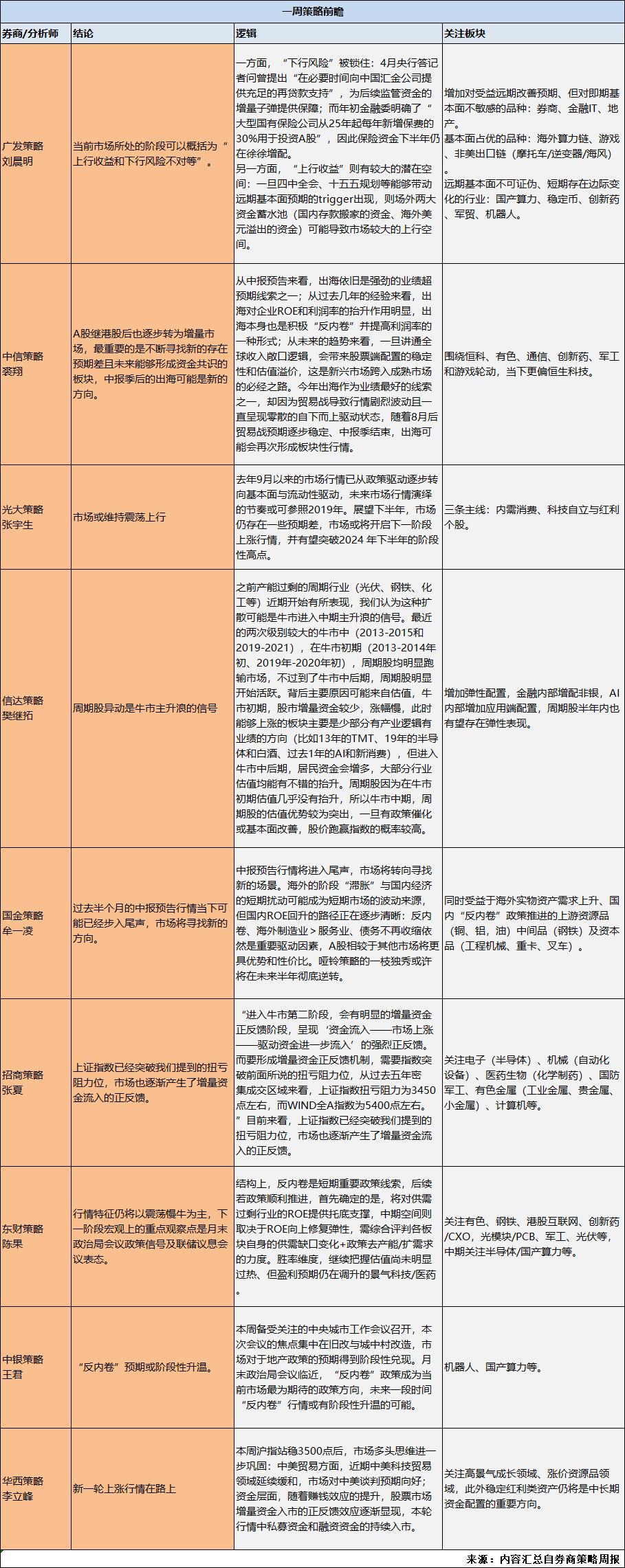
A股分析师前瞻:普遍积极,“上行收益”有较大的潜在空间
Xuan Gu Bao· 2025-07-20 15:06
Group 1 - The current market stage is characterized by "asymmetric upside potential and locked downside risk," indicating that while downside risks are contained, there is significant room for upside gains [1][2] - The People's Bank of China has provided assurances for sufficient re-lending support to financial institutions, which is expected to bolster market liquidity [1][2] - Large state-owned insurance companies are mandated to invest 30% of their new premiums in A-shares starting from 2025, suggesting a gradual increase in insurance capital allocation to the market [1][2] Group 2 - The recent performance of cyclical stocks may signal the onset of a mid-term bull market rally, as these stocks typically underperform in the early stages of a bull market but gain traction later [2][3] - Historical data from previous bull markets (2013-2015 and 2019-2021) shows that cyclical stocks lag in the early phases but become more active as the market matures, primarily due to valuation advantages [2][3] - The Shanghai Composite Index has surpassed the resistance level of 3450 points, indicating a positive feedback loop of incremental capital inflow into the market [3][4] Group 3 - The market is expected to maintain a slow upward trend, driven by fundamental improvements and liquidity dynamics, with a focus on sectors such as domestic consumption, technology independence, and resource stocks [3][4] - The upcoming Central Urban Work Conference is anticipated to address urban renewal and village renovation, which may influence market expectations regarding real estate policies [4]
港股热度持续升温,场内热点轮动加速
Yin He Zheng Quan· 2025-07-20 11:13
Group 1 - The Hong Kong stock market continues to gain momentum with accelerated rotation of market hotspots, as evidenced by the performance of major indices [1][2] - For the week of July 14 to July 18, the Hang Seng Index rose by 2.84%, the Hang Seng Tech Index increased by 5.53%, and the Hang Seng China Enterprises Index climbed by 3.44% [2][4] - Among the ten sectors in the Hong Kong stock market, all but the real estate sector saw gains, with healthcare, information technology, and consumer staples leading the way with increases of 9.52%, 4.16%, and 3.92% respectively [2][7] Group 2 - The average daily trading volume on the Hong Kong Stock Exchange for the week was HKD 246.725 billion, an increase of HKD 4.213 billion from the previous week [2][13] - Southbound capital recorded a net inflow of HKD 21.456 billion, which is a decrease of HKD 4.899 billion compared to the previous week [2][13] - The price-to-earnings (PE) and price-to-book (PB) ratios for the Hang Seng Index as of July 18 were 11.04 and 1.16, respectively, both of which are at the 81% and 82% percentile levels since 2019 [2][18] Group 3 - The report highlights that the overall valuation of the Hong Kong stock market is relatively low compared to global equity markets, with the Hang Seng Index's risk premium at 4.62%, which is at the 8% percentile since 2010 [2][20] - The report suggests that sectors benefiting from favorable policies, such as stablecoin concept stocks, innovative pharmaceuticals, AI industry chains, and "anti-involution" industries, should be closely monitored [2][37] - The performance of companies exceeding expectations in their mid-year reports is expected to rebound, indicating potential investment opportunities [2][38]