
农业

Search documents
央行等四部门:统筹建立常态化金融支持机制 助力防止返贫致贫和乡村全面振兴
Zheng Quan Ri Bao Wang· 2026-02-14 04:27
Core Viewpoint - The People's Bank of China, along with other regulatory bodies, has issued guidelines to establish a normalized financial support mechanism aimed at preventing poverty and promoting rural revitalization, in line with the directives from the 20th National Congress of the Communist Party of China [1][2]. Group 1: Financial Support Mechanism - The guidelines propose the establishment of a long-term financial support mechanism for key populations, optimizing microcredit for impoverished individuals and enhancing credit policies for farmers [1][2]. - Financial institutions are encouraged to develop loans for specialized industries and increase the upper limit for entrepreneurial guarantee loans in eligible regions [1][2]. - A tiered financial support mechanism for underdeveloped areas will be established, prioritizing new financial resources for key rural revitalization counties [1][2]. Group 2: Agricultural and Rural Development - The guidelines emphasize the need for financial resources to be directed towards key areas, including grain and oil production, to enhance agricultural production capacity and quality [2]. - Supply chain financial services, such as accounts receivable financing, will be developed to meet the financial needs of the entire agricultural industry chain [2]. - There will be increased investment in rural infrastructure and support for the integration of agriculture, culture, and tourism [2]. Group 3: Financial Services and Innovation - The guidelines call for strengthening the financial service capacity and improving the financial organizational system [2]. - Financial institutions, particularly local ones in underdeveloped areas, are encouraged to issue special financial bonds for small and micro enterprises and agriculture [2]. - The guidelines advocate for the innovation of insurance products and services, as well as the establishment of a monitoring mechanism for the effectiveness of financial support policies [2][3]. Group 4: Collaboration and Implementation - The People's Bank of China will enhance collaboration with regulatory bodies to summarize effective practices in financial support and rural revitalization [3]. - There will be a focus on statistical monitoring and evaluation of the financial services provided for rural revitalization [3]. - The aim is to innovate financing mechanisms to prevent large-scale poverty and promote comprehensive rural revitalization [3].
央行等四部门印发《关于统筹建立常态化金融支持机制 助力防止返贫致贫和乡村全面振兴的意见》
Xin Lang Cai Jing· 2026-02-14 03:43
Core Viewpoint - The People's Bank of China, along with other regulatory bodies, has issued guidelines to establish a normalized financial support mechanism aimed at preventing poverty and promoting rural revitalization, in line with the directives from the 20th National Congress of the Communist Party of China [1][17]. Group 1: Financial Support Mechanism - The guidelines emphasize the need to develop a long-term financial assistance mechanism targeting key populations, optimizing microcredit for impoverished individuals, and ensuring continuous support for those at risk of falling back into poverty [2][18]. - Financial institutions are encouraged to create loans for specialized industries and increase the upper limit for entrepreneurial guarantee loans in eligible regions [2][18]. - A tiered financial support mechanism for underdeveloped areas will be established, prioritizing new financial resources for key rural revitalization counties [2][18]. Group 2: Investment in Key Areas - The guidelines stress the importance of enhancing financial resources in critical sectors, particularly in grain and oil production, to improve agricultural productivity and quality [3][19]. - Development of supply chain financial services, such as accounts receivable financing, will be promoted to meet the financial needs of the entire agricultural industry chain [3][19]. - Increased long-term funding for rural infrastructure projects is highlighted, supporting the integration of agriculture, culture, and tourism [3][19]. Group 3: Financial Service Capacity Building - The guidelines call for strengthening the financial organizational system, with state-owned banks and rural financial institutions playing a crucial role in supporting rural revitalization [11][28]. - Financial institutions are urged to diversify their product offerings and develop tailored financial services to meet the needs of various agricultural stakeholders [11][29]. - The promotion of digital transformation in financial services is emphasized, leveraging technologies like big data and artificial intelligence to enhance efficiency [12][30]. Group 4: Multi-Industry Financial Collaboration - The guidelines encourage the issuance of special financial bonds by local financial institutions to raise stable, low-cost funds for rural revitalization [14][32]. - A comprehensive support system for capital markets will be constructed, facilitating the listing of enterprises in rural areas and providing risk management tools for agricultural products [14][32]. - The development of innovative insurance products to safeguard agricultural projects and enhance service quality is also a focus [15][32]. Group 5: Policy Coordination and Implementation - The guidelines advocate for coordinated policy efforts to ensure sustained financial support for poverty prevention and rural revitalization, with a focus on maintaining low non-performing loan rates in targeted areas [20][33]. - Establishing a dynamic monitoring mechanism to assess the effectiveness of financial assistance policies is crucial for ongoing evaluation and improvement [20][33]. - The promotion of successful case studies and experiences in financial support for rural revitalization is encouraged to foster a positive social environment [20][33].
二〇二五年陕西招商引资量质双升
Shan Xi Ri Bao· 2026-02-14 00:35
Group 1 - The province established 428 new foreign-funded enterprises, with a year-on-year increase of 57.1% in contracted foreign investment, including 25 projects over $30 million; actual foreign investment reached 24.571 billion yuan [1][2] - A total of 38 provincial-level investment promotion activities were held, focusing on key industrial chains such as energy and chemicals, high-end equipment manufacturing, information technology, modern agriculture, and cultural tourism, resulting in 1,137 signed projects with a total investment of 429.448 billion yuan [1][2] - The provincial commerce department plans to establish a key industrial chain project recruitment list by 2025, aiming to attract 4,270 industrial chain investment projects in collaboration with various departments and cities [1] Group 2 - The province's commerce department has explored compiling key country-specific investment guides and established regular communication with overseas business associations and foreign enterprises to enhance investment attraction [2] - The province successfully launched three QFLP funds and organized investment promotion activities in countries like South Korea, Denmark, and the Czech Republic, including a joint event with CITIC Group [2] - The province's commerce department has implemented a mechanism for multinational companies, holding roundtable meetings to enhance service and support for foreign enterprises [3]
“一生磨一剑!”独家对话黄燕铭,A股下一站,重点关注这两个方向!
券商中国· 2026-02-13 23:49
Core Viewpoints - The current A-share market is characterized as a "confidence bull," driven by improved expectations of national governance and enhanced expectations of technology leading the economy, with the movement of residents' deposits being a result rather than a cause [2][5] - The outlook for A-shares in 2026 is expected to be a "sideways fluctuation with slight strengthening," emphasizing the pursuit of a long-term, slow, and healthy bull market while being cautious of rapid bull markets that may lead to sharp declines [2][6] - The previous "dumbbell" market trend has ended, shifting investment opportunities from "high-growth technology + low-volatility high-dividend" extremes to a focus on mid-cap blue chips, particularly in the cyclical and manufacturing sectors [2][6] Investment Opportunities - Opportunities in cyclical industries are not in the real estate chain but are related to national strategies in three sectors: chemicals, metals, and agriculture [3][7] - AI remains a core focus in technology, with long-term potential, but is currently in a phase of expectation verification, requiring careful stock selection [3][9] - The investment focus for the next 3 to 6 months should be on cyclical and manufacturing sectors, as these align with national strategies and economic transformation [7][8] Market Dynamics - The core drivers of the current market uptrend are improvements in national governance and stronger expectations for technology-led economic growth, with significant achievements in diplomacy, defense, and trade contributing to economic resilience [4][5] - The market is currently at a critical juncture around the 4100-point level, with the need for new drivers to support further upward movement, as previous gains have largely reflected the core drivers [6][12] - The transition from a "dumbbell" market structure to a focus on mid-cap blue chips indicates a shift in risk appetite, with low-volatility, high-dividend stocks losing their appeal [11][12] Future Outlook - The AI sector is expected to experience a period of consolidation and differentiation, with the potential for long-term growth remaining intact despite short-term fluctuations [9][10] - The public fund commission rate reform is prompting a strategic shift in brokerage research departments, moving towards comprehensive service for institutional clients beyond just public funds [17] - The securities research industry is seen as a field of continuous learning and growth, with a call for new talent to join and contribute to the evolving landscape [18]


“一生磨一剑!”对话黄燕铭,A股下一站,重点关注这两个方向!
Xin Lang Cai Jing· 2026-02-13 23:47
Core Insights - The current A-share market is characterized as a "confidence bull," driven primarily by improved expectations of national governance and enhanced technological leadership in the economy, with the movement of residents' deposits being a result rather than a cause [2][5][23] - The outlook for 2026 indicates a market pattern of "sideways fluctuations with slight strengthening," emphasizing the pursuit of a long-term, slow, and healthy bull market while cautioning against overly high index targets [2][6][24] - The previous "dumbbell" market trend has ended, shifting investment opportunities from "high-growth technology and low-volatility high-dividend" extremes to a focus on mid-cap blue chips, particularly in the cyclical and manufacturing sectors [2][19][25] Investment Opportunities - Opportunities in cyclical industries are not found in the real estate chain but are linked to national strategies in three key sectors: chemicals, metals, and agriculture [3][20][25] - The AI sector remains a core focus for technology, with long-term potential, but is currently in a phase of expectation verification, requiring careful stock selection [5][28][29] - The manufacturing sector is highlighted as a key area, with China being a manufacturing powerhouse, focusing on equipment across various fields such as machinery, new energy, robotics, military, and semiconductor manufacturing [25][26] Market Dynamics - The market is transitioning from a "two ends" structure to a focus on mid-cap blue chips, with a shift in risk appetite towards more stable investments [30][31] - The core drivers of the market's performance are rooted in changes in expectations rather than liquidity factors, emphasizing the importance of political, economic, and technological developments [31][32] - The upcoming period is expected to see a verification and correction phase for the AI sector, with overall market volatility likely to decrease [28][29] Industry Evolution - The public fund commission rate reform is significantly impacting the securities research industry, prompting a strategic shift towards providing comprehensive services across investment banking, institutional business, and wealth management [35][36] - The future of securities research will involve deeper integration with the core business areas of securities firms, expanding the client base to include enterprises, institutions, and individual clients [35][36]
中南经贸关系发展迎来新机遇
Xin Lang Cai Jing· 2026-02-13 22:46
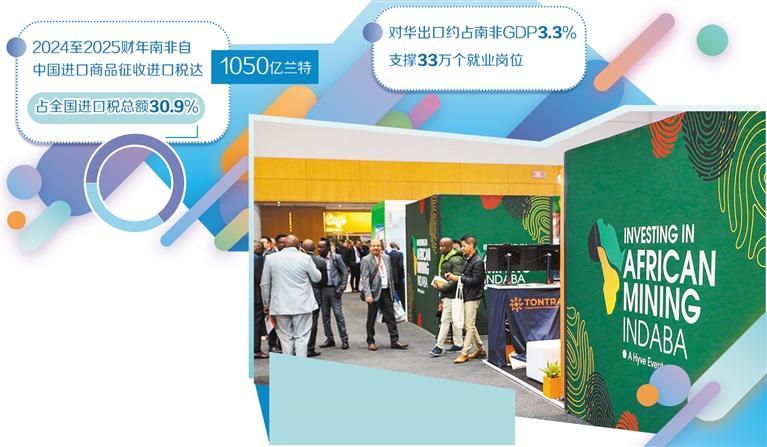
Core Viewpoint - The signing of the economic partnership framework agreement between China and South Africa marks a significant step in enhancing bilateral trade and investment relations, reflecting a commitment to deeper economic cooperation and mutual benefits [2][4][6]. Group 1: Bilateral Economic Cooperation - The framework agreement is the 33rd of its kind signed by China with an African nation, aimed at allowing African countries to benefit from China's vast market opportunities [2]. - Both parties expressed a desire to enhance bilateral trade, particularly in sectors such as agriculture, mining, and renewable energy, while ensuring compliance with World Trade Organization (WTO) rules [3][5]. - South Africa is keen to attract more Chinese investments and increase its exports of agricultural products and high-value manufactured goods to China [4][5]. Group 2: Trade and Investment Opportunities - South Africa is a primary destination for Chinese investments in Africa, with a growing interest from South African companies to enter the Chinese market [5]. - The agreement is expected to provide zero-tariff treatment for certain South African exports to China, thereby promoting increased trade volume [4][6]. - The partnership aims to create a stable and predictable environment for economic cooperation, which is essential for achieving mutual benefits [4][6]. Group 3: Global Trade Context - The agreement comes at a time when South Africa is seeking to diversify its trade relationships in response to rising protectionism and unilateralism in global trade [8]. - Strengthening ties with China is seen as a strategic move to mitigate the impacts of external economic pressures, particularly from the United States [8]. - The ongoing development of Sino-South African trade relations is viewed as a stabilizing force in the global trade system, contributing positively to international economic dynamics [8].
农文旅产业学院共同体助力乡村振兴的浙江实践
Xin Lang Cai Jing· 2026-02-13 16:24
(来源:中国经济导报) 转自:中国经济导报 沈萍 乡村振兴,关键在人;人才振兴,基础在教育。浙江省以系统性思维破题职业教育服务乡村振兴的结构 性困境,鼓励院校对接地方成立产业学院,服务区域特色产业。宁波城市职业技术学院在地方政府的支 持下,于2013年率先成立全国首个地市级旅游类产业学院——宁波旅游学院,并以此为枢纽,持续整合 园林、茶学、视觉艺术、农文旅运营等资源,构建起覆盖全省、辐射长三角的"1+N"农文旅产业学院共 同体,走出一条具有中国特色、浙江辨识度的职业教育助力乡村振兴的制度化路径。 直面现实之困,破解职教服务乡村的三重难题。浙江实践清醒认识到,若不能将课堂搬到田间地头、把 专业建在产业链上、让成果落在百姓心坎里,职教赋能易沦为"纸上谈兵"。其一,专业设置滞后于农文 旅融合发展趋势。缺乏对民宿运营、非遗活化、数字营销、生态康养等新兴业态的能力支撑,尚未形成 基于真实产业场景的育人闭环。其二,创新创业教育未能嵌入专业教学全过程。学生难以在解决乡村实 际问题中锤炼"懂农业、爱农村、爱农民"的综合素养。其三,职业教育技术帮扶项目转化效率偏慢。例 如,文化IP开发、直播带货、生态种植等服务缺乏系统集成,导 ...
维蒙特工业公布未来财务目标与增长战略,聚焦公用事业扩张与农业复苏
Jing Ji Guan Cha Wang· 2026-02-13 14:16
Core Insights - The company is focusing on strategic execution and financial goals in the near term [1] Financial Performance Goals - The management has set clear short-term financial targets, aiming for sales growth of $500 million to $700 million and earnings per share to increase to $25 to $30 [2] Project Advancement - The utility sector is currently the fastest-growing business line for the company, with plans to invest approximately $150 million annually, including $100 million specifically for utility capacity expansion to capitalize on market opportunities from aging infrastructure replacement and energy transition [3] Capital Allocation - The company has authorized a $700 million stock buyback program and established a mechanism for regular dividend increases each first quarter, with a 13% dividend increase in 2025, reflecting management's confidence in cash flow generation and commitment to shareholder returns [4] Industry Conditions - The agricultural business is currently in a cyclical low, with market attention on the company's international market strategies (such as in Brazil, the Middle East, and Africa) and its ability to improve performance as food security demands rise and the industry cycle recovers [5]

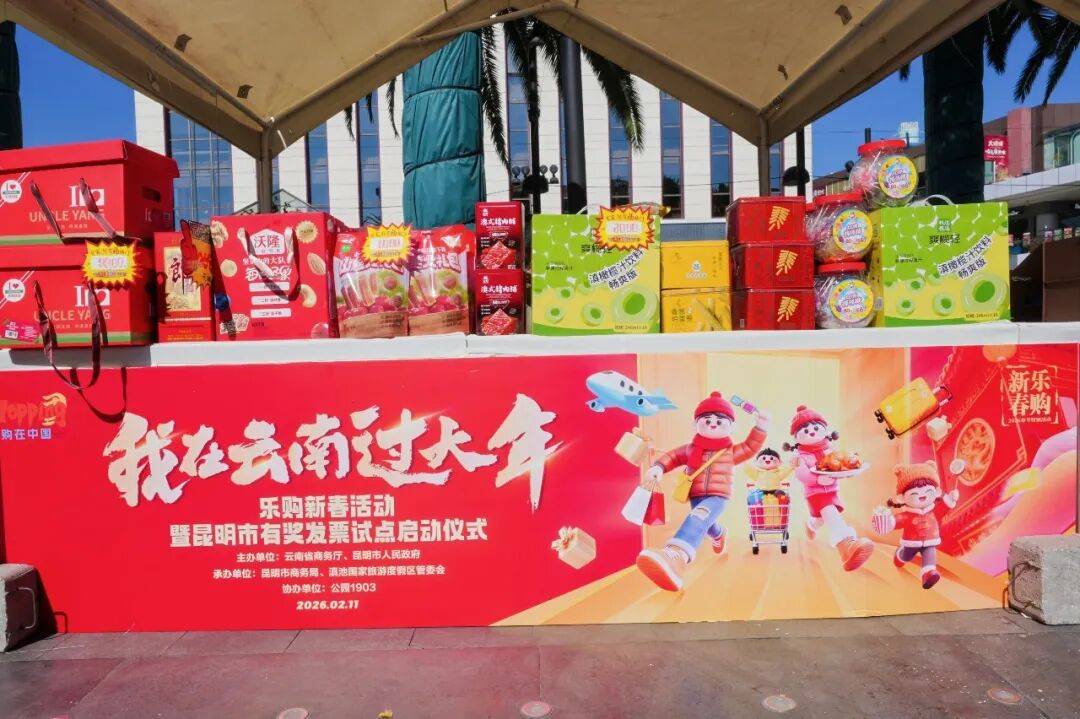
“我在云南过大年”乐购新春活动暨昆明市有奖发票试点正式启动
Sou Hu Cai Jing· 2026-02-13 12:51
Group 1 - The event "I Celebrate the New Year in Yunnan" was launched to promote consumption during the Spring Festival, featuring a theme of "Enjoy Yunnan, Shop for the New Year" [1] - The Kunming Municipal Bureau of Commerce introduced the overall arrangement for the 2026 Spring Festival consumption season, including a new food map and a prize invoice trial program [3] - As one of the pilot cities for the prize invoice program, Kunming offers consumers a chance to win up to 800 yuan for single purchases over 100 yuan [3] Group 2 - The provincial commerce department announced consumption promotion policies and key activities, including a prize invoice program across 15 other cities, where consumers can win vouchers for purchases over 50 yuan [4] - The initiative also includes a focus on trade-in programs for consumer goods like automobiles and electronics, supported by financial incentives to encourage the purchase of energy-efficient products [4] - A large-scale distribution of consumption vouchers exceeding 100 million yuan will target retail, dining, accommodation, and e-commerce sectors to boost consumer confidence during the festive season [4] Group 3 - The event highlighted local specialties such as flowers, blueberries, Yunnan cuisine, and seafood, with promotional efforts for seasonal products and purchasing channels [6] - The Yunnan Blueberry is currently in peak season, with major brands ensuring market supply and offering various packaging options for the holiday [6] - A food map for Yunnan cuisine was released, promoting dining options and ensuring a safe and quality consumption environment during the festival [6] Group 4 - The event effectively connects with holiday consumption demands and aims to continuously introduce policies and activities to enhance consumer experiences [8] - Future initiatives will focus on collaborative efforts among departments to sustain the momentum of the "I Celebrate the New Year in Yunnan" campaign, providing tangible benefits to consumers [8]

华英农业:截至2026年2月10日公司股东户数为52757户
Zheng Quan Ri Bao Wang· 2026-02-13 09:14
Core Viewpoint - Huaying Agriculture (002321) reported that as of February 10, 2026, the number of shareholders reached 52,757 [1] Summary by Relevant Categories - Company Information - Huaying Agriculture has a total of 52,757 shareholders as of the specified date [1]
