
非银金融

Search documents
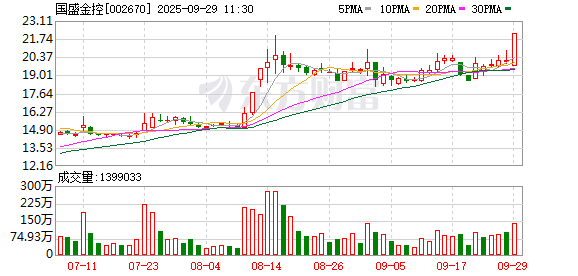
国盛金控盘中创历史新高
Zheng Quan Shi Bao Wang· 2025-09-29 03:58
证券时报·数据宝统计显示,国盛金控所属的非银金融行业,目前整体涨幅为1.89%,行业内,目前股价 上涨的有73只,涨幅居前的有国盛金控、华泰证券、东吴证券等,涨幅分别为9.99%、6.06%、5.06%。 股价下跌的有9只,跌幅居前的有*ST仁东、拉卡拉、海南华铁等,跌幅分别为1.96%、1.59%、1.32%。 两融数据显示,该股最新(9月26日)两融余额为9.89亿元,其中,融资余额为9.82亿元,近10日增加 1.21亿元,环比增长14.07%。 国盛金控股价创出历史新高,截至10:49,该股上涨9.99%,股价报22.13元,成交量1.17亿股,成交金额 24.82亿元,换手率7.19%,该股最新A股总市值达428.23亿元,该股A股流通市值359.25亿元。 公司发布的半年报数据显示,上半年公司共实现营业收入11.36亿元,同比增长32.10%,实现净利润 2.09亿元,同比增长369.91%,基本每股收益为0.1081元,加权平均净资产收益率1.87%。(数据宝) (文章来源:证券时报网) ...


公募挖掘优势风格“扩散”机会
Zhong Guo Zheng Quan Bao· 2025-09-28 20:46
□本报记者 王鹤静 自9月美联储降息落地以来,A股市场科技成长风格持续走强。截至9月26日,多只半导体设备相关主题 ETF表现不俗。业内机构分析,人工智能(AI)产业的新进展层出不穷,成长风格带动的结构性行情仍 未结束。不过,叠加十一假期的"节前效应",如果没有较多的利好催化,近期市场或以震荡为主。 在科技板块估值进入高位的同时,板块内部的轮动也在提速。业内机构提示,此前市场极致的结构分化 和过于集中的共识需要消化和整固。在当下由增量资金和部分行业景气度驱动的行情中,轮动并非简单 基于估值、追求赔率的"高切低",决定板块胜率的主要因素是景气度的确定性,而非位置高低,所以更 要立足景气度逻辑与产业趋势,挖掘优势风格及主线机会的"扩散"。 A股成长风格行情仍未结束 自9月18日美联储降息落地以来,A股市场延续此前的科技成长风格,截至9月26日,科创50指数区间涨 幅超过5%。 短期来看,富国基金认为,美联储重启降息给予了流动性叙事更多底气,目前国内经济数据仍在回暖, 叠加十一假期的"节前效应",如果没有较多的利好措施进一步出台,近期市场或以震荡波动为主。 富国基金提示,可关注以下板块的机会:一是科技板块仍是行情核 ...
廖市无双:如何应对指数“明显分化”?
2025-09-28 14:57
Summary of Key Points from Conference Call Industry or Company Involved - The discussion primarily revolves around the performance of the stock market, particularly focusing on the dual innovation indices (创业板 and 科创 50) and their impact on the overall market dynamics [1][3][4]. Core Insights and Arguments 1. **Market Performance and Divergence** - The dual innovation indices have shown strong performance, particularly the 科创 50, which indicates a strong upward momentum despite the pressure on weight indices like 上证 50 and 沪深 300 [1][3][4]. 2. **Challenges and Uncertainties** - The market faces significant challenges, including the divergence of indices, unclear direction of the 上证 index, and the upcoming long holiday which adds to market uncertainty [4][5]. 3. **Investment Strategy in Complex Market** - Investors are advised to focus on systemic market characteristics, avoiding concentrated strategies and instead monitoring overall market rotation. Attention should be given to the sustainability of the dual innovation indices to prevent larger adjustment pressures [6][7]. 4. **Future Market Predictions** - The market is expected to continue in a range-bound consolidation phase, with the 上证 index lacking momentum. The performance of the financial sector, particularly brokerages, is crucial for any potential upward movement in the broader market [11][14]. 5. **Sector Performance** - Notable sectors this week include electronics, non-ferrous metals, and battery industries, which have seen significant gains. Conversely, consumer-related sectors have underperformed, likely due to profit-taking ahead of the National Day holiday [10][11]. 6. **Asset Relationships and Impact** - There is a notable interrelationship among various asset classes, with systemic market characteristics leading to simultaneous rises and falls. A balanced allocation between cyclical and technology sectors is recommended to mitigate risks [7][24]. 7. **Investment Recommendations** - Investors should consider a diversified approach, focusing on sectors with strong fundamentals such as non-bank financials and real estate, which may have significant upside potential if profit expectations improve [29][30]. 8. **Market Sentiment and Wealth Effect** - The improvement in industrial profits and consumer spending in Shanghai is attributed to the wealth effect, which has begun to manifest after two years of market growth [2][28]. Other Important but Possibly Overlooked Content 1. **Technical Analysis of Indices** - The 上证 index's daily and weekly analysis indicates it is currently in an adjustment phase, with the need for careful monitoring of key moving averages to assess potential risks [8][12]. 2. **Brokerage Sector's Role** - The brokerage sector's performance is critical for the overall market's ability to reach higher levels, emphasizing the need for a healthy rotation within this sector [14][31]. 3. **Real Estate Sector Dynamics** - The real estate sector, while currently lacking in momentum, shows potential for significant upside if profit recovery occurs, making it a sector to watch closely [30]. 4. **Future Focus on Research and Service** - The team acknowledges the need to enhance service quality and better align research outputs with investor needs, indicating a shift towards more investor-centric approaches in the future [32].
10年数据透视:国庆节后A股上涨概率70%
21世纪经济报道· 2025-09-28 14:49
Core Viewpoint - The article discusses the performance of the A-share market around the National Day holiday, highlighting historical trends and sector performance, suggesting a generally positive outlook for the market post-holiday [1][5]. Market Performance Statistics - Over the past decade, the Shanghai Composite Index and Shenzhen Component Index have shown a 70% probability of rising on the first trading day after the National Day holiday, with 60% and 70% probabilities of rising over the next five trading days respectively [1]. - The historical data indicates that the Shanghai Composite Index recorded five years of gains and five years of losses in October, while the Shenzhen Component Index had seven years of gains and three years of losses [2][3]. Sector Performance Analysis - The sectors with the highest probability of gains post-National Day include Computer, Communication, and Electronics, with Banking, Non-bank Financials, and Automotive also showing strong performance in the weeks following the holiday [4]. - The average returns for key sectors during the week before and after the holiday indicate that sectors like Computer and Communication have consistently performed well, with average returns of 2.7% and 1.8% respectively in the first trading day after the holiday [4]. Future Market Outlook - Multiple brokerages have a positive outlook for the A-share market post-holiday, recommending investors to maintain positions and consider sector allocations in Electronics, Communication, and Machinery [5][6]. - The current market environment shows active trading and a recovery in investor participation, suggesting a continuation of the upward trend in A-shares [6].

国庆前后交投趋弱,十五五预期利好低位蓝筹配置
Haitong Securities International· 2025-09-28 13:40
Group 1 - The report indicates that A-shares are expected to consolidate to digest previous gains, while Hong Kong stocks may experience a short-term pullback after a recent rally [1][7] - The focus of the market has shifted from technology gains to economic and policy aspects, with the People's Bank of China emphasizing the need for additional stimulus in Q4 [2][8] - The upcoming Fourth Plenary Session will review recommendations for the 15th Five-Year Plan, with ministries drafting plans for sectors such as new energy vehicles and modern manufacturing [2][8] Group 2 - A-share turnover weakened ahead of the National Day holiday, with technology stocks stabilizing and low-valued blue chips showing signs of recovery [3][10] - The financial sector, particularly non-bank financials, is showing improvement and presents an attractive entry point for Q4, while property stocks are rebounding due to expectations from the 15th Five-Year Plan [3][12] - Daily turnover in the A-share market has decreased to RMB 2.3 trillion, indicating a cooling in trading enthusiasm as the holiday approaches [3][13] Group 3 - Hong Kong equities faced pressure from currency fluctuations and rising U.S. Treasury yields, which negatively impacted market sentiment [4][14] - The AH premium index has slightly increased, with notable net inflows into major stocks like Alibaba and Tencent, while Xiaomi experienced a small outflow [4][15] - The report suggests that the current market conditions may create an attractive entry point for non-bank financials and sectors related to consumption and anti-involution strategies [4][16]
陈果:海外再通胀交易有望继续
Sou Hu Cai Jing· 2025-09-28 13:07
Core Viewpoint - The A-share and Hong Kong stock markets continue to exhibit "volatile differentiation + internal rotation of technology style," with capital preference focusing on power equipment, non-ferrous metals, and electronics sectors [1][4] Economic Environment - The U.S. August core PCE data did not show significant inflationary pressure, increasing market bets on two more rate cuts by the Federal Reserve this year [1][18] - The "Great American Rescue Plan" is expected to gradually take effect in the second half of the year, alongside fiscal and monetary expansion in Europe, which may boost global demand recovery [1][11] Industry Performance - The technology-related overseas sectors are performing strongly due to ongoing capital expenditure expansion related to AI, while traditional manufacturing and consumption sectors are relatively weak due to high interest rates suppressing demand [2][8] - The A-share and Hong Kong markets are seeing a rotation in capital towards sectors with clear improvement in profitability, such as power equipment and non-ferrous metals [4][6] Investment Opportunities - The AI sector remains a mid-term industry prosperity mainline, with potential for short-term trading adjustments as valuations digest [3][18] - Key areas to watch include battery, engineering machinery, and the anti-involution price increase chain (express delivery, breeding, fiberglass) [3][18] - The overseas capital goods chain is worth early-stage exploration, particularly in non-ferrous metals, engineering machinery, and petrochemicals [3][18] Market Trends - Historical analysis shows that after the Fed resumes rate cuts, improvements in the U.S. job market often lag, while PMI and CPI rebound more quickly [14][18] - The current high interest rate environment is expected to gradually improve housing mortgage rates and corporate financing rates, potentially leading to a recovery in the real estate sector and traditional industry investment willingness [11][18]

百炼金精,越辩愈明
Huaan Securities· 2025-09-28 12:07
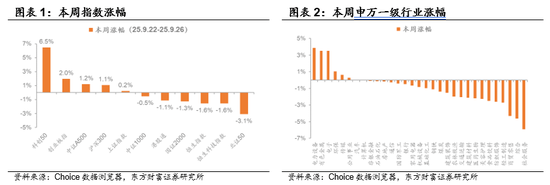
Group 1 - The main focus in October is the Fourth Plenary Session, which is expected to boost market risk appetite and generate numerous thematic investment opportunities, leading to a stable or upward-trending market [3][4] - The Fourth Plenary Session's "15th Five-Year Plan" recommendations are anticipated to enhance market risk appetite, with a focus on traditional manufacturing upgrades and strategic deployment of emerging and future industries [4][14] - Micro liquidity remains abundant, supporting the market, while macro liquidity continues to be loose, with no significant risks emerging from domestic economic conditions or US-China negotiations [5][18] Group 2 - The industry configuration emphasizes the establishment of a new growth cycle, with a focus on AI computing infrastructure, which is deemed irreplaceable, alongside attention to AI applications and military industries [3][6] - Key sectors with hard support for performance include power equipment (wind power/storage/batteries/power supply), non-ferrous metals (rare earth permanent magnets/precious metals), and machinery (engineering machinery) [6][8] - The first main line of investment is the new growth cycle in industries, particularly in AI computing infrastructure, with significant advantages in application expansion, focusing on areas such as TMT, computing power, and military [8][39] Group 3 - The second main line of investment focuses on sectors with strong performance support, including power equipment benefiting from high demand in wind power exports and overseas storage, as well as breakthroughs in solid-state batteries [8][38] - The report highlights that the growth in the AI computing infrastructure sector is expected to continue, with significant demand for related products such as PCBs and CPOs, driven by the rapid expansion of AI and data transmission needs [39][40] - The report anticipates that the global optical module market will see a year-on-year growth rate of 32% in 2025, indicating strong demand in the sector [40][41]
量化周报:非银确认日线级别下跌-20250928
GOLDEN SUN SECURITIES· 2025-09-28 10:24
- The non-bank sector confirmed a daily-level decline this week, with the Shanghai Composite Index rising by 0.21% for the week[1][7] - The A-share prosperity index was 22.14 as of September 26, 2025, up 15.83 from the end of 2023, indicating an upward cycle[2][28] - The A-share sentiment index signals were empty for both bottom and top signals, with a comprehensive signal of empty[2][35] - The CSI 500 enhanced portfolio outperformed the benchmark by 0.91% this week, with a cumulative excess return of 50.71% since 2020 and a maximum drawdown of -5.73%[2][44] - The CSI 500 enhanced portfolio's holdings include stocks such as Guojin Securities, Nanjing Iron & Steel, and Perfect World, among others[2][47] - The CSI 300 enhanced portfolio underperformed the benchmark by 0.81% this week, with a cumulative excess return of 37.70% since 2020 and a maximum drawdown of -5.86%[2][51] - The CSI 300 enhanced portfolio's holdings include stocks such as Huaneng International, Founder Securities, and Wuxi AppTec, among others[2][53] - The market style analysis shows that the size factor had a high excess return this week, while the residual volatility factor had a significant negative excess return[5][56] - The style factor performance indicates that high Beta and high growth stocks performed well recently, while residual volatility and value factors performed poorly[5][56] - The main indices' performance attribution shows that the Shanghai Composite Index, SSE 50, and CSI 300 had large exposures to the size factor, while the CSI 500 and Wind All A had smaller exposures[5][61]
非银金融周报:央行例会释放信号,维护资本市场稳定-20250928
HUAXI Securities· 2025-09-28 09:06
Investment Rating - The industry rating is "Recommended" [5] Core Insights - The average daily trading volume of A-shares for the week (September 21-27, 2025) was 23,132 million yuan, a decrease of 8.1% week-on-week but an increase of 17.5% year-on-year. The average trading volume for the third quarter of 2025 to date is 21,062 million yuan, up 212.2% compared to the same period in 2024. Year-to-date average trading volume in 2025 is 16,423 million yuan, an increase of 89.0% compared to 2024 [1][16] - The People's Bank of China held its monetary policy committee meeting on September 23, 2025, emphasizing the need to maintain stability in the capital market and exploring regular institutional arrangements for stock repurchase and increase loans [3][14] - The insurance sector saw a significant increase in premium income, with life insurance premiums rising by 47.25% year-on-year in August 2025, driven by strong market demand and a reduction in the preset interest rate [4][15] Summary by Sections Market and Sector Performance - The non-bank financial Shenwan index decreased by 0.09%, underperforming the CSI 300 index by 1.16 percentage points, ranking 9th among all primary industries. The securities sector fell by 0.18%, while the insurance sector rose by 0.46% [2][13] Securities - The average daily trading volume of A-shares was 23,132 million yuan, with a total of 2 new stock issuances raising 370 million yuan during the week. Year-to-date, there have been 76 IPOs in A-shares, raising 749.58 billion yuan [1][16] Insurance - The insurance industry reported original premium income of 4.8 trillion yuan for the first eight months of 2025, with life insurance premiums at 3.8 trillion yuan, reflecting a year-on-year growth of 11.32% [4][15] Industry News - Major state-owned banks announced they would no longer establish supervisory boards, which is expected to enhance governance efficiency [38] - The total scale of public funds in China has surpassed 36 trillion yuan for the first time, marking a significant milestone in the industry [39]






中观高频景气图谱(2025.9):上游资源品回暖,电气机械边际修复
Guoxin Securities· 2025-09-28 08:23
Group 1 - The overall performance of upstream resource products remains weak, but there are signs of recovery on a month-on-month basis, with coal prices rising and the oil and petrochemical sectors showing improvement [4] - In the midstream manufacturing sector, electrical equipment shows month-on-month improvement, while machinery performs well on the domestic demand side but faces pressure from external demand; the automotive sector remains at a low level, and the textile and apparel sector exhibits a mixed pattern [4] - The downstream consumer sector shows stable performance in home appliances, with increased consumption resilience; however, the food and beverage sector remains weak under price pressures, and the pharmaceutical and biological sectors show divergence, particularly with a continued decline in traditional Chinese medicine prices [4] Group 2 - Supportive services and finance sectors show month-on-month improvement in banks and a recovery in the funding environment; non-bank financial services remain active but with slowing growth; transportation shows divergence with container shipping rates rebounding while overall shipping rates face pressure; the environmental protection sector shows improvement with positive indicators [4] - The chemical industry shows a mixed performance with excess returns tracking indicators related to fuel oil and methanol futures prices, indicating a correlation with market movements [5][10] - The steel industry shows excess returns correlated with iron ore and steel production metrics, indicating a relationship with operational rates and inventory levels [21][24] Group 3 - The non-ferrous metals sector shows excess returns linked to various high-frequency indicators, including LME base metal indices and copper prices, suggesting a strong correlation with market trends [30][31] - The construction materials sector's excess returns are associated with cement price indices and glass settlement prices, indicating a relationship with construction activity [32][36] - The coal industry shows excess returns linked to thermal coal and coking coal prices, reflecting market dynamics and demand fluctuations [39][42] Group 4 - The oil and petrochemical sector's excess returns are influenced by gasoline and diesel wholesale prices, as well as production capacity utilization rates, indicating a strong correlation with market conditions [46][47] - The electrical equipment sector's excess returns are tracked against the prices of photovoltaic components and polysilicon, suggesting a relationship with renewable energy trends [50][51] - The automotive sector's excess returns are linked to tire production rates and average daily sales of passenger vehicles, indicating a correlation with consumer demand [53][58] Group 5 - The machinery sector's excess returns are associated with various price indices, indicating a relationship with global shipping rates and equipment pricing [60][66] - The transportation sector shows excess returns correlated with container freight indices, reflecting market conditions and trade dynamics [67][70] - The electronic sector's excess returns are linked to indices such as the DXI and NAND flash prices, indicating a relationship with technology market trends [72][74] Group 6 - The light industry sector's excess returns are tracked against TDI prices and real estate transaction metrics, indicating a correlation with housing market activity [78][83] - The textile and apparel sector's excess returns are influenced by various textile price indices, reflecting market conditions and consumer preferences [90][93] - The retail sector shows excess returns linked to order price indices, indicating a relationship with consumer spending trends [97][100] Group 7 - The agriculture, forestry, animal husbandry, and fishery sector's excess returns are correlated with food product price indices and wholesale vegetable prices, indicating a relationship with agricultural market conditions [101][106] - The food and beverage sector's excess returns are influenced by prices of staple food products and agricultural wholesale prices, reflecting market dynamics [113][117] - The pharmaceutical and biological sector's excess returns are linked to traditional Chinese medicine price indices, indicating a correlation with market trends [118][123]