食品饮料

Search documents
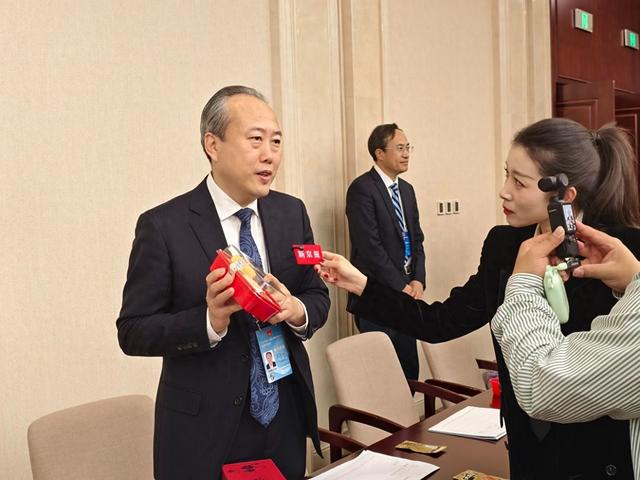
北京两会“摆摊”现场亮出老字号新思路
Xin Lang Cai Jing· 2026-01-25 09:59
Group 1 - The core focus of the article is on the promotion of traditional Chinese brands, specifically "old brands," in Beijing, highlighting efforts to enhance their cultural significance and market presence [1][2] - Beijing currently has a total of 274 "old brands," and the municipal government is implementing various measures to support their inheritance and innovation [2] - The rise of "Guochao" (national trend) is noted, with young consumers becoming the main driving force behind this cultural and consumption shift, leading to a demand for products that blend cultural heritage with modern fashion [2] Group 2 - The establishment of the Beijing Fashion and Trend Play Professional Committee in January 2023 marks a new phase for the city's fashion and trend industry, focusing on resource aggregation and collaborative development [2] - In 2026, Beijing aims to enhance product quality and promote the "Guochao" consumption trend, supporting the digital transformation of old brands and encouraging international brands to establish their first stores and R&D centers in the city [2] - The city is also focused on developing an international food capital and promoting the integration of dining with other sectors, while optimizing the consumption ecosystem for housing and automobiles [2][3]

耐克大中华区换帅求变;中国中免约28亿元收购 LVMH 旗下 DFS;宜家入驻即时零售平台“京东秒送”|品牌周报
36氪未来消费· 2026-01-25 09:06
Group 1: Nike's Management Change and Performance - Nike has announced a management change in its Greater China region, with current head Dong Wei stepping down and Cathy Sparks appointed as the new Vice President and General Manager [3][4] - Dong Wei has been with Nike for 20 years and was recently promoted to Chairman and CEO of Nike Greater China, but the company is facing declining performance in the region, with Q2 FY2026 revenue at 14.23 billion yuan, down 17% year-on-year [4] - The decline in revenue is attributed to a drop in direct sales and digital business, with EBIT halving, down 49% year-on-year, indicating a need for strategic reform under the new leadership [4][5] Group 2: China Duty Free Group and LVMH Partnership - China Duty Free Group has reached a strategic cooperation agreement with LVMH to acquire DFS for up to $395 million, which includes retail stores in Hong Kong and Macau and exclusive rights to several brands in the Greater China region [6][7] - DFS has shown stable financial performance, with revenues of 4.1 billion yuan and 2.7 billion yuan for 2024 and 2025 respectively, making it a valuable asset for China Duty Free Group [7] - The acquisition will enhance China Duty Free Group's high-end brand supply chain, as DFS has partnerships with over 750 global brands [8] Group 3: IKEA's New Retail Strategy - IKEA has launched an instant retail service on JD.com, marking its first foray into this business model, covering 13 stores in major cities [9] - This new service aims to improve delivery efficiency and reduce consumer barriers, with a minimum purchase of 99 yuan for free delivery within a 4 km radius [9] - IKEA's sales in China have declined, with a reported revenue of approximately 11.15 billion yuan for FY2024, down 7.6% year-on-year, indicating a need for adaptation to changing consumer preferences [10] Group 4: Haidilao's New Concept Store - Haidilao has opened its first "sugar water shop" as a thematic store, integrating hot pot and dessert offerings to cater to diverse consumer needs [12] - The shop operates independently and has already achieved over 100 orders daily, indicating a successful trial of the "store within a store" model [13] Group 5: Walmart's Collaboration with Xiaohongshu - Walmart has partnered with Xiaohongshu to open a co-branded retail experience space called "Mashi Store," focusing on customer-centric shopping experiences [14] - The store features eight "interest islands," each showcasing specific lifestyle products, reflecting Walmart's ongoing transformation to attract younger consumers [14] Group 6: Financial Updates from Various Companies - Yonghui Supermarket expects a net loss of 2.14 billion yuan for 2025, marking its fifth consecutive year of losses due to store adjustments and supply chain reforms [18] - Kraft Heinz China is restructuring its sales regions to accelerate national expansion and seek new growth opportunities [19] - Nestlé is moving forward with the sale of its water business, valued at 5 billion euros, indicating a strategic shift in its portfolio [20]




公募基金25年Q4配置分析:公募基金四季报是否会影响我们对市场和板块的判断?
广发香港· 2026-01-25 08:28
Core Conclusions - The current fund allocation numbers reflect the results of economic transformation, with a notable shift in the channels through which residents are entering the market, particularly among high-net-worth individuals [12][19] - The allocation towards "new productive forces" indicates a structural shift in the economy, with changes in heavy holdings reflecting different stages of economic dividends [23][29] Asset and Sector Allocation - Fund positions have decreased, with ongoing redemption pressures; net inflows for various fund types were approximately 1200 billion CNY in Q4, down from over 2600 billion CNY in Q3 [12][15] - Active equity funds are experiencing a "return of capital redemption" pressure, with 2563 out of 6471 existing active equity funds exceeding their 2020-2022 high points, representing about 40% of the total [15][19] Industry Allocation - There is a rotation within the technology sector, with increased allocations to non-ferrous metals, non-bank financials, and chemicals, while reductions were seen in electronics, pharmaceuticals, and media [5][51] - The semiconductor and lithium battery materials sectors are highlighted as key areas for increased investment, alongside insurance and chemicals, driven by positive economic expectations [58][65] Individual Stock Allocation - The concentration of holdings has decreased, indicating a diversification in investment strategies among funds [40] Fixed Income Plus Fund Allocation Analysis - "Fixed income plus" funds are becoming a significant source of incremental growth, with a preference for sectors such as non-ferrous metals, non-bank financials, and utilities, reflecting a focus on economic cycle-related and dividend-paying industries [58][65]





“藏字号”产品受香港市场青睐
Ren Min Ri Bao· 2026-01-25 03:26
Core Insights - The trade interaction between Tibet and Hong Kong during the 14th Five-Year Plan period reached 622 million yuan, with unique Tibetan products like Cordyceps and mineral water leading exports [1][2] - Hong Kong's re-export trade network and financial services are expected to enhance Tibet's foreign trade capabilities, which have been limited due to late development and narrow channels [1] - Recent initiatives have allowed Tibetan products such as organic barley and honey to enter the Hong Kong market, marking significant breakthroughs in export [1] Group 1 - The export value of goods between Tibet and Hong Kong during the 14th Five-Year Plan period was 622 million yuan, with key products including Cordyceps and mineral water [1] - Hong Kong's experience in re-export trade and financial services can help address Tibet's foreign trade challenges [1] - New products from Tibet, including organic barley and honey, have recently entered the Hong Kong market, indicating a successful market expansion effort [1] Group 2 - The Lhasa Customs has implemented "cloud issuance" for inspection and quarantine certificates, significantly improving logistics efficiency by reducing inspection time from 6 hours to approximately 6 minutes [2] - The new "Lhasa-Chengdu Tianfu-Hong Kong" air route, opening on February 19, 2025, will enhance connectivity and facilitate trade between the regions [2] - Increased trade activity is expected to lead to deeper cooperation in cross-border logistics and specialty product trade between Tibet and Hong Kong [2]
雀巢奶粉受菌污染 瑞士指问题原料来自中国供应商
Ge Long Hui· 2026-01-25 03:23
Group 1 - Nestlé, headquartered in Switzerland, has recalled baby formula in 37 countries due to potential bacterial contamination [1] - The contaminated ingredient, arachidonic acid (ARA), was sourced from a Chinese supplier, one of the world's top three ARA producers [1] - The specific name of the supplier has not been disclosed by Nestlé [1] Group 2 - China has requested Nestlé (China) to recall relevant batches of the affected products [1] - Major ARA producers in China include DSM, Cabio, and Runke Biotech, with DSM and Runke Biotech stating they are not involved in the incident [1] - Attention is now focused on Cabio, a biotech company based in Wuhan, as a potential source of the contamination [1] Group 3 - Lactalis, a private company in France, also recalled certain baby formulas in January due to contamination with vomiting-type enterotoxin [1] - The French Ministry of Agriculture announced that Lactalis's recall is related to the same Chinese raw material supplier as Nestlé's case [1]

食品饮料行业周度市场观察-20260125
Ai Rui Zi Xun· 2026-01-25 03:03
Investment Rating - The report does not explicitly provide an investment rating for the food and beverage industry Core Insights - The food and beverage industry is witnessing diverse trends such as the emergence of fresh food restaurants, smart products, and health management, indicating a shift towards quality consumption and lifestyle changes [2] - The 2025 consumption landscape in China is being reshaped by trends like the rise of night economy, health-oriented products, and the popularity of new Chinese-style beverages [4] - Local brands are gaining traction in the ready-to-drink coffee market, with significant sales growth driven by competitive pricing and innovative product offerings [4] Industry Environment - The pet economy is evolving, with a projected market size exceeding 300 billion yuan by 2024, driven by younger consumers seeking quality and diverse pet-related services [2] - The baking market in China has expanded to 365,000 stores, with a notable increase in health-conscious and visually appealing products, alongside a rise in pet baking [2] - The ready-to-drink coffee market is experiencing a transformation, with local brands like Nongfu Spring and Dongpeng gaining market share through affordable pricing and innovative flavors [4] - The new dietary guidelines in the U.S. emphasize protein and healthy fats while reducing sugar intake, reflecting a global trend towards healthier food options [5] - The rise of community bakeries is characterized by personalized service and community engagement, proving that small stores can compete effectively [7] - New Chinese-style health drinks are gaining popularity, with a market potential reaching billions, driven by the demand for convenient health solutions [8] - The condiment industry is seeing a split between leading brands and those struggling to keep up, with a focus on health-oriented product innovation [8] - The takeaway market is evolving into a competitive landscape, with platforms like Meituan and Alibaba expanding into instant retail [9] - The no-sugar beverage market in China is expected to double in size within five years, driven by increasing health awareness [14] - The rise of new health-oriented food products is appealing to younger consumers, with a focus on traditional ingredients and health benefits [15] Top Brand News - The acquisition of yogurt brand Suan Nai Kuan Kuan by Mo Yogurt reflects the ongoing consolidation in the ready-to-drink beverage sector [16] - Yili Group is actively engaging in capital operations, including debt repayment and establishing investment subsidiaries to seek growth opportunities [16] - Huablin Group is revitalizing its War Horse brand to compete with Dongpeng, launching new sugar-free products to cater to health-conscious consumers [17] - New retail formats combining supermarkets, markets, and restaurants are emerging in Shanghai, showcasing a shift in consumer preferences and supply chain integration [17] - The collaboration between Lynk & Co and Starbucks highlights innovative marketing strategies aimed at enhancing customer engagement [19] - Gu Ming has exceeded its expansion goals, planning to open 4,000 new stores in 2026, focusing on supply chain efficiency and product diversification [19]
“十四五”时期 西藏与香港货物贸易进出口额达6.22亿元 “藏字号”产品受香港市场青睐
Ren Min Ri Bao· 2026-01-24 22:05
Core Insights - The trade interaction between Tibet and Hong Kong during the 14th Five-Year Plan period reached a total import and export value of 622 million yuan, with unique Tibetan products like cordyceps and mineral water leading the exports [1][2] - Hong Kong's re-export trade network and financial services are expected to enhance Tibet's foreign trade capabilities, which have been limited due to late development and narrow channels [1] - Recent initiatives have allowed Tibetan products such as organic barley and honey to enter the Hong Kong market, marking significant breakthroughs in export [1] Group 1 - The export value of goods between Tibet and Hong Kong during the 14th Five-Year Plan period was 622 million yuan, with key products including cordyceps and mineral water [1] - Hong Kong's experience in re-export trade and international market promotion can help address Tibet's foreign trade challenges [1] - The introduction of new products from Tibet to Hong Kong, such as organic barley and honey, signifies a successful market expansion effort [1] Group 2 - The Lhasa Customs has implemented "cloud issuance" for inspection and quarantine certificates, significantly improving logistics efficiency by reducing inspection time from 6 hours to approximately 6 minutes [2] - The new "Lhasa-Chengdu Tianfu-Hong Kong" air route, opening on February 19, 2025, will enhance connectivity and facilitate passenger flow between the regions [2] - The ongoing development of cross-border logistics and trade in specialty products is expected to inject vitality into Tibet's open development [2]
【财闻联播】苹果降价!又一商业火箭企业,完成IPO辅导!
券商中国· 2026-01-24 13:45
Macro Dynamics - Beijing is enhancing the application of new generation information technologies such as space cloud computing, artificial intelligence, and big data in satellite constellations, as outlined in the "Measures for Promoting the Development and Utilization of Commercial Satellite Remote Sensing Data Resources (2026-2030)" [2] Financial Institutions - The first batch of 2025 performance reports from listed banks shows significant improvement in performance indicators, with asset quality remaining stable. For instance, China Merchants Bank reported a net profit of 150.18 billion yuan, a slight year-on-year increase, while Hangzhou Bank's net profit grew by approximately 12% year-on-year. Eight banks, including CITIC Bank and Shanghai Pudong Development Bank, have reported positive net profit growth [8] Market Data - The Nasdaq Composite Index rose by 0.28%, with the precious metals sector leading the gains. The three major U.S. stock indices closed mixed, with the Dow Jones Industrial Average down by 0.58% and the S&P 500 up by 0.03% [9][10] - The Nasdaq China Golden Dragon Index fell by 0.26%, with notable declines in stocks such as Xpeng Motors and NIO, while Youdao and New Oriental saw gains [11] Company Dynamics - Zhongke Aerospace has completed its IPO counseling, transitioning from "counseling acceptance" to "counseling work completed," with Guotai Junan Securities as its counseling institution [12] - Apple has launched a limited-time discount event from January 24 to 27, offering price reductions on various products, including the iPhone 16 series and MacBook models, with discounts reaching up to 1,000 yuan [13] - Tesla announced an 8,000 yuan limited-time insurance subsidy for certain Model 3 variants purchased before February 28, 2026, contingent on specific conditions [14] - Baidu has established a new personal super intelligent business group, merging its document library and cloud storage divisions, with Wang Ying appointed as the head, aimed at enhancing AI application capabilities [15][16] - Danone has announced an expansion of its recall of infant formula products in specific markets due to regulatory adjustments, although details on the affected products and regions have not been disclosed [17]
决战下周!美联储议息撞车A股关键数据,4200点这次能冲过去吗?
Sou Hu Cai Jing· 2026-01-24 09:09
Market Overview - Global markets experienced a downturn, with the Dow Jones falling by 0.53%, S&P 500 by 0.35%, and Nasdaq by 0.06%, primarily due to uncertainty regarding AI profitability and Federal Reserve interest rate decisions [1] - European markets fared worse, with Germany's DAX index dropping by 1.57% and France's index by 1.40%, driven by trade tensions and economic growth concerns [1] - In contrast, Brazil's stock market surged by 8.53%, while South Korea and Taiwan saw gains of 3.08% and 1.76%, respectively, indicating resilience in Asia [1] A-Share Market Dynamics - The A-share market exhibited a unique trend where individual stocks performed well despite the overall index remaining relatively stable [2][3] - The small-cap stocks, represented by the Wind Micro Cap Index, surged by 5.25%, while the CSI 500 and CSI 2000 indices rose over 4% [3] - Conversely, large-cap indices like the Shanghai Composite Index increased by only 0.84%, and the CSI 300 index fell by 0.62%, with the CSI A50 index declining by 1.81% [3] ETF Activity and Market Sentiment - Significant trading activity was observed in the CSI 300 ETF, suggesting a strategic adjustment rather than a blind market support, with a focus on cooling overheated sectors [4] - This adjustment negatively impacted major sectors such as banking and beverages, which saw declines of 2.70% and 1.41%, respectively, due to structural trading dynamics rather than fundamental deterioration [4] Sector Performance - Capital flowed into cyclical stocks, with the construction materials sector skyrocketing by 9.23%, and the oil and petrochemical sector rising by 7.71%, alongside gains in steel, chemicals, and non-ferrous metals exceeding 6% [5] - Within the technology sector, there was a notable shift, with the communications sector declining by 2.12%, while advanced topics like humanoid robots saw a rise of 1.38% [5] Future Outlook - The A-share market's divergent trends are expected to continue, with positive factors such as supportive policies and upcoming manufacturing PMI data potentially boosting confidence [6] - However, risks remain, particularly with the Federal Reserve's upcoming meeting, which could introduce volatility if hawkish signals are perceived [6] - The recent surge in small-cap stocks may indicate overheating, warranting caution for potential short-term corrections [6] Investment Strategy - Investors are advised to focus on cyclical and hard-tech sectors, including oil and petrochemicals, basic chemicals, and commercial aerospace, as well as semiconductors and robotics with solid policy backing [9] - Caution is advised regarding large-cap sectors like banking and beverages, which may face short-term pressure from capital outflows [9] - For already inflated small-cap stocks, vigilance is necessary to avoid being the last buyer in a potential downturn [9] - Opportunities in the Hong Kong market should be explored, particularly in consumer and technology leaders that resonate with A-share movements [9]
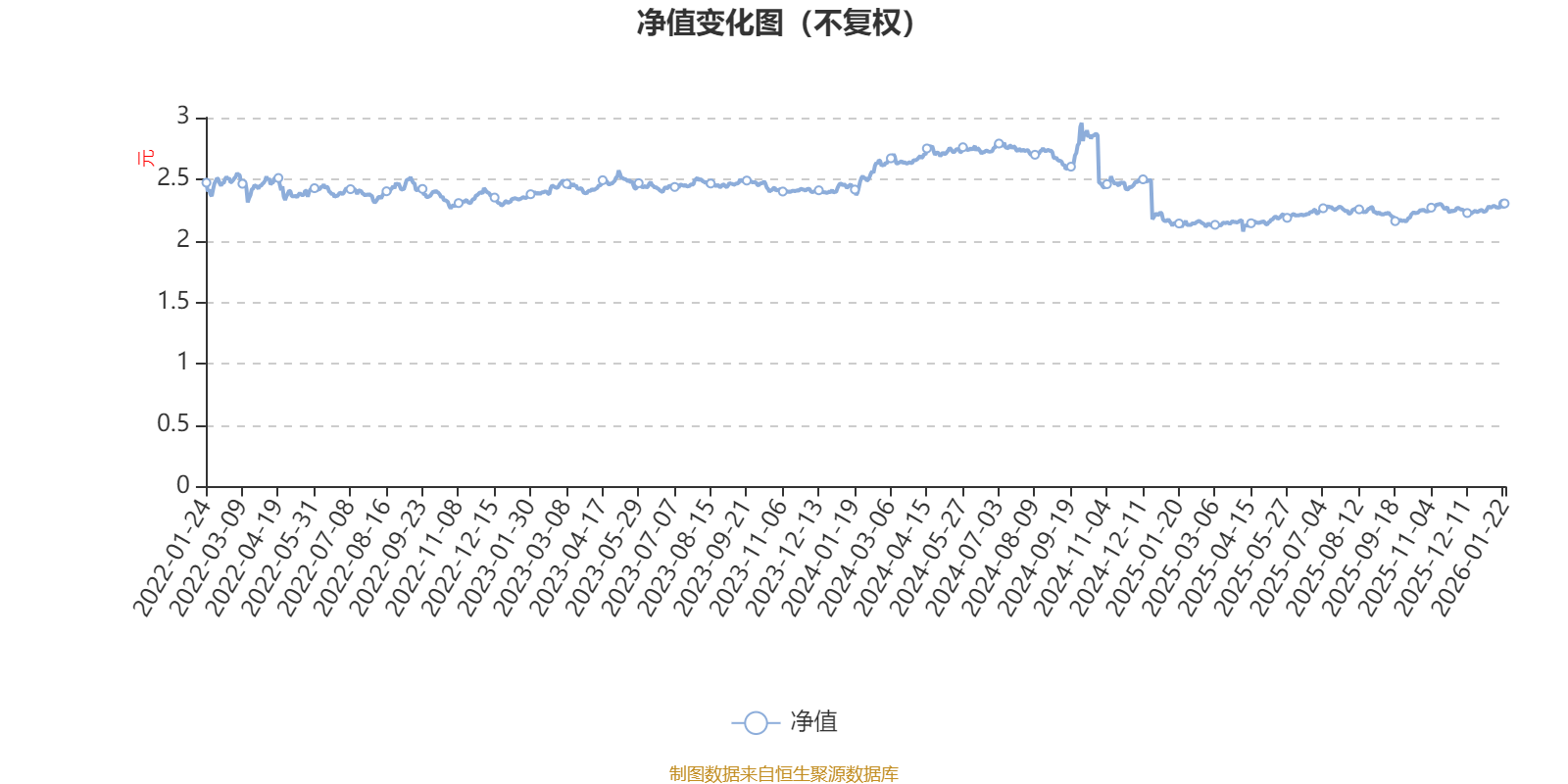
长盛量化红利混合A:2025年第四季度利润2267.90万元 净值增长率3.98%
Sou Hu Cai Jing· 2026-01-24 08:32
Core Viewpoint - The AI Fund Changsheng Quantitative Dividend Mixed A (080005) reported a profit of 22.679 million yuan for Q4 2025, with a weighted average profit per fund share of 0.0903 yuan. The fund's net value growth rate for the period was 3.98%, and the fund size reached 481 million yuan by the end of Q4 2025 [3]. Fund Performance - As of January 22, the fund's three-month cumulative net value growth rate was 2.90%, ranking 226 out of 265 comparable funds. The six-month growth rate was 1.15%, ranking 261 out of 265. The one-year growth rate was 9.07%, also ranking 261 out of 265. Over three years, the growth rate was 25.60%, ranking 97 out of 256 [4]. Risk and Return Metrics - The fund's three-year Sharpe ratio was 0.7605, ranking 64 out of 254 comparable funds [9]. - The maximum drawdown over the past three years was 8.42%, with the worst quarterly drawdown occurring in Q2 2019 at 13.33% [11]. Investment Strategy - The fund maintained an average stock position of 75.76% over the past three years, compared to a peer average of 86.12%. The highest stock position was 93.63% at the end of Q1 2021, while the lowest was 61.46% at the end of Q3 2022 [14]. - The fund's top ten holdings as of Q4 2025 included Yutong Bus, Zhongchuang Zhiling, Midea Group, Beijing Bank, Yili Group, China Petroleum, Gree Electric Appliances, Gibit, Sheneng Co., and Ping An Insurance [18]. Market Observations - The fund manager noted that sectors with strong dividend quality and cash flow, such as metals and manufacturing, performed well, while sectors like banking, transportation, and food and beverage showed weaker performance. The market's risk appetite has improved, shifting from a focus on "risk aversion" to "recovery expectations + profit improvement," favoring high-profit and high-growth stocks [3].