
外卖

Search documents
美团发布2025年Q2财报:营收918亿元,用户交易频次再创新高
Ge Long Hui· 2025-08-27 08:45
Core Insights - Meituan reported Q2 2025 revenue of 91.8 billion RMB, a year-on-year increase of 11.7%, reinforcing its market leadership [1] - The company aims to enhance consumer experience and operational efficiency through technological innovation and ecosystem development [1] - The core local business segment generated revenue of 65.3 billion RMB, up 7.7% year-on-year, while new business revenue reached 26.5 billion RMB, growing 22.8% [3] Group 1: Business Performance - Meituan's monthly active users surpassed 500 million, with record-high annual transaction frequency [1] - The peak daily order volume for Meituan's instant retail exceeded 150 million in July [1] - The company has opened over 5,500 brand satellite stores in collaboration with over 800 leading restaurant brands, aiming for over 10,000 by year-end [2] Group 2: New Business Developments - The new business segment's loss narrowed to 1.9 billion RMB, with strong growth in order volume and GTV for Keeta, particularly in Hong Kong and the Middle East [3] - Meituan's flash purchase service saw significant growth, expanding its product categories beyond groceries to include electronics and beauty products [2] Group 3: Social Responsibility and Ecosystem Development - Meituan has implemented measures to enhance rider welfare, including full coverage of work injury insurance and a summer subsidy of 1.6 billion RMB for riders [4] - The company is promoting a healthy ecosystem for merchants through cash subsidies and innovative business models, with over 300,000 restaurant merchants benefiting from its support [4] - Meituan is advancing food safety infrastructure through the "Internet + Bright Kitchen" initiative, with plans to have over 200,000 merchants participating by 2025 [5] Group 4: Technological Investment - Meituan invested 6.3 billion RMB in R&D, a year-on-year increase of 17.2%, focusing on technological advancements to support retail industry growth [5] - The company has established 64 drone delivery routes across major cities, completing over 600,000 orders [5]

外卖大战“压垮”堂食了吗,我找多家门店问了问
3 6 Ke· 2025-08-27 03:45
Core Insights - The fierce competition in the food delivery market has led to significant changes in consumer behavior and restaurant revenue dynamics, with companies like Meituan and Taobao intensifying their subsidy strategies to attract users [1][2][3] Group 1: Market Dynamics - JD's entry into the food delivery market initially raised expectations, but the subsequent price wars have resulted in increased subsidies from competitors, leading to a surge in daily active users for Taobao's flash purchase service and a 40% year-on-year increase in JD's active users [1] - The intense competition has driven consumers to prioritize cost-effective options, often opting for delivery over dining in, which has negatively impacted in-store dining experiences [1][5] Group 2: Impact on Restaurants - Many restaurant owners report a significant decline in dine-in customers, with some experiencing a drop of up to 50% in in-store dining due to the rise of food delivery services [2][3] - The revenue from food delivery orders is often lower than that from dine-in services, with some restaurants receiving only 50% of the listed price for delivery orders compared to full price for dine-in [2][3] Group 3: Consumer Behavior - Consumers are increasingly inclined to check food delivery prices first, leading to a trend where they order delivery even when they are physically present at the restaurant, often opting for self-pickup to save costs [5][6] - The prevalence of discount coupons and promotions has created a situation where dine-in options are becoming less attractive, with many consumers choosing delivery or self-pickup instead [5][6] Group 4: Long-term Viability - The ongoing price wars and high operational costs associated with food delivery platforms are causing financial strain on many small restaurants, leading to concerns about their long-term viability [6][9] - Some restaurant owners are contemplating closing their businesses or shifting to ghost kitchens to avoid the competitive pressures of the delivery market [9][10]
让金融活水化身民生暖流
Jin Rong Shi Bao· 2025-08-27 02:40
Group 1 - Employment is viewed as a barometer of economic development and a stabilizer for society, with policies focusing on job stability and improving livelihoods [1] - The collaboration between government and banks has created a financial support system for job seekers, enhancing economic resilience [1] Group 2 - The number of delivery riders in China has exceeded 10 million, highlighting the growing demand for gig economy jobs [2] - Delivery riders prioritize timely salary payments, which poses financial challenges for service providers who often need to advance funds [2][3] Group 3 - Financial institutions like Industrial Bank have developed tailored loan products such as "Xing Su Dai" to address the cash flow needs of delivery platforms, with a total of 1 billion yuan disbursed to support over 10,000 riders [3] - Other banks have introduced specialized financial services to alleviate payroll pressures for small and medium enterprises [3] Group 4 - New farmers and young entrepreneurs are crucial for the growth of the private economy, with many returning to rural areas to start businesses [4] - Financial support from banks, such as Jiangsu Bank's customized services, has enabled these entrepreneurs to overcome initial funding challenges [4] Group 5 - Local governments in Ningbo have implemented various support measures, including loans and subsidies, to assist new entrepreneurs [5] - Several banks have launched targeted credit support policies for new farmers and young entrepreneurs, enhancing their access to funding [6] Group 6 - Banks are actively participating in job fairs and providing personalized financing solutions to job seekers, addressing the information gap between employers and potential employees [7] - Initiatives like the "Thousand Jobs, Ten Thousand Families" program by China Bank aim to facilitate employment through various activities and platforms [7]
外卖大战 谁在买单、谁是赢家?专家呼吁提升补贴规则透明度
Nan Fang Du Shi Bao· 2025-08-26 14:17
Core Viewpoint - The recent "subsidy war" among food delivery platforms aims to capture market share and enhance user engagement by offering significant discounts, raising concerns about long-term sustainability and competition dynamics [1][2][3]. Group 1: Subsidy War Dynamics - Since April, food delivery platforms have engaged in a "subsidy war" involving billions in discounts, significantly boosting order volumes [2]. - Platforms are reallocating funds previously spent on advertising to consumer subsidies, enhancing customer acquisition efficiency [2]. - Experts suggest that while consumers benefit in the short term, long-term implications may include price wars leading to compromised food safety and merchant rights [2][3]. Group 2: Market Competition and Strategy - The competition is not merely about food delivery but aims to dominate the "last mile" of local services, transitioning from food delivery to broader instant consumption scenarios [3]. - Platforms are leveraging subsidies to increase app usage frequency and user engagement, which is critical for future growth [3]. - The competition landscape has evolved into a multi-dimensional arena involving pricing, service quality, and data utilization [3][8]. Group 3: Transparency and Regulation - Experts advocate for greater transparency in subsidy rules to protect smaller merchants and ensure fair competition [4][6]. - The proposed regulations emphasize the need for platforms to disclose subsidy sharing ratios, duration, and merchant participation conditions [6][7]. - The draft rules also address concerns about predatory pricing and the need for fair treatment of all merchants on the platforms [7]. Group 4: Concerns Over "Involution" - There is a debate on whether the current price competition constitutes "involution," with experts urging a distinction between healthy competition and harmful price wars [8][9]. - The focus should be on ensuring that low prices do not lead to low-quality services, with existing laws on food safety and product quality being emphasized [9]. - A balanced approach is recommended to foster a vibrant yet orderly platform economy, benefiting all stakeholders involved [9].
被玩坏的外卖大战
远川研究所· 2025-08-26 13:04
Core Viewpoint - The article discusses the intense competition among major Chinese internet companies in the food delivery and instant retail sectors, highlighting the unsustainable nature of their subsidy-driven strategies and the limited growth potential of the market [3][4][62]. Group 1: Competition Dynamics - The competition among Alibaba, JD.com, and Meituan in the food delivery market is characterized by a focus on order volume rather than profitability, leading to significant financial losses for all players involved [3][4][20]. - Meituan holds a dominant market share in food delivery, with nearly 70% of the market, but its profit margin remains low at around 4% [8][14]. - The food delivery market's growth has plateaued, with a penetration rate exceeding 20% in 2022, necessitating policy-driven stimulation for further growth [11][12]. Group 2: Instant Retail Emergence - Instant retail, defined as delivering a wide range of products quickly, is seen as a new battleground for internet companies, with Meituan capturing nearly 40% of the market share by 2024 [22][47]. - The article notes that instant retail is not a new concept but a derivative of "new retail," which aims to bridge online and offline sales through rapid delivery [26][33]. - Despite the potential for growth, the actual market capacity for instant retail is limited, with estimates suggesting a penetration rate of only 10% [46]. Group 3: Financial Implications - The financial burden of subsidies is significant, with Goldman Sachs estimating that Alibaba and JD.com will incur losses of 41 billion and 26 billion RMB, respectively, while Meituan's EBIT will decrease by 25 billion RMB [20]. - The article emphasizes that the current subsidy wars are unsustainable, as they do not lead to long-term customer loyalty and merely accelerate the market's saturation [56][60]. - The competition is increasingly viewed as a costly war with diminishing returns, reminiscent of historical conflicts where the costs outweighed the benefits [63][64].



中国香港,为何成了互联网新战场?
3 6 Ke· 2025-08-26 12:41
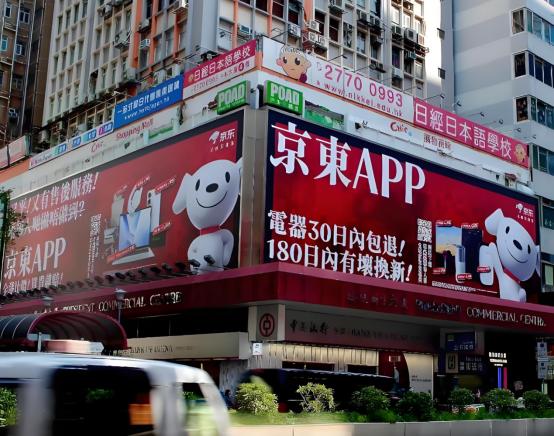
Core Insights - The article discusses how mainland Chinese internet companies are transforming the landscape of Hong Kong's economy and consumer behavior, marking a significant shift in the region's internet ecosystem [1][3][4]. Group 1: Market Dynamics - Mainland companies like JD.com and Meituan are aggressively entering the Hong Kong market, leveraging their logistics and service capabilities to meet local consumer demands [5][12]. - JD.com has established five self-operated delivery centers across Hong Kong, enabling delivery times as fast as four hours, showcasing a new level of service efficiency [5]. - Meituan is utilizing a dual-subsidy strategy to attract users and incentivize delivery personnel, leading to a rapid increase in market share, surpassing competitors like Deliveroo and Foodpanda [9][10]. Group 2: Economic Context - Hong Kong has experienced a prolonged economic decline, with GDP growth rates stagnating below 5% since 2010, necessitating innovative solutions to improve living standards [32][36]. - The integration of mainland internet platforms is seen as a potential remedy for Hong Kong's economic challenges, providing new services and enhancing consumer experiences [39][40]. Group 3: Technological Integration - The article highlights the importance of cross-border payment systems and data transmission efficiency for the successful operation of mainland companies in Hong Kong [22][30]. - The upcoming implementation of the "Cross-Border Payment Link" and the "Guangdong-Hong Kong-Macao Greater Bay Area Data Cross-Border Flow Agreement" is expected to streamline operations and enhance user experience [22][30]. Group 4: Future Prospects - The article suggests that as mainland companies continue to expand in Hong Kong, the region could become a hub for technological innovation and a testing ground for new business models [39][42]. - The collaboration between mainland and Hong Kong enterprises is anticipated to foster a more integrated economic environment, benefiting both sides in the long run [46].
阿里又变阵,马云频频“上线” || 深度
Sou Hu Cai Jing· 2025-08-26 11:23
Core Viewpoint - Alibaba is undergoing significant organizational changes, with a recent restructuring that has shifted its business classification from the previous "1+6+N" model to four main segments, indicating a major transformation within the company [3][11][14]. Group 1: Organizational Changes - Alibaba has frequently adjusted its organizational structure, with over 15 public adjustments since 2011, contrasting with Tencent's less frequent changes [6][8]. - The latest restructuring, announced on March 28, 2023, involved a shift to the "1+6+N" structure, which has now been replaced by four main business categories [8][11]. - The new business segments include Alibaba China E-commerce Group, Alibaba International Digital Commerce Group, Cloud Intelligence Group, and all other businesses, marking the end of the "1+6+N" framework [11][14]. Group 2: Market Context and Competition - The market landscape has changed significantly, with competitors like Pinduoduo surpassing Alibaba in market capitalization before experiencing a decline [5][17]. - Pinduoduo reported a revenue of 393.84 billion yuan for 2024, a year-on-year increase of 80%, while Alibaba's revenue for the same period was 941.17 billion yuan, growing by 8% [17]. - The rise of AI and the need for Alibaba to adapt to new market dynamics are driving the company's transformation efforts [18]. Group 3: Leadership and Strategic Direction - Jack Ma's recent appearances and involvement in Alibaba's operations signal a potential shift in leadership dynamics and strategic focus [33][40]. - The new organizational structure aligns with Alibaba's strategic direction, emphasizing e-commerce and cloud + AI as core areas for the next 3 to 5 years [22][23]. - The reduction in the number of partners in the decision-making committee suggests a consolidation of power, with key figures like Jiang Fan taking on more significant roles [26][28]. Group 4: Employee Engagement and Initiatives - Alibaba is implementing new initiatives to support its delivery personnel, including social security subsidies and enhanced insurance coverage, reflecting a commitment to employee welfare [31][32]. - The company is also expanding its market presence in smaller cities, indicating a long-term investment strategy rather than short-term gains [32].

恐怕没有任何一个平台,比大众点评更懂“外卖好商家”在哪里
阿尔法工场研究院· 2025-08-26 09:38
Core Viewpoint - Meituan is leveraging Dazhong Dianping's extensive database of quality dining experiences to enhance its food delivery service through the newly launched "Quality Takeaway" channel, which focuses on high-quality restaurants that also offer dine-in options [1][3][5]. Group 1: Market Context - The Chinese food delivery market has reached a trillion-dollar scale, with 545 million users and an average daily spending of approximately 3.3 billion yuan on takeout [6]. - The industry is at a turning point where growth is challenging, necessitating a focus on enhancing the value of existing users rather than merely acquiring new ones [6][7]. Group 2: Consumer Behavior - Consumers are increasingly concerned about the quality of takeout, with 61% checking if a restaurant has a physical location and clean kitchens before ordering [7]. - Social media has become a platform for users to share experiences and tips on identifying quality takeout, indicating a shift towards more informed consumer choices [8][9]. Group 3: Dazhong Dianping's Role - Dazhong Dianping is uniquely positioned to identify quality takeout options due to its extensive user reviews and ratings of dining experiences [5][12]. - The platform's integration with Meituan provides it with superior delivery capabilities, enhancing the overall quality of the takeaway experience [13][14]. Group 4: Quality Assurance Mechanisms - Dazhong Dianping employs strict criteria for listing restaurants, ensuring that only those with dine-in capabilities are included, thus reducing the prevalence of "ghost kitchens" [17][18]. - The platform utilizes a robust evaluation system based on consumer feedback, ensuring the authenticity and reliability of restaurant ratings [20][22]. Group 5: Business Implications for Restaurants - The emergence of quality takeout is changing the business dynamics for restaurants, as Dazhong Dianping targets a more discerning customer base rather than relying on broad traffic [25]. - Restaurants can benefit from increased customer loyalty and repeat business due to the platform's emphasis on quality and trust [25][33]. Group 6: Long-term Trust and Growth - The focus on quality takeout represents a broader trend towards building trust in the food service industry, with Dazhong Dianping aiming to create a protective barrier through genuine reviews and transparent information [34][35].

重庆积极开展外卖食品“你点我检 服务惠民生”活动
Zhong Guo Zhi Liang Xin Wen Wang· 2025-08-26 08:09
Core Viewpoint - Chongqing's market supervision system is actively addressing consumer concerns regarding food safety in the takeaway sector through the "You Order, We Inspect" initiative, ensuring the safety of takeaway food [1] Group 1: Initiative Implementation - The initiative involves consumer participation in selecting food for inspection, with enforcement officers conducting random checks and results being available online [1] - The Banan District Market Supervision Bureau focuses on food safety during high-temperature periods, advocating for a three-pronged regulatory system that includes professional team building, digital oversight, and community involvement [4] Group 2: Consumer Engagement - The Bishi District Market Supervision Bureau has established multiple channels for consumer engagement, including WeChat platforms and physical suggestion boxes at delivery stations, collecting 1,755 questionnaires to inform inspection targets [2] - The Jiulongpo District Market Supervision Bureau has received over 500 valid survey responses from consumers and delivery personnel to enhance awareness and participation in the initiative [3] Group 3: Inspection and Compliance - The Bishi District conducted 330 inspections of popular takeaway items, identifying one batch of non-compliant products, while a total of 3,559 batches were inspected across various food categories, revealing 37 non-compliant products [3] - The Banan District has conducted 115 inspections of consumer-concerned food categories, resulting in 65 cases of non-compliance being filed, demonstrating the effectiveness of food safety inspections in mitigating risks [4]
美图业绩前瞻:美团料将公布第二季利润下滑、收入增长
Sou Hu Cai Jing· 2025-08-26 04:32
Core Viewpoint - The Chinese food delivery platform is expected to report a net profit of RMB 94.9 billion, which is lower than the RMB 113.5 billion from the same period last year [1] Financial Performance - Revenue is projected to be RMB 935.9 billion, an increase from RMB 822.5 billion year-on-year [1] - The anticipated decline in net profit amidst rising revenue indicates potential challenges in profitability [1] Market Sentiment - Investors remain cautious about the company's outlook due to intense competition in the food delivery industry [1] - The company's stock, listed in Hong Kong, has seen a decline of 20% year-to-date [1]