奢侈品

Search documents
中国奢侈品市场现回暖迹象,年轻人称“还是不如买黄金”
Di Yi Cai Jing· 2026-01-30 11:27
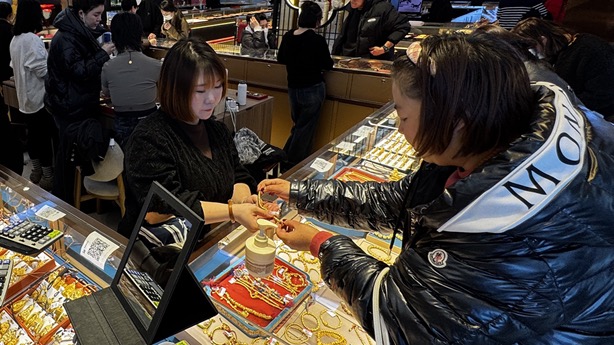
Core Insights - Luxury goods are becoming an important part of asset allocation for the new generation of consumers, with young people seeking balance between luxury items and traditional investments like gold [1] - The shift from "emotional consumption" to "rational investment" in the luxury goods market is highlighted, with consumers focusing more on the investment value and cost-effectiveness of luxury products [3] Group 1: Market Trends - The 2025 China Personal Luxury Goods Report indicates a significant change in the luxury market, with a noticeable easing of the decline in the personal luxury goods market in mainland China compared to 2024, showing early signs of recovery since Q3 of the previous year [3] - The report suggests that 2025 will be a year of adjustment for the Chinese luxury market, with consumers seeking a balance between quality, uniqueness, and practicality in high-cost performance products [3] - The high-value customer (VIC) group remains a core driver of the luxury market, but younger potential consumers are cautiously entering the luxury market [3] Group 2: Consumer Behavior - The new generation of young consumers is increasingly valuing the investment potential and sustainability of luxury goods, driving a recovery in the jewelry category and rapid growth in the second-hand luxury market [3] - There is a growing acceptance of second-hand luxury goods among consumers, particularly among younger and price-sensitive demographics, indicating a shift in consumer perception [4] - The second-hand luxury market in China is projected to grow by 15% to 20% in 2025, driven by increased supply, higher consumer acceptance, and the popularity of live-streaming platforms [4] Group 3: Jewelry Market Dynamics - The jewelry market in China is showing signs of improvement due to the rising gold prices, although it has not fully reversed the previous decline, with the drop in jewelry sales narrowing to less than 5% [6] - Young consumers express that while jewelry holds emotional value, they prefer gold as a more practical investment, reflecting a shift in asset allocation preferences [6] Group 4: Purchasing Trends - The proportion of Chinese consumers purchasing luxury goods overseas has significantly decreased, with an estimated 65% of luxury consumption occurring in mainland China and 35% abroad, indicating a trend of consumption returning to the domestic market [7] - The combination of China's visa-free policies and flexible tax refund systems is attracting some foreign consumers to purchase luxury goods in mainland China, although their contribution remains relatively small compared to the overall market [7] - Looking ahead to 2026, China is expected to remain a cornerstone for global luxury growth, with strong market recovery trends anticipated starting in the second half of 2025 [7]

报告:高净值人群对高奢品牌热情度下降,实用性服饰热情度上升
Jin Rong Jie· 2026-01-30 07:32
Group 1 - The report indicates a significant decline in the enthusiasm of high-net-worth individuals for luxury brands, dropping by 12 percentage points [1] - There is a notable increase in the interest for practical clothing, which emphasizes comfort over brand, rising by 14 percentage points [1] - The interest in custom-made clothing remains stable compared to last year, while the enthusiasm for trendy brands has slightly decreased by 5 percentage points [1] Group 2 - The overall interest in the second-hand luxury goods market has significantly decreased, with 41% of high-net-worth individuals indicating they would purchase second-hand luxury items, a drop of 24 percentage points from last year [1] - Among those willing to buy second-hand luxury items, handbags and accessories are the preferred choices, followed by jewelry [1] Group 3 - There is a marked decline in the enthusiasm for high-end watches, with the planned purchases dropping from an average of 2.8 watches last year to just 1 this year [1] - Additionally, 59% of respondents do not plan to purchase any watches in the coming year [1]
LVMH利润下滑9%,美妆的角色变了
3 6 Ke· 2026-01-30 02:38
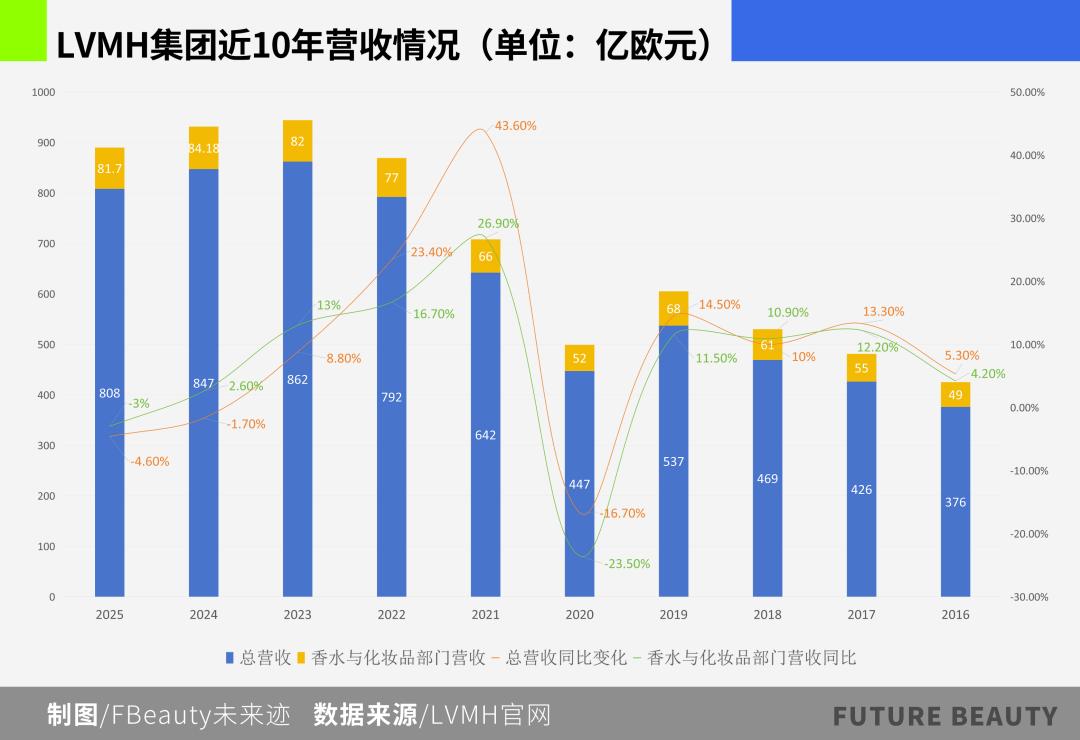
Core Insights - LVMH has experienced a significant business growth over the past decade, but is now entering a "slow normal" phase, with 2025 revenue reported at €80.8 billion (approximately ¥671.6 billion), a decline in revenue and profit compared to the previous year, yet showing signs of stabilization in quarterly performance with a 1% organic revenue growth in Q4 [1][4] Group 1: Financial Performance - The group's revenue and operating profit have decreased year-on-year, with operating profit at approximately €17.8 billion (around ¥147.9 billion) and net profit at about €10.9 billion (approximately ¥90.6 billion) [1] - The fashion and leather goods segment remains the largest and most profitable, although it saw a decline in 2025, while maintaining high operating profit margins [7] - The wine and spirits segment has been a drag on overall performance due to slowing demand for cognac and external environmental impacts [7] Group 2: Market Dynamics - The beauty and selective retail segments, which include Sephora, have shown resilience, with the beauty segment's operating profit increasing by 8% despite stable revenue, indicating effective cost control and product optimization [8] - The selective retail segment achieved a 4% organic growth in 2025, with profits rising by 28%, showcasing its role as a channel platform that meets diverse consumer demands [8] Group 3: Consumer Behavior Changes - There is a notable shift in consumer behavior, particularly in China, where consumers are willing to pay for high quality and strong design but are less tolerant of symbolic pricing and demand more authenticity in brand narratives [9][10] - The luxury dream is evolving from a focus on symbols to a more complex experience and content-driven approach, requiring brands to connect deeply with local cultural narratives [9][10] Group 4: Strategic Adjustments - LVMH is focusing on core assets that are controllable and replicable, indicating a potential reevaluation of brands that require high investment and rely on celebrity endorsements [26] - The company is adopting a strategy of innovation for growth while maintaining efficiency to protect profits, emphasizing better product structures and controlled channels [28] - Retail strategies are shifting towards adaptation rather than expansion, with a focus on meeting consumer needs and preferences in a more competitive environment [29] Group 5: Future Outlook - The beauty segment is increasingly seen as a critical touchpoint for consumer engagement and profit generation, especially in the context of fluctuating market conditions [30] - LVMH's ability to translate its strategies into stable growth will depend on its capacity to refine product offerings, channel strategies, and local narratives to resonate with evolving consumer expectations [30]
国泰海通证券:维持普拉达“增持”评级 26年范思哲并表开启新篇章
Zhi Tong Cai Jing· 2026-01-30 02:37
Core Viewpoint - The report from Guotai Junan Securities maintains an "Overweight" rating for Prada (01913), projecting steady growth for Miu Miu and new contributions from the consolidation of Versace, with expected net profits for 2025-2027 at €8.8/9.6/10.5 billion, reflecting year-on-year growth of 5.2%/8.7%/9.0% [1] Group 1 - The company anticipates a high single-digit year-on-year growth in retail sales for 2025 at fixed exchange rates, leading the industry; Q4 2025 retail sales growth is expected to slow slightly to mid-single digits compared to Q3 [1] - For the Prada brand, retail growth in Q4 2025 is expected to improve from a decline of -1% in Q3 to flat, while Miu Miu is projected to achieve a retail growth rate of 15-20% in Q4 2025, supported by sustained brand momentum despite high base effects [1][2] - The company estimates a negative impact from foreign exchange of approximately 700 basis points in Q4 2025, with an annual impact of about 400 basis points [1] Group 2 - Looking ahead to 2026, Miu Miu is expected to increase retail space by 10%-15%, focusing on the Eurasian region and planning further expansion into the low-penetration U.S. market by 2027 [2] - Prada aims to balance "strategic price points" by enhancing its nylon collection to reach a broader audience while attracting high-net-worth clients through limited edition leather goods [2] - Versace's acquisition was completed on December 2, 2025, with expected contributions to financials in 2026; Versace reported revenues of approximately €705 million and an operating loss of about €46 million as of March 2025 [2] Group 3 - The overall customer base remains stable, with the luxury goods industry entering a "new normal," characterized by market share consolidation among strong brand DNA companies [3] - The industry trend is shifting from overt consumption and brand-driven strategies to authenticity and value-driven approaches [3] Group 4 - The outlook for Miu Miu's growth is supported by high-quality growth, with most of the growth in high base years coming from same-store sales; there is significant potential for new store openings, with 147 direct stores globally by the end of 2024 compared to over 300 for YSL and BV [4] - The brand has established a differentiated brand perception in recent years, likely benefiting from the trend of entry-level consumers shifting from high luxury [4] - Prada's Q3 2025 showed sequential improvement, with expectations for continued investment in creative leather goods and marketing of iconic products like Galleria, as well as expansion of the regenerated nylon series to enhance entry-level product offerings [4]


国泰海通晨报-20260130
GUOTAI HAITONG SECURITIES· 2026-01-30 01:08
Macro Research - The Federal Open Market Committee (FOMC) meeting in January 2026 maintained interest rates, aligning with market expectations, while showing a more optimistic outlook on the economy, employment, and inflation, adding uncertainty to future rate cuts [1][2] - Silver prices have surged to new highs since 2025, driven by a combination of industrial and financial demand, with potential pressure on silver prices if gold experiences volatility [1][2] - The Federal Reserve's internal division was evident in the recent rate decision, with a 10:2 vote, indicating differing opinions on the need for a 25 basis point cut [2] Silver Market Analysis - Silver's price dynamics differ from gold, with stronger commodity attributes and broader industrial demand, while its monetary attributes have weakened significantly [7] - Historical price surges in silver have been driven by speculative funds and macroeconomic factors, with the current surge attributed to geopolitical risks and a turbulent international monetary system [8] - Industrial demand for silver is expected to remain robust, particularly from emerging industries like photovoltaics and electric vehicles, supporting price resilience [8][9] Company Analysis: Qingdao Bank - Qingdao Bank has shown strong balance sheet expansion and continuous improvement in asset quality, with a non-performing loan ratio dropping below 1% [10][11] - The bank's net profit is projected to grow by 22% in 2025, with a target price set at 6.40 CNY, maintaining a buy rating [11][12] - The bank's revenue growth is supported by an increase in asset and loan growth rates, with a focus on optimizing cost structures to enhance profitability [12][14]
贝恩:2026年中国个人奢侈品市场将适度增长
Guo Ji Jin Rong Bao· 2026-01-29 15:16
Core Insights - The 2025 China Personal Luxury Goods Report by Bain & Company indicates a contraction of 3% to 5% in the mainland personal luxury goods market, showing a significant easing compared to the sharp decline in 2024 [1] - The report highlights a shift in consumer behavior towards high-cost performance products that balance quality, uniqueness, and practicality, with a preference for experiential consumption such as travel and health [1] - The report notes that the high-value customer (VIC) group remains the core driver of the luxury goods market, while younger potential consumers are entering the luxury market with a more cautious and delayed approach [1] Market Performance - Different luxury categories show varied performance: beauty and personal care products are recovering with a growth of 4% to 7%, while apparel is declining by 5% to 8%, leather goods by 8% to 11%, watches by 14% to 17%, and jewelry is expected to decline by 0% to 5% compared to 2024 [1] Consumption Trends - The share of overseas luxury goods consumption has significantly decreased in 2025, with 65% of luxury consumption occurring in mainland China and 35% abroad, indicating an increase in consumption return [2] - Mainland consumers' enthusiasm for outbound travel has not diminished their willingness to purchase luxury goods domestically, aided by reduced price gaps between mainland and major overseas markets [2] - The rise of local Chinese luxury brands, particularly in beauty and personal luxury categories, is emphasized, with these brands leveraging culturally relevant product designs and competitive pricing strategies [2] Competitive Advantages - Local brands are building differentiated advantages through a deeper understanding of local consumer preferences, implementing a "China-first" customer outreach strategy, and enhancing access to local quality resources and materials to establish price advantages [3] - Despite ongoing market volatility and uncertainty, Bain forecasts moderate growth for the Chinese personal luxury goods market in 2026, supported by the expanding middle-income group and improving consumer confidence [3]
贝恩:2025年中国奢侈品消费回流程度有所增加
Bei Ke Cai Jing· 2026-01-29 14:29
新京报贝壳财经讯(记者陈维城)1月29日,贝恩公司发布的《2025年中国个人奢侈品报告》显示, 2025年中国内地个人奢侈品市场收缩了3%至5%,相比2024年的大幅下降有明显缓和。贝恩估计,2025 年中国奢侈品消费中有65%发生在中国内地,35%在境外,反映出消费回流的程度有所增加。 贝恩公司全球合伙人杨玥表示:"二手市场正在逐渐成为中国奢侈品生态系统中不可或缺的一环,它的 持续增长不仅说明了消费者观念的转变,也标志着整个市场的日益成熟。"她指出,直播平台兼具实时 互动和产品验证两大功能,增强了消费者对二手奢侈品的信心。" 报告还强调了本土中国奢侈品品牌的持续崛起,特别是在美妆护肤和部分个人奢侈品类别中。这些品牌 通过文化相关的产品设计、数字化和互动导向的消费者策略以及由本地投入和供应链支持的竞争性价格 定位获得市场份额。 展望未来,尽管波动和不确定性仍将持续,贝恩预计中国个人奢侈品市场将在2026年实现适度增长,但 仍将保持全球奢侈品市场增长的基石地位。随着中等收入群体的不断壮大、消费者信心的提升以及有利 政策的出台,预计将有更多奢侈品消费回流至中国内地市场。然而,增长的程度仍将高度依赖于具体的 产品类 ...
贝恩公司:预计2026年中国奢侈品市场恢复温和增长 美妆类别表现最为强劲
智通财经网· 2026-01-29 13:13
报告指出,2025年是中国奢侈品市场重新调整的一年,消费者变得更加谨慎,他们更倾向于选择那些在 质量、独特性和实用性之间达到良好平衡的高性价比产品。体验型消费,包括旅行和健康,继续受到欢 迎,显示出人们更偏好情感和感官体验,而不是单纯的物质商品。 展望未来,尽管波动和不确定性仍将持续,贝恩预计中国个人奢侈品市场将在2026年实现适度增长,但 仍将保持全球奢侈品市场增长的基石地位。随着中等收入群体的不断壮大、消费者信心的提升以及有利 政策的出台,预计将有更多奢侈品消费回流至中国内地市场。然而,增长的程度仍将高度依赖于具体的 产品类别和品牌。 贝恩公司表示,尽管2025年大部分时间消费者情绪谨慎,但奢侈品产业从第三季开始出现企稳迹象,这 得益于股市走强和消费者信心增强。 智通财经APP获悉,贝恩公司1月29日发布的《2025年中国个人奢侈品报告》显示,2025年中国内地个 人奢侈品市场收缩了3%至5%,相比2024年的大幅下降有明显缓和。预计今年中国个人奢侈品市场将恢 复温和增长,但警告复苏势头疲弱,且在各个品牌及类别之间的复苏亦不平均。其中,美妆个护品类表 现最佳,增长恢复到4%至7%。 报告还强调了本土中国奢 ...
LVMH集团净利继续下滑:“2026年不会轻松”
Bei Jing Shang Bao· 2026-01-29 12:33
2025年的LVMH集团,依旧没有回到增长轨道。近日,LVMH集团发布2025年财务报告,总营收、净利润双双下滑,从旗下多部门收入下滑的现状来看, LVMH集团新的一年依然面临挑战。不只是LVMH集团,当下奢侈品行业集体面临发展困境,如何转型改革、重拾消费者信心成为新一年能否回归增长的关 键。 根据财报数据,LVMH集团2025年全年实现总营收808亿欧元,较2024年减少了38.76亿欧元,同比下降5%,经常性营业利润和净利润分别下滑9%、13%, 分别为177.55亿欧元、108.78亿欧元。 在奢侈品降温的大环境下,包括LVMH集团在内的奢侈品集团表现均不太乐观。开云集团2025年上半年集团营业收入为75.87亿欧元,同比下降16%;营业利 润9.69亿欧元,同比下降38.7%;净利润4.74亿欧元,同比下降46%。2024年,开云集团全年营收171.94亿欧元,同比下降12%;净利润为11.33亿欧元,同比 下滑62%。香奈儿2024年销售额同比下滑5.3%至187亿美元,净利润下跌28.2%至34亿美元。 或是基于自身的业绩压力,LVMH集团在过去的一年动作频频。如2025年6月,LVMH集团旗下L ...

LVMH利润下滑9%,美妆的角色变了
FBeauty未来迹· 2026-01-29 11:04
Core Viewpoint - LVMH Group has experienced significant growth over the past decade, but is now entering a "slow normal" phase, with 2025 revenue reported at €80.8 billion (approximately ¥671.6 billion) and net profit at €10.9 billion (approximately ¥906 million), indicating a decline compared to the previous year, although there are signs of stabilization in quarterly performance [3][6]. Group Performance Overview - The fashion and leather goods segment remains the largest and most profitable, although it is expected to decline in 2025. Despite this, the operating profit margin remains high, indicating that brands like Louis Vuitton and Dior are maintaining pricing and channel discipline [10]. - The wine and spirits segment has been a drag on overall performance, with demand for cognac slowing down due to external factors, which directly impacts profits [10]. - The fragrance and beauty segment has shown resilience, with revenue remaining stable in 2025 while operating profit increased by 8%, reflecting effective product management and cost control [10][11]. - The selective retail segment, particularly Sephora, achieved 4% organic growth in 2025, with profits rising by 28%, showcasing its role as a channel platform that meets diverse consumer demands [11]. Consumer Behavior Changes - There has been a notable shift in consumer behavior, particularly in China, where consumers are willing to pay for high quality and design but are less tolerant of symbolic pricing. They demand authenticity and clearer reasons for purchases [12][13]. - The luxury dream is evolving, moving towards a more experiential and content-driven narrative rather than solely relying on symbolic value [12]. Strategic Adjustments - LVMH is focusing on core assets that are controllable and have clear profit models, while being cautious with brands that require high investment and rely on celebrity endorsements [26]. - The company is adopting a "cost-saving" approach in beauty, emphasizing innovation for growth and efficiency to maintain profits, rather than relying on price reductions [26][27]. - Retail strategies are shifting towards adaptation rather than expansion, with a focus on aligning product offerings with consumer trends and enhancing the value proposition of retail spaces [27]. Future Outlook - The beauty segment is increasingly recognized for its potential to drive profits during volatile periods, serving as a testing ground for understanding consumer changes in China [28]. - The ability of LVMH to translate these insights into stable growth will depend on its capacity to make nuanced and adaptive choices in product offerings, channels, and local narratives [29].