电子设备

Search documents
今日A股市场重要快讯汇总|2026年1月6日
Xin Lang Cai Jing· 2026-01-06 00:25
一、上市公司重要公告 1月5日盘后,红棉股份、长高电新、先锋精科、尚纬股份、百川能源、南亚新材、好太太、信科移动、 航亚科技、深赛格、合富中国、富特科技、莱绅通灵、ST逸飞、中钢洛耐、博通集成、万泽股份等17 家A股上市公司披露减持情况,当日暂无A股上市公司披露增持情况。 二、外围市场与关联资产 周一美股三大指数集体收涨,道指涨1.23%创历史新高,纳指涨0.69%,标普500指数涨0.64%;大型科 技股涨跌不一,特斯拉涨超3%,亚马逊涨超2%,Meta、高通涨超1%,苹果、美光、博通、甲骨文、 AMD跌超1%。 纳斯达克中国金龙指数收涨0.53%,嘉楠科技涨9.01%,万物新生涨8.58%,康迪车业涨8.34%,叮咚买 菜涨7.89%。 此外,纽约期金突破4470美元/盎司,日内涨0.43%;纽约期银日内涨9%,现报77.41美元/盎司。 声明:市场有风险,投资需谨慎。本文为AI大模型基于第三方数据库自动发布,任何在本文出现的信 息(包括但不限于个股、评论、预测、图表、指标、理论、任何形式的表述等)均只作为参考,不构成 个人投资建议。受限于第三方数据库质量等问题,我们无法对数据的真实性及完整性进行分辨或核 ...
包头市青山区:烟火气里燃动消费新活力
Sou Hu Cai Jing· 2026-01-05 08:39
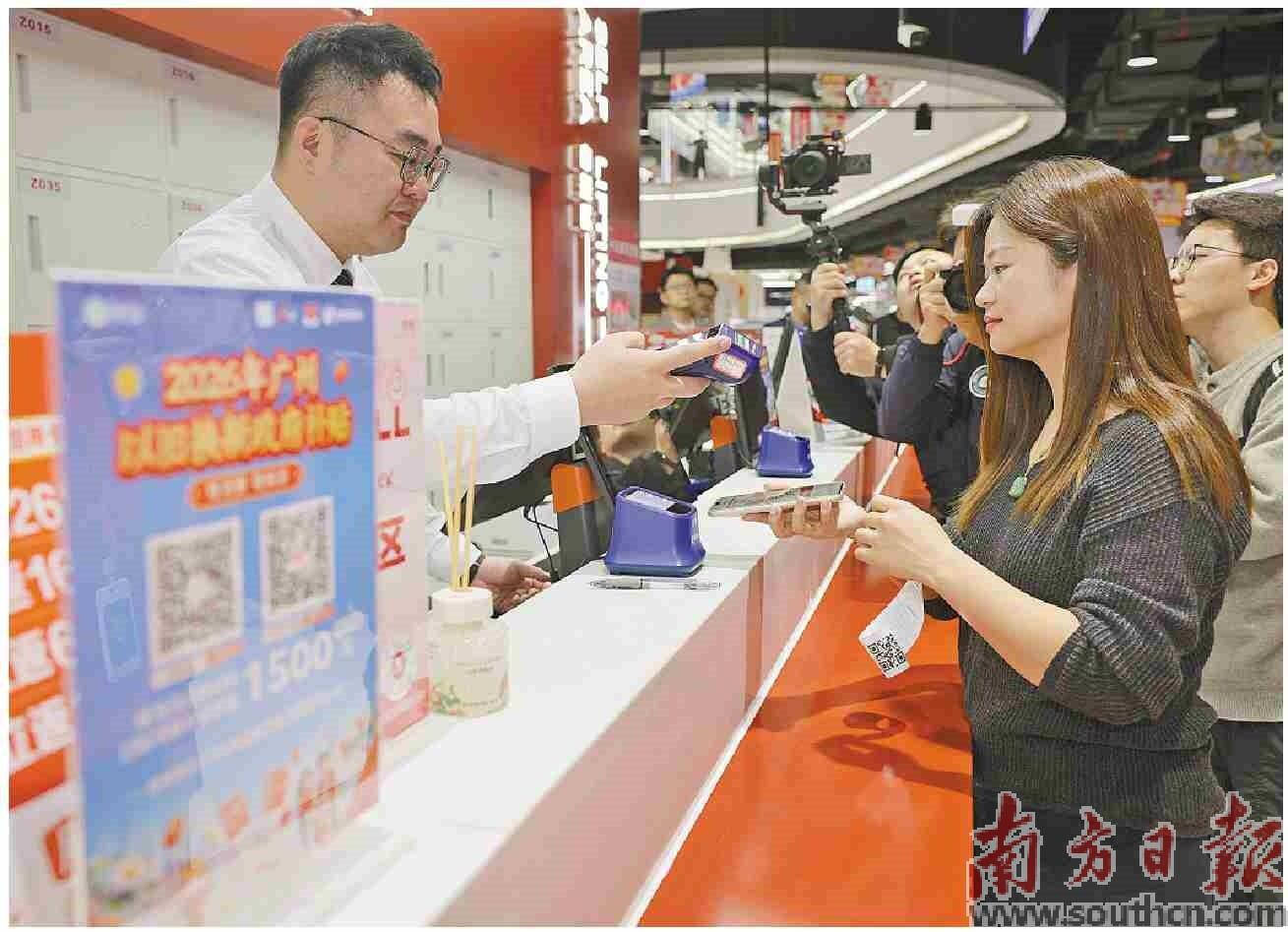
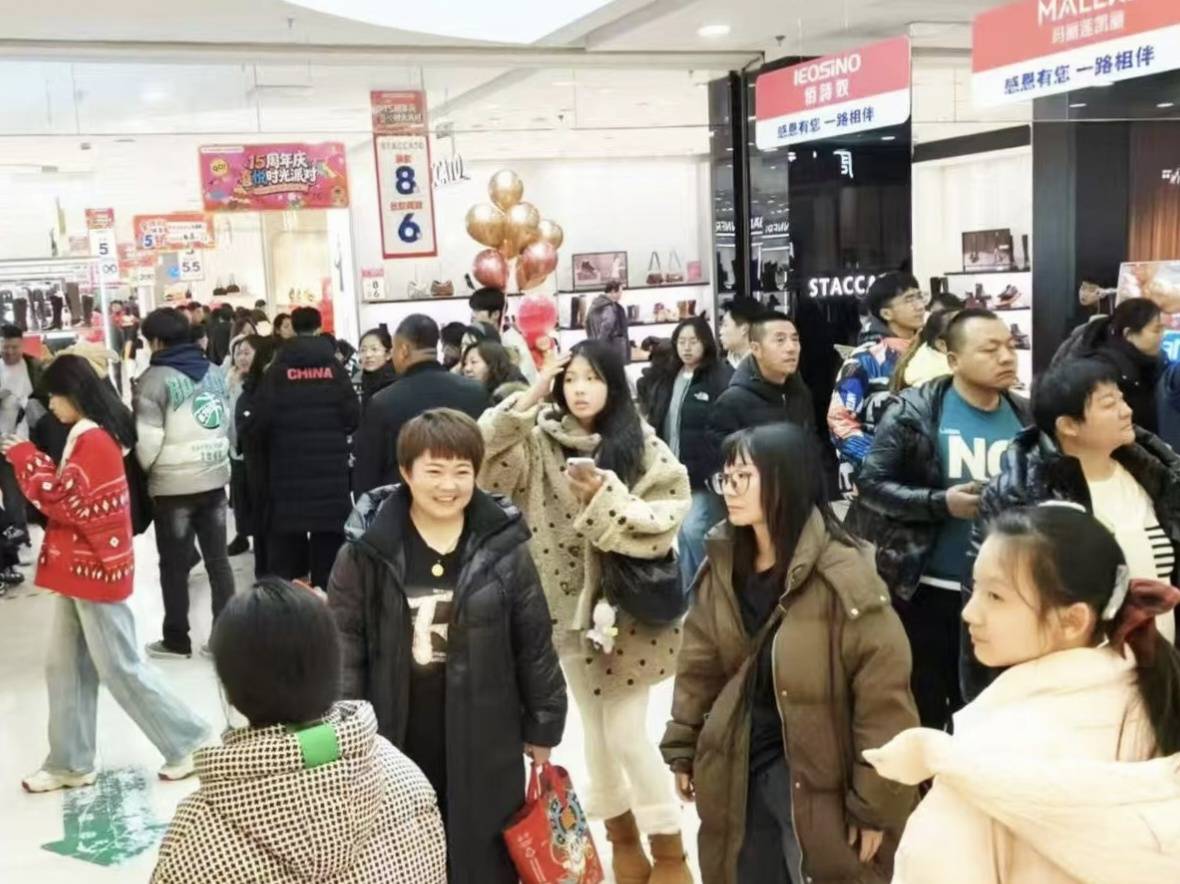
Group 1 - The core viewpoint highlights the vibrant consumer market in Qingshan District during the New Year holiday, driven by policy benefits, innovative consumption scenarios, and upgraded quality demands, contributing to strong economic growth for the year ahead [1] Group 2 - During the New Year holiday, Qingshan District's key monitored commercial enterprises achieved a total revenue of 35.72 million yuan over three days, with eight major commercial complexes generating over 50 million yuan, reflecting a year-on-year growth of 27% [3] - On New Year's Day, the monitored retail and catering enterprises in the district reported year-on-year revenue increases of 30.43% and 25.28%, respectively [3] Group 3 - The introduction of the old-for-new subsidy policy during the New Year period provided up to 1,500 yuan in subsidies for energy-efficient appliances and smart digital products, effectively stimulating green and smart consumption [4] - Major appliance retailers launched exclusive promotions and events in conjunction with the New Year, enhancing shopping experiences and consumer enthusiasm [4] Group 4 - The supply of essential goods remained stable and orderly during the holiday, with sufficient inventory of key consumer products like meat and vegetables, and overall market prices maintained stability [5] - The Qingshan District's integration of cultural, tourism, and retail activities, along with continuous innovation in consumption scenarios, enriched the holiday experience and released economic vitality for the year [5]

今日204只个股跨越牛熊分界线
Zheng Quan Shi Bao Wang· 2026-01-05 08:24
Market Overview - The Shanghai Composite Index closed at 4023.42 points, above the annual line, with a gain of 1.38% [1] - The total trading volume of A-shares reached 30,483.30 billion yuan [1] Stocks Breaking Annual Line - A total of 204 A-shares have surpassed the annual line today, with notable stocks including: - Guanhao Biological (300238) with a deviation rate of 13.10% - Beilu Pharmaceutical (300016) with a deviation rate of 12.97% - Yinkang Life (300143) with a deviation rate of 12.90% [1] Stocks with Significant Deviation Rates - Stocks with high deviation rates include: - Guanhao Biological: 20.00% increase, latest price at 16.62 yuan - Beilu Pharmaceutical: 13.22% increase, latest price at 8.99 yuan - Yinkang Life: 15.18% increase, latest price at 11.38 yuan [1] Additional Stocks with Positive Performance - Other stocks showing positive performance include: - Gangtong Medical (301515) with a 14.16% increase and a deviation rate of 12.82% - Zhite New Materials (300986) with a 20.04% increase and a deviation rate of 10.50% [1] Stocks with Lower Deviation Rates - Stocks that have just crossed the annual line with lower deviation rates include: - Longqi Technology (603341) with a 10.01% increase and a deviation rate of 9.02% - Taihe New Materials (002254) with a 9.98% increase and a deviation rate of 8.61% [1]
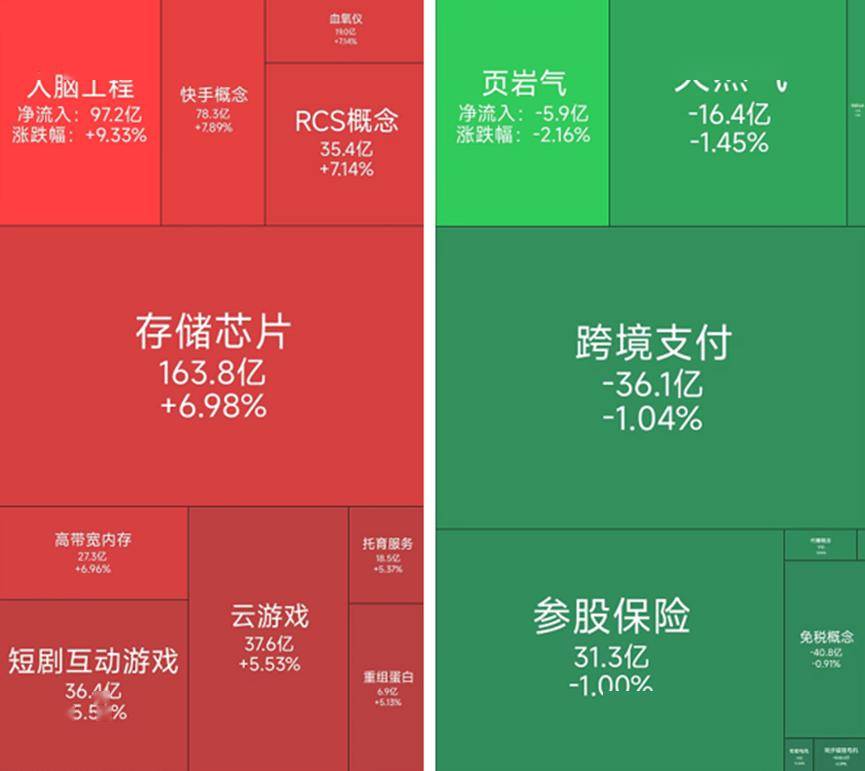
人脑工程板块涨幅居前,9位基金经理发生任职变动
Sou Hu Cai Jing· 2026-01-05 08:08
Market Performance - On January 5, the three major A-share indices collectively rose, with the Shanghai Composite Index increasing by 1.38% to 4023.42 points, the Shenzhen Component Index rising by 2.24% to 13828.63 points, and the ChiNext Index up by 2.85% to 3294.55 points [1] - The sectors that performed well included brain engineering, storage chips, and cloud gaming, while shale gas, natural gas, and insurance-related sectors saw declines [1] Fund Manager Changes - From January 1 to January 5, a total of 9 fund managers experienced changes in their positions, which can significantly impact the future performance of the funds they manage [2] - In the same period, 4 fund products announced fund manager departures, with reasons including job changes and personal reasons [3] - A total of 29 fund products announced new fund manager appointments, involving 7 new fund managers [3] Fund Performance - Wang Bo from Ping An Fund managed a total fund asset of 696 million yuan, with the highest return of 99.12% from the fund "Anxin Xinfang Youxuan Mixed A" during his tenure [3] - Li Jialiang from Southern Fund managed a total fund asset of 9.657 billion yuan, with the highest return of 163.15% from the "Southern Shanghai Stock Exchange Science and Technology Innovation Board Chip ETF" during his tenure [3] Fund Research Activity - In the past month (December 6 to January 5), Huaxia Fund conducted the most company research, engaging with 43 listed companies, followed by Bosera Fund, Southern Fund, and E Fund, which researched 39, 32, and 29 companies respectively [5] - The chemical products industry was the most researched sector, with 161 instances, followed by the computer equipment industry with 112 instances [5] Recent Company Focus - In the last month, the most researched company by public funds was Zhongke Shuguang, which is in the specialized computer equipment industry, with 117 fund management companies participating in the research [5] - Other companies receiving significant attention included Haiguang Information and Changan Automobile, with 117 and 86 fund management companies involved in their research respectively [5] Recent Weekly Research Activity - In the week from December 29 to January 5, the company with the highest number of fund research engagements was Oulutong, with 30 fund institutions participating [6] - Other companies with notable research activity included Jingji Zhinu and Zhongwei Shares, with 29 and 26 fund institutions respectively [6]




投资前瞻:CPI、PPI数据将公布,2026 CES拉开帷幕
Sou Hu Cai Jing· 2026-01-04 22:46
Economic Indicators - The National Bureau of Statistics will release the CPI and PPI data for December 2025 on January 9, with a projected CPI year-on-year growth of 0.7% and a PPI year-on-year decline of 1.9% [1] Subsidies and Support - The 2026 childcare subsidy application will open on January 5, following a system upgrade from January 1 to 4, with over 24 million people having received subsidies in 31 provinces, achieving an 80% issuance rate for 2025 [2] Energy Sector - The first adjustment of fuel prices for 2026 will occur at midnight on January 6, with the last adjustment on December 22 resulting in a decrease of 170 yuan per ton for gasoline and 165 yuan per ton for diesel [3] Employment Data - The U.S. non-farm payroll data will be released on a regular schedule this week, with expectations of a slight decrease in the unemployment rate from 4.6% to 4.5% according to KPMG, while Citigroup predicts an increase to 4.7% [4] Technology and Consumer Electronics - The 2026 International Consumer Electronics Show (CES) will commence on January 6 in Las Vegas, featuring major tech companies including Lenovo, Hisense, and TCL, with new entrants in the robotics sector showcasing their products [6] - Honor's Power2 smartphone will be officially launched on January 5, featuring a 10,000mAh battery and the MediaTek Dimensity 8500 Elite chip, achieving a benchmark score of over 2.4 million [7] Corporate Transactions - Zhongwei Company plans to acquire a 64.69% stake in Hangzhou Zhongsilicon through a combination of stock issuance and cash payment, with the company focusing on CMP equipment solutions [9] - Meike Home intends to acquire 100% of Wanda's stake to expand into the high-speed interconnect field, with stock resuming trading on January 5 [10] - ST Asia Pacific has completed its restructuring plan, with a reference price of 7.05 yuan per share for trading resumption on January 5 [11] - Jiaheng Home's controlling shareholder will change to Hangzhou Pinpianyi, with a share transfer agreement signed at 33.21 yuan per share [13] Stock Unlocking - A total of 36 stocks will have their lock-up periods lifted this week, with a total market value exceeding 160 billion yuan, including significant unlocks from Baili Tianheng and Guolian Minsheng [15][16] New Stock Issuance - Two new stocks will be issued this week, including Zhixin Co. on the Shanghai Stock Exchange and Kema Materials on the Beijing Stock Exchange [19] Market Outlook - Institutions expect a transition from a "structural bull" to an "index bull" market in 2026, with a focus on AI applications, humanoid robot production, and mergers and acquisitions [21] - Zhongtai Securities emphasizes the potential in AI application industries, while Huachuang Securities notes the acceleration of domestic AI computing chip development [22][23] - Citic Securities highlights the favorable conditions for RMB-denominated equity assets, predicting stability in banking operations and a recovery in income and profits [24] - Goldman Sachs indicates a rebound potential for Chinese assets, with significant interest from overseas investors in technology and biotechnology sectors [25]

江南春:2026年创业的26个关键词
Zhong Guo Jing Ying Bao· 2026-01-04 04:44
Core Insights - The article emphasizes the importance of brand elevation strategies to combat market pressures such as price competition and declining sales, suggesting that companies should focus on enhancing quality, service, and emotional value rather than engaging in price wars [1][3][4]. Price Anxiety Resolution - Price anxiety cannot be resolved through lowering prices, as this leads to a cycle of competitive price reductions. Instead, companies should focus on elevating product quality and service to enhance perceived value [1][2][3]. Sales Pressure Solutions - Sales pressure cannot be alleviated through promotions alone, as consumers may switch to competitors offering better deals. Investing in brand development is crucial for creating a loyal customer base that chooses the brand for its inherent value [3][4][5]. Traffic Issues and External Solutions - Internal traffic issues arise from rising costs and competition for the same target audience. Companies should focus on expanding their reach and educating potential customers about their brand to overcome these challenges [4][5][6]. Importance of Brand Awareness - Effective marketing requires a broad reach to educate potential consumers about the brand's core values. Without significant brand awareness, achieving sales goals becomes increasingly difficult [5][6][7]. Media and Advertising Effectiveness - Reducing marketing expenditures significantly impacts brand activity and sales. Continuous advertising is essential for maintaining brand presence and consumer engagement [6][7][8]. Long-term Brand Strategy - Companies should focus on long-term brand building rather than short-term promotional tactics. A strong brand presence leads to sustainable sales growth and market share [11][12][13]. Consumer Engagement and Touchpoints - Effective media strategies should prioritize high engagement and frequent touchpoints to create lasting consumer memories and influence purchasing behavior [9][10][11]. Brand Value and Market Positioning - Brands must focus on creating a strong market presence and consumer recognition to achieve long-term profitability. This involves identifying core business strengths and eliminating non-essential offerings [14][15][16]. Scenario Creation for Demand - Brands should create scenarios that resonate with consumer needs and emotions to stimulate demand and drive sales growth [15][16][17]. Competitive Strategy - Companies should differentiate themselves from competitors by focusing on unique value propositions rather than merely improving product quality or reducing prices [25][26][27]. Brand Influence on B2B - A strong consumer brand can positively influence B2B relationships, enhancing dealer confidence and driving sales through increased visibility and market presence [27][28][29]. The Matthew Effect in Branding - Strong brands naturally attract more consumer attention and loyalty, leading to a self-reinforcing cycle of growth and market dominance [28].


雷军回应小字营销:行业陋习,马上就改
21世纪经济报道· 2026-01-04 02:44
雷军在直播中致歉推迟直播:"先说个抱歉,这是一场迟到的直播,原定的跨年直播,因为我 感冒了,最后推迟到今天晚上,虽然是推迟了,但不小心就成了2026年的第一场大型直播,所 以也挺有意义的。" 雷军称拆车是为回应网络传言 1月3日晚上,小米创办人、董事长兼CEO雷军进行2026年的第一场直播,现场直播工程师拆 一台新的小米YU7。 此次直播,雷军回应了多个大众关心的热点问题。 直播中,雷军表示,这次拆车是为了回应一些过去这段时间网上对小米汽车的各种问题,过去 小米回应得很少,是因为觉得好产品自己会讲话,清者自清,不要不停地自证。但是前段时间 看到不少的米粉朋友们建议还是要主动及时地回应,过去一年里面要回应的问题特别多,打算 分期分批来回应,今天首先回应YU7产品相关的。 图/雷军直播视频截图 图/雷军直播视频截图 雷军称,小米YU7发布后一直比较火,我们用料扎实,还是比较自信的。这次拆车可以进一步 了解小米汽车。 雷军还提到,有一个拆车博主说他为什么拆小米的车呢?小米的车特别火,你说它好会火,说 它不好也会火。但总体说来,说他不好更高一些。所以他刚开始也是抱着挑毛病的心态来拆 的,拆完以后发现确实还可以。他讲了 ...


小米取得电子设备和设备模组专利,实现相机配件电连接
Jin Rong Jie· 2026-01-03 11:47
Group 1 - The core point of the article is that Beijing Xiaomi Mobile Software Co., Ltd. has obtained a patent for "electronic devices and device modules," indicating ongoing innovation in technology [1] - The patent was granted with the announcement number CN223757002U, and the application date is February 2025 [1] - The patent summary describes an electronic device that includes a first connector for electrical connection with camera accessories and a battery cover with a positioning opening corresponding to the first connector [1] Group 2 - Beijing Xiaomi Mobile Software Co., Ltd. was established in 2012 and is located in Beijing, primarily engaged in software and information technology services [1] - The company has a registered capital of 148.8 million RMB [1] - According to data from Tianyancha, the company has invested in 4 enterprises, participated in 149 bidding projects, and holds 5000 patent records, along with 123 administrative licenses [1]
去一趟封关后的海南,我被自己“穷笑了”
Sou Hu Cai Jing· 2026-01-03 08:52
Core Insights - The recent closure of Hainan has transformed Sanya into a shopping paradise, particularly for gold and luxury goods, with consumers flocking to take advantage of tax-free prices and discounts [1][4][22] Group 1: Gold Market - The immediate aftermath of Hainan's closure saw a surge in demand for gold, with reports of consumers saving over 10,000 yuan by purchasing gold jewelry [4][19] - The price of gold in Hainan's duty-free shops is significantly lower than in mainland stores, with a reported price of 1,194 yuan per gram compared to over 1,368 yuan in mainland stores, leading to savings of over 160 yuan per gram [11][19] - Many consumers are actively seeking to maximize their savings through government consumption vouchers, with some reporting prices as low as 1,108 yuan per gram after applying discounts [19][20] Group 2: Luxury Goods and Electronics - The demand for luxury items, particularly the new iPhone 17 Pro series, has also surged, with discounts exceeding 2,000 yuan, making it a popular item among consumers [25][22] - Duty-free shopping in Hainan has led to a significant increase in sales, with Sanya's duty-free stores reportedly achieving sales exceeding 100 million yuan over four consecutive days [36][44] - The influx of consumers has not only benefited the luxury goods market but has also led to increased demand for everyday items, such as imported durians, indicating a broader economic impact [36][38] Group 3: Investment Opportunities - Hainan's new policies have positioned it as a low-tax haven, attracting investments from companies looking to benefit from reduced corporate tax rates and exemptions on certain imports [44][50] - Reports indicate that significant investments are being made in real estate, with one company reportedly spending nearly 5 billion yuan to acquire land in Sanya [44][45] - The strategic implications of Hainan's closure extend beyond consumer goods, as it is seen as a burgeoning investment landscape for both domestic and foreign capital [44][50]
今年全国首笔“国补”订单落地广州
Sou Hu Cai Jing· 2026-01-01 01:24
Core Viewpoint - The Guangdong New Year Consumer Goods Trade-in Program (referred to as "National Subsidy" program) officially launched on January 1, 2026, marking the first successful implementation of this policy nationwide [1][3]. Group 1: Program Launch and Initial Transactions - The program commenced at midnight on January 1, 2026, with all 21 cities in Guangdong participating [3]. - The first transaction under this program occurred at the JD MALL in Guangzhou, where a consumer purchased a vivo smartphone using the trade-in subsidy [3]. - The consumer received a 500 yuan subsidy, reducing the final price of the smartphone from 5999 yuan to 4849 yuan after additional platform and brand discounts [3]. Group 2: Financial Impact and Support - In 2025, the total amount of trade-in subsidies in Guangdong reached 31.83 billion yuan, driving sales of 262.8 billion yuan and benefiting 60.585 million consumers [4]. - The National Development and Reform Commission, along with the Ministry of Finance, has allocated 62.5 billion yuan in special long-term bonds to support the trade-in program for 2026 [4]. Group 3: Subsidy Details - The subsidy policy for 2026 includes a 15% subsidy on the sales price for personal consumers purchasing certain electronic products, with a maximum subsidy of 500 yuan per item [4]. - For major home appliances, a similar 15% subsidy applies, with a maximum of 1500 yuan per item for energy-efficient products [4]. - In the automotive sector, consumers can receive a subsidy of up to 20,000 yuan for purchasing new energy vehicles after scrapping eligible old vehicles, and up to 15,000 yuan for purchasing fuel vehicles with specific engine sizes [5].